Thinking about Email Bankruptcy? Try this First

Mac Outlook

A few years ago I heard about “email bankruptcy,” where an executive simply deleted all his piled-up email and then found a way to let all his previous emailers know what he was doing. If they wanted a reply on something, they’d have to write a new email or re-send the old one.

It might have bugged some folks, but it got him to “inbox zero” pretty quickly. Only an exec could pull this off; I doubt a middle manager quite has the workplace capital to be able to do it without some repercussions.

For the rest of us, what to do when the inbox creeps past 50, 100, 200 emails?

Here’s a simple trick. It’s totally psychological, but I’ve used it twice in the last six months, and it works wonders. Here’s what my Inbox often looks like, full of messages. (Senders and subjects deleted here for the sake of privacy.) Yours might look like this, too:

Inbox with messages in it

Even with a mere 40 messages here, I’m still a ways away from inbox zero. So I’ve created a folder called “0 akj inbox” that shows up underneath my actual Inbox. The “0” is so it alphabetizes at the top. I leave all my sub-folders expanded so I can always see “0 akj inbox.” Then I make this move:

Moving Inbox messages to sub-folder

And… voilà! Empty Inbox:

Ever-elusive "Inbox Zero"
Ever-elusive “Inbox Zero”

Sure, this didn’t do the work of actually responding to those 40 messages. They’re still in “0 akj inbox,” awaiting my attention. But the couple times I’ve zeroed out in this way recently (rather than declaring actual email bankruptcy) has really cleared my head and allowed me to focus on the work I have to do. If 10 messages come in in the next hour, I can quickly work through them and keep my Inbox at 0. And even chip away at the new sub-folder I’ve created.

Just a mind trick? Perhaps. But so much of staying on top of email is, I’m convinced, psychological. The more email I have, the harder it seems to work through any of it. The less I have, the better I do staying zeroed out on a daily or weekly basis. Seeing my Inbox at 0, as above, makes me much more efficient on email, even if all I did was a simple drag-and-drop.

And now, on to that sub-folder….

Restoration in the Wilderness

JBap

I heard a good joke today. Good by my standards, anyway, which not all who know my humor will wholly trust.

Question: “What do John the Baptist and Kermit the Frog have in common?”

Answer: “Well, besides their affinity for water, they both share a middle name of the.”

That made me think again about my boy JBap. (Yes, that’s what Raymond Brown really calls him.) As Words on the Word inches closer to its one-year anniversary, I am reproducing below some reflections I shared last summer on John the Baptist, the wilderness, and restoration:

From the wilderness comes restoration.

The wilderness for Israel was all too often a place of dissension and lack of trust in God’s promises.

Exodus 17:7 says, “Moses called the name of the place Massah and Meribah, on account of the quarreling of the children of Israel, and on account of their testing Yahweh, which they did by saying, ‘Is Yahweh in the midst of us or not?'” Massah means testing and Meribah means strife or quarreling. “Whining” would not be an inappropriate translation for Meribah. Psalm 78 (go here and scroll down to 78) details the repeated lack of faith Israel had in their delivering God.

(Disclaimer: I am not claiming I would have done better or have done better in wilderness settings.)

In the Gospels, however, Jesus redeems and transforms the wilderness experience on behalf of the entire people of God. In the New Testament Jesus serves as a stand-in for the people of God, both in the wilderness and on the cross.

One of Mark’s first καὶ εὐθὺς statements (“and immediately”) has Jesus going into the wilderness to be tempted by Satan. But unlike the people of God in Exodus, Jesus did not sin when he was tempted to walk away from God and worship another. I once heard a preacher say that where Adam failed, where Israel failed, and where all humanity failed… Jesus succeeded on behalf of all people when he refused to listen to Satan in the wilderness.

The wilderness, isolated place that it is, connects with hope to the whole of salvation history. John the Baptist, the “voice of one crying in the wilderness,” hearkens back to Old Testament prophets that “prepare the way of the Lord.” John self-identifies as the prophet par excellence who prepares the way for Jesus. The wilderness may be lonely and despairing, but it is also the place to which Jesus comes.

As R.T. France writes, “The wilderness was a place of hope, of new beginnings…in the wilderness God’s people would again find their true destiny.”

From the wilderness comes restoration—even if it’s only the beginning of the process of restoration. Saint Mark’s first listeners/readers saw the wilderness motif immediately at the beginning of the Gospel (no birth narrative!), with John as prophet in the wilderness and with Jesus conquering Satan’s temptation in the wilderness. This alerted them that something significant was about to happen.

“Is God in our midst or not?”

I confess I’m too quick to ask that question with Israel when I find myself in a proverbial desert. But the desert wilderness is the exact place to which God saw fit to send John, preaching the good news of forgiveness and calling people to a baptism of repentance. The desert wilderness is the exact place to which God saw fit to drive Jesus, so that he could resist the devil’s temptations, beginning to win for us a victory we could never win for ourselves. God in Jesus restores what we have made “Massah” and “Meribah” by our lack of trust and rush to complain.

Next wilderness I come to, I’m going to try to ask myself… what restoration is on the other side of this?

New Mark Kozelek (Sun Kil Moon) & Jimmy LaValle (Album Leaf): STREAM

kozelek lavalle

Click here to hear a full stream of the new Mark Kozelek (Sun Kil Moon) and Jimmy LaValle album, Perils from the Sea.

I’ve been waiting for this collaboration for a quite some time. It already has one positive review. Three songs in, and the Koz’s precious nylon-string guitar is nowhere to be found.

Greek Isaiah in a Year, Week 21=Isaiah 27:1-28:13

This week in Greek Isaiah in a Year covers Isaiah 27:1-28:13.

Here is the schedule and text for Monday through Friday, using again the text from R.R. Ottley’s Book of Isaiah According to the Septuagint. Ottley is also here in Logos (reviewed here) and here as a free, downloadable pdf in the public domain. The full reading plan for our group is here (pdf).

Monday, April 22Isa 27:1-6

27 Τῇ ἡμέρᾳ ἐκείνῃ ἐπάξει ὁ θεὸς τὴν μάχαιραν τὴν ἁγίαν καὶ τὴν μεγάλην καὶ τὴν ἰσχυρὰν ἐπὶ τὸν δράκοντα ὄφιν φεύγοντα, ἐπὶ τὸν δράκοντα ὄφιν σκολιόν, καὶ ἀνελεῖ τὸν δράκοντα. Τῇ ἡμέρᾳ ἐκείνῃ ἀμπελὼν καλός· ἐπιθύμημα ἐξάρχειν κατʼ αὐτῆς. ἐγὼ πόλις ἰσχυρά, πόλις πολιορκουμένη, μάτην ποτιῶ αὐτήν· ἁλώσεται γὰρ νυκτός, ἡμέρας δὲ πεσεῖται τὸ τεῖχος. καὶ οὐκ ἔστιν ἣ οὐκ ἐπελάβετο αὐτῆς· τίς με θήσει φυλάσσειν καλάμην ἐν ἀγρῷ; διὰ τὴν πολεμίαν ταύτην ἠθέτηκα αὐτήν. τοίνυν διὰ τοῦτο ἐποίησεν Κύριος ὁ θεὸς πάντα ὅσα συνέταξεν. κατακέκαυμαι, βοήσονται οἱ ἐνοικοῦντες ἐν αὐτῇ, ποιήσωμεν εἰρήνην αὐτῷ, ποιήσωμεν εἰρήνην. οἱ ἐρχόμενοι, τέκνα Ἰακώβ, βλαστήσει καὶ ἐξανθήσει Ἰσραήλ, καὶ ἐμπλησθήσεται ἡ οἰκουμένη τοῦ καρποῦ αὐτοῦ.

Tuesday, April 23Isa 27:7-9

μὴ ὡς αὐτὸς ἐπάταξεν, καὶ αὐτὸς οὕτως πληγήσεται; καὶ ὡς αὐτὸς ἀνεῖλεν, οὕτως ἀναιρεθήσεται; μαχόμενος καὶ ὀνειδίζων ἐξαποστελεῖ αὐτούς· οὐ σὺ ἦσθα ὁ μελετῶν τῷ πνεύματι τῷ σκληρῷ, ἀνελεῖν αὐτοὺς πνεύματι θυμοῦ; διὰ τοῦτο ἀφαιρεθήσεται ἡ ἀνομία Ἰακώβ, καὶ τοῦτό ἐστιν ἡ εὐλογία αὐτοῦ, ὅταν ἀφέλωμαι αὐτοῦ τὴν ἁμαρτίαν, ὅταν θῶ πάντας τοὺς λίθους τῶν βωμῶν κατακεκομμένους ὡς κονίαν λεπτήν· καὶ οὐ μὴ μείνῃ τὰ δένδρα αὐτῶν, καὶ τὰ εἴδωλα αὐτῶν ἐκκεκομμένα ὥσπερ δρυμὸς μακράν.

Wednesday, April 24Isa 27:10-13

10 τὸ κατοικούμενον ποίμνιον ἀνειμένον ἔσται, ὡς ποίμνιον καταλελιμμένον· καὶ ἔσται πολὺν χρόνον εἰς βόσκημα, καὶ ἐκεῖ ἀναπαύσονται. 11 μετὰ χρόνον οὐκ ἔσται ἐν αὐτῇ πᾶν χλωρὸν διὰ τὸ ξηρανθῆναι. γυναῖκες ἐρχόμεναι ἀπὸ θέας, δεῦτε· οὐ γὰρ λαός ἐστιν ἔχων σύνεσιν, διὰ τοῦτο οὐ μὴ οἰκτειρήσῃ ὁ ποιήσας αὐτούς, οὐδὲ ὁ πλάσας αὐτοὺς οὐ μὴ ἐλεήσει. 12 Καὶ ἔσται ἐν τῇ ἡμέρᾳ ἐκείνῃ συμφράξει Κύριος ἀπὸ τῆς διώρυγος τοῦ ποταμοῦ ἕως Ῥινοκορούρων· ὑμεῖς δὲ συναγάγετε τοὺς υἱοὺς Ἰσραὴλ κατʼ ἕνα ἕνα. 13 Καὶ ἔσται ἐν τῇ ἡμέρᾳ ἐκείνῃ σαλπιοῦσιν ἐν τῇ σάλπιγγι τῇ μεγαλῇ, καὶ ἥξουσιν οἱ <ἀπολόμενοι> ἐν τῇ χώρᾳ τῶν Ἀσσυρίων καὶ οἱ ἀπολόμενοι ἐν Αἰγύπτῳ, καὶ προσκυνήσουσιν τῷ κυρίῳ ἐπὶ τὸ ὄρος τὸ ἅγιον ἐν Ἰερουσαλήμ.

Thursday, April 25Isa 28:1-6

28 Οὐαὶ τῷ στεφάνῳ τῆς ὕβρεως, οἱ μισθωτοὶ Ἐφράιμ, τὸ ἄνθος τὸ ἐκπεσὸν ἐκ τῆς δόξης ἐπὶ τῆς κορυφῆς τοῦ ὄρους τοῦ παχέως, οἱ μεθύοντες ἄνευ οἴνου. ἰδοὺ ἰσχυρὸν καὶ σκληρὸν ὁ θυμὸς Κυρίου, ὡς χάλαζα καταφερομένη οὐκ ἔχουσα σκέπην, βίᾳ καταφερομένη· ὡς ὕδατος πολὺ πλῆθος σῦρον χώραν, τῇ γῇ ποιήσει ἀνάπαυσιν· ταῖς χερσίν, καὶ τοῖς ποσὶν καταπατηθήσεται ὁ στέφανος τῆς ὕβρεως, οἱ μισθωτοὶ τοῦ Ἐφράιμ. καὶ ἔσται τὸ ἄνθος τὸ ἐκπεσὸν τῆς ἐλπίδος τῆς δόξης ἐπʼ ἄκρου τοῦ ὄρους τοῦ ὑψηλοῦ· ὡς πρόδρομος σύκου, ὁ ἰδὼν αὐτό, πρὶν ἤ εἰς τὴν χεῖρα αὐτοῦ λαβεῖν, θελήσει αὐτὸ καταπιεῖν. τῇ ἡμέρᾳ ἐκείνῃ ἔσται Κύριος σαβαὼθ ὁ στέφανος τῆς ἐλπίδος ὁ πλακεὶς τῆς δόξης, τῷ καταλειφθέντι μου λαῷ· καὶ καταλειφθήσονται ἐπὶ πνεύματι κρίσεως ἐπὶ κρίσιν καὶ ἰσχὺν κωλύων ἀνελεῖν.

Friday, April 26: Isa 28:7-13

οὗτοι γὰρ οἴνῳ πεπλανημένοι εἰσίν· ἐπλανήθησαν διὰ τὸ σίκερα, ἱερεὺς καὶ προφήτης ἐξέστησαν διὰ τὸν οἶνον, ἐσείσθησαν ἀπὸ τῆς μέθης τοῦ σίκερα, ἐπλανήθησαν· τοῦτό ἐστιν φάντασμα. ἀρὰ ἔδεται ταύτην τὴν βουλήν· αὕτη γὰρ ἡ βουλὴ ἕνεκεν πλεονεξίας. τίνι ἀνηγγείλαμεν κακά, καὶ τίνι ἀνηγγείλαμεν ἀγγελίαν; οἱ ἀπογεγαλακτισμένοι ἀπὸ γάλακτος, οἱ ἀπεσπασμένοι ἀπὸ μαστοῦ. 10 θλίψιν ἐπὶ θλίψιν προσδέχου, ἐλπίδα ἐπʼ ἐλπίδι, ἔτι μικρὸν ἔτι μικρόν, 11 διὰ φαυλισμὸν χειλέων, διὰ γλώσσης ἑτέρας· ὅτι λαλήσουσιν τῷ λαῷ τούτῳ, 12 λέγοντες αὐτῷ Τοῦτο τὸ ἀνάπαυμα τῷ πεινῶντι καὶ τοῦτο τὸ σύντριμμα, καὶ οὐκ ἠθέλησαν ἀκούειν. 13 καὶ ἔσται αὐτοῖς τὸ λόγιον Κυρίου τοῦ θεοῦ θλίψις ἐπὶ θλίψιν, ἐλπὶς ἐπʼ ἐλπίδι, ἔτι μικρὸν ἔτι μικρόν, ἵνα πορευθῶσιν καὶ πέσωσιν εἰς τὰ ὀπίσω, καὶ κινδυνεύσουσι καὶ συντριβήσονται καὶ ἁλώσονται.

See here for more resources and links to texts for Greek Isaiah.

And here are the Week 21 readings above, in pdf form.

Review of 1,500 Quotations for Preachers, with Slides (5 vols.)

1500-quotations-for-preachers-with-slides

“A good quotation enables you to drive a point home more powerfully than you might be able to otherwise,” says Elliot Ritzema, one of the editors of Logos Bible Software’s 1,500 Quotations for Preachers, with Slides.

These 1,500 quotations come as a five-volume package, each with 300 quotations. It’s divided up chronologically: Early Church (100-600), Medieval Church (600-1500), Reformation (1500-1650), and Modern Church (1650-present). Elizabeth Vince (Modern Church) and Rebecca Brant (Medieval Church) are editors with Ritzema in the series. A fifth volume (edited by Ritzema and Vince) has quotations from the Puritans, of whom Ritzema writes:

The Puritan movement began before 1650 and continued beyond it, so dividing Puritan quotations between the Reformation and Modern volumes would not have made sense. In addition, there are so many fantastic quotations from the Reformation and Modern periods that we would have had to leave out some very good ones to stay with two volumes, so we decided to create the Puritan volume to include more of them.

What does the resource look like and what can it do? Here’s a screenshot of an entry, with the numbers detailing the various features:

1500_J.C. Ryle

1. Collapsable and expandable table of contents let you go through and see who is quoted in each volume, as well as the title that the series has given to each quote.

2. Quotation title.

3. Hyperlinked Scripture references that integrate with the rest of Logos. This way if a preacher is preaching on 1 Peter 5:8, a search of the quotations (which you can do by Bible reference–a good feature) will lead to “An Accomplice of the Devil,” shown above. Mousing over the references show popovers of those verses, without having to open a new tab.

4. “Preaching Themes.” One can keyword search these resources by preaching themes and get to the pertinent quotations, in the same way as #3 above. These themes do not seem to automatically integrate with the Sermon Starter Guide, but if you set up a “Collection” (see below), it will show up there.

5. A slide containing the quotation. You can right-click on this to send to PowerPoint or Keynote, or save as a .jpg, etc. Single-clicking on it blows it up so you can see how the quote is formatted on the slide.

6. The author’s name is hyperlinked with more detailed bibliographical information.

It’s really convenient to have the quotations made into slides already, especially if you use digital media in presenting or preaching. The slides look good. They are not editable, though. They also don’t automatically size quite right into Powerpoint. Even after resizing the slide, the ratio is such that it won’t fill up a PPT slide. But this wouldn’t necessarily matter on a black background.

It’s possible that preachers will have a specific era (or the Puritans) in mind when looking for a quotation. More likely, the sermon-prepper will want to search all 1,500 quotations at once. The resource doesn’t come with that capability as such, but there are a couple of ways to search through all five volumes at once.

One could open each of the five quotation books, and then search “All Open Resources,” as here:

Quotations Search Query

Or one can create a user collection that consists of all five quotation books, then search that collection all at once, as here:

1500 collection

I may well turn to this resource (as one among many) in sermon preparation. There’s a wealth of good material here, especially for the preacher who wants to have her or his congregation aware of the history of the church and theology.

One philosophical point to make: the product page says, “Find precisely the words you need for any occasion with 1,500 Quotations for Preachers, a five-volume set, with slides. Selecting a fitting quotation to share with your congregation—a task that can often take hours—will now take you minutes.”

I know ad copy is ad copy (and presumably the editors of the resource did not write it), but that description gives me pause. I’m not convinced there are shortcuts to good preaching or thoughtful exegesis (both of original texts and of congregations and cultures!). Even with a survey of quotations from all eras of church history, the “fitting” thing to share with a congregation may be words from the preacher’s own experience, or “quotations” from Scripture itself. So preachers ought not to over-rely on this resource or any other compendia of quotations.

One neat thing about 1,500 Quotations is that any date that appears (the birth and death dates come after the name of each historical figure being quoted) is hyperlinked to Logos 5’s Timeline (not included with this resource). So putting a person in historical context is easy; one just has to click on the flag symbol that appears next to dates.

However, I wish that church history were more widely represented here–the “Modern Church” volume, for example, has no females quoted. The “Reformation” volume has just “Teresa of Ávila,” even though there are numerous quoteworthy women from these eras.

The greatest strength of 1,500 Quotations is its integration with and ability to draw on the other tools of Logos to streamline research. (Making it into a “collection,” as described above, appears to be needed in order to have it fully integrated.) The PowerPoint/Keynote exporting feature is a nice touch, too, even if the slides still need to be re-sized. I hope any future editions or volumes in Quotations consider drawing from an even wider swath of church history.

(UPDATE 4/23/13: Be sure to read Mr. Ritzema’s comment below, that speaks to a couple points I made in the review.)

Logos asked me to review 1,500 Quotations for Preachers, with Slides, and offered me a review copy for the purposes of the review. This was done, however, with no expectation of my review other than honest impressions.

Logos 5: Gold package, reviewed (part 2)

Logos 5

Logos 5 has been on the market for a few months now. How is it holding up?

I reviewed Logos 5 in several parts when it first came out last fall, looking especially at the Silver package. Those reviews are all compiled here.

Since then I’ve been using the Gold base package, which I began to review here. If you’re new to Logos and/or this blog, reading through the posts above all apply in review of Logos Gold. To summarize a bit, Silver and Gold base packages both have:

  • Features like Bible Facts, Passage Guide, Bible Word Study, Exegetical Guide, Sermon Starter Guide, Timeline, and more
  • Clause Search–about which I wrote more here
  • The New American Commentary set
  • The Pulpit Commentary set
  • Greek and English Apostolic Fathers
  • A new English translation of the Septuagint, The Lexham English Septuagint
  • A lot more

The Gold base package adds to Silver:

The full contents of Gold can be seen here, in comparison with the other packages.

In this concluding part of my Gold review, I want to look at some of the above features: one feature in-depth, and a couple others briefly.

Bible Sense Lexicon

Morris Proctor describes the Bible Sense Lexicon (BSL, hereafter) in this way:

The primary purpose of this feature is to present the range of possible meanings for Hebrew and Greek lemmas and then suggest precise contextual definitions for them as they appear in verses.

For example, the Bible Sense Lexicon shows that kosmos may have 12 different meanings, but in John 3:16 it refers to the world populace or people on the earth.

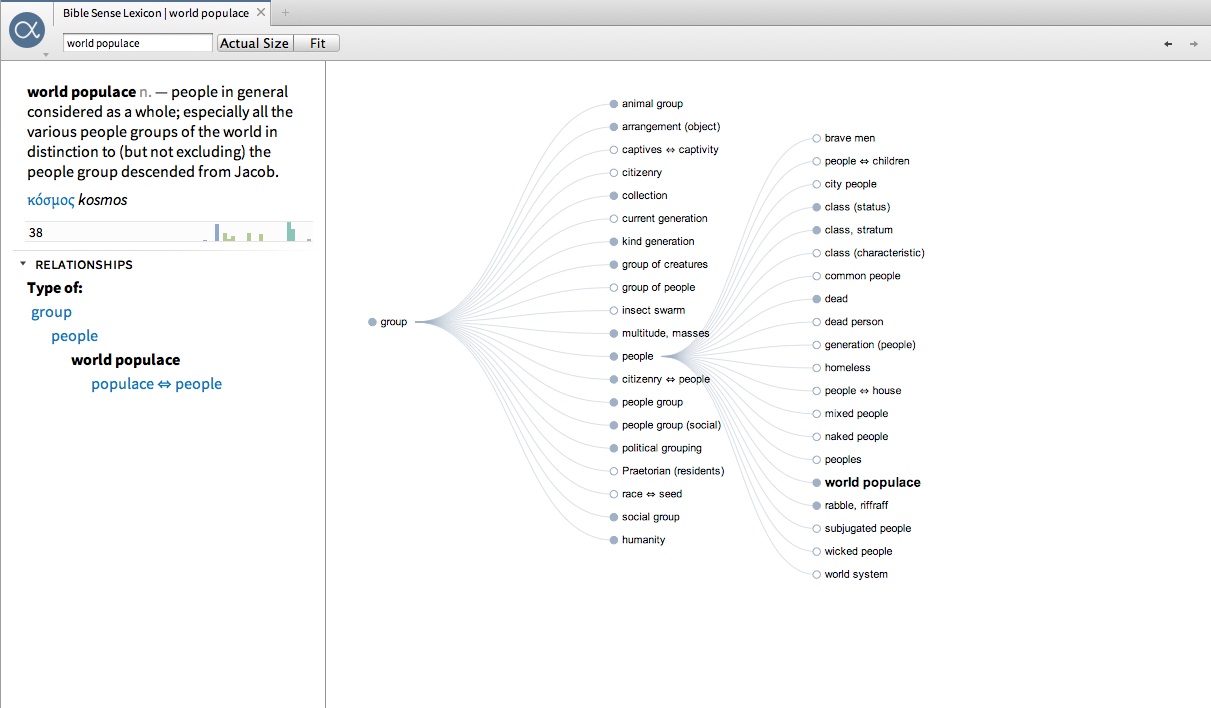
The BSL at the moment works just with nouns. There are several ways to access it. By right-clicking on kosmos (inflected as κόσμον) in John 3:16, the menu shows me that the “sense” is “world populace.” From there I can go directly to the BSL entry for this word, which gives its meaning (as determined by the team at Logos) in context. Here’s what the entry looks like (open in new tab or window to see larger):

BSL

The “sense” of kosmos is “world populace,” which is further defined at upper left: “people in general considered as a whole….” The number and bars underneath that show how that specific sense (not word) is distributed across books of the Bible. Mousing over it, one notes that “world populace” for kosmos occurs 22 times in John. The little bar graph is good for quick-reference, but it’s pretty small, and you can’t really click from it to any other information directly.

Proctor uses the image of “orchard with trees bearing branches” to describe the BSL. In this case, if you click on “group” in blue font (a “branch”), you are moved back to the “orchard” of “entity,” and its “tree” of “abstraction.” It is under entity | abstraction that the “branch” of group | people | world populace fits (to use Proctor’s analogy). As you move through various levels of the BSL in this way, the forward and back arrows at top right in the image above help you find your place.

In the branch system in the middle of the image, hovering over any word shows a pop-up with further information. Clicking on a filled-in blue circle expands the branch at that point.

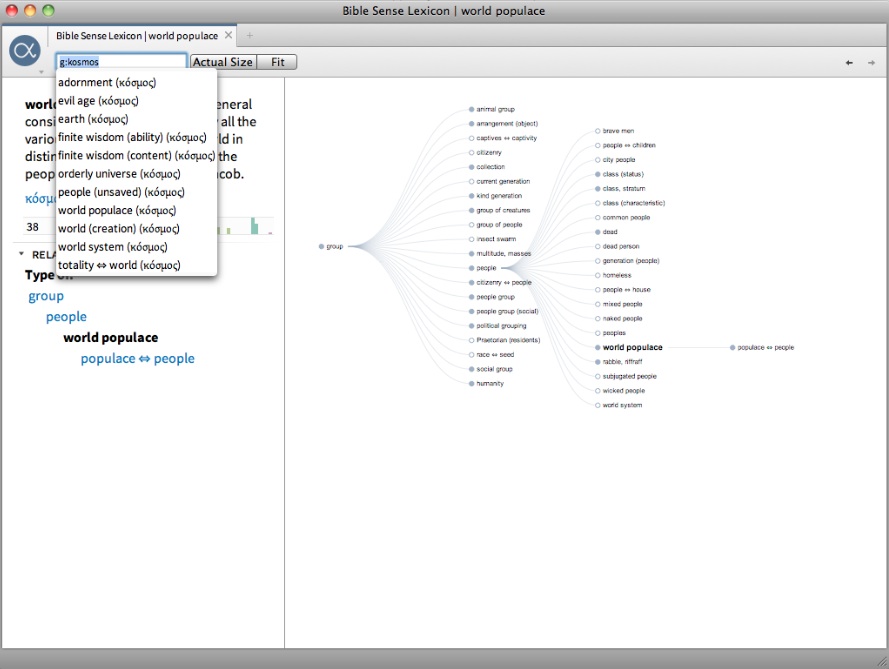
One other way to use the Bible Sense Lexicon (which is properly called a “data set” in Logos) is to open it from the “Tools” menu in Logos. Doing that allows the user to look up any word, regardless of what passage may already be open. Typing in “g:kosmos” (“g” for “Greek”) shows the following 11 senses (as determined by Logos) in a drop-down menu:
BSL_2

One could more fully explore kosmos by going through each of the senses, one-by-one.

There’s more to the BSL than what I’ve highlighted here. Watch the video at this page (and read the rest of the page’s text) for a quick but substantive overview from Logos. There is a detailed and really helpful Logos wiki page on the BSL, too.

The Bible Sense Lexicon is comparable in some ways to Louw & Nida’s Greek-English Lexicon of the New Testament Based on Semantic Domains. Context determines meaning of words, and the BSL works from that premise. There is right now no easy way to find a list of passages that use a word in the given sense you are looking at, as noted here. This and the fact that the BSL only has nouns for now are areas that need improvement. Louw & Nida, by contrast (also available in Logos), covers other parts of speech.

The Bible Sense Lexicon is available in the Gold package and up (or by using a crossgrade option).

Exegetical Summaries

Exegetical SummariesThis is a great commentary set for careful study of words, phrases, and verses. The Logos product page has this description: “The 24-volume Exegetical Summaries Series asks important exegetical and interpretive questions—phrase-by-phrase—and summarizes and organizes the content from every major Bible commentary and dozens of lexicons.”

A difficult phrase from Romans 1:17, for example, receives this treatment in the commentary (pdf), with lexical and exegetical options laid out. The pdf doesn’t show it, but in Logos the abbreviations and verses references are hyperlinked.

For sermon prep or research papers, the Exegetical Summaries Series could be a good starting point.

UBS Handbooks

UBS OTThese handbooks (OT and NT) are geared specifically toward translators, though any serious Bible student will appreciate them. The handbooks often discuss the decisions that various translations made for a given Hebrew or Greek word. A note on “Bethlehem Ephrathah” in Micah 5:2, for example, reads as follows:

Ephrathah is a term added perhaps to distinguish David’s Bethlehem from other towns or villages bearing the same name. Probably Ephrathah is a name for the district in which Bethlehem was located. It comes from the name of Ephrath, one of the clans which made up the tribe of Judah (Ruth 1:2). David’s family were members of this clan (1 Sam 17:12). It is probably best to translate Bethlehem Ephrathah as the name of the town. If this seems too long for a name in some languages, then it is all right to translate as “Bethlehem in the region (or district) of Ephrathah” (see NEB).

Whether one knows biblical languages or not, the level of detail in these verse-by-verse handbooks helps the user to more fully understand what is going on in the biblical text at any juncture.

Concluding Thoughts

My personal experience with Logos 5 (which was also true of Logos 4) is that it handles and operates more smoothly on a PC than on a Mac. More often than I’ve liked, I’ve found myself waiting for the spinning rainbow pinwheel after entering a search query or scrolling down through a resource. The speed issue is not really present on a PC, though. Having fewer tabs open on a Mac makes for fluid operation, but Logos on PC is the way to go for complex, involved operations with multiple resources open at once.

One strength Logos currently has over any other Bible software is how it syncs across computers and devices. Everything I do and save in my PC version of Logos will be right as I left it when I open it up on a Mac. Its cloud capabilities are tops.

I’ve reviewed individual resources in Logos, as well. You can find many of those by going through Words on the Word, if you are so inclined. One of Logos’s strengths is in the massive resource library it makes available. Much as I love the printed book, the convenience of accessing multiple biblical texts and commentaries from just about anywhere feels like nothing short of a 21st century luxury.

Thanks to Logos for the gratis review copy of Gold, given me with the sole expectation that I review it honestly here on my blog. Kudos are due again to MP Seminars, whose “What’s New” manual helped me more quickly apprehend the Bible Sense Lexicon.

My five-year-old son reviews: Can You Count to a Googol?

can you count to a googol

“Can you count to a googol?”

“I can’t. I think it might take a hundred days to count to a googol. You think so, daddy?”

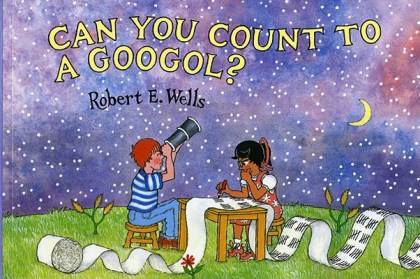
Thus inquired my 5-year-old son as we sat down to read Can You Count to a Googol? by Robert E. Wells.

As the book worked its way through various numbers leading up to googol, it asked, “What would YOU do with ONE BILLION dollars?” My son said, “Spend it for something that is one billion dollars… but one billion dollars is a lot!”

Here’s his review of the book, in his words:

This book tells you everything about a googol. A googol is a number: a really, really, really, really big number. It is 1 with a hundred zeros after it. And how about we write it to show you what it looks like?

10000000000000000000000000000000000000000000000000000000000000000000000000000000000000000000000000000

In one picture, 10 monkeys are balancing 100 bananas, and some bananas are balancing each other! And there’s a girl clapping, and a boy raising his hands, and a wagon with a basket in it. The picture is trying to show us how many 100 is.

In another picture, there’s a big thing: there’s 100 eagles carrying two people and two monkeys. And 100 penguins–each have 10 ice creams.

There’s nothing that’s googol, not even all of the people in the whole universe. Stars aren’t googol. Asteroids aren’t googol, too.

This book might be good for 5-year-olds and up. So a little bit the best for 4-year-olds. And a LOT best for 5-year-olds.

[Dad’s editorial note: When the page appeared on which a monkey and some children were writing out a googol on a board, my 5-year-old stopped and counted every 0–there really were 100.]

Thanks to Albert Whitman & Company for the copy of the book to review. Its product page is here; at Amazon here.

Read Your Bible: But How? (Lectio Divina)

Open Bible by Petr Kratochvil

“Read your Bible.” But how?

I’ve benefitted from reading large portions of Scripture–whole narratives, books, and multiple chapters–in one sitting. I’ve also benefitted immensely from slowing down and meditatively just reading a few verses at a time. Lectio Divina is a way of reading Scripture that encourages that. It’s reading, as many have said, for transformation and not just information.

Lectio Divina means “holy reading” or “divine reading.” The idea is to deliberately reflect in God’s presence on God’s words, inviting God to echo his words in us today. The most classic formulation of this ancient Benedictine practice is the four-part: lectio (read), meditatio (meditate), oratio (pray), and contemplatio (contemplate).

I’ve also seen a slightly adjusted form, which I’ve used in groups and individually.  It goes like this:

    1. Read: What does the passage say?
    2. Pray: What is God saying to me through this passage?  (short phrase or single word)
    3. Listen: How is God calling me to respond to what he’s saying?
    4. Respond: What will I commit to God to do in response?

Lectio works best with smaller passages–a few verses from the Psalms or Proverbs… perhaps some words of Jesus or a Pauline prayer. Colossians 3:15-17 is a good place to start, if you’re new to the practice:

Let the peace of Christ rule in your hearts, since as members of one body you were called to peace. And be thankful. Let the word of Christ dwell in you richly as you teach and admonish one another with all wisdom, and as you sing psalms, hymns and spiritual songs with gratitude in your hearts to God. And whatever you do, whether in word or deed, do it all in the name of the Lord Jesus, giving thanks to God the Father through him.

In a group setting, readers (four different ones) can read the passage out loud (slowly) before each of the four movements. Individually, one could just read and re-read the passage before each of the four movements.

I’ve also found benefit in doing the fourth “respond” movement creatively: maybe I respond not just seated through prayer, but perhaps there is a response through song or drawing or movement that I can offer.

There are other approaches to Lectio; it’s certainly not meant to be formulaic. But whether I do it in 5 minutes or 30 minutes, with a group or by myself, I find that I am always impressed with how much God’s Word/words still can speak today–if I quiet myself enough to listen.

Greek Isaiah in a Year, Week 20=Isaiah 26

This week in Greek Isaiah in a Year covers Isaiah 26.

Here is the schedule and text for Monday through Friday, using again the text from R.R. Ottley’s Book of Isaiah According to the Septuagint. Ottley is also here in Logos (reviewed here) and here as a free, downloadable pdf in the public domain. The full reading plan for our group is here (pdf).

Monday, April 15Isa 26:1-4

Ὠιδή

26 Τῇ ἡμέρᾳ ἐκείνῃ ᾄσονται τὸ ᾆσμα τοῦτο ἐπὶ γῆς Ἰούδα, λέγοντες Ἰδοὺ πόλις ὀχυρά, καὶ σωτήριον ἡμῖν θήσει τεῖχος καὶ περίτειχος. ἀνοίξατε πύλας, εἰσελθάτω λαὸς φυλάσσων δικαιοσύνην καὶ φυλάσσων ἀλήθειαν, ἀντιλαμβανόμενος ἀληθείας καὶ φυλάσσων εἰρήνην. ὅτι ἐπι σοὶ ἤλπισαν, Κύριε, ἕως τοῦ αἰῶνος, ὁ θεὸς ὁ μέγας ὁ αἰώνιος,

Tuesday, April 16Isa 26:5-8

ὃς ταπεινώσας κατήγαγες τοὺς ἐνοικοῦντας ἐν ὑψηλοῖς· πόλεις ὀχυρὰς καταβαλεῖς, καὶ κατάξεις αὐτὰς ἕως τοῦ ἐδάφους, καὶ πατήσουσιν αὐτοὺς πρᾳέων καὶ ταπεινῶν. ὁδὸς εὐσεβῶν εὐθεῖα ἐγένετο, καὶ παρεσκευασμένη ἡ ὁδὸς τῶν εὐσεβῶν. ἡ γὰρ ὁδὸς Κυρίου κρίσις· ἠλπίσαμεν ἐπὶ τῷ ὀνόματί σου καὶ ἐπὶ τῇ μνείᾳ

Wednesday, April 17Isa 26:9-12

ᾗ ἐπιθυμεῖ ἡ ψυχὴ ἡμῶν. (Ὠιδή.) ἐκ νυκτὸς ὀρθρίζει τὸ πνεῦμά μου πρὸς σέ, ὁ θεός, διότι φῶς τὰ προστάγματά σου ἐπὶ τῆς γῆς. δικαιοσύνην μάθετε, οἱ ἐνοικοῦντες ἐπὶ τῆς γῆς. 10 πέπαυται γὰρ ὁ ἀσεβής· οὐ μὴ μάθῃ δικαιοσύνην ἐπὶ τῆς γῆς, ἀλήθειαν οὐ μὴ ποιήσῃ· ἀρθήτω ὁ ἀσεβής, ἵνα μὴ ἴδῃ τὴν δόξαν Κυρίου. 11 Κύριε, ὑψηλός σου ὁ βραχίων καὶ οὐκ ᾔδεισαν, γνόντες δὲ αἰσχυνθήσονται· ζῆλος λήμψεται λαὸν ἀπαίδευτον, καὶ νῦν πῦρ τοὺς ὑπεναντίους ἔδεται. 12 Κύριε ὁ θεὸς ἡμῶν, εἰρήνην δὸς ἡμῖν, πάντα γὰρ ἀπέδωκας ἡμῖν.

Thursday, April 18Isa 26:13-17

13 Κύριε ὁ θεὸς ἡμῶν, κτῆσαι ἡμᾶς· Κύριε, ἐκτὸς σοῦ ἄλλον οὐκ οἴδαμεν, τὸ ὄνομά σου ὀνομάζομεν. 14 οἱ δὲ νεκροὶ ζωὴν οὐ μὴ ἴδωσιν, οὐδὲ ἰατροὶ οὐ μὴ ἀναστήσουσιν· διὰ τοῦτο ἐπήγαγες καὶ ἀπώλεσας καὶ ἦρας πᾶν ἄρσεν αὐτῶν. 15 πρόσθες αὐτοῖς κακά, Κύριε, πρόσθες κακὰ πᾶσιν τοῖς ἐνδόξοις τῆς γῆς. 16 Κύριε, ἐν θλίψει ἐμνήσθην σου, ἐν θλίψει μικρᾷ ἡ παιδία σου ἡμῖν. 17 καὶ ὡς ἡ ὠδίνουσα ἐγγίζει τοῦ τεκεῖν, καὶ ἐπὶ τῇ ὠδῖνι αὐτῆς ἐκέκραξεν, οὕτως ἐγενήθημεν τῷ ἀγαπητῷ σου.

Friday, April 19: Isa 26:18-21

18 διὰ τὸν φόβον σου, Κύριε, ἐν γαστρὶ ἐλάβομεν καὶ ὠδινήσαμεν καὶ ἐτέκομεν· πνεῦμα σωτηρίας σου ἐποιήσαμεν ἐπὶ τῆς γῆς, ἀλλὰ πεσοῦνται οἱ ἑνοικοῦντες ἐπὶ τῆς γῆς. 19 ἀναστήσονται γὰρ οἱ νεκροί, καὶ ἐγερθήσονται οἱ ἐν τοῖς μνημείοις, καὶ εὐφρανθήσονται οἱ ἐν τῇ γῇ· ἡ γὰρ δρόσος ἡ παρὰ σοῦ ἴαμα αὐτοῖς ἐστιν, ἡ δὲ γῆ τῶν ἀσεβῶν πεσεῖται. 20 Βάδιζε, ὁ λαός μου, εἴσελθε εἰς τὰ ταμιεῖά σου, ἀπόκλεισον τὴν θύραν σου, ἀποκρύβηθι μικρὸν ὅσον ὅσον, ἕως ἄν παρέλθῃ ἡ ὀργὴ Κυρίου. 21 ἰδοὺ γὰρ Κύριος ἀπὸ τοῦ ἁγίου ἐπάγει τὴν ὀργὴν ἐπὶ τοὺς ἐνοικοῦντας ἐπὶ τῆς γῆς· καὶ ἀνακαλύψει ἡ γῆ τὸ <αἷμα> αὐτῆς, καὶ οὐ κατακαλύψει ἡ γῆ τοὺς ἀνῃρημένους.

See here for more resources and links to texts for Greek Isaiah.

And here are the Week 20 readings above, in pdf form.

Gary Burge’s Jesus and the Jewish Festivals, reviewed

Jesus and the Jewish Festivals

In college I thought my friend Chad was really cool (he was) for climbing on top of college buildings late at night and shouting the Shema at the top of his lungs… until he was corralled by Public Safety.

Sh’ma Yisrael: Adonai Eloheinu, Adonai echad!

I learned my first Hebrew in Gary Burge’s Christian Thought class my senior year in college. He had us reciting the Shema (Deut. 6:4-5) in no time. We’d stand and say it out loud at the beginning of class: Sh’ma Yisrael: Adonai Eloheinu, Adonai echad! (Hear, Israel: the Lord our God, the Lord is one!)

I was never quite as bold as Chad with my recitation of the Shema, but it’s stayed with me these past 11 years since taking Dr. Burge’s class.

Burge’s writing in Jesus and the Jewish Festivals is just as good as his teaching in the classroom. Burge, a Professor of New Testament at Wheaton College and Graduate School, focuses especially on the Gospel of John as he looks at Jesus and the Sabbath (ch. 2), the Passover (ch. 3), Tabernacles (ch. 4), Hannukah (ch. 5) and Jesus’ last Passover (ch. 6). Chapter 1 explores “the festivals of Judaism” more generally, while the final chapter (7) looks at what early Christians did with these Jewish festivals.

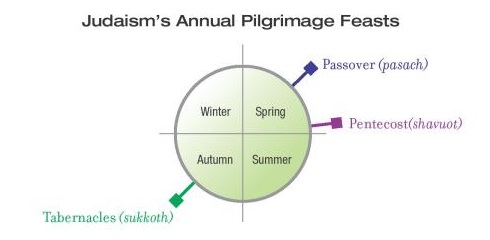
As Burge puts it, Judaism had three “great pilgrimage festivals”:

Burge_Pilgrimage Feasts

These three festivals

were based not only on the agricultural rhythms of the year, but also they served to tell the story of Israel’s salvation. Israel was rescued from Egypt (Passover, Pesach), Israel met God at Mount Sinai (Pentecost, Shavuot), and then Israel wandered in the wilderness (Tabernacles, Sukkoth). (122)

The chapters cover the original Jewish context of the festivals, Jesus’ relation to each, and then what faith looks like through the lens of that festival–both for Jews then and (especially) for Christians now.

As with other books in the Ancient Context, Ancient Faith series, Jesus and the Jewish Festivals is printed on glossy paper and full of high-quality, color illustrations. It’s like a guide book in that regard. I don’t know whether it was Burge or an editor or both, but the photographs and charts throughout the book are expertly placed and reinforce the text at just about every turn. For example, this image appears in conjunction with Burge’s description of the Passover:

Burge_Passover

As Burge recounts John 6 and the feeding of the 5,000, he notes that “Passover themes were swirling around almost every aspect of the story” (60). Further, Jesus “is the manna from God’s treasury for which Israel has been waiting. He had been sent by God as manna descended in the wilderness” (63). Then, there is always application to people of faith today: “Therefore celebrating Passover is not only knowing about what happened yesterday–though this is important–it is also about knowing the God who desires to feed us now” (65). I have always appreciated this way of approaching biblical studies with a doxological posture.

Another thing I appreciated about Jesus and the Jewish Festivals is the ease with which Burge uncovers layers of meaning in the Gospels, showing how Jesus related to the major themes of Jewish festivals. I found my own gratitude for Jesus’ sacrifice, for example, greatly enhanced by the author’s description of Jesus’ last Passover. As Burge puts it: “If we understand these festivals and their symbolism, then suddenly we understand the more profound things about Jesus and his work” (31, italics original). The color illustrations make Burge’s explanations even more vivid.

My critiques of the book are few and minor. At times there is what seems to be just a wee bit of speculation on the part of the author as he explores symbolism in John. For example, he says, “But I am convinced that Jesus wanted to die during the Festival of Passover because of the profound meaning it would convey with regard to his sacrifice” (102). Burge doesn’t further elaborate, and this seems a difficult (though not impossible) claim to support.

Jesus and the Jewish Festivals would be aided by a Scripture and subject index at the back of the book. I also found myself wanting more explanation of the Jewish calendar. Page 26 has a nice figure that shows all the months of the calendar of Judaism (together with various festivals noted), but a little more about its construction would have even further undergirded Burge’s tour of the festivals.

I really enjoyed reading Jesus and the Jewish Festivals. Not only did I find my knowledge and understanding of the Jewish festivals refreshed and expanded; I also grew in my appreciation of Jesus and his work due to the connections Burge made. This seems to have been an intention of this book, and in this regard, it is quite successful. Anyone who wants to better grasp Jesus’ words and work in the Gospels, whether pastor or parishioner, scholar or student, would do well to work her or his way through Burge’s short volume.

Thanks to Zondervan for the review copy. Jesus and the Jewish Festivals is on Amazon here. Its product page is at Zondervan’s site here.