
In August I lived a rare day alone, away from home, with no commitments. I realized: Time to begin my Russian literature era.
I can’t say exactly what produced the epiphany. But I set my face toward St. Petersburg and resolved to tackle Brothers Karamazov and War and Peace.
Both are famously long, though, and what if I didn’t like Dostoevsky or Tolstoy? I can’t just not finish a book. (Narrator: He can.) I chose the more modest but still celebrated Resurrection, Tolstoy’s final novel. A trifling 500 pages.
I hated it.
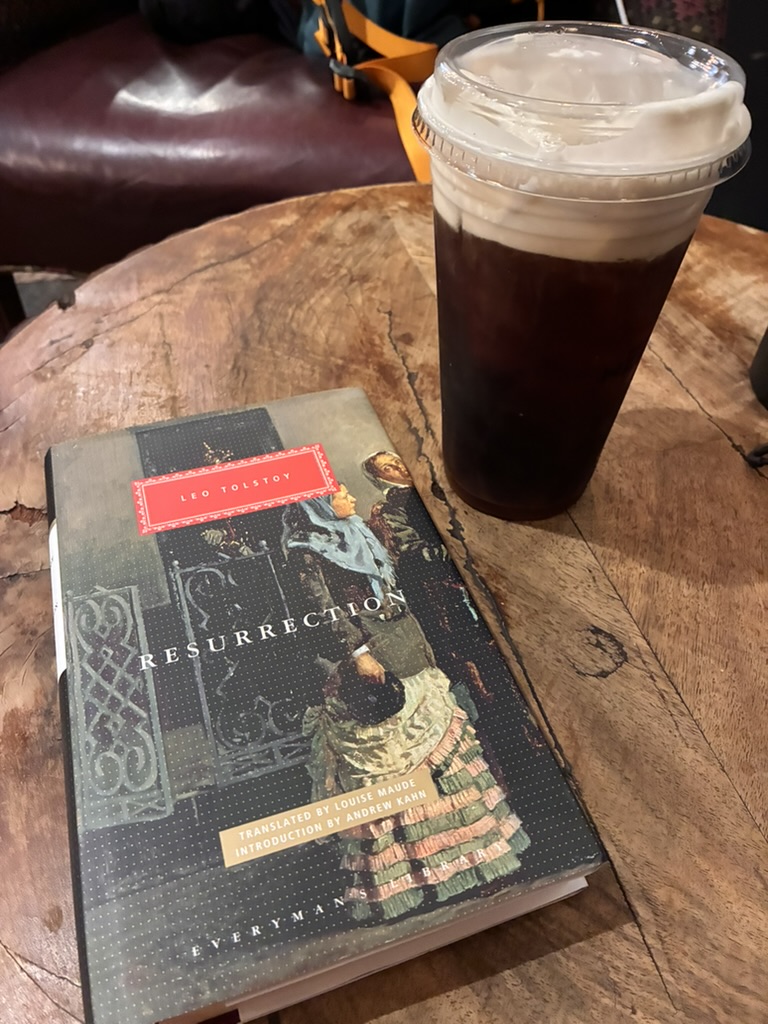
Tolstoy came so close to piercing insight into the human condition, even had the bones of a compelling narrative and some clever turns of phrase, but Resurrection screamed We are men. Why bother with introspection?
Resurrection reads like Nickelback sounds. It has the emotional range of a potato. Was Tolstoy writing autobiographically when he described main character Nekhlyudov?
The intellectual powers of the man – his numerator – were great; but his opinion of himself – his denominator – was immeasurably greater, and had far outgrown his intellectual powers.
Nekhlyudov’s feeble attempt at reparations for “seducing” a teen (he raped her; Tolstoy’s own description bears this out) are pietistic, self-aggrandizing, and reveal both main character and author to be churlish chuckleheads.
Early on in this monumental contribution to rape culture, Tolstoy submits a competitive entry into the #menwritingwomen sweepstakes:
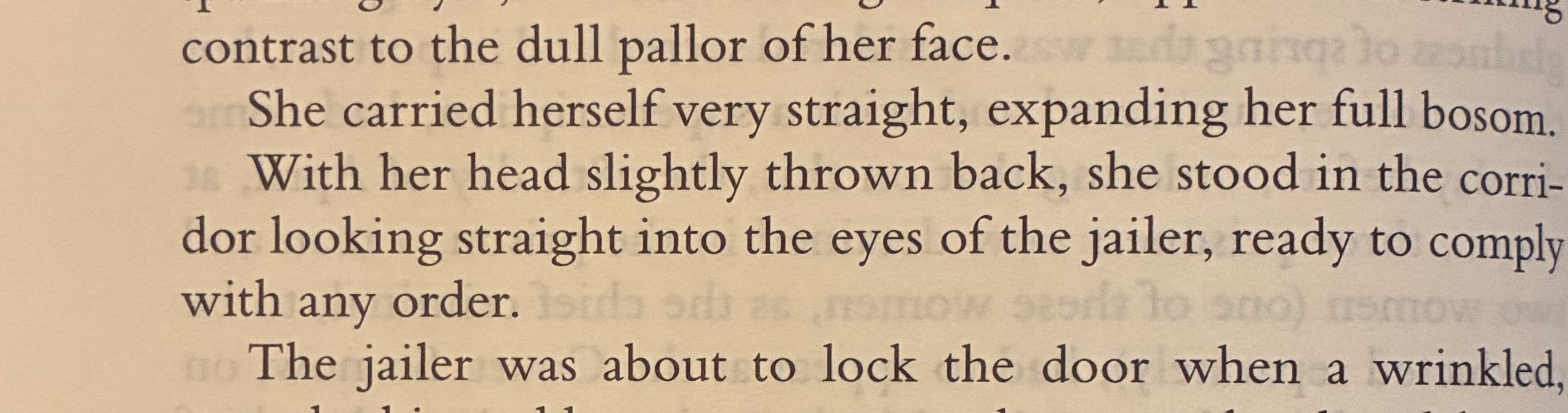
She carried herself very straight, expanding her full bosom.
With her head slightly thrown back, she stood in the corridor looking straight into the eyes of the jailer, ready to comply with any order.
I don’t have a Ph.D. in Literary Studies, but I think this may be the rhetorical device of 🤮.
At this point, rather than using the book to level the sideboard in our slanted dining room, I turned to the Introduction. There I learned that Tolstoy married an 18-year-old when he was 34.
18. 34.
And he had known her (GROOMED her?) since her childhood. Why is that not the first detail mentioned alongside Tolstoy’s name?
I soldiered on, but my slog through 500 pages of swampy drivel—that his wife Sophia probably had to type up for him—led me to abandon my erstwhile goal of reading War and Peace. I considered hate-reading the epic, but for what? Do svidaniya, Tolstoy.
On to Dostoevsky. Let’s start small. I read two novellas bound together: The Double and The Gambler.
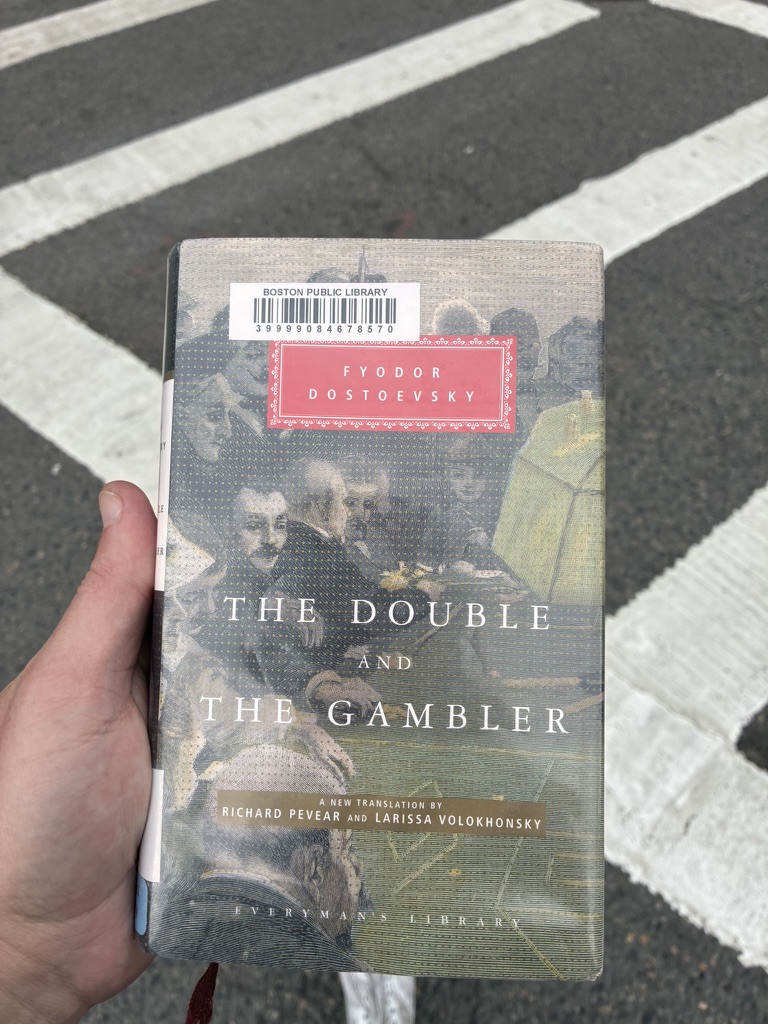
The writing is clearer, his insights into humanity deeper, and his stories—despite or perhaps because of some painful flaws in the characters—are compelling. Still not the breathtaking reading experience I had hoped for, given 200 years of hype. Bookmark Dostoevsky—I’ll tackle Brothers K later.
Next up was Vladimir Sorokin’s Blue Lard. It was not good. Withdraw that ish from publication and check the man’s hard drive?
The next Russian writer I turned to was delightful—Andrey Platonov, The Foundation Pit. Anthropologically astute and syntactically inventive. Much closer to what I was looking for when I started Tolstoy and Dostoevsky. (N.B.: I read Russian women too! Currently: Alexandra Popoff. Next: Svetlana Alexievich.)
Then one balmy September day at my local library, looking for New York Review of Books Classics volumes, I spotted this beauty, a photo of which a friend had sent me years ago:
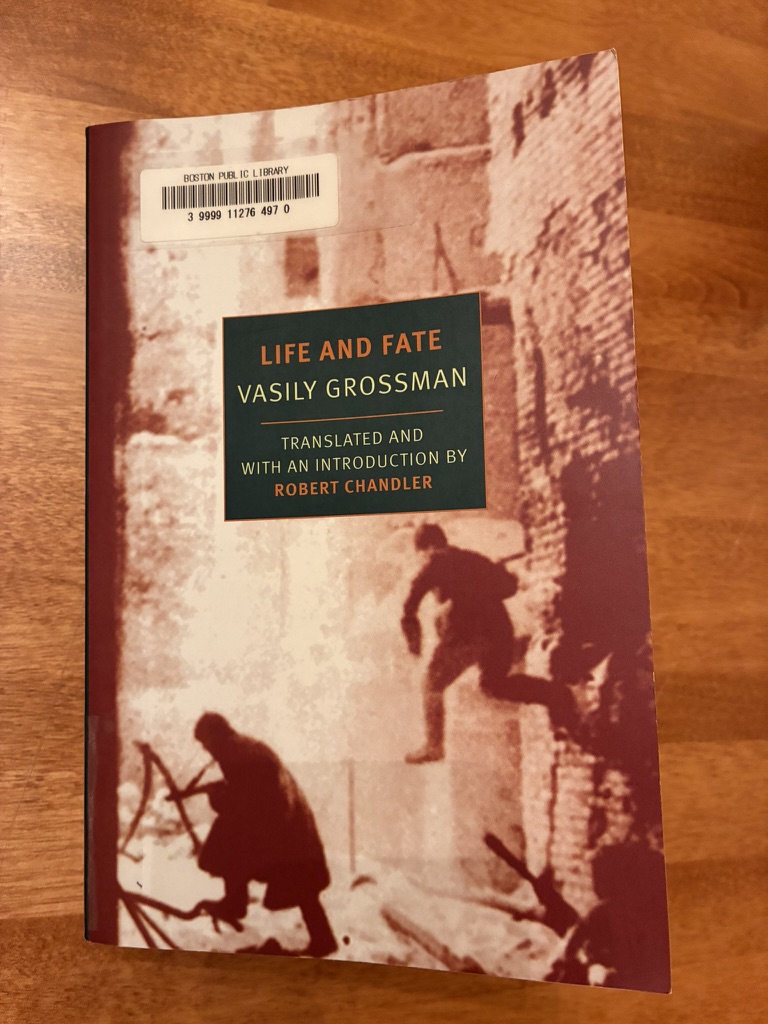
Life and Fate, by Vasily Grossman. I checked it out together with Charles’s Dickens’s Our Mutual Friend, knowing I would only read one of those lengthy novels. Eeny, meeny, miny, moe… I choose Grossman.
I determined to complete the novel by Christmas; I finished it last week.
Nearly 900 pages, Life and Fate is (by far) the best book I’ve ever read.
I’ll tell you why in the next post, hoping to reroute would-be readers of Tolstoy along the way.


