I enjoyed presenting and discussing the HOPE framework with a group at the Medford Public Library last night!
HOPE stands for Healthy Outcomes from Positive Experiences. While Adverse Childhood Experiences (ACEs) correlate with poor mental health in adulthood, Positive Childhood Experiences (PCEs) correlate with good mental health in adulthood.1
And PCEs may serve a protective function: even in the presence of ACEs, they correlate with better mental health outcomes.
These are the four building blocks of the HOPE framework, all PCEs we want to promote:
As much as I love presenting this good news, I was even more encouraged to hear how folks in the group were already bringing these building blocks to life in their day-to-day.
I noted last night and note again now: ACEs are not necessarily determinative of any outcome. Correlation is not causation blah blah blah, but more important, we don’t want to be fatalistic about folks’ future… even while we look with great compassion and trauma-sensitivity on their past. ↩︎
A steady companion on my fall and winter long runs was Bedeker, a rock band from Southern California with a stellar lineup, including my friend and former bandmate Eric Exley.
Exley remains one of my favorite musicians of all time, and his Bedeker project is one of the most polished and complete offerings I’ve heard from him. (With the exception of any music he and I have collaborated on, OF COURSE.)
The personnel:
Self-produced, the band was fortunate enough to enlist a couple of legends along the way: Darrell Thorp (Beck, Deep Sea Diver, Foo Fighters) mixed the album, and mastering was handled by Joe LaPorta (David Bowie, Leon Bridges, Vampire Weekend) at Sterling Sound.
Jayson Belt (vocals/guitar) cut his teeth with the Red West (Atlantic Records) before branching out on a solo career. Adam Ferry (drums) was a founding member of Plankeye, and was part of the OC Supertones, Fielding, and Two Guns. Rounding out the ensemble are Eric Churchill (bass), Eric Exley (guitar) and Steve Judy (keys).
On first listen, I texted Exley about one song I really liked (All of Our Fathers). He told me he had written the lyrics. I told him my other favorite was Colleagues, which he said happened to be the other song he wrote lyrics for. Old souls know.
A sampling of Colleagues, which is one of four songs close to or more than six minutes long (as good songs should be):
Per my last email, please find attached Notes from our meeting Comments in red I can’t quite recall when we started to drift From lovers, to neighbors to workers on a shift Will we begin to turn into
Colleagues on conference calls Meetings on protocol Talking about the weather Waiting forever For any other voice to break through
I can’t tell if the song is about an actual ex-romantic relationship (obviously?) or about institutional betrayal (over-reading here?), but it connects.
Throughout the album, the alternate tunings, shimmering arpeggiated guitars, and microdosing1 of distortion are perfectly complemented by the impeccable drumming (how long did it take to record them?!?), driving bass lines, smooth vocals, and keyboards always just where they need to be.
I’m grateful to have gotten a copy of this before it released. It seriously propelled me through some long, cold miles. Easily one of my favorite albums of 2025.
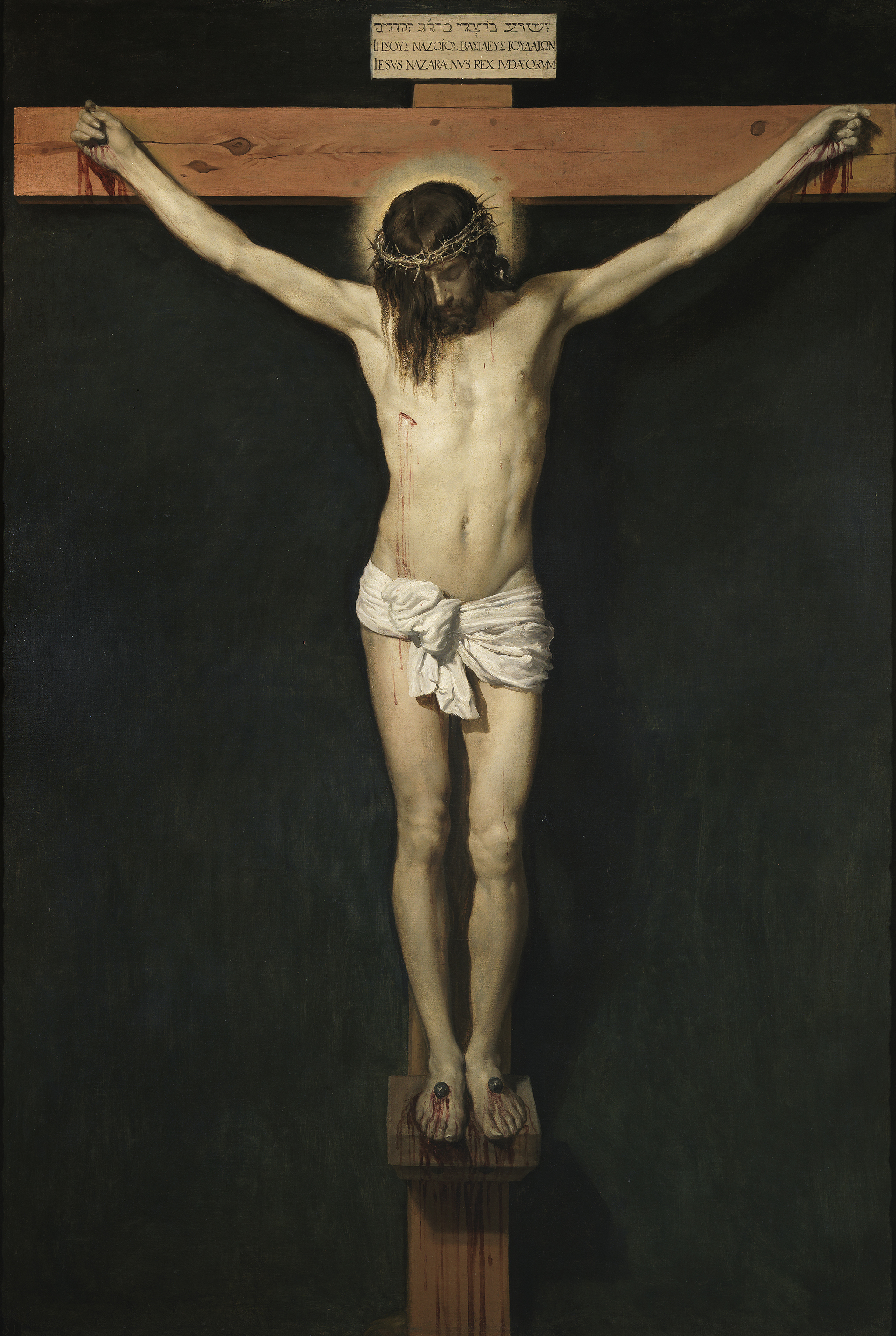
I preached on: “My God, My God, why have you forsaken me?” Recording above (with an awesome congregation of saints), transcript below.
Jesus was betrayed
Who betrayed Jesus?
Judas comes to mind.
Judas would move from a loving disciple and a safe person, to a treacherous informant. Judas would not protect Jesus but would turn him over. Judas betrayed Jesus.
Who betrayed Jesus?
Peter betrayed him, too.
Peter was even part of an inner circle of Peter, James, and John. Peter had VIP access to miracles and teachings. If anyone should defend Jesus, if anyone should show up for him, it’s Peter.
Yet when Jesus predicts his own death and resurrection, Peter rebukes him! Even before Holy Week Peter starts to deny Jesus: “Far be it from you, Lord!,” he says. “This shall never happen to you” (Matt. 16:22). That’s a betrayal of Jesus and his mission.
Peter’s betrayal of Jesus would go even deeper, when he denied Jesus—publicly and loudly—three more times during Holy Week.
More: when Jesus gets to the Garden of Gethsamene, he pleads with his disciples, “My soul is overwhelmed with sorrow to the point of death. Stay here and keep watch” (Mark 14:34). He just wanted his disciples to stay awake with him, to show some solidarity.
He was “overwhelmed with sorrow to the point of death”—that’s the language of the traumatized, even before Jesus was arrested.
Jesus finds his crew sleeping. “Could you not keep watch for one hour?” (Matt. 26:40) he says. Betrayed by loved ones, yet again!
Surely Jesus’s family would stick with him.
Very early in Jesus’s adult ministry. Jesus appoints the 12, pulls them together, and then (Mark 3:21): “When his family heard about this, they went to take charge of him, for they said, ‘He is out of his mind.’”
His family—whom he relied on for safety and support and nurture for 30+ years—tried to seize him. And they called him crazy!
I get we might say, “Well, family is crazy.” But his family’s “intervention” was also a betrayal. They want to sideline Jesus, clip his wings, undermine his God-given mission.
Jesus Christ was betrayed at just about every turn—by one of his 12, by one of his 3, even by family.
That’s just at the personal level.
There’s still more to Who betrayed Jesus?
Jesus also experienced “institutional betrayal.”
I only learned that phrase recently: institutional betrayal. But as soon as I heard it I thought—oh, I know what that is!
There were institutions that were supposed to provide for and protect Jesus but didn’t, in the end.
Like: the temple. Like: the religious leadership, the chief priests and the elders and the Bible scholars of his day that he amazed at age 12 when he taught them.
Jesus was as observant and as close to God as you could get, and yet time and time again, he found himself betrayed by the religious institutions that were supposed to treat him with dignity. Many religious leaders handed him over, and parts of his religious community shouted “Crucify!”
And then, Jesus found himself betrayed by the political institutions of his day. The Roman Empire had the power to actually do something. Jesus deserved a fair trial. He deserved an advocate in Pontius Pilate, and instead he got, I wash my hands of him.
Jesus betrayed again, by a person, Pilate, and with the full weight of the institution of the Roman empire behind him.
The researcher Jennifer Freyd saysinstitutional betrayal is a “fail[ure of institutions] to intervene,” on behalf of people who depend on those institutions.
Institutional betrayal is when ones appointed to protect and to serve instead neglect and betray.
And it’s so much worse when all these people—Judas, Peter, Jesus’s family—and these institutions—the Temple, Rome… they all have provided Jesus with support… until they withdraw it. They all loved him and nurtured him and respected his rights… until they betrayed those rights. They were all so trusted and trustworthy… until they weren’t.
So when Jesus cries out from the cross, “My God, My God, why have you forsaken me?” behind those words is the weight and pain and trauma of a lifetime of betrayals.
And now, even you, O LORD, are forsaking me?Et tu, Yahweh?
The personal betrayal was bad enough.
The institutional betrayal put Jesus up on this cross.
And now, Jesus asks, with the whole world listening: is there divine betrayal, too?
What happened to “I and the Father are one?” What happened to, “This is my Son, whom I love; with him I am well pleased”???
Whatever we make of the theology of it, Jesus’s prayer is a powerful portrayal of how a deeply traumatized personfeels:
Abandoned.
Disoriented.
Fragmented.
Fractured.
Alienated.
A stranger to the world. A stranger to yourself.
“My God, My God, why have you forsaken me?”
You have been betrayed
Maybe, on some level, you can relate to this Jesus who knew so much betrayal. Maybe you have held in your body the overwhelming pain that betrayal trauma causes.
Like Jesus, do you know what it feels like to be betrayed by a friend or a family member? Have you been working with colleagues for a common cause, and you thought you were together, only to have them undermine what you had all agreed to?
Like Jesus, do you know what it feels like to be betrayed and exploited by the institutions that were supposed to be there for you? Have you brought your deep pain to the institution we call Church, only to get hurt even more? Have you been betrayed by a religious leader or political leader, when you turned to them for safety, and instead they tried to devour you?
And like Jesus, after all this betrayal you’ve felt, have you prayed—or wanted to pray—“My God, my God, why have you forsaken me?” Have you wondered if God—whom you trusted—had betrayed you?
However we wrestle with the theology of Jesus’s prayer, we know this: Jesus said it. Jesus prayed that prayer for all to hear: “My God, My God, why have you forsaken me?”
So Jesus knows that prayer when he hears it from you.
Jesus knows what you feel like, when you’ve been betrayed: by people, by institutions, when you wonder if you’ve been betrayed by God.
When you ask Jesus to get you out of this “Godforsaken mess,” Jesus remembers the cross.
Resurrection, already on Good Friday
After Jesus prays, “My God, My God, why have you forsaken me?” he cries out again, he dies, and then…
“Behold! The curtain of the temple was torn in two from top to bottom. The earth shook, the rocks split and the tombs broke open. The bodies of many holy people who had died were raised to life.” (Matt. 27:51-52).
“Raised to life”!
Jesus just died. We are just seconds away from betrayal trauma and torture overwhelming his faculties to the point of death, and we hear:
“The bodies of many holy people who had died were raised to life.”
Something with resurrection happened, not just Sunday at the tomb, but Friday at the cross. Something must have happened with that prayer—“My God, My God, why have you forsaken me?” Because already Jesus’s death was bringing wholeness, power, and resurrection.
The temple curtain ripped. The temple—that institution that had betrayed Jesus. A dividing curtain is ripped in half.
The ground shook and rocks split in two—this is a new, powerful world that only Jesus can bring. “Even the rocks will cry out” with life.
Those tombs—that included saints of old who were betrayed unto death—those tombs opened up. The dead were raised to life.
Being betrayed and feeling Godforsaken… violates even your ability to make meaning of life. Yet Jesus’s betrayal, Jesus’s trauma at the cross, Jesus’s cry of Godforsakenness… gives new meaning to all pain and suffering.
The cross means you have new life, right now, even when you are betrayed and feel like you’re dying. Even on your Good Friday, the cross means resurrection.
Bodies are already raised to life, even while Jesus is still on the cross.
The cross means that even when people and institutions betray you, God will, in fact, not betray you, because the dead—even the dead are raised! God will not forsake you. God will not leave you for dead.
God has brought you back to life, and God will bring you back to life as many times as you need,
so you can breathe again,
so you can walk again,
so you can live again,
so you can trust again.
There is resurrection even on Good Friday. “My God, My God, why have you forsaken me?”
And the answer comes—even before Easter! The answer to Jesus’s fourth word on the cross comes on Friday:
Here I am, tearing the curtain in two!
Here I am, shaking the earth. Here I am, splitting the rocks!
Here I am breaking open the tombs. Here I am, raising the dead to life!
Here I am, raising your bodies, your bodies that have known so much hurt and have held so much injury and have borne so much pain.
Here I am, raising your bodies that have been betrayed again and again and again.
Here I am raising your body to new life, right now, even on Good Friday.
Around this time every year, I join my voice to the chorus of dressed-up church children everywhere, asking: “Wait, why do we call it GOOD Friday?”
My stock answer goes something like this: Even though Jesus died on Friday, he came back to life on Sunday, defeating sin and death, and giving the promise of new, resurrection life to all people! His death on Friday became good, even though it didn’t look so good at first.
And there are implications for us: what looks not-so-good at first, even suffering and death, can turn into good, especially when God is at work. In Genesis 50:20 Joseph says to his brothers: “You intended to harm me, but God intended it for good to accomplish what is now being done, the saving of many lives.” God brought wholeness out of harm, good out of evil. Joseph, without meaning to, foreshadows what would happen with Jesus on Easter weekend.
I still stand by this understanding of “Good” Friday. But I also worry about a human tendency to underestimate suffering, or to fetishize it. Theologian Christopher B. Hays says, “Indeed, there are times when suffering is simply evil, and must be resisted rather than embraced. The suggestion that other people’s suffering is redemptive is particularly dangerous; it risks making the observer complicit in the evil.”
Job’s friends wanted to find “other people’s suffering” (Job’s) redemptive, somehow. They wanted to see a cause-and-effect answer to why Job lost everything. Eliphaz, Bildad, and Zophar went to great lengths and used many, many words to try to find greater meaning in Job’s suffering.
They must have really wanted to turn his Terrible, Horrible, No Good, Very Bad (Fri)Day into Easter Sunday.
Maybe their pontifications weren’t for Job’s sake, but to ease their own theological cognitive dissonance.
After hearing one too many times that “Everything happens for a reason,” Job said: “I have heard many things like these before. What miserable comforters are you all!” (Job 16:2)
Thou shalt neither minimize nor romanticize my suffering, in other words.
We can be like Job’s friends: downplaying suffering because we can’t handle how awful it is, or over-glorifying it because of the power of post-traumatic growth. Both are strong human impulses—in which I’m sure I’ve participated.
But even with Good Friday soon to give way to Resurrection Sunday, the horrors of crucifixion invite—even demand—that we take seriously pain and suffering and loss and trauma and torture and abuse.
The church traditions of The Stripping of the Altar and not-celebrating Eucharist on Good Friday are embodied ways of locating ourselves at the foot of the cross, as if in real time.
If you’ve ever sat in a quiet and dark sanctuary with an eerily bare altar in Holy Week, you might have felt trapped in time. Or dislodged from your day-to-day travels through the space-time continuum. You might have even been able to inhabit a space where—even if only for a moment—you couldn’t conceive how it was going to all turn out.
I think we need such quiet moments. They help us avoid a triumphalism that skips past Good Friday and goes right to Easter, that skips death and goes right to life. So we linger at the cross a little longer, before we run to the tomb. We actually observe Good Friday.
But this Holy Week I’m wondering about going a step further. Even within Good Friday, what if I slowed down some aspects of the day itself?
I am asking:
How might my participation in Good Friday change if I tarried a little longer with Jesus’s suffering, and with the suffering of the world borne on his shoulders?
What would a Good Friday be like that didn’t hurry to ascribe greater cosmic significance to Jesus’s suffering, but just took it in, looking the crucified, tortured, abused Lord in the eyes?
What if I tried to neither minimize Christ’s suffering (because I can’t handle the atrocity of it) nor romanticize Christ’s suffering (because I need suffering be redeemed)?
What if, this Good Friday, I put the meaning-making on hold and tried to just sit quietly with Jesus in his agony?
Dietrich Bonhoeffer was hanged in the Nazi concentration camp of Flossenbürg on April 9, 1945, just two weeks before the U.S. military came to liberate it.
John W. de Gruchy describes the lead-up to that day in his Editor’s Introduction to Letters and Papers from Prison (Dietrich Bonhoeffer Works, volume 8):
On October 8 [of 1944], Bonhoeffer was taken to the cellar of the Gestapo prison on Prinz-Albrecht-Straße, where he stayed until February 7, 1945. From then on, all correspondence came to an end, and contact between Bonhoeffer and the family and [Eberhard] Bethge was broken. From there Bonhoeffer was taken first to Buchenwald and then, via the village of Schönberg in Bavaria, to the Flossenbürg concentration camp, where he arrived on April 8. That evening he was tried by a hastily rigged court and condemned to death. Early the next morning Bonhoeffer was executed along with several other coconspirators.
He was hanged April 9. His family would not learn about it for several months.
The July before he had written to his trusted friend (and later biographer) Eberhard Bethge, one day after the failed assassination attempt on Hitler’s life. He wrote:
How should one become arrogant over successes or shaken by one’s failures when one shares in God’s suffering in the life of this world? You understand what I mean even when I put it so briefly. I am grateful that I have been allowed this insight, and I know that it is only on the path that I have finally taken that I was able to learn this. So I am thinking gratefully and with peace of mind about past as well as present things. …
May God lead us kindly through these times, but above all, may God lead us to himself.
His final recorded words before his hanging are especially appropriate in these days that lead up to Easter Sunday:
This is the end–for me the beginning of life.
Over the years on April 9 I’ve re-posted this a few times. It began as part of the “Tuesdays in Lent with Bonhoeffer” I wrote when I first got into Bonhoeffer. See other gathered Bonhoeffer posts here.
Our church learned that an occasional attendee had repeatedly sexually abused a minor some decades ago.1 The one who shared was courageous to do so. The abuser had not confessed or taken accountability for his heinous behaviors.
Believing the report of the abuse, church leadership prayed and worked through a plan for talking to the offending man about what we had learned. Then we tried to find him—without success.
One Sunday, after a long absence from our church, he showed up at the public park where we were worshiping… mid-service. It was the first time I’d seen Ned Notrealname since learning of the abuse he perpetrated. I had to finish the sermon before I could talk to him.
I preached with one eye on the congregation and another eye on Ned. His presence that day was a surprise, but we were prepared for this moment.
After the service I approached him. With two church elders standing next to me, I told him we knew that he had sexually abused a minor, and that what he did is not okay. I called him to repentance.
Ned not only admitted it, he doubled down and said he was proud of what he did.
He was exulting in how he sexually abused a dearly loved child of God.
I’ve seen some things in 20+ years of ministry, but this was the most evil I’ve ever been face to face with.
Given Ned’s response, I told him he could not be present at our church. We were clear with him that what he did was awful. Here he was not only unrepentant, not only defending himself, but he was calling evil good. It was the actual worst.
Already agitated and combative, Ned looked poised to aggress. A member of the church offered to call the police. The police came and (kind of?) helped de-escalate the situation. Ned eventually left.
I planned to share with the congregation what happened. As a special announcement at the beginning of the next week’s service, I would be clear and open about what we’d learned about Ned and about how he responded to us. I wanted our people to know what was actually going on. And to know what kind of a church we would be when confronted with abuse in our midst.
That following Sunday, outside in the park again, I was in the middle of my planned, “You may have seen us talking last week after the service with Ned….” Before even my third sentence, a couple folks in the congregation motioned toward me to look behind them. There was Ned.
He was keeping a distance from us, and I hoped it would stay that way, but I was amplified through a speaker and he could have heard me. I cut the announcement short. I would have to put all this in a letter to the congregation.
So I did. Later that day I wrote:
Beloved Church,
This is a fuller version of the announcement I started to give in church today but chose to cut short because the person in question showed up, and I didn’t want another combative response from him. Note that the below has potentially triggering content around abuse. In the end I hope you receive it as a message of assurance.
If you were at the park in person last week, after church you saw or maybe even experienced a difficult interaction with Ned, who has a long on-and-off history with our church. I want you all to know what happened:
We heard a report earlier this year that Ned had repeatedly sexually abused a minor some decades ago. …
According to the plan we elders had set out, I was confronting Ned over his acts of abuse. I told him: we know about it, what he did is not okay, and I invited him to repentance. Instead he doubled down and said he was proud of what he did.
Any anger you may have seen toward Ned on Sunday wasn’t anger toward him for his mental condition, nor even for his being difficult to talk to, both in the past and again Sunday. Rather, we were angry at him for the acts of abuse he committed, and that he was now exulting in how he hurt a dearly loved child of God.
We do not see Ned as a safe person, and our church will be a physically safe environment, as best as we can make it. Consequently I told Ned that he may not be present at our church. If he does try to come around again, please do not engage him.
As I’ve spent time listening and praying through this, I want to share with you my heart for our church:
We will be a church that stands up for those who have been abused or harassed or hurt.
We will be a church that does our best to come alongside the wounded for their healing, and that calls oppressors to repentance.
We will be a church that–with God’s help–does the right thing in uncomfortable situations, especially where children and other vulnerable people are involved.
This difficult topic can open up past trauma for folks, especially if you have abuse in your past. If that is the case for you, please know that I am here and willing to listen. ___ is here and willing to listen, as well. Please don’t hesitate to reach out.
Empowered by the Holy Spirit, let’s keep on being a loving church and a place of safety, of hope, and of healing.
Yours in the strong and healing name of Jesus,
Pastor Abram
Let me repeat what I said in another post, where I expressed skepticism at any time a church leader is the hero (or just protagonist) in their own story:
Not that the above makes me heroic—trauma sensitivity is a bare minimum expectation we should have of the Church!
The above collective actions—and the supportive response of the congregation—encouraged me in my hope for the church. The interaction with Ned lit a fire under an already existing vision I had for the church. I wanted to be clear in communicating that vision again.
Even so, I believe that such a response is the bare minimum expectationany of us should have for how the Church responds to disclosures of sexual abuse.
And it grieves me that it seems to take so much to get churches to stop enabling abuse. Let alone respond to it in a way that centers the ones harmed and prioritizes everyone’s safety.
We ALL have work to do here.
May any of us with influence in the Church be found faithful before God in how we respond to abusers and care for the abused in our midst.
GRACE (Godly Response to Abuse in the Christian Environment)
I don’t say “occasional” or “some decades ago” to minimize the situation but to describe it. Abuse is abuse and people disclose (or don’t!) on their own timeline, and long-delayed disclosure of abuse is common. This is a documented and knowable phenomenon, one that I don’t understand why churches and pastors continue to overlook or deny. The church should be lovingly responsive to those who disclose abuse, no matter what—bare minimum, no excuses. I conclude the post this way too. ↩︎
Last night I drove through back roads of snowy, slushy Boston to pick up my teenage son from an event. I listened to an album that I first listened to when I was about his age: Drowning with Land in Sight, by The 77s. “Film at 11” followed by “Mezzo” is still one of my favorite one-two punches of any guitar-driven album.
Awash in nostalgia and Mike Roe’s near seamless transitions between blistering bluesy solos and shoegazy arpeggios, I realized what a remarkable thing it is for an album from my youth to still hold up. To have grown up to an album, and to have that album grow up with me, revealing yet more sonic and lyrical depth as the years pass? A rare and beautiful thing.
Or maybe it’s not rare. I started wondering: how well did I pick ‘em, back in the day? I purchased Roadside Monument’s 1994 Beside This Brief Hexagonal, my first Christian “alternative rock” cassette, right when it came out. And, man, does that album hold up. It made the perfect companion on a moonlit walk on the harbor as recently as a year ago. So much of my voracious listening to music since discovering that album has been a quest to find more like it. Beside This Brief Hexagonal still stands alone.
On the other hand, my Columbia House purchase of the 1991 Beauty and the Beast soundtrack for 1/8 of a cent? Money well spent, I guess, but I couldn’t make it through more than 20 seconds of “Gaston” just now. Not to mention, uh, the entire premise and abusive relationship dynamicsof the story.
So here I begin a new eleventy-billion-part series I’m calling “Will It Float? Revisiting the Albums of My Youth.” I listen anew to an album from the 1980s or 1990s and ask: does it hold up for me today? Musically, lyrically, culturally.
The title idea comes from David Letterman’s “Will It Float?” segment, which if it were under analysis here, would not float for me today because—brilliant theme music and concept notwithstanding—it objectifies women. Come on, David Letterman…. Anyway, take this palate cleanser from SNL’s Jack Handey, from around the same time:
Here are some of the albums I’m thinking about, in no particular order, with a snippet about each.
Medals, Russ Taff (1985): just listened this week. Still so good.
Self-Titled, Russ Taff (1987): the nostalgia is strong with this one. “I Still Believe” might rate as a cheesy platitude of a song if I didn’t know Russ Taff’s amazing backstory. I love this album.
Lead Me On, Amy Grant (1988): where to start? It’s been rated best CCM album of all time for many reasons. Her powerful vocals and the just perfect guitars are two reasons.
I’ll Lead You Home, Michael W. Smith (1995): I might justifiably be ribbed for liking this one. And some of it may not hold up. But the trilogy in it still gives me goose bumps.
Watermelon, Driver Eight (1996): this one goes with Roadside Monument for me.
Stay of Execution, Deliverance (1992): yeah, I’ve been listening to metal for a long time.
The Power of Failing, Mineral (1997): core memory: driving to my full-time telemarketing job between high school and college, emoting to this album.
Rattle & Hum, U2 (1988): I saw this movie when it came out in theaters, with my dad. I wasn’t even double-digits-years old yet.
Achtung Baby, U2 (1991): This 1/8 cent purchase from Columbia House single-handedly redeemed the 1/8 cent I lost on Beauty and the Beast.
This Beautiful Mess, Sixpence None the Richer (1995): this album deserves more than a snippet. I purchased a Boss DD-5 Digital Delay pedal because of it.
S/T, Sixpence None the Richer (1997): the story behind this album makes it even better. And Sixpence is touring again. This album almost didn’t see the light of day.
OK Computer, Radiohead (1997): one of my claims to fame: I found this CD at a record store as a pre-release version about a week before it came out. That’s right, I heard one of the best albums ever before anybody else…
The Bends, Radiohead (1996): …and I was already a Radiohead fan, so OK Computer was so much more astounding, so much sweeter. I listened to The Bends in its entirety recently, too. It floats.
E.P., Bloomsday (1997): I loved this album from day one, but it has aged so well that I love it even more now.
Free Flying Soul, The Choir (1996): that opening three-chord combo to Salamander? Still so clean. So very clean.
S/T, Jars of Clay (1995): biggest influence on my guitar playing. Haven’t listened in a while! How will it land with me in 2025?
The Day the Colors Died, Bloomsday (1996): then and now, I didn’t like it as much as their E.P. that would follow, but this was and is such an awesome band. This full-length is excellent.
Slow Dark Train, Vigilantes of Love (1997): what’s this, a Christian songwriter singing about depression? Yes, please, and thank you.
Delusions of Grandeur, Fleming & John (1995): this album is still wonderful but will not float, I’m afraid. More anon.
Forever Your Girl, Paula Abdul (1988): haha, not even kidding. I can still sing at least the choruses to these songs.
i 2 (EYE), Michael W. Smith (1988): so nostalgic it hurts. This is inextricably linked with my Christian middle school experience in Wheaton, IL.
Back to Back, P.I.D. (Preachas in Disguise) (1998): I’m name dropping this just to see if anyone’s heard of them. My brother has.
RRRock It Right, Michael Peace (1987): I just listened to the opening track, “Heart Trouble.” Still kind of a banger (I think).
S/T, King’s X (1992): King’s X will never not be awesome.
I Scream Sunday, One Bad Pig (1991): yeah, I might be able to let this one go. I’ll give it another try.
Jesus Freak, DC Talk (1995): I’ll be skipping this one. Too fraught.
So You Wanna Go Back to Egypt?, Keith Green (1980): “bamanna bread?!?” I will make that joke every chance I get.
“And what more shall I say? I do not have time to tell about”1 Randy Stonehill, Mylon LeFevre, Margaret Becker, PFR (Pray for Rain), Poor Old Lu, Fold Zandura, D-Boy Rodriguez, Boyz II Men (though I DO have time to sing them, often), Steve Camp, Precious Death, Holy Soldier, etc.
What important albums from the 80s and 90s am I missing? Which ones should I revisit first?
From Hebrews 11, which I spent a lot of time studying my senior year in high school—it floats! I love that book.↩︎
This is my third post in a row pointing to other places I’m writing. I haven’t abandoned Words on the Word, but I am excited to have started a new blog that had been an idea for months: Healing Pastors.
What it’s about:
Healing Pastors helps pastors bring greater trauma sensitivity to their congregations, while also helping pastors process and heal from their own trauma.
Substack has paid subscriptions available. Anyone can become a “paid subscriber” to Healing Pastors, which as of now offers the sole benefit of supporting the work. Everyone can read everything there for free.
And more will follow. (Now writing: Where are the Psalms of Bathsheba?)
Find it all here, and feel free to subscribe to have future posts delivered to your probably already overcrowded inbox, but I hope that Healing Pastors emails/posts will be life-giving to you!
I’ve been focusing especially on spiritual abuse in church settings—recognition, prevention, response, and healing. I’ve been privileged to join my friend Mindelynn in launching her Website and Substack, The Broken Road. There we seek to offer resources and connection to folks who have experienced harm, especially in church and religious settings.
Substack is new to me. It’s both a blog and an email newsletter subscription. The subscribe link gives you paid options, but for now everyone can access everything free.
Each post has something Mindelynn or I have written, followed by a collection of resources we are fans of. Here are the posts where I’ve written the lead article:
First, my review of Stollar’s book, The Kingdom of Children: A Liberation Theology, is published in print and online at TheChristian Century.
Second, the Century was kind enough to interview me about the review and child liberation theology more generally. That is linked here and below at the thumbnail:
Third, I interact with Stollar and Jesus and Rabbi Irving Greenberg and others in Currents in Theology and Mission. Best part: a cameo paragraph by my pre-teen daughter. The article is free to access, linked here. It’s called: “A Burning Child in the Midst: The Promise and Power of R.L. Stollar’s Child Liberation Theology.”
What I’m most excited about in all of the above is my daughter’s writing. What I’m next-most excited about is my realization that Jesus’s healing of a child in Mark 9 directly and literally satisfies Rabbi Greenberg’s halting claim: “No statement, theological or otherwise, should be made that would not be credible in the presence of burning children.” I want to expand on this later.
I have come to see the Kingdom of God anew through the lens of childhood and actual children, which has influenced how I see and interact with the world and people around me. The above three pieces will give you just a taste.
















 Words on the Word