“He Is Risen!” Delirious Tale or New Reality?

There was a family with twin boys. They looked exactly alike, but everything else about them was different. One liked rap; the other listened to country music. One always thought it was too warm in the house; the other thought it was too cold. And so on. One brother was a hope-filled optimist, while the other was a convinced pessimist.

Their dad wanted to try an experiment with them. So one Christmas Eve, while the kids were asleep, he filled the room of his pessimist son with every single item on his wish list: toys, games, books, gadgets.

The room of his optimist son, on the other hand, he filled with horse manure.

Christmas morning came, and the Dad went to the pessimist’s room. That son was surrounded with his new presents, weeping.

“Why are you crying?” said the dad.

The son replied, “My friends will get jealous of me; I’ll have to share; there’s all these instructions to read before I can play with the toys; the batteries are going to run out…”, etc.

Down the hall the father saw his other son–the optimist–singing and dancing around in the pile of manure.

“Why are you so happy?” the dad asked.

The optimistic son said, “Because… there’s got to be a pony in here somewhere!”


Setting the Stage: The Tomb


The disciples on Easter morning lived in a pessimists’ world, and for good reason, as we’ll see. They had no hope of finding a pony among the manure. Their hope, they thought, lay dead in the ground, sealed behind a heavy stone.

Luke tells us some female disciples went to the tomb, “taking the spices that they had prepared.” They were going to embalm the body. Not in the hopes of resuscitating it—nobody thought that was possible. But because they wanted to show honor to the dead.

But they get there, and—no body. Luke 24:4 says “they were perplexed about this.”

And wouldn’t you be, too?

This is not necessarily a sign of hope to them, that the body is gone. It’s cause for despair.

Their beloved teacher, their companion and friend, the one who was going to redeem them from their constrained existence under Roman rule—this one was dead. What’s worse, they can’t mourn him properly now. They’re losing access to their chance at closure. This is not shaping up to be a good death.

Fact is, it’s not shaping up to be a death at all.

The angels ask, “Why do you look for the living among the dead?” (“The living,” they must’ve responded?)

“He is not here, but has risen!”

Spinning as their heads were, verse 8 represents at least a minor miracle: “They remembered his words.” It all clicks. Jesus is alive! They believe it.

And they run and tell the disciples and a bunch of others.


Unbelieving Disciples: Idle Tale


And don’t you just love how true-to-life the Gospels are?

The eleven apostles and the others—a formidable group of men and women from whom the Church would spring–they didn’t believe their own friends! Verse 11 says, “But these words seemed to them an idle tale, and they did not believe them.”

“An idle tale.” Silliness. The ravings of madmen, or, in this case, madwomen. The narrator Luke was a doctor, his word for “idle tale” is rooted in medical language–it has to do with delirium. The women were assumed to be delirious.


Bad start for the Church

This is a bad start for the church–resurrection is THE core belief of Christianity. The apostle Paul would soon write, “If Christ has not been raised [from the dead], our preaching is useless and so is your faith.” (1 Cor 15:14)

Useless. The faith of these disciples the women are preaching to is useless. If the story had stopped here, you and I would not even be gathered for worship this morning! If you don’t have the resurrection of Jesus, you don’t stand a fighting chance against the world!

This is a real struggle of people of faith: they thought they were hearing idle tales.

They might have appreciated the narrative arc of the women’s story. They might have said, “This will make for some great literature to be studied in future English courses.” (Or, uh, Aramaic and Greek classes.) They maybe even saw the book sales potential–finally we’ve got something that can bump Homer off the best-sellers’ list!

But still, this is just a story we’re hearing, they thought. Fiction–not factual truth.


Justified, though?

One reason they didn’t believe the women is because of some bad cultural mores that discounted a woman’s witness. They weren’t seen as credible sources.

But if we can’t forgive the disciples their outdated sexism, let’s cut them some slack, for some other reasons. Before Jesus would undo death, his death had undone everything for the disciples. Every word Jesus had spoken to them? Felt like an empty promise. This coming Kingdom of God? Gone, nailed to the cross with him.

Besides that, one of these women, Mary Magdalene, had been demon-possessed. And not just sort of demon-possessed. She was severely demon-possessed. Luke told his readers earlier that she had “seven demons cast out.”

The disciples thought she was delirious, and must’ve wondered–did she now have a relapse, with Jesus dead? Is she a conduit for demons again?

Make no mistake–the disciples believed in resurrection, even before they saw Jesus. But the story of Lazarus notwithstanding, they seem to have reverted back to their default religious belief. Resurrection would happen in their mind… but at the last day. In the end times. And THIS was not yet the last day.


How we are like them

The story of the resurrection did not ring true in the disciples’ ears. To their mind there was no power to it.

There is a danger that you and I would hear the resurrection story as they did, as an idle tale. We are susceptible to the same disbelief the disciples had, when it comes to Jesus’ rising from the dead. Many today take this account as fiction.

Or worse, we might accept the truthfulness of Luke 24, but then unwittingly dismiss the resurrection story as an irrelevant tale. We may celebrate the resurrection historically, as a past event, without the realization that it still means everything for us today. We would be without true hope if we acknowledged that it happened, but then failed to live like ones who have ourselves received the gift of resurrection power, of new life.


Peter: Sprint to the Tomb


Peter fares a little better than the others. He actually takes the women’s story seriously, and so runs to the tomb, in Luke 24:12: “But Peter got up and ran to the tomb; stooping and looking in, he saw the linen cloths by themselves; then he went home, amazed at what had happened.”

He gets there and sees the tomb:
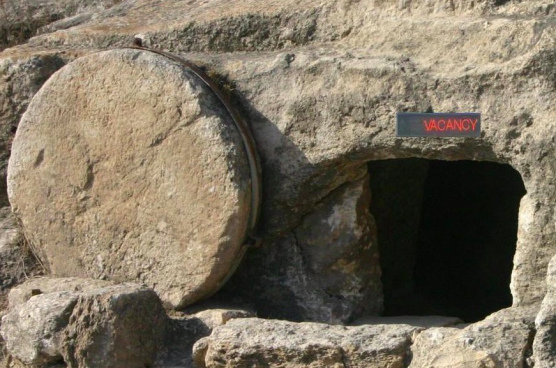
 

Tomb Vacancy


But Peter goes home. He doesn’t, oh, say, go back to the disciples and confirm the account of the women. That’s because, even though he’s amazed, he’s still not sure what everything means. His amazement does not seem to translate into full acceptance of faith. It’s more like being perplexed, bewildered. He is astounded, yes, but this going home feels like a shrug of the shoulders.

We can identify with Peter. How many times have we sprinted towards the cross, only to get there and turn around and go back home, to our old ways? How often have we run towards the empty tomb, eager to meet our risen Lord… only to walk away as if nothing ever happened?

It’s like the one in James who looks in a mirror and then goes away and forget what he looks like. Peter’s response calls to mind the seed that was sewn, and grew up fast… but then could not grow once it encountered the thorns and weeds of this life.

Living in the light of the resurrection is more marathon than sprint. Eagerness is good, yes, but so is stick-to-itiveness.


The Women


We come to Jesus much as the women came to the tomb that morning. We come to him with no hope in the world, apart from what we trust he can give us. Maybe you’re coming this morning and wondering if the resurrection really is all that relevant to what you’re going to have for lunch in a little while, or what your working day tomorrow looks like. Maybe you are having trouble connecting the glory of this morning to the mundane week that awaits you. Perhaps you are looking for somewhere trustworthy to place your belief… someone Good you can hold onto.

Mary Magdalene and the others, desperate and forlorn, manage somehow to offer a model response to the resurrection.

The male disciples–even Peter, the so-called “rock”–are Luke’s version of the TV show “What Not to Wear.” Dismissing the resurrection as an idle tale? Not the response I’m looking for, says Luke. Sprinting toward the empty tomb, only to go away shrugging your shoulders in bewilderment? Nope.

Instead, Luke traces an inspiring movement of faith by Mary Magdalene, Joanna, and Mary the mother of James.


They looked for the living, albeit among the dead

The angel asks, “Why do you look for the living among the dead?”

The women didn’t realize they were looking for the living, but they were looking for Jesus all the same! They thought they were going to find a dead Jesus, but at least they were seeking all the Jesus they had left!

Especially in those moments when Jesus seems distant, disconnected–or, worse, dead to us–approaching what we have of him may be all we can do. Still do it, Luke suggests.


They bowed in worship

In response to the angel, the women “bowed their faces to the ground” in worship. This humble posture of Doxology shows their openness to letting God reveal himself however he will reveal himself. At this point they’ve let go of the fabrication that we know better than God.


They remembered his words

From their posture of worship, Mary and the women could remember what Jesus said. Verse 8 says, “Then they remembered his words.”

Remembering is not just something you happen to do or don’t. Sure, if we don’t go grocery shopping with a good list, the pack of coffee filters will slip our mind. But this remembering the women do–it’s more than a fleeting thought that happened to come to them. They’re training their focus back to inhabit the world they had known with Jesus. They’re calling his words to mind… dwelling on them, and believing them. They remember their first love. You do that, too, Luke seems to tell us.


What the Resurrection Means


This week has brought us a steady stream of reminders that life sometimes seems like nonsense. An airport attack in Brussels. Another one in Iraq. Yet another videotaped example of institutionalized racial profiling.

It would be easy to rush to the tombs of these innocent men and women and see only bewilderment and death.

Closer to home we have our own enigmatic interactions and happenings that push the limits of our capacity to hope in God.

But because of the resurrection, where our lives once looked like this…


Egg Down


…they now look like this:


Many Eggs


Jesus’ defeat of death is real. The resurrection is far-reaching in its implications. Jesus’ rising from the dead calls us to a new way of living. Those women’s lives really started that day.

Because of Jesus’ resurrection, failure can become opportunity. Because of Jesus’ defeat of death, every ending has in it the seeds of a new beginning. Because of the presence in our lives of the resurrected Christ, where we have forgotten, we can again choose to remember. Because the stone was rolled away, our stony hearts can give way to compassion. Because Jesus did not remain among the realm of the dead, mourners can know that–if not now–then SOME DAY they will rejoice. Because of Christ’s victory over the grave, when others intend to keep us down, God can bring us back up again, rising with him.

That optimistic twin brother was right–where there’s manure, there’s got to be a pony somewhere. But not because we are optimistic people by nature. There are plenty of things to be pessimistic about, and with good reason. But the power of Christ’s resurrection opens us up to a new reality. It’s more than a new perspective on life. It’s new life altogether!

We can overcome evil with good. We can stare down death and know that it’s not the end. Even when we’re confronted with evil, we can be assured that the power of the rolled away stone is stronger than the power of the tomb. We can follow these wonderful women, and be first responders at scenes of tragedy, sharing the good news of God’s love in Christ.

If the resurrection of Jesus is real–if it transformed the world then–it is still transforming the world now. If Mary Magdalene and her friends could go from wailing tears to evangelistic zeal, there is hope for you in your despairing moments. If Jesus rose from the dead–and, friends, he did–he rises again out of the rubble of the world. Jesus even rises in our hearts, and empowers us to choose life with Him.

Alleluia! Christ is risen!
The Lord is risen indeed! Alleluia!

Alleluia! Christ is risen!
The Lord is risen indeed! Alleluia!

Practicing Solitude Anywhere, in a Matter of Seconds

The practice of solitude suffers from some misconceptions.

An old misconception of the habit, which tempts our belief from time to time, is that solitude is primarily the domain of those who live in the desert or among cloisters and in monks’ cells.

We do have some impressive models from such traditions. There was St. Anthony of Egypt, who withdrew to the desert and lived as a hermit until he died at 105 years old. Hardly a week passed where he didn’t have some visitor coming to seek his wisdom.

Or maybe the word “solitude” conjures up a more recent spiritual practitioner, someone closer to home, like Thomas Merton, who wrote from a Trappist monastery in Kentucky.

We might also conceive of solitude as a luxury available only to folks with few external commitments.

But, as with all spiritual disciplines, practicing solitude is for everybody.

I’ve been having my inner world re-arranged again this Lent by Richard Foster’s Celebration of Discipline. He knows plenty about how often misunderstood the spiritual disciplines are. So on the very first page of his book, he says, “God intends the Disciplines of the spiritual life to be for ordinary human beings: people who have jobs, who care for children, who wash dishes and mow lawns.”

Solitude is for everybody.

It’s not to be confused with loneliness.

In loneliness there is a constant wish that things would be other than they are. There is a deep, unsatisfied craving–even a sad yearning, a missing of what is not there. Loneliness includes anxiety. It feels like being forgotten or passed by. Loneliness seems more often beyond our control, whereas solitude is a choice.

Solitude and loneliness are not the same.

Neither is solitude merely time alone… any more than holy Sabbath-keeping is just lack of working.

There are plenty of ways to not work and still disregard a holy Sabbath that we consecrate to God. And there are many ways to be alone but not really alone with God. We can be alone and not even really alone with ourselves. Our first impulse when solo might be to distract ourselves with some noise or input.


Sanctified Time


Solitude is not just time alone; it’s sanctified time alone. It’s dedicated and God-focused aloneness.

The Psalmist prays to God, “My times are in your hands” (31:15). Solitude is sanctified time, willingly placed in God’s hands. It is our attention, given over to God for the purposes of God, not the purposes of the self.

Many Christians through the years have suggested one reason God doesn’t “speak” to us today is that we’re too absorbed in other noise to be attuned to God’s voice in the first place.

Solitude, then, is being by yourself, but in such a way that you are clutter-free enough to hear yourself, and to be open to the voice of God.

I share here about solitude, using the same units we use to measure time: seconds, minutes, hours, days.


Seconds


It is possible, yes, to put even the seconds of our lives into God’s hands. We can give the tick of the seconds hand to God in such a way that even something like a quarter of a minute can be sanctified for God’s work in us.

All of the spiritual disciplines have both internal and external components to them. When we think about the seconds of our days, a soul-searching question to ask is: What do I default to doing when I have a short break? What do I reach for when I’m waiting half a minute for someone to arrive at a meeting? Even when I get to the coffee shop and there are only two folks in front of me, where does my mind go? When my kid finally stops running around because he or she has to go potty, what am I doing with the short break–interrupted as it soon will be by a request for help?

All of those instances are enough time to pray, for example, the Jesus Prayer: “Lord Jesus Christ, Son of God, have mercy on me, a sinner.”

I don’t mean we have to be deliberate about every single second of the day. That would be exhausting. And it’s good to just zone out sometimes. But especially if you’re struggling with where to find opportunities for solitude, those otherwise lost moments–those scattered seconds–are the place to begin. We all have these already-existing spaces–however small they are–that we don’t have to create. We just have to see them and be ready to use them as mini-retreats.

Thinking in terms of seconds an unexpected place to start on solitude. But this spiritual practice in particular, I think, is one where quality of time is at least as important as quantity of time.

If we don’t know how to sanctify the seconds of our lives for our communion with God–however brief it may be–if we can’t do that, we’re likely struggle when we carve out longer periods of time to reflect and pray by ourselves.

I was a professional house painter for a year. I wanted to paint fast (and well) like my boss. He cut in the best lines (with no painter’s tape!), and quickly.

But, of course, in my first weeks painting, I was only fast. As a result, I had to learn how to use a razor blade to take excess oil-based paint off window panes.

My boss referred me to Walter, the best painter in the city who occasionally worked with us. Walter trained me. He said: start with quality first. Get it right before you get it fast. Speed will follow good technique.

I slowed down. I got better at painting clean lines. My boss noticed my decrease in speed—how long it took me to do a window or baseboard—but he was patient. By the end the of year, I was painting windows and baseboards with no painter’s tape, almost as fast as my boss.

Solitude is like this, too: start with quality of time spent alone, then build quantity from there. Work on your solitude mindset technique, so to speak, in the seconds of the day.

And if you already regularly practice solitude with much greater quantity than seconds, pay attention to the seconds hand. God is just as present there as he is in your hour-long devotional time.


Minutes


Then there the minutes of our lives. They add up quickly, those minutes we need to get ready for the day, to do our hair, to take a shower, to wind down before we go to sleep. We spend minutes at a time in line at the grocery store. Minutes in the car (sometimes many minutes) stuck in traffic.

Like seconds, these minutes are already-existing moments we don’t have to create–they’re either built-in or beyond our control. And they’re a great place to practice solitude–opening ourselves up, in moments of aloneness, to God.

The other day I had to make what would be a 90-minute commute for a school meeting I was hoping would have just been an email.

Before leaving, I probably spent as much time complaining to my wife about the meeting as I would later spend stuck in traffic on the highway.

And I spent way too much psychological energy trying to figure out how I could redeem the 3 hours I knew I would be in the car. Audiobooks? Phone calls? Bass-heavy, hip hop music playlists?

To my surprise, when I got into the car to head out, I felt a fairly strong sense that I should just spend that time praying. Some of that praying ended up being confession for the non-prayer-like thoughts I had about the drivers around me. But as frustrated I was at all that time in the car, through God’s mercy, I was able to receive that solitude–such as it was–as a gift.


Hours


Our lives are made up of seconds and minutes… and also of hours. This moves us into territory where we need to carve out time and space for solitude. These hours exist–we all have the same amount of them each day. But a little more effort is required.

We’ve got to anticipate our first morning commitment and set the alarm for 15 or 30 or 45 minutes before that. Or look at what time our last commitment of the day will be and schedule time with ourselves and God at night, before we go to bed.

As we learn to practice solitude in the seconds and minutes of our days, time alone with God that is measured by the half hour and hour will become especially precious.

We heard the Gospels of Jesus–a man with relational demands on his time if ever there was one!–“But Jesus often withdrew to lonely places and prayed.” Often–on a regular basis. Even while the sick and needy were trying to track him down and keep him from solitude. He withdrew–a proactive move to seek substantial alone time with God.


Days


Then, as the quality of our sanctified time in God’s hands increases, we’ll probably not be content with just seconds and minutes and even hours–we’ll start to consider whether we can spend periods of solitude that span half-days and full days.

Something like an overnight retreat or day trip to a local retreat center requires extra coordination, but it’s just as doable as planning a vacation.


As a Way of Life and Orientation of the Heart


As we weave in and out of seconds, minutes, hours, and days, the question we want to answer is: How we can live in an integrated way so that our heart’s orientation can be one of inward solitude and focus on God? Even with crowds and sounds and external demands around us each day, how can we devote our attention in a given moment to singular communion with God?

Solitude is a way of life and, overall, an orientation of the heart, whether we are alone or with others.

There is much that keeps us from practicing solitude. They are internal and external: external noise, internal noise, fear, an impulse of self-preservation, feelings of incompetence in the spiritual life, and guilt.

Especially the barrier of guilt can keep us from solitude. We may have a sense of shame or having fallen woefully short when it comes to practices like God-focused solitude. Both our past and present lack of success induce enough guilt to keep us from entering into God’s presence during important moments of our day.

But, friends, every day we have 86,400 new seconds to call God’s goodness to mind and pray. Each day affords us 1,440 more minutes to say to God, “My time is in your hands.” This time—this very second—is in your hands.

We don’t get to choose the use of all of these seconds and minutes and 24 hours. The sheer amount of inputs competing for our attention will always tempt us to pass off God-focused solitude as the purview of advanced spiritual masters. But if you miss the three-minute opportunity you just had to re-center on God, don’t beat yourself up. Just offer God the next little pocket of time you have–when you’re waiting for someone or in between commitments.

God’s promise to us through Isaiah is: “You will keep in perfect peace those whose minds are steadfast, because they trust in you.”

Let us trust in God—let us trust God with our seconds, minutes, days, hours… and with focused hearts. May we fix our minds on Jesus through moments of solitude—moments both short and long. May God meet us there, and keep us in perfect peace.

From Compulsion to Contentedness: Practicing Simplicity

Philip Yancey tells about a busy and overcommitted “spiritual seeker” who decided to check in to a monastery for a short retreat. The monk who greeted him said, “I hope your stay is a blessed one. If you need anything, let us know… and we’ll teach you how to live without it.”

To seek a posture of simplicity does not mean to eschew complexity or nuance of thought. We know those parts of life that are grey—not black and white—and that defy simplification.

But when we talk about simplicity of lifestyle, we also know what it means to overcomplicate things.

We take on too many commitments—all good ones, even, but then we can’t fulfill our responsibilities.

We lose track of where our money is going, and feel reactive rather than proactive with our finances.

We find ourselves surrounded with physical clutter at home or in our office.

We’re awash in mental and psychological clutter every time we unlock or open an electronic device.

We long for simplicity of focus, but often find our attention scattered.

We regret when our lack of simplicity prevents us from serving others. Valerie Hess, in her year-long Spiritual Disciplines Devotional, says that through simplicity “we seek to live a life that is pleasing to God, life-giving to ourselves, and has an element of availability to others.”

As many have pointed out, simplicity is both interior posture and external action.

Our inner lives and outward deeds mutually reinforce each other. Focused hearts produce focused minutes. And a simple lifestyle trains our hearts more fully on God.


Simplicity: Where?


Long before there was “Buy Nothing Day,” there was, “Use it up, wear it out, make it do or do without.”

This is good counsel when it comes to material possessions. We want to interact with our possessions, but without anxiety. We don’t want to be possessed by what we have—or don’t have. We want to trust God with whatever we have, great or small.

And this applies not just to the stuff we have, but to our time, our financial position, our attention and focus, and even to how we interact with electronic media.

These are some of the sites where we variously experience focus and peace, or distractedness and discomfort.


Compulsion vs. Contentedness


So, yes, in a sense too much complexity is the enemy of simplicity. But I also think it’s our runaway compulsions that keep us from simplicity of life, simplicity of heart.

We are, as the great hymn says, “prone to wander.” This takes the shape of wanting more, of following our compulsions to pursue what we think we want, rather than living in joy no matter the circumstances. The call to simplicity is a call to contentedness, an exhortation to steward and enjoy what we have.

The Challenge

In Celebration of a Discipline Richard Foster tells about a friend who panicked one morning when his morning newspaper wasn’t in his yard. His friend realized he had an addiction to the morning paper. So he called and cancelled his subscription—he needed to quit cold turkey. I love Richard Foster, but nearly 40 years later, this example seems quaint. I wish my interior life were as simple as warring with myself about reading a print newspaper in the morning.

If the bombardment of statistics is true, many of us North Americans today can’t even get out of bed without checking our “newspapers” on our phones (by which I mean: text messages that came in overnight, our Facebook news feeds, and other notifications, etc.).

Foster concludes with advice that is, however, timeless and timely: “Reject anything that is producing an addiction in you.”

“How do you discern an addiction?” he asks. “Very simply, you watch for undisciplined compulsions.”

And I want to add: we should watch for “undisciplined compulsions”—especially the compulsion to worry—in these areas: time, finances, possessions, media, and our overall sense of focus.

Fear and worry keep us from simplicity. We somehow think that riding out the feelings of fear that come up will accomplish something.

Jesus was wise to ask, “Who of you by worrying can add a single hour to your life?”

Of course we don’t worry to try to somehow make there be 25 hours in a day. Or do we? How many times have we rejected the simple confines of sunrise, sunset, 6 days on, 1 day off, and tried to finagle 30 hours worth of commitments into a single day?

We are committed, as followers of Jesus, to a life of trust and simplicity. We resonate with this Proverb: “Give me neither poverty nor riches, but give me only my daily bread.”

But then, even as we are consuming the day’s bread, we worry about where it will come from tomorrow. Our fears and thoughts give way to unwise compulsions as we act on our lack of trust. We give up contentedness for a shot to add a single hour to our life by fretting, by grasping for at least mental control over our circumstances. If we can’t change our circumstances, we can at least feel a little in charge by worrying about them.

So God had to tell the Israelites, through Moses: Here’s some manna for you, but no one is to keep any of it until morning… because I will provide for you again, and I want you to go out and see it tomorrow. For now, sit back, relax, and enjoy what you have.

“Seek first the kingdom of God,” Jesus said, “and his righteousness, and all these things will be added to you.”

When we seek first the creations of the Kingdom, and not the Creator-King, our mind is divided, our attentions scattered, and our hearts are anything but pure and simple before the Lord.

The Vision

We do well to pray in such moments—as literal Gospel truth—“All things come from you, O Lord.” We can recognize that anything good in this life is a gift from God.

And we continue to pray, “Of your own have we given you.”

Perhaps the best antidote to a scarcity mentality is to give back to God and others out of the abundance of what we’ve received—giving generously of our time, our energy, our financial resources, and our skills.


Practical Ways Forward


If the goal is to “Seek first the kingdom of God, and his righteousness,” rather than seeking or worrying first about “all these [other] things,” what can we do externally that will shape us internally?

1. Pare Down: Less to Worry About

In general, we can shoot to pare down, so there is less to worry about.

Something as small as clearing out your backpack or purse or wallet of accumulated receipts and other random stuff can help sharpen your focus. Are you constantly carrying more than you need? Paring it down can help us have more mental clarity with which to seek the kingdom of God.

You may need to de-clutter your room or living space or car. You may find you have good stuff you just don’t need that you can give away to others who would appreciate it. See if you can find one or two things this week to give to someone else who would find them useful and enjoyable.

You might need to de-clutter your schedule, maybe even your email inbox. (Hint: take two minutes and start here.) And consider this short prayer from an old book of daily prayers: “Lord, do not let us do more, if in doing less, we might do it better.”

Start leaving margins, rather than squeezing more things into them. Pare down.

2. Simplicity of Speech

You could also consider practicing simplicity of speech. Jesus says, in the Sermon on the Mount, “Simply let your ‘Yes’ be ‘Yes,’ and your ‘No,’ ‘No’; anything beyond this comes from the evil one.”

In other words, Jesus says, when you say you’re going to do something, just say you’re going to do it… and, insofar as you can, do it. Don’t over-promise or over-represent yourself. Folks who too often say, “Believe me,” or, “I guarantee” sound more like snake oil salesman and less like people you would trust.

3. Enjoyment and Contentedness

About a year ago my college roommate sent me Marie Kondo’s The Life-Changing Magic of Tidying Up: The Japanese Art of Decluttering and Organizing.

Parts of her approach are a little over-the-top for me, but I think it’s actually a great book with a lot to commend it.

When it comes to the things they are considering discarding or keeping, Kondo’s driving question she wants her clients and readers to ask is: “Does it spark joy?”

But maybe the apostle Paul’s ability to be content—whatever his circumstances—gives us an even more effective starting point. As we make an inventory of our clutter and distractions—physical ones and psychic ones—an even more powerful question can be, “Can I practice contentedness with this?”

Our being content is not rooted in things themselves, of course, but in a God who loves to care for and provide for his children. The Psalmist prays:

Lord, you alone are my portion and my cup;

you make my lot secure.

The boundary lines have fallen for me in pleasant places;

surely I have a delightful inheritance.

To the back of your journal or a brand new notebook, add a couple daily writing prompts, like, “Today, I am grateful for…” and, “God, today I remember you have given me….” (fill in the blanks). Gratitude and contentedness go hand in hand, so maybe another external practice to adopt is to write a thank you note.

4. Attention/Focus

And if all else fails, and you need to super-charge your quest to seek first God, so that everything else falls into place… you could build yourself one of these:


The Isolator


This is The Isolator, from 1925. Which is kind of funny, because that guy thought the 20s was a distracting decade to live in!

Or you could just put your phone on “Do Not Disturb” for a little while and go the simpler route of Dorothy Day:


Image via Weavings
Image via Weavings

5. Foster’s 10 Principles

Finally, consider Richard Foster’s “Ten Controlling Principles for the Outward Expression of Simplicity.” His emphasis is on “outward expression”—there may still be some soul-searching and interior work you’ll want to do around issues of simplicity and sufficiency, worry vs. trust, compulsion vs. contentedness.

But in the middle of working through these principles in Foster’s book, I was distracted by wondering if Field Notes Brand in Chicago had released any new pocket notebooks in the last three days. When I read on their site, “Keep on scrolling. Things you need await,” I was sufficiently embarrassed, and decided we all probably could benefit from all the practical suggestions Foster gives us.


Conclusion: Start Today


May God give us the grace and courage to see the many good things of God all around us. May we be like the apostle Paul and know contentedness whether we have much or have little. He says to the church in Philippi: “I know what it is to be in need, and I know what it is to have plenty. I have learned the secret of being content (keeping it pure… and focused) in any and every situation, whether well fed or hungry, whether living in plenty or in want.”

And then the secret to Paul’s contentment? It’s simple: “I can do all this through him who gives me strength.”

Reading the Bible in a New (Old) Way

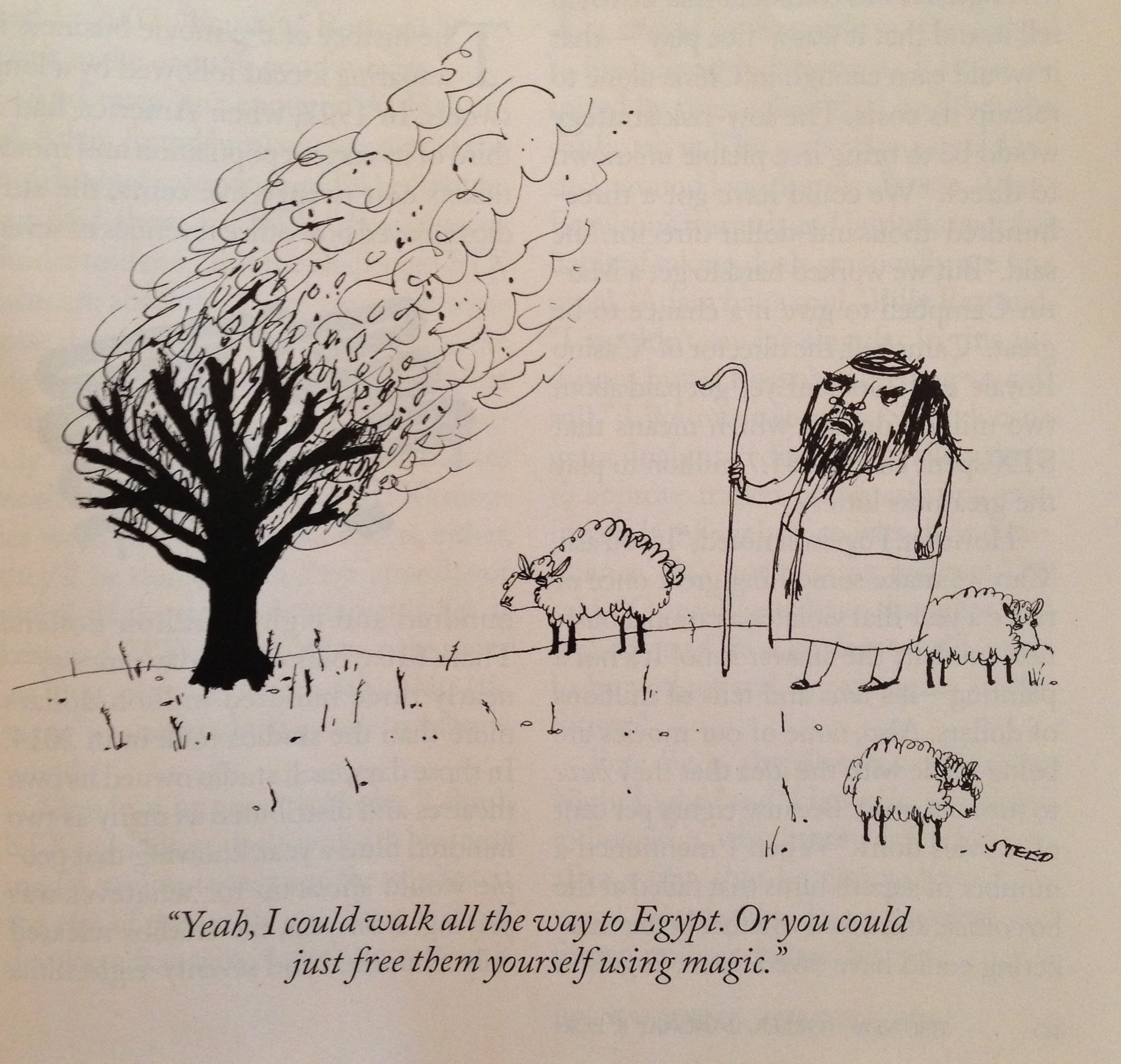
Check out this biblical scene as re-told by The New Yorker.


Moses and Miracles


The cartoonist reminds us that there are not really any quick fixes in the spiritual life.

And our best times with God are not hurried, not like a lunch order to go… but like a carefully prepared meal, where we leisurely converse and savor every bite.

Ironically (regarding this cartoon), God did free the Israelites from Egypt using a little bit of magic—or miracles, at least.

But the most salient feature of God’s delivering his people from slavery was his presence among them. He tabernacled with them, literally. God was a God seeking a people among whom he could dwell, and make his home.

The spiritual habit in focus with this post is that of meditation. Christian meditation is a way to silently open ourselves up to the working of God in us. It’s a closer sense of communion—union, even—with God.


Lectio Divina


Lectio divina is an ancient way of reading Scripture that goes back to at least the Middle Ages. It means “divine reading” or “holy reading.” It has traditionally been used by Benedictine monks, but more recently has become popular with Protestant Christians, as well. “Lectio,” as it is called, can span 20 minutes or 2 hours. Through this sort of contemplative, prayerful reading of Scripture, we open our hearts and ears to the God who speaks to us through his Word.

Saint Benedict spoke of reading the Bible with “the ears of our heart.” We can become like the disciples on the road to Emmaus, where Jesus is not just written Word, but the living Word. The idea is that Scripture and time with God would not just inform us, but form us.


Four/Five Movements


Lectio divina is not meant to be a formula. The important thing is not so much to complete the following steps as such, but to enter in to communion with God. We want to open up a space where the living God—who breathes his Holy Spirit on us—can change and shape us. This process is meant to help us do that.

One writer talks about it as “feasting on the Word,” and says you first take a bite, then chew on it, then savor its essence, and finally digest it and fully take it in to your body.

Traditionally there are four steps or movements in lectio divina—I like five, actually, since I find that starting with deliberate preparation can be helpful for focusing a wandering mind.

1. Silencio: Re-orient

Here we simply prepare ourselves for an encounter with God.

A helpful verse many use is Psalm 46:10: “Be still and know that I am God.”

This “know that God is God” is what sets Christian meditation apart from just “meditation.” We are not emptying ourselves for the sake of emptying ourselves and achieving some kind of zen state—instead, we are casting aside our distractions and preoccupations so that we can enter into fuller communion with God.

So we can begin simply by finding a comfortable place to sit—not lay, because you know how it goes when you lay down to pray. We can focus on our breathing. We can even pray something aligned with our breaths, like: “I breathe in the breath of God.” “I breathe out the worries of my heart.”

2. Lectio: Read

Having readied yourself, the first thing to do is to read a passage of Scripture, as slowly as you can. You could even use multiple translations if you find that helpful. But don’t get too hung up on logistics.

Picking a shorter passage is best. Psalms are especially good as we do this type of meditative reading, since they are already reflective prayers.

As you read you are asking, “What does the passage say?”

3. Meditatio: Reflect

Then we reflect on the passage, and give it some time to sink in. Through meditation or reflection, we let God speak to us and see what one word or phrase particularly jumps out at us. Then we meditate on that phrase for at least a couple of minutes, repeating it to ourselves over and over and asking God to come be with us and speak to us through that word.

Through meditation we ask: “What is God saying to me through this passage?”

4. Oratio: Respond

Then, having begun to read and reflect, we shape a response to the passage. You might ask God why that particular word or phrase jumps out at you, and tell God how you intend to live according to that word. In these moments of prayer, we both listen and pray our response to God. We might ask, “What do these verses call me to?” “What do you want from me, Lord?” And, “What of God do I seek more fervently now?”

5. Contemplatio: Rest

Finally, there is rest. In the end we spend more time in silence, thanking God for his Word. We simply rest in God’s presence, receiving all that he desires to give us of Himself. We surrender ourselves, too, to the will of our loving God.

We might pray things like, “Thank you God, for your mercy, revealed to me this morning. I rest in your mercy. I receive your mercy. I accept your mercy.”

After moments of contemplation, you might even wish to make for yourself some kind of reminder to keep with you—you could write or draw or paint or create a short tune to sing… however you can best capture what you’ve experienced of God, to carry with you as your day progresses.


Try it Now, If You Like


You could even try it now, if you like. Here is a short passage to use, Colossians 3:15-17:

Let the peace of Christ rule in your hearts, since as members of one body you were called to peace. And be thankful. Let the word of Christ dwell in you richly as you teach and admonish one another with all wisdom, and as you sing psalms, hymns and spiritual songs with gratitude in your hearts to God. And whatever you do, whether in word or deed, do it all in the name of the Lord Jesus, giving thanks to God the Father through him.

You begin with silent preparation—the sort of re-orientation you need to begin lectio, and then you can read that passage before each of the movements. If you want to try this right now, below is a summary of what’s above, that you could use to work through the movements with this text.

Silencio: Re-orient

Preparation

Psalm 46:10: “Be still and know that I am God.”

Moments of silence (focus on breathing, e.g.)

Lectio: Read

Read the passage.

Let the peace of Christ rule in your hearts, since as members of one body you were called to peace. And be thankful. Let the word of Christ dwell in you richly as you teach and admonish one another with all wisdom, and as you sing psalms, hymns and spiritual songs with gratitude in your hearts to God. And whatever you do, whether in word or deed, do it all in the name of the Lord Jesus, giving thanks to God the Father through him.

Prayerfully ask, “What does the passage say?”

Meditatio: Reflect

Read the passage.

Let the peace of Christ rule in your hearts, since as members of one body you were called to peace. And be thankful. Let the word of Christ dwell in you richly as you teach and admonish one another with all wisdom, and as you sing psalms, hymns and spiritual songs with gratitude in your hearts to God. And whatever you do, whether in word or deed, do it all in the name of the Lord Jesus, giving thanks to God the Father through him.

Prayerfully ask, “What is God saying to me through this passage?” (one word or short phrase)

Oratio: Respond

Read the passage.

Let the peace of Christ rule in your hearts, since as members of one body you were called to peace. And be thankful. Let the word of Christ dwell in you richly as you teach and admonish one another with all wisdom, and as you sing psalms, hymns and spiritual songs with gratitude in your hearts to God. And whatever you do, whether in word or deed, do it all in the name of the Lord Jesus, giving thanks to God the Father through him.

Listen and pray your response to God

“What do these verses call me to?” “What do you want from me, Lord?” And, “What of God do I seek more fervently now?”

Contemplatio: Rest

Read the passage.

Let the peace of Christ rule in your hearts, since as members of one body you were called to peace. And be thankful. Let the word of Christ dwell in you richly as you teach and admonish one another with all wisdom, and as you sing psalms, hymns and spiritual songs with gratitude in your hearts to God. And whatever you do, whether in word or deed, do it all in the name of the Lord Jesus, giving thanks to God the Father through him.

Rest quietly in the presence of our loving God.

Three Worthy Loci of Study, Part 3: The Table of God

Last Sunday I preached about the discipline of study: “Paying Attention to Word, Works, and Table.” I have been sharing my reflections on each of those three loci of study in a series of blog posts: the Word of God, the works of God, and the Table of God (the focus of this post).

Everything surrounding the Table of God is worthy of our careful attention and study.

I love that the disciples on the road to Emmaus did not recognize Jesus until communion time. Many communion liturgies highlight the four-fold movement that Jesus made when sitting at the table with those disciples: “When he was at the table with them, he took bread, gave thanks, broke it and began to give it to them. Then their eyes were opened and they recognized him….”

But get this: before they recognize Jesus and before he disappears, they’ve already been engaged with Jesus in the spiritual discipline of study. Luke 24:27:

And beginning with Moses and all the Prophets, he explained to them what was said in all the Scriptures concerning himself.

Talk about the best Bible study leader ever! They were studying the Word of God with the Word himself. Yet they missed him.

And they were studying the works of God, especially the piece of salvation history they had been so privileged to observe first-hand. Jesus plays dumb to what’s going on in Jerusalem. But then in verse 19 they carefully recount the story of the works of God they have observed: “He was a prophet, powerful in word and deed….”

It’s not to pit against each other the Word of God, the Works of God, and the Table of God. May God give us the experience of his grace and presence in each of those areas of study! But it is to say that in Luke 24, Word and Works only took these disciples so far… until they sat down at the Table, with the risen Lord.

May we pay careful attention to the words we hear and say each time we approach the Table. May we give our full energy and alertness to the bread and the cup, every time we come forward to receive. When we turn our full attention to the communion table, we are poring over the words of Scripture, hearing them again and again and finding deeper meaning. When we come to the communion table, we are eating of the work of God’s creation: the grain of the earth and the fruit of the vine. And when we receive communion together, we do it in the context of this salvation narrative:

For God so loved the world, that he gave his one and only Son… that whoever believes in him would not perish, but have everlasting life.

Three Worthy Loci of Study, Part 2: The Works of God

Last Sunday I preached about the discipline of study: “Paying Attention to Word, Works, and Table.” I am sharing my reflections on each of those three loci of study in a series of blog posts over the next few days: the Word of God, the works of God, and the table of God.


Studying the Works of God


We ought to study—pay careful attention to—the works of God. Richard Foster notes how quick we are, when thinking about study, to go the verbal route—to books and texts. He suggests we can profitably study the non-verbal, too: nature, relationships, even ourselves. We do well, especially, I think, to carefully attend to the works of God.

We see God’s works especially through creation and through salvation history. God worked in the world to create it, and he works today to sustain all that he made.

The Bible describes creation as a worthy locus of our study. The Psalmist praises God (143:5), “I remember the days of long ago; I meditate on all your works and consider what your hands have done.” And Psalm 8: “I look at your heavens, the work of your fingers the moon and the stars, which you have set in place….” The Psalmist studies God’s creation.

More specifically, Evelyn Underhill says:

As to the object of contemplation, it matters little. From Alp to insect, anything will do, provided that your attitude be right.

We see the works of God, too, through salvation history. “I will remember the deeds of the Lord; yes, I will remember your wonders of old. I will ponder all your work, and meditate on your mighty deeds” (Psalm 77:11-12).


Study God’s Works: How?


How can we study the works of God in creation, and throughout all of human history?

One verse you could think about memorizing this week provides a pretty neat answer to the question. Proverbs 6:6:

Go to the ant, you sluggard; consider its ways and be wise!

There’s a sense in which the giver of the Proverb excepts the ways of the ant to be self-evident: life is simple for them. But they’re industrious. They get it done, even if they don’t have a supervisor micro-managing them, as the next verse goes on to say.

But when Proverbs says, “consider its ways,” we can only get so far from memory. Go outside and actually find some ants and watch them! For, like, 20 minutes! See what you observe. Write it down or paint or draw a picture (or write a song about) what you’re seeing. Solomon implies that there is wisdom to be had in this exercise of studying a tiny creature in God’s good earth.

So, too, when Jesus says, “Look at the birds of the air” and “Consider how the wild flowers grow”… go bird watching with a field guide and some binoculars. Even if you don’t really know what you’re doing. Go find a field full of flowers and sit and stare.

And when it comes to the works of God that constitute what we call “salvation history,” you might bookmark those great chapters of the Bible that recount the story in short form: Nehemiah 9, Psalm 78, Peter’s speech starting in Acts 2:14. Read those passages and really pore over them. Get a good study Bible and let yourself get lost, following all the cross-references and study notes.

Study the works of God in the world: creation and the ongoing narrative of salvation.

Next up: the Table of God as a worth site of our careful study.

Three Worthy Loci of Study, Part 1: The Word of God

And we have the word of the prophets made more certain, and you will do well to pay attention to it, as to a light shining in a dark place, until the day dawns and the morning star rises in your hearts. (2 Peter 1:19)

In one sense, God’s gifts of presence and love come to us whenever they come, however they come, and wherever they come. But in another sense, there are things we can do to at least try to put ourselves in the path of God’s mercy.

Sunday I preached about the discipline of study. I subtitled the sermon: Paying Attention to Word, Works, and Table. I’ll share my reflections on each of those three loci of study in a series of blog posts over the next few days: the Word of God, the Works of God, and the Table of God.

Study is, at its heart, paying close attention. Study is carefully observing a text, an event, a creature, a relationship. To study something is to mull it over and to know it and to comprehend it more fully. To study is to go beyond a surface skimming and into the depths.

Think of study as a door to your mind and heart that you open, wider and wider… it is still the Holy Spirit who comes into the space you’re opening and dwells with you… but by repetition, and by devoting your time to the object of your study, you prop open a door the Holy Spirit can come through.

Romans 12:2 urges us to “be transformed by the renewing of [our] mind.” That call is preceded by another summons: “Do not conform any longer to the pattern of this world.” Conformity is the default, whether to the patterns of the world, or to the same cycles we develop in our thought life.

Something is going to make up our minds’ preoccupations anyway, so it might as well be, as Philippians puts it, those things which are true, noble, right, pure, lovely, admirable—whatever has these traits, “if anything is excellent or praiseworthy—think about such things.”

We need to practice the habit of study so our minds and hearts are themselves renewed, so we can be Christ’s agents of renewal in the world.
 

God’s Word: Pay Attention


Scripture is probably the first thing we think of when we ask, “What can we study?”

Ironically, we don’t have to study very long at all before we find many Scripture passages that call its readers to careful engagement.

  • 2 Timothy 2:15: “Do your best to present yourself to God as one approved, a worker who does not need to be ashamed and who correctly handles the word of truth.” (To do so requires more than just vague familiarity.)
  • Psalm 119: “I meditate on your precepts and consider your ways. I delight in your decrees; I will not neglect your word.” And, “Your word is a lamp to my feet and a light for my path.”
  • And Psalm 1: “Their delight is in the law of the LORD, and on his law they meditate day and night.”

For us Christians, we read these verses and have two Testaments to meditate on. But even in the Old Testament, the Law, or Torah, was not just a set or rules, but all the life-giving words that proceeded from the mouth of God.

So we give our mental energies to understanding Scripture, the words of God. We do well to read it, as best we can, on its own terms.

We can cut the poets more slack, and take them line by line.

We can appreciate the genealogies—even if we read through them as fast as we can, or skip them—as testaments to God’s faithfulness to particular people at specific times and places.

We can do our best to let Jesus speak for himself, and take seriously his radical calls to discipleship.

God repeatedly calls his people to the discipline of study, and he wants his words to be our focus.

  • Deuteronomy 28:13: “The LORD will make you the head, not the tail. If you pay attention to the commands of the LORD your God that I give you this day and carefully follow them, you will always be at the top, never at the bottom.”
  • Proverbs 4:20: “My son, pay attention to what I say; listen closely to my words.”
  • Proverbs 22:17: “Pay attention and listen to the sayings of the wise; apply your heart to what I teach….”
  • Hebrews 2:1: “ We must pay more careful attention, therefore, to what we have heard, so that we do not drift away.”

God wants us to pay attention.

And think about the word pay in pay attention: to pay is to agree to a cost, to give up a kind of currency in hope of gaining some good.

There is sacrifice involved in taking the time to pay attention to the words of God. We might consider how we forego multi-tasking when reading the Bible, and making it our sole focus. We might decide this week that we need to put some Bible reading into our calendar like we would any other appointment, to make sure it doesn’t get just two minutes here, three verses there.
 

Study God’s Word: How?


Nuts and bolts: how can we study the words of God? How can we pay attention closely?

You could read through a book of the Bible, start to finish, taking notes and writing down questions as you go. If it doesn’t kill you to write in your Bible, take notes in the margins, highlight, color coordinate. Or use a little pocket notebook to write down all those things that move you, that you want to hold on to, or whatever incites your curiosity and requires further study to really understand. Or you could find a small group of fellow church folk to meet with and dive in to study together.

Repetition is helpful—you might take a single Psalm or chapter from a Gospel and read it once every day in a week. See how your understanding of it progresses as you spend more prayerful time working through the text.

Another tried and true method for paying closer attention to Scripture is through a word study. Perhaps you’re on Psalm 23 and you read, “The LORD is my shepherd,” and you start thinking about shepherds. Our default might be to say, “Oh, that’s really nice. God is my shepherd. Baaa baaa.” And then we move on.

But really take time to consider “shepherds” in the Bible. Use a concordance or study Bible, or if you don’t have one of those, visit biblegateway.com to find all the other times the Bible uses “shepherd.” Who are the good ones and who are the bad ones? What does it mean to be under the care of a good shepherd?

You would probably uncover pretty quickly, in such a study, that many titles or aspects of God’s character are quickly followed by some kind of human response. “The Lord is my shepherd… (response) I shall not want.” How do the ones a shepherd guards respond?

And don’t go it alone, either—there are many centuries of devotional classics and rich commentaries on the Bible that can aid us in our study.
 

Memorize the Bible


In addition to studying the Bible in greater depth, we can memorize it.

Adele Calhoun, who writes about spiritual disciplines like study, says that memorization “gives the mind somewhere to go when all the media is turned off.”

Memorizing the Bible also gives your mind a good place to go when there is too much media turned on, and you need to regroup!

If you need to start small, you could work through a compendium of the shortest verses in the Bible: “Jesus wept” and, “Pray continually” … but then study the context and get behind what they mean and what they say to us today. You could memorize well-known passages like Philippians 2 or John 1 or Psalm 46.

We should study the Word of God.

Next up: the Works of God—both as seen in creation, and as seen in salvation history.

For *Whom* Is Prayer?

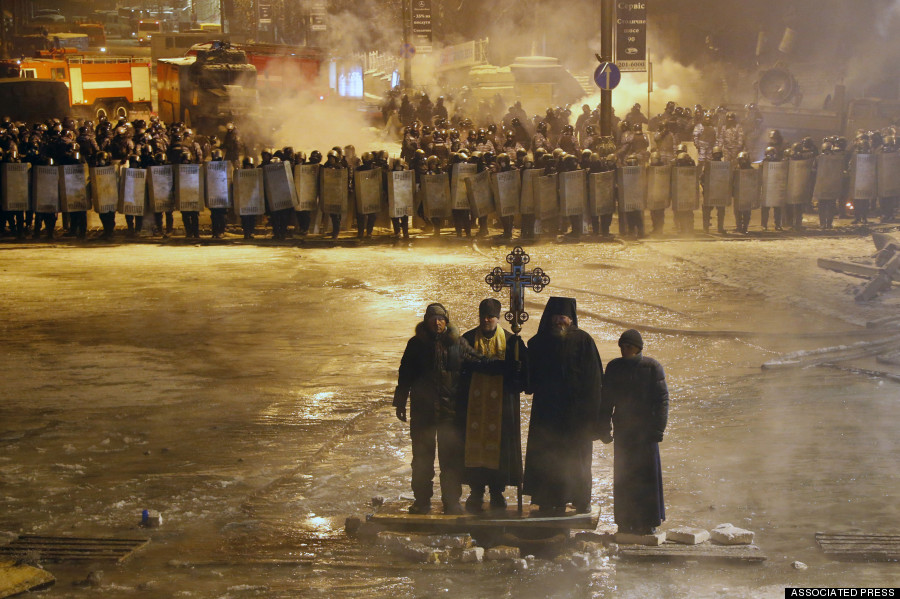
(AP Photo/Sergei Grits)


Who is prayer for? Or if we’re going to be grammatically proper and stylistically sensitive, “For whom is prayer?”

I want to suggest:

  1. Prayer is for us.
  2. Prayer is for God.
  3. Prayer is for the world.


1. Prayer Is for Us


It’s not selfish to say that prayer is for us.

Prayer changes us and shapes us into God’s image.

When we spend time with another person, they rub off on us. This is especially true with a family member, close friend, or romantic partner. A relationship with God works this way, too. The more we spend time with God–and prayer is a way we do this–the more like God we can become.

Richard Foster says,

To pray is to change. Prayer is the central avenue that God uses to transform us…. In prayer we learn to think God’s thoughts after Him: to desire the things He desires, to love the things He loves, to do the things He wills.

Prayer centers us.

How many times have you been in the throes of indecision or stress or frustration, and realized that you hadn’t prayed about it… and you stop and pray… and even if all of life’s challenges don’t go away, you feel focused. A little bit more at peace. Re-calibrated. Prayer centers us.

Prayer is how we express our need for God, and how God responds.

To pray, then, is to build a relationship with God.

Thomas Keating, a Catholic who is perhaps best known for his work on centering prayer, puts it like this:

When we say, ‘Let us pray,’ we mean, ‘Let us enter into a relationship with God,’ or, ‘Let us deepen the relationship we have,’ or, ‘Let us exercise our relationship with God.’

Prayer is for us. It changes us and shapes us into God’s image. Prayer centers us. And prayer is the way we cultivate our relationship with God.
 

2. Prayer Is for God


Our praying is for God, too. Prayer is an offering we give to God. With our tithes and offerings in church we pray, “All things come from thee, O Lord, and of thine own have we given thee.” This is true not just about our money but about our time, about our very selves.

To pray when we would rather be thinking about nothing, or thinking about something else, or plotting our own course by our own wits–to pray is to sacrifice. It’s to give our time to God. It is to devote our attention to God. It is to be ready for an encounter where our desires, instincts, and inclinations may be changed. To pray is to seek to grow our relationship with God.

Because of who we know God to be, we return thanks, we praise him, we glorify him, we honor him… prayer, in this sense, is for God.
 

3. Prayer is for the World


Finally, if prayer is for us, and if prayer is for God, then it’s also for the world.

What better way is there for us to link together the grace of God with the hurts of others? You don’t even have to ask a person’s permission to start praying for them! You can just do it.

A writer I’m quite fond of writes about it like this:

Intercessory prayer can be thought of as incarnational prayer. It saves us from the worst kind of fixation on internal states by turning us outward, and in that turn, finding ourselves turned Godward, gathering the needs and suffering of others, reconnecting them to a Divine Source. That Presence in turn catches us up in its living, out-reaching activity.

Through prayer we connect the grace of God to the needs of others.

I suspect every preacher (let alone blogger!) has a hobby horse or two. As much as we pastors try to preach the whole counsel of God, and as much as we try to offer variety… these are the things we keep repeating, knowingly and unknowingly.

For me, one of these truths worth repeating is that prayer is not something you do before you act or after you act or even as you act. To pray is to act. To pray for another is to act on that person’s behalf. To pray for justice is to work for justice. Prayer is action. It’s not the only kind of action God wants us to take… but in and of itself, it is perhaps the most important kind of action. Because in prayer we connect ourselves and our efforts to a power and a love that is far greater than anything we ourselves have to offer.

In this way, to pray is to act for the good of the world.

We pray for our own sake… we pray as homage to God… and we pray for the good of the world.


The above is adapted from the first half of a sermon I preached Sunday.

Lazarus: You Don’t Have to Wait, Because Jesus is Resurrection NOW

Do you notice how often John, in chapter 11 of his Gospel, defines Lazarus by his sickness?

“Sick” or “sickness” appears five times in the first six verses.

v. 1: “ a man named Lazarus was sick
v. 2: “Mary, whose brother Lazarus now lay sick
v. 3: “Lord, the one you love is sick.”
v. 4: “This sickness will not end in death.”
v. 6: “he heard that Lazarus was sick

Add to that: he was from Bethany, a town meaning “house of the the poor” or sick. “Sick” is the main description of Lazarus.

Lazarus: Brother, Beloved

Who else was he? Lazarus was brother to Mary and Martha.

These were sisters John’s audience knew well enough that John could just identify Mary by a single story: “the same one who poured perfume on the Lord and wiped his feet with her hair.”

It was “this Mary, whose brother Lazarus now lay sick.”

Lazarus was a brother. And Lazarus was a beloved. Verse 3 says, “So the sisters sent word to Jesus, “Lord, the one you love is sick.””

Some say the so-called “disciples Jesus loved” is not John but Lazarus… this verse would be evidence for that view. Lazarus was a brother and beloved friend.

Lazarus: DEAD

As the account progresses, Lazarus becomes defined by his being dead. “He’s that guy who died.”

v. 11: “Our friend Lazarus has fallen asleep
v. 13: “Jesus had been speaking of his death
v. 14: “Lazarus is dead
v. 16: “Let us… die with him
v. 17: “Lazarus had already been in the tomb for four days”
v. 19: “the loss of their brother”
v. 21: “If you had been here, my brother would not have died
v. 37: “Could not he who opened the eyes of the blind man have kept this man from dying?”
v. 38: “’But, Lord,’” said Martha, the sister of the dead man”

Even in verse 44 after Jesus has said, “Lazarus, come out,” John doesn’t say: And Lazarus came out… he says, “The dead man came out, his hands and feet wrapped with stops of linen, and a cloth around his face.”

John primarily describes Lazarus as either sick or dead.

And he heightens the pathos of the narrative by noting he is a brother and a loved one.

Lazarus: Locus of God’s Glory

But there’s one more thing that John says about Lazarus—he is the site of the revelation of God’s glory. He is the locus of God’s Son being glorified.

The miracle sets the stage for the rest of the book of John.

It’s the 7th of the 7 Signs of Jesus in John. We’ve seen Jesus turn water into wine, perform three healings, feed the multitudes, walk on water, and now he’s about to raise a man from the dead.

This paves the way for Jesus’ own resurrection from the dead, which John will narrate at the end of the Gospel.

Look at verse 4: “When he heard this, Jesus said, ‘This sickness will not end in death. No, it is for God’s glory so that God’s Son may be glorified through it.’”

Lazarus is the one through whom Jesus reveals himself to be the resurrection and the life. Lazarus’s death is an occasion for Jesus to show everyone more about himself, leading up to his own resurrection.

Remember that—I’ll come back to that in a bit: Lazarus is the one through whom Jesus reveals himself to be the resurrection and the life.


The Story of Lazarus


So that’s Lazarus, as John tells it: Sick… a brother… a beloved friend… then dead… but ultimately the locus of Jesus’ revelation and God’s glory.

The Setup

Jesus gets news of Lazarus’s sickness, and even though John’s about to describe Lazarus as “the dead man,” Jesus says, “This sickness will NOT end in death.”

But Jesus stays put for two days.

And he hears about it from Mary and Martha. Both sisters, independently of each other, say, “Lord, if you had been here, my brother would not have died!”

God, if you had intervened—and you could have—this man I love would have been healed. Or maybe he wouldn’t have even gotten sick in the first place.

Theodicy: Jesus Mourns with Us

This chapter actually makes an enduring contribution to Christian theodicy, or the practice of trying to justify how an all-powerful God could stop evil but doesn’t.

John doesn’t address the question directly, but he does show a Jesus who comes alongside his loved ones in adversity, and mourns with them.

John 11:35 is the shortest verse in the Bible, and the best one to start with if you want to up your Scripture memory game. It just says, “Jesus wept.” “Jesus wept.”

It’s not the only time in the New Testament that someone cries, but John uses a word for weeping that is only used here in the New Testament. A richer translation is: “Jesus burst into tears.”

He mourns when death seems to have gotten dominion—Jesus is even angry at the injustice of it all. We Christians don’t need to fear death, but it’s awful to lose a friend, a family member, a loved one.

Jesus mourns—bursts into tears, even—right along with us.

The Jewish co-mourners—the ones who were comforting Mary and Martha—are taken aback and say, “See how he loved him!”

Jesus’s weeping was motivated by love.

So that’s a nice sidebar in this story, I think—it doesn’t solve the problem of evil, not at all. But Jesus’s response does remind us that where there is suffering, where there is death, where the unfair and unthinkable happen… in those places, Jesus weeps with us, because he is a loving, compassionate, and empathetic God.

The Sign

And then the sign comes—verse 43, Jesus says in a loud voice: “Lazarus, come out!”

We don’t even get a response from Lazarus—he walks out like a mummy, all his death clothes still wrapped around him.

And then, you kind of feel bad for the guy…. After Lazarus is resurrected, in chapter 12 the religious leaders would make a decision about him. They decide not only do they want to kill Jesus, they want to kill Lazarus, too! Even after this awesome miracle, he might be dead again soon.

Jesus is like, “Come on! I just… got him out of there.”


Jesus is Resurrection NOW


The Crux of the Passage

As I’ve read and re-read this passage, as I’ve studied and puzzled over it… I keep coming back to verses 21-27.

They are the crux of the passage.

“Lord,” Martha said to Jesus, “if you had been here, my brother would not have died. But I know that even now God will give you whatever you ask.”

Jesus said to her, “Your brother will rise again.”

Martha answered, “I know he will rise again in the resurrection at the last day.”

Jesus said to her, “I am the resurrection and the life. He who believes in me will live, even though he dies; and whoever lives and believes in me will never die. Do you believe this?”

“Yes, Lord,” she told him, “I believe that you are the Christ, the Son of God, who was to come into the world.”

There’s a cosmic interplay in their conversation between present and future, between resurrection later and resurrection now.

Martha says, “I know Lazarus will rise again in the resurrection at the last day.”

This is common Jewish teaching. The Pharisees believed in a resurrection. The Sadducees didn’t—that’s why they’re so sad, you see. Martha’s response is not unexpected.

Especially since Jesus in John 6 said, about a million times, “I will raise them up at the last day.” Anyone who comes to me, who eats this bread of life (that is me, Jesus), will never die, will live forever, and I will raise them up at the last day.

Martha is tracking with the best of Jesus’ students here.

Resurrection at the last day is not only standard Jewish teaching—it is standard Christian teaching. We affirm that we will experience the joy of resurrection, in body and soul, at some future day we call “the last day.”

At Funerals and during Easter are the two times we’re most aware of the promise of resurrection.

Jesus doesn’t argue with Martha, about raising people up at the last day. There’s nothing for him to correct in her future eschatology. Hope in a future resurrection is kind of the anchor for our faith.

But Jesus pushes a step further and says, “I am—RIGHT NOW—the resurrection and the life. Whoever believes in me will live, even though they die, and whoever lives and believes in me will never die.”

“I am—not just tomorrow, not just in the last day, but right now, present tense, in this very moment—I am the resurrection and the life.”

Immediately after saying so, Jesus gives a manifestation—a pretty literal one—as to what it means that Jesus is the resurrection right now for those who believe. He raises Lazarus from the dead.

By a supernatural sign Jesus shows that the power of the resurrection is not just for tomorrow or some later date, but for this day.
 

We are Lazarus


I suspect John wants us to use Lazarus as a sort of mirror, a character in whom we find ourselves.

Lazarus was sick. We get sick. We have physical ailments.

And if we allegorize a bit, we have mental lapses, emotional breakdowns, and plenty of imperfections. We see lack of health in ourselves.

Also like Lazarus, we were dead.

“As for you,” Ephesians says, “You were dead in your transgressions and sins…. All of us also lived among them at one time, gratifying the cravings of our flesh and following its desires and thoughts. Like the rest, we were by nature deserving of wrath.” Before coming to know Jesus, we were as good as tomb-dwellers.

Lazarus is also the one Jesus loves. His beloved. John himself, in one of his short church letters, will call his recipients beloved. We are loved by Jesus, just like his friend Lazarus.

We’re like Lazarus in his sickness… like Lazarus in his death… and like Lazarus in resurrection.

That Ephesians passage continues:

But because of his great love for us, God, who is rich in mercy, made us alive with Christ even when we were dead in transgressions—it is by grace you have been saved.

Even now we are raised to new life in Christ, remade in him from sickness to health, and from death to life.

Resurrection People

Scripture is rife with passages that suggest resurrection isn’t just for later, but for right now, for those who are people of God.

Paul says in Philippians 3, “I want to know Christ and the power of his resurrection.”

Romans 8:4 says:

Therefore we have been buried with him by baptism into death, so that, just as Christ was raised from the dead by the glory of the Father, so we too might walk in newness of life.” (Right now!)

Had we been protesting the lack of resurrection in our lives, we might have shown up to a rally, chanting, “What do we want? Resurrection! When do we want it? Now!”

Later in Romans 8, we hear:

And if the Spirit of him who raised Jesus from the dead is living in you, he who raised Christ from the dead will also give life to your mortal bodies because of his Spirit who lives in you.


Resurrection Now


In Living the Resurrection Eugene Peterson (whose Message translation inspired the title of this post) observes that the ones who witnessed Christ’s resurrection were afterwards “walking the same old roads over the same old ground they had grown up on and talked and worked on, with the same old people they had grown up with.” He says:

Now it was becoming clear to them… that the resurrection also had to do with them and the ongoing circumstances of their lives. … They were beginning to get the sense that Jesus’ resurrection had everything to do with their ordinary lives. They needed practice in this reorientation, and they plunged into ordinariness—the old familiar workplace of sea and the fishing boat.

Because Jesus is the resurrection and the life, right now, we live in the light of the resurrection… right now. We already walk and live and work in a new reality—we don’t have to wait for it.

How do we receive such a gift? If we are to be resurrection people right now, how do we practice living out that identity?

Answering this question will actually be a churchwide focus in Lent.

Lent might feel more like crucifixion than resurrection for you. But we have already been raised to new life, just like Lazarus. And there are methods of engagement we can employ to put ourselves in a position to receive God’s grace, God’s new life.

In Lent our congregation will be trying out a series of weeklong habits—“spiritual disciplines” is the familiar name for them. Each Sunday I’ll preach about one practice Christians throughout the centuries have used to open up to God, to receive Jesus as resurrection and life… and then we’ll practice on our own that week.

And as we re-gather Sunday after Sunday in Lent, we’ll do it at this same communion table. At the table we receive a taste of that new life, and a reminder that the resurrected life is ours to receive and live, every day.

We don’t have to be defined—as Lazarus was—by our sickness, by our imperfections, by our falling short.

We don’t have to be identified—as Lazarus was—as being dead… in our case, dead in our transgressions and stupid sins. We are no longer cut off in darkness from the land of the living.

We are, like Lazarus, identified as God’s dearly loved children. Jesus, the resurrection and the life, calls us to put our full trust and faith in him.

And through his resurrection power, he calls us (right now!) into newness of life.


The above is adapted from a sermon I preached last Sunday, the last in a series on the Seven Signs of Jesus in John.

Changing Blood Into Wine

Check out these compelling lines from a 6th century Greek Orthodox hymnographer named St. Romanus the Melodist. He writes about Jesus’s first miracle of turning water into wine at Cana in Galilee:


    When Christ, as a sign of His power, clearly
        changed the water into wine
    All the crowd rejoiced, for they considered the
        taste marvelous.
    Now we all partake at the banquet in the
        church
    For Christ’s blood is changed into wine
    And we drink it with holy joy,
    Praising the great bridegroom,
    For he is the true bridegroom, the Son of
        Mary,
    The Word before all time who took the form
        of a servant,
    He who has in wisdom created all things.