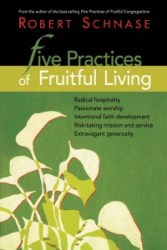
Super-sweet image via Fortress Press (click to enlarge)
Big news for Bonhoeffer aficionados/as: Fortress Press, publishers of the 17-volume Dietrich Bonhoeffer Works (English edition), has just announced the Fall 2015 publication of Reader’s Edition volumes of Discipleship, Life Together, Ethics, and Letters and Papers from Prison.
I haven’t seen a ton of information yet, but here’s the publisher’s description:
Featuring the acclaimed DBWE translation and adapted for a more accessible format, the new Reader’s Edition volumes include supplemental material from DBWE general editor, Victoria J. Barnett, as well as insightful introductions by Bonhoeffer scholars which clarify the theological meaning and importance of his work.
New to Bonhoeffer? I collected some reflections on his writings after spending much of one Lent reading him. All my Bonhoeffer posts are gathered here. I reviewed the amazing Life Together and Prayerbook of the Bible (DBWE 5) here.
It’s hard to imagine how the editors of the DBWE set could offer anything to improve upon those exceptional volumes, but I do like the idea of a more accessible, annotated Bonhoeffer. Check it all out here.
If Christ is to come in order to dwell in me, that has to transpire in accordance with the heading of the gospel for the day in the calendar: “Christ enters through closed doors.”
Dietrich Bonhoeffer was hanged in the Nazi concentration camp of Flossenbürg on April 9, 1945, just two weeks before the U.S. military came to liberate it.
John W. de Gruchy describes the lead-up to that day in his Editor’s Introduction to Letters and Papers from Prison (Dietrich Bonhoeffer Works, volume 8):
On October 8 [of 1944], Bonhoeffer was taken to the cellar of the Gestapo prison on Prinz-Albrecht-Straße, where he stayed until February 7, 1945. From then on, all correspondence came to an end, and contact between Bonhoeffer and the family and [Eberhard] Bethge was broken. From there Bonhoeffer was taken first to Buchenwald and then, via the village of Schönberg in Bavaria, to the Flossenbürg concentration camp, where he arrived on April 8. That evening he was tried by a hastily rigged court and condemned to death. Early the next morning Bonhoeffer was executed along with several other coconspirators.
He was hanged April 9. His family would not learn about it for several months.
The July before he had written to his trusted friend (and later biographer) Eberhard Bethge, one day after the failed assassination attempt on Hitler’s life. He wrote:
How should one become arrogant over successes or shaken by one’s failures when one shares in God’s suffering in the life of this world? You understand what I mean even when I put it so briefly. I am grateful that I have been allowed this insight, and I know that it is only on the path that I have finally taken that I was able to learn this. So I am thinking gratefully and with peace of mind about past as well as present things. …
May God lead us kindly through these times, but above all, may God lead us to himself.
His final recorded words before his hanging are especially appropriate in these days that follow Easter Sunday:
This is the end–for me the beginning of life.
This post is adapted from a post I wrote around this time last year, as part of the “Tuesdays in Lent with Bonhoeffer” I was doing. See other gathered posts here.
When I saw the Whoopie Pie truck in the drop-off lane of a local workout facility, I was reminded that life is full of oxymorons. Or at least things that go together that seem to be contradictory. (Chocolate and cream-filled power up for the elliptical? Yes, please!)
Jesus once said:
Whoever wants to be my disciple must deny themselves and take up their cross and follow me. For whoever wants to save their life will lose it, but whoever loses their life for me and for the gospel will save it.”
There’s another oxymoron for you—or at least it sure sounds like one. The disciples thought it was. “Lose your life to save it? If you lose your life, you’re dead.”
Jesus applied that idea to himself. Before he could rise again from the dead, he had to… well… die first. That you would have to die before you could come back from death is logical enough. But that Jesus even could come back once he was in the irreversible state of death sounded as oxymoronic to the disciples as a dessert delivery driver stopping by the morning Zoomba class.
Peter “knew better.” After his teacher’s death-to-life crazy-talk, Peter pulled Jesus aside and started to “rebuke him.” Jesus rebuked him right back, “Get behind me, Satan! You do not have in mind the concerns of God, but merely human concerns.”
Shortly after that episode with Peter, Jesus said again to his disciples, “‘The Son of Man is going to be betrayed into human hands, and they will kill him, and three days after being killed, he will rise again.’”
Once again, the Gospel of Mark tells us, “They did not understand what he was saying,” but this time they “were afraid to ask him.”
I-Thou: Why Jesus’ Death Was So Devastating
Peter and the others thought that death could only be the career-ending move that it has been, is, and will be for every other human being. It’s not something you come back from.
The idea of resurrection supersedes rationality and, generally, so-called empirical evidence.
And underneath Peter’s blockheaded attempt to tell Jesus who he really was and what he should do, there was a real love. Peter would confess Jesus as “the Messiah, the Son of the living God.”
The disciples didn’t understand Jesus’ teaching of, “I must die and you must die so that we together may truly live.” And even if they could grasp it intellectually, Jesus’ disciples were a group of men and women who had left home, jobs, ways of life to follow someone they believed was going to save them, guide them, and just be with them.
Someone you love that much is the last person you want to even think about dying, let alone hear that person repeatedly referring to their death and saying it has to happen. So there was, I’m sure, an emotional resistance on the disciples’ part to hearing Jesus talk about his own death.
The Jewish theologian Martin Buber offers some insight into why the death of a loved one is so difficult. In his I and Thou, Buber writes that the identity of the individual is constituted not just in isolation, but in relationship to others:
If Thou is said, the I of the combination I-Thou is said along with it.
The primary word I-Thou can only be spoken with the whole being.
There is no I taken in itself, but only the I of the primary word I-Thou.
The disciples’ sense of self was fully interdependent with their sense of who Jesus was. They knew, at least at some level, that they lived and died with him. When they heard Jesus talk about his own death, whether they kept living or not, they knew that a part of themselves would die with him.
It was that knowledge—that gut sense of their intertwined identity—that would lead Peter to say just before the crucifixion, “Even if I have to die with you, I will never disown you.”
Jesus’ death was devastating to his followers. Their sense of self and of the world would never be the same. How could they ever hope again? How could they ever trust? How could they dig out of the hole they now found themselves in?
In the Gospel John’s resurrection account, the stone is gone, but the disciples still don’t understand about Jesus’ dying-then-living. Even with the tombstone rolled away, it was all Mary Magdalene could do to stand “outside the tomb crying… [weeping].”
But There’s More Beneath the Surface
It seems like every time I walk back to our house from the church, I find something new in the driveway or yard. As the snow continues its slow, steady melt, we keep discovering things we forgot we lost. A whiffle ball bat. The pink plastic shovel that caused so much discord back when the kids were fighting over who would use it. Or that hand towel I was reaching for to wipe snotty noses in between shoveling piles of snow off the van several times a week.
I asked our Deacons if they, too, were able to testify to the signs of life emerging from underneath the snow, shooting up from the ground. And they were—let me show you.
There’s always more beneath the surface. Life is so rich and the universe so mysterious and wonderful that what you see on first glance isn’t all that’s there.
The workings of God exceed what we can comprehend. We may think or live as if he’s limited by natural laws. Yet the One who wrote those laws, who put them into place, can re-order the universe as he sees fit.
The one who breathed and still breathes life into creation does not find death to be an obstacle to his purposes.
What seems to be the end is not the end. What the disciples thought was the Last Supper they would ever have with Jesus was, in fact, the first communion meal, an observance that would be repeated countless times by Christians everywhere. That bread—in its brokenness‚ representing death—would be the very source of life to followers of Jesus throughout the ages. One early church father called the communion bread, “medicine of immortality” and “an antidote to prevent us from dying.”
I-Thou, Redux: With Him in Death, With Him in Life
Jesus’ death was heart-wrenching to his disciples. This is because, for them, participation in Jesus’ suffering and death was not a spiritual discipline, or a spiritual state to try to attain—it was their natural reaction to an immense loss. They died with him, as the fire in their hearts went out.
But if they died with Jesus that awful Friday we dare to call “Good,” they came right back life with him, at his resurrection.
“I have seen the Lord!” Mary Magdalene proclaimed. When Jesus came—in person—to the fear-struck, mourning disciples, John says they “were overjoyed when they saw the Lord.”
The disciples were buried with Christ, and they rose again with him to new life. Jesus breathed on them, gave them the Holy Spirit, and the book of Acts happened. The church spread at an amazing rate. Christ’s followers could not contain the joy of new life.
We who call ourselves disciples today also have participated in the death of Jesus. We take part with Jesus in his suffering any time we are compassionately attuned to the unjust treatment and oppression of others. We associate ourselves with Christ’s crucifixion again today when we receive the elements of communion. We join with the first disciples when we observe Holy Week, or practice austerity during Lent, and when we affirm that we, too, were there when they crucified our Lord.
One well-known disciple, Paul, would say, “Is not the cup of thanksgiving for which we give thanks a participation in the blood of Christ? And is not the bread that we break a participation in the body of Christ?”
We participate in Jesus’ death when we accept that it was a sacrifice made on our behalf, offered to bring us into communion with God. From the cross came life–our life, springing forth from the cold, dead ground.
Elsewhere Paul would write, “We were therefore buried with him through baptism into death in order that, just as Christ was raised from the dead through the glory of the Father, we too may live a new life. For if we have been united with him in a death like his, we will certainly also be united with him in a resurrection like his.”
If we have died with Christ, then we live with Christ. We have participated in his death, so we participate in his resurrection.
Conclusion: The Stone Has Been Rolled Away
The stone has been rolled away. Jesus did not stay in the land of the dead, but rose to the land of the living. When death gets the last word in the lives of the ones we love, we know that life actually has a rejoinder. Dead isn’t dead forever.
This is why the Psalmist, perhaps in anticipation of the coming Messiah, could say, “I will not die but live, and will proclaim what the Lord has done.”
So, like those beautiful buds and flowers that improbably spring forth from under an impossible mound of snow, come on out of the hole you’ve dug into the ground. The stone has been rolled away–Jesus himself has done this! There’s no more need to hibernate or hide out.
Jesus, thought to have breathed his last, springs forth from the grave, finds the disciples he so loves, and breathes his own new life on them, so that they can share with him in the resurrected life. The darkness of the tomb is now illuminated by the light of Christ. The somber purple of Lent has give way to the bright white of Easter.
Jesus is risen from the dead! Death is so last season. Resurrection is the new black.
Apparent endings can become starting points, seedbeds, for unexpected beginnings. We now have access to new life in Christ.
The world is lit up with the light of the resurrection of Jesus. Jesus died and lived through it. He took us with him from cross to grave to glory.
We who have died with Christ, who “were there” when they crucified our Lord, now share in the abundant, new life he gives us, through his resurrection from the dead. Thanks be to God!
I just got home from our congregation’s Maundy Thursday service of communion. We came forward, knelt down, and partook of the bread and the cup–the body broken, the blood poured out for us. The altar has now been stripped and the cross covered with black cloth.
Our church’s practice is to celebrate communion on the first Sunday of the month. This Easter, then, will be a Communion Sunday for us.
As we do not have communion every Sunday, the idea of two Eucharists in such close proximity–one on the betrayal-and-death side of the story, the other on the resurrection side–has been fascinating to me.
Below is an adaptation of a short message I wrote to our congregation last night.
I’m writing to invite you again to our Maundy Thursday communion service of worship tomorrow night at the church.
And Sunday is Easter Day, Resurrection Sunday, the most glorious day of the calendar year.
As it turns out, because April 5 is the first Sunday of the month, it is also a Communion Sunday for us.
This offers as a unique lens through which to experience this last half of Holy Week and Easter. We might even think of it as A Tale of Two Eucharists.
The First Eucharist
On Thursday Jesus broke bread and gave thanks (this latter verb is the underlying meaning of the Greek-based Eucharist). But even as he was filled with gratitude for his Father’s love, surrounded by the ones who loved him most, he knew there was a betrayer at the table.
In a more cosmic sense, the next day—Good Friday—he would be betrayed by all of the ones he came to save. Not I!, we protest with the disciples at the table. But we, too, “were there when they crucified our Lord.” We have been complicit.
The Second Eucharist
Yet Jesus forgives us of that complicity. Every other Eucharist that has taken place since that first Thursday Eucharist has been on the other side of Resurrection. Our moral failings, stubborn hearts, and forgetfulness in doing good have now all been put to death. We rise to new life with Christ, given a second (and a third, and a fourth…) chance to embody Jesus to a world that is as broken today as it was when our Savior was crucified.
Easter reminds us that the crucifixion was not the closing chapter the disciples thought it was. Rather, it was a preface (a “cold open,” as TV shows call it) to the real story of why Jesus came—to defeat sin and suffering and death through his resurrection, and to invite us into the resurrected life with him.
Just as we participate with Jesus in his death and suffering–Maundy Thursday’s bread of betrayal–we also participate with him in his glorious victory over darkness–Easter morning’s bread of new life.
Last week Major League Baseball pitchers and catchers started reporting for Spring Training. Spring Training, of course, takes place in Florida and Arizona. Red Sox pitchers and catchers reported last Friday in Fort Myers, Florida, where it will be in the 60s, 70s, and 80s all this week.
On the one hand, Spring Training team standings don’t mean much. How a team does in Spring Training is often not a predictor of how they’ll do in the regular season. Last year, for example, there were 21 teams with better Spring Training records than the Kansas City Royals, who very nearly won the World Series. But this 40-odd day period of preparation, exercise, and deliberate conditioning is essential to summer success in Major League Baseball.
Lent: Spring Training for Christians
We Christians actually invented Spring Training: except we call it Lent. There’s no Cactus League or Grapefruit League for us… more of a Penance League and a Snowstorm League.
Lent is the period of 40 days, plus Sundays, leading up to Easter—Resurrection Sunday—the most important date on the calendar for followers of Jesus, more important, even, than Opening Day.
Lent in 2015 at our church will allow us some opportunities to more deeply cultivate our sense of Christian identity, both as individuals and as a church. We’ll explore five key disciplines for those who walk with Jesus.
Each Sunday in church I’ll preach on one of the five practices. Then, the week following, we’ll read that corresponding chapter.
Here are the Five Practices:
• Radical Hospitality (“Receiving God’s Love”)
• Passionate Worship (“Loving God in Return”)
• Intentional Faith Development (“Growing in Grace”)
• Risk-Taking Mission and Service (“Loving and Serving Others”)
• Extravagant Generosity (“The Grace of Giving”)
Today’s focus is Radical Hospitality, our hospitality and receptivity to God’s grace toward us. This discipline is all about how we receive God’s love. I think you’ll really appreciate this chapter if you make time to read it this week.
Receiving God’s Love
God is many things, but Love is God’s most fundamental characteristic.
“The LORD is compassionate and gracious, slow to anger, abounding in love”—a sort of mantra of the Old Testament that finds expression in books as diverse as Exodus, Nehemiah, Joel, and the Psalms.
“God is love,” John says, multiple times in 1 John 4.
And any love we experience or share is rooted in God’s love for us: “We love because he first loved us.” “God is love.”
God declared his love for Jesus at Jesus’ baptism: “You are my Son, whom I love. With you I am well-pleased.” Through our baptism and faith we are adopted into God’s family. Not only do we call God Father, but we call Jesus brother, and share in his inheritance of the Father’s love and good pleasure.
The love that God declared for Jesus has been bestowed on us, lavished on us, 1 John says. “See what great love the Father has lavished on us, that we should be called children of God!”
We are God’s children, whom he loves.
That God is love and that we are loved by God is the most foundational aspect of reality, what philosophers have for thousands of years sought after as “the really real.”
How do we know God loves us? Here’s 1 John again:
This is how God showed his love among us: He sent his one and only Son into the world that we might live through him. This is love: not that we loved God, but that he loved us and sent his Son as an atoning sacrifice for our sins.
And so I appreciate that the first of these five disciplines that Robert Schnase suggests is not so much a habit to take on or a practice to engage, but just plain love to receive.
Of course we don’t hoard it or keep it to ourselves, so the other practices of Christian faith include loving God back and serving others in this great love.
But it’s worth stopping just to ask: Am I receiving God’s love? Am I carving out space in my life where I can listen, call to mind, welcome, and accept God’s lavish love for me?
Each year I’m usually pretty consistent about taking on a couple of Lenten disciplines. I especially like pairing the practice of “giving up” something—a distraction that keeps me from awareness of God—with “taking on” something—a new practice or renewed effort to keep God’s presence more top of mind.
This year, however, I’m still catching up on my New Year’s resolutions, so it’s been hard to think about starting a new Lenten discipline.
If you’re in the same boat, or if you didn’t realize until today that we’re already 4 days into Lent, and you want to do something, I encourage you to think just in terms of this coming week, and to carve out some time and space to receive God’s love. Make space to receive God’s love.
One of my New Year’s resolutions I fell behind on the second week of January was reading the Bible all the way through in a year. I’m not giving up, though. This week, as I was supposed to be wrapping up Leviticus, I read Exodus 25. God has raised up Moses, Aaron, and Miriam, and led this new covenant people out of miserable slavery in Egypt. They’re on their way to the promised land.
After God gives Moses and the people the 10 Commandments and many other instructions, there comes this beautiful pivot point in Exodus 25 that sets up so much of Israel’s wilderness journey: God says, “And let them make Me a sanctuary that I may dwell among them.”
Tabernacle Model, Via Ruk7 at Wikipedia Commons
See, God can dwell wherever and whenever and however he chooses, but he calls his people from the very beginning to carve out a space for him, where they can honor his presence and receive his love. Hospitality toward God is all about making room for God. Hospitality toward God is about receptivity, open hands, a willing heart. As our author will put it, it’s about saying, “Yes” to God.
This “practice of fruitful living,” we’ll see, drives all the other practices and undergirds them.
External Obstacles
But how many obstacles are there that stand between us and God’s love?
For one, we have a dizzying array of technological distractions available to us at any moment.
Or maybe we get our viewing and clicking habits under control, only to find out that the real, live human beings we know have a whole host of demands and expectations of us. Whether co-workers, clients, professors, children, bosses, siblings, or students, we often acutely feel that our time is not our own.
Furthermore, we have been shaped, for better or for worse, by hurts imposed upon us by others, by pain past and present, some things resolved, others unresolved. These can make us guarded, and give us pause when it comes to opening the door of our hearts to God.
Internal Obstacles
And then there’s us. We get in the way of our own receiving of God’s love for us. We undermine our own efforts at radical hospitality toward the grace of God. We do this by neglect, out of fear, due to pride, because of overworking, or just sheer lack of putting forth the effort required to make a space where we can commune with God.
As I’ve thought this week about the many barriers that keep us from more fully embracing God’s love, I’ve found some illumination in a somewhat unlikely place: one of my all-time favorite movies, Good Will Hunting.
Will Hunting—played by Matt Damon—is a genius, a mathematical prodigy who proves an impossible theorem on an MIT chalkboard while he’s mopping the floor as janitor.
He gets into trouble for hitting a police officer, and then is assigned therapy as part of his deal to not have to go to prison.
His therapist, Sean, is played by Robin Williams… an amazing performance by both men.
Sean realizes very early with Will that there are two poles, both of which keep Will from opening himself to receiving—and giving—love.
On the one hand, Will undermines deep relationships by his lack of effort, through willful stubbornness and arrogance.
On the other hand, Will is an orphan; he was abused by his foster dad and the foster system itself. One can hardly blame him for wanting to keep distance from all humanity.
Sean points out, “We get to choose who we let into our weird little worlds,” as he watches Will pursue a love interest while also keeping her at bay.
At their first therapy session, Will pompously tries to psychoanalyze his therapist, Sean, based on the books, pictures, and a single painting in his office.
Next session, Sean leads Will out of his office and to a park bench at the Boston Public Garden.
He points out that Will is really just practicing avoidance. As they sit there in that iconic scene, Sean says,
I can’t learn anything from you, [that] I can’t read in some __ book. Unless you want to talk about you, who you are. Then I’m fascinated. I’m in.
But you don’t want to do that do you sport? You’re terrified of what you might say.
Your move, chief.
He walks away.
We know what it is to be “terrified of what [we] might say,” if we were truly vulnerable in the presence of God. We can also be scared of what we might hear, what God might ask of us, or of getting a reminder of what God has already asked of us, that we’re not doing.
But if Will Hunting’s avoidance is partly his own doing, there is also a sense in which he has been so malformed by his past, that he really doesn’t know how to love, and how to be loved.
One of the culminating scenes in the movie is where the therapist Sean has to turn in a report on Will to the court. (You can watch it here.)
Will says, “So, uh, what is it, like, Will has an attachment disorder? Is it all that stuff?”
Sean nods.
Will goes on, “Fear of abandonment? Is that why I broke up with Skylar?”
Sean says, “I didn’t know you had.”
Sean says, “Hey, Will? I don’t know a lot. You see this? All this [stuff]?
He holds the file up and then drops it down on his desk.
Sean says, “It’s not your fault.”
“Yeah, I know that.”
“Look at me, son,” says Sean. “It’s not your fault.”
Will nods, but Sean just keeps repeating that line, “It’s not your fault; it’s not your fault; it’s not your fault,” till finally Will breaks down, sobbing, and reaches out to hug his therapist.
Make Space This Week to Receive God’s Love
Bishop Schnase in his book talks about these two poles Sean identified in Will. He doesn’t talk about Good Will Hunting, but it’s the same dynamic. Schnase calls them “elements of distance, both inherited and willful,” that keep us from receiving God’s love.
Whether “It’s not your fault,” or whether “It’s your move, chief,” a combination of fear, guilt, neglect, deep pain, and disobedience almost actively seeks to prevent us from carving out spaces where God can dwell, and where we can simply bask in his love.
We need more time, more openings, more gaps, and wider margins where we can slowly churn over God’s words that are for us, too:
“You are my child, whom I love. With you I am well-pleased.”
“You are my child, whom I love.”
“You are my child, whom I love.”
Give yourself permission—starting today and tomorrow—to dedicate time and space to gratefully receive God’s love. If you can’t give yourself permission, you’ve got my permission. Consider it the pastor’s equivalent of a doctor’s note—a pastoral exhortation.
“Listen!” Jesus says, “I am standing at the door, knocking; if you hear my voice and open the door, I will come in and dine with you, and you will dine with me.”
Give yourself permission to do as God’s first people did, to make little sanctuaries of time and space where you can meditate on God’s lavish love for you, and receive his grace.
Not just so you can run off and give it to someone else—that’s next week’s practice…but so that you can know how deep, how strong, how rich, how unrelenting, how comforting, how amazing, how replenishing, how good, and how perfect is the love of Jesus… for you.
The above is adapted from the sermon I preached at my church last Sunday.
Behold, the dwelling of God is with humankind. He will dwell with them, and they shall be his people, and God himself will be with them, and be their God.
Revelation 21:3
During Advent our congregation read the book of Jonah, that sometimes-ignorant, sometimes-faithful, always-stubborn prophet who called the wayward city of Nineveh to turn away from their past and accept God’s second chance.
We’re complex people like Jonah. Sometimes we’re even like the people of Nineveh, we don’t know our left from our right, or up from down.
Whether we’ve created our own difficult reality by our actions, or whether others have put us in a tight spot, we all know what it is to live and walk in darkness.
So we look for light. We pray earnestly for second chances. We ask for God’s mercy to come even to lowly folks such as ourselves. We yearn to see God’s justice executed on those who actively work against it.
We grasp about for light, and we long to behold Jesus.
Alleluia! To us a child is born!
Come, let us adore him! Alleluia!
But it’s easy to get confused about Jesus. Not because Jesus is confusing or because God is unknowable. But because we’re an easily confused people.
Having seen so many paintings of a crucified Jesus, young Asher Lev asked his mother whether this was the Messiah.
Marc Chagall, “White Crucifixion,” 1938
“No,” she says, “He was not the Messiah. The Messiah has not yet come, Asher. Look how much suffering there is in the world. Would there be so much suffering if the Messiah had really come?”
A trenchant critique, to be sure.
Time and again we look for Jesus to come in glory, in power, to right wrongs on a different timetable than God seems to have in mind… but time and again Jesus insists on coming in humility, in squalor, in seemingly insignificant interactions, even showing up in the midst of a fight. He doesn’t eliminate suffering; he gets born right into it, and takes part it in it himself.
Alleluia! To us a child is born!
Come, let us adore him! Alleluia!
Still, some days we’d rather skip past his first coming and go straight to the ending, his second coming when he makes everything right.
We keep wanting him to show up in full majesty, draping white robes behind him, as he smites the naysayers and draws his people out of a dark world and unto himself.
But year after year he keeps being born in a stable, to an unwed mother, next to unbathed animals, with astrologers as front-pew worshipers.
Alleluia! To us a child is born!
Come, let us adore him! Alleluia!
One poet sums it up nicely in four lines:
They all were looking for a king
To slay their foes, and lift them high:
Thou cam’st a little baby thing
That made a woman cry.
Rather than eliminate suffering in his first coming, Jesus participates in it. He takes on vulnerable, imperfect human flesh. He becomes one of the so-called least of these. A child. A poor child.
He doesn’t vanquish the darkness all at once… he’s born into it, and lets loose every now and then with a ray of light, a glimmer of hope. Indeed, for those who have eyes to see it, there is great light coming from the most unlikely birthing story you’ve ever heard.
Jesus was born into this world as it is, not yet as it should be. This is good news for our confused and dark souls. Even our hearts can become a home in which the Christ-child can dwell. Even we can bear Jesus as Mary did and bring him to all the world. Christ has come, a “little baby thing” to dwell with us, as we are, to be our God, to make us his own.
Alleluia! To us a child is born!
Come, let us adore him! Alleluia!
The Episcopal Bishop of Pittsburgh, Bishop Dorsey McConnell, is a favorite preacher and writer of mine. He says it well for all of us:
But the Christ Child has a life of His Own, and He will be born even in as dark a stable as that of my own heart. …I suppose I will just have to let Him have His way….And I know He will have His way with you as well. Whatever you’re afraid of in your own life or soul, just remember: He’s been born in darker places. Give Him so much as a square inch of your shadows, and He will fill you with His light.
Alleluia! To us a child is born! Come, let us adore him! Alleluia!
I have Honest Toddler to thank for helping me keep my wits about me as the father of three young kids. Here’s a recent Facebook status of this all-too familiar personality:
Good Morning! Wow it’s like it has been forever. …. Anyway for breakfast I’ll have 6 plain pancakes … on the red plate. Not the red one with the green trim or the brick colored one, RED. Yes, the one that shattered yesterday. I’m sure you’ll figure something out. God help you if I see a crack. Also, I would like my pancake intact but in bite-sized pieces. Don’t break my pancakes but please cut them. I want them undamaged but in small pieces so I can eat. Do you see what I’m saying? Perfect but altered. It’s not hard. Follow your heart but keep in mind that if you get it wrong I’ll make today hard. Ok I’ll be in the family room sitting in your lap while you also cook in the kitchen. Love you. (so hungry)
Toddlers can somehow seamlessly embody two (or more) mutually exclusive desires at the same time.
I want to wear that shirt, but I don’t want it covering my top half.
I want milk on my cereal, but I don’t want my Cheerios to be wet!
Nuanced Characters
I have a hard time knowing what to do when someone I’m responsible for wants me to do their top button, but at the same time leave it unbuttoned.
But when it comes to literature, film, music, and narrative TV, I love highly nuanced and complex characters.
I appreciate people like Elsa, Jimmy McNulty, Robert Duvall in The Apostle, any character by Flannery O’Connor.
Good literature, good film, and good TV all blur the line between “good guys” and “bad guys,” because those categories aren’t so clear in real life.
Jonah’s a fascinating character in that regard. We’re not really sure what to make of him. Is he a good prophet, a bad prophet, or some of both, depending on the day? His portrayal is not an even one, or an easy one to detect. He’s a bundle of contradictions and love and judgmentalism and frustration and eagerness and obedience…. He runs away from Nineveh, but then goes flying towards it, preaching repentance as he walks into the city. And then with his message successful, he flees the city again, to watch it from afar.
Jonah: Loves God’s Compassion (for him),
Hates It (for others)
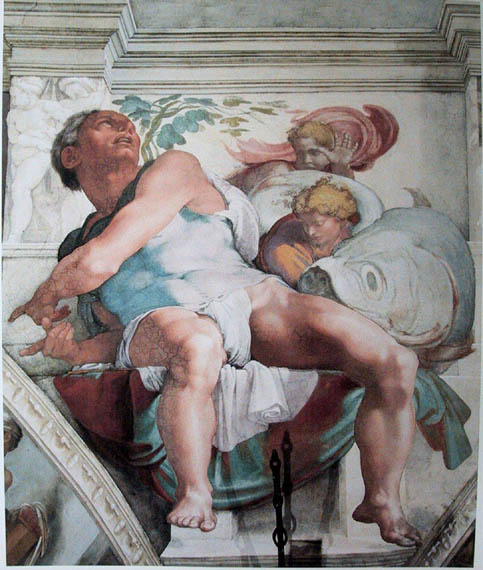
Jonah / Michelangelo / Sistine Chapel
God’s compassion is what Jonah loves most about God… when it comes to Jonah. It was God’s predisposition toward second chances, after all, that has kept Jonah alive throughout this book.
Jonah shows in Jonah 4 that he knew one of Israel’s creeds quite well: “I knew that you are a gracious and compassionate God, slow to anger and abounding in love, a God who relents from sending calamity.” And he rightly takes the shade-giving vine as God’s provision for him.
But if God’s provision and compassion toward Jonah is what keeps Jonah coming back to God, the Lord’s mercy toward despised others is what keeps Jonah running away from God.
Three times in this chapter Jonah tells God he’d rather die than watch his repentant enemies receive God’s clemency.
It almost makes you think about Peter’s three-fold denial of knowing Jesus. Jonah tries to deny God the opportunity to forgive whomever he wants to forgive.
Even the Animals
Jonah is angry enough to die. But God is concerned enough to save a clueless city…. even the animals!
Like in Jonah 4:11. Another translation follows the word order of the Hebrew a little more closely than the NIV, and punctuates the book’s ending with a mention of the animals!
“Should I not be even more concerned about Nineveh, this enormous city? There are more than one hundred twenty thousand people in it who do not know right from wrong, as well as many animals!”
A Heathen Animal of Nineveh, Pre-Repentance
Animals—there they are again! Putting on their sackcloth and mooing their repentance to the Lord.
Jonah loved the whale that saved him, but the worm that ate his shade—this animal he hated.
A vine that came up overnight, that Jonah had nothing to do with—he latched onto and cried when it withered. But a city full of hopeless people… well, he wanted them to wither like that vine… to go down into the depths and be consumed by worms.
But God loves all that he has made—evildoing humans, whales, worms, withered vines, and cursing sailors. Not one being is outside the scope of God’s loving care.
Good Theology, Bad Heart
Jonah gets a lot of things right. He’s right, I think, to be so angry at the perpetrators of injustice and oppression. He’s like every other God-inspired prophet who railed against those who tipped the scales to keep others down.
And he’s right about who God is, in verse 2 of the final chapter of the book: “a gracious and compassionate God, slow to anger and abounding in love, a God who relents from sending calamity.”
But not everything in Jonah’s head has made its way down into his heart. His theology at the beginning of this chapter sounds right, but he wants to apply the attributes of God just to himself.
It’s as if Jonah turns God’s words against him. He recites a well known formula, an articulation of who God is, but in a mocking tone of voice. In conflict resolution terminology, that’s called invalidating.
He’s like the prodigal son, who can’t stand watching lavish grace poured out on people who should have long ago forfeited the opportunity by their behavior. He’s the good guy, they’re the bad guys–why would God show them favor?
Which leads to an important question: Whom is God for? For whom exactly does God intend his salvation?
Whom is Christmas For?
And we might seasonally appropriate that question: Whom is Advent for? Whom is Christmas for?
Whose Light?
It would be easy in a season of preparation, to tend so much to our own hearts and lives, that we think only of how we receive Jesus for ourselves. We can spend so much time tending the vine, that we forget about the city we live in.
And we may be tempted to keep God’s compassion to ourselves and begrudge him when he shows mercy to those who have wronged us (and then turned to God). Well, we just wanted to see them get what was coming to them!
A Jewish commenter on this passage says, “It is not unusual for people to be so intent on the punishment of others that they lose their own way and are disappointed when people change their ways for the better.”
Jesus came into the world, offering light and life to anyone who would turn away from the darkness and turn toward him. And there are some really scummy people included in this invitation. How do we feel about that? What do we think of God’s way too liberal compassion? (I mean, he should pace himself more, right?)
Will we hide it under a bushel? Is God’s grace a proprietary character trait, only meant for the people of God? Jonah tried to hide under a vine, a divinely created shelter that he wanted only for himself.
But God sent a little worm to eat that thing up, in an effort to shake Jonah out of his self-focused slumber.
Choose Your Own Adventure
I like these stories with nuanced characters, ones whose interior lives are complex. I think this sort of storytelling is truer to the human condition.
And I resonate with Jonah. He gets it some of the time; other times, not so much. He really has a hard time just letting God be God.
One other thing that good storytellers do, besides writing full and complex characters, is to write compelling endings.
You can probably recall endings to novels that left you with goosebumps, because the last few lines of the story actually described a new beginning:
So we beat on, boats against the current, borne back ceaselessly into the past.
After all, tomorrow is another day.
Max stepped into his private boat and waved goodbye and sailed back over a year and in and out of weeks and through a day and into the night of his very own room where he found his supper waiting for him—and it was still hot.
These stories show characters with the hope of boats going on, even if into the past… they show the hope of a new day, the hope of a still-hot dinner, waiting in his room.
The narrator of Jonah is writing a new beginning into the end of the story.
But Nineveh has more than a hundred and twenty thousand people who cannot tell their right hand from their left, and many cattle as well. Should I not be concerned about that great city?
This is no tidy conclusion. It’s a question. It’s a rhetorical question, and we know the answer, just like Jonah knew the “right answer” in verse 2. But even as a rhetorical question, it invites—even demands—our response.
We have no idea how Jonah ends for Jonah. We don’t know if he’ll continue in his anger, or if he’s changed for the better.
But it really doesn’t matter… because it’s not just Jonah’s new day that the author concerned about… it’s ours. This is not The Great Gatsby or Gone with the Wind or Where the Wild Things Are. Jonah reads much more like a Choose Your Own Adventure book, where you, the reader, decide how the story ends for you.
The conclusion to Jonah requires our participation.
God has compassion on evil agents of empire when they come clean. The compassion that was always ours is now theirs—we have decide if we’re okay with sharing.
We are left with having to answer God’s question ourselves. The main character of the book of Jonah has always been God, with Jonah the most prominent supporting actor. But now we become the supporting cast, as we hear God ask:
“Should I not be concerned about that great city?”
Should I not be concerned about people who are killing each other, enslaving the innocent, beating the helpless, oppressing the poor, and destroying the environment?
Did I not come to earth to set despised evildoers free, too, should they accept my love?
Do you have any right to be angry at my gratuitous acts of incarnation, crucifixion, and resurrection for the life of the world?
Is this not the way, God asks, of my breaking in on earth, that I should have mercy on whom I will have mercy, and compassion on whomever I please?
This doesn’t mean there won’t still be justice, but do you have any right to be angry, God asks, when I decide to save the ones who should be smitten down?
The book of Jonah all boils down to that burning question: What will your response be, O reader, to the ways and work of God? Can you only accept it on your own terms, and keep God’s grace close to home? Or can you see Jesus as coming to earth for everyone, a gift of love for anyone who would believe?
Jonah ends here—but for us, the revelation of God’s concern for oppressors is not a period, but an ellipsis….
When Jesus comes, will we receive him largely for ourselves? Or can we receive him on his own terms, and open our hearts to his compassion so that we overflow with love toward even the most corrupt parts of God’s creation?
The skilled storyteller invites us now to take up the pen…
Jonah Thrown into the Sea, by Peter Paul Rubens (1577–1640)
Advent is a season of preparation, of expectation, of taking stock before the Christ comes.
In his mercy Jesus came into the world to save a wayward people. In his mercy Jesus comes to us each day and dwells with everyone—woman, man, and child—who calls on his name.
Jonah—that recalcitrant prophet who finally cried out to God from inside a giant fish—knew God’s mercy. It was probably a deep appreciation of God’s grace and a desire to share it with others that led Jonah to the prophetic vocation in the first place.
Yet the book of Jonah shows a follower running in the opposite direction of his Lord.
“I knew that you are a gracious and compassionate God, slow to anger and abounding in love, a God who relents from sending calamity,” Jonah will say in the fourth and final chapter of the book bearing his name. “That is why,” Jonah said, “I was so quick to flee to Tarshish.”
Reading the first few verses of Jonah, we think he is fleeing from God because he has to call a powerful, godless empire to repentance—and that would involve some serious risk to the prophet’s life! But at the end of the book, Jonah reveals it wasn’t fear for his safety that led him away from Nineveh; it was fear that this heinous people would actually accept and receive God’s mercy.
The same God of mercy who had drawn near to Jonah and won his heart now wanted to draw near to the unworthy city of Nineveh.
A King and Savior drew near—to one of Israel’s most despised enemies in the 8th century B.C., the Assyrian Empire. And—hope against hope—Nineveh’s king repented and called the rest of the city to “give up their evil ways and their violence.”
Our King and Savior now draws near—through our remembrance of the Incarnation, a scandalous act of God’s lavish mercy to the undeserving. The Incarnation would culminate in the crucifixion, an act by which Jesus would draw all people to himself—from sacred Jerusalem to Gentile Nineveh, from Main Street to Wall Street.
Our King and Savior now draws near—through the promise of Christ’s second coming, to be at an hour which no one knows, at a time when we least expect it.
Our King and Savior now draws near—in daily interactions with neighbors, in world events, among the least and the last, and to our own hearts.
The book of Jonah teaches us who have accepted God’s mercy that we are to extend God’s lavish love to everyone. We should not begrudge God’s grace given to those we most despise.
That’s easier said than done.
Reading through Jonah, we do well to pay special attention to what it reveals of its main character (Jonah’s God), to Jonah’s internal struggles (and how it resonates with our own), and to the repentance of unlikely characters (the sailors, the Ninevites).
And may we each consider, as we meditate on the unfolding of God’s mercy, from Jonah to Jesus:
Our King and Savior now draws near—how do I receive him?
The above is adapted from an introduction I wrote for my congregation as part of an Advent Reading Guide to Jonah. (A number of us are reading a chapter of Jonah each week of Advent.) More on Advent and Jonah to follow.
They screamed in the face of death, their frightened bodies clawing
at sodden rigging, tattered by the storm,
and horror-stricken gazes saw with dread
the sea now raging with abruptly unleashed powers.
“Ye gods, immortal, gracious, now severely angered,
help us, or give a sign, to mark for us
the one whose secret sin has roused your wrath,
the murderer, the perjurer, or vile blasphemer,
who’s bringing doom on us by hiding his misdeed
to save some paltry morsel of his pride!”
This was their plea. And Jonah spoke: “’Tis I!”
In God’s eyes I have sinned. Forfeited is my life.
“Away with me! The guilt is mine. God’s wrath’s for me.
The pious shall not perish with the sinner!”
They trembled much. But then, with their strong hands,
they cast the guilty one away. The sea stood still.
–“Jonah,” Dietrich Bonhoeffer, written from prison the year before his death
















 Words on the Word