The Real Reason We Don’t Take a Sabbath

Traffic Jam
One of the many things New Englanders are good at is taking a summer vacation. You see the evidence of this if you are driving on 128, 95, or 93 on a Sunday afternoon or evening, when everyone is coming back from a weekend or day away.

Nonetheless, our life’s work can easily take over if we’re not careful. We forget the truths of Psalm 127—that it is God who makes our work truly come alive. We do our work with a sort of Tower of Babel mentality… I’m just going to get this done really quick by myself.
 

Unless the Lord Builds….

 
Psalm 127:1-2 says:

Unless the LORD builds the house,
      its builders labor in vain.
Unless the LORD watches over the city,
      the watchmen stand guard in vain.
In vain you rise early
      and stay up late,
toiling for food to eat—
      for he grants sleep to those he loves.

The other day I finished an intensive summer class on Cross Cultural Counseling. The final paper I turned in was in its 7th or 8th draft when I finally clicked the Send button to submit it to my professor.

So recently I can relate to “rise early and stay up late.” If your life’s work involves taking care of other people, early mornings or late nights when they are asleep might be your best time to work through your task list. These two verses don’t say not to do that. But they do caution us against squeezing more hours out of our day without deliberately inviting and acknowledging God’s presence in those working hours.

I can stand watch early over my work, but that work is good only because God stands watch with me. Work without God, Solomon says, is in vain.

Besides that, you need to sleep. God knows that. Sleep is part of the benefits package, if you will, of those who work with the God of Israel.

“He grants sleep to those he loves.”  (I.e., to everyone.)

Our bodies have an amazing way of getting sleep when they need it. If we go for too long without enough sleep, our bodies just shut down. We may fall asleep involuntarily. This is one of the ways, I think, that God grants sleep to those he loves: When we’re tired enough, our bodies will sleep, whether we want them to or not. So you might as well get out of your chair or off the couch, brush your teeth, and get in your bed.
 

Why We Should Take a Sabbath

 
Another manifestation of God’s granting of sleep—rest—to the ones he loves is the gift of a Sabbath day. A Sabbath day of rest is part of the natural, biological rhythm that God set up from the very beginning of creation. God did his work—created the heavens and the earth, life and all that is in them—in six days. And on the seventh day, he rested. He didn’t do or create anything. Six days on, one day off.

Psalms of SummerWe don’t need much intellectual convincing of the value of Sabbath-keeping. We know that practicing the Sabbath follows God’s pattern of six days on, one day off. (Work and rest, work and rest… not: work and work, work and work.)

We know that keeping a Sabbath re-orients us to God, in case we forgot about God during the rest of the week. We experience Sabbath as a gift of refreshment when we most need it, part of the full life that Jesus promised. (A Sabbath-less life is really only half a life.)

And who wants to eat what verse 2 of this Psalm calls “the bread of anxious toil”? We’ve ordered and eaten that dish, right? It’s disgusting. The bread of anxious toil leaves a bad aftertaste; it gives you heartburn.

Besides, we can’t really be productive 7 days a week anyway. Even multitasking doesn’t really give us an edge. A New York Times article says, “In fact, multitasking is a misnomer. In most situations, the person juggling e-mail, text messaging, [on] Facebook and [at] a meeting is really doing something called ‘rapid toggling between tasks,’ and is engaged in constant context switching.” We can’t just keep switching contexts and rapidly “[toggle] between tasks” for 7 days. That’s exhausting.
 

Sabbath: Not Just a Day, A Mindset

 
The practice and mentality and posture of Sabbath-keeping is not just for one day, but we can practice a Sabbath mindset in all of life, turning to God and acknowledging his presence in our work and in our rest, in our waking hours and in our sleeping hours.

Clement of Alexandria, one of those highly quotable early church dudes, said,

Practice husbandry if you’re a husbandman, but while you till your fields, know God.  Sail the sea, you who are devoted to navigation, yet call the while on the heavenly pilot.

Here’s how The Message puts Jesus’ words in Matthew:

Are you tired? Worn out? Burned out…? Come to me. Get away with me and you’ll recover your life. I’ll show you how to take a real rest. Walk with me and work with me—watch how I do it. Learn the unforced rhythms of grace. I won’t lay anything heavy or ill-fitting on you. Keep company with me and you’ll learn to live freely and lightly.

That’s what we want. That sounds amazing. We need no convincing whatsoever of the value of Sabbath-keeping, both as a distinct day of the week and as an ongoing daily mindset.
 

Why We Don’t Keep Sabbath, Really: Internal Competing Values

 
And yet, we don’t take a Sabbath as we should. Or we do, but three days into the week, we forget to practice a daily Sabbath orientation toward God with complete reliance on him. We turn to our own inner resources to face our life’s work.

Euguene Peterson warns against “un-Sabbathed workplace” when he says,

[W]ithout a Sabbath…the workplace is soon emptied of any sense of the presence of God. The work itself becomes an end in itself. It is this ‘end in itself’ that makes an un-Sabbathed workplace a breeding ground for idols. We make idols in our workplaces when we reduce our relationships to functions that we can manage. We make idols in our workplaces when we reduce work to the dimensions of our egos and our control.

Why do we do this? We don’t really think about other people as just relationships to be managed, do we? We’re not really egomaniacs, right? At least, in the depths of our beings, we don’t want to live like that.

Is this as simple as just saying, “Okay, well, I guess we need to take a Sabbath more. We should practice a Sabbath mentality more often in our daily endeavors”? We’re just a forgetful and disobedient people and we need to obey to this 4th commandment.

There is some truth to that. But I don’t think it’s just disobedience or forgetfulness or laziness that leads to an un-Sabbathed life.

I think the main Christians don’t take a Sabbath, or don’t practice a daily Sabbath mentality, is because of our competing internal values.
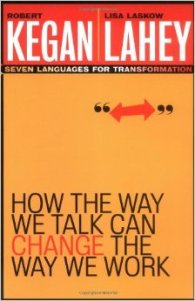
Kegan and LaheyTwo educators at Harvard—Kegan and Lahey—have a diagnostic grid that I’ve found immensely helpful for unearthing my sometimes subtle competing values. It’s from their book How the Way We Talk Can Change the Way We Work.

The essence of their diagnostic is to begin with a commitment or value or belief—something where we say it’s really great if this happens. In this case, to adapt their language, “We are committed to the value or importance of… Sabbath-keeping,” both as a distinct day and as a mentality throughout the week.

Then we ask, “What are we doing or not doing that prevents this from happening?” So think for a moment, what are you doing or not doing that prevents Sabbath-keeping and rest from happening?

There may be some forces outside of your control—small children, an overbearing boss. But what are you doing that prevents a Sabbath rhythm in your life?

Underneath the answer to that question is a competing commitment or value or belief. Based on what I’m doing to undermine my Sabbath-keeping—checking email on a day off, not calling in anyone else for help–“I may also be committed to…” getting everything done myself and making sure it gets done right. Or, “I may also be committed to” just keeping going, because I have to.

Where Kegan and Lahey’s grid gets really fascinating is in what comes after you’ve unearthed your competing value. They suggest that each competing value carries with it a big assumption that may or may not be true.

If I don’t do this task, it will never get done, and there is no one else in the entire universe who can do it as well as I would.

Or, I’m committed to working 7 days a week (competing value), because (here’s the big assumption) if I stop and take a Sabbath, I’ll be so stressed out the day after the Sabbath with catching up, that it won’t have been worth it.

Or, if I slow down enough to practice a Sabbath mentality, I might become less productive.

Walter Bruegemmann talks about this kind of assumption as a scarcity mentality. He says:

There’s never enough time; there’s never a moment’s rest. … But how willing are we to practice Sabbath? A Sabbath spent catching up on chores we were too busy to do during the week is hardly a testimony to abundance. [It] does nothing to weaken the domain of scarcity. Honoring the Sabbath is a form of witness. It tells the world that ‘there is enough.’”

There is enough. There is enough time for us to stop on the 7th day, and to slow down on the other 6 days and to dwell in the watching presence of God.

It’s true that we have a bundle of competing values, commitments, and assumptions that keep us from fully practicing God’s call to a Sabbath rest.

But ultimately, a Sabbath way of life acknowledges that God is God and we are not.

God can and does complete building projects that we cannot finish. God can and does stay awake watching, guarding, protecting, so we can sleep.
 

A Modest Experiment: Four Weeks of Sabbath

 
Here’s the final square in Kegan and Lahey’s competing values diagnostic: Try “a modest, safe test.”

back to school
NO.

I had to pinch myself the other day when I saw a “Back to School” sign up at the store. Our summer just started! But we’re just a few weeks away from Labor Day.

It’s time to start planning your fall, if you haven’t already. And I would propose that as you do, you try a “modest, safe test,” with regard to Sabbath-keeping.

Plan a Sabbath each week for the next four weeks and keep it. Make it a Sabbath from technology. From your job. From household chores. And after four weeks, evaluate it. See how it went. See if all the things you thought would go wrong (if you took a break), actually did go wrong.

Or… see if you find yourself refreshed and living with a heightened awareness of God’s watching presence. See if you find the scarcity you feared… or, if you find instead an abundance of good gifts from the God who gives rest to the ones he loves.

I preached on Psalm 127:1-2 this last Sunday, from which the above is adapted. See my other Psalms sermons here.

The Gay Bonhoeffer?

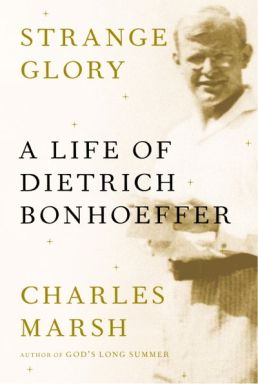
Strange Glory
Was Bonhoeffer gay? That’s been a focus of inquiry and discussion since Charles Marsh has suggested the possibility in his new biography of Bonhoeffer, Strange Glory: A Life of Dietrich Bonhoeffer.

There is an excellent summary of the discussion from Sarah Pulliam Bailey here, which links to the major reviews of Strange Glory thus far, as well as offers insight on Bonhoeffer’s sexuality from a few Bonhoeffer scholars. (Her section heading “Speculation without confirmation” seems appropriate, though one could also question the appropriateness of the speculation itself.) There is also this New York Times review of the book, just published on the newspaper’s site today.

Wesley Hill offers some valuable and nuanced perspective (as does Charles Marsh, whom he quotes) in this post at the Spiritual Friendship blog.

Of course, Marsh’s biography covers much more territory than just the nature of Bonhoeffer’s relationship with Eberhard Bethge. I have the Marsh biography, though have yet to complete the Bethge biography. I look forward to reading Marsh firsthand soon.

Biblia Hebraica Quinta (BHQ) Update: “State of the Edition”

The Biblia Hebraica Quinta (BHQ) will supercede the current scholarly edition of the Hebrew Bible, the Biblia Hebraica Stuttgartensia (BHS).

I reviewed the BHS module in Accordance Bible Software here, and posted at length about the BHQ here, if you want a primer. Short version: Emanuel Tov says it is “much richer in data, more mature, judicious and cautious than its predecessors. It heralds a very important step forward in the BH series,” though he notes that its notations are “more complex” and “less user-friendly for the non-expert.”

Here is BHQ on Amazon; here it is at Hendrickson Publishers’ site.

Hendrickson sent out an update today with the BHQ publishing schedule as it currently stands. Most volumes are “in preparation,” but the schedule (available here) notes that Ezekiel (ed. by Johan Lust) is coming in 2016 and Numbers (ed. by Martin Rösel) is coming in 2017.

When Your World Gives Way, Sing it ALAMOTH (Or, Why Obscure Liturgical Notes at the Top of the Psalms Matter)

 
Psalms of Summer
 
Psalm 46 begins with some liturgical instructions, one of which is unclear. Here is the superscription to the Psalm, a sort of post-it note tacked onto the sheet music:

For the director of music. Of the Sons of Korah. According to Alamoth. A song.

The Psalm itself will divide thematically this way:

  1. Natural Disasters: 
But God is a strong refuge 
(vv. 1-3)
  2. Human Violence and Tragedies: 
But God rules over violence
 (vv. 4-7)
  3. Be Still and Know: 
Despite both of the above, God is God; God is with us
 (vv. 8-11)

11 Psalms are attributed to the Sons of Korah. Korah himself is not a major Biblical figure, but he and his descendants were Levites, involved in musical leadership. This portion of the inscription is clear enough—it’s “a song.”

Alamoth, a Hebrew word that goes untranslated in the 1984 NIV, means “young women.” Alamoth could have been just the name of a musical setting—like singing the doxology to the tune of Old 100th. Or Alamoth could have meant that this song was to be sung by young women—by sopranos—and so it is high-pitched. (HT: P. C. Craigie)

Or Alamoth could have just been how the choirmaster preferred to take his apple pie.

(Sorry.)

But—back to business—the fact that this is a song, and marked as a song, with details about how to sing it, is significant.

Here you have a people confronted with natural disasters, human violence, and tragedies… and their worship leaders call them in response to sing!

Lord, open our lips.
And our mouth shall proclaim your praise.
 
I preached on Psalm 46 this last Sunday, from which the above is adapted. This is the final of three posts this week about that Psalm. I wrote about it here and here, too.

The First Youth Ministry Talk I Never Gave

A Day of Hope cover slide.001

On September 16, 2001, I was planning to deliver my first ever message as a vocational youth minister. It would have been about Philippians 3.

I had just taken a position at an Episcopal church in Illinois as part-time youth minister. In my excitement to start ministering among youth and families, I invited all the parents of youth to come to our first youth worship service that Sunday. In the weeks leading up to that service I worked hard on my sermon, which was going to be about Paul’s pressing on toward the goal and striving to know Jesus Christ more and more. I hoped this would be a central theme in my new ministry.

On Monday, September 10, 2001, I went for a long run and mapped out the outline to my talk. I came back from my run refreshed and ready to go; I couldn’t wait to begin that Sunday.

The next morning, as I walked to a youth ministry class, my friend Michael asked me if I had heard the news. What news, I asked? He told me about a plane, commandeered by terrorists, crashing into the Twin Towers of the World Trade Center in New York, taking the lives of thousands of people. When I arrived at class, my professor turned on the TV as our session was set to begin and just said, “I’m going to stay here and watch the news about this; feel free to stay if you like; feel free to go home if you need to.”

Maybe it goes without saying, but I didn’t preach to the youth and their families that following Sunday about Philippians. Instead, I turned to Psalm 46, and tried to convey some sense of hope, because of the strength we can find in God, even when awful things happen.

To try to do that I used a collection of projected images (that we had been seeing in the news all week anyway), with the text of Psalm 46, bit-by-bit, underneath, next to, or on top of the images.

Here is a .pdf version (unedited since then) of our worship focus that morning. Though it’s been almost 13 years since that Sunday, I’ve found myself–still–turning to this Psalm in the wake of tragic events.

I preached on Psalm 46 this last Sunday, from which the above is adapted. See also here.

An Interculturally Aware Read of Psalm 46 (Location, Location, Location)

Psalms of Summer

As I have read and preached on some Psalms this summer, I’ve appreciated the importance of trying to practice intercultural sensitivity in reading the Bible (and in all of life).

I am working on a course on intercultural counseling this summer, one purpose of which has been to help build intercultural competence and sensitivity.

The readings, lectures, and class discussions have reminded me of the important truth that reading and interpreting the Bible is an exercise–whether we realize it or not–in intercultural relations.

Intercultural Sensitivity=Better Bible Reading

The culture, values, and practices, for instance, of ancient Israel differ from those of 21st century North America in a number of ways. If I read a passage with only an awareness of the cultural values I carry with me, I very well may miss an important truth or robust reading of a text. Or I may map a “truth” or value judgment onto the text that the author didn’t necessarily intend to be there. (I’m not discounting the potential value of so-called reader-response criticism, but I am suggesting we seek to avoid a monocultural or culturally hegemonic interpretation of a text, if possible.)

In a 2008 article for Journal of Spiritual Formation & Soul Care (“Relational Spirituality and Transformation: Risking Intimacy and Alterity”), Steven J. Sandage, Mary L. Jensen, and Daniel Jass write:

Since hermeneutical understanding is always intercultural and contextual, cultural self-awareness is a prerequisite to responsibly interpreting Scripture and spiritual experience.

I mentioned here how the idea of intercultural sensitivity helped me read Psalm 23 in a fuller way. The same thing happened as I prepared to preach on Psalm 46 this week. I got a little extra help this time from a Bible atlas I’ve been reading.

Psalm 46: God Is Our Refuge

Psalm 46 begins:

 1 God is our refuge and strength,
an ever-present help in trouble.
2 Therefore we will not fear, though the earth give way
and the mountains fall into the heart of the sea,
3 though its waters roar and foam
and the mountains quake with their surging.

How should we understand the scenario the Sons of Korah (writers of this Psalm) describe?

Mountain and WaterThe sons of Korah don’t just paint a picture of tragic events befalling God’s people—it’s the complete disintegration of all of life that is the dominant metaphor in these verses. A number of commentators point out here that the effective merging of the land (mountains) and waters (sea) harken back to the pre-creation state of chaos that existed before God separated the land from the waters, bringing order to life. The sons of Korah, then, describe a sort of uncreation.

But even in the midst of an envisioned chaos and uncreation of the world (!), “God is our refuge and strength.”

Verse 2 says, “though the earth give way,” or, though the land give way. Here is where an interculturally aware read of the Psalm helps it to come alive even more profoundly. (The below was inspired, in part, by Paul H. Wright’s Rose Then And Now Bible Map Atlas® With Biblical Background And Culture.)

Life for Israel: Location, Location, Location

Before there was such a thing as real estate, life for Israel already was location, location, location.

The topography or shape of the land had a lot to do with whether a given area would be suitable for habitation. Mountains, in particular, provided a sort of natural buffer of protection against enemies… a hiding place to run to, if need be. Water, of course, was necessary for life and the production of crops.

Mountains in Edom (photo: Garo Nalbandian, from Carta's Sacred Bridge atlas)
Mountains in Edom (photo: Garo Nalbandian, from Carta’s Sacred Bridge atlas)

The congregation of Israelites who would sing this Psalm understood their identity as intricately tied to the land. The land—which God had given them—was part and parcel of his covenant relationship with them. It was part of his blessing, a sign of his love. If we don’t have this land, how can we really call ourselves God’s people? This is still a live question for many.

Yet even if we were to lose this fundamental aspect of our identity, the Psalm declares, even if the world were to be uncreated and fall back into chaos, “we will not fear.”

The congregation can still say—can still sing, “God is our refuge and strength, an ever-present help in trouble.”

Given how important land was to the people of Israel and the construction of their collectivistic identity, this is an amazing affirmation of trust in God.

Intercultural Insight from a Bible Atlas

Paul Wright AtlasPaul H. Wright’s cultural awareness and sensitivity is present from the very first chapter (“The Landed Context of the Biblical Story”) of his biographically-arranged atlas:

To start, it is perhaps appropriate to define a few aspects of location that have impacted living conditions in the lands of the Bible over time. The building blocks of biblical geography include the following….

He lists topography, climate, and available resources. He goes on:

The particular mix of elements such as these plays a significant role in determining whether any given plot of ground can support permanent settlements and how large and well-established these might have become, or if the land is better suited for herding or desert lifestyles.

Here’s the intercultural piece, which I so appreciated:

Specific geographical realities have also helped to shape cultural values and norms that defined individual societies. For instance, protocols of cooperation, hospitality and defense that functioned well in arid, shepherding societies in biblical times developed differently than did those that attained to urban centers located in fertile areas, or to sailors who frequented foreign ports-of-call. And aspects of geography gave rise to specific images that biblical writers used to describe God and the people of ancient Israel.

Understanding the value of land to the people singing Psalm 46–it was an essential component of their identity and experience of God’s love for them!–makes the affirmation of trust in this Psalm even more remarkable.

Though the sons of Korah envision a scenario in which their land is gone–having slipped into the ocean–they call on the congregation to praise God still.

The above is adapted from a portion of a sermon I preached yesterday. Rose Publishing has sent me the Wright atlas for review purposes. A full review is forthcoming. You can find the atlas in the following places: Rose Publishing, Amazon (affiliate link), Carta (as Greatness, Grace, and Glory: Carta’s Atlas of Biblical Biography), and Eisenbrauns (same title as Carta).

Mother Teresa: Some Difficult Words

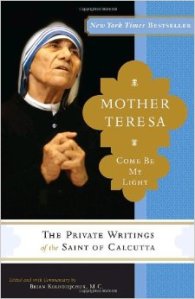
Mother TeresaThese are good but difficult words from Mother Teresa. They were noted today on Plough, the Website where I mentioned finding the free Oscar Romero book. I’ve just subscribed to Plough Quarterly and am already enjoying the content of the site greatly.

Today I came across this arresting, powerful, and difficult quote from Mother Teresa:

God cannot fill what is full. He can fill only emptiness – deep poverty – and your “yes” [to Jesus] is the beginning of being or becoming empty. It is not how much we really “have” to give – but how empty we are – so that we can receive fully in our life and let him live his life in us. In you today, he wants to relive his complete submission to his father – allow him to do so. Take away your eyes from yourself and rejoice that you have nothing. 

Eusebius’s Onomasticon in Greek, Free (and Where to Find it in English)

One of many cool things about Carta’s Sacred Bridge atlas is its use of original/source languages.

For example, when The Sacred Bridge (TSB) cites Eusebius’s Onomasticon (a 4th century list of Bible place names), it does so both in its original Greek and in English translation.

OnomasticonThis, of course, got me to wondering about Eusebius in Greek. Using The Sacred Bridge in Accordance, I can easily pull up all the times TSB cites Eusebius (more on this later).

Then I wanted to know where to find more Onomasticon in Greek.

After a short hunt, I found this digital edition of the Onomasticon in Greek. I thought I would pass it on in case anyone else using the atlas in English wanted to be able to access the Greek.

Brill has an expensive triglot edition, and De Gruyter has one with Greek and Syriac, but the above is free and online.

Eusebius’s Onomasticon (in English translation, and with English translation of Jerome’s Latin translation/expansion of Eusebius) is here in Accordance, here on Carta’s site, and here at Eisenbrauns, Carta’s North American distributor.

Septuagint Studies Soirée #9 and #10: Buy One, Get One Free Edition

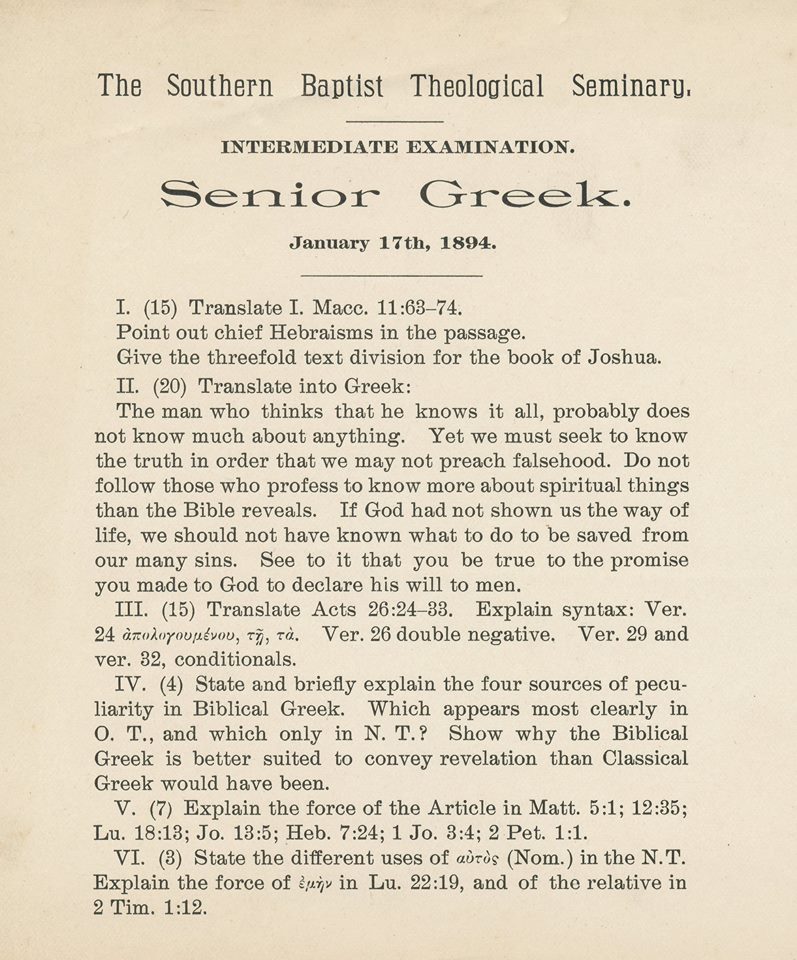
How would you do on this exam?

The Septuagint Studies Soirée is back. You can find all previous months gathered here, where I post links to what I find around the blogosphere in Septuagint studies. This soirée covers two months: April and May.

T. Michael Law continues to dominate the Septuagintablogosphere with his Septuagint Sessions podcast. Since the last soirée he posted episode 4 (on Greek Isaiah’s style), episode 5 (“Your BHS is safe with me!”), and episode 6 (“about a problem in research on the LXX that stems from a canonical bias”).

Suzanne McCarthy at BLT asks whether Judith was originally written in Greek or Hebrew. She also looked at our two “prototypical parents” in Greek Genesis 3 and 4. Her co-blogger J.K. Gayle examined the use of “baptism” in Plato and the LXX. BLT is one of the more substantive biblioblogs I read. You would do well to bookmark BLT’s Septuagint tag page, which includes even more recent LXX-related posts. (Also, add this one to your slate of BLT posts to read.)

Linguae Antiquitatum posted a nice review (with some interesting pedagogical musings) of a book about teaching beginning Greek and Latin. The same blog posted the first ever “Ancient Languages Carnival.”

Mosissimus Mose continues an ongoing review of  T. Michael Law’s When God Spoke Greek. Chapter 5 posted in May.

William Ross posted about papyri.info, and offered this and this post as to how to use it for LXX research.

Summer beach reading?

Brian Davidson at LXXI suggests some summer reading. If you have made it this far in reading this post, you might even consider his recommendations to be good beach reading.

Here is Ed Gallagher on “The Greek Bible among the Jews.” And here he is with an illuminating post on the word “deuterocanonical.”

We’ve been in Easter season. And the LXX may have had “an increasing awareness of resurrection theology.” Read a short but fascinating post about it here.

Allow me to make a plug again for The International Organization for Septuagint and Cognate Studies (IOSCS), which publishes a yearly journal. I’m excited to say that the forthcoming issue will include a fairly lengthy review article I’ve written about the use of Bible software for Septuagint studies.

Finally, check out Jacob Cerone’s post of a Greek exam given in the late 19th century by John Broadus and A. T. Robertson (pictured at the top of this post). He even takes part of it and posts his answers. Nice work, Jacob!

One last note–Rod Decker passed away this last month. Read a note from his family here. I’ve found his Koine Greek Reader and Septuagint-related vocabulary lists quite helpful. He will be missed.

Did I miss anything? Feel free to post an LXX-related link in the comments. Until next time!

“The Biblical Picture is Not of What Someone Receives from the Church….”

Bock BECNT Acts

Here are some words of wisdom from Darrell L. Bock, writing about Acts 2:42-47, on which I’ll be preaching tomorrow:

The biblical picture is not of what someone receives from the church, although one does receive a great deal, but of what one gives and how one contributes to it. The portrait of the early church in Acts shows that community and the welfare of the group were a priority. …[T]he believers’ preaching was matched by their community, making a powerful testimony for their mission. When the early church said that God cared, the care they gave their own demonstrated this.