Uproar: Why the Yankees Can’t Buy Their Way to a World Series

Credit: AP

A “system” is a process with its distinct yet interrelated parts. An organism or institution may consist of multiple systems. For example, various interlocking systems (nervous, skeletal, respiratory) make up the one human body. The human body is its own unified system with all these smaller systems working together. The church is a system full of complex humans—a system full of systems, you might say.

The Bible uses systems imagery in Romans 12: “For just as each of us has one body with many members, and these members do not all have the same function, so in Christ we, though many, form one body, and each member belongs to all the others.”

In a healthy human body, all the systems do their part and work together as one. In a healthy church, all the “systems” (interrelationships) work together toward unity in Christ. Peter Steinke says, “Health is a continuous process, the ongoing interplay a of multiple forces and conditions.”

This is why, for example, the New York Yankees can’t just buy their way to a World Series. They could have all the best players, on all the most expensive contracts, but if they don’t work well together as a team (“one body”), they won’t win. The Red Sox (or the Tampa Bay Rays!) will beat them every time. It’s not just about all the parts, but how the parts connect and work together as one.

Because you and your leadership do not exist in isolation, what you model as a Christian leader can ripple through the whole congregation (system). This is true of attendees who are not leaders, too. Think, for example, about how “contagious” giving can be, and how matching gifts can enact a process where people are inspired to give.

The downside to a system like the church, where patterns can be contagious, is anxiety. Anxiety is about as catchy as the omicron variant of COVID. Because the church is one body—interconnected with various systems and processes that affect each other—anxiety in one part of the church spreads and affects what is happening in another part of the church. For example, if there’s anxiety about a budget-setting process, that can spread into other parts of the church, like how we relate to each other in small groups. Or a parishioner might lose a loved one and direct the anger outward at a church leader or other member. Or this classic example: Bob has had a stressful day at work, because his boss yelled at him (because his boss fought with a spouse before work), so Bob comes home and kicks the dog. The dog isn’t legally employable, and yet the anxiety from Bob’s workplace (and Bob’s boss’s marriage) has spread to the poor pooch. Steinke refers to this as “shifting the burden” or “blame displacement,” also known as scapegoating. Systems crave stability, and sometimes the drive to release anxiety causes members to act in reactive and unhealthy ways. Anxiety is normal. It just needs to be regulated.

In his book Uproar: Calm Leadership in Anxious Times, Peter Steinke calls leaders to be a non-anxious presence: “To be a non-anxious presence,” he says, “means to acknowledge anxiety but not let it be the driver of behavior.” “Non-anxious” is the ideal, but a bit of a misnomer. Everybody has some anxiety. But good leaders strive—with God’s help!—to be at least a less-anxious presence.

Uproar, Introduction

In an “emotional system,” the emotional temperature comes from the people, and from the relationships people have, and from the culture and processes that are embedded there. An emotional system can be a congregation, a non-profit, a medical practice, a denomination, a family, or a small group.

Steinke lists some key ways that “leaders impact a system.” Then he says, “The overall health and functioning of any organization depends primarily on one or several people at the top who can exercise the above characteristics well.” He says, “Any social system—a family, workplace, or even a whole society—improves when people function less and less in reactive ways and more and more on the basis of values and beliefs sustained by clear goals.”

Uproar, chapter 1: “Living Nowhere between Two Somewheres”

Steinke writes:

Living nowhere between two somewheres has been called “the liminal experience,” the “neutral zone,” and the “transition space.” My own term is “Uproar.” Uproar is a time of dislocation; everything is “up in the air” or “at loose ends.”

We live in anxious times. And anxiety wishes to resolve itself, to be relieved. We don’t always pursue this in healthy ways. Sometimes we look for (or try to be) “rescuers,” placing unreasonable expectations on our leaders. But:

If the leader becomes anxious and forfeits calm reflection, the system is essentially leaderless. Anxiety tumbles down like loose rock dislodged from a high position. In a time of Uproar, the leader cannot be as anxious as everyone else.

The non-anxious leader should be differentiated, having a clear sense of self. They are neither overly close to others (emotionally “fused”) nor too emotionally distant (“cutoff”). Many people have stories about family members who were co-dependent or overly distant. The church is not immune to this dynamic.

Well-differentiated leaders know who they are. They find their identity in Jesus, and are not afraid to let other people be who they are, even when they disagree. Differentiated leaders do not change themselves to match other people, nor do they automatically withdraw from people or coerce them when there is disagreement.

Steinke:

What does this mean for leadership functioning? Either the leader becomes unengaged with others (acts rigidly, dominates, withdraws, becomes overly dogmatic) or too close (panders, seeks consensus, shifts with the wind for the sake of harmony). …In highly anxious times, people tend to tilt toward one or the other extreme in order to survive.

I’d sum it up like this:

  • Well-differentiated leaders know who they are
  • We find our identity in Jesus, and are not afraid to disagree
  • Differentiated leaders do not change themselves to match other people
  • Differentiated leaders do not withdraw from people or coerce them when there is disagreement.

We can pray that God’s peace would empower us to be a loving, non-anxious presence in our congregations.

Uproar: Calm Leadership in Anxious Times


At the church I pastor, our elders have been reading through a powerful book called Uproar: Calm Leadership in Anxious Times. It’s the final book written by Peter Steinke, whose books I’ve interacted with here and here.

Why am I leading our leaders through Uproar? Among other reasons, because anxiety confronts us at multiple levels:

  • our own individual insecurities that we don’t measure up or aren’t doing enough
  • anxieties that unwanted patterns from our family of origin will just repeat themselves in other settings
  • congregational anxieties: building space, attendance, an aging congregation, the absence of younger/newer folks, still not seeing some of our folks who attended before the pandemic
  • societal anxieties: take your pick! COVID-19, racism, inflation, Putin/Ukraine, social media, violent rhetoric from public officials

Steinke uses family systems theory to help us know how to be a non-anxious (or less anxious) presence in the midst of all these multiple anxieties. Understanding how to respond maturely and faithfully to anxiety will make us more effective leaders, not to mention better and fuller versions of ourselves.

On a personal level, family systems theory and the practice of a non-anxious presence have been powerful helps for me in pastoral ministry the past few years. I want to share with my fellow leaders what I’ve learned on my own leadership journey.

And I’d like to share those lessons, too, here at Words on the Word.

Our church’s leadership is five chapters in to Uproar, and even though it’s less church-specific than Steinke’s other works, we’ve been finding powerful applications—in a congregational setting and beyond. In the midst of life’s anxieties, family systems theory and especially the idea of being a non-anxious presence can help us build individual and organizational capacity. This is true whether we’re in conflict situations right now, or even if any of our life spheres are relatively conflict-free. In fact, it’s in conflict-free times that conversations about reducing anxiety can be most powerful—certainly easier. “An ounce of prevention is worth a pound of cure.”

I didn’t set out to do it at first, but I’m creating short study guides for the chapters we discuss, and I’ll post adaptations of those here in coming weeks. In the meantime, check out Uproar here or at your local library. Below is its full Table of Contents. Let me know in the comments if you have read or are reading this book.

Full Table of Contents

INTRODUCTION

PART I: THE NEW CONTEXT

1 Living Nowhere between Two Somewheres
2 Anxious Times
3 Societal Emotional Process

PART I: THE LEADER’S PRESENCE

4 Heads Up!
5 The Non-anxious Presence
6 Impacting the Emotional System

PART III: THE LEADER’S FUNCTIONING

7 The Balancing Act
8 At the Edge
9 The People of the Charm

PART IV: THE LEADER’S CHALLENGE

10 Rocking the Emotional Boat
11 We versus They
12 Staying Calm and Courageous, No Matter What

POSTSCRIPT

God of the Ship of Theseus: A Thought Experiment for Church Identity

The other night I was gazing upon the city skyline, and I counted about a dozen different cranes rising over the buildings.

I started wondering: if every brick and every slat of every building in Boston were eventually replaced, would it still be Boston?

In philosophy, there is a similar thought experiment: “The Ship of Theseus.”

To explain the Ship of Theseus, I give you Marvel Comics’ final episode of the show WandaVision, where the superhero Vision is confronted with essentially a clone of himself. They are trying to figure out which is the true Vision, so they turn to the Ship of Theseus.


The Ship of Theseus in an artifact in a museum. Over time its planks of wood rot and are replaced with new planks. When no original plank remains, is it still the Ship of Theseus?

Secondly, if those removed planks are restored and reassembled, free of the rot, is that the Ship of Theseus?”

One of the two superheroes named Vision replies, “Neither is the true ship. Both are the true ship.”

This thought experiment applies to churches, too. The congregation I pastor is only a little bit over 50 years old, and we still have some of the original planks and bricks of the church. Not the building anymore, sadly, but the people!

50 more years from now, when this church has its 100th anniversary, and no original plank remains, will it still be South End Neighborhood Church?

Yes. South End Church 50 years ago, South End Church today, and South End Church 50 years into the future—it’s all the real South End Church, no matter how much the parts and the people change.

Our task, then, in the presence of God, is to ask and prayerfully discern: what makes us us? What are the consistent ties that bind us together, past, present, and future?

And if we’re a ship, where are we going? Where is God leading us?


I keep hearing commentators make a big deal (as they should) about how this is the Boston Celtics’ 22nd NBA Finals appearance. The first few times I heard that stat, it was jarring. There is literally nobody on the team for whom that statement is true. Even Al Horford, their veteran, hasn’t been to an NBA Finals before.

But of course the team has. And there is something in the ethos, the DNA, the blood of this organization that serves as a through line, making the Celtics still the Celtics, even though none of the same people from the last Finals-making team are there now.

Organizations and churches and cities—like the ship of Theseus—have a culture, what some refer to as a thisness.

Those of us who steward these organizations in the present moment have the great privilege of discerning together just what that culture is—what is worth preserving, and what is worth culling, all in favor of living out our deepest identity and calling.


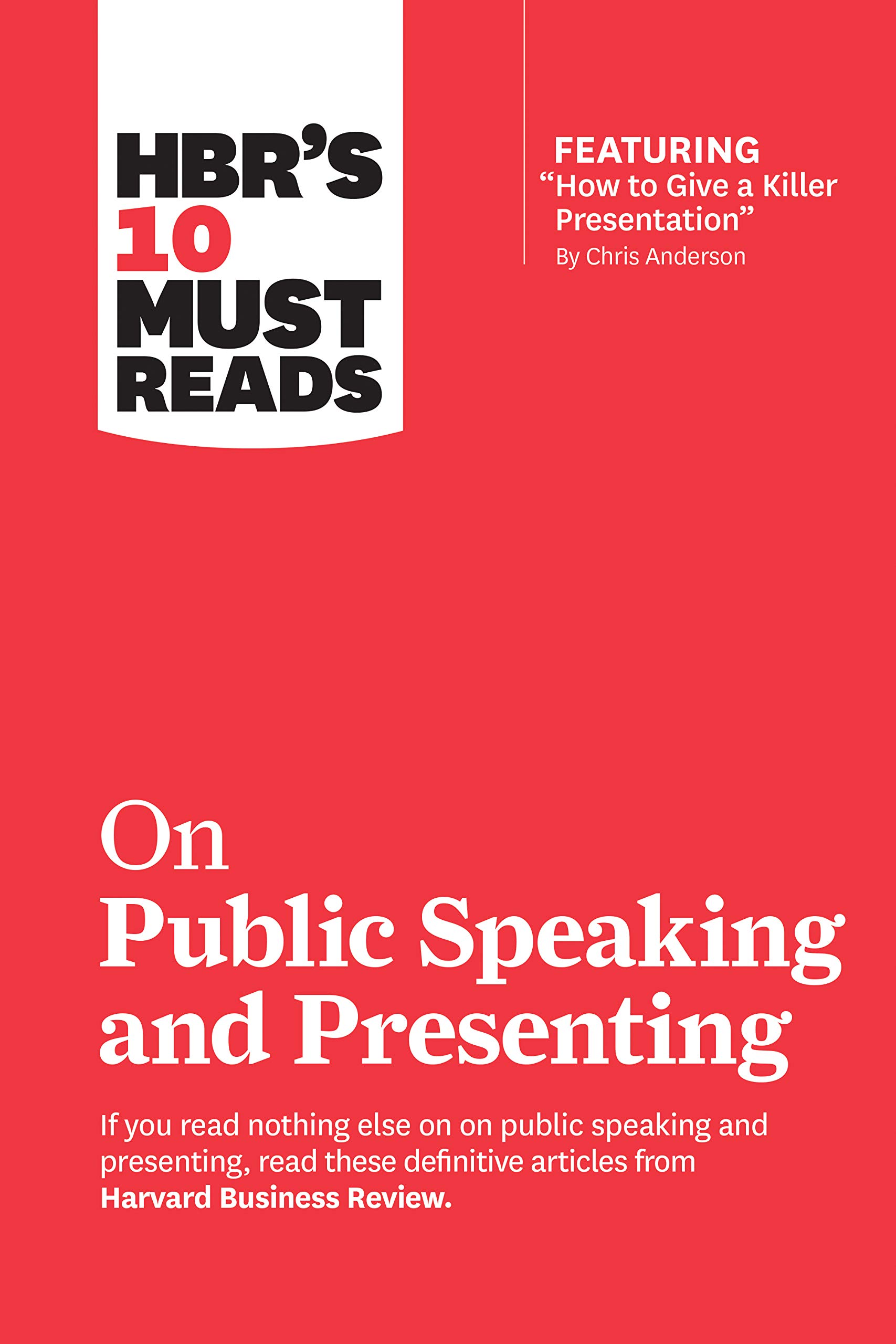
Review: HBR’s 10 Must Reads on Public Speaking and Presenting

You probably already realize how much of in-person communication is non-verbal. But did you know that audiences perceive non-verbal signals as having more weight than the words you are actually saying?

Nick Morgan notes as much in his Harvard Business Review article, “How to Become an Authentic Speaker”:

If your spoken message and your body language are mismatched, audiences will respond to the nonverbal message every time.

Why?

You’re probably coming across as artificial. The reason: When we rehearse specific body language elements, we use them incorrectly during the actual speech—slightly after speaking the associated words. Listeners feel something’s wrong, because during natural conversation, body language emerges before the associated words.

Recently in a natural conversation I tried to notice which came first—my hand gestures or the words they accompanied. And Morgan is right!

So if you’re going to script non-verbals into your public speaking, well… maybe just don’t. Those need to be natural, or the listeners will know something is off.

Morgan’s article is in HBR’s 10 Must Reads on Public Speaking and Presenting, a compelling and informative read that has already helped me as a preacher.

Here is the list of articles included:

  • “How to Give a Killer Presentation,” by Chris Anderson
  • “How to Become an Authentic Speaker,” by Nick Morgan
  • “Storytelling That Moves People: A Conversation with Screenwriting Coach Robert McKee,” by Bronwyn Fryer
  • “Connect, Then Lead,” by Amy J.C. Cuddy, Matthew Kohut, and John Neffinger
  • “The Necessary Art of Persuasion,” by Jay A. Conger
  • “The Science of Pep Talks,” by Daniel McGinn
  • “Get the Boss to Buy In,” by Susan J. Ashford and James R. Detert
  • “The Organizational Apology,” by Maurice E. Schweitzer, Alison Wood Brooks, and Adam D. Galinsky
  • “What’s Your Story?” by Herminia Ibarra and Kent Lineback
  • “Visualizations That Really Work,” by Scott Berinato
  • (“bonus” article) “Structure Your Presentation Like a Story,” by Nancy Duarte.

I don’t think there’s a dud in here. Chris Anderson’s lead article is an inside look into the world of TED Talks. As the curator of the conferences, he’s coached plenty of speakers, and here distills some of his advice.

I especially appreciated the focus in a few articles on good storytelling. Even if data is part of a presentation, tell a story about it, rather than presenting it in drab charts and graphs. (Or use charts and graphs, but make them visually compelling.) “What’s Your Story” is about how to frame and re-frame career transitions—especially relevant to the so-called “Great Resignation” happening across workplaces today.

Harvard Business Review and its books have always appealed to me, though as a church leader I often have to translate the wisdom into a somewhat unique context. This particular volume, however, is immediately relevant to anyone speaking or presenting to people.

Check it out here.

C.S. Lewis on Deception

Is it possible to gaslight oneself?

Here is a profound insight on what self-deception (and then deception of others) looks like:

No man, perhaps, ever at first described to himself the act he was about to do as Murder, or Adultery, or Fraud, or Treachery, or Perversion; and when he hears it so described by other men, he is (in a way) sincerely shocked and surprised. Those others “don’t understand.” If they knew what it had really been like for him, they would not use those crude ‘stock’ names. With a wink or a titter, or in a cloud of muddy emotion, the thing has slipped into his will as something not very extraordinary, something of which, rightly understood and in all his highly peculiar circumstances, he may even feel proud.

A Preface to Paradise Lost, by C.S. Lewis

We rationalize our actions, even if we might rightly balk at the same actions, were it somebody else. Hard a pill as this is to swallow, I think it’s an important truth to acknowledge—and confess to God.

Yeah, But He’s *Our* Hananiah: When the One Who Misleads Is One of Us

The Prophet Jeremiah, by Gustave Doré (1832–1883)

I keep coming back to this arresting passage in Jeremiah:

For from the least to the greatest of them,
everyone is greedy for unjust gain;
and from prophet to priest,
everyone deals falsely.
They have treated the wound of my people carelessly,
saying, “Peace, peace,”
when there is no peace.

— Jeremiah 6:13-14

Any declaration of peace calls for discernment. Anyone can say there is “peace” in a place when there’s really not. In fact, folks with positions of power (formal or informal) have a vested interest in “saying, ‘Peace, peace,’ when there is no peace.”

That way they can preserve the status quo (from which they benefit). They can avoid “conflict” (or taking a long, hard look at reality and themselves). They can curry favor with those who love to hear that there is peace (don’t we all?).

In Jeremiah it was prophet and priest who were “dealing falsely,” saying “Shalom!” when shalom was decidedly not God’s word for the people. Shalom did not reflect the hard realities.

I find it sobering to remember that prophet and priest are appointed, sacred offices, established by God.

Yes, even sacred communities are susceptible to the abuse of lying leaders who declare peace where there is none.

A hard truth, but I think the even greater challenge is to think about how these verses might apply to our own settings.

It’s easy to call out Jeremiah’s Hananiah, his nemesis who persuaded the people “to trust in lies.” It’s easy to point at pastors, priests, and bishops who have lied and misled people in other communities. It’s easy to call for the resignation of a deceitful and unrepentant church leader in another faith community (or president of a country). Indeed, we should.

But what about when the false prophet is my false prophet? What about when the fake peace proclaimer is our fake peace proclaimer? What about when the deceit is coming “from inside the house”?

We might try to minimize:

  • Yeah, but she’s been a huge part of our community for decades!
  • Well, he thinks there is actually “peace” here, and he’s prophesying sincerely.
  • They’re doing the best they can under the circumstances; how about some grace?

Or the even more insidious: “Who can even know what peace is?”

It’s harder to navigate when Hananiah is one of us… when we have worshiped with Hananiah… when we have shared meals with Hananiah… when we have done mission together… when we celebrated birthdays and holidays and baptisms together. We might even think that Hananiah has somehow earned the right to be wrong, the right to (occasionally?) misrepresent God to the people. Jeremiah’s Hananiah is clearly in the wrong but my Hananiah gets a mulligan.

Jeremiah 6:16 goes on:

Thus says the LORD:
Stand at the crossroads, and look,
and ask for the ancient paths,
where the good way lies; and walk in it,
and find rest for your souls.

Instead of an uncritical acceptance of our Hananiah’s lying, instead of asking, “How can we even know?”, God calls the people to stand and look and ask. (“Seek and you shall find.”) And then to walk in “the good way.”

And then there is the last line of Jeremiah 6:16—indeed, it often goes unquoted:

But they said, “We will not walk in it.”

May God have mercy on us, for all the times we choose not to walk in God’s good way. And may God give us the discernment and the courage to acknowledge the truth about Hananiah and his prophecies, even when he’s “one of us.”

Gossip Destroys, Especially When We Think We’re Not Gossiping but Really Are

From HBR, via ICHIRO/Getty Images

I recently saw a survey given to young people that asked them something like, “Do you use your computer inappropriately?” The number was low, 10% or so of respondents answering yes. The next question was something like, “Do your peers use their computer inappropriately?” The number was much higher; if I recall, close to a majority of respondents said yes. In other words, I don’t do that, but they do.

I suspect that pattern holds with other destructive habits. Take gossip, for example. Deborah Grayson Riegel points out that in her coaching work, her clients often deny participating in workplace gossip, “with a look on their faces that indicates that they are insulted to have been asked such a question.” But when Grayson Riegel reframes the question, the response changes:

When I ask them whether they have ever participated in a “confirmation expedition” — whereby they 1) ask a colleague to confirm their own negative or challenging experience with a third colleague who is not present, or 2) welcome a similar line of confirmation inquiry from another colleague about a third colleague who is not present, most admit that this is, in fact, a regular part of their daily work life.

She talks about the importance of naming gossip (or a “confirmation expedition”) as such:

First, call gossip “gossip” to stop it in its tracks. If you are engaging in “informal and evaluative talk in an organization, usually among no more than a few individuals, about another member of that organization who is not present,” — especially if the aim is to confirm your experience rather than get constructive solutions — then you are participating in gossip.

The intertestamental book of Sirach goes further than just calling gossip “gossip.” It says, “Curse the gossips and the double-tongued, for they destroy the peace of many” (Sirach 28:13, NRSV). Gossip destroys the well-being of persons and disrupts whole communities.

The apostle Paul also warns his first century churches about “gossips,” which in Greek sure seems like an onomatopoeia: psithuristēs (whisperer). Think: “whisper networks,” but not the good, truth-telling kind that rightly bring down folks like Harvey Weinstein et al.

One of the dangers of gossip is that it seeks to confirm information (or at least claims to), but it risks getting reality wrong, because not all the involved people are in the room, including folks who may know more about a situation at hand. Not to mention that such furtive whispering is hard to hear, and often inaccurately conveys information when passed from one person to another (as happens in the kids’ game of “Telephone”).

Grayson Riegel has excellent advice for what to do about this dynamic (see her Harvard Business Review article here). I especially appreciate her “Let people know that you have a policy of ‘if you have a problem with me, please tell me first.’” (Although I think we need to be ready for the unfortunate possibility that some may simply ignore this request.)

I would add this prayer from Psalm 139:23-24, which could help us avoid doing what we are sure only others do:

Search me, O God, and know my heart; test me and know my thoughts.

See if there is any wicked way in me, and lead me in the way everlasting.

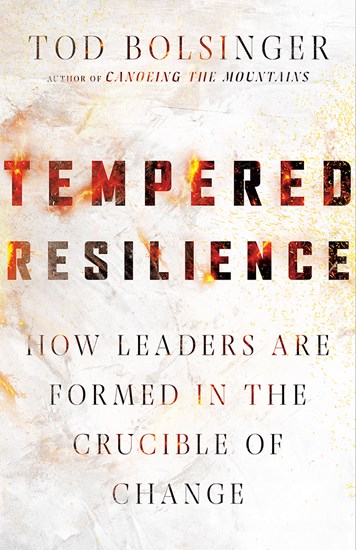
Tempered Resilience (Tod Bolsinger)

Book cover of Tempered Resilience


The best way to introduce you to Tod Bolsinger’s new book is through a couple of quotations that wowed me:

A teachable learning mindset leads to a greater capacity for staying in a difficult position, taking on a particularly difficult task or standing up to resistance, because there is an inherent assurance that if all else fails this trial will—if nothing else—lead to further growth.

This sobering word, too:

A major difficulty in sustaining one’s mission is that others who start out with the same enthusiasm will come to lose their nerve. Mutiny and sabotage came not from enemies who opposed the initial idea, but rather from colleagues whose will was sapped by unexpected hardships along the way.

And this, which I shared with our church’s leadership and several other pastors I know:

One of the genuine crises of Christian leadership today is how inward focused it is. A movement founded on the salvation and transformation of the world often becomes consumed with helping a congregation, an organization, or educational institution survive, stay together, or deal with rampant anxiety (often all at the same time). It’s not enough to turn around a declining church, resolve conflict, restore a sense of community, regain a business’s market share, return an organization to sustainability, or even “save the company.” The question before any leader of an organization is “save the company for what?”

Bolsinger’s guiding metaphor is from blacksmithing: “To temper describes the process of heating, holding, hammering, cooling, and reheating that adds stress to raw iron until it becomes a glistening knife blade or chisel tip.” Others may find his drawing on the blacksmithing process more compelling than I did. I would have gladly taken Bolsinger’s wisdom straight up, sans analogy. (As in the quotes above.)

If you thought being sabatoged was unique to you? Par for the course, apparently. Bolsinger doesn’t deny the reality of church dysfunction; he seems to assume it. But then he equips the reader with how to lead resiliently in the face of adversity–even adversity coming from within. (“The call is coming from inside the house.”)

Bolsinger describes a “six-step process”:

1. Working: Leaders are formed in leading.
2. Heating; Strength is forged in self-reflection.
3. Holding: Vulnerable leadership requires relational security.
4. Hammering: Stress makes a leader.
5. Hewing: Resilience takes practice.
6. Tempering: Resilience comes through a rhythm of leading and not leading.

Despite a few dry moments or chapters that I thought could have been edited down, Tempered Resilience is an encouraging and empowering read. It’s offered me great encouragement these last few months, as well as given me a framework and tools to better understand the “crucible” of church leadership.

Tempered Resilience is available here (IVP) and here (Amazon/affiliate link).


Thanks to the good folks at IVP for the review copy, via NetGalley, sent without expectations of the content of my review.

5 Forthcoming Reviews

Just a short “in the mail” post today to share five reviews you can expect to read here in the coming weeks and months:


IMG_7101

 
  1. First Raise a Flag: How South Sudan Won the Longest War but Lost the Peace (Oxford University Press)  

    This book just arrived in the mail yesterday. Some years ago I read a few books on the Rwandan genocide, and have had occasional interest in African history. Time to reactivate that interest and learn more about what’s been happening in Sudan. (LINK)


    IMG_7084

     
  2. The 13.1 GoneForaRun running journal  

    It will be hard to top the Believe training journal I use now, but this one looks good so far. (LINK)


    fullsizeoutput_39c7

     
  3. Old Testament Hebrew vocabulary cards  

    I learned Hebrew using these more than 10 years ago; now the Basics of Biblical Hebrew suite from Zondervan is in a new edition, so I’m re-learning with the updated cards. (LINK)


    fullsizeoutput_39cd

     
  4. A sweet leather wallet from Galen Leather  

    It holds a pen! Cards! A notebook! Money! (money sold separately) It looks, feels, and smells amazing. (LINK)


    IMG_6953

     
  5. Harvard Business Review’s new book, Why Do So Many Men Become Incompetent Leaders? (and how to fix it)  

    I just finished the book yesterday, so will probably post about that next. (LINK)

A Book You Should Read: Amy L. Sherman’s Kingdom Calling

Any church is an outpost of the Kingdom of God. There is the mission of the church, expressed in terms of what it does together as a congregation. Then there are the myriad ways members of a congregation—especially but certainly not limited to ones involved in teaching, social services, and other care-taking roles—live out the church’s call to love, to be salt and light, to share the good news of God’s love..

Even if we are at church four hours a week, we churchgoers spend some 98% of our lives not gathered with the congregation as a whole. How can churchgoing folks continue to build the Kingdom of God, not just when we are together, but when we are apart?

3809There exists among congregations an impressive amount of what Amy L. Sherman in Kingdom Calling refers to as “vocational power–knowledge, platform, networks, position, influence, skills and reputation.” As a pastor I am keenly aware of the importance of equipping the body of believers to use their “vocational power” for the growing of the Kingdom of God. How, as Ephesians says, can we “equip the saints for the work of ministry”—ministry not just at church but in our day-to-day lives, in all the places in which God has set us?

Sherman sets the course with a definition of vocational stewardship: “the intentional and strategic use of one’s vocational power (skills, knowledge, network, platform) to advance the values of the Kingdom of God.” In calling for “foretastes” of the Kingdom of God, she speaks of a righteousness that has three dimensions: up (God and me), in (myself), and out (the world and me). This robust understanding of righteousness gets at the heart of the Old and New Testament’s definition of righteousness as right relationship with God, self, and others.

Throughout Kingdom Calling Sherman tells inspiring stories of non-profit owners, teachers, pastors, small groups, construction workers, cleaning service providers, and many others who are helping to advance the Kingdom of God by offering foretastes of it in their own spheres.

As a pastor I appreciated Sherman’s focus on “four pathways for deploying congregants in the stewardship of their vocations” (22). These are:

  1. “Blooming where we are planted by strategically stewarding our current job,”
  2. “Donating our vocational skills as a volunteer,”
  3. “Launching a new social enterprise,” and,
  4. “Participating in a targeted initiative of our congregation aimed at transforming a particular community or solving a specific social problem.”

Sherman shares inspiring stories of church-school partnerships and congregation-wide initiatives, although it is hard to know how to replicate some of the successes Sherman mentions, absent more specific implementation suggestions. But insofar as her aim is to cast a vision to church leaders and attendees of vocational stewardship and the great potential found in vocational power, Sherman’s work has excited me to move ahead in my own church with what I’ve learned from Kingdom Calling.