Behold, the dwelling of God is with humankind. He will dwell with them, and they shall be his people, and God himself will be with them, and be their God.
Revelation 21:3
During Advent our congregation read the book of Jonah, that sometimes-ignorant, sometimes-faithful, always-stubborn prophet who called the wayward city of Nineveh to turn away from their past and accept God’s second chance.
We’re complex people like Jonah. Sometimes we’re even like the people of Nineveh, we don’t know our left from our right, or up from down.
Whether we’ve created our own difficult reality by our actions, or whether others have put us in a tight spot, we all know what it is to live and walk in darkness.
So we look for light. We pray earnestly for second chances. We ask for God’s mercy to come even to lowly folks such as ourselves. We yearn to see God’s justice executed on those who actively work against it.
We grasp about for light, and we long to behold Jesus.
Alleluia! To us a child is born!
Come, let us adore him! Alleluia!
But it’s easy to get confused about Jesus. Not because Jesus is confusing or because God is unknowable. But because we’re an easily confused people.
Having seen so many paintings of a crucified Jesus, young Asher Lev asked his mother whether this was the Messiah.
Marc Chagall, “White Crucifixion,” 1938
“No,” she says, “He was not the Messiah. The Messiah has not yet come, Asher. Look how much suffering there is in the world. Would there be so much suffering if the Messiah had really come?”
A trenchant critique, to be sure.
Time and again we look for Jesus to come in glory, in power, to right wrongs on a different timetable than God seems to have in mind… but time and again Jesus insists on coming in humility, in squalor, in seemingly insignificant interactions, even showing up in the midst of a fight. He doesn’t eliminate suffering; he gets born right into it, and takes part it in it himself.
Alleluia! To us a child is born!
Come, let us adore him! Alleluia!
Still, some days we’d rather skip past his first coming and go straight to the ending, his second coming when he makes everything right.
We keep wanting him to show up in full majesty, draping white robes behind him, as he smites the naysayers and draws his people out of a dark world and unto himself.
But year after year he keeps being born in a stable, to an unwed mother, next to unbathed animals, with astrologers as front-pew worshipers.
Alleluia! To us a child is born!
Come, let us adore him! Alleluia!
One poet sums it up nicely in four lines:
They all were looking for a king
To slay their foes, and lift them high:
Thou cam’st a little baby thing
That made a woman cry.
Rather than eliminate suffering in his first coming, Jesus participates in it. He takes on vulnerable, imperfect human flesh. He becomes one of the so-called least of these. A child. A poor child.
He doesn’t vanquish the darkness all at once… he’s born into it, and lets loose every now and then with a ray of light, a glimmer of hope. Indeed, for those who have eyes to see it, there is great light coming from the most unlikely birthing story you’ve ever heard.
Jesus was born into this world as it is, not yet as it should be. This is good news for our confused and dark souls. Even our hearts can become a home in which the Christ-child can dwell. Even we can bear Jesus as Mary did and bring him to all the world. Christ has come, a “little baby thing” to dwell with us, as we are, to be our God, to make us his own.
Alleluia! To us a child is born!
Come, let us adore him! Alleluia!
The Episcopal Bishop of Pittsburgh, Bishop Dorsey McConnell, is a favorite preacher and writer of mine. He says it well for all of us:
But the Christ Child has a life of His Own, and He will be born even in as dark a stable as that of my own heart. …I suppose I will just have to let Him have His way….And I know He will have His way with you as well. Whatever you’re afraid of in your own life or soul, just remember: He’s been born in darker places. Give Him so much as a square inch of your shadows, and He will fill you with His light.
Alleluia! To us a child is born! Come, let us adore him! Alleluia!
I have Honest Toddler to thank for helping me keep my wits about me as the father of three young kids. Here’s a recent Facebook status of this all-too familiar personality:
Good Morning! Wow it’s like it has been forever. …. Anyway for breakfast I’ll have 6 plain pancakes … on the red plate. Not the red one with the green trim or the brick colored one, RED. Yes, the one that shattered yesterday. I’m sure you’ll figure something out. God help you if I see a crack. Also, I would like my pancake intact but in bite-sized pieces. Don’t break my pancakes but please cut them. I want them undamaged but in small pieces so I can eat. Do you see what I’m saying? Perfect but altered. It’s not hard. Follow your heart but keep in mind that if you get it wrong I’ll make today hard. Ok I’ll be in the family room sitting in your lap while you also cook in the kitchen. Love you. (so hungry)
Toddlers can somehow seamlessly embody two (or more) mutually exclusive desires at the same time.
I want to wear that shirt, but I don’t want it covering my top half.
I want milk on my cereal, but I don’t want my Cheerios to be wet!
Nuanced Characters
I have a hard time knowing what to do when someone I’m responsible for wants me to do their top button, but at the same time leave it unbuttoned.
But when it comes to literature, film, music, and narrative TV, I love highly nuanced and complex characters.
I appreciate people like Elsa, Jimmy McNulty, Robert Duvall in The Apostle, any character by Flannery O’Connor.
Good literature, good film, and good TV all blur the line between “good guys” and “bad guys,” because those categories aren’t so clear in real life.
Jonah’s a fascinating character in that regard. We’re not really sure what to make of him. Is he a good prophet, a bad prophet, or some of both, depending on the day? His portrayal is not an even one, or an easy one to detect. He’s a bundle of contradictions and love and judgmentalism and frustration and eagerness and obedience…. He runs away from Nineveh, but then goes flying towards it, preaching repentance as he walks into the city. And then with his message successful, he flees the city again, to watch it from afar.
Jonah: Loves God’s Compassion (for him),
Hates It (for others)
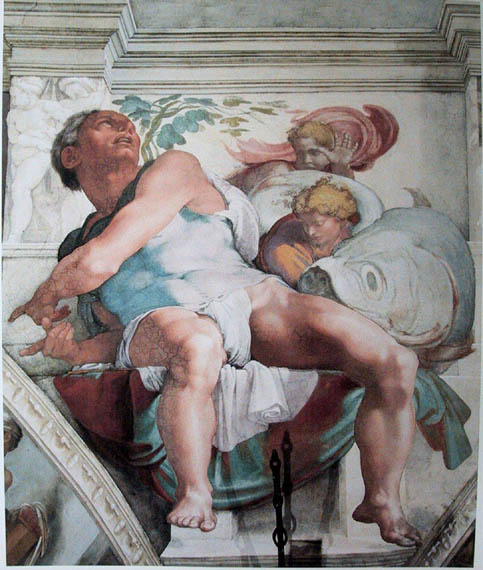
Jonah / Michelangelo / Sistine Chapel
God’s compassion is what Jonah loves most about God… when it comes to Jonah. It was God’s predisposition toward second chances, after all, that has kept Jonah alive throughout this book.
Jonah shows in Jonah 4 that he knew one of Israel’s creeds quite well: “I knew that you are a gracious and compassionate God, slow to anger and abounding in love, a God who relents from sending calamity.” And he rightly takes the shade-giving vine as God’s provision for him.
But if God’s provision and compassion toward Jonah is what keeps Jonah coming back to God, the Lord’s mercy toward despised others is what keeps Jonah running away from God.
Three times in this chapter Jonah tells God he’d rather die than watch his repentant enemies receive God’s clemency.
It almost makes you think about Peter’s three-fold denial of knowing Jesus. Jonah tries to deny God the opportunity to forgive whomever he wants to forgive.
Even the Animals
Jonah is angry enough to die. But God is concerned enough to save a clueless city…. even the animals!
Like in Jonah 4:11. Another translation follows the word order of the Hebrew a little more closely than the NIV, and punctuates the book’s ending with a mention of the animals!
“Should I not be even more concerned about Nineveh, this enormous city? There are more than one hundred twenty thousand people in it who do not know right from wrong, as well as many animals!”
A Heathen Animal of Nineveh, Pre-Repentance
Animals—there they are again! Putting on their sackcloth and mooing their repentance to the Lord.
Jonah loved the whale that saved him, but the worm that ate his shade—this animal he hated.
A vine that came up overnight, that Jonah had nothing to do with—he latched onto and cried when it withered. But a city full of hopeless people… well, he wanted them to wither like that vine… to go down into the depths and be consumed by worms.
But God loves all that he has made—evildoing humans, whales, worms, withered vines, and cursing sailors. Not one being is outside the scope of God’s loving care.
Good Theology, Bad Heart
Jonah gets a lot of things right. He’s right, I think, to be so angry at the perpetrators of injustice and oppression. He’s like every other God-inspired prophet who railed against those who tipped the scales to keep others down.
And he’s right about who God is, in verse 2 of the final chapter of the book: “a gracious and compassionate God, slow to anger and abounding in love, a God who relents from sending calamity.”
But not everything in Jonah’s head has made its way down into his heart. His theology at the beginning of this chapter sounds right, but he wants to apply the attributes of God just to himself.
It’s as if Jonah turns God’s words against him. He recites a well known formula, an articulation of who God is, but in a mocking tone of voice. In conflict resolution terminology, that’s called invalidating.
He’s like the prodigal son, who can’t stand watching lavish grace poured out on people who should have long ago forfeited the opportunity by their behavior. He’s the good guy, they’re the bad guys–why would God show them favor?
Which leads to an important question: Whom is God for? For whom exactly does God intend his salvation?
Whom is Christmas For?
And we might seasonally appropriate that question: Whom is Advent for? Whom is Christmas for?
Whose Light?
It would be easy in a season of preparation, to tend so much to our own hearts and lives, that we think only of how we receive Jesus for ourselves. We can spend so much time tending the vine, that we forget about the city we live in.
And we may be tempted to keep God’s compassion to ourselves and begrudge him when he shows mercy to those who have wronged us (and then turned to God). Well, we just wanted to see them get what was coming to them!
A Jewish commenter on this passage says, “It is not unusual for people to be so intent on the punishment of others that they lose their own way and are disappointed when people change their ways for the better.”
Jesus came into the world, offering light and life to anyone who would turn away from the darkness and turn toward him. And there are some really scummy people included in this invitation. How do we feel about that? What do we think of God’s way too liberal compassion? (I mean, he should pace himself more, right?)
Will we hide it under a bushel? Is God’s grace a proprietary character trait, only meant for the people of God? Jonah tried to hide under a vine, a divinely created shelter that he wanted only for himself.
But God sent a little worm to eat that thing up, in an effort to shake Jonah out of his self-focused slumber.
Choose Your Own Adventure
I like these stories with nuanced characters, ones whose interior lives are complex. I think this sort of storytelling is truer to the human condition.
And I resonate with Jonah. He gets it some of the time; other times, not so much. He really has a hard time just letting God be God.
One other thing that good storytellers do, besides writing full and complex characters, is to write compelling endings.
You can probably recall endings to novels that left you with goosebumps, because the last few lines of the story actually described a new beginning:
So we beat on, boats against the current, borne back ceaselessly into the past.
After all, tomorrow is another day.
Max stepped into his private boat and waved goodbye and sailed back over a year and in and out of weeks and through a day and into the night of his very own room where he found his supper waiting for him—and it was still hot.
These stories show characters with the hope of boats going on, even if into the past… they show the hope of a new day, the hope of a still-hot dinner, waiting in his room.
The narrator of Jonah is writing a new beginning into the end of the story.
But Nineveh has more than a hundred and twenty thousand people who cannot tell their right hand from their left, and many cattle as well. Should I not be concerned about that great city?
This is no tidy conclusion. It’s a question. It’s a rhetorical question, and we know the answer, just like Jonah knew the “right answer” in verse 2. But even as a rhetorical question, it invites—even demands—our response.
We have no idea how Jonah ends for Jonah. We don’t know if he’ll continue in his anger, or if he’s changed for the better.
But it really doesn’t matter… because it’s not just Jonah’s new day that the author concerned about… it’s ours. This is not The Great Gatsby or Gone with the Wind or Where the Wild Things Are. Jonah reads much more like a Choose Your Own Adventure book, where you, the reader, decide how the story ends for you.
The conclusion to Jonah requires our participation.
God has compassion on evil agents of empire when they come clean. The compassion that was always ours is now theirs—we have decide if we’re okay with sharing.
We are left with having to answer God’s question ourselves. The main character of the book of Jonah has always been God, with Jonah the most prominent supporting actor. But now we become the supporting cast, as we hear God ask:
“Should I not be concerned about that great city?”
Should I not be concerned about people who are killing each other, enslaving the innocent, beating the helpless, oppressing the poor, and destroying the environment?
Did I not come to earth to set despised evildoers free, too, should they accept my love?
Do you have any right to be angry at my gratuitous acts of incarnation, crucifixion, and resurrection for the life of the world?
Is this not the way, God asks, of my breaking in on earth, that I should have mercy on whom I will have mercy, and compassion on whomever I please?
This doesn’t mean there won’t still be justice, but do you have any right to be angry, God asks, when I decide to save the ones who should be smitten down?
The book of Jonah all boils down to that burning question: What will your response be, O reader, to the ways and work of God? Can you only accept it on your own terms, and keep God’s grace close to home? Or can you see Jesus as coming to earth for everyone, a gift of love for anyone who would believe?
Jonah ends here—but for us, the revelation of God’s concern for oppressors is not a period, but an ellipsis….
When Jesus comes, will we receive him largely for ourselves? Or can we receive him on his own terms, and open our hearts to his compassion so that we overflow with love toward even the most corrupt parts of God’s creation?
The skilled storyteller invites us now to take up the pen…
Jonah Thrown into the Sea, by Peter Paul Rubens (1577–1640)
Advent is a season of preparation, of expectation, of taking stock before the Christ comes.
In his mercy Jesus came into the world to save a wayward people. In his mercy Jesus comes to us each day and dwells with everyone—woman, man, and child—who calls on his name.
Jonah—that recalcitrant prophet who finally cried out to God from inside a giant fish—knew God’s mercy. It was probably a deep appreciation of God’s grace and a desire to share it with others that led Jonah to the prophetic vocation in the first place.
Yet the book of Jonah shows a follower running in the opposite direction of his Lord.
“I knew that you are a gracious and compassionate God, slow to anger and abounding in love, a God who relents from sending calamity,” Jonah will say in the fourth and final chapter of the book bearing his name. “That is why,” Jonah said, “I was so quick to flee to Tarshish.”
Reading the first few verses of Jonah, we think he is fleeing from God because he has to call a powerful, godless empire to repentance—and that would involve some serious risk to the prophet’s life! But at the end of the book, Jonah reveals it wasn’t fear for his safety that led him away from Nineveh; it was fear that this heinous people would actually accept and receive God’s mercy.
The same God of mercy who had drawn near to Jonah and won his heart now wanted to draw near to the unworthy city of Nineveh.
A King and Savior drew near—to one of Israel’s most despised enemies in the 8th century B.C., the Assyrian Empire. And—hope against hope—Nineveh’s king repented and called the rest of the city to “give up their evil ways and their violence.”
Our King and Savior now draws near—through our remembrance of the Incarnation, a scandalous act of God’s lavish mercy to the undeserving. The Incarnation would culminate in the crucifixion, an act by which Jesus would draw all people to himself—from sacred Jerusalem to Gentile Nineveh, from Main Street to Wall Street.
Our King and Savior now draws near—through the promise of Christ’s second coming, to be at an hour which no one knows, at a time when we least expect it.
Our King and Savior now draws near—in daily interactions with neighbors, in world events, among the least and the last, and to our own hearts.
The book of Jonah teaches us who have accepted God’s mercy that we are to extend God’s lavish love to everyone. We should not begrudge God’s grace given to those we most despise.
That’s easier said than done.
Reading through Jonah, we do well to pay special attention to what it reveals of its main character (Jonah’s God), to Jonah’s internal struggles (and how it resonates with our own), and to the repentance of unlikely characters (the sailors, the Ninevites).
And may we each consider, as we meditate on the unfolding of God’s mercy, from Jonah to Jesus:
Our King and Savior now draws near—how do I receive him?
The above is adapted from an introduction I wrote for my congregation as part of an Advent Reading Guide to Jonah. (A number of us are reading a chapter of Jonah each week of Advent.) More on Advent and Jonah to follow.
They screamed in the face of death, their frightened bodies clawing
at sodden rigging, tattered by the storm,
and horror-stricken gazes saw with dread
the sea now raging with abruptly unleashed powers.
“Ye gods, immortal, gracious, now severely angered,
help us, or give a sign, to mark for us
the one whose secret sin has roused your wrath,
the murderer, the perjurer, or vile blasphemer,
who’s bringing doom on us by hiding his misdeed
to save some paltry morsel of his pride!”
This was their plea. And Jonah spoke: “’Tis I!”
In God’s eyes I have sinned. Forfeited is my life.
“Away with me! The guilt is mine. God’s wrath’s for me.
The pious shall not perish with the sinner!”
They trembled much. But then, with their strong hands,
they cast the guilty one away. The sea stood still.
–“Jonah,” Dietrich Bonhoeffer, written from prison the year before his death
Keeping Advent is counter-cultural. To be sure, Advent has been integral to the culture of the Church for at least a millennium and a half. But if we used to complain about seeing Christmas displays and shopping specials before Thanksgiving, now it’s not unheard of to hear Christmas music in mid-October at Stop & Shop. Not exactly Advent-y.
In a society where Black Friday deals (and now pre-Black Friday deals) seem to outpace a few moments of meaningful reflection, how can we be faithful in preparing our hearts for Jesus? “Our King and Savior now draws near,” declares the Book of Common Prayer. We, the people of God, are expected to respond—want to respond—“Come, let us adore him!”
This King draws near when we don’t expect him, maybe when we weren’t even watching. But God’s mercy is like that—unexpected. Unpredictable. And meted out to all the wrong people.
Jonah certainly thought of God’s mercy that way. Though a prophet—whose vocation was to proclaim God’s message of deliverance—he resisted God’s call, because he was angered at the Lord’s grace toward the evil empire of Nineveh. How much more offended might he have been at the scandal of the Incarnation, and at the universal, saving power of the Cross?
Jonah is an obvious counter-example as we seek to pursue a faithful response to God’s mercy. On further examination, however, we find ourselves more like Jonah than we want to admit.
At the church where I minister, we’re keeping Advent together, a season of expectation and inward preparation. Each of four Advent Sundays I am preaching from a chapter of Jonah. My hope is that we can engage Jonah’s inner turmoil as a springboard to inwardly reflect and prepare our own hearts for the coming of God’s great mercy, as revealed to us in his incarnate Son, Jesus
Our King and Savior now draws near—how shall we behold him?
The above is adapted from a letter I wrote to my congregation in advance of Advent. Keep coming back here for more posts on reading Jonah and receiving Jesus this Advent.
This is the sermon I preached Sunday on Jacob, us, and wrestling with God. Text: Genesis 32:22-32.
Jacob was a trickster. He had managed to trade a meal of lentil stew for his older brother Esau’s birthright, to be next in line in his family. Lentil stew! I like lentils, but as soup goes, this wasn’t even chicken tortilla soup.
With the help of his mother, Rebekah, he tricked his blind father Isaac into blessing him instead of Esau. Esau was getting ready to go all Cain and Abel on his brother Jacob.
Esau Comin’
Since Esau had made a vow to kill his brother—the Bible says, “Esau hated Jacob”—Jacob left his home and his family. He moved in with his uncle Laban and started a family of his own.
Some 20 years later, Jacob is coming back home. He’s days away from meeting up with Esau, so has sent ahead some gifts—you know, the usual: goats, sheep, cows… bowls of piping hot lentil stew. (No, wait, I shouldn’t send him that!)
Jacob knows Esau is coming.
Jacob and his crew come up to a river. It’s dark. The majestic mountains on either side of them and the starry night overhead are no match for the utter fear that grips Jacob now.
He helps his family cross to safety, and then in v. 24: “So Jacob was left alone.”
“So Jacob was left alone.”
Before he could worry whether Esau would pounce on him in his vulnerable state, a man jumps out of the shadows and they start to wrestle. Surely this is Esau! Jacob must be thinking.
There’s a well-represented strand of Jewish interpretation that sees this mysterious man as Esau’s patron angel… a proxy for Esau. But the story goes on to reveal this is more of a divine than human character he is wrestling with.
The fight seems to be pretty even. Verse 25 says, “The man saw that he could not overpower [Jacob],” but then he pops him in the hip so that Jacob begins to limp.
Jacob—ever the trickster, ever the procurer of blessings where they are not his to procure—says to the guy he has in a headlock, “I will not let you go unless you bless me.”
Come to Jesus
“What is your name?” the man asks him. “What is your name?”
The answer is, “Jacob,” but naming in the book of Genesis and Ancient Near East was deeply significant. Your name was your personality. Your name was your reputation. Your name was your future calling and destiny. Your name was who you are.
“What is your name?” the godlike wrestler said. “Who are you?”
Jacob has a come-to-Jesus moment here, to use a religiously anachronistic phrase.
At this point he can dodge the question. He can say, “I’m not telling you that. Why should you know anything about me?” He can run off, though he’ll be hobbling and probably won’t get very far. He can lie and say he is somebody else.
“What is your name? Who are you?”
“I’m Jacob—I’m a trickster. I don’t trust people very well. My family was dysfunctional, my parents played favorites, and my family role was the conniving one. I want so deeply to be loved, that I’ll cheat, lie, and steal my way to it.”
Just one word in the text, “Jacob,” he says, but when I visualize this encounter, I think of Jacob’s answer as almost a confession of who he is, warts and all. By this point, surely, he must realize it’s not Esau he’s been wrestling with. “I saw God face to face,” Jacob would say at the end of this encounter, and face-to-face with God, he tells God his name. By saying, “I am Jacob,” he admits to God—freely—who he is, what he’s done, what his own internal struggles have been.
Go to the Mattresses
Growing up my family had a few go-to movies that we’d watch on a Friday night. One of them was You’ve Got Mail. Tom Hanks and Meg Ryan are two competing bookstore owners who also happen to be falling in love over AOL’s now archaic Instant Messenger service online, under the screen names of “ShopGirl” and “NY152.” They don’t at first that they already know each other in real life, too.
Meg Ryan’s character complains from her computer screen, as ShopGirl, to Tom Hanks’s character, as NY152, about Hanks’s ruthless efforts to put her local, neighborhood bookstore out of business.
Hanks’s character summons the Godfather and tells her, “Go to the mattresses.”
Befuddled at that reference, she asks him about it and he replies:
The Godfather is the I Ching. The Godfather is the sum of all wisdom. The Godfather is the answer to any question. What should I pack for my summer vacation? “Leave the gun, take the cannoli.” What day of the week is it? “Maunday, Tuesday, Thursday, Wednesday.” And the answer to your question is “Go to the mattresses.” You’re at war. “It’s not personal, it’s business. It’s not personal it’s business.” Recite that to yourself every time you feel you’re losing your nerve. I know you worry about being brave, this is your chance. Fight. Fight to the death.
Jacob has gone to the mattresses. He’s fighting—if not to the death, then he’s fighting for some favor. He’s wrestling for a blessing.
Let’s not forget how the book of Genesis started—the God of the universe separated vast expanses of sky, water, and land; he created light; he made all kinds of beings and vegetation, culminating in the creation of male and female in his image.
This Lord of the cosmos, this magnificent God of the universe who spoke and breathed all things and people into being—this could be a God we puny humans choose to avoid. Out of fear. Out of a sense of unworthiness. Due to a notion that we don’t want to trouble God with our concerns, our struggles, our anxieties. Maybe we think we have to be strong, or keep it together, or look like we’re keeping it together.
Maybe we feel guilty for the questions we have, for how distant we’ve been, for how hard it is to pray.
But if that’s you, go to the mattresses. Go to the mattresses with God.
Are you angry, at your brother or sister, or at God? Are you nervous about your life? Go to the mattresses—take it to God. Do you feel betrayed, passed over, or left out to dry by God? Go to the mattresses—take it up with him and have it out.
Go to the mattresses with God, if you think you have a need to clear the air.
Go be alone, like Jacob was, and wrestle a little bit.
Jacob Wrestles with the Angel of the LORD, Eugène Delacroix (1798–1863)
The stakes are higher for us than in the Godfather because we can’t say, “It’s not personal; it’s business.” With God, it’s all personal, and the blessing of our future seems to entirely depend on whether we can have an encounter with God.
I realize this is potentially dangerous advice to give to a group of Christians, to encourage us to go to the mattresses with God. You see Jacob limping around here, with a strained hip. And who wants another injury to have to worry about?
But there’s something about this human-divine struggle that is holy. There’s something sacred about grappling more deeply with the wonder and the mystery–even the sometimes elusive nature–of God.
Jacob Became Who He Was Always Supposed to Be
Jacob, the trickster, the one who contends on his own behalf, receives the new name Israel, meaning, “God strives,” “God contends,” “God struggles for you and for your good.”
Jacob became even more of who he was always called to be.
I think there are two main reasons we don’t go to the mattresses with God when we know we should, or could.
First, we think that God can’t handle it. We’re worried that the whole edifice will come crumbling down and we’ll have nothing left to believe in, when we really examine just who this God is, and just what this Word is, and just why justice does not prevail as it should in the world. We think God is either easily offended, quickly angered, or readily deconstructed, and so we stay at home. We don’t fight. We don’t engage in the struggle that is needed.
But if God is truly omniscient, if God really knows everything, then he already knows your questions, your frustrations, the things you protest about him, or others, or about the world. So why not give voice to them?
God can handle our frustrations, our consternation, our jadedness, even if we see him as the source of it.
Another reason we don’t go to the mattresses with God is we think we can’t handle it. We’re nervous that we’re right about God not being able to handle our complaints, our indictments, our protestations, and what would I have left anymore if that were true?
But if you’re keeping a midnight, solo encounter with God at bay for fear of what will happen—what do you have left anymore right now, anyway?
God can handle the struggle. You can manage to get in the ring—respectfully, of course—and go a few rounds.
Jacob, on that long, dark night, became even more of who he was always called to be. From the struggle emerged a new expression of God’s favor. From the wrestling came a blessing. Because he dared to face God—in all his honesty and uncertainty, and with all his passion—God gave him a new name, an altered identity, and declared Jacob to be a new person in God.
When we wrangle with God, we are not the same afterwards. We may come out of a period of holy wrestling a little worse for the wear, as Jacob did with his limp—which healed in due time—but we do so with a blessing. We get back up with a new name, a refined identity.
So if you need to, go to the mattresses with God. You don’t have to do it alone, like Jacob did; take a friend with you. Make a vulnerable new step of really chasing down some of your unfinished business with God, and sharing that journey with a friend, inviting them to walk with you, to pick you up and carry you when you’re limping.
And as the sun rises after your dark night, you will be able to rejoice at the new name and the even more abundant blessings you’ve received from God.
But sometimes, to get there, you’ve got to be willing to wrestle.
One of the many things New Englanders are good at is taking a summer vacation. You see the evidence of this if you are driving on 128, 95, or 93 on a Sunday afternoon or evening, when everyone is coming back from a weekend or day away.
Nonetheless, our life’s work can easily take over if we’re not careful. We forget the truths of Psalm 127—that it is God who makes our work truly come alive. We do our work with a sort of Tower of Babel mentality… I’m just going to get this done really quick by myself.
Unless the Lord Builds….
Psalm 127:1-2 says:
Unless the LORD builds the house, its builders labor in vain. Unless the LORD watches over the city, the watchmen stand guard in vain. In vain you rise early and stay up late, toiling for food to eat— for he grants sleep to those he loves.
The other day I finished an intensive summer class on Cross Cultural Counseling. The final paper I turned in was in its 7th or 8th draft when I finally clicked the Send button to submit it to my professor.
So recently I can relate to “rise early and stay up late.” If your life’s work involves taking care of other people, early mornings or late nights when they are asleep might be your best time to work through your task list. These two verses don’t say not to do that. But they do caution us against squeezing more hours out of our day without deliberately inviting and acknowledging God’s presence in those working hours.
I can stand watch early over my work, but that work is good only because God stands watch with me. Work without God, Solomon says, is in vain.
Besides that, you need to sleep. God knows that. Sleep is part of the benefits package, if you will, of those who work with the God of Israel.
“He grants sleep to those he loves.” (I.e., to everyone.)
Our bodies have an amazing way of getting sleep when they need it. If we go for too long without enough sleep, our bodies just shut down. We may fall asleep involuntarily. This is one of the ways, I think, that God grants sleep to those he loves: When we’re tired enough, our bodies will sleep, whether we want them to or not. So you might as well get out of your chair or off the couch, brush your teeth, and get in your bed.
Why We Should Take a Sabbath
Another manifestation of God’s granting of sleep—rest—to the ones he loves is the gift of a Sabbath day. A Sabbath day of rest is part of the natural, biological rhythm that God set up from the very beginning of creation. God did his work—created the heavens and the earth, life and all that is in them—in six days. And on the seventh day, he rested. He didn’t do or create anything. Six days on, one day off.
We don’t need much intellectual convincing of the value of Sabbath-keeping. We know that practicing the Sabbath follows God’s pattern of six days on, one day off. (Work and rest, work and rest… not: work and work, work and work.)
We know that keeping a Sabbath re-orients us to God, in case we forgot about God during the rest of the week. We experience Sabbath as a gift of refreshment when we most need it, part of the full life that Jesus promised. (A Sabbath-less life is really only half a life.)
And who wants to eat what verse 2 of this Psalm calls “the bread of anxious toil”? We’ve ordered and eaten that dish, right? It’s disgusting. The bread of anxious toil leaves a bad aftertaste; it gives you heartburn.
Besides, we can’t really be productive 7 days a week anyway. Even multitasking doesn’t really give us an edge. A New York Times article says, “In fact, multitasking is a misnomer. In most situations, the person juggling e-mail, text messaging, [on] Facebook and [at] a meeting is really doing something called ‘rapid toggling between tasks,’ and is engaged in constant context switching.” We can’t just keep switching contexts and rapidly “[toggle] between tasks” for 7 days. That’s exhausting.
Sabbath: Not Just a Day, A Mindset
The practice and mentality and posture of Sabbath-keeping is not just for one day, but we can practice a Sabbath mindset in all of life, turning to God and acknowledging his presence in our work and in our rest, in our waking hours and in our sleeping hours.
Clement of Alexandria, one of those highly quotable early church dudes, said,
Practice husbandry if you’re a husbandman, but while you till your fields, know God. Sail the sea, you who are devoted to navigation, yet call the while on the heavenly pilot.
Here’s how The Message puts Jesus’ words in Matthew:
Are you tired? Worn out? Burned out…? Come to me. Get away with me and you’ll recover your life. I’ll show you how to take a real rest. Walk with me and work with me—watch how I do it. Learn the unforced rhythms of grace. I won’t lay anything heavy or ill-fitting on you. Keep company with me and you’ll learn to live freely and lightly.
That’s what we want. That sounds amazing. We need no convincing whatsoever of the value of Sabbath-keeping, both as a distinct day of the week and as an ongoing daily mindset.
Why We Don’t Keep Sabbath, Really: Internal Competing Values
And yet, we don’t take a Sabbath as we should. Or we do, but three days into the week, we forget to practice a daily Sabbath orientation toward God with complete reliance on him. We turn to our own inner resources to face our life’s work.
Euguene Peterson warns against “un-Sabbathed workplace” when he says,
[W]ithout a Sabbath…the workplace is soon emptied of any sense of the presence of God. The work itself becomes an end in itself. It is this ‘end in itself’ that makes an un-Sabbathed workplace a breeding ground for idols. We make idols in our workplaces when we reduce our relationships to functions that we can manage. We make idols in our workplaces when we reduce work to the dimensions of our egos and our control.
Why do we do this? We don’t really think about other people as just relationships to be managed, do we? We’re not really egomaniacs, right? At least, in the depths of our beings, we don’t want to live like that.
Is this as simple as just saying, “Okay, well, I guess we need to take a Sabbath more. We should practice a Sabbath mentality more often in our daily endeavors”? We’re just a forgetful and disobedient people and we need to obey to this 4th commandment.
There is some truth to that. But I don’t think it’s just disobedience or forgetfulness or laziness that leads to an un-Sabbathed life.
I think the main Christians don’t take a Sabbath, or don’t practice a daily Sabbath mentality, is because of our competing internal values.
Two educators at Harvard—Kegan and Lahey—have a diagnostic grid that I’ve found immensely helpful for unearthing my sometimes subtle competing values. It’s from their book How the Way We Talk Can Change the Way We Work.
The essence of their diagnostic is to begin with a commitment or value or belief—something where we say it’s really great if this happens. In this case, to adapt their language, “We are committed to the value or importance of… Sabbath-keeping,” both as a distinct day and as a mentality throughout the week.
Then we ask, “What are we doing or not doing that prevents this from happening?” So think for a moment, what are you doing or not doing that prevents Sabbath-keeping and rest from happening?
There may be some forces outside of your control—small children, an overbearing boss. But what are you doing that prevents a Sabbath rhythm in your life?
Underneath the answer to that question is a competing commitment or value or belief. Based on what I’m doing to undermine my Sabbath-keeping—checking email on a day off, not calling in anyone else for help–“I may also be committed to…” getting everything done myself and making sure it gets done right. Or, “I may also be committed to” just keeping going, because I have to.
Where Kegan and Lahey’s grid gets really fascinating is in what comes after you’ve unearthed your competing value. They suggest that each competing value carries with it a big assumption that may or may not be true.
If I don’t do this task, it will never get done, and there is no one else in the entire universe who can do it as well as I would.
Or, I’m committed to working 7 days a week (competing value), because (here’s the big assumption) if I stop and take a Sabbath, I’ll be so stressed out the day after the Sabbath with catching up, that it won’t have been worth it.
Or, if I slow down enough to practice a Sabbath mentality, I might become less productive.
Walter Bruegemmann talks about this kind of assumption as a scarcity mentality. He says:
There’s never enough time; there’s never a moment’s rest. … But how willing are we to practice Sabbath? A Sabbath spent catching up on chores we were too busy to do during the week is hardly a testimony to abundance. [It] does nothing to weaken the domain of scarcity. Honoring the Sabbath is a form of witness. It tells the world that ‘there is enough.’”
There is enough. There is enough time for us to stop on the 7th day, and to slow down on the other 6 days and to dwell in the watching presence of God.
It’s true that we have a bundle of competing values, commitments, and assumptions that keep us from fully practicing God’s call to a Sabbath rest.
But ultimately, a Sabbath way of life acknowledges that God is God and we are not.
God can and does complete building projects that we cannot finish. God can and does stay awake watching, guarding, protecting, so we can sleep.
A Modest Experiment: Four Weeks of Sabbath
Here’s the final square in Kegan and Lahey’s competing values diagnostic: Try “a modest, safe test.”
NO.
I had to pinch myself the other day when I saw a “Back to School” sign up at the store. Our summer just started! But we’re just a few weeks away from Labor Day.
It’s time to start planning your fall, if you haven’t already. And I would propose that as you do, you try a “modest, safe test,” with regard to Sabbath-keeping.
Plan a Sabbath each week for the next four weeks and keep it. Make it a Sabbath from technology. From your job. From household chores. And after four weeks, evaluate it. See how it went. See if all the things you thought would go wrong (if you took a break), actually did go wrong.
Or… see if you find yourself refreshed and living with a heightened awareness of God’s watching presence. See if you find the scarcity you feared… or, if you find instead an abundance of good gifts from the God who gives rest to the ones he loves.
I preached on Psalm 127:1-2 this last Sunday, from which the above is adapted. See my other Psalms sermons here.
Yesterday I preached on Sabbath-keeping and what I think is the real reason it’s so hard for us to engage such a life-giving practice. As I’m reflecting further this week on cultivating a Sabbath-oriented mindset throughout my days, I remembered a book I read a few years ago that nourished me. It’s called Sabbath in the City: Sustaining Urban Pastoral Excellence.
Bryan P. Stone and Claire E. Wolfteich wrote this short yet compelling book on “what constitutes pastoral excellence in the urban context” and “what sustains it.” The authors use results from their project, “Sustaining Urban Pastoral Excellence,” which piloted a program of rest and renewal for 96 urban pastors across the country. According to Stone and Wolfteich, there are four primary activities or modes of being that make up pastoral excellence (which they also refer to as “virtue”):
The cultivation of holy, life-giving friendships, particularly with other pastors;
Regular Sabbath practices of rest that allow for acts of both creation and liberation;
A renewal of the spirit through disciplines like prayer, reading Scripture, and silence;
Study and reflection on the theology and practice of ministry (the authors tie this in with the above activity, renewal of the spirit).
While the authors note that pastoral excellence thus constituted is applicable to other, non-urban settings, they emphasize the uniqueness of the urban context and how it can challenge and fatigue urban pastors. They describe the city as “a place of distractions, busyness, and frenzied activity.” In contradistinction to more affluent suburban parishes, the urban church is likely to function as a full-service institution that addresses the variegated needs of the city in which it resides. The authors follow the group of 96 participants and show how the four practices listed above helped them to cultivate and sustain pastoral excellence.
Reading the book was itself an act of refreshment. Two aspects were most helpful to me:
First, the authors highlight the importance to pastors of cultivating holy, God-focused friendships. They write, “Friendships, then, are not simply a means of supporting a more healthy spiritual life. As some of the pastors in our project put it, ‘They are our spiritual life.’” The old African proverb is apropos here:
If you want to travel fast, travel alone. If you want to travel far, travel together.
Second, Sabbath-keeping is easier idealized than practiced. Stone and Wolfteich write,
[The] advice to accept the incompleteness of our work may be difficult to enact.
Though I didn’t have Sabbath in the City in mind at the time, the sermon I’ll post later this week interacts at length with this idea, i.e., why it is that we don’t take the Sabbath we know we want to take.
The book is intended for pastors in an urban setting, but even a suburban-dweller who is not involved in pastoral ministry will find rest and hope in Sabbath in the City.
You can find it on Amazon here and at Westminster John Knox Books here.
Psalm 46 begins with some liturgical instructions, one of which is unclear. Here is the superscription to the Psalm, a sort of post-it note tacked onto the sheet music:
For the director of music. Of the Sons of Korah. According to Alamoth. A song.
The Psalm itself will divide thematically this way:
Natural Disasters: But God is a strong refuge (vv. 1-3)
Human Violence and Tragedies: But God rules over violence (vv. 4-7)
Be Still and Know: Despite both of the above, God is God; God is with us (vv. 8-11)
11 Psalms are attributed to the Sons of Korah. Korah himself is not a major Biblical figure, but he and his descendants were Levites, involved in musical leadership. This portion of the inscription is clear enough—it’s “a song.”
Alamoth, a Hebrew word that goes untranslated in the 1984 NIV, means “young women.” Alamoth could have been just the name of a musical setting—like singing the doxology to the tune of Old 100th. Or Alamoth could have meant that this song was to be sung by young women—by sopranos—and so it is high-pitched. (HT: P. C. Craigie)
Or Alamoth could have just been how the choirmaster preferred to take his apple pie.
(Sorry.)
But—back to business—the fact that this is a song, and marked as a song, with details about how to sing it, is significant.
Here you have a people confronted with natural disasters, human violence, and tragedies… and their worship leaders call them in response to sing!
Lord, open our lips. And our mouth shall proclaim your praise.
I preached on Psalm 46 this last Sunday, from which the above is adapted. This is the final of three posts this week about that Psalm. I wrote about it here and here, too.
On September 16, 2001, I was planning to deliver my first ever message as a vocational youth minister. It would have been about Philippians 3.
I had just taken a position at an Episcopal church in Illinois as part-time youth minister. In my excitement to start ministering among youth and families, I invited all the parents of youth to come to our first youth worship service that Sunday. In the weeks leading up to that service I worked hard on my sermon, which was going to be about Paul’s pressing on toward the goal and striving to know Jesus Christ more and more. I hoped this would be a central theme in my new ministry.
On Monday, September 10, 2001, I went for a long run and mapped out the outline to my talk. I came back from my run refreshed and ready to go; I couldn’t wait to begin that Sunday.
The next morning, as I walked to a youth ministry class, my friend Michael asked me if I had heard the news. What news, I asked? He told me about a plane, commandeered by terrorists, crashing into the Twin Towers of the World Trade Center in New York, taking the lives of thousands of people. When I arrived at class, my professor turned on the TV as our session was set to begin and just said, “I’m going to stay here and watch the news about this; feel free to stay if you like; feel free to go home if you need to.”
Maybe it goes without saying, but I didn’t preach to the youth and their families that following Sunday about Philippians. Instead, I turned to Psalm 46, and tried to convey some sense of hope, because of the strength we can find in God, even when awful things happen.
To try to do that I used a collection of projected images (that we had been seeing in the news all week anyway), with the text of Psalm 46, bit-by-bit, underneath, next to, or on top of the images.
Here is a .pdf version (unedited since then) of our worship focus that morning. Though it’s been almost 13 years since that Sunday, I’ve found myself–still–turning to this Psalm in the wake of tragic events.
I preached on Psalm 46 this last Sunday, from which the above is adapted. See also here.












 We don’t need much intellectual convincing of the value of Sabbath-keeping. We know that practicing the Sabbath follows God’s pattern of six days on, one day off. (Work and rest, work and rest… not: work and work, work and work.)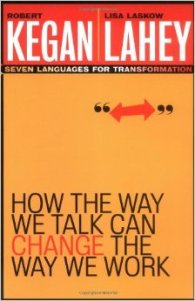





 Words on the Word