I’m late to the Bonhoeffer party, but now I see what everyone’s been talking about. What a guy. I’ve had his Discipleship before me as I’ve worked my way through the Sermon on the Mount (see here). I interacted with his thought at greater length here, wondering how he might read “turn the other cheek” in light of Russia’s occupation of Ukraine.
Fortress Press has sent me the above three volumes for review at Words on the Word. I will review them, in due time, but I’m posting now to say: on Tuesdays during Lent I’ll post something Bonhoeffer-related. It may be as short as a quotation, or it may be as long as a mini-essay in which I interact with some facet of his life or writing.
Tuesdays are my day off, so while Bonhoeffer has very much been informing my preaching on Matthew so far, what I post here in coming weeks will not necessarily relate to (my) preaching. One of his books I’ll interact with is his Collected Sermons, however.
If you scroll back up to the top of this post, to the right, just under the search bar, is a subscribe option you can select to receive notifications of new posts. Just type in your email address (it won’t get shared elsewhere) and then click Subscribe/Follow. You can also follow Words on the Word via Facebook here.
I’m looking forward to interacting with more Bonhoeffer in the coming weeks. Check back again tomorrow for the first Tuesday in Lent with Bonhoeffer.
UPDATE:Here is the first post, on Bonhoeffer on forgiveness.
You have heard that it was said, ‘Eye for eye, and tooth for tooth.’ But I tell you, do not resist an evil person. If anyone slaps you on the right cheek, turn to them the other cheek also.
You have heard that it was said, ‘Love your neighbor and hate your enemy.’ But I tell you, love your enemies and pray for those who persecute you, that you may be children of your Father in heaven.
I find myself thoroughly challenged by Jesus’ words (Matthew 5:38-48). I hear in “love your enemies” a call to individuals. I am sure that at least that much is there. I know that “pray for those who persecute you” needs to shape our lives. When we pray for and seek the good of our adversaries–any with whom we have conflict–we inhabit a new and better Kingdom reality.
But is this portion of the Sermon on the Mount merely a private text, as Martin Luther and other interpreters have said? Is this call of Jesus just for the interpersonal domain?
Or–as a long line of Anabaptist thinkers and others are convinced–is it true that there really is no private vs. public distinction with Jesus? Jesus certainly doesn’t say in the Sermon on the Mount that loving enemies works differently at a corporate or national level. Many faithful Christians have inferred a difference, on various grounds, but it’s not explicitly stated, at least not in this text.
So Russia moves into Ukraine and today we hear Jesus say, “Don’t retaliate. Love your enemies.”
Turn the other cheek. Do not resist an evildoer. Pray for those who persecute you.
CREDIT: REUTERS / Baz Ratner
How does a Ukrainian read this text today? There were presumably churches in Ukraine who heard Matthew 5:38-48 last week, when it was the Revised Common Lectionary reading. These words from the Sermon on the Mount are still ringing in their ears, even as the sound of Putin’s tanks and soldiers try to drown it out.
Dietrich Bonhoeffer, in his Cost of Discipleship, adamantly defended this Gospel text in its fullness: he said it did not apply on a merely private level, but that it also applied at the level of those who hold office (i.e., corporately), because people are people, in whatever capacity they are acting…. If it’s wrong to retaliate with force in an interpersonal reaction, it’s wrong at a state level, too, Bonhoeffer argued. In an era in which Hitler had already come to power, Bonhoeffer would write in 1937:
The overcoming of others now occurs by allowing their evil to run its course. The evil does not find what it is seeking, namely, resistance and, therewith, new evil which will inflame it even more. Evil will become powerless when it finds no opposing object, no resistance, but, instead, is willingly borne and suffered….
And that sounds so good. I cling to that hope.
But Hitler, finding no opposing object, and no resistance, not even from much of the church in Germany, continued his rise to power. Evil became not “powerless,” but more powerful.
Bonhoeffer goes on:
There is no thinkable deed in which evil is so large and strong that it would require a different response from a Christian. The more terrible the evil, the more willing the disciple should be to suffer. Evil persons must be delivered to the hands of Jesus. Not I but Jesus must deal with them.
Which Bonhoeffer?
Critics were quick to call Bonhoeffer overly idealistic and impractical for this understanding of the Sermon on the Mount. But he was firm in his read of Jesus.
And then, something happened. Something happened in Bonhoeffer that led him to align himself with a group of folks who tried to overthrow Hitler, planning to use force if necessary. Bonhoeffer was arrested and imprisoned and implicated in a plot to kill Hitler. Bonhoeffer was hanged in 1945.
If we grant that “turn the other cheek” and “love your enemies” have to do with both individual and corporate domains, which Bonhoeffer was right? The one who wrote, “The more terrible the evil, the more willing the disciple should be to suffer. …. Not I but Jesus must deal with them”?
Or was it the Bonhoeffer who tried to make a plan to “deal with” Hitler in perhaps more physical ways?
Perhaps Bonhoeffer saw a distinction between evil done to him and evil done to another. You can turn your own cheek, but when it’s the cheek of another, and you see them being struck, it’s all you can do to run over and move (maybe even push?) the oppressor out of the way.
So I leave this text with questions and tensions. What seems a fairly straightforward statement, “Love your enemy,” is difficult. What does it mean to love enemies? In what spheres must that take place, and how should it happen, especially in the presence of an inordinately powerful evil? How categorical is Jesus in his forbidding of force? Was he speaking to disciples, or to disciples and states?
But even with the questions, there are two places I find myself landing. First, the one purpose statement in this passage is this: “But I tell you, love your enemies and pray for those who persecute you, that you may be children of your Father in heaven.”
That you may win them over? Hopefully, but not necessarily. “Love your enemies and pray for those who persecute you,” so that they might be converted and join the Kingdom of Heaven, turning from their ways of oppression? Yeah, that would be awesome, but it’s not always going to happen. “Love your enemies and pray for those who persecute you,” for by so doing, you are called children of your Father in heaven. “Blessed are the peacemakers, for they shall be called the children of God.” They are children who do the things they see their God doing.
Which brings me to my second landing point, amid the questions I still have of this passage. Jesus, Philippians says,
made himself nothing by taking the very nature of a servant, being made in human likeness. And being found in appearance as a man, he humbled himself by becoming obedient to death— even death on a cross!
In the end, Jesus submitted himself to death. He humbled himself in the ultimate manifestation of turning the other cheek: “by becoming obedient to death–even death on a cross!”
And yet in that defeat was the very stuff of victory.
In that death was the very stuff of life.
In that humbling was the very stuff of exaltation.
Philippians goes on:
Therefore God exalted him to the highest place and gave him the name that is above every name, that at the name of Jesus every knee should bow, in heaven and on earth and under the earth, and every tongue acknowledge that Jesus Christ is Lord, to the glory of God the Father.
He knew full well what he was doing–he was going to that cross to die. He was accepting the unjust death penalty–even the torture–that had been set upon him. But he was also going to that cross to win. He was going to the cross to defeat death and evil. In the end he would rise again.
The Son of God endured suffering, and yet scorned its shame, unmasking the evil powers that put him on the cross, and razing them to the ground. Through death, through the cross, he made an offer of peace to even his enemies (including us!) so that we could love our enemies, too.
Jesus’ resistance to death was not violent, but neither was it passive. It was sure, deliberate, subversive, generous to all, and full of love, even to enemies.
There is power in Jesus’ going to the cross. It is the ultimate act of cheek-turning, self-giving love. The cross of Christ is an act of defiance that says:
No, suffering! You cannot warp me into a person I don’t want to be.
No, violence! You cannot seduce me to kill.
No, evil! You do not have the last word.
The above is adapted from the sermon I preached on Matthew 5:38-48 yesterday. Scripture quotations come from the NIV (1984 or 2011) or TNIV.
One of the most important things anyone has ever said about Scripture is:
Do not think that I have come to abolish the Law or the Prophets; I have not come to abolish them but to fulfill them.
–Jesus in Matthew 5:17
The careful reader of Matthew will hear “fulfill” in 5:17 and recall at least some of its previous uses already in the book.
Fulfillment is one of Matthew’s major themes. Calling the other uses of “fulfill” to mind gives Jesus’ claim even more impact.
Having established that Jesus’ birth was “to fulfill what was written…,” Matthew shows John baptizing an adult Jesus “to fulfill all righteousness.” Early in Jesus’ ministry, Matthew shows Jesus as the fulfilling light that the people walking in darkness have been waiting for.
Here is a one-page pdf listing the instances of fulfillment in the birth and early ministry of Jesus in Matthew 1-4.
With so much of his life a fulfillment of the Scriptures already, Matthew’s reader is now prepared to see how Jesus fulfills all of Scripture–down to the last letter–through his read and interpretation of it. In the rest of Matthew 5, Jesus will unpack just what he means by “fulfill [the Scriptures],” using six specific biblical examples, culminating at last in a call to the disciples to “be perfect.”
Shane Claiborne is an author and activist who helped found The Simple Way, an intentional Christian community in Philadelphia. He loves Jesus and loves the poor, and has given his life on their behalf.
Shane Claiborne
Shane was lined up to speak at a youth worker’s national conference once, and to the surprise of the crowd and the organizers, when his keynote came, he stood up, read the Sermon on the Mount, and then sat down. His “talk” was done–a reading of Jesus’ sermon in Matthew 5-7.
When interviewed about it later, Claiborne said that as much as he loves that particular conference, the amount of noise and clutter and “Christian stuff” of that conference led him to the simplicity of the words of Jesus. He wanted to read them and let them stand on their own. Continue reading “What is the Good Life? Jesus’ Take”→
Let us now believe this. As we pray to be filled with the Spirit, let us not seek for the answer in our feelings. All spiritual blessings must be received, that is, accepted or taken in faith. Let me believe, the Father gives the Holy Spirit to His praying child. Even now, while I pray, I must say in faith: I have what I ask, the fullness of the Spirit is mine.
Let us continue steadfast in this faith. On the strength of God’s Word we know that we have what we ask. Let us, with thanksgiving that we have been heard, with thanksgiving for what we have received and taken and now hold as ours, continue steadfast in believing prayer that the blessing, which has already been given us, and which we hold in faith, may break through and fill our whole being. It is in such believing thanksgiving and prayer, that our soul opens up for the Spirit to take entire and undisturbed possession.
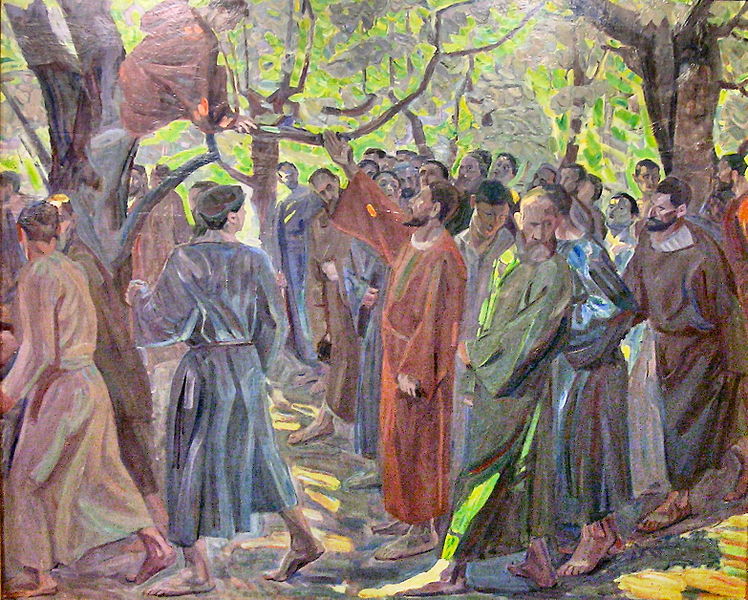
Even though Zacchaeus was “a wee little man”–he was not “wee” or “little” in terms of his financial standing.
Luke 19:1-2 Jesus entered Jericho and was passing through. A man was there by the name of Zacchaeus; he was a chief tax collector and was wealthy.
He was “a chief tax collector” and he “was wealthy.” Those two things are actually three strikes against Zacchaeus.
Strike one: He was a tax collector.
Tax collectors made out pretty well in Jesus’ day. They contracted with the Roman state to collect taxes from their fellow Jews. As long as the tax collectors paid the Romans a certain amount, they could charge whatever commission they wanted.
Strike two: He was a chief tax collector.
A chief tax collector oversaw other tax collectors. Zacchaeus had a prime position.
There was really little regulation here. This is sort of like pre-2008 subprime mortgage lending. Only it’s worse, because Zacchaeus as chief tax collector has a lot of other tax collectors doing the dirty work for him. And not only are they getting rich from people’s hard-earned cash, they’re even giving some of it to an imperial power–Rome. And who knows what non-kosher godlessness that money is going to!
Strike three: Zacchaeus was rich.
He was a tax collector, he was a chief tax collector, and he was rich. There’s nothing wrong with being rich, of course, but generally in Luke’s Gospel, the rich people Jesus meets have a hard time loving God on account of all their money.
Zacchaeus got rich off of other people’s money. Think: Ebenezer Scrooge.
As with the tax collector last week, the listeners expect this chief tax collector to be the antagonist.
So it’s no surprise in verse 3 when Zacchaeus can’t see Jesus. Sure, he’s short–probably not even 5 feet tall–but even if he were 6 feet tall, I’ll bet the crowd wouldn’t have made way for a guy like him.
Luke 19:3 He wanted to see who Jesus was, but being a short man he could not, because of the crowd.
Source: Adrienne Lavidor-Berman (Boston Globe)
These people are waiting to see Jesus! This is even more exciting than watching Big Papi and the Red Sox get on a duck boat! No way they’re going to make room for Zacchaeus.
The crowd blocks his line of sight. But Luke says he wanted to see Jesus. He seems to have these three strikes against him, but maybe this is a bit of character development here? Another translation says, “He wanted to see Jesus, who he was.”
He wants to figure out who Jesus is. He’s interested. He’s what church growth gurus in the 1980s and 90s referred to as “a seeker.”
The Motif of Urgency
Luke 19:4 So he ran ahead and climbed a sycamore-fig tree to see him, since Jesus was coming that way.
Zacchaeus runs ahead. He seems to be eager to see Jesus.
It wasn’t until I’d read this passage at least a dozen times and went for a long walk that I picked up on this motif of urgency.
The story picks up the pace at this point. Jesus is on his way to Jerusalem. He’s about to die. And rise again. He’s aware of what’s coming; his disciples are not, really.
But this is Jesus’ last face-to-face encounter till he gets to Jerusalem. So Luke as a writer is going to pack in as much as he can.
We’ve got lots of Luke’s themes here:
Wealth can keep you from God, or you can use it to worship him and serve others
Belief in God always leads to action and compassion for others
Jesus came to save the lost
God is a seeker, who goes after the ones he loves
In Luke this is a sort of final crescendo to close out this movement, before Jesus’ triumphal entry into Jerusalem, and then the events of Holy Week. All those themes are here, and Luke the storyteller notes that they are all important–urgently important.
verse 4: Zacchaeus runs ahead
verse 5: Jesus tells him to come down immediately…
verse 5 again: Jesus must stay at his house today
verse 6: Zacchaeus comes down at once
verse 8: Zacchaeus re-directs his giving and quits his cheating ways, and he metes out this retributive justice “here and now,” he says
“Today,” Jesus says in verse 9, “salvation has come to this house”
So keep that motif in mind as we work through the rest of the passage. Zacchaeus runs up the tree, and Jesus sees him.
Jesus Invites Himself Over
Luke 19:5b “Zacchaeus, come down immediately. I must stay at your house today.”
This culture valued hospitality, but there are still ways to do hospitality and ways not to do it. What you don’t do is invite yourself over to someone’s house. That’s still true today.
But Jesus has to–Jesus must–stay at his house. Forget the conventions of hospitality. Forget the conventions of not eating with unclean sinners. Forget that Zacchaeus was a traitor and that there were some in the crowd who just wanted Jesus to be Che Guevera and overthrow Rome.
How does Jesus know Zacchaeus’s name? Luke doesn’t tell us. Jesus other knew him through divine omniscience or through Zacchaeus’s reputation. But he’s got to get to Zacchaeus’s house.
Why? We’ll come to that in a bit.
Already we’re struck by Jesus’ offer of fellowship. His offer to fellowship with him is a standing offer, but as with Zacchaeus, it’s also an offer he wants us to take him up on right now. This very day. This very minute. Jesus wants to come to us, to enter the homes of our hearts and minds, and have communion with us.
God calls the ones he has made good. And when we go bad–as Zacchaeus did–he does not turn away from us, but continues to pursue us, and invite himself into our homes, our work, our daily routines, our lives.
Zacchaeus models a response to Jesus. He comes down with the same urgency Jesus had in calling him.
Luke 19:6 So he came down at once and welcomed him gladly.
He receives Jesus into his home as an esteemed guest. No delay. There’s not putting it off till another time. Zacchaeus comes down have fellowship with Jesus right now.
The people in the crowd don’t like this, of course.
Luke 19:7 All the people saw this and began to mutter, “He has gone to be the guest of a ‘sinner.’”
They grumble against Jesus. But haven’t they figured out by now that this is the sort of thing Jesus does? Have we learned that yet?
Zacchaeus’s Immediate Response
And then, more urgency:
Luke 19:8 But Zacchaeus stood up and said to the Lord, “Look, Lord! Here and now I give half of my possessions to the poor, and if I have cheated anybody out of anything, I will pay back four times the amount.”
Right now–on the spot, Zacchaeus pays it all back. Retributive justice, it’s called. He makes amends in a way that is appropriate to the crime. Redistribution of ill-gotten wealth was the only way for him to do this.
Saint Augustine once wrote of grace that it “is bestowed on us, not because we have done good works, but that we may be able to do them.”
This is another side of the coin when we consider last week’s tax collector and his uttered prayer. “God, have mercy on me, a sinner.” This prayer of faith made him right with God, Jesus said. Here, there is action, which always accompanies belief. Salvation has come, Jesus says, and that is evident because of what Zacchaeus is doing with his money.
He literally puts his money where his mouth is. His profession of faith is only truly complete as he acts on it. And he acts on it “here and now.”
He held his money loosely. He embodied that offertory prayer: “All things come from thee, O Lord, and of thine own have we given thee.”
Zacchaeus is going to lose a ton of money here–and think of all the logistics in making sure everyone gets repaid properly.
But no matter–he is eager to express his love toward God through his vocation and his giving.
Luke 19:9-10 Jesus said to him, “Today salvation has come to this house, because this man, too, is a son of Abraham. For the Son of Man came to seek and to save what was lost.”
Remember how Jesus said, “I must stay at your house today”? Or, as another translation puts it, “It is necessary” for Jesus to stay?
This is because Jesus’ fellowship with Zacchaeus was “mission-critical.” It was the core of Jesus’ mission to “seek and to save what was lost.” He’s doing that here. He has done that here. He sought Zacchaeus, and saved him– “Today salvation has come to this house.”
Zacchaeus did his part, of course–he climbed a tree, pledged to give back money he had extorted from people.
But Jesus is the ultimate initiator, I think. He could have passed by that tree… pretended not to see Zacchaeus.
The Prodigal Son Returns, Rembrandt
“The Son of Man [Jesus] came to seek and to save what was lost.”
The 1 sheep, lost and wandering away from the other 99. The 1 coin, lost on a dusty floor. The 1 son, lost in his youthful rebellion and waywardness. A despised chief tax collector. Prostitutes. People with diseases. Gentiles. You. Me. Jesus comes to seek and to get all of these.
Our Mission with Jesus
Jesus’ mission is “to seek and to save what was lost.”
This has now become the mission of the church, as the visible expression of Jesus’ body on earth.
Faith and action go hand in hand, as they did with Zacchaeus. For him, following Jesus necessarily entailed that he do all he could to bring about justice. The kingdom ethics of Jesus transformed the way he thought about his business relationships. It revolutionized the way he worked.
Zacchaeus responded to Jesus immediately. There was a sense of urgency in his desire to make things right before God.
And he responded to Jesus with joy.
May we be inspired by this unlikely hero. Zacchaeus allowed his whole life to be transformed by his encounter with Jesus, in the very moment of Christ’s coming to him. Salvation has come to our house today. Let’s receive him with joy.
The above is adapted from the sermon I preached this Sunday on Luke 19:1-10, covering the story of Zacchaeus’s encounter with Jesus. All Scripture quotations come from the NIV (1984). See my other sermons, if you desire, here.
“Lord Jesus Christ, Son of God, have mercy on me, a sinner!”
“Lord Jesus Christ, Son of God, have mercy on me, a sinner!”
“Lord Jesus Christ, Son of God, have mercy on me, a sinner!”
It’s a surprising source, but I have J.D. Salinger to thank for introducing me to the Jesus Prayer in his book Franny and Zooey.
“Lord Jesus Christ, Son of God, have mercy on me, a sinner!”
In a simplified form, that is the prayer of the tax collector in Jesus’ parable of the Pharisee and the tax collector (Luke 18:9-14): “God, have mercy on me, a sinner.” It has become known as the Jesus Prayer.
The tax collector is a model for prayer, though if this character in Jesus’ story were worshiping with us today, he’d never let us hold him up as an exemplar.
Two Guys Walk into the Temple to Pray….
Luke 18:9 To some who were confident of their own righteousness and looked down on everybody else, Jesus told this parable:
Note the phrases, “confident of their own righteousness” and, “looked down on everybody else.”
The Old Testament prophet Isaiah speaks of such people:
They say, “Keep to yourself!
Don’t get near me, for I am holier than you!”
These people are like smoke in my nostrils,
like a fire that keeps burning all day long. (Isa 65:5)
Luke 18:10 Two men went up to the temple to pray, one a Pharisee and the other a tax collector.
Of these two men, who do the listeners think is going to be the hero? The Pharisee. Just about everyone hated tax collectors.
Oh, this is going to be good, the self-righteous listeners must have thought. Jesus is about to validate us, as he should!
Jesus isn’t out to bash Pharisees with this parable. We have to be careful about this as we read the Gospels. In fact, as one commentator points out, “The Pharisees were admired by the common folk for their piety and devotion to the Mosaic Law. Our contemporary equation of Pharisaism with hypocrisy would not have been made by a first-century Jew.”
It’s the same kind of setup as you get in the Good Samaritan parable–the religious person ends up showing us what not to do, while the real sinner becomes the example.
God Is Lucky to Have Him
Luke 18:11 The Pharisee stood up and prayed about himself: “God, I thank you that I am not like other men—robbers, evildoers, adulterers—or even like this tax collector.
Some of the listeners in the audience are saying, “Amen! Good prayer! Jesus gets it!”
This Pharisee starts his prayer out in the right way–“God, I thank you,” a typical beginning to Jewish prayers.
But it never really was an actual thanking of God for who God is. It was a thanking of God for who the Pharisee was.
He’s at the temple praying, standing up. This is a posture that suggests he was praying for others to hear him.
Note that it says he “prayed about himself.” This is much more soliloquy than prayer. Dear God–but enough about you. Here’s who I am and what I bring to the table. He mentions God, prays to him, but God quickly becomes just a footnote in the prayer. He continuses:
Luke 18:12 “I fast twice a week and give a tenth of all I get.”
What a good, religious guy! No, really–he is living an exemplary life, in terms of spiritual practices.
And he might well be sincere in his fasting and tithing. His fasting twice a week was more than was required. Designating a tenth of everything to God is an Old Testament practice that many continue today when they consider financial giving to their churches.
But he’s missing the point.
The primary subject and actor in this prayer is… the one praying. Not the one he prays to.
He addresses his prayer to “God,” but after that, he thanks God for who he is not. He’s telling God what he’s doing for God, and he’s also making sure to remind God of how rotten these other people are. God, you’re lucky to have me!
This guy’s understanding of himself is interesting to me. He defines himself before God in two primary ways:
(a) who he is not (these other people) and
(b) what he has done.
The guy has identity issues. Can he only be secure in himself by putting others down? Or maybe he’s a little more sincere than that. Maybe he’s like the older brother in the Prodigal Son story–he does his duty, says his prayers, fasts, tithes… but the people around him are moral slackers. And he just can’t stand it.
He’s still missing the point. The despised tax collector, however, really does get it.
He Can’t Even Look at God
The Pharisee and the Tax Collector, by Gustave Doré (1832–1883)
Luke 18:13 But the tax collector stood at a distance. He would not even look up to heaven, but beat his breast and said, “God, have mercy on me, a sinner.”
With the Pharisee, the primary subject and actor in his prayer was… the one praying. The subject and primary actor in this prayer is God. “God, have mercy on me, a sinner.”
That’s it. It’s much shorter prayer than the Pharisee’s prayer.
Before he even prays, he beats his chest, a sign of lament. He did not stand where everyone could see him. The Message version says he was “slumped in the shadows.”
Clearly he was “supposed to” be the antagonist of the story. A tax collector was in collusion with the Roman occupiers. Assuming he was Jewish, he took money from his own people to pay a foreign power, often with a kickback for himself.
He knows he’s supposed to be the antagonist in the story–he knows his sin too well. He confesses his sin to God.
An Old Testament prayer goes: “O my God, I am too ashamed and embarrassed to lift my face to you, my God, for our iniquities have risen higher than our heads, and our guilt has mounted up to the heavens” (Ezra 9:6).
But God–and all the listeners to this story knew this–God is a God who forgives wrongdoings. He welcomes the wayward sinner home.
Jesus concludes:
Luke 18:14 “I tell you that this man, rather than the other, went home justified before God. For everyone who exalts himself will be humbled, and he who humbles himself will be exalted.”
Remember how the story started? “To some who were confident of their own righteousness and looked down on everybody else, Jesus told this parable.”
They were confident in their own righteousness, their own right standing, their peace with God. But, look, Jesus says, you don’t get that from yourself, so stop trying. If you hold yourself up as righteous, you’ll humbled. But if you are humble, you will be exalted–not a sort of fame or glory with other people, but if you are humble, you will be truly justified before God. You will have peace with God.
“God, have mercy on me, a sinner.”
Where We Fit in the Parable
One writer (quoting another for the first portion below) says that because we know the end of the story:
“We identify with the tax collector and feel silent gratitude that we are decent and humble rather than being self-righteous like that shameful Pharisee.” We can be like the Sunday school teacher who goes through the lesson and says at the end, “Now, children, let us bow our heads and thank God we are not like that Pharisee.”
And that’s one of our reactions reading this text, isn’t it?
Well, yeah, I’d never actually name people in my prayer and say, “God, thank you that I’m not like him or her or those people.” And maybe that’s true. Maybe we don’t explicitly pray prayers like that, certainly not out loud.
But we might think thoughts like that. This same loathing of others that the Pharisee brings to God… we may do this in more subtle ways.
We might smugly watch the people going for long walks on a Sunday morning while we drive to church. We might watch the way a parent scolds their child and think: well, I would never do anything like that. We might work hard in the office or even here at the church, and secretly resent those who don’t seem to be as productive as we are. Or we might just look at someone with pseudo-pity and say to ourselves, “I am sure glad I don’t have to be that person.”
“God, have mercy on me, a sinner.” This is the sort of attitude, the kind of prayer that brings us into fellowship with God.
This prayer, in various forms, has inspired people ever since the tax collector prayed it. Ironically enough–the prayer of this humble man has been exalted and used by many.
What Salinger’s Franny Knew About Prayer
J.D. Salinger first wrote Franny and Zooey in the late 1950s as two separate shorts in The New Yorker magazine. Franny is a college student who is becoming disillusioned with college–not with her studies, per se, but with other college students. She thinks they’re fake, shallow, and egotistical. Her boyfriend Lane isn’t much better.
He’s a name-dropper, a complainer. He boasts in his own achievements–his good grades and his upcoming paper he’s going to publish. He’s sort of like the Pharisee in the parable.
What Franny read
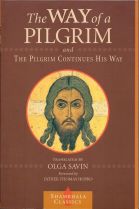
Franny is in the middle of an existential crisis. At the recommendation of a prof, she’s been reading The Way of a Pilgrim, a 19th century Russian story about a pilgrim who wants to know how to “pray without ceasing,” as one verse says. He finally finds a spiritual advisor who tells him to repeatedly pray a version of the tax collector’s prayer: “Lord Jesus Christ, Son of God, have mercy on me, a sinner.” The idea is to make this prayer move from the lips to the heart, so that, as Salinger puts it, the prayer “becomes an automatic function in the person, right along with the heartbeat.”
Franny has been experimenting with the prayer, and at the end of the story, she faints. When she comes to, with boyfriend Lane by her side, she is mouthing the words: “Lord Jesus Christ, Son of God, have mercy on me, a sinner.”
Various Christian traditions suggest praying the prayer repeatedly, as the Russian pilgrim did, and as Franny tried to do.
As one devotes 5, 15, then 30 minutes to praying this prayer, different words stand out each time. Jesus Christ is Lord. Jesus is the Son of God. I am a sinner. Mercy–Jesus has mercy on us, or shows us grace when we don’t deserve it. “Lord Jesus Christ, Son of God, have mercy on me, a sinner.”
Some recommend breathing in as you pray the first half of the prayer–inhale with “Lord Jesus Christ, Son of God,” then exhale as you pray the second half–”have mercy on me, a sinner.” You internalize this prayer, so that its words become as natural to you as breathing.
But humility is a tricky thing. Just as soon as we think we are humble, we are tempted to congratulate ourselves on our humility. Maybe not loudly, but quietly. So we cling to the message of this parable, summarized elsewhere in Scripture: “God opposes the proud, but gives grace to the humble.”
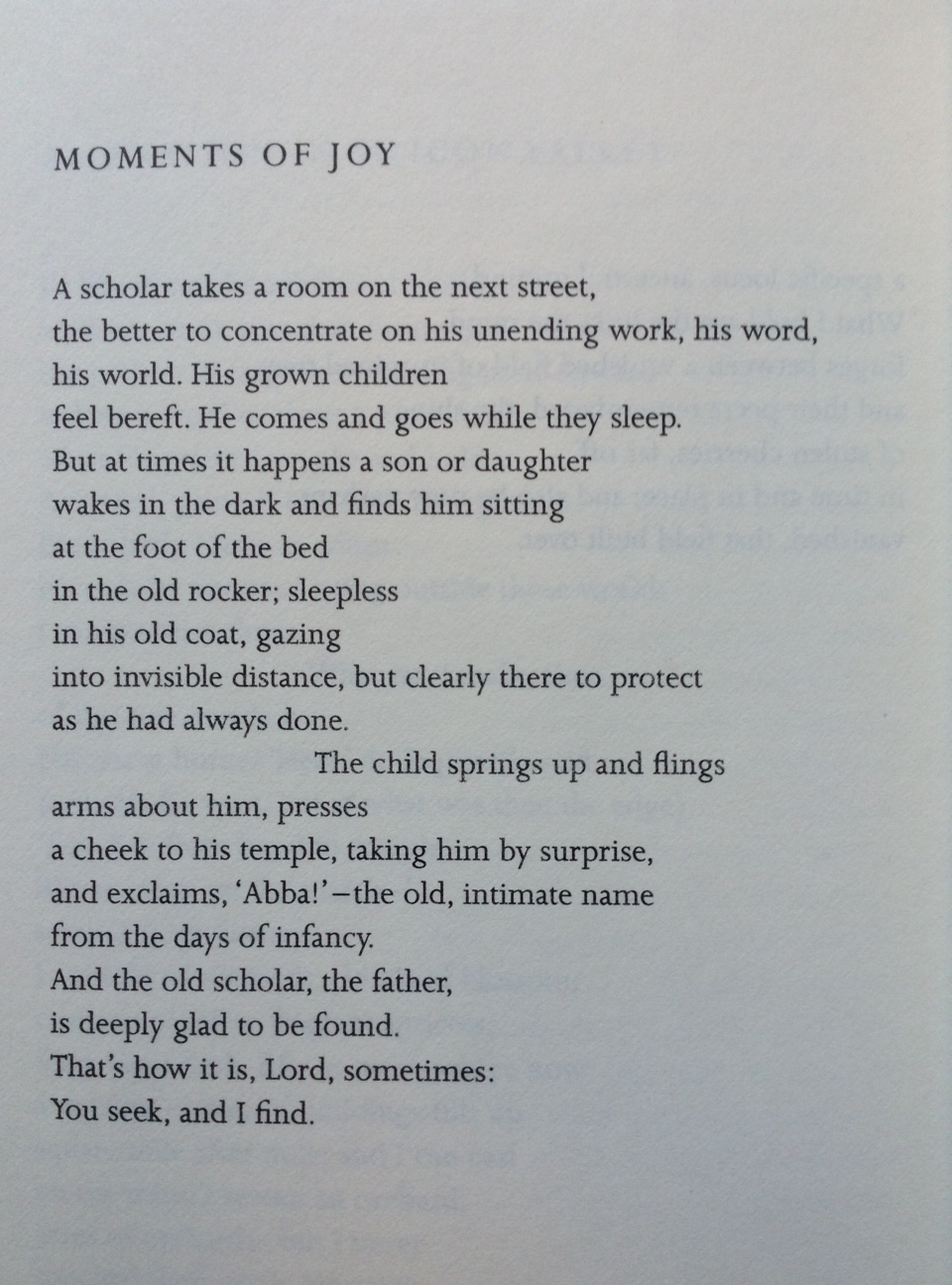
I wonder if Salinger’s character Franny knew that: even as she saw occasion to criticize shallowness and inauthenticity around her, she clung to the prayer of humility. It moved from her lips to her heart. It became not just a prayer, but a posture. It wasn’t a formula, but her very breath.
It is Christ’s mercy, his “unmerited favor,” as some have defined it, that sets us right with God. We remind ourselves of that mercy each time we confess our sins and call on God for his aid.
“Not to us, Lord, not to us, but to your name be the glory.” (Ps. 115:1)
The above is adapted from the sermon I preached today on Luke 18:9-14, covering the Parable of the Pharisee and the Tax Collector. All Scripture quotations come from the NIV (1984). See my other sermons, if you desire, here.
To all my teacher and student friends who are still going with school… the below is adapted from an e-devotional I wrote that went out over email to Gordon students in December 2011.
It may seem strange to talk about Sabbath-keeping during end-of-the-semester crunch time. Who has any time to spare for rest, let alone a whole day?
Last week I was reading from Exodus during Morning Prayer, with the people with whom my family lives in intentional community. Exodus 34:21 jumped out at me, “Six days you shall labor, but on the seventh day you shall rest; even during the plowing season and harvest you must rest.”
Regardless of our familiarity with agrarian lifestyles and metaphors, this text speaks to us of a God who invites his people into rest. Sabbath-keeping, as with all of God’s commandments, brings life to those who keep it. Even during the plowing season and harvest you must rest.
You all are in the midst of final papers and exams—you likely can’t just up and take a day off, since that might mean missing an important exam. But you can seek pockets of rest, times to sit down in God’s presence and ask for him to guide you through all your comings and goings. If Israel must rest even during their plowing season and harvest, we ought to seriously consider following this timeless pattern, taking rest even during our busiest seasons.
So close your email. Go to bed (especially if you’re reading this at 3am). Go outside and walk around (even if it’s raining). Go eat a snack and talk to a friend. Some of you will need more encouragement to this than others, of course, but heed well God’s life-giving words. Even during Finals week, we must rest.
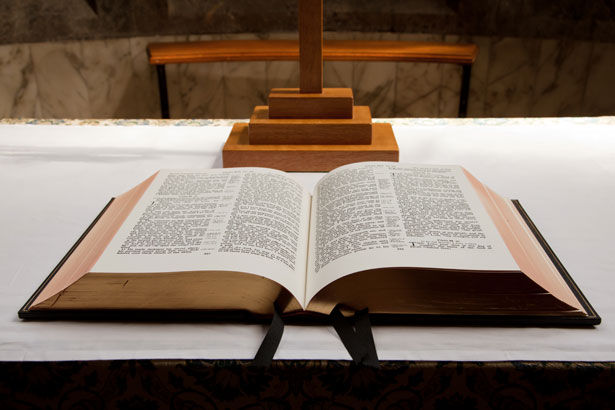
I’ve benefitted from reading large portions of Scripture–whole narratives, books, and multiple chapters–in one sitting. I’ve also benefitted immensely from slowing down and meditatively just reading a few verses at a time. Lectio Divina is a way of reading Scripture that encourages that. It’s reading, as many have said, for transformation and not just information.
Lectio Divina means “holy reading” or “divine reading.” The idea is to deliberately reflect in God’s presence on God’s words, inviting God to echo his words in us today. The most classic formulation of this ancient Benedictine practice is the four-part: lectio (read), meditatio (meditate), oratio (pray), and contemplatio (contemplate).
I’ve also seen a slightly adjusted form, which I’ve used in groups and individually. It goes like this:
Read: What does the passage say?
Pray: What is God saying to me through this passage? (short phrase or single word)
Listen: How is God calling me to respond to what he’s saying?
Respond: What will I commit to God to do in response?
Lectio works best with smaller passages–a few verses from the Psalms or Proverbs… perhaps some words of Jesus or a Pauline prayer. Colossians 3:15-17 is a good place to start, if you’re new to the practice:
Let the peace of Christ rule in your hearts, since as members of one body you were called to peace. And be thankful. Let the word of Christ dwell in you richly as you teach and admonish one another with all wisdom, and as you sing psalms, hymns and spiritual songs with gratitude in your hearts to God. And whatever you do, whether in word or deed, do it all in the name of the Lord Jesus, giving thanks to God the Father through him.
In a group setting, readers (four different ones) can read the passage out loud (slowly) before each of the four movements. Individually, one could just read and re-read the passage before each of the four movements.
I’ve also found benefit in doing the fourth “respond” movement creatively: maybe I respond not just seated through prayer, but perhaps there is a response through song or drawing or movement that I can offer.
There are other approaches to Lectio; it’s certainly not meant to be formulaic. But whether I do it in 5 minutes or 30 minutes, with a group or by myself, I find that I am always impressed with how much God’s Word/words still can speak today–if I quiet myself enough to listen.














 Words on the Word