Dietrich Bonhoeffer was hanged in the Nazi concentration camp of Flossenbürg on April 9, 1945, just two weeks before the U.S. military came to liberate it.
John W. de Gruchy describes the lead-up to that day in his Editor’s Introduction to Letters and Papers from Prison (Dietrich Bonhoeffer Works, volume 8):
On October 8 [of 1944], Bonhoeffer was taken to the cellar of the Gestapo prison on Prinz-Albrecht-Straße, where he stayed until February 7, 1945. From then on, all correspondence came to an end, and contact between Bonhoeffer and the family and [Eberhard] Bethge was broken. From there Bonhoeffer was taken first to Buchenwald and then, via the village of Schönberg in Bavaria, to the Flossenbürg concentration camp, where he arrived on April 8. That evening he was tried by a hastily rigged court and condemned to death. Early the next morning Bonhoeffer was executed along with several other coconspirators.
He was hanged April 9. His family would not learn about it for several months.
The July before he had written to his trusted friend (and later biographer) Eberhard Bethge, one day after the failed assassination attempt on Hitler’s life. He wrote:
How should one become arrogant over successes or shaken by one’s failures when one shares in God’s suffering in the life of this world? You understand what I mean even when I put it so briefly. I am grateful that I have been allowed this insight, and I know that it is only on the path that I have finally taken that I was able to learn this. So I am thinking gratefully and with peace of mind about past as well as present things. …
May God lead us kindly through these times, but above all, may God lead us to himself.
His final recorded words before his hanging are especially appropriate in these days that lead up to Easter Sunday:
This is the end–for me the beginning of life.
Over the years on April 9 I’ve re-posted this a few times. It began as part of the “Tuesdays in Lent with Bonhoeffer” I wrote when I first got into Bonhoeffer. See other gathered Bonhoeffer posts here.
This is my third post in a row pointing to other places I’m writing. I haven’t abandoned Words on the Word, but I am excited to have started a new blog that had been an idea for months: Healing Pastors.
What it’s about:
Healing Pastors helps pastors bring greater trauma sensitivity to their congregations, while also helping pastors process and heal from their own trauma.
Substack has paid subscriptions available. Anyone can become a “paid subscriber” to Healing Pastors, which as of now offers the sole benefit of supporting the work. Everyone can read everything there for free.
And more will follow. (Now writing: Where are the Psalms of Bathsheba?)
Find it all here, and feel free to subscribe to have future posts delivered to your probably already overcrowded inbox, but I hope that Healing Pastors emails/posts will be life-giving to you!
I’ve been focusing especially on spiritual abuse in church settings—recognition, prevention, response, and healing. I’ve been privileged to join my friend Mindelynn in launching her Website and Substack, The Broken Road. There we seek to offer resources and connection to folks who have experienced harm, especially in church and religious settings.
Substack is new to me. It’s both a blog and an email newsletter subscription. The subscribe link gives you paid options, but for now everyone can access everything free.
Each post has something Mindelynn or I have written, followed by a collection of resources we are fans of. Here are the posts where I’ve written the lead article:
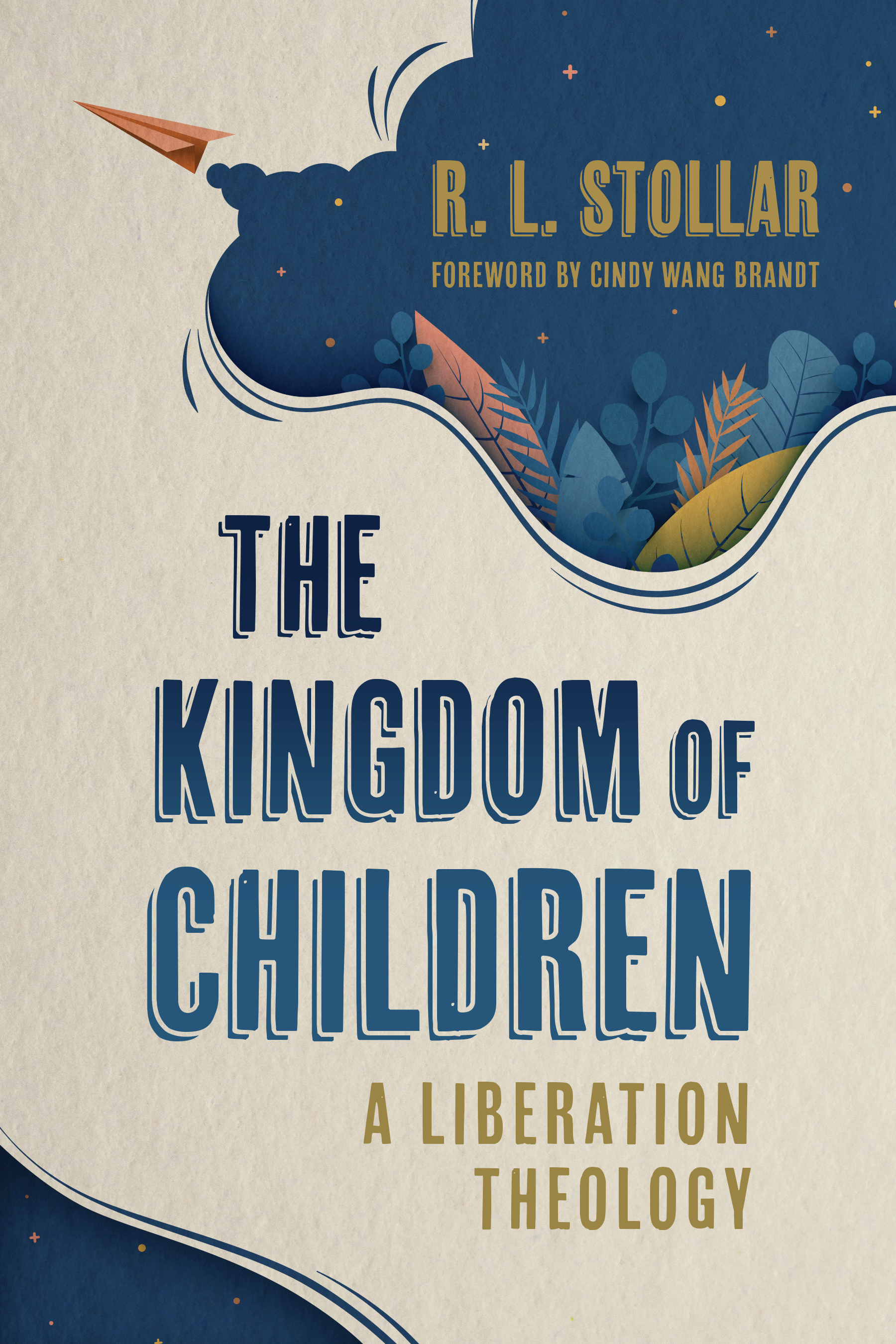
First, my review of Stollar’s book, The Kingdom of Children: A Liberation Theology, is published in print and online at TheChristian Century.
Second, the Century was kind enough to interview me about the review and child liberation theology more generally. That is linked here and below at the thumbnail:
Third, I interact with Stollar and Jesus and Rabbi Irving Greenberg and others in Currents in Theology and Mission. Best part: a cameo paragraph by my pre-teen daughter. The article is free to access, linked here. It’s called: “A Burning Child in the Midst: The Promise and Power of R.L. Stollar’s Child Liberation Theology.”
What I’m most excited about in all of the above is my daughter’s writing. What I’m next-most excited about is my realization that Jesus’s healing of a child in Mark 9 directly and literally satisfies Rabbi Greenberg’s halting claim: “No statement, theological or otherwise, should be made that would not be credible in the presence of burning children.” I want to expand on this later.
I have come to see the Kingdom of God anew through the lens of childhood and actual children, which has influenced how I see and interact with the world and people around me. The above three pieces will give you just a taste.
Early in 2023 I re-read the Gospels, paying close attention to how Jesus interacted with children. Going back to how much Jesus loved and honored children in his ministry has been transformative for me.
Now I’m leading a five-session Webinar series: A Little Child Shall Lead Them: A Biblical Theology of Children and the Kingdom of God. It’s free, and I’m offering it in the hopes that all of us might grow in how we understand, love, and advocate for children.
The series uses Accordance Bible Software’s Webinar platform, but you don’t need to have Accordance to participate. Details are in this one-pager; you can go straight to the registration landing page here. First session is this Wednesday (12/20) at 12p Eastern (Christmas-themed!), and then the first four Wednesdays in January.
R.L. Stollar’s new book vaulted into my Top 5 Books Ever before I’d even finished reading it. It’s called The Kingdom of Children: A Liberation Theology. (Publisher product page / $4.99 on Kindle now (affiliate link))
Book review and additional interaction forthcoming. For now: I haven’t stopped thinking about The Kingdom of Children since reading it. It’s already having the same impact on my thinking and pastoral practice as I’ve experienced from Paulo Freire’s Pedagogy of the Oppressed and from the late Sang Hyun Lee’s From a Liminal Place. I wrote more about this here, with—I hope—more to follow.
Pais is the first—and only—theologian to dedicate an entire book to a child liberation theology to date. While various individuals and organizations have explored a theology of childhood or advocated for child theology, the specific topic of child liberation theology has received very little attention. My goal with this book is to change that and bring the vital conversation about child liberation theology forward to a new generation.
Time will tell to what extent Stollar meets his goal, but I’m 100% behind it. And for what it’s worth, both theorizing and practicing child liberation theology are now front and center with me. And for that I am grateful.
Too many to count were the college papers I finished writing at 3:00 a.m. that I knew were brilliant. Just stunning stuff that was going to land me in a peer-reviewed academic journal as an undergraduate.
Not only was I never published as an undergrad, but most of those papers—even as I groggily re-read them while walking to class later in the morning—turned out to be… not as amazing as I’d thought. My twilight assessment had been clouded by lack of sleep, caffeine, adrenaline, and repeat listens to Coldplay’s first album (you know, the good one).
A rare exception is a paper I wrote my senior year in Spanish, an extended review of Paulo Freire’s 1974 essay, “Las iglesias, la educación, y el proceso de liberación humana en la historia” (“Churches, Education, and the Process of Human Liberation in History”).
I titled my essay, “Gritar con los oprimidos: Una teoría de liberación para la juventud en el ministerio,” which in English is, “Shouting with the Oppressed: A Theory of Liberation for Youth in Ministry.” In true liberation theology fashion, I wrote the paper while active in youth ministry. And falling short of liberation theology ideals, I did not quote or amplify actual voices of young people in my essay. But I set out a theoretical framework that, in practice, powerfully shaped my ministry with youth in a well-to-do, predominantly white suburb.
I concluded (grandiosely, or inspired—let the reader decide):
In this model, we do not start with ourselves, but we start with listening to the voice of the oppressed person. In this way, the voice of the oppressed will be heard throughout the world. We use power in the fight with them against the elites and towards a new historical reality, constituted by us, and that reflects the glory of God on earth.
Today Freire’s longer Pedagogy of the Oppressed remains one of books that has most shaped me. I particularly thrilled, a few years ago, to be able to discuss Freire’s work and approach in detail with school educators in my congregation. I like to think that led to all of our teaching—in our respective spheres—shaping a reality more in line with the liberation Jesus longs to bring to the world.
Still, since writing my (real or imagined) pièce de résistance 20+ years ago, I’ve often found myself lulled into accepting the status quo in church settings. Liberation theology has been an afterthought. An after-praxis.
But our God is a liberating God, and that beautiful and powerful reality is brought to bear on God’s people throughout the pages of Scripture. And today, too: God still liberates—and longs to liberate—those who are oppressed and kept from living what Jesus called “life to the fullest.”
Having nearly forgotten my writing (and practice) around “Liberation for Youth,” I recently discovered child liberation theology. It’s awesome, Christocentric, generative, and powerful.
Here are four sources that I’ve loved sitting with as I seek to reintegrate this important framework—liberation theology—into my own life and ministry, with a particular focus on children:
1. The Gospels
Recently I slowly re-read the Gospels with an eye toward how Jesus interacted with children and other vulnerable populations. The read-through has been transformative for me. And not just temporarily so.
This week what’s really sticking out to me are two sayings of Jesus, both of which call for a centering of children in the Kingdom of God and in our own lives:
Let the little children come to me, and do not hinder them, for the kingdom of God belongs to such as these.
— Matthew 19:14 // Mark 10:14 // Luke 18:16
And this gem, which I’ve seen less frequently cited, even in literature talking about Jesus and children:
Truly I tell you, unless you change and become like little children, you will never enter the kingdom of heaven.
—Matthew 18:3
Unless you change! This is not just Jesus talking about how he loves children, or about how we adults should love children, but about how we should become like little children. To be faithful to Jesus, we have to stop and ask: How are little children, that we can become like them? In what ways do children know and wonder about and access and experience God, and how can I do the same?
Yes, we are to love children like Jesus does. And we are to love children like we love Jesus. But Matthew 18:3 is saying also: love Jesus like children do. We adults have a long ways to go on this one.
2. R. L. Stollar
I’ve spent hours reading his site already. But perhaps start here, with “Towards a Child Liberation Theology.” Take, for example, just this extraordinary paragraph, that is already beginning to invigorate how I read the Bible:
Child liberation theology thus begins with the Child that is Jesus and the children of all histories and locations who bear God’s image. And it places these children at the center of religious texts. It asks us to consider religious texts from the vantage point of those children — from the vantage point of Jesus as the God Child and all children as God images. Thus we must read our texts from the interpretive lens of these children. Children become the point from which all our exegesis and praxis must begin and end.
He has a great, accessible 8-page PDF called “Child Liberation Theology” that is freely available here.
EDIT: Especially valuable is Dr. Nessan’s summary of the method of liberation theology:
The method of liberation theologies consists of five elements: 1) identification with particular forms of oppression and suffering, 2) prophetic critique of that condition, 3) social analysis of the causes of oppression and suffering, 4) biblical and theological engagement to address that suffering and overcome that oppression, and 5) advocacy of structural change toward a greater approximation of justice.
4. My Children
Perhaps most important of all, I’ve found that as I’ve engaged with child liberation theology recently, I’ve become more likely to be with—and enjoy being with—my own children in an unhurried, unpressured way. How do they know and love God? How do they experience God’s love and talk about it? What insights do they want to share with me? What questions are they asking, and what questions and longings are behind those questions?
Child liberation theology offers hope not just for structures and for the world and for the church, but for individual family relationships. And child liberation theology is a powerful framework—rooted in the words and person of Jesus himself—that God uses to fulfill the glorious promise in Malachi 4:6:
He will turn the hearts of parents to their children and the hearts of children to their parents, so that I will not come and strike the land with a curse.
For any of us who write, curate, or teach curriculum, it’s good to remember that what we usually call “curriculum” is just one of (at least) four kinds of curricula that shape all of us.
In one footnote, authors Gary A. Parrett and S. Steve Kang talk about three kinds of curriculum:
explicit curriculum: this includes documentation around vision, the scope and sequence of teaching curriculum, and what we hope students will be, know, feel, and do.
implicit curriculum: I think of this as not just what’s formally “taught” but what’s “caught.” It’s the ethos or environment that a person feels as they encounter the explicit curriculum. Implicit curriculum includes the actions (culture) that “speak louder than words.”
null curriculum: this is what we don’t teach. Better, it’s: “what a teaching institution chooses not to teach at all” (my emphasis). If what we teach is a choice, so is what we don’t teach. Parrett and Kang quote Elliot W. Eisner: “Ignorance is not simply a neutral void; it has important effects on the kinds of options one is able to consider, the alternatives that one can examine, and the perspectives from which one can view a situation or problems.”
To consider one example of null curriculum: trauma responses may not make sense to someone who is not trauma-informed, so if something like “trauma and its effects” or “where Jesus is present in trauma” are not in a church’s explicit curriculum, they are now null curriculum, and a student may not have robust categories and language to process difficult events.
I’d add a #4 to the above three kinds of curriculum.
The church doesn’t do spiritual formation in a vacuum. So we also want to ask: what is the external curriculum all our people are already being formed by, in their other 160+ hours/week?
There is family, greater society, school, friends, advertising, media, etc. But this “curriculum” is only “external” from the vantage point of the church. These character-shaping forces move from external to internal for all of us. We have an internalized curriculum that has formed and is forming us. And we each bring our formed self to any event, group, gathering, or relationship where explicit curriculum is present. There are no blank slates.
As a full-time vocational minister for 20+ years, knee-deep in the life of a church or Christian community for 40+ hours a week, I’ve tended to focus on #1 and #2—explicit and implicit curriculum.
That’s necessary, but I’m realizing it’s not enough. I want to pay more attention to null curriculum and external curriculum.
Even in strategic planning and documenting discipleship pathways, how can we take into account all four of these kinds of curricula?
As we go about learning and growing in the faith, we can ask: what areas have we missed, glossed over, or refused to engage in (null curriculum)? Are there things we Christians need to un-learn, or re-learn? What other lived contexts do we need to take more seriously as we do spiritual formation (external curriculum)?
And—most important—how does the good news of Jesus speak into all of the contexts that shape us?
Attending to more than just explicit and implicit curriculum requires more creative thinking and deeper work, but the result—more fully formed disciples of Jesus— is worth it.
In it she profiles two seminary communities in Kentucky: Southern Baptist Theological Seminary and Asbury Theological Seminary. Southern has a “complementarian insistence on male headship,” whereas Asbury “rejects overtly gendered hierarchies.” This comparative study already piques my interest. I expected it to be a takedown of Southern that held Asbury up as a shining example of how to “do gender and practice power.” Indeed, McKnight writes here about Weaver Swartz and “Southern Seminary’s ‘Godly’ Man.” McKnight calls it “faux masculinity” where “the power dynamic becomes asymmetrical, which itself is fertile ground for abuse.”
But Weaver Swartz notes in the introduction, “Asbury, however, has struggled to achieve the demographic equity it prescribes.” Even this seminary with a so-called egalitarian theology has a narrative that “limits women much more subtly.” There is at Asbury Seminary an “individualistic genderblindness” that “limits gender equity.” And so, “Combining theology, culture, rhetoric, and embodied practice, both seminaries narrate powerful institutional stories that center men and limit women’s agency.”
Phew! That’s all from the first few pages. And the title, Stained Glass Ceilings, is really clever. Not to mention a beautifully designed cover.
Check out the book here at the publisher’s site. I’m eager to read it.
“St. Paul Writing His Epistles,” by Valentin de Boulogne (17th Cent.)
I preach from the Bible whenever I preach. God spoke through and to humanity by the Word. My primary goal as a preacher is to create a space where we can hear God speaking to us today again through that Scripture that is “living and active.” And that we would respond faithfully.
Rare, however, is the full sermon I preach about the Bible: what it is, how we got it, what it does, and how we can respond. I had that privilege this last Sunday, as I preached on the first of five parts of our church’s vision: Scripture guides us. To say Scripture guides us invites reflection on at least two questions: (1) what is Scripture and (2) why should that be what guides us? (Not to mention: how would we know, months and years from now, if Scripture actually were guiding us?)
Despite 40+ years of my life steeped in the Bible, despite memorizing whole books of the New Testament as a kid, despite reading the Bible through multiple times, and despite reading it in Hebrew and Greek… I found it surprisingly challenging to concisely share about, “What is the Bible?” and the follow-on question: “So what?”
In the end I broke it down broadly into two -ations: Revelation and Invitation. God’s Word is revelation. God’s word is an invitation.
To call the Bible revelation means that it is a received word. It is a given word. It is not something we went looking for and figured out by pure reason or emotion or will—in contrast to starting points in other disciplines, like philosophy. All the world’s Pulitzer Prize winners combined couldn’t conjure up God’s Word if they tried. Scripture is God’s self-revelation, and we have it, available to us. Deuteronomy 30:11-14 says:
This command I am giving you today is not too difficult for you, and it is not beyond your reach. It is not kept in heaven, so distant that you must ask, ‘Who will go up to heaven and bring it down so we can hear it and obey?’ It is not kept beyond the sea, so far away that you must ask, ‘Who will cross the sea to bring it to us so we can hear it and obey?’ No, the message is very close at hand; it is on your lips and in your heart so that you can obey it.
Notice who is doing the work, so to speak, in finding “the message”—not you! Not me! God says the people of Israel already have it—on their lips and in their heart. Not because they set it there, but because God put it there. In the 21st century, we might add that we have God’s Word at our very fingertips—just a search string and a click away.
The more specific word Scripture uses for revelation is inspiration. 2 Timothy 3:16-17 says:
All Scripture is God-breathed and is useful for teaching, rebuking, correcting and training in righteousness, so that the servant of God may be thoroughly equipped for every good work.
Maybe a better English word (or at least a more literal one) for “God-breathed” would be theo-spired. God breathed his words into the Bible. Just as he breathed life into Adam and Eve and created them in his image, he breathed himself into Scripture, showing us even more of his image. Scripture is not just humans guessing at who God is; it’s God himself telling us who he is.
Millard Erickson, in his wonderful Christian Theology, puts it this way:
By inspiration of Scripture we mean that supernatural influence of the Holy Spirit on the Scripture writers that rendered their writings an accurate record of the revelation or that resulted in what they wrote actually being the Word of God.
Just how does inspiration work? If the Bible was both written by God and written by humans, what percentage of each author is at play in each passage, or across the whole Bible? Or is that the wrong way to think about it? Is it more like the incarnation: fully divine, fully human, both at once?
I think the best answer to this question is: we just don’t know. Erickson says it more articulately:
It is our contention here that inspiration involved God’s directing the thoughts of the writers, so that those thoughts were precisely the ones that he wished expressed. At times these thoughts were very specific; at other times they were more general. When they were more general, God wanted that particular degree of specificity recorded, and no more.
I suppose Erickson’s claim could be seen as a case of post hoc ergo propter hoc , where someone infers causation (or intent) just because one thing chronologically follows the other. In other words, “We have it how we have it, so God must have wanted it that way.” But I believe he’s right, and so do millennia of interpreters.
Speaking of philosophy, Erickson tells this story about Edmund Husserl:
Edmund Husserl, the phenomenologist, had a devoted disciple and assistant, Eugen Fink. Fink wrote an interpretation of Husserl’s philosophy upon which the master placed his approval. It is reported that when Husserl read Fink’s article, he exclaimed, “It is as if I had written it myself!””
So, too, God’s relationship to Scripture.
That’s all revelation. But this revelation of God calls for a response: it’s also an invitation. I’ll write more about this in a future post.








 Words on the Word