
After casting an unclean spirit out of a boy, Jesus takes his disciples away privately. Where does Jesus direct their attention after a triumphant encounter? Surprisingly, he points them to his own death:
And going out from there, they passed through Galilee, but Jesus did not want anyone to know, because he was teaching his disciples and saying to them, “The Son of Man is to be handed over into the hands of people, and they will kill him, and—despite being killed—after three days he will rise again.”
—Mark 9:31-32, my translation
The repetition of “kill” is fascinating. Here’s a wooden read of the Greek, where the verb for kill (ἀποκτείνω/apokteinō) is repeated:
…and they will kill (ἀποκτείνω/apokteinō) him, and—being killed (ἀποκτείνω/apokteinō)—he will rise again.
The first use of “kill” is an active indicative verb: “they will kill him.” Jesus is the object of that verb, the recipient of the action of killing.
The second use of “kill” is a passive participle, with Jesus the subject, translated something like: “and despite his being killed….” Here Jesus is grammatical subject, not object, because he is also the subject of the main indicative verb that the participle modifies: “he will rise again.”
I draw two conclusions from this:
First, Jesus has gone from passive recipient of a heinous action (“they will kill him”) to active agent that overcomes it (“despite being killed, he will…”). As my friend Mark used to say, “That’ll preach!” I think of the oft-used protest mantra, that I preached about the other week: “They tried to bury us; they didn’t know we were seeds.”
Second, Jesus is repetitive in saying, “they will kill him… and being killed he will….” I think Jesus is emphasizing his death on purpose.
Mark and Jesus don’t need to use “kill” (ἀποκτείνω/apokteinō) twice. In fact, in Mark 8:31, when Jesus predicts his death to his disciples, even a similar verbal formula uses “kill” just once. Perhaps because you can only kill a person once! Dead is dead.1
And yet in Mark 9, Jesus says “kill” twice. Maybe it’s because the disciples didn’t understand his impending death in Mark 8. So Jesus recapitulates the prediction here and adds some emphasis in hopes that they’ll get it this time in Mark 9.2 Maybe Jesus also wants to highlight the power of his resurrection—that he rose from the actual dead. He didn’t wake up from a merely “mostly dead” state:
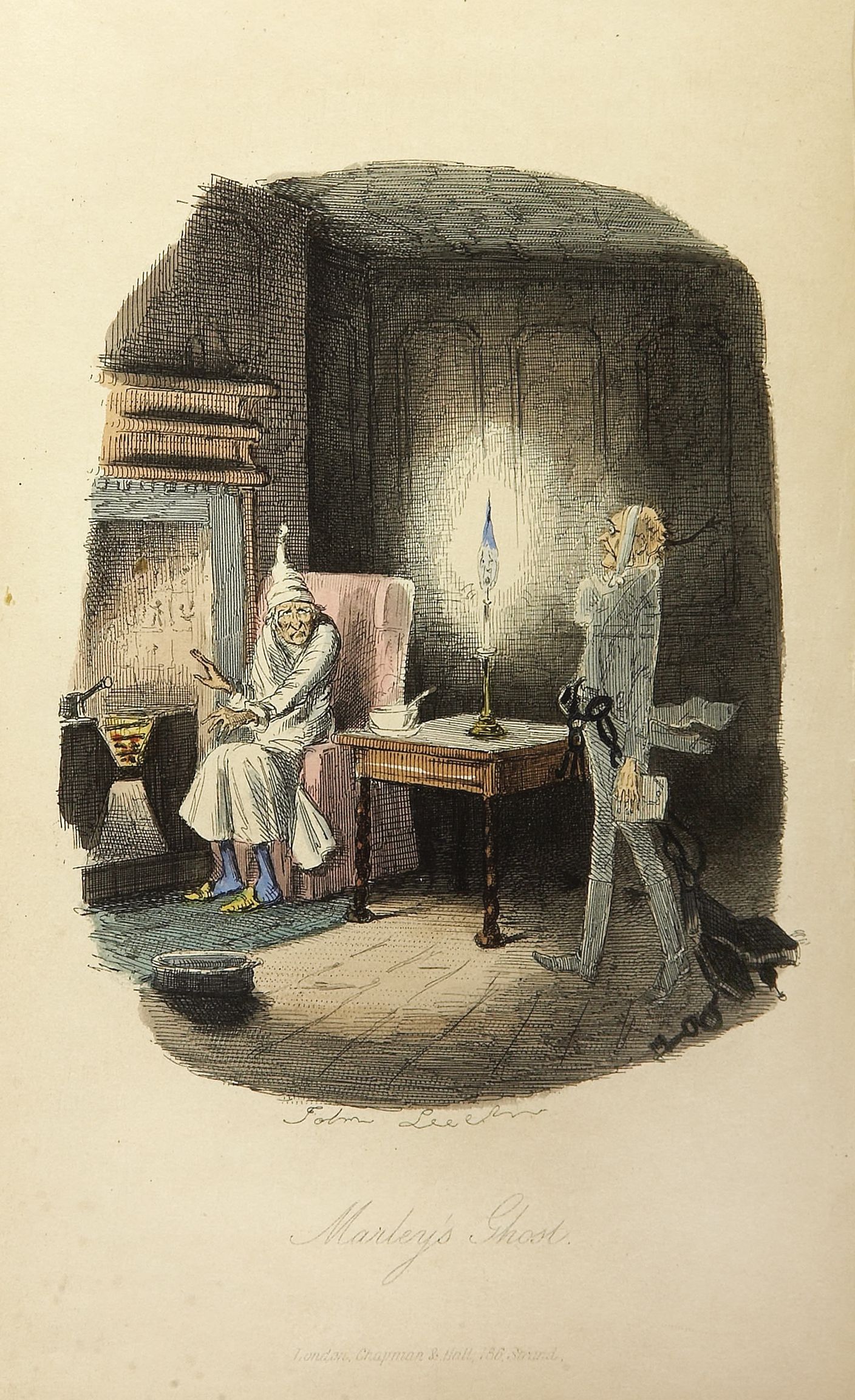
In Charles Dickens’s A Christmas Carol it says, “Old Marley was as dead as a doornail.” Dickens could have just said “Old Marley was dead!” Dead is dead. You either are or you aren’t.
But since Ebenezer Scrooge will see the ghost of Marley, Dickens wants to emphasize that it really is a ghost, because Marley really is dead when the story begins.
I think Mark and Jesus are doing the same thing here: “they will kill me, and—even though I’ve really been killed, dead as a doornail—I will rise again.”
Mark sets the stage here for a powerful response of awe when Jesus does rise again—from full-on, actual death, over which Jesus has authority.
- Disclosure: I did not read through any commentaries before posting this, but I’m sure many commentators have seen the same thing. Fascinatingly, the NET Bible chooses NOT to translate the second “kill,” inexplicably chalking it up to “redundancy in the statement” in the Greek text. ↩
- They don’t. ↩

 Words on the Word
Thanks for showing the import of the repetition. Love your translation that illustrates the doubling emphasis of Jesus’s being “dead as a doornail”!
Some translators of more ancient Greek literature will use “murder” for the verb to emphasize when it’s people killing and a human person being killed. There’s a shock, and there are social justice implications for humanity, when it’s people killing people, and people being killed by people.
How different would our English language mirroring of Mark’s and Jesus’s language be if the verse goes like this?
“The Son of Man is to be handed over into the hands of people, and they will murder him, and—despite being murdered—after three days he will rise again.”
—Mark 9:31-32, your translation [with “murder” added by me]
I love this comment and insight. So good! Thank you. Really helps the whole thing come alive. (No pun intended, seriously.)
This also makes me think: have we somehow sanitize the word crucifixion? The word homicide has impact too.
Such a great question! May I translate, without sanitizing, some from Mark 14:1, 15:1, 6-7, 9-13?
“The top priests and the experts on Biblical texts were still looking for a chance to trick Jesus, to overpower and murder him…. They tied Jesus up, led him out, and took him to Pilate, the Roman governor…. It was the governor’s practice each annual Jewish Passover to free one of the Romans’ prisoners—anybody the Jewish people requested. One of the prisoners at that time was that ‘Papa’s Boy,’ a radical, who had murdered somebody in the insurrection. ‘Would you all like me to free to you all instead this ‘King of the Jews’? Pilate asked. He’d figured out the top priests had grabbed Jesus out of jealousy. But at this point the top priests stirred up the Jewish crowd to demand the freedom of Papa’s Boy instead of Jesus. Pilate asked them, ‘So what should I do with this man you all call the king of the Jews?’
They shouted back, ‘A Roman style murder for him! Stick him up stripped nude on the stake! Public shame! Slow suffering suffocation!’ Yes, murder him Roman style!”
What an awesome translation. It reads so well! I love it.
How much of Mark have you translated?
Also–if I may–your putting “murder him Roman style!” on the lips of Jewish people helps me read this as a prime example of Freire’s thought that the oppressed internalize the consciousness of their oppressor. In this case, using the oppressor’s method of capital punishment.
Just love your reference to how Freire thoughtfully underscores the complex dynamics of oppression, and then how you read that within the crucifixion narrative. When Ghandi and later Martin Luther King Jr. look to Jesus for nonviolent resistance by the oppressed, when James Cone even later in our lifetime looks at the cross as a lynching tree, the Freireian oppressor dynamics you’re considering really do get highlighted synchronically and diachronically. On translating Mark, I was just more doing it as a simultaneous interpreter might. And just following your lead in feeling how the Greek style and maybe Hebraic style of Jesus punctuate the horrific violence of the narrative history. Thank you for the good post and conversation!
Always! Really grateful for this interaction.