I just can’t get enough of Honest Toddler. Several out-loud laughs and snorts may or may not have been heard from the room in which I read today’s post on Santa.
Author: Abram K-J
I am a husband and father, a pastor, a runner, a writer, an editor, and a reviewer of cool stuff.

Resources for Septuagint Study
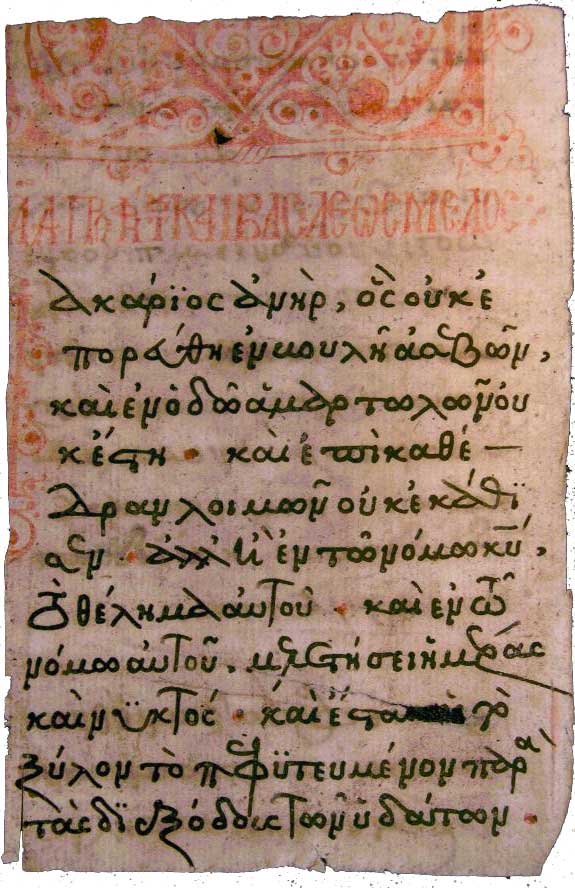 Yet another reason to love Sunday: it’s Septuagint Sunday at Words on the Word. (Settle down.) Here are some resources I’ve found helpful for the study of the Septuagint:
Resources Relating to the LXX. From the Codex biblical studies blog by Tyler Williams. This is up-to-date and probably the best place to start working your way through what’s out there in Septuagint land right now. Williams lists available English translations, introductions, Greek editions, language tools, topical studies, and electronic resources for the study of the Septuagint. He includes brief and helpful descriptions of each resource he links to. The page looks to have been last updated in 2009, but it’s still pretty current.
Rod Decker’s LXX Resources page. Decker is behind the ever-helpful Koine Greek Reader, which includes grammar review, vocabulary lists, and graded readings in the Greek of the New Testament, the Septuagint, the Apostolic Fathers, and a few early church creeds. His resources page has some very helpful Septuagint vocabulary lists. This one (PDF) has all words occurring more than 100 times in the Septuagint. And this one (PDF) has words that occur more than 100 times in the Septuagint but less than 25 times in the New Testament. The second list is ideal for those who know their NT Greek, but want to branch out into the much larger vocabulary pool of the Septuagint.
Septuagint Online. By Joel Kalvesmaki. He gives a great historical overview of the Septuagint, including clarifying some terminology (see here). And here is his link to other Septuagint resources.
The International Organization for Septuagint and Cognate Studies (IOSCS). The IOSCS is “a nonprofit, learned society formed to promote international research in and study of the Septuagint and related texts.” Yes, I’m a member, as of this last week (honey, sorry you had to hear about it on the blog, but it was only $15). The IOSCS puts out an annual journal, has published some Septuagint monographs, and even has a book-by-book commentary series on the Septuagint in the works.
Albert Pietersma’s page. Pietersma co-edited the New English Translation of the Septuagint (NETS, all online for free here). His page contains, among many other useful resources, a couple of .pdfs on various Psalms, where he does a verse-by-verse commentary that examines both the Greek and the Hebrew. He prints the Greek and the Hebrew before commenting on it, too, so it’s a great way to increase one’s language skills. This allows one to see the kinds of issues that Septuagint translators were working on.
You may also wish to bookmark this link, which gathers all my posts that have a “Septuagint” tag (including this one, previous ones, and future ones I post).
Share this:

“Chocolate Thunder Diaper Explosions”

Another Junia (!)
Junia is Not Alone: Review of Scot McKnight
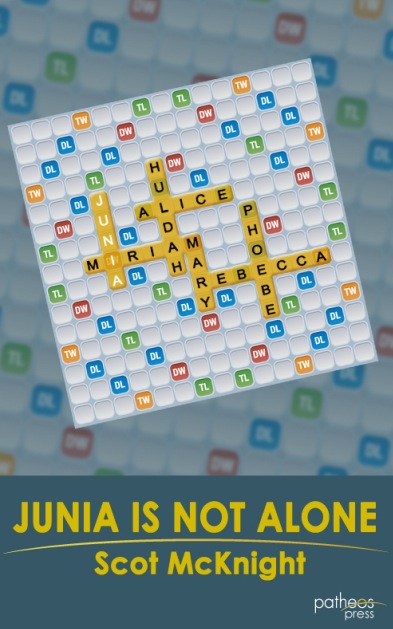 In Junia is Not Alone, Scot McKnight asks, “Why are we so obsessed with studying the ‘subordination’ of women to men but not a woman like Deborah, who subordinated men and enemies?” And, “Why is there so much silence in the church about the women in the Bible?”
Noting how few of his students (i.e., none) had heard of Junia and other women in the Bible, he dedicates his short ebook to “ending the church’s deafening silence on women in the Bible.”
Junia “appears innocently enough” in just one verse of the New Testament, Romans 16:7, “alongside her husband, Andronicus.” (See my Junia post here.) McNight goes on to say that Junia “had no idea she would someday be the subject of endless discussions,” although unfortunately his own discussion of her ends pretty quickly.
On the bright side, McKnight does what often goes undone in conversations about the apostle Junia–he explains what the term “apostle” means in Romans 16:7. He writes,
So, we conclude that there was a first-century relative of the apostle Paul named Junia; she entered into Christ before Paul did; and this Junia was an apostle. Which means (because this is what apostles did) she was in essence a Christ-experiencing, Christ-representing, church-establishing, probably miracle-working, missionizing woman who preached the gospel and taught the church.
Nice. Unfortunately, however, readers who are looking for anything else about Junia will be disappointed. Of course there is only the one Bible verse that mentions her, and no other first century documents where she is known to appear (although someone please correct me if I am wrong?). But there is a long history of interpretation and textual criticism around “Junia” and Romans 16:7, which I would have liked to see McKnight delve into a bit more. As it is he merely favorably summarizes the conclusions of Eldon J. Epp (the text does read “Junia,” not a male “Junias”; she was an actual apostle).
In addition to Junia, McKnight mentions other women in the Bible–Priscilla, Mary, Phoebe, Deborah, Miriam. Although his listing these women and briefly discussing their ministry is helpful, he says very little about each (Miriam: led Israel in song). Perhaps this is due to the nature of a deliberately short ebook, but I was left wanting more.
McKnight helpfully traces the history of the Greek New Testament editions, and how “Junia” became “Junias.” But his conclusion feels dramatic:
The editors of Greek New Testaments killed Junia. They killed her by silencing her into non-existence.
All I could think about after reading that line was Dan in Real Life, where one of Steve Carell’s teenage daughters (whose romantic relationship he is trying to end) storms off and says, “YOU! ARE A MURDERER… OF LOVE!” McKnight again: “They murdered that innocent woman by erasing her from the footnotes” (my italics). A bit much.
But I’ll give McKnight that even Bible translations can be “political” and motivated by other external factors. He says it better here: “Who says New Testament texts and translations are not political?” Some editors/translators think that a woman couldn’t hold the office of apostle, so they essentially tamper with the text… if he’s right that that has been a common motivation for reading “Junias” and not “Junia,” then I agree; it’s poor form. Actual textual evidence for “Junias” would be a good reason to read “Junias” in the text, but there is not much. All the same, the charge of murder seems harsh.
In the end McKnight asks about Junia, “Do you hear her voice?” But ultimately the God who calls, gifts, and equips women and men alike for ministry is the one whose voice we ought to be listening for. McKnight knows this, and I get his point, but I think his appeal could have been strengthened by calling the Church to hear and heed Junia’s example and to let her significant ministry as an “outstanding apostle” inspire us. Junia didn’t write anything (at least that we have today), so what “voice” are we to listen for, and how? It almost sounds like she is supposed to speak to me from the grave or via some warp in the space-time continuum.
I’d wager that’s not what McKnight is getting at, however. I think he simply wants the “silence” about women in the Church to end. Although the preponderance of Biblical heroes are male (for cultural but not theological reasons, in my opinion), there are some pretty significant ministry roles that women play in both testaments.
And my criticisms notwithstanding, I’m with McKnight–those women’s stories need to be told more often and more fully as preachers and teachers expound the whole Bible to their congregations. Where there is silence about how God has used and continues to use women to spread his Gospel, the silence should end. I just wish McKnight himself –as someone fully qualified to do so–had made more noise about Junia and the other women who join her in the pages of Scripture.
Share this:

Family Friday: Dad Life Rap
The Dad Life Rap, courtesy of YouTube. I can relate. Well, I don’t have the riding mower yet (no yard to mow!), but the St. John’s Bay shirt resonated with me.
Share this:
Gungor and Celloboxing
Share this:
Worship Leading Wednesday: Planning a Band Rehearsal
It’s the first Worship Leading Wednesday at Words on the Word. My vocational work is to lead worship and help coach worship leaders at an undergraduate college. In some way or another, I’ve been leading worship in church settings (and now a college setting) for the last 18 years.
One of the hardest things for me as a worship leader, especially early on when I started leading, has been making sure everything is prepared for band rehearsals. How many times have you, as a leader or musician, shown up to a band practice only to have no chord charts from which to play? Or have to change the key because the leader didn’t test out the key beforehand? (I’m guilty of such crimes myself.)
Here are some practical things to keep in mind in planning a worship band rehearsal.
1. Figure out what your goals are for that particular rehearsal.
- This may entail a regular/weekly meeting with your co-leader(s), if you have them, so you all can do this work together
- Think through the larger service for which you are preparing. Is there a theme? Important Scriptures to take note of? Something the speaker/preacher is going to touch on that you could bring out through song? What are the other worship elements that are going to be present, and how does your music tie in?
- Are there long-term things as a band to work on? Unity? Fellowship? People talking over each other at rehearsals or other such bad band habits? Think through how to address those larger issues in practice, too
- Plan a prayer/Bible study component of practice, so that you remember what you’re about
2. Get the songs ready.
- Select the songs that you will rehearse, and what order to do them in in the rehearsal.
- Sing and play through them first to be sure they are in a comfortable key (excellent post about that here–worth reading every word)
- Secure copies of the chord charts. We use CCLI’s Song Select service.
3. Get your team ready.
- Make sure they know, with plenty of lead time and reminders, where and when the rehearsal is. Note that if you want to start making music at 7pm, that means members can’t just show up at 7pm. Encourage them to leave time to get equipment set up (e.g., come at 6:30pm, we’ll start playing at 7pm).
- Get the chord charts to your band members in advance–emailing .pdfs is a good way to go here
- Flag any particular issues or unique arrangements that they should be ready for in practice
- Make sure you know who is leading vocally for each song, and convey that information to the team
- Consider whether it’s worth scheduling a separate practice just for vocalists
4. Intangible but important
- Think through things to say before, after, and in-between songs. E.g., is there a good verse of Scripture that sets up a given song that you could read beforehand? Do this planning as part of your rehearsal planning
- Figure out the tech side of things: amps, mics, someone to run the sound board (if appropriate)
- Chord charts often don’t have intros or outros to songs (lead sheets do)… think about how you want to begin each song and end each song. Are there other things you plan to do differently from what’s on the chord chart? Make sure this gets noted on the charts, whether electronically or by hand
5. Ways to make your team happy
- Bring printed chord charts to practice
- Bring pencils
- Be the first one there to help other team members (especially drums!) set up as needed
- Have Bibles on hand for any Bible study you’ll do
I’ll write more in future Worship Leading Wednesdays about how to run the rehearsal itself… for now, are there any other things you can think of that are important to do to prepare well for a worship band rehearsal?
Share this:
Book Giveaway at Koinonia
 Zondervan Academic’s blog Koinonia is giving away a free copy of Introducing the Old Testament by Tremper Longman. Go here to enter.
I’m about halfway through reading a digital galley of this book myself, so will post a review on some upcoming Magnificent Monograph Monday. So far I’ve found the book helpful in refreshing and deepening my understanding of the sweep of the Old Testament. One of the best features of the book so far is that Longman asks with each OT book: how does this anticipate the Gospel of Jesus?
The question Koinonia asks is one I was just talking with my boss about yesterday at work: “Are Proverbs always true?” Answer that question on their site to enter the giveaway, and I’d also be curious to hear anyone’s answer here.
Share this:

This happened tonight