
Coming soon to this blog… some interaction with The Wire. Stay tuned.
I’ll be linking to all kinds of writing and analysis of the show, offering my own thoughts here and there, and reviewing such works of literary creativity as this one:
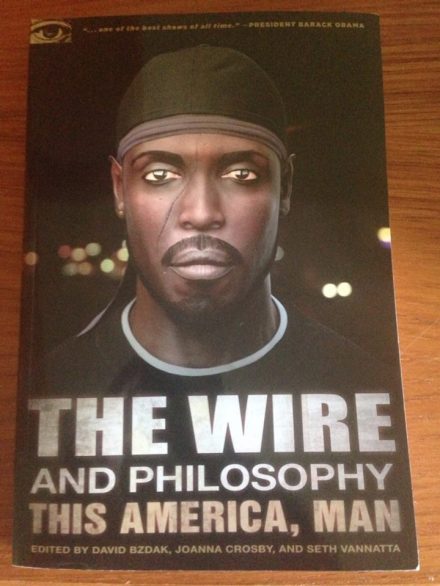
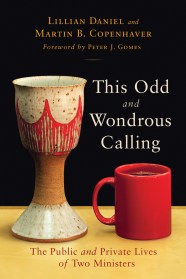 Especially since Eerdmans has a large number of resources in production right now at Logos Bible Software, I’ve started paying more attention to Logos’s Pre-Publication program.
Logos puts titles into “Pre-Pub” to help gauge user interest in various resources. When users pre-order a resource, that helps to cover the cost of production. If/when enough users pre-order, the title goes into development and the user gets it at the discounted pre-pub price when it “ships” (i.e., when it is completed).
Here is a short description from Logos’s Pre-Pub About page:
Prices start low and increase over time so the sooner you pre-order, the less you pay. We don’t charge you until your pre-order is ready, and we’ll send you a reminder email a few weeks before. If you decide you don’t want the resource anymore, you can cancel your pre-order at any time.
Here is a compilation of the newest Pre-Pub titles. (This one from Oxford University Press is pricey but looks good; here is When God Spoke Greek, which had enough pre-pub orders that it’s already under development and will probably ship within a month.)
Here is the Pre-Pub list sorted by Progress or “ship date,” so you can see which ones are almost ready to go–with the pre-order discount still applying, at least for now. There’s a bunch of Eerdmans stuff that will go out on August 6, including this collection that looks especially useful to pastors, including the book that is pictured above.
Here’s a short overview video of how Pre-Pub in Logos works:
Psalm 46 begins with some liturgical instructions, one of which is unclear. Here is the superscription to the Psalm, a sort of post-it note tacked onto the sheet music:
For the director of music. Of the Sons of Korah. According to Alamoth. A song.
The Psalm itself will divide thematically this way:
11 Psalms are attributed to the Sons of Korah. Korah himself is not a major Biblical figure, but he and his descendants were Levites, involved in musical leadership. This portion of the inscription is clear enough—it’s “a song.”
Alamoth, a Hebrew word that goes untranslated in the 1984 NIV, means “young women.” Alamoth could have been just the name of a musical setting—like singing the doxology to the tune of Old 100th. Or Alamoth could have meant that this song was to be sung by young women—by sopranos—and so it is high-pitched. (HT: P. C. Craigie)
Or Alamoth could have just been how the choirmaster preferred to take his apple pie.
(Sorry.)
But—back to business—the fact that this is a song, and marked as a song, with details about how to sing it, is significant.
Here you have a people confronted with natural disasters, human violence, and tragedies… and their worship leaders call them in response to sing!
Lord, open our lips.
And our mouth shall proclaim your praise.
I preached on Psalm 46 this last Sunday, from which the above is adapted. This is the final of three posts this week about that Psalm. I wrote about it here and here, too.
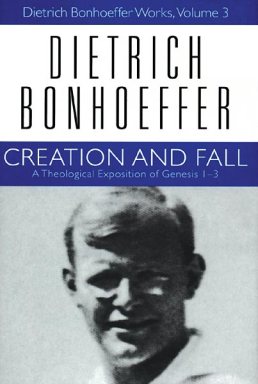
You may have read Bonhoeffer on the Sermon on the Mount, but did you know that he has a compelling and inspiring set of published lectures of Genesis 1-3, too?
Already at the age of 19, Bonhoeffer was laying the groundwork for what would become Creation and Fall: A Theological Exposition of Genesis 1-3. In an early essay he talked about God as the one
for whom the terms “God spoke” and “it became so” are identical.
In Creation and Fall this idea reaches fuller expression:
That God creates by speaking means that in God the thought, the name, and the work are in their created reality one. What we must understand, therefore, is that the word does not have ‘effects’; instead, God’s word is already the work. What in us breaks hopelessly asunder–the word of command and what takes place–is for God indissolubly one. With God the imperative is the indicative.
This month Logos Bible Software offers Creation and Fall for free. I haven’t read the whole thing, but what I have read has helped even familiar chapters of Scripture come alive in new ways. Highly recommended.
You can find Creation and Fall for Logos here. As part of the same promotion, Logos is also offering Bonhoeffer’s Fiction from Tegel Prison for $0.99.
If you’re not already set up with Logos, feel free to message me here, and I’ll tell you how to do it.
I’ve just set Words on the Word to a new font. You’ll see it as you are reading this post and moving through the site.
What do you think? Feedback is welcomed. I’m going for bigger (last font was pretty small) and easily readable/skimmable.
You can see a preview of the new font in the image below, or click on the image to go to that original post and see the font in action.


On September 16, 2001, I was planning to deliver my first ever message as a vocational youth minister. It would have been about Philippians 3.
I had just taken a position at an Episcopal church in Illinois as part-time youth minister. In my excitement to start ministering among youth and families, I invited all the parents of youth to come to our first youth worship service that Sunday. In the weeks leading up to that service I worked hard on my sermon, which was going to be about Paul’s pressing on toward the goal and striving to know Jesus Christ more and more. I hoped this would be a central theme in my new ministry.
On Monday, September 10, 2001, I went for a long run and mapped out the outline to my talk. I came back from my run refreshed and ready to go; I couldn’t wait to begin that Sunday.
The next morning, as I walked to a youth ministry class, my friend Michael asked me if I had heard the news. What news, I asked? He told me about a plane, commandeered by terrorists, crashing into the Twin Towers of the World Trade Center in New York, taking the lives of thousands of people. When I arrived at class, my professor turned on the TV as our session was set to begin and just said, “I’m going to stay here and watch the news about this; feel free to stay if you like; feel free to go home if you need to.”
Maybe it goes without saying, but I didn’t preach to the youth and their families that following Sunday about Philippians. Instead, I turned to Psalm 46, and tried to convey some sense of hope, because of the strength we can find in God, even when awful things happen.
To try to do that I used a collection of projected images (that we had been seeing in the news all week anyway), with the text of Psalm 46, bit-by-bit, underneath, next to, or on top of the images.
Here is a .pdf version (unedited since then) of our worship focus that morning. Though it’s been almost 13 years since that Sunday, I’ve found myself–still–turning to this Psalm in the wake of tragic events.
I preached on Psalm 46 this last Sunday, from which the above is adapted. See also here.
As I have read and preached on some Psalms this summer, I’ve appreciated the importance of trying to practice intercultural sensitivity in reading the Bible (and in all of life).
I am working on a course on intercultural counseling this summer, one purpose of which has been to help build intercultural competence and sensitivity.
The readings, lectures, and class discussions have reminded me of the important truth that reading and interpreting the Bible is an exercise–whether we realize it or not–in intercultural relations.
The culture, values, and practices, for instance, of ancient Israel differ from those of 21st century North America in a number of ways. If I read a passage with only an awareness of the cultural values I carry with me, I very well may miss an important truth or robust reading of a text. Or I may map a “truth” or value judgment onto the text that the author didn’t necessarily intend to be there. (I’m not discounting the potential value of so-called reader-response criticism, but I am suggesting we seek to avoid a monocultural or culturally hegemonic interpretation of a text, if possible.)
In a 2008 article for Journal of Spiritual Formation & Soul Care (“Relational Spirituality and Transformation: Risking Intimacy and Alterity”), Steven J. Sandage, Mary L. Jensen, and Daniel Jass write:
Since hermeneutical understanding is always intercultural and contextual, cultural self-awareness is a prerequisite to responsibly interpreting Scripture and spiritual experience.
I mentioned here how the idea of intercultural sensitivity helped me read Psalm 23 in a fuller way. The same thing happened as I prepared to preach on Psalm 46 this week. I got a little extra help this time from a Bible atlas I’ve been reading.
Psalm 46 begins:
1 God is our refuge and strength,
an ever-present help in trouble.
2 Therefore we will not fear, though the earth give way
and the mountains fall into the heart of the sea,
3 though its waters roar and foam
and the mountains quake with their surging.
How should we understand the scenario the Sons of Korah (writers of this Psalm) describe?
 The sons of Korah don’t just paint a picture of tragic events befalling God’s people—it’s the complete disintegration of all of life that is the dominant metaphor in these verses. A number of commentators point out here that the effective merging of the land (mountains) and waters (sea) harken back to the pre-creation state of chaos that existed before God separated the land from the waters, bringing order to life. The sons of Korah, then, describe a sort of uncreation.
But even in the midst of an envisioned chaos and uncreation of the world (!), “God is our refuge and strength.”
Verse 2 says, “though the earth give way,” or, though the land give way. Here is where an interculturally aware read of the Psalm helps it to come alive even more profoundly. (The below was inspired, in part, by Paul H. Wright’s Rose Then And Now Bible Map Atlas® With Biblical Background And Culture.)
Before there was such a thing as real estate, life for Israel already was location, location, location.
The topography or shape of the land had a lot to do with whether a given area would be suitable for habitation. Mountains, in particular, provided a sort of natural buffer of protection against enemies… a hiding place to run to, if need be. Water, of course, was necessary for life and the production of crops.

The congregation of Israelites who would sing this Psalm understood their identity as intricately tied to the land. The land—which God had given them—was part and parcel of his covenant relationship with them. It was part of his blessing, a sign of his love. If we don’t have this land, how can we really call ourselves God’s people? This is still a live question for many.
Yet even if we were to lose this fundamental aspect of our identity, the Psalm declares, even if the world were to be uncreated and fall back into chaos, “we will not fear.”
The congregation can still say—can still sing, “God is our refuge and strength, an ever-present help in trouble.”
Given how important land was to the people of Israel and the construction of their collectivistic identity, this is an amazing affirmation of trust in God.
 Paul H. Wright’s cultural awareness and sensitivity is present from the very first chapter (“The Landed Context of the Biblical Story”) of his biographically-arranged atlas:
To start, it is perhaps appropriate to define a few aspects of location that have impacted living conditions in the lands of the Bible over time. The building blocks of biblical geography include the following….
He lists topography, climate, and available resources. He goes on:
The particular mix of elements such as these plays a significant role in determining whether any given plot of ground can support permanent settlements and how large and well-established these might have become, or if the land is better suited for herding or desert lifestyles.
Here’s the intercultural piece, which I so appreciated:
Specific geographical realities have also helped to shape cultural values and norms that defined individual societies. For instance, protocols of cooperation, hospitality and defense that functioned well in arid, shepherding societies in biblical times developed differently than did those that attained to urban centers located in fertile areas, or to sailors who frequented foreign ports-of-call. And aspects of geography gave rise to specific images that biblical writers used to describe God and the people of ancient Israel.
Understanding the value of land to the people singing Psalm 46–it was an essential component of their identity and experience of God’s love for them!–makes the affirmation of trust in this Psalm even more remarkable.
Though the sons of Korah envision a scenario in which their land is gone–having slipped into the ocean–they call on the congregation to praise God still.
The above is adapted from a portion of a sermon I preached yesterday. Rose Publishing has sent me the Wright atlas for review purposes. A full review is forthcoming. You can find the atlas in the following places: Rose Publishing, Amazon (affiliate link), Carta (as Greatness, Grace, and Glory: Carta’s Atlas of Biblical Biography), and Eisenbrauns (same title as Carta).
Here is a recent recording of my four-year-old son praying the Lord’s Prayer. Gets me every time.
My two-year-old gave me an unexpected opportunity yesterday to practice what I just preached Sunday. I noted in my sermon that I had been understanding Psalm 23 as a “counter-circumstantial prayer of defiance,” a “subversive prayer when you compare it to what you see around you.”
I mentioned some potential circumstances which make us feel far from the idyllic pastoral imagery of the Psalm, and then suggested that those are some of the best times to (defiantly) pray Psalm 23:
When you hear about wars and rumors of wars, say this Psalm.
When your best friend gets sick, say this Psalm.
When someone in your family grieves you by their seeming lack of care for you, say this Psalm.
When you don’t know what the next year of your life holds, say this Psalm.
An instance I didn’t think to include was:
When your two-year-old daughter draws with permanent marker all over the brand-new cork floor that the church graciously put in last year in the parsonage kitchen… say this Psalm.
When I noticed the damage, this image is about the opposite of how I was feeling:
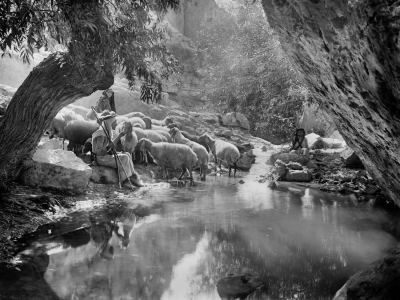
I was feeling more like this:

For at least 10 minutes as I frantically scrubbed, I didn’t even remember there was a Psalm 23, let alone think to say it.
But then I took a step back (by God’s grace) and began to quietly say–through gritted teeth:
The LORD is my shepherd, I shall not be in want.
He makes me lie down in green pastures,
he leads me beside quiet waters,
he restores my soul….
And when my gracious and patient wife came home, she gently reminded me of the “magic sponge” we have under the sink that takes permanent marker off of everything. Within minutes, the green marker drawing on the floor was gone. Gone. The cork floor is good as new.
True, there are much darker valleys in life to walk through, but I think sometimes in parenting those little mini-valleys of frustration and exasperation can add up pretty quickly. And for us parents, they can be the regular “stuff” of our everyday existence. We need good Psalms to pray for the big valleys, and good Psalms to pray for the little valleys.
For those moments–should my two-year-old again somehow elude my watch like she has been so eager to do lately–I will try again (and again) to remember to “say this Psalm.”

This October Fortress Press will publish a new–and the final–volume of the Dietrich Bonhoeffer Works (English edition). This is Volume 17: Index and Supplementary Materials.
Here is the description from Fortress Press:
The completion of the Dietrich Bonhoeffer Works, the definitive English translation of the Critical Edition, represents a milestone in theological scholarship. This wonderful series is a translation from the German editions of Dietrich Bonhoeffer Werke. The product of over twenty years of dedicated labor, the comprehensive and thoroughly-annotated sixteen-volume series will be the essential resource that generations of scholars will rely upon to understand the life and work of this seminal thinker in the wider frame of twentieth-century thought and history.
Now, the editorial team has offered an essential companion to the entire series in the form of an index volume.
Here are the book’s contents. It is more than just an index, per se:
General Editor’s Foreword to the Dietrich Bonhoeffer Works, English Edition—Victoria J. Barnett
The Translation of the Dietrich Bonhoeffer Works, English Edition: An Overview—Victoria J. Barnett
The Dietrich Bonhoeffer Works, English Edition: A Retrospective—Clifford J. Green
The Dietrich Bonhoeffer Werke: Afterword to the German Edition—Wolfgang HuberPart I: Additional Letters and Documents
Part II: Comprehensive Chronology and Master List of Documents
1. Chronology 1906–1945
2. Master List of Documents for DBWE 8–17Part III: Master Indexes
1. Master Index of Scriptural References
2. Master Index of Names
3. Master Index of Subjects
New to Bonhoeffer? I collected some reflections on his writings after spending much of Lent reading him. All my Bonhoeffer posts are gathered here. I’m currently reading Life Together and Prayerbook of the Bible (DBWE 5) and will post a review some time this summer.
As for DBWE 17, here is its product page at Fortress Press. It’s also here at Amazon.
My understanding is that the “Additional Letters and Documents” (Part I) have been published elsewhere, but not necessarily in English, and not in the German Dietrich Bonhoeffer Werke. So DBWE 17 will include material that is new to the Works series, some of it appearing in English for the first time anywhere.
The Dietrich Bonhoeffer Works series in English is described here, available for purchase (hardcover) through Fortress Press here. Fortress Press tells me that once DBWE 17 is published, there will be a discounted purchase rate available for the whole set for a short time this fall.


