A Peaceable Psychology: Christian Therapy in a World of Many Cultures

Peaceable PsychologyThis summer I’ve been taking a course on multicultural counseling. Here I offer some interaction with and reflection on A Peaceable Psychology, pictured at left.

Key Points of Learning: Agreements and Concerns

Before reading A Peaceable Psychology, I hadn’t really thought about counseling and therapy as “political” acts. And yet Alvin Dueck and Kevin Reimer warn well against the illusion that the therapist can somehow counsel apolitically, aculturally, amorally, and areligiously. One of the key, unifying ideas of the book is: “Civility includes learning and validating the language of the ethno-religious client. It is polite to defer to the meaning framework of a client.”

I found this to be a helpful way of framing the quest for diversity competence among therapists and pastors. Dueck and Reimer do go even farther than saying this kind of psychotherapy is polite; they suggest that to counsel in this way is to be like Jesus, especially when therapist and client can inhabit the same place of suffering together.

Although Dueck and Reimer have a healthy (and hearty!) reluctance toward philosophical foundationalism as such, they see the work and life and love of Jesus as foundational to a peaceable psychology. This is especially evident in their view of the importance of the atonement.

I found myself in agreement with Dueck and Reimer when they wrote:

The reconciling atonement of Christ is not spiritual alone but contains physical, psychological, and social dimensions of human brokenness. The suffering God is a beckoning God, who in Christ offers the potential of a new beginning. Consequently, a peaceable psychology is an incarnational event whereupon the invisible spiritual reality of God’s grace is attached to and bound up in the visible life of both the victim and the offender.

They go on, “Atonement is God’s welcoming of the enemy, of the other. It is an invitation to new life, to freedom from sin. This is the basis of a peaceable psychology.”

When considering various theological theories of the atonement, I find myself convinced by an all-of-the-above approach. (How could we limit the efficacy of the atonement by proffering just one theory as to what it was and how it happened?) The work and suffering of Jesus, they suggest, is to transform the therapist-client relationship. “If Juanita were our client,” they ask, “would her suffering fully impact us?”

This, however, also was a potential point of disagreement I had with the authors. Or at least I had questions and wanted to add qualifications. To be sure, the idea of the “kenotic therapist” makes sense to me—especially as a pastor. But the following expression of kenotic therapy was too much, at least for me: “Indeed, I am held hostage by my clients’ suffering. Their face places an ethical claim on me because as a fellow human I am systemically responsible for their suffering.”

While I can agree about “an ethical claim,” I’m not sure being “held hostage” is the most useful metaphor. How many clients will—or can—a therapist allow to hold him hostage before he feels imprisoned in an unhealthy and stultifying way? I wish the authors had spoken more to the point with some practical suggestions and caveats.

Implications for Pastoral Care

Dueck and Reimer say, “We fear that the American psychologist who assumes a level playing field for the linguistic comprehension of ‘self’ has already begun a subtle process of imposition upon the client.”

This is a valuable reminder to me as a minister. I simply cannot make assumptions about the cultural backgrounds of congregants. Further, there is value in this approach (of not assuming “a level playing field for the linguistic comprehension of ‘self’”) that has already—just this last week—had practical import and payoff in my biblical hermeneutics for preaching.

Yesterday I preached on Psalm 23. Due in large part to the idea Dueck and Reimer articulate above, namely, that constructions of self are culturally conditioned and informed, I was able to observe the following about Psalm 23.

David uses the first person singular pronoun throughout the Psalm. God is the shepherd of each individual who would follow him.

This may seem slightly unremarkable to us. We live in a North American society that already tends toward individualism. Our cultural construction of the self tends to be individually-focused.

The culture in which David found himself was much more communally-oriented. …A person’s sense of self was constructed and informed and shaped in a communal context.

So it’s at least a little remarkable, in the larger context of Hebrew worshiping society, that David begins–the Lord is MY shepherd.

This really drove home the point in another article we read in class: “Since hermeneutical understanding is always intercultural and contextual, cultural self-awareness is a prerequisite to responsibly interpreting Scripture and spiritual experience” (Sandage, Jensen, and Jass).

I also do and will find it useful for my own pastoring to consider that “a peaceable therapist recognizes that healing is best conducted ethnically, in the client’s mother tongue and in his or her local culture.”

Of course no therapist can be already conversant in the mother tongue of every cultural or religious tradition. But Dueck and Reimer realize that, and are suggesting more of an “ad hoc” approach anyway: “A peaceable therapist is a linguist; he or she recognizes differences between languages and honors them by learning them.”

May God help us–therapists and ministers alike–so to do!

Find A Peaceable Pscyhology at Amazon here. Baker/Brazos has its product page here, with an excerpt (including Table of Contents) here. No review copy–I bought this one!


Psalm 23: Psalm of Trust, Psalm of Defiance

Psalms of Summer

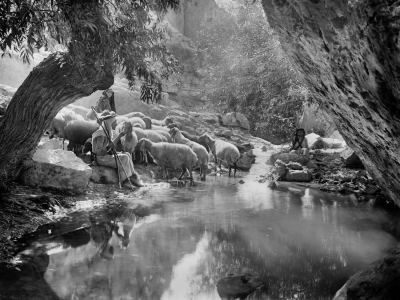
Psalm 23 is a Psalm of Trust. A Declaration of Confidence in God.

The imagery and tone of the Psalm are peaceful: “green pastures,” “quiet waters,” a restored soul, the promise of God’s presence even when death and darkness are near. The LORD is my shepherd: he provides, he guides, he restores, he is with his sheep, and he comforts.

“He makes me lie down in green pastures.” With God as my comforting shepherd, there is time to rest. Time to stop. Time to be still.

Image Credit: LifeintheHolyLand.com (Todd Bolen), used with permission

Typically a shepherd leads sheep to a pasture where they can graze. The sheep still do work; the shepherd does the leading but not necessarily the feeding. As the Psalm progresses, God as comforting shepherd becomes welcoming host, who sets out a whole banquet for his flock.

Image Credit: LifeintheHolyLand.com (Todd Bolen), used with permission

Psalm 23: It Just Got Personal

Psalm 23 is intensely personal. It’s a prayer of an individual to God; a song from one soul, who recognizes that the ruling king of the universe has taken the time to lead him to a restful spot to get a drink… to rest.

The LORD is my shepherd, I shall not be in want.
He makes me lie down in green pastures,
he leads me beside quiet waters,
he restores my soul….

David uses the first person singular pronoun throughout the Psalm. God is the shepherd of each individual who would follow him.

This may seem slightly unremarkable to us. We live in a North American society that already tends toward individualism. Our cultural construction of the self tends to be individually-focused.

The culture in which David found himself was much more communally-oriented. The sins of an individual and the corporate sins of the community were not always distinguished. A person’s sense of self was constructed and informed and shaped in a communal context.

Identity for a Hebrew man or woman had much more to do with being a part of a chosen and called-out community. A chosen people, plural.

Even in other Psalms, when God is prayed to as shepherd, there’s a sense in which he’s understood as a shepherd of a whole people:

For he is our God,
and we are the people of his pasture,
and the sheep of his hand.

So it’s at least a little remarkable, in the larger context of Hebrew worshiping society, that David begins–the Lord is MY shepherd.

The idea of God as personal shepherd is consistent with Jesus’ interpretation of himself as shepherd. You remember the Christlike image of the shepherd who–even though he has 100 sheep–will stop and go find the one who goes missing.

So it really is okay, and probably even closest to the original intent of this Psalm, to put your own name in there as you read it.

Psalm 23 as Prayer of Defiance

Maybe it’s because I’ve been reading this Psalm through the lens of the news this week, but I’m beginning more and more to see Psalm 23 not only as an affirmation of trust and confidence in God, but also as a counter-circumstantial prayer of defiance. It’s a subversive prayer when you compare it to what you see around you.

Verse 4 says, “Even though I walk through the valley of the shadow of death…” David seems to just take it as a given that life contains dark and death-filled valleys.

11,002 ThingsI saw in a bookstore yesterday a little book called 11,002 Things to Be Miserable About. It’s a work of satire, mostly, though not all of it is. Here are a few of the things it listed:

  • Exaggerated vows of love
  • Abysses of regret
  • Tipping over backward in your chair
  • The misery of goldfish
  • Heel pain caused by flip-flops

But we don’t need a book to think of all the ways in which life is full of dark valleys.

You’ve been in a dark valley before. Maybe you’re in one now. It can be a valley of darkness and shadows that you’ve found yourself in due to no choice of your own: some hurt or frustration someone has caused you; prayers that continue to go unanswered in the way you’d like to see answered; illness and physical ailment; unexpected and sudden grief.

You could be in a valley of darkness and shadows that is more of your own making, too. Maybe your whole life doesn’t feel like a valley, but maybe you’re aware of your “shadow side” that you wouldn’t dare bring to church, that part or those parts of you that you don’t want anyone to see. Maybe you’ve looked inside and seen something in your heart that—it pains you to see—doesn’t please God.

Or, to see some “valleys of the shadow of death,” you could just pay attention to global events this week. 4 children in Gaza—cousins—playing at the beach and shot dead from the ocean. An Israeli ground invasion into the Gaza Strip. Another Malaysian Airline plane crash full of passengers, this one shot down by a ground to air missile as it was flying over Ukraine.

And if you really want to lose some faith in humanity, you probably have already heard that that airplane had something like 100 of the world’s top HIV/Aids researchers on their way to an international Aids conference.

So, yes, there are plenty of valleys of the shadow of death and darkness that we walk through.

And yet, even though—“even though I walk through through the valley of the shadow of death, I will fear no evil, for you are with me.” “Even though,” David says, in a hope-filled prayer of defiance.

There’s an old story of a young preacher who was preaching in a rural church in Louisiana during the depression. This church had just one lightbulb coming down from the ceiling that gave light to the whole sanctuary. As Pastor Taylor was preaching, the electricity went out. He was a newish preacher and didn’t know what to do in the now-dark sanctuary. But an elderly deacon in the church, from the back of the room, shouted, “Preach on, preacher! We can still see Jesus in the dark.”

“We can still see Jesus in the dark.”

For whatever reason, when I hear “shepherd,” there’s part of me that thinks of a humble, young boy (or girl) walking sheep through beautiful country fields on a quiet, sunny day.  And that’s right. Leading your sheep to serenity is part and parcel of what it means to be a shepherd.

But there’s this fascinating passage of Scripture, Micah 5, which says:

When the Assyrian invades our land
a
nd marches through our fortresses,
we will raise against him seven shepherds,
even eight leaders of men.

Maybe it’s just me, but reading about a coming invasion by an Assyrian superpower, my first reaction is: What kind of a country would send their shepherds out to battle?

But Micah is drawing on a rich tradition in the Scripture—especially in the Old Testament—of using “shepherd” imagery to describe kings, to describe commanders, to describe strong and mighty leaders.

When Micah says “shepherd,” he is talking about a ruling king who goes to battle for his people.

David, as a ruler himself, surely had this aspect of shepherding in mind. The readers and prayers and singers of this Psalm surely saw not just a shepherd to comfort me, not just a host to welcome me, but God as a ruler to protect me. This ruler won’t do away with all of life’s dark valleys—not yet, anyway—but he will be with me while I walk through them.

The Lord is my shepherd, and his rod and his staff—weapons of protection in the hands of a skilled shepherd—fend off that which would attack us.

When Jesus describes himself as the Good Shepherd, we see his gentleness in his willingness to lay down his life for the sheep, and we see his ferocity, his power, his authority over all things when he says, “No one can snatch them out of my hand.”

Even the presence of enemies in verse 5 cannot keep this ruling shepherd from playing banquet host, setting out a feast for the ones he loves.

So good shepherds are not to be trifled with, because they protect their flock. They walk with them through darkness. The Good Shepherd is a ruling king, and he keeps our modern-day enemies—shame, guilt, fear, anxiety, the accusations of others, stress, hatred… he keeps our modern-day enemies at bay. Even though life is full of valleys of the shadow of death, tens of thousands of things to potentially be miserable about, Jesus the Good Shepherd is a ruling king who STILL is sovereign over all he has made, no matter how fouled up it gets.

“We can still see Jesus in the dark.”

So—when you’re riddled with doubt and self-loathing, or just questioning your worth? Say this Psalm.

When you hear about wars and rumors of wars, say this Psalm.

When your best friend gets sick, say this Psalm.

When someone in your family grieves you by their seeming lack of care for you, say this Psalm.

When you don’t know what the next year of your life holds, say this Psalm.

When you have to do the hard work of reconciling with someone you have hurt or that has hurt you, say this Psalm.

When you can’t pay your mortgage on time, say this Psalm.

When you don’t want to get out of bed in the morning, say this Psalm.

When you get scared of the dark, say this Psalm.

As a holy act of defiance against the darkness,
as an affirmation of trust and confidence in Jesus,
when you come up on one of life’s dark valleys,
get ready to walk through….and say:

The LORD is my shepherd, I shall not be in want.

He makes me lie down in green pastures,
he leads me beside quiet waters,
he restores my soul.

He guides me in paths of righteousness
for his name’s sake.

Even though I walk
through the valley of the shadow of death,
I will fear no evil,
for you are with me;
your rod and your staff,
they comfort me.

You prepare a table before me
in the presence of my enemies.
You anoint my head with oil;
my cup overflows.

Surely goodness and love will follow me
all the days of my life,
and I will dwell in the house of the LORD
forever.

The above is adapted from the sermon I preached today. Scripture quotations are from the 1984 NIV. See my other sermons gathered here, including the first Psalm of Summer sermon here.

The Best Case You Can Get for Your iPad Mini

My favorite iPad mini case has been replaced with another one from the same company.

INVELLOP now has a slightly heavier-duty leatherette case for iPad mini that works with both the first-generation and the retina mini model.

Usually when I review gear I list pros and cons. INVELLOP’s new case, however, has really only one slight drawback, which I note below.

I find the case to be just about the perfect combination of protection and slimness.

This is what it looks like, in a few views:

In viewing mode
In viewing mode
Front of case, closed
INVELLOP 3
Back of case, closed
INVELLOP 4
Inside of the case

Here’s why I haven’t put any other case on my iPad since getting this one:

  • The cutouts (headphone jack, volume control, camera lens) are perfectly sized
  • The case covers both front and back of the iPad; it’s all one piece
  • Though I still sometimes take the case off for extended periods of reading or watching, it’s really easy to hold the iPad in one hand with the case folded back
  • I actually have dropped the iPad a couple times (on the carpet, thankfully) since getting this case… and it’s been fine (phew!)
  • After a few months of use, there is just the slightest bit of wear on the case, but it’s holding up very nicely
  • Closing the screen flap puts the device to sleep; opening it wakes it–this functions perfectly
  • At the time of this post, you can get the case for about $20 at Amazon (affiliate link to help fund ye ole blog)
  • The inside of the screen cover has microfiber, which has not scratched the screen at all
  • The screen cover is in thirds so that you can put your iPad upright (in landscape mode) in two different positions (for viewing or typing)
  • There are magnets that keep the front cover secured in place when you fold it back

The only minor critique I have is that it’s slightly heavier (by a couple ounces, maybe) than the previous iteration of this case. But that’s a small price to pay for the greater protection and classier feel. Two thumbs up. This feels like everything you’d want an iPad mini case to be.

Thanks to INVELLOP for the review sample. The case reviewed above can be found at Amazon hereYou can find my other gear reviews here.

Scrivener is 50% Off in the App Store Right Now

Scrivener Logo

Scrivener is 50% off at the Mac App Store right now. Not sure how long this sale will last, but it’s now $22.99, which is well worth the value Scrivener looks to provide, especially to writers. I posted about writing a paper with Scrivener here. The link to the sale in the App Store is here. (HT: Brian Renshaw for pointing it out!)

A Poem I Wrote in Spanish After Reading Paulo Freire

Pedagogy of the Oppressed

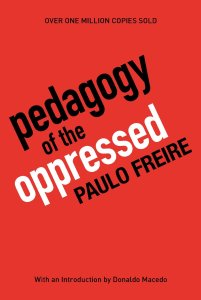
Some 12 years ago I wrote the following poem-prayer after reading Paulo Freire’s Pedagogy of the Oppressed and some of his other writing on the church. I found it again the other day so am posting it here:

Hasta que haya la paz, no descansaré.
Hasta que las guerras cesen, no abandonaré la lucha.
Hasta que la justicia reine, seguiré leyendo, predicando, y gritando.
Hasta que haya una verdadera liberación humana, no dormiré.
Que vengas, Jesucristo. Que venga tu voluntad y tu reino,
como en el cielo, así también en la tierra.


Zondervan Theology Collection (Logos Software) Giveaway

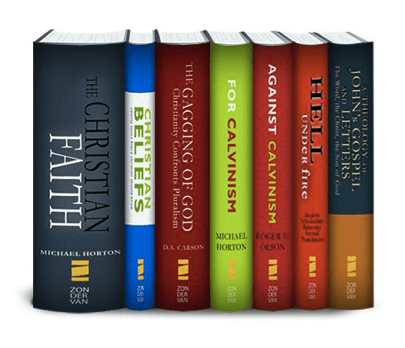
Logos Zondervan TheologyWant to enter for a chance to get some free theology books? These ones won’t even take up shelf space. I’m joining with a few other bloggers and Logos Bible Software for a giveaway of Logos’s Zondervan Theology Collection.

What’s Up for Grabs

The collection can be found here. It includes these books:

How to Enter the Giveaway

Logos will choose the winner at random on August 1, with the collection sent to that person’s Logos account. If you don’t have a Logos account, you can register for free here. An iOS app for Logos (and other mobile apps can be found here, also free.

To enter, log in below using either your email address or Facebook account, and the Punchtab widget walks you through the rest. You can choose which methods of entry to use. Each prompted action is its own entry.

Logos has this disclaimer: By entering this giveaway you consent to being signed up to Logos’ “Product Reviews” email list.  (This just means you’d get emails with Logos-related content written by bloggers such as yours truly.)

UPDATE: WordPress doesn’t want to show the Punchtab widget for some reason. For now you can enter here.

Writing My First Paper Using Scrivener

During my first few minutes using Scrivener 2, I kept thinking the most apt comparison was “word processor on steroids.” But that’s not quite accurate. For one, there are no negative side effects here—save for the commitment the user will have to put in to learn a flexible, layered, and impressive program. And Scrivener is about as far from a word processor as LeBron James is now from Miami.

How Quickly Could I Get Started? (In About 40 Minutes)

I had a paper due this weekend for a grad school class I’m taking. I wanted to use Scrivener to write it, since I thought it would simplify the process. Yes, Scrivener processes words, but it’s really a program for writing project management. Its product page says:

Enter Scrivener: a word processor and project management tool that stays with you from that first, unformed idea all the way through to the final draft. Outline and structure your ideas, take notes, view research alongside your writing and compose the constituent pieces of your text in isolation or in context. Scrivener won’t tell you how to write—it just makes all the tools you have scattered around your desk available in one application, leaving you free to focus on the words.

Scrivener is fast and easy to install. When you open it for the first time, you see an interactive tutorial you can work through:

Scrivener_Getting StartedBut it says it will take “couple of hours if you go through it thoroughly,” and I needed to get started sooner than that on the paper. (I’ll go through the whole tutorial as soon as I can; it’s really well done.)

There are also tutorial videos here. A lot of them. I’ll admit to being somewhat overwhelmed at first. Scrivener is, after all, the kind of program you need to spend at least a little time to learn how to use, even if you’re already relatively computer-savvy. But it promises to be time well spent.

As an experiment, I decided to watch the ten-minute overview (the first video at the link above, “An Introduction to Scrivener”) to see if it was enough to get me “up and running as quickly as possible,” as the video description suggested. I had never used Scrivener before this month.

Sure enough—10 minutes later (plus another 30 minutes or so searching the forums, help files, and user manual) I was up and running, using Scrivener for the first time to complete a grad school writing assignment.

Writing a Paper More Efficiently

The paper I was writing requires multiple sections and is a topic I’d written about before. I also had some readings to integrate into the paper. And, of course, I wanted to keep the syllabus and specific requirements in front of me as I wrote.

So, after opening a preset template based on the Chicago Manual of Style, I got my project ready. Here’s what it looks like in Scrivener. To you Scrivener power users: this is a pretty basic setup, and I’m still learning what all I can do. To you who are not familiar with Scrivener: I’ll note below what each of the portions of the screenshot is. (Click on image to enlarge.)

Scrivener Paper LayoutThe leftmost column is the Binder. This looks a bit like a Mac’s Finder folders. Here is where I laid out my paper. The preset template took care of the “Title Page” and “Works Cited” formatting; I just had to fill them in. I outlined the “Main Content.” Underneath that is “Research,” a set of .pdfs and other files I dragged in. Instead of switching between Preview, Word, and multiple windows in multiple programs, I could access everything I needed from the “Binder,” once I put it there. This meant that once I took a few minutes to set up the project, I only needed this one app open to complete the writing assignment, start to finish.

The “Ideas” section in the Binder, by the way, allows you to do a virtual version of creating notecards, for later rearrangement and integration into the paper.

Scrivener LogoThe middle panes (the largest ones) comprise the Editor, which is where I wrote the paper. One really cool thing about this is you can have it all be one big pane, or you can open two panes at once. In the above screenshot, I’m writing my paper in the top editor pane and accessing a previous writing for reference in the bottom pane.

At right is the Inspector. This is versatile and can be used to select one of six different sub-panes. In the view above I have open a short synopsis of the section I’m writing (here I copied from the assignment so I knew what I was supposed to be writing), as well as some general Project Notes I wanted to keep before me for each section of the paper.

After I had written the paper, I selected Compile from the File menu, and Scrivener gave me a myriad of easy-to-navigate options for how I wanted to export my paper into a word processor for final formatting. I exported it to Word and only had to do a very few tweaks to have my paper come out properly formatted–including the footnotes.

More to Follow

Literature & Latte kindly supplied me with a license of Scrivener for the purposes of review. There is much, much more to the program than what I have outlined above, and I’ll write more later. I came to Scrivener this week just wondering if I could learn its basics fast enough to use it right away to write a paper, and in a way that would save me time compared to my normal workflow. This was very much the case when I had finished. I only wish I had known about the program much sooner in my graduate studies!

Want to check it out? (I recommend it.) Here you can download a free trial, for Mac or Windows. (It’s a generous trial period, too.) You can read more about Scrivener’s features here.

LeBron: Back Home to Cleveland

Lebron to Cleveland

LeBron James is going back to Cleveland. He says:

Before anyone ever cared where I would play basketball, I was a kid from Northeast Ohio. It’s where I walked. It’s where I ran. It’s where I cried. It’s where I bled. It holds a special place in my heart. People there have seen me grow up. I sometimes feel like I’m their son. Their passion can be overwhelming. But it drives me. I want to give them hope when I can. I want to inspire them when I can. My relationship with Northeast Ohio is bigger than basketball. I didn’t realize that four years ago. I do now.

Whether you care much for him or not, it’s a beautifully written article, touching on themes of home, family, forgiveness, and making change in your community. Read the whole thing here.

Change Your “Pas5w0rd,” Change Your Life

Psalms of Summer

This summer we’re going to delve more deeply into the Psalms. “The Psalms of Summer,” I’m calling the preaching series. (Or, as a pastor friend of mine called it, the Psalms of Psummer.)

We’ll find ourselves here in these poems and see our heart’s desires expressed in the Psalms. Some days we’ll walk out of church with new prayers to pray: prayers we’ve been longing to pray and have already been feeling, but maybe couldn’t put words to.

We’ll seek, too, to be shaped and formed by these prayers.

Psalm 1 as Preface, and Picking a Password

Psalm 1 is, as one early church theologian called it, the “foundation” of the house. It sets up the whole book of 150 Psalms. You could almost even think of it as a sort of “Psalm 0.”

The ones who are blessed, this Psalm says, the ones with the richest, most God-filled lives, the ones who flourish, are the ones who meditate on God’s word. Over and over.

Blessed are those… who delight in the law of the LORD and meditate on his law day and night.

I found myself this week being redirected to an article on NBC’s Today Website, because I had to click on the link that said, “How a password changed one man’s life for the better.”

And how can you not click on that, you know?

Mauricio Estrella had just gone through a painful divorce and was depressed. He says:

One day I walk into the office, and my computer screen showed me the following message:

“Your password has expired. Click ‘Change password’ to change your password.”

His work required a change of password every 30 days. He writes:

I was furious that morning. A sizzling hot Tuesday, it was 9:40 a.m and I was late to work. I was still wearing my bike helmet and had forgotten to eat breakfast. I needed to get things done before a 10 a.m. meeting and changing passwords was going to be a huge waste of time.

As the input field with the pulsating cursor was waiting for me to type a password — something I’d use many times during every day — I remembered a tip I heard from my former boss.

And I decided: I’m gonna use a password to change my life.

He reasoned like this–he has to type in his password several times a day–when his screen saver came up or his lock screen kicked in when he was away from his desk for extended periods of time.

So, freshly wounded from the divorce, he set a password: “Forgive her.”

Except he had to have at least one capital letter, one lowercase letter, one symbol, and one number, so it was “Forgive@h3r.”

Every day for a month he wrote, “Forgive her.” And Estrella said:

That simple action changed the way I looked at my ex wife. That constant reminder that I should forgive her led me to accept the way things happened at the end of my marriage, and embrace a new way of dealing with the depression that I was drowning into.

A month later, his password expired, so his new password–reflecting a new mantra he wanted to take on–became: Quit@smoking4ever.

It was a great article–a little self-help-y for my tastes, and it is true that we find ourselves in way too many situations that we can’t just positive think our way out of. But Mauricio Estrella knew what the writer of Psalm 1 knew–what we meditate on has the power to transform us. 

Two Ways

Here is one way of outlining Psalm 1:

What are the two ways? (Ps. 1:1-2)

What are they like? (Ps. 1:3-4)

What do they lead to? (Ps. 1:5-6)

This Psalm tells us, especially, that what we meditate on has the power to transform us.

What are the two ways? (Ps. 1:1-2)

Ps 1:1    Blessed are those
who do not walk in step with the wicked
or stand in the way that sinners take
or sit in the company of mockers,

2 but who delight in the law of the LORD
and meditate on his law day and night.

Or, get this–I’d never read Psalm 1 in this translation until this week:

Happy the man
who did not walk by the counsel of the impious,
and in the way of sinners did not stand,
and on the seat of pestiferous people did not sit down.

(Stay away from the pestiferous ones!)

Walk… stand…sit. There’s a progression into wickedness here. At first you might be walking on by, just taking a look at–thinking about–going down a road you shouldn’t. If you slow down enough to stand there and look at the way of the wicked–that’s worse… when you stop to sit in the chair of those pestiferous people, well, then… you’re done for. Because what we meditate on has the power to transform us. And the ones that we spend time with also have the power to transform us, for better or for worse.

These are the two ways: the way of the wicked, the way of the righteous.

Righteous ones “delight in the law of the LORD and meditate on [it] day and night.”

Remove@clothingm1ldew?

Later Psalms will echo this. In Psalm 119, verse 97, it says, “Oh, how I love your law! I meditate on it all day long.” Then in verse 103, the Psalmist writes, “How sweet are your words to my taste, sweeter than honey to my mouth!”

I suspect that this idea of loving the law of God can sound a bit strange to us. We all see the value in laws and rules and regulations, sure, but to love somebody’s laws more than the summer season’s first ice cream?

We hear the word “law” and might think about some of the detailed instructions given in, say, Leviticus, regarding physical hygiene and ritual purity, such as Leviticus 14, which is about cleansing from infectious skin diseases and what to do when you notice mildew on your clothes.

So your new computer password becomes: Remove@clothingm1ldew.

Or we hear the word “law” and think of it as opposed to “grace.”  They were living under “law”; we are living under “grace.”

So what’s the Psalmist talking about?

He’s talking about his equivalent to our Bible. The Torah–the first five books: Genesis, Exodus, Leviticus, Numbers, Deuteronomy. This is “the Law”–it’s “God’s Word.” And not just the laws part of God’s law–but the revelation of God that it brings, the story that it tells of a compassionate God who is, in fact, slow to anger and eager to show compassion on all he has made.

In meditating on God’s law–God’s very words–the Psalmist is meditating on God: his guidance, instructions, blessings, love, character.

And I think Psalm 1 is self-referential, too–those who meditate on these Psalms will be blessed, will experience the favor of God.

What are they like? (Ps. 1:3-4)

3 [The righteous] are like a tree planted by streams of water,
which yields its fruit in season
and whose leaf does not wither—
whatever they do prospers.

4
Not so the wicked!
They are like chaff
that the wind blows away.

Those who meditate on God’s word are rooted, strong, nourished, bearers of good and visible fruit to all who walk by them. The wicked–in this case those who ignore God’s truth and go their own way–they are the chaff that has fallen to the floor. The grain is kept and preserved, the chaff just blows away. No roots, no fruit, no nothing.

What do they lead to? (Ps. 1:5-6)

5 Therefore the wicked will not stand in the judgment,
nor sinners in the assembly of the righteous.

6 For the LORD watches over the way of the righteous,
but the way of the wicked will be destroyed.

Then in verses 5 and 6 there is what one interpreter calls a “parting of the ways.” God watches over them. What we meditate on has the power to transform us, so the righteous one now is a rooted and well-watered tree, bearing fruit like it should. She or he receives God’s blessing, God’s preservation.

The wicked one has been transformed by the bad company he keeps, so he just floats away with the next wind, on his way to judgment.

It’s God who does the planting and watering and blessing here, but it’s the righteous person who has done his or her part to meditate on God’s word. And that meditation has caused a transformation.

Scripture Memory

Over the last month or so I’ve gotten back into Scripture memory. I have these little cards I bring in my pocket with verses on them. The pocket is a great place for them because I might reach for my phone to check for messages, and I’ll feel the little packet of cards instead. This is a prompt for me to either pull a card out and learn a verse, or if I already know it, to try to say it and pray it.

There are many ways to meditate on God’s Word. We’re going to try one particular way this summer, and that is Scripture memory….

[AKJ note: Here we looked at some Scripture memory cards I made up for Psalm 1:1-2, as a way to put into practice what this Psalm preaches. Make your own, using this document, if you want!]

The above is adapted from the sermon I preached last Sunday. Scripture quotations are from the TNIV. See my other sermons gathered here.

Counseling the Culturally Diverse

Counseling the Culturally Diverse

This week I’m beginning a course on multicultural counseling. I can’t wait to jump in.

One of the textbooks we’re using is Counseling the Culturally Diverse: Theory and Practice, 6th Edition (Wiley, 2013), by Derald Wing Sue and David Sue. Here’s a bit of the description from the book’s product page:

Filled with numerous examples, authentic vignettes, and practical case studies, Counseling the Culturally Diverse, Sixth Edition remains the best source of real-world multicultural counseling preparation for students and an influential guide for professionals.

The first chapter (which is as much as I’ve read so far) begins with the personal (and professional) journeys of two readers of the book, as well as the author’s own such reflections. From the reflection questions on the very first page, readers of this sixth edition get the sense that they, too, are in for a challenging and invigorating journey. The first reflection question is:

In what ways do our personal reactions to topics of race, gender, sexual orientation, and oppression have to do with counseling diverse clients?

Then there is:

Who are you as a racial/cultural being? How often have you thought about yourself as a man/woman, White individual/person of color, or straight/gay?

The underlying assumption behind the question is that those in so-called majority statuses in each of the above categories will not have thought as much about such identities as those in minority statuses have. Indeed, this not having to think about it characterizes what folks refer to as white privilege, male privilege, and so on.

Self-understanding around issues of culture, the book suggests, is essential to the development and effectiveness of a counselor/therapist.

Finally, the author says,

[The book’s] goals are to enlighten you about how counseling and psychotherapy may represent cultural oppression and to provide a vision of change that is rooted in social justice.

I hope to have a chance to report more about the book in the future. (And if any of you reading this post has read Counseling the Culturally Diverse, I’d love to hear your thoughts in the comments, or via this contact form.)

The book is here at Wiley and here on Amazon (affiliate link). In both places it’s available in print or electronically. Via Wiley, you can look at the full Table of Contents here (pdf) and read the first chapter in full here (pdf).