Dietrich Bonhoeffer was hanged in the Nazi concentration camp of Flossenbürg on April 9, 1945, just two weeks before the U.S. military came to liberate it.
John W. de Gruchy describes the lead-up to that day in his Editor’s Introduction to Letters and Papers from Prison (Dietrich Bonhoeffer Works, volume 8):
On October 8 [of 1944], Bonhoeffer was taken to the cellar of the Gestapo prison on Prinz-Albrecht-Straße, where he stayed until February 7, 1945. From then on, all correspondence came to an end, and contact between Bonhoeffer and the family and [Eberhard] Bethge was broken. From there Bonhoeffer was taken first to Buchenwald and then, via the village of Schönberg in Bavaria, to the Flossenbürg concentration camp, where he arrived on April 8. That evening he was tried by a hastily rigged court and condemned to death. Early the next morning Bonhoeffer was executed along with several other coconspirators.
He was hanged April 9. His family would not learn about it for several months.
The July before he had written to his trusted friend (and later biographer) Eberhard Bethge, one day after the failed assassination attempt on Hitler’s life. He wrote:
How should one become arrogant over successes or shaken by one’s failures when one shares in God’s suffering in the life of this world? You understand what I mean even when I put it so briefly. I am grateful that I have been allowed this insight, and I know that it is only on the path that I have finally taken that I was able to learn this. So I am thinking gratefully and with peace of mind about past as well as present things. …
May God lead us kindly through these times, but above all, may God lead us to himself.
His final recorded words before his hanging are especially appropriate in these days that lead up to Easter Sunday:
This is the end–for me the beginning of life.
Over the years on April 9 I’ve re-posted this a few times. It began as part of the “Tuesdays in Lent with Bonhoeffer” I wrote when I first got into Bonhoeffer. See other gathered Bonhoeffer posts here.
Sometimes when we lament a problem to another person, we want help finding solutions. Other times we want to be heard, seen, understood. We want to know another person is really there with us.
More than that, there’s power in knowing that what we lament, someone else laments too. That messed up reality I see? You see it too. I hear you say with me, “Yeah… that’s not okay!” Such solidarity brings comfort, validation, and even strength.
The apostle Paul addresses “the sufferings of the present time” in Romans 8. He points us to glory and calls us to hope, but not without deep empathy as he considers our current pain.
In response to suffering, there are three groaning parties in Romans 8:
All of creationgroans as it suffers under the weight of its “bondage to decay” (vv. 21-22).
We ourselves—“who have the firstfruits of the Spirit” groan within ourselves (v. 23).
The Holy Spiritgroans in wordless intercession for us (v. 26).
I am just beginning to appreciate how the Holy Spirit is standing in solidarity with us, specifically by groaning.
The “groan” roots are all there in Greek. (“Sighs too deep for words” in the NRSV is beautiful, but obscures the “groan” language.) But I missed the connections until reading a compelling essay this morning from Richard B. Hays’s Reading with the Grain of Scripture: “Pneumatology: The Spirit in Romans 8.” In considering what the Holy Spirit does, Hays makes powerful intertextual connections to Ezekiel, Isaiah, and especially Israel’s exodus narrative.
Hays says that all this groaning in Romans 8 is “describing creation’s bondage to death as analogous to Israel’s slavery in Egypt.” The groaning we hear and make now connects to the Israelites’ groaning under slavery in Exodus 2:23-24. Paul is now “envisioning the eschatological redemption of all creation as a new and final exodus, in which the whole created world will share in Israel’s experience of redemption and freedom” (p. 216, my emphasis). A “new and final exodus”? Yes, please!
In the meantime—and it’s a very long meantime, isn’t it?—we’re all groaning for freedom from suffering, “like a woman in labor”:
All creation groans
We children of God groan
The Holy Spirit groans
Hays shows these three as existing in a sort of chain of solidarity: (1) Creation groans, and (2) “the children of God share fully in creation’s suffering and agonized groaning.” The children of God groan, and (3) “God’s Spirit joins in the groaning.”
By groaning, the Holy Spirit is passionately expressing solidarity with God’s children and with all of creation.
The Spirit’s wordless groans are not just disconnected intercessions. I don’t think Paul is making an interesting but stand-alone point about how prayer really works. He’s saying that the Spirit’s groaning is God joining himself in active solidarity with an already-groaning creation and with an already-groaning family of children who are exhausted from their bondage.
The great I AM is also with us as the great I GROAN. “I will be with you” includes “I will groan with you.”
Just as Yahweh rescued Exodus, Paul speaks of hope and deliverance in Romans 8. God’s children and all of creation will be liberated, brought into freedom and glory! Thanks be to God.
Until then, we have a great fellow-Groaner who laments with us in the waiting.
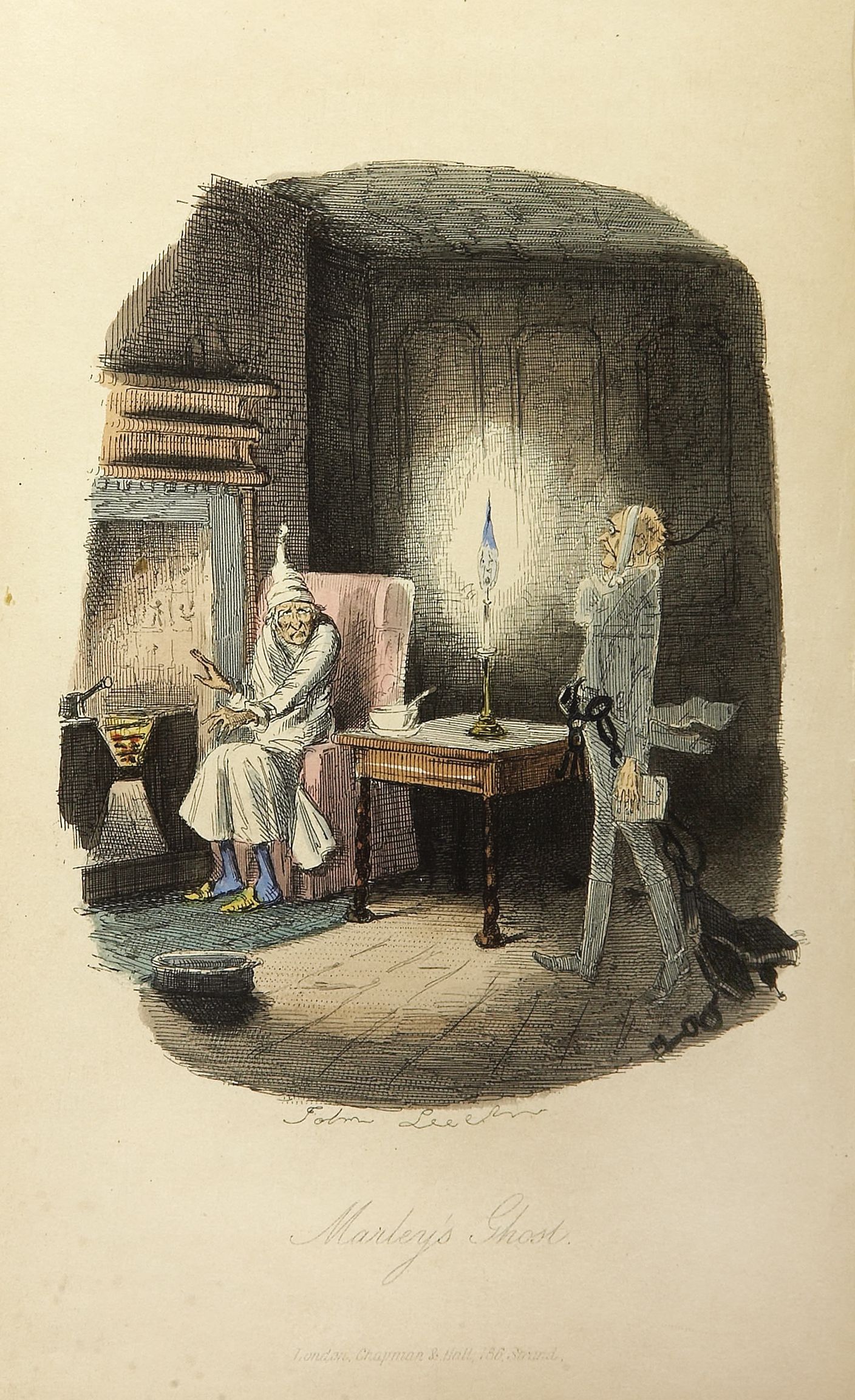
Marley’s Ghost, by John Leech, Public domain, via Wikimedia Commons
After casting an unclean spirit out of a boy, Jesus takes his disciples away privately. Where does Jesus direct their attention after a triumphant encounter? Surprisingly, he points them to his own death:
And going out from there, they passed through Galilee, but Jesus did not want anyone to know, because he was teaching his disciples and saying to them, “The Son of Man is to be handed over into the hands of people, and they will kill him, and—despite being killed—after three days he will rise again.” —Mark 9:31-32, my translation
The repetition of “kill” is fascinating. Here’s a wooden read of the Greek, where the verb for kill (ἀποκτείνω/apokteinō) is repeated:
…and they will kill (ἀποκτείνω/apokteinō) him, and—being killed (ἀποκτείνω/apokteinō)—he will rise again.
The first use of “kill” is an active indicative verb: “they will kill him.” Jesus is the object of that verb, the recipient of the action of killing.
The second use of “kill” is a passive participle, with Jesus the subject, translated something like: “and despite his being killed….” Here Jesus is grammatical subject, not object, because he is also the subject of the main indicative verb that the participle modifies: “he will rise again.”
I draw two conclusions from this:
First, Jesus has gone from passive recipient of a heinous action (“they will kill him”) to active agent that overcomes it (“despite being killed, he will…”). As my friend Mark used to say, “That’ll preach!” I think of the oft-used protest mantra, that I preached about the other week: “They tried to bury us; they didn’t know we were seeds.”
Second, Jesus is repetitive in saying, “they will kill him… and being killed he will….” I think Jesus is emphasizing his death on purpose.
Mark and Jesus don’t need to use “kill” (ἀποκτείνω/apokteinō) twice. In fact, in Mark 8:31, when Jesus predicts his death to his disciples, even a similar verbal formula uses “kill” just once. Perhaps because you can only kill a person once! Dead is dead.1
And yet in Mark 9, Jesus says “kill” twice. Maybe it’s because the disciples didn’t understand his impending death in Mark 8. So Jesus recapitulates the prediction here and adds some emphasis in hopes that they’ll get it this time in Mark 9.2 Maybe Jesus also wants to highlight the power of his resurrection—that he rose from the actual dead. He didn’t wake up from a merely “mostly dead” state:
In Charles Dickens’s A Christmas Carol it says, “Old Marley was as dead as a doornail.” Dickens could have just said “Old Marley was dead!” Dead is dead. You either are or you aren’t.
But since Ebenezer Scrooge will see the ghost of Marley, Dickens wants to emphasize that it really is a ghost, because Marley really is dead when the story begins.
I think Mark and Jesus are doing the same thing here: “they will kill me, and—even though I’ve really been killed, dead as a doornail—I will rise again.”
Mark sets the stage here for a powerful response of awe when Jesus does rise again—from full-on, actual death, over which Jesus has authority.
Disclosure: I did not read through any commentaries before posting this, but I’m sure many commentators have seen the same thing. Fascinatingly, the NET Bible chooses NOT to translate the second “kill,” inexplicably chalking it up to “redundancy in the statement” in the Greek text. ↩
Early in 2023 I re-read the Gospels, paying close attention to how Jesus interacted with children. Going back to how much Jesus loved and honored children in his ministry has been transformative for me.
Now I’m leading a five-session Webinar series: A Little Child Shall Lead Them: A Biblical Theology of Children and the Kingdom of God. It’s free, and I’m offering it in the hopes that all of us might grow in how we understand, love, and advocate for children.
The series uses Accordance Bible Software’s Webinar platform, but you don’t need to have Accordance to participate. Details are in this one-pager; you can go straight to the registration landing page here. First session is this Wednesday (12/20) at 12p Eastern (Christmas-themed!), and then the first four Wednesdays in January.
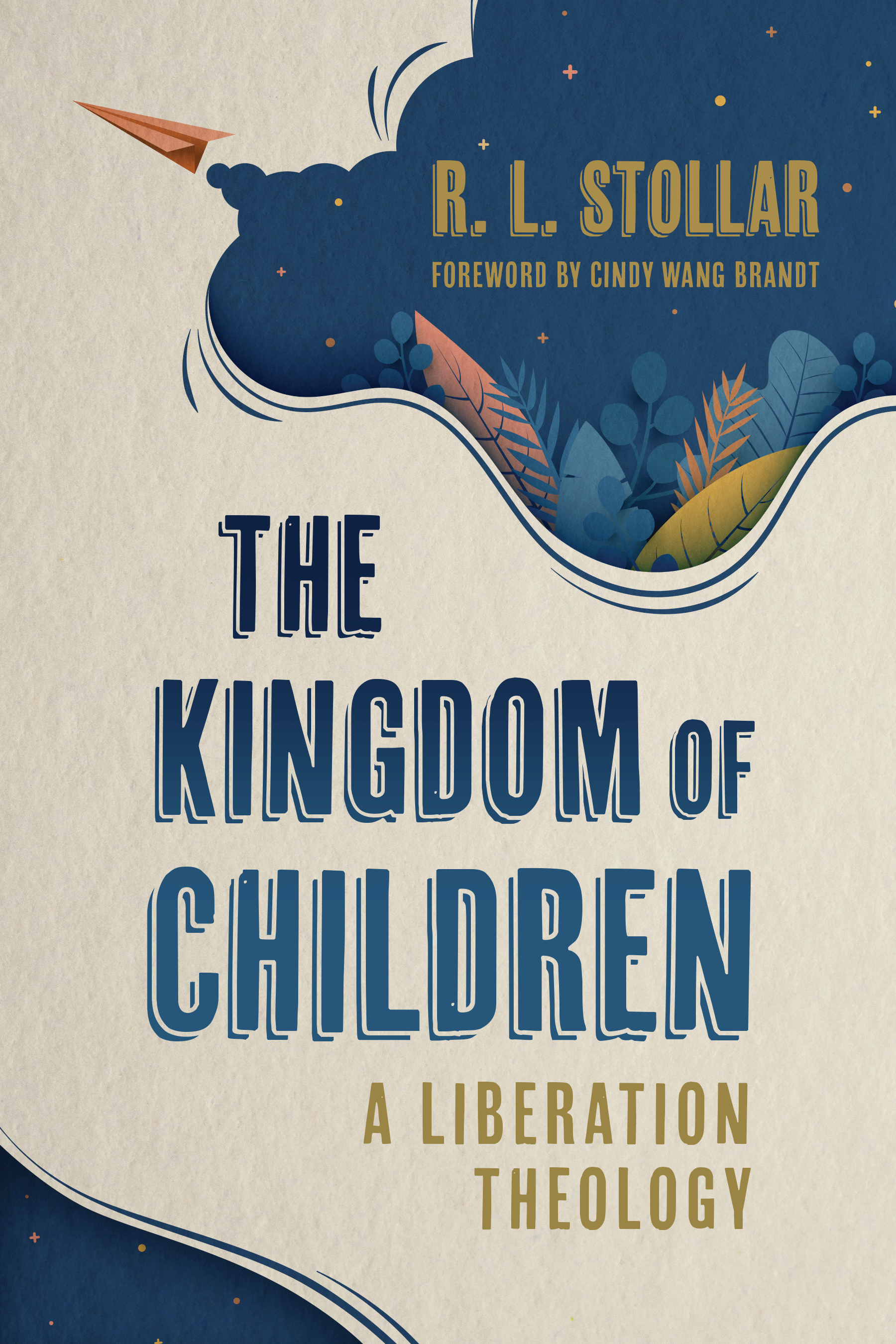
R.L. Stollar’s new book vaulted into my Top 5 Books Ever before I’d even finished reading it. It’s called The Kingdom of Children: A Liberation Theology. (Publisher product page / $4.99 on Kindle now (affiliate link))
Book review and additional interaction forthcoming. For now: I haven’t stopped thinking about The Kingdom of Children since reading it. It’s already having the same impact on my thinking and pastoral practice as I’ve experienced from Paulo Freire’s Pedagogy of the Oppressed and from the late Sang Hyun Lee’s From a Liminal Place. I wrote more about this here, with—I hope—more to follow.
Pais is the first—and only—theologian to dedicate an entire book to a child liberation theology to date. While various individuals and organizations have explored a theology of childhood or advocated for child theology, the specific topic of child liberation theology has received very little attention. My goal with this book is to change that and bring the vital conversation about child liberation theology forward to a new generation.
Time will tell to what extent Stollar meets his goal, but I’m 100% behind it. And for what it’s worth, both theorizing and practicing child liberation theology are now front and center with me. And for that I am grateful.
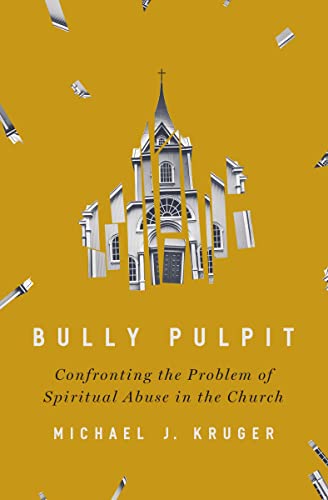
New Testament scholar Michael J. Kruger didn’t expect to write a book about spiritual abuse in the church, but—a couple of chapters in to his new book Bully Pulpit—I’m glad he did.
Kruger says:
I never expected to write a book on Christian leadership. And I certainly never expected to write this one. After all, my prior writing projects have been more on the academic side of the spectrum—mainly on early Christianity and the origins of the New Testament—and not on practical aspects of Christian ministry.
But what does any of us really know about what God might some day call us to? In lines that resonate with me, he goes on:
But sometimes God leads you down pathways you never imagined you would take. And sometimes you do things not because you want to but because they need to be done.
I know the feeling: I could only write each of these posts after firsthand and secondhand experience.
Bully Pulpit’s sub-title is: Confronting the Problem of Spiritual Abuse in the Church. Here’s Kruger’s definition of spiritual abuse:
Spiritual abuse is when a spiritual leader—such as a pastor, elder, or head of a Christian organization—wields his position of spiritual authority in such a way that he manipulates, domineers, bullies, and intimidates those under him as a means of maintaining his own power and control, even if he is convinced he is seeking biblical and kingdom-related goals.
Then he unpacks the definition:
“Spiritual abuse involves someone in a position of spiritual authority” (more on this below)
“Spiritual abuse involves sinful methods of controlling and domineering others” (i.e., the abuser is hypercritical, cruel, threatening, defensive, manipulative)
“Spiritual abusers seem to be building God’s kingdom (but are really building their own)”—this allows for an important intent vs. impact distinction
Kruger notes that defining spiritual abuse can be tricky, but that shouldn’t keep us from trying:
But sins that are more difficult to spot are still sins. Pride may be one of the worst sins, and yet it is remarkably difficult to prove in any given individual. Yet if such difficult-to-spot sins would disqualify a person from ministry (1 Tim. 3:3; Titus 1:7; 1 Peter 5:3; 2 Tim. 2:24), then the church is obligated to assess them even if the task of doing so requires more nuance and care. Can the church ignore these requirements merely because they are more subjective than others? One might argue that the pileup of churches wrecked by domineering leaders over the last decade shows that the church needs to do better in this area. We have ignored these requirements at our peril.
One element I especially appreciate in Kruger’s definition of spiritual abuse is that the abuser can be a person “in a position of [any] spiritual authority.” The abuser may not be in a positional of formal authority in the church, in other words. Their power may come from years of spiritual influence in a congregation. They may be a beloved church musician with informal authority but lots of power. They may be a long-serving elder or lay leader or popular Sunday school teacher who has waited out multiple pastors over the decades.
Kruger will come to focus, I think, on lead pastors or organization heads. This is as it should be, although I eagerly await someone’s book on spiritual abuse perpetuated from the so-called second chair–and the pew.
Either way, whoever spiritually abuses does so because they have spiritual power in a community, and they take drastic, hurtful measures to maintain it.
Jesus’s “Not so with you!” is a great refrain already in Kruger’s book. He will build to a positive vision of “creating a culture that resists spiritual abuse.”
For now, though, I’m grateful for his delineating what spiritual abuse is, since it offers shared, specific language for a practice that causes real and lasting harm.
Too many to count were the college papers I finished writing at 3:00 a.m. that I knew were brilliant. Just stunning stuff that was going to land me in a peer-reviewed academic journal as an undergraduate.
Not only was I never published as an undergrad, but most of those papers—even as I groggily re-read them while walking to class later in the morning—turned out to be… not as amazing as I’d thought. My twilight assessment had been clouded by lack of sleep, caffeine, adrenaline, and repeat listens to Coldplay’s first album (you know, the good one).
A rare exception is a paper I wrote my senior year in Spanish, an extended review of Paulo Freire’s 1974 essay, “Las iglesias, la educación, y el proceso de liberación humana en la historia” (“Churches, Education, and the Process of Human Liberation in History”).
I titled my essay, “Gritar con los oprimidos: Una teoría de liberación para la juventud en el ministerio,” which in English is, “Shouting with the Oppressed: A Theory of Liberation for Youth in Ministry.” In true liberation theology fashion, I wrote the paper while active in youth ministry. And falling short of liberation theology ideals, I did not quote or amplify actual voices of young people in my essay. But I set out a theoretical framework that, in practice, powerfully shaped my ministry with youth in a well-to-do, predominantly white suburb.
I concluded (grandiosely, or inspired—let the reader decide):
In this model, we do not start with ourselves, but we start with listening to the voice of the oppressed person. In this way, the voice of the oppressed will be heard throughout the world. We use power in the fight with them against the elites and towards a new historical reality, constituted by us, and that reflects the glory of God on earth.
Today Freire’s longer Pedagogy of the Oppressed remains one of books that has most shaped me. I particularly thrilled, a few years ago, to be able to discuss Freire’s work and approach in detail with school educators in my congregation. I like to think that led to all of our teaching—in our respective spheres—shaping a reality more in line with the liberation Jesus longs to bring to the world.
Still, since writing my (real or imagined) pièce de résistance 20+ years ago, I’ve often found myself lulled into accepting the status quo in church settings. Liberation theology has been an afterthought. An after-praxis.
But our God is a liberating God, and that beautiful and powerful reality is brought to bear on God’s people throughout the pages of Scripture. And today, too: God still liberates—and longs to liberate—those who are oppressed and kept from living what Jesus called “life to the fullest.”
Having nearly forgotten my writing (and practice) around “Liberation for Youth,” I recently discovered child liberation theology. It’s awesome, Christocentric, generative, and powerful.
Here are four sources that I’ve loved sitting with as I seek to reintegrate this important framework—liberation theology—into my own life and ministry, with a particular focus on children:
1. The Gospels
Recently I slowly re-read the Gospels with an eye toward how Jesus interacted with children and other vulnerable populations. The read-through has been transformative for me. And not just temporarily so.
This week what’s really sticking out to me are two sayings of Jesus, both of which call for a centering of children in the Kingdom of God and in our own lives:
Let the little children come to me, and do not hinder them, for the kingdom of God belongs to such as these.
— Matthew 19:14 // Mark 10:14 // Luke 18:16
And this gem, which I’ve seen less frequently cited, even in literature talking about Jesus and children:
Truly I tell you, unless you change and become like little children, you will never enter the kingdom of heaven.
—Matthew 18:3
Unless you change! This is not just Jesus talking about how he loves children, or about how we adults should love children, but about how we should become like little children. To be faithful to Jesus, we have to stop and ask: How are little children, that we can become like them? In what ways do children know and wonder about and access and experience God, and how can I do the same?
Yes, we are to love children like Jesus does. And we are to love children like we love Jesus. But Matthew 18:3 is saying also: love Jesus like children do. We adults have a long ways to go on this one.
2. R. L. Stollar
I’ve spent hours reading his site already. But perhaps start here, with “Towards a Child Liberation Theology.” Take, for example, just this extraordinary paragraph, that is already beginning to invigorate how I read the Bible:
Child liberation theology thus begins with the Child that is Jesus and the children of all histories and locations who bear God’s image. And it places these children at the center of religious texts. It asks us to consider religious texts from the vantage point of those children — from the vantage point of Jesus as the God Child and all children as God images. Thus we must read our texts from the interpretive lens of these children. Children become the point from which all our exegesis and praxis must begin and end.
He has a great, accessible 8-page PDF called “Child Liberation Theology” that is freely available here.
EDIT: Especially valuable is Dr. Nessan’s summary of the method of liberation theology:
The method of liberation theologies consists of five elements: 1) identification with particular forms of oppression and suffering, 2) prophetic critique of that condition, 3) social analysis of the causes of oppression and suffering, 4) biblical and theological engagement to address that suffering and overcome that oppression, and 5) advocacy of structural change toward a greater approximation of justice.
4. My Children
Perhaps most important of all, I’ve found that as I’ve engaged with child liberation theology recently, I’ve become more likely to be with—and enjoy being with—my own children in an unhurried, unpressured way. How do they know and love God? How do they experience God’s love and talk about it? What insights do they want to share with me? What questions are they asking, and what questions and longings are behind those questions?
Child liberation theology offers hope not just for structures and for the world and for the church, but for individual family relationships. And child liberation theology is a powerful framework—rooted in the words and person of Jesus himself—that God uses to fulfill the glorious promise in Malachi 4:6:
He will turn the hearts of parents to their children and the hearts of children to their parents, so that I will not come and strike the land with a curse.
I came across this powerful description of Jesus this morning:
Jesus, the poor layman turned prophet and teacher, the religious figure from rural Galilee without credentials, met his death in Jerusalem at least in part because of his clash with the rich aristocratic urban priesthood. To the latter, a poor layman from the Galilean countryside with disturbing doctrines and claims was marginal both in the sense of being dangerously antiestablishment and in the sense of lacking a power base in the capital. He could be easily brushed aside into the dust bin of death.
John P. Meier, A Marginal Jew: Rethinking the Historical Jesus, vol. 1: The Roots of the Problem and the Person, p. 9. Quoted in this awesome Richard Hays book. Emphasis mine.
Click on the thumbnail above for a short reflection I shared with the church I pastor. It’s something important–but easy to overlook–that happened before Jesus fed 5,000+ people.
There is a Bible verse that always stops me in my tracks:
Herod was furious when he realized that the wise men had outwitted him. He sent soldiers to kill all the boys in and around Bethlehem who were two years old and under, based on the wise men’s report of the star’s first appearance.
—Matthew 2:16 (New Living Translation)
This is some of the most heinous evil the Bible reports. Can you imagine?
Herod couldn’t find Jesus, but he knew Jesus was in Bethlehem or nearby, and he knew Jesus was two years old or under. So Herod just took that whole group of people and had them killed. It’s an egregious abuse of power.
The Gospels record attempts on Jesus’s life once he is active in ministry, but it’s a miracle that Jesus even made it to adulthood. He emerged from an entire generation of babies that Herod ordered murdered.
The story of those babies and their families doesn’t stop with their murder. The parents had to live with the death of their children for the rest of their lives. All the birthdays, yearly feasts, and celebrations: gone. Two high school graduations—class of ’13 and class of ’14—cancelled, because no one was there to graduate. A murderous, abusive, vindictive tyrant stole those kids from their parents.
Jesus’s birth was surrounded by child abuse.
“O Little Town of Bethlehem, how still we see thee lie”? Nope. At least not for long. Herod was making that little town a cesspool of death and trauma. There’s no stillness in what Matthew goes on to describe, quoting the prophet Jeremiah:
“A cry was heard in Ramah— weeping and great mourning. Rachel weeps for her children, refusing to be comforted, for they are dead.”
Did Mary and Joseph and Jesus have survivor’s guilt? How awful must Mary and Joseph have felt about all this? And what was Jesus’s reaction when he realized the circumstances surrounding his birth? Surely this did not look like the salvation the angel had promised Jesus would bring—maybe even its opposite.
I’ve started wondering: all this killing of little babies… did this shape Jesus’s passion for ministering to children? Was it a deeply formative experience for how Jesus would live in the world?
More specifically, did the abuse and trauma Jesus learned about inspire him to especially love the abused and traumatized? Did the erasure of children and complete destruction of their rights lead him to become a champion of children?
Reading against such a backdrop, these words of Jesus strike me as even more poignant—and powerful:
“Let the little children come, and do not forbid them, for of such is the kingdom of heaven.”
“If anyone causes one of these little ones—those who believe in me—to stumble, it would be better for them to have a large millstone hung around their neck and to be drowned in the depths of the sea.”
“Truly I tell you, whoever does not receive the kingdom of God as a little child will never enter it.
And this powerful moment:
And he took them up in his arms, laid his hands on them, and blessed them.
I have to think Jesus carried all the death and grief and trauma that others experienced, not just at the cross, but from the very time he was born. When he looked at the children coming to him, did he remember all the children that would never have a chance to approach him? When he blessed the children, was it a deliberate undoing of the curse Herod had pronounced?
Miraculously, Jesus survived citywide infanticide. He lived through that systemic abuse. Now he would prioritize the well-being of children. He would make sure they could truly live.







 Words on the Word