One good monograph to read on the Septuagint is First Bible of the Church. And if you want to get in-depth with the critical edition of the LXX, I have offered reviews of the Göttingen Septuagint in Logos and Accordance softwares. And, perhaps as important, I suggest how one might actually make sense of that critical edition, noted here and here, with an ever-elusive third part of the primer still to come.
But right now, I’m going to go play outside in the snow with my kids. Happy LXX Day!
Suzanne at BLT has been writing about childshippe. I haven’t been able to fully digest it all, but given the preponderance of the word “son”/υἱός in the New Testament, I want to spend more time thinking through why so many translations opt for “son” when both male and female “children” seem to be in view. She writes more here and here.
Jim promises a review of de Gruyter’s Die Göttinger Septuaginta. And check out the Dust blog for a post called, “How much we take for granted, the publishing process and the Septuagint,” here.
Also, it wasn’t updated in January, but I just found out about what looks like a good LXX-related blog.
Did I miss anything? Feel free to leave more January 2014 LXX links of interest in the comments. And Happy (almost) International Septuagint Day!
I’ve had a fascinating realization recently: almost all of Jesus’ first recorded words in Matthew and Luke were first spoken by somebody else. Jesus is highly prone to quotation early in his ministry.
This first stood out to me when reading through Matthew. After Jesus’ baptism and temptation, his first words of public proclamation (Matthew 4:17) are:
“Repent, for the kingdom of heaven has drawn near!”
John the Baptist had been saying the same thing (Matthew 3:2), verbatim, in his first recorded words in Matthew:
“Repent, for the kingdom of heaven has drawn near!”
The man Raymond Brown calls JBap
I’m sure that Jesus’/Matthew’s use of these same words from John are deliberate. Jesus and Matthew are showing that Jesus stands in the line of the prophetic, John-the-Baptist tradition. This is a tradition that fulfills what God has promised in the Old Testament. By chapter 4, the prophecy-fulfillment theme has already been prevalent in Matthew.
The very first words of Jesus that Matthew records are at Jesus’ baptism, where he tells a protesting John, “Let it be [this way] now, for this is proper, in order to fulfill all righteousness.”
But after that, the next three statements of Jesus in Matthew are quotations of Deuteronomy to fend off the devil in the temptation narrative. Then comes Matthew 4:17, where Jesus issues the same call to repentance that John has issued.
Luke is similar. After Luke 2:49 has Jesus telling his parents that he had to be in his Father’s house, Luke moves to his account of the temptation. Luke also includes three “It is written” statements by Jesus. Then he goes to his hometown synagogue in Nazareth and reads from Isaiah–yet more quoted words on the lips of Jesus.
What are we to make of this? Did Jesus not have anything original to say at the beginning of his ministry?
I think both of these Gospel writers and Jesus were keen to show that Jesus’ ministry was a continuation–better, a culmination–of the work and ministry that God had already initiated through Moses and the prophets. (Note: Mark and John look a bit different here.)
“God spoke long ago,” Hebrews begins, “in many instances and in many ways, to [our] fathers through the prophets, but in these last days he has spoken to us by [his] Son….”
At the baptism of Jesus in Matthew 3, God declared Jesus to be his Son. This Son carries on and brings to completion the work of salvation that God has already been effecting in the world. Matthew and Luke highlight Jesus’ use of Scripture early in his ministry to place him firmly at the center of God’s action in the world. The Sermon on the Mount of Matthew 5 and following will show even more in-depth interaction between Jesus and the Scriptures.
Jesus speaks God’s words, only now with an authority that exceeds the authority of all those who came before him. Jesus speaks other people’s words, but now with the authority of a Son, who was already present with God when the Word first inspired those words long ago.
It’s the first day of a new month (and new year), which means that the Septuagint Studies Soirée has arrived. Here is a collection of what the LXX-blogosphere had to offer in December 2013.
Old School Script has an interesting post (with some good questions to think about) regarding lexicography and instincts. (E.g., “How much do we trust our (next-to-nothing?) intuitive powers?”)
J.K. Gayle asks the provocative question, “Was David a virgin when his soul was pregnant?” to “bring some attention to the way in Bible reading and translation we highlight gender and sex and motherliness so dogmatically.” Gayle seems to “know” a bit about the Bible’s “sex verbs,” as he discusses ἐγίνωσκεν in Matthew 1 here. One other post of his worth reading (all his posts are worth reading) says, “The Greek / Hebrew names here for the baby Jesus are rather political in contrast to the Empire of Alexander and the Empire of the Caesar.”
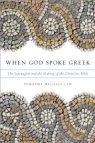
T. Michael Law’s book about the Septuagint made #2 on Near Emmaus’s year-end books list.
Though it wasn’t on a blog, per se, James K. Aitken posted a chapter on LXX neologisms (thanks, Jim, for the tip). He writes, “There is a need for more descriptors of so-called new words, identifying them as semantic extensions, unattested compounds, morphological extensions, foreign loans, and so on.” One other non-blog, LXX-related url, if you want a daily LXX fix via the Twitter, is here.
Brian Davidson at LXXI made a couple of short videos about using Logos for a sort of MT-LXX Two-way Index.
Speaking of Brian, he’s taking over Greek Isaiah in a Year (which just finished) and leading a group through Isaiah again in 2014! Join them here.
Did I miss anything? As prevalent as women are in Septuagint studies, I didn’t find any LXX blog posts by women in December, but I might have missed one! Feel free to leave more December 2013 LXX links of interest in the comments. And in case you didn’t see it, the first Septuagint Studies Soirée is here; the second one is here; the third one is here; the fourth one is here.
On November 30 the group Greek Isaiah in a Year read the last verses of Isaiah 66. And what a rewarding experience it was to read slowly–over the course of a (church) calendar year–through Isaiah.
Blogger Brian Davidson wants to do it again. I’m going to be following the Facebook group (here, where all the action will be), but am not sure I can do the whole thing again in a year. We’ll see.
But if you started last time and didn’t finish, or are looking for a way to sharpen your Greek this coming calendar year, check it out.
Here are a few blog posts from November, regarding the Septuagint, that are worth taking a look at:
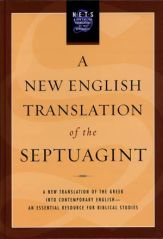
J.K. Gayle considers the question of whether the Septuagint translator of the Hebrew Song of Songs might have been a woman, then raises some challenges inherent to that view, at least as it is presented by the NETS (see image at left). J.K. also offered insight into the possible motherliness of God and the patriarch Joseph. Suzanne responded here, preferring to talk about “wombly feelings” instead of “motherly” ones. Kurk writes back again, noting some “maternal” language (with help from Greek Isaiah) in the “Our Father.”
I’ve just this month learned of a blog called Old School Script, which focuses on linguistics and biblical languages. Check out as much as you can of that site, starting with an October post that I missed last month, “Word Order in Septuagint Judges.” Note also some extended exploration this past month about Paul’s use of the LXX. Said blog also pointed this month to Randall Buth’s thinking about an SBL session on the Greek perfect.
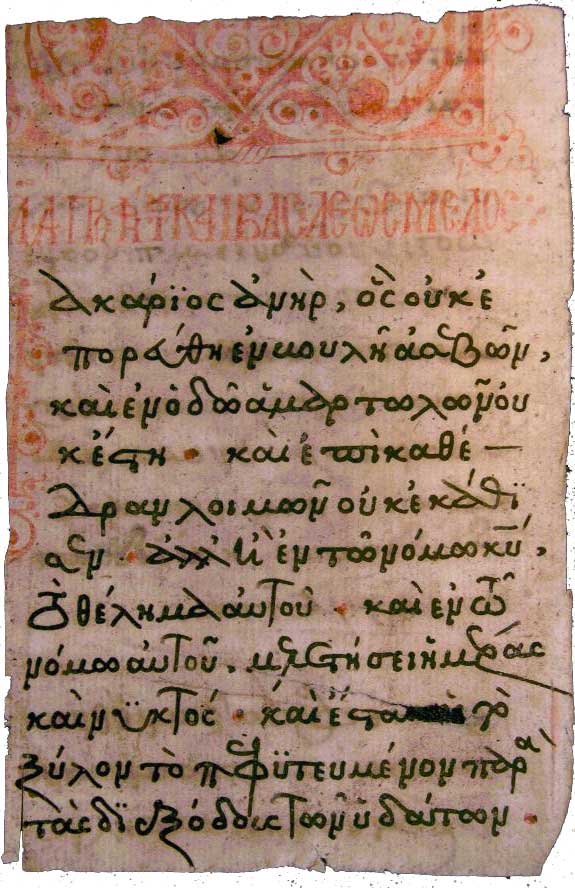
Also, this month Logos Bible Software released (for free) Codex Sinaiticus, includingits Septuagint portions.
Did I miss anything? Feel free to leave more November 2013 LXX links of interest in the comments. And in case you didn’t see it, the first Septuagint Studies Soirée is here; the second one is here; the third one is here.
One other thing to note–a reading group of nearly 200 folks on Facebook (and more who are not on Facebook) finished a reading plan last Friday through Greek Isaiah.
Reading through Isaiah, I’ve made connections between biblical texts that I never noticed before. I’ve posted about Philippians and Ephesians. Today I saw something in Isaiah 63:11 that seems to have inspired the author of Hebrews.
Isaiah 63:11
English: And the one who brought up from the landthe shepherd of the sheep remembered the days of eternity. Where is the one who put his holy spirit in them?
English: And the God of peace, who brought up from the deadthe great shepherd of the sheep, our Lord Jesus Christ, by the blood of the eternal covenant…
Though Hebrews has “great” in addition to “the shepherd of the sheep,” the latter phrase (τὸν ποιμένα τῶν προβάτωνin Greek) is identical in both passages.
The author of Hebrews seems to want to explicitly identify “the shepherd of the sheep” from Isaiah, which he/she does by noting that this “great” shepherd is “our Lord Jesus Christ.”
Did the author of Hebrews intend with “brought up from the dead” to echo Isaiah’s “brought up from the land”? The Greek verbs are different, but both have the ἀνα=up prefix, and both are in participial form.
If Hebrews’s bringing up is meant to evoke Isaiah’s bringing up, is Hebrews taking Isaiah’s exodus motif in Isaiah 63 and holding up Jesus as the leader of the new exodus?
Both passages have “eternity” (αἰώνιος) in view.
I haven’t checked commentaries yet, but after observing the above, I noticed that the critical apparatus (manuscript notes) in the Göttingen edition of the Septuagint notes that Hebrews 13:20 should be consulted.
I plan to see what others have written about this, but for now, the similarities above have me fairly convinced that this was a deliberate reference, and that the author of Hebrews was finding Jesus in Isaiah 63:11.
Isaiah 1:1 reads, “The vision of Isaiah son of Amoz, which he saw concerning Judah and Jerusalem in the days of Uzziah, Jotham, Ahaz, and Hezekiah, kings of Judah” (NRSV).
Scholars remain divided as to whether or not this “vision of Isaiah” verse is meant to apply to all 66 chapters, or whether Isaiah might be the author of just the first 39 chapters, with other authors (in the tradition of Isaiah) having penned chapters 40-55 and 56-66.
I’ve long had my eye on The Eerdmans Companion to the Bible and have begun using it recently. Its introductory section to Isaiah had what I thought was a refreshingly balanced approach to the issue of authorship in Isaiah:
Taken as an introduction to the book as a whole, Isa. 1:1 identifies the contents of the subsequent 66 chapters as the “vision” of 8th–century Isaiah. But modern scholars have challenged the traditional view that considers him the source of all the material contained in the book that bears his name. Though chapters 40–66 echo certain themes contained in chapters 1–39, they also contain specific, predictive prophecies that some scholars doubt Isaiah foretold. For example, they consider it unlikely that an 8th–century prophet not only predicted the 6th–century Persian king Cyrus’s conquest of the Babylonian Empire but also named him specifically (see 44:28 and 45:1). Old Testament prophets normally directed their messages to contemporaries. For Isaiah to have directly addressed the Babylonian exiles (and perhaps returnees to Judah) pictured in chapters 40–66, his prophetic ministry would have to have extended well beyond the reign of Hezekiah (the last king mentioned in 1:1), and he would have to have lived for more than two centuries.
On the other hand, in this book God holds out his power to predict the future as proof of his divine supremacy (chs. 41, 44, 46, and 48). It is not unreasonable, therefore, to think that Isaiah mediated predictive messages as words from God and at times addressed audiences of future generations.
More details on this Bible guide are here at the Eerdmans page. I’m finding that it’s a concise yet substantive way to get myself oriented to a given book of the Bible.
Recently I’ve been paying more attention to the Dictionary of Classical Hebrew and its Concise counterpart (see here).
It took me a little while to figure out how to read the frequency stats in DCH/CDCH. So I’m posting this little tidbit here to save some folks a bit of time.
The introduction to the concise version of the lexicon reads:
2. Statistics. Next comes a notation of the number of occurrences of the word in each of the four corpora of ancient Hebrew: the Bible, Ben Sira, the Dead Sea Scrolls, and the Inscriptions. Thus the notation 334.5.13.32 means that the word occurs 334 times in the Bible, 5 times in Ben Sira, 13 times in the Dead Sea Scrolls and 32 times in the Hebrew Inscriptions. If there is only one number in the statistics, the word occurs only in the Hebrew Bible, and if the notation is, for example, 0.0.7, it means that it occurs only in the Dead Sea Scrolls, and that 7 times. In the case of verbs, occurrence statistics are also given for each of the voices (or, binyanim).
The entry for נתן has a frequency count of “2015.62.228.26.” That’s straightforward enough. But then with the entry for תרומה the frequency given is “76.2.18.” This means it occurs 76 times in the Bible, 2 in Ben Sira, 18 times in the DSS, and 0 times in the Inscriptions. Another entry that has “11.4″ means 11 times in the Bible, 4 times in Ben Sira, 0 in DSS and 0 in the Inscriptions.
What took me a little while to figure out is that some entries have counts like “376.0.1,” which means 376 occurrences in the Bible, 0 in Ben Sira, 1 in DSS, and 0 in the Inscriptions.
The 0s are not noted, then, if there is not still a number to come after it that is 1 or more. In other words, you’d have “376.0.1,” but never “376.1.0.0″ or even “376.1.0.” That would be abbreviated instead to “376.1.”
It would have been easier if all the 0s were inserted in every case, so that you were always looking at 4 actual numbers (thinking of 0 as a “number” for the moment), but I am guessing that this is because the longer DCH (at 8 volumes in print) likely couldn’t afford to be filled with 0s, where they could otherwise be deleted.
In summary, the four corpora in this lexicon are:
Hebrew Bible
Ben Sira
Dead Sea Scrolls
Hebrew Inscriptions
Committing that sequence to memory (and better understanding when a 0 is used and not used) makes use of the lexicon even easier. I appreciate DCH/CDCH’s inclusion of frequency statistics, as I use it to build my Hebrew vocabulary.
I use the Concise DCH for regular Hebrew reading in Accordance, but have just recently been really getting to know it as a lexicon. The print version of The Concise DCH is here; in Accordance it is here. The full 8-volume set from Sheffield Phoenix Press is here, found also here at Accordance.
HALOT has been the scholarly standard in Hebrew lexicons, but might that change?
The mammoth 8-volume Dictionary of Classical Hebrew (DCH) is another major lexical source for readers of biblical Hebrew to consult. What is unique about the DCH is that lexicons like HALOT and Brown-Driver-Briggs (BDB) cover solely the Hebrew found in the Hebrew Bible. DCH, by contrast, covers a wider corpus–“from the earliest times to 200 CE,” it says. According to its product page:
It is the first dictionary of the classical Hebrew language to cover not only the biblical texts but also Ben Sira, the Dead Sea Scrolls and the Hebrew inscriptions. It is the first dictionary to analyse the exact sense of every occurrence of every word, to follow every Hebrew word or phrase with an English equivalent, to print a frequency table of occurrences of each word, and to provide an English-Hebrew index.
Not least among its features is its addition of more than 3500 new words to the stock of the Hebrew lexicon, together with an extraordinarily rich bibliography surveying special lexicographical studies over the last century.
The Concise Version
The 8-volume set in print is high-priced, as one would expect. It is much more affordable (as “affordable” goes, in these contexts) in Accordance, which is currently the only Bible software to carry it. The concise version seems to be financially within the reach of many students and pastors.
What is remarkable about the concise version of the dictionary is: “All the words in the full Dictionary of Classical Hebrew are to be found in the CDCH.” Of course, there are less instances of a given word’s occurrence listed, but that every word of the 8-volume set is treated in its 500-some-page younger sister is impressive.
The CDCH thus contains not only the c. 8400 Hebrew words found in the standard dictionaries, but also a further 3340+ words (540 from the Dead Sea Scrolls, 680 from other ancient Hebrew literature, and 2120+ proposed words for the Hebrew Bible not previously recognized by dictionaries).
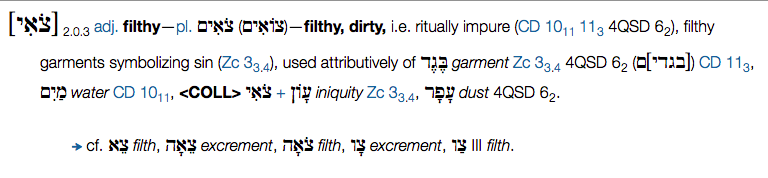
By way of comparison, here is an entry for the same (rarely occurring) word in the concise and full dictionaries, respectively:
Full DCHConcise DCH
I use the Concise DCH for regular Hebrew reading in Accordance, but have just recently been really getting to know it as a lexicon. (UPDATE: see another post here on word frequency statistics in the lexicon.) The print version of The Concise DCH is here; in Accordance it is here. The full 8-volume set from Sheffield Phoenix Press is here, found also here at Accordance.


 One good monograph to read on the Septuagint is First Bible of the Church. And if you want to get in-depth with the critical edition of the LXX, I have offered reviews of the Göttingen Septuagint in Logos and Accordance softwares. And, perhaps as important, I suggest how one might actually make sense of that critical edition, noted here and here, with an ever-elusive third part of the primer still to come.









 Words on the Word