Here are great lines from Czech playwright and activist Václav Havel (shown also in the image above):
A genuinely fundamental and hopeful improvement in “systems” cannot happen without a significant shift in human consciousness, and… it cannot be accomplished through a simple organizational trick. It’s hard to imagine the kind of system I’ve tried to describe here coming about unless man [sic], as I’ve said, “comes to his senses.” This is something no revolutionary or reformer can bring about; it can only be the natural expression of a more general state of mind, the state of mind in which man can see beyond the tip of his own nose and prove capable of taking on—under the aspect of eternity—responsibility even for the things that don’t immediately concern him, and relinquish something of his private interest in favor of the interest of the community, the general interest. Without such a mentality, even the most carefully considered project aimed at altering systems will be for naught.
I think he’s right. As a leader who seeks to effect change in systems (and in individuals), I find this sobering and ultimately liberating. There’s only so much change any one person can actually bring about. In the end, each needs to take responsibility for themselves.
(It’s been a long time since I read this quote in context, so I don’t know if Havel makes this connection, but the Parable of the Prodigal Son uses this same phrase to describe the younger son’s turnaround in Luke 15:17–“he came to his senses.”)
As a Christian, I would add, there is the power of the Holy Spirit at work in the “senses” of humankind. That can significantly change any person, system, and organization–if we would let it.
The authors of the book, Erika H. James and Lynn Perry Wooten, write, “Crises are never one-off events. They happen again and again, although we never seem to expect them.”
James and Wooten wrote The Prepared Leader to help leaders prepare for crises, but why don’t we already? They write:
A crisis can feel like it hits you and your organization out of the blue. In reality, certain types of crisis can simmer in the background until the conditions are just right for disaster to materialize. These smoldering crises can be hard to predict, even if they are technically foreseeable.
Crucially, this is because these crises “are often tied to failure in organizational culture or procedures—the same failure that allows them to happen while also making them hard to see or track.” Bury sexual harassment claims, for example, and it will eventually turn into a crisis. (And, worse than whatever “crisis” befalls an organization, real people get hurt behind this stuff.)
I think of Charlie Brown and Lucy and the running football gag by Charles M. Schulz. Like a crisis that could have been avoided or at least prepared for, it gets Charlie Brown every time.
Why is this?
James and Wooten list five biases (“cognitive distortions”) that prepared leaders need to recognize—and overcome:
Probability Neglect: we “underestimate the probability that something (bad) will happen to us.” They give the example of COVID-19, and how many North Americans thought it was all the way over there in China and would never reach us.
Hyperbolic Discounting: it’s easier to focus on the present than the future, even if (especially if?) the problems of the future feel overwhelming.
Anchoring Effect: we “tend to cleave to the first impression or understanding we form about a risk or threat.” This especially serves us poorly if we know such-and-such a person as someone who would never do that, even though they’ve just been credibly accused by multiple people. The cognitive dissonance in such cases is painful and difficult to resolve.
Exponential Growth Bias: this is bias against the exponential growth that a crisis tends to have. In other words, we think situations unfold in a linear, straightforward way. They often don’t.
Sunk-Cost Fallacy: “once we have settled on a course of action, and invested time, effort, and resources, it’s hard to change direction.” Once Charlie Brown is running toward that football, even though he knows Lucy is going to pull it out from under him, he still follows through and tries to kick it.
The Prepared Leader calls all of us to hold these cognitive distortions up to the light right now, because “the next crisis is already heading your way.” Or you’re in one right now. They warn readers not to “let your guard down,” which may be our default mode, especially when our biases almost hard-wire us to miss warning signs.
Is there good news here? Yes! Chapter 1 of The Prepared Leader profiles Adam Silver, commissioner of the NBA, and his brilliant (and seemingly lightning-fast) move to implement a “Bubble” when COVID-19 hit, so that the season could continue.
Silver’s actions remind us that we have agency, even in the midst of a crisis. In short, we should “have a learning organizational culture, with processes and protocols in place to surface and share information and to resolve any blockages in knowledge flow.”
Leaders and organizations that try to wish a crisis away (tempting as it is) won’t do much better with the next one. Examining and trying to overcome our cognitive biases is an important start.
Erika H. James and Lynn Perry Wooten are experts in organizational leadership, especially leadership through crises. They each moved into major new roles of leadership at the start of 2020: Dr. James became Dean of The Wharton School of the University of Pennsylvania; Dr. Wooten became the President of Simmons University. They describe what would already be a set of daunting, exciting, high-stakes challenges in leadership positions.
“Then,” they write, “COVID-19 hit.”
I can relate (albeit on a smaller scale). The church I pastored for nearly eight years was confronting its own constellation of challenges as Fall 2019 turned to Winter 2020. I was already experiencing the reality James and Wooten describe: “A crisis will invariably test your leadership to the very limits of your abilities.”
Then COVID-19 hit.
In early 2021 I accepted a call to pastor a diverse, urban church in the heart of Boston. When I began pastoring there, the church was still not far removed from the previous Pastor’s departure; there had been about a year of the Pastor position’s being vacant; COVID-19 was still raging; and we didn’t have a building to meet in.
It seemed the congregation had experienced loss upon loss. Loss may not always be the same thing as crisis, but the congregation that had just called me had had its leadership tested “to the very limits of [its] abilities.”
We’ve stabilized since then, thanks be to God. I’m a month away from the two-year mark as Pastor there. Most if not all of us have been vaccinated, with all the boosters. We rent space in a church just a block or two away from our previous location.
But that doesn’t mean we don’t face new crises—now or lurking around the corner.
As I started the introduction, I realized this book would be powerful and instructive for me, even if there had never been a COVID-19. But seeing how Drs. James and Wooten integrate findings from that new (and still present) global health crisis make their work especially relevant.
Without downplaying the negative disruptive potential of a crisis, they describe how crises can be opportunities:
If there’s one thing we have learned about crises in our research over the years, it is that they bring opportunities as much as they bring risks. Crises are opportunities to sharpen your leadership skills and to unearth new expertise—often in surprising places. They are also opportunities to learn—to determine which important lessons a crisis has to share and to embed those lessons in your leadership practice going forward.
There’s so much wisdom to receive and unpack here—and this is just in the Introduction! As I read these lines, here are all the opportunities a crisis brings, according to the authors:
Crisis brings opportunities to become a more skilled leader
Crisis brings opportunities to find new expertise in your organization
Crisis brings opportunities to discover that this new expertise could be somewhere (or with someone) you didn’t expect
Crisis brings opportunities to learn important lessons
Crisis brings opportunities to integrate these lessons into leadership in the future
I know that crises, loss, and threats all bring opportunities with them. I’ve heard this before. And I don’t disagree, but it’s a truth that—if I’m honest—I’ve had a hard time appreciating. “Consider it pure joy,” the biblical book of James says, “whenever you face trials of many kinds.” No, I consider it pure joy when I don’t have to face any trials!
But James goes on, “Because you know that the testing of your faith develops perseverance. Perseverance must finish its work, so that you may become mature and complete, not lacking anything.”
Trials mature us. The testing of our faith forms our character, even makes us more like Jesus.
Do I like that reality? Not really. If I were God, would I try to create a set of conditions whereby people could develop perseverance without the trials? Maybe, but then again, any sentence that begins with “If I were God…” (especially when I write it) is a bad one.
I believe that Apostle James, Dr. James, and Dr. Wooten are not only right about the formative effect of crises/trials—I think they are preaching an essential life truth.
Crises are inevitable, The Prepared Leader says. Jesus said, “In this world you will have much trouble.” The Psalmist wrote, “Many are the afflictions (troubles, dangers, trials) of the righteous.”
The questions are: how will we respond to a crisis, what will we learn from it, and how will we prepare for the next one?
It’s rare the book that I want to write about after just the introduction, but The Prepared Leader has been as good as a cup of coffee with an engaging Executive Coach (or two, in this case).
Next time I’ll write about James and Wooten’s insights about why we fail to foresee crises, even when a crisis give us hints that it might be coming.
The first time I saw Michael K. Williams’s memoir in the bookstore, I devoured the main chapter on his character Omar from The Wire. I thought that was most of what I’d want to read.
But then I started reading from the beginning. And kept reading. And reading.
Mike tells his powerful story in a compelling, humbling, and vulnerable way. From childhood to adulthood, he wrestles in view of the reader with his family, identity, joys, insecurities, ambition, addiction, and what it means to come back home and give back to one’s community.
There are gems throughout the book. For example:
What most people don’t realize about addiction is that it is in you before the drug even shows up. That’s because the drug itself is not the problem; it is a symptom of the problem. The drug is the culmination, the final step—not the first.
And:
If you push something down, it’ll find its way out. You can’t run from it. Jay-Z says we can’t heal what we never reveal. And it’s true. You can’t heal what you never reveal.
In talking about a powerful encounter with Reverend Ron, who showed him God’s love:
It didn’t happen right away, took years in fact, but Reverend Ron was the beginning. I started to see myself as worthy of his love, of that congregation’s love, of God’s love. It all started there in that New Jersey church.
But:
It’s not like boom I was saved and clean all at once. There’s not an addict on the planet who it’s like that for. Being an addict means forward and back constantly. It means saying no again and again. That’s why someone who is clean for thirty years can still call himself an addict. They’re always one choice away.
Especially poignant is Mike’s description of the ebbs and flows of his addiction throughout the five seasons of The Wire, including his emotional response to the show’s conclusion:
It was like in Forrest Gump when he decides to stop running across the country and everyone following him just kind of stops too and wanders away. I felt like one of those people. Like, What do I do now? It wasn’t even about the next job. It was Where do I get this feeling again? How am I going to reach in and get that feeling? That drug, that Omar drug, that shit was powerful, and I didn’t have any legs to stand on. I didn’t know who I was because I had stopped doing work on myself.
The reader does see how much progress Mike made in his life in loving himself and loving others. His self-love is an amazing counterpoint to this truth he articulates: “Every addict, every alcoholic has a self-loathing; we bathe ourselves in that.”
Having learned to love himself—even in a society that in many ways still does not love young black males well—Mike gave back to overlooked communities.
We have to get back to the idea of the village, figure out how to mend our struggling families in the community. Give them culture, respect, connection, the experience of dreaming and hoping. The permission to dream is so important. The permission to love yourself is so important. You don’t have to get scarred up in your face and go through endless rehabs and almost die and overdose to finally understand that you’re worth something.
Scenes from My Life is a heartbreaking and inspiring read. Rest in peace, Mike.
Thanks to Crown Publicity for the review copy, given with no expectation as to the content of my review.
In it she profiles two seminary communities in Kentucky: Southern Baptist Theological Seminary and Asbury Theological Seminary. Southern has a “complementarian insistence on male headship,” whereas Asbury “rejects overtly gendered hierarchies.” This comparative study already piques my interest. I expected it to be a takedown of Southern that held Asbury up as a shining example of how to “do gender and practice power.” Indeed, McKnight writes here about Weaver Swartz and “Southern Seminary’s ‘Godly’ Man.” McKnight calls it “faux masculinity” where “the power dynamic becomes asymmetrical, which itself is fertile ground for abuse.”
But Weaver Swartz notes in the introduction, “Asbury, however, has struggled to achieve the demographic equity it prescribes.” Even this seminary with a so-called egalitarian theology has a narrative that “limits women much more subtly.” There is at Asbury Seminary an “individualistic genderblindness” that “limits gender equity.” And so, “Combining theology, culture, rhetoric, and embodied practice, both seminaries narrate powerful institutional stories that center men and limit women’s agency.”
Phew! That’s all from the first few pages. And the title, Stained Glass Ceilings, is really clever. Not to mention a beautifully designed cover.
Check out the book here at the publisher’s site. I’m eager to read it.
I am feeling compelled to finally read The Origins of Totalitarianism, the 1951 work of Jewish political philosopher Hannah Arendt. In it she explores Nazi Germany and Stalinist Russia. She wants to come to some kind of understanding—should it be possible—of horrific evil, and of how totalitarian regimes can come to be in the first place.
In the words of an acquaintance, my strong desire to read Arendt feels both “ominous and important.” Am I reading it in preparation for the 2024 presidential election and all that may follow? I hope not—but I will anyway. Or am I reading it to (still) try to wrap my head around how so many folks in the U.S. voted in 2016 for a man who praises Vladimir Putin and himself had (has) dictatorial aspirations? Or do I feel it necessary to read this because of the ways in which anti-Semitism, xenophobia, and racism persist, decades after Nazi Germany?
All of the above.
Here are just a few quotations from The Origins of Totalitarianism:
The ideal subject of totalitarian rule is not the convinced Nazi or the convinced Communist, but people for whom the distinction between fact and fiction (i.e., the reality of experience) and the distinction between true and false (i.e., the standards of thought) no longer exist.
Another:
Practically speaking, the totalitarian ruler proceeds like a man who persistently insults another man until everybody knows that the latter is his enemy, so that he can, with some plausibility, go and kill him in self-defense.”
(This is exactly what Putin is doing in Ukraine—claiming self-defense as he launches unprovoked attacks—and also descriptive of Trump’s unprovoked verbal abuse toward others, whom he then labels enemies/rivals.)
And this sobering line:
The sad truth is that most evil is done by people who never make up their minds to be good or evil.
Let me know in the comments if you’ve read Arendt or anything else on totalitarianism.
Bruce Waltke’s Commentary on Micah is on sale for $12.90 in Accordance for a while longer. Even at its list price of $27.90, it’s a bargain.
It’s been a while since I used it in depth, but whenever I have plunged its depth, I’ve been astounded at Waltke’s attention to detail, analysis of the text, and careful treatment of the grammar (and so much more). He has other Micah volumes available, even: Tyndale and McComiskey. But this stand-alone volume is the one it seems he really wanted to write, the volume that was far too long for inclusion in any series. He says in the preface that he treated each pericope as if it were a doctoral dissertation.
When I wrote a lengthy exegesis paper on a Micah passage in seminary, this commentary was close at hand. I used the library copy extensively, then bought myself a hard copy afterwards to celebrate. (I do love the smell of Eerdmans books.) When it became available in Accordance, I quickly made it one of a handful of double purchases, where I get a book in print and Accordance, so that I could access it electronically, as well.
No kickback for me on this post… just one of the best commentaries I’ve ever used for in-depth, original language work (especially text criticism), so wanting to give it its due.
Some 12 years ago I wrote the following poem-prayer after reading Paulo Freire’s Pedagogy of the Oppressed and some of his other writing on the church. I found it again the other day so am posting it here:
Hasta que haya la paz, no descansaré. Hasta que las guerras cesen, no abandonaré la lucha. Hasta que la justicia reine, seguiré leyendo, predicando, y gritando. Hasta que haya una verdadera liberación humana, no dormiré. Que vengas, Jesucristo. Que venga tu voluntad y tu reino, como en el cielo, así también en la tierra.
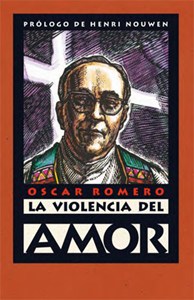
“Beautiful is the moment,” Archbishop Oscar Romero said, “Beautiful is the moment in which we understand that we are no more than an instrument of God; we live only as long as God wants us to live; we can only do as much as God makes us able to do….”
The book above–La Violencia del Amor, or, The Violence of Love–is available as a free download from the publisher, here (Spanish) and here (English).
Amazingly, I made it through high school and college without reading Elie Wiesel’s Night. Having just found a copy in good condition at a local used bookstore, I plan now to read it. My recent reading of Bonhoeffer has revived my interest in Holocaust and genocide studies.
(Yes, I know it's a reality of "white/male privilege" to be able to choose when to think about oppression and to make "studies" out of genocide.)
I may or may not report back here again about Night, but I expect it to be a powerful read.




 Words on the Word