Why don’t people go to church?

Photo by Abhishek Koli on Unsplash


I was invited to reflect recently: Why don’t people go to church?

In this post I list reasons I’m aware people don’t attend Christian services of worship.

(Note: there’s recent research on this question, which I consulted only after writing the below. I base my answers on personal experience and the experience of others.)

For a one-page printable PDF of the below, click here.


Why don’t people attend worship services? Some bullet points, in no particular order, some of which combine with and build on each other:

  • don’t want to
    • our task: to ask and learn why
    • maybe someone wants to go to church, but not as much as they want to do something else: coffee and read, sleep in, go to the beach, kids’ soccer, etc.
    • church is boring? (either actually, or perceived)

  • aren’t able to
    • ability/disability-related reasons
    • accessibility challenges: transport, having to work an inflexible job on a Sunday, not having a spouse or family interested in going, etc.

  • don’t feel safe (aren’t safe)
    • in particular, due to being abused by someone at/from church, whether physically, spiritually, or otherwise
    • church drama and church trauma—both are real and painful
    • burned out on the whole church experience

  • aren’t even thinking about church (Romans 10:14: “How, then, can they call on the one they have not believed in? And how can they believe in the one of whom they have not heard?”)… this points to the need for sharing the good news with others

  • disincentivized by Christians
    • we may fail to be warm and welcoming
    • we may not be culturally sensitive or trauma-informed
    • we may be well meaning but say less than helpful things (e.g., “God doesn’t give you more than you can handle.”)
    • we may not be intentional with our connection/discipleship pathway (e.g., here)
    • we may not be giving people Jesus!

  • Church’s reputation (deserved or not)
    • e.g., reputation of being close-minded, shallow, brainwashing, homophobic, sexist, politically bought off, etc.

  • larger cultural forces
    • individualism: idea that “I don’t need other people to be spiritual”
    • “have it your way”: piece together one’s own spirituality without restrictions and commitments of a church
    • COVID: idea that “During COVID, I realized I didn’t really need church anyway.”
    • mistrust of institutional authority (and of the Church specifically)

  • spiritual forces
    • I’d want to be wise and discerning in how we talk about this, but surely there is a spiritual battle—seen and often unseen—that influences if/when/how people come to church
    • are there ways we churches are quenching the Holy Spirit?

There are more reasons, including ones I’m not aware of or am slow to admit to, as a long-time churchgoer and pastor! I want to be open to learning here. I asked a dear friend of mine—who doesn’t go to church anymore—why he doesn’t, and he just sent me this.

What would you add to the list above, or push back on?

Our Resistance to Changing Course Keeps us from the Truth

Great little book I’m reading: Misbelief: What Makes Rational People Believe Irrational Things. Chapter 1’s title poses a question: “How Could That Person Believe That Thing?” It’s a question I’ve asked many times. Including a question that—to be fair—I’ve tried to interrogate myself with.

Author Dan Ariely sets up his chapter with this brilliant insight from Leo Tolstoy, from 1897:

I know that most men (sic)—not only those considered clever, but even those who are very clever and capable of understanding most difficult scientific, mathematical, or philosophic problems—can very seldom discern even the simplest and most obvious truth if it be such as to oblige them to admit the falsity of conclusions they have formed, perhaps with much difficulty—conclusions of which they are proud, which they have taught to others, and on which they have built their lives.

When the stakes are high, in arguments and in life, even the smartest among us may struggle to “discern even the simplest and most obvious truth” if it means saying we were wrong. There are just some positions people hold—even “very clever and capable” people—that no amount of logic or clear evidence can overturn.

So what to do? Push harder? Try a back-door or softer approach? Give up? Break up?

It depends, I think, on the impact a particular bad belief could have.

If my friend believes Dunkin’ makes good coffee, he’s laughably wrong, but so what? His assessment doesn’t hurt anyone. Let him drink his coffee-water in peace.

If my colleague campaigns against vaccinations, on the other hand, I’m going to spend more time thinking about how to push back, since that colleague’s approach impacts other people. (And it is a public health issue.)

As for changing either person’s mind… I don’t know. Maybe you just can’t? Or maybe I just haven’t cracked some code of persuasion yet.

That doesn’t mean give up. It doesn’t mean don’t speak up, especially if there’s an important voice not represented in the conversation that stands to lose something or be deprived of something. In such cases I find myself more likely to labor with/against “the falsity of conclusions they have formed.”

In the meantime, nodding my head and accepting Tolstoy’s insight (if somewhat regretfully) seems like an important step.

Wendell Berry on Not Knowing Where to Go

Middlesex Fells Reservation

Listless? Lost? Maybe not:

It may be that when we no longer know what to do
we have come to our real work,

and that when we no longer know which way to go
we have come to our real journey.

The mind that is not baffled is not employed.

The impeded stream is the one that sings.

“Our Real Work,” by Wendell Berry

Christian Apologetics winner

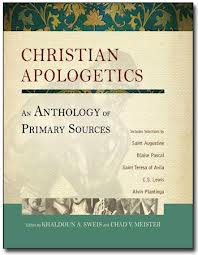
We have a winner in the giveaway contest at Words on the Word for Zondervan’s primary source compendium, Christian Apologetics: An Anthology of Primary Sources, edited by Khaldoun A. Sweis and Chad V. Meister.

I have weathered the storm, several flickers of the power on and off, and have selected the winner at random. (Actually, a random number generator is to thank/blame.)

And the winner is… Matthew Hamrick! Congratulations, Matthew, and enjoy the book. Thank you to everyone who participated and spread the word.

I reviewed the book here if you’d like to learn more.

Almost every Monday at Words on the Word (and other days, too) I review new books in the field of biblical studies, original languages, and theology. I also review Bible software. Check or bookmark this link to see all my reviews.

Christian Apologetics: free book giveaway

One good giveaway deserves another.

The other day I noted that Zondervan has just put out a primary source compendium called Christian Apologetics: An Anthology of Primary Sources, edited by Khaldoun A. Sweis and Chad V. Meister.

I have an extra copy to give away (not my review copy). It’s a good resource to have on the shelf, and I know I’ll be turning to it in the future for the work and ministry I do in a college setting.

I reviewed the book here.

I will choose a winner at random. To enter the drawing, simply comment on this blog post with your greetings, thoughts about apologetics, favorite philosopher/theologian, etc. I will accept entries through Monday afternoon, with 3pm EST being the cutoff.

Then if you link to this post on your Facebook, Twitter, blog, etc., come back here to tell me in the comments section that you did, and you’ll receive a second entry. I will announce the winner just before 5pm EST Monday.

Christian Apologetics: a review

I still remember, as a 16-year-old, sitting down at my parents’ computer, hearing the dial tone, and logging on to AOL. I would do this often, not just to check the new technological miracle known as e-mail, but also to go into chat rooms (remember those?) and seek to share my faith with others online.

I made similar efforts at my high school, starting conversations when appropriate and generally just trying to be ready to speak intelligently and compellingly about my Christian faith.

This handbook by Peter Kreeft was a constant reference guide for me. I went on to major in philosophy at a Christian undergraduate school, where I took, among others, classes on the philosophy of religion, St. Augustine, and more. Readings in the Philosophy of Religion became a new resource to which I often turned. I had begun having philosophical and existential questions of my own by that point, ones that I experienced on a profound and at times troubling level.

I’ve always had an interest in the intellectual underpinnings of my Christian faith. And I’ve often been aware that what appear to be intellectual questions or questions of “the head,” are sometimes–when one digs deeper–questions of “the heart,” as well. Since college days, then, I’ve been a bit more cautious than I was as a 16-year-old in an AOL chat room about just how effective “apologetics” can be.

Zondervan has just put out a primary source compendium called Christian Apologetics: An Anthology of Primary Sources, edited by Khaldoun A. Sweis and Chad V. Meister.

There are 54 selections divided into 11 parts, which you can see listed here (PDF) in the table of contents. Christian Apologetics begins with some methodological considerations in part 1, then moves right into various arguments for the existence of God–cosmological, teleological, ontological, moral, the argument from religious experience, and so on. From there the book narrows to more specific topics like the Trinity, the incarnation, miracles, the resurrection, the problem of evil, and more.

Christian Apologetics claims to be “a sampling of some of the best works written by Christian apologists throughout the centuries,” offering “a snapshot of Christian apologetics at its best across the spectrum of time and culture.”

The essays in this volume certainly are some of the best in apologetics. There is Paul at the Areopagus in Acts 17, Aquinas on the cosmological argument for God’s existence, Anselm and Plantinga with the ontological argument for God, Pascal’s wager, Teresa of Avila on experiencing God, Anselm on the incarnation, Swinburne on miracles, John Hick’s “Soul Making Theodicy,” Augustine on free will, and Marilyn McCord Adams on horrendous evil and the goodness of God. Each of these essays is a classic and makes a valuable contribution to the area of apologetics.

The book spans “the spectrum of time” fairly well, with a higher concentration of 20th century writers. Just a couple of the contributors are women, and the overwhelming majority hail from Western contexts–this latter an admission of the book, but a weakness all the same.

A particularly pleasant surprise to me was the inclusion of an an article by R.T. France, in which he makes the case for the historical reliability of the Gospels, which must, he argues, be understood in their proper literary context as “highly selective” records of Jesus’ life with “only a loose chronological framework.” This is not due to deficiency of the Gospels; rather, it is how the Gospel writers intended to write:

The four canonical gospels will not answer all the questions we would like to ask about the founder of Christianity; but, sensitively interpreted, they do give us a rounded portrait of a Jesus who is sufficiently integrated into what we know of first-century Jewish culture to carry historical conviction, but at the same time sufficiently remarkable and distinctive to account for the growth of a new and potentially world-wide religious movement out of his life and teaching.

As I read I appreciated a statement in the book’s general introduction:

But arguments and evidences do not of themselves bring someone into new life in Christ. Here the work of the Holy Spirit is central, and we must be willing to surrender to his leading and his truth and his goodness if we are to truly dwell with the Lord.

I hadn’t yet learned this in the AOL chat rooms, but I’ve long since been convinced of it. So I had hoped to hear more in this book about the role of the Holy Spirit in apologetics. There is a short (one paragraph) treatment by James K. Beilby in chapter 3 that asks, “What is the role of the Holy Spirit in apologetics?” He rightly (in my view) sees it as “not a zero-sum game.” The apologist should be “significantly involved” yet “still hold that the Holy Spirit will determine the effectiveness of our efforts.”

Though the Holy Spirit receives treatment in the section on the Trinity (by Origen, Aquinas, the Creeds, and Thomas V. Morris) and on the Bible (Calvin and canonization), there is never more than Beilby’s paragraph treatment about the role of the Holy Spirit in the project of apologetics. Cogent though Beilby is, I would think “a snapshot of Christian apologetics at its best” should make more mention of something like the Wesleyan view of prevenient grace or even the notion that the Holy Spirit witnesses to a person’s heart before an apologist does. Only the former can enable the latter. Christian Apologetics is not without the exploration of other methodological considerations; I just would have liked to have seen more of this one.

Several other possible areas for improvement in a future edition could be more on faith and reason and how the two interrelate, as well as arguments for the existence of God that take into account and respond to the varous assertions made by the “new atheism” (anemic though it is).

All in all, though, this is a strong work, and I’m happy for it to sit alongside my old college text, Readings in the Philosophy of Religion. Zondervan’s Christian Apologetics is a worthy, if basic, reference guide. I expect it will serve apologists well.

Thanks to Zondervan for the review copy, which I was given for the purposes of review, though without any expectations as to the nature of my review. Find the book at Amazon here (affiliate link) or at Zondervan’s product page for the book.