

Category: reading

11 Dreamy Bookshelves
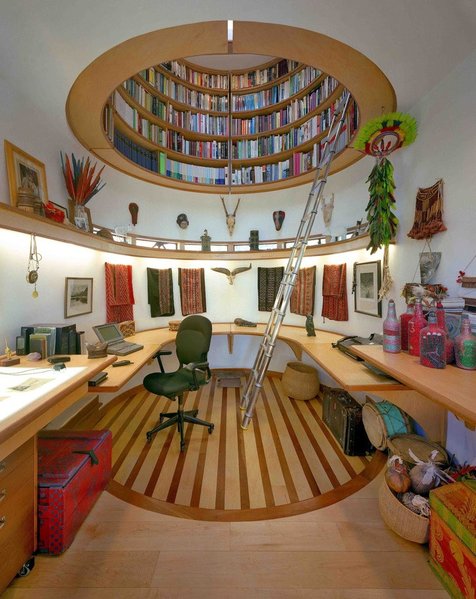
The LA Times has featured 11 Dreamy Bookshelves. What digital book revolution? I myself am not partial. I love print and digital. But these bookshelves are heard to beat. See them all here.
Share this:

How to Speed Read (Or, at least, how I am learning to speed read)
 I have often watched in awe as my wife sped through the book she was reading while I slogged through mine. But I have been teaching myself to speed read lately. The number of books I’ve been able to review for Words on the Word in the last month is perhaps evidence that what I’m trying is working.
Here’s what I’m doing to increase my reading speed:
- I am pushing myself to read faster than is comfortable for me. This may sound like an obvious thing to do; it is. And it works great. I am still at the stages of sacrificing a bit of comprehension for the sake of speed, but my comprehension is already increasing as I practice more.
- I try to discipline myself not to go back over words I’ve already read. It’s a temptation to go back, especially since I’m pushing myself to read faster, but it defeats the purpose. Keep moving forward.
- I “silence the inner voice” that I hear when I read. I got this idea from the speed-reading site Spreeder (as well as the above two thoughts). At first I thought it just sounded cheesy, but then I realized they were right. Spreeder makes the point that when many of us first learned to read, we read out loud. With time we could read silently, but still with an inner voice pacing us. This means we will only ever read as fast as we can speak. But I want to be able to read faster than that. So far, so good.
- I read as fast as I possibly can for less essential reading. If I’m reading a theology book for class or reviewing a commentary for this site, I can’t generally afford to lose comprehension. But if I’m reading a newspaper or magazine article, or something online, or a book for fun, I try to really push myself.
- I glance through the entire book I’m about to read before diving in. I actually learned this from one of my college philosophy professors. Even 10 minutes glancing through the book, looking carefully at the table of contents, and poking around for the thesis in the introduction or first chapter helps me frame the book in such a way that I can better read it quickly.
- I try to speed read when I’m well-rested. Ha. We just had our third child. “Well-rested” is relative here. But I do find that I speed read much better in the morning or early afternoon than at, say, 10:00 at night.
- I don’t beat myself up if I decide to slow down for a section. Especially when comprehension and eventual recall is important, I let myself slow down if I need to. No need to stress.
As an encouragement, let me say that if a previously slow reader like me can learn to speed read, you can too! I had to demystify the process by just trying… and then trying some more. It’s not as hard or magical as it seems. But it sure makes reading more enjoyable, and I get to read more of what I want.
UPDATE: More lessons learned on speed reading here.

 Words on the Word