Review of Logitech Bluetooth Easy-Switch Keyboard K811

Images in this post via Logitech
Image via Logitech


There is a proliferation of external keyboards for iPads and iPhones. Logitech’s Bluetooth Easy-Switch Keyboard K811 is by far the best.

Here is a short video of the keyboard in action:


This is no foldable, plastic, tag-along keyboard. It looks and feels like something native to an aluminum-body Mac Laptop.

This is what’s great about the keyboard:

  • It’s backlit. You can use it in the dark and make out all of the keys easily.
  • It’s got three keyboard shortcuts for toggling between three Apple devices at a time. So once you’ve paired it with, say, a computer, an iPhone, and an iPad, you can switch between any device the keyboard is paired with… with just one press of a button. You don’t have to pair, un-pair, re-pair, etc.


Logitech K810 Image 2


  • That backlit keyboard? It’s smart. The keyboard has sensors that allow it to adjust the illumination level based on the light in the room. Amazing. (You can also manually adjust the keyboard brightness via its F5 and F6 keys.)
  • The battery life is long. It’s rechargeable via an (included) USB cable. And there’s an on/off switch, of course, so you don’t drain the battery between uses.
  • There’s no lag. The Bluetooth connection is fast, so there’s really no lag between the time you type and see a character on the screen, regardless of the device you’re using.
  • It is a full keyboard. Nothing is missing–the command key, volume up/down keys, the escape key… all here.
  • It’s got “hand proximity detection.” From the product page: “A motion sensor detects your hands as they approach the keyboard and turns the backlight on/off to help you save power when you are not typing.” From what I can tell, this feature also helps to preserve and prolong the battery life.
  • Setup couldn’t have been any simpler. I probably could have figured it out without the manual, but the manual succinctly and clearly explained how to pair with devices.
  • Having easy access to up/down and left-right arrow keys for iPad and iPhone is really cool.

And here is what I really like about the keyboard:

  • If feels better than any other keyboard (portable or otherwise) I’ve typed on. Very smooth, and just the right amount of resistance on the keys.
  • You can use keyboard shortcuts with iPad as easily as you would on a desktop computer. The app Drafts and this Logitech keyboard make for a great combo. I started this blog post in Drafts, for example, and then with a single key stroke had sent the draft to Evernote for backup and future work across devices.
  • This is a little thing, but there is a keyboard key (on the actual keyboard) that lets you toggle your iPad on-screen keyboard on and off. Unlike other external keyboards, you can even have your native iPad on-screen keyboard up at the same time as using this physical one.

As for drawbacks? Nothing significant, that’s for sure. It’s not foldable, so of course it’s less portable than other external keyboards, but that is the (small) price one pays for its durability and full-size feel. I don’t mind that it can’t be folded up. It would be nice if the keyboard came with a carrying case or simple sleeve, though–you’ll have to figure that one out on your own.

The keyboard isn’t inexpensive, but it’s the best external keyboard on the market, easily. Find out more at the product page here, or via Amazon here.


Thanks to Logitech for the product review sample, given to me for purposes of review, but with no expectations or influence on the review’s content.

How Can the Ark of the LORD Ever Come to Me?


I. “How can the ark of the LORD ever come to me?”


David, now King over all Israel in 2 Samuel 6, asks a poignant question, “How can the ark of the LORD ever come to me?” (6:9) “How can the ark of the LORD ever come to me?”

The ark of the covenant was the adorned chest in the tabernacle that symbolized the presence of God. It went with and settled among God’s people wherever they wandered. It contained the two tablets with the 10 commandments, a jar of manna—representing God’s provision in the wilderness, and Aaron’s rod—a sign of the authority and sovereignty of God to make for himself a people of his own.

There’s a weightiness in David’s question: “How can the ark of the LORD ever come to me?” There’s a sincerity to it, a desire in David’s heart to truly commune with God. But there’s also fear and frustration. The verse before says, “Then David was angry because the LORD’s wrath had broken out against Uzzah…” (6:8).


II. A God of David’s Own Choosing?


We’re still in the part of 2 Samuel that narrates David’s rise to power, and his initial establishment of his kingdom. Most outlines of 2 Samuel have this chapter in the “successes” part of the David story. His moral failings and infidelity–to God and others–really start with the Bathsheba account.

There’s some truth to that. But already here, while David is still setting up shop as King, the complexity of his spiritual life begins to emerge. Sometimes he is inspiringly faithful, sometimes he’s not-so-faithful. No wonder so many have so deeply resonated with this historical character.


A. Faithful David


Let’s trace a portion of this narrative account to look at both David’s faithfulness to God, as well as ways in which he was already “prone to wander, prone to leave the God [he loved]”… just like we are. Let’s look first at the faithfulness of David.

1. David Practiced God’s Presence (5:10)

First, we saw last week that the key to David’s ability to lead, even before he was King, was his practice of the presence of God. 2 Samuel 5:10 says, “And he became more and more powerful, because the LORD God Almighty was with him.” David was rooted and grounded in the presence of God. Out of the assurance that God was with him, David led faithfully.

2. David Attributed His Success to God (5:12, 20)

Second, David attributed his success to God. 2 Samuel 5:12 says, “And David knew that the LORD had established him as king over Israel and had exalted his kingdom for the sake of his people Israel.” David knew that “every good and perfect gift comes from above,” as the New Testament says. And in verse 20, David says it is the LORD who has defeated his enemies.

He did not take credit for his own military success, or leadership effectiveness. He knew that it was God’s doing.

3. David “Inquired of the LORD” (5:19, 23)

A third way we see David’s faithfulness so far is in 2 Sam 5:19, 23. Both of these verses, before David makes a major decision, have the phrase, “[S]o David inquired of the LORD.” “[S]o David inquired of the LORD.”

Having sought the presence of God, having affirmed that his success was from God, he continued to regularly inquire of the LORD. And it doesn’t stretch the imagination too much to assume there are even other decisions and situations not described here where David inquired of the LORD some more.

4. David Got Rid of Philistine Idols (5:21)

Here is another sign of David’s obedience to God: chapter 5, verse 21 says, “The Philistines abandoned their idols there, and David and his men carried them off.” We have trouble with some of the militarism of the Old Testament, but perhaps it helps, at least a little, to realize that this was as much as anything, a sort of war of gods… a contest as to which god is really able to save a people.

Some of God’s people get in trouble in other passages for defeating an enemy, but then failing to destroy their idols. David does right here, and carries them off… completely removes them from the scene to physically show—there is no God but Yahweh. God is the best god out of all the gods, or, so-called gods. David removed the idols that others set up against the LORD God Almighty.

5. David Did What God Commanded (5:25)

And then, check out verse 25 of chapter 5: “So David did as the LORD commanded him, and he struck down the Philistines all the way from Gibeon to Gezer.” Again—we struggle with this “struck down” language, especially when we consider the value of every human life. But the Philistines are cast here as an oppressive people who want nothing more than to destroy a chosen people, worshiping gods who cannot save and who bring not life but death. David “did as the LORD commanded him” and went up against even Israel’s terrifying oppressors.

6. Praises Wholeheartedly; Leads Others in Same (6:5)

Finally, coming to our reading today, chapter 6, we see a portrait of a David as Spirit-filled worship leader. 2 Samuel 6:5 reads, ”David and the whole house of Israel were celebrating with all their might before the LORD, with songs and with harps, lyres, tambourines, sistrums [a kind of hand-held shaker] and cymbals.”

Israel celebrates the defeat of their oppressors, and especially rejoices in the presence of God, moving alongside them, symbolized by the ark of the covenant. They went all out in praising God.


B. Not-So-Faithful David


But a picture of a not-so-faithful David also starts to come into view in chapters 5 and 6.

1. David “Took” More Women (5:13)

2 Samuel 5:13 says, “After he left Hebron, David took more concubines and wives in Jerusalem, and more sons and daughters were born to him.”

Deuteronomy had already said rulers were not to multiply wives for themselves. And we know that David would eventually kill a man to cover up his adultery with the man’s wife, later on. This would lead to severe consequences for him and his family, and would prove a major breach of his relationship with God. One of David’s moral flaws is already visible.

2. David Did Not (Always) “Inquire of the LORD” (6:1)

Second, and you can see this in your outline, too: David did not always inquire of the LORD. You remember that in 2 Samuel 5:19 and 23, it said, “so David inquired of the LORD.”

As this new chapter, chapter 6 begins, the attentive listener or reader may notice that that little formula (“so David inquired of the LORD”) is not here. Like in those two instances, here David was gathering people for a major task—this time the moving of the ark. This time, however, he does not inquire of the LORD, at least as far as we can tell.

3. David Put the Ark on A New Cart (6:3-4)

A third instance of David’s being not-so-faithful comes in chapter 6, verses 3 and 4. Look at those verses:

They set the ark of God on a new cart and brought it from the house of Abinadab, which was on the hill. Uzzah and Ahio, sons of Abinadab, were guiding the new cart with the ark of God on it, and Ahio was walking in front of it.

What could be better than a sweet new ride for the sacred ark of the covenant? Well… a better question is: did the ark of God, the ark of the covenant need a new cart? No. It didn’t.

It had been in the house of Abinadab, after it had zapped some other irreverent Philistines who didn’t take it seriously. David didn’t inquire of the LORD before bringing the ark to Jerusalem, but moving the ark to Jerusalem itself seems to be okay. He’s bringing it to the city from which he will rule, as if to show that it is really God who is king.

However…the ark had rings and places for horizontal-running poles that were to be used to carry it. David, for whatever reason, is ignoring that instruction.

Had it been carried by its poles and not balanced on a cart, Uzzah probably wouldn’t have needed to reach for it, because it would have been more stable and likely wouldn’t have fallen in the first place.        (HT: this commentary)

Not only that, but Uzzah does not appear to have been a Levite. He was not from the clan that God had commanded to be the ones to oversee the ark. So he was the wrong guy, carrying the ark the wrong way, and then he was at the wrong place at the wrong time.

Maybe his intentions were good, but so holy is this ark, says God, which symbolizes my presence, that you are not supposed to even touch it. Uzzah’s demise all begins with David’s carelessness in overseeing the transportation of the ark in the first place. David and company were not taking God totally seriously.

As king, as spiritual leader of Israel, David is in an ultimate sense responsible for this whole debacle.

4. Wants the Ark (Presence) Only for its Blessing? (6:10-11)

This event leads to the fourth and probably the biggest way in which we see David as a deeply flawed hero. Look at verses 10 and 11:

He was not willing to take the ark of the LORD to be with him in the City of David. Instead, he took it aside to the house of Obed-edom the Gittite. The ark of the LORD remained in the house of Obed-edom the Gittite for three months, and the LORD blessed him and his entire household.

David now does not want anything to do with the ark, because he is afraid, but also because he is angry at God. He’s angry that Uzzah is struck down, but I wonder, too, if he’s angry that he got called out for trying to control God. One commentator says, “The ark would become central to Israel’s worship, but David needed to learn that it was not his to control.” He’s learned this lesson, but he’s learned it the hard way, so he sends the ark away.

Once it blesses the house to which it was banished, David wants it back after all!


III. A Fundamental Choice: 
Welcoming God’s Presence on God’s Own Terms


David, I think, realizes the folly of his ways. Now he dances in a priest’s robe, worshiping God with all his might. And verse 13 tells us that just six steps in to their Take 2 of moving the ark, they offer sacrifices to God. Now David seems to realize the utter care with which he must transport the sacred ark of the covenant, that symbol of God’s history and presence with Israel… a sign of God’s love and provision, but also his holiness that no human could ever attain to.

As I sit with this text and work with it and try to let it work on me, I keep hearing David’s haunting question in chapter 6, verse 9: “How can the ark of the LORD ever come to me?”

And I ask, “How can the presence of the LORD ever come to me?”

The answer, or at least the answer that this passage gives, is: on its own terms.  God comes to us as God comes to us, not how we wish God would come to us. God comes to us when God comes to us, now when we wish God would come to us. God comes to us, fully under his own control, not in manifestations that we can control or completely delineate, or fully understand. God will not be confined by the parameters we seek to impose.

Like David, we have a fundamental choice to make—it’s a choice which arrives many times a day, actually: will we welcome God’s presence on God’s own terms? Can the ark of the LORD, the presence of God, ever come to us? Will we welcome God’s presence when it appears as a challenge, as a rebuke, as a perplexing state of affairs over which God is somehow supposed to be superintending? Or, will we receive God when he shows mercy to the ones we wish would suffer the fate of Uzzah?

Tim Keller, a Gordon-Conwell grad and pastor in New York, says, “If your god never disagrees with you, you might just be worshiping an idealized version of yourself.”

It is precisely David’s initial comfort with accepting God on David’s terms that will lead to even more trouble. And who of us cannot point to a time when we had God wrong, or realized that—either intentionally or not—we were worshiping an idealized version of ourselves? Or following just a God of our own understanding or, worse, a God of our own choosing?

Yet even after David fouls this up, chapter 7, which we’ll read next week—is one of the most beautiful and important scenes in all of Scripture. God reiterates his covenant with David and promises him a throne that will last forever–being fulfilled at last in the Kingship of Jesus.

While it is gravely important that we seek through the power of the Holy Spirit to be faithful to God—while that is a most serious undertaking, we do not, we have not, we cannot, and we will not consistently get it right. We connect so well with David not because of his military exploits or womanizing or deceitful and murderous impulse (did I miss anything?), but we connect with him because we see in him a heart like ours… a heart which at its core may be very much trained on God, but is so “prone to wander,” prone to walk off, “prone to leave the God [we] love” that we sometimes wonder if we will ever be able to find our way back to him.

Good thing being at peace with God does not depend on our choosing God always, but on God’s having chosen us. Our salvation, the letter to Titus proclaims, is “not because of righteous things we had done, but because of [God our Savior’s] mercy.”

So even when we spend more time on the not-so-faithful side of the spectrum, it is not our actions or consistency in faithfulness that actually redeems us. It is God who chooses, God who saves, and God who has mercy. On that basis we are called his own dearly-loved children, just as God would promise to be like a father to David and his family for all time.

“How can the presence [of God] ever come to us?” Only on God’s own terms, terms which include holiness and a call to lifelong obedience… and terms which also include great mercy and never-ending love, and a relentless drive to continue to pursue us. God will yet make his home among us as sovereign LORD and King.

May God give us strength, courage, faithfulness, and the openness we need to welcome God’s own presence exactly as it comes to us.


The above is adapted from the sermon I preached today at church.

Caspian: Live at the Larcom

Caspian
Image via band Website


Last night I went to a screening of Caspian’s Live at the Larcom concert film. Here’s a short write-up from the hosting venue (The Cabot):

Live at the Larcom is a 2-hour concert film chronicling CASPIAN’s momentous 10-year anniversary performance on October 18, 2014 at the Larcom Theatre in Beverly, MA. Performed in chronological order spanning all 4 of their studio albums, the set features both well known and rarely played songs by the band, captured in sweepingly atmospheric, reverent fashion by director Ryan Mackfall (Mastodon, Defeater) of Crashburn Media from London, UK.

The sound was amazing, the lights perfect, and the music and performance were incredibly moving. (And the Cabot Theater is itself lovely.) Caspian does both heavy and beautiful well, and often both at the same time. Their dynamic range is truly impressive. I’ve never seen them live, but when I closed my eyes at this film screening, I could easily imagine myself in the room with them.

Here’s the trailer (you’ll have to click through if you’re reading this post via email or other feed):


Here’s the set list:

1.) Cigarette
2.) Quovis / Further Up / Further In
3.) Moksha
4.) The Dove / ASA
5.) Ghost of The Garden City
6.) Malacoda
7.) Concrescence
8.) Sycamore
9.) Gone In Bloom and Bough
10.) Halls of The Summer
11.) Fire Made Flesh
12.) Hymn For The Greatest Generation

Check out “Gone in Bloom and Bough” (yes, it’s 10 minutes–all of it awesome):


Find Live at the Larcom available for purchase here on Blu-Ray and here as a digital download.

My First Time Using Mind Mapping

Some folks swear by mind mapping, a way to get ideas down on paper and visually display their interconnections beyond what just a text editing file can do.

I haven’t found it as easy a medium, but this last week I tried mind mapping my sermon outline before writing out the manuscript, and found the process really helpful. I used the app MindNode to do it, which I review today.


A Simple Mind Map of The Fifth Discipline


Here’s a simple mind map for understanding Peter Senge’s five disciplines in The Fifth Discipline:


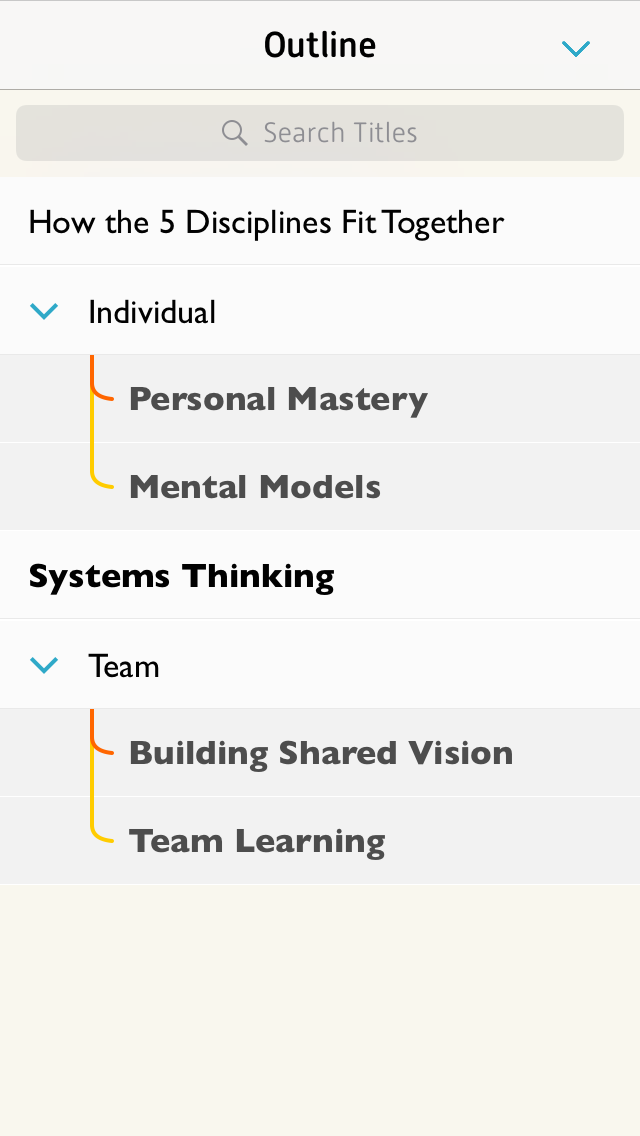
5 Disciplines on an iPhone


What’s really cool is what you can do with this mind map in MindNode (iOS) once you have it. You can see a text-based outline, which can expand or collapse levels:


iOS Mind Map Outline


And you can export to MyMindNode, where you can view and publish your map on the Web:


Upload to MyMindNode 2


You can then share the link to your mind map


I was hoping to embed the above mind map right here in this post, but WordPress.com does not support plug-ins or a good deal of third-party embeds (dah!), so I simply can give you this hyperlink to see what it looks like.


More Complex Mind Mapping


I used MindNode to map out my sermon outline this last Sunday. When I was done it looked like this:


ScreenShot from OSX app MindNode Pro (click to enlarge)


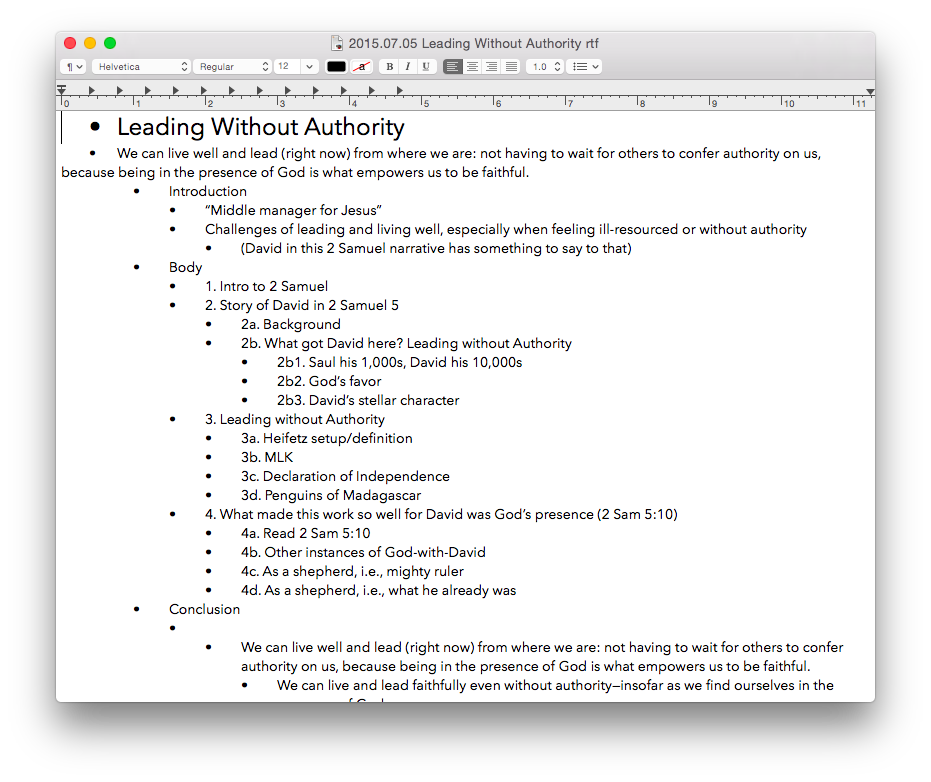
And then I thought: oops. How I am going to get this into Scrivener without re-typing everything? At first I just dragged a .png image file into Scrivener so I could see the mind map as I worked on next steps. Then I realized I could actually export it not only as a PDF or image, but as a text file. (!!)

It looked like this:


Export to text


…which was sweet, because then I could just copy and paste to Scrivener and write my manuscript into my outline, started in MindNode.

By the time I was done writing the manuscript, I’d pared down the outline a bit. Editing in MindNode was easy, so that the final map looked like this:


Final Sermon MindMap


Nodes, Parents, Siblings, Etc.: All Easy to Use


There’s a lot more to mind mapping, not the least of which is learning some terminology (nodes, parents, siblings, children, etc.). The best place to start is the MindNode Web page here. The iOS User Guide is also a great way to get to know the app; that is here.

MindNode offers iCloud and Dropbox support. iCloud has its issues (sync hanging), but MindNode has the best and most succinct troubleshooting guide I’ve seen.

Styles, fonts, and colors are all customizable. And it seems a rare treat for a writing app to exist (and be well-designed and executed) on iPhone, iPad, and Mac. Of course, for a large mind map one will probably choose Mac (or iPad) over iPhone, but moving between devices is easy. There is no Apple device on which you cannot access and edit your mind map. There’s even an accompanying Apple Watch app.

There are some other really nice touches, too, like being able to “fold and unfold” nodes, the equivalent to expand/collapse in a table of contents, for example. You can hide all of a nodes’ children if you need to clear up some screen real estate, and just as easily unhide them. You can also add notes to a node for storing even more information without having to display it.

Perhaps the best thing about MindNode is how easy it was for me to make both of the above mind maps before reading any of the support material. Moving nodes, connecting them, disconnecting them, changing fonts, dragging things around, exporting, and more… all of this was really intuitive and easy to come by both on OSX and iOS.

So… I’ll keep trying mind mapping for the outlining stage of writing. MindNode has much more still to uncover, and I’m looking forward to future use. A brilliantly executed app.


Thanks to the good people of IdeasonCanvas, for giving me a download of MindNode for iOS and OSX for the review. Check out the app’s iOS page here and the Mac app (MindNode Pro) here. Note that MindNode Pro for OSX has now been updated to MindNode2. See my other AppTastic Tuesday reviews here.

Omar Comin’…. (for real, this time)

A long time ago I promised you:

Coming soon to this blog… some interaction with The Wire. Stay tuned.

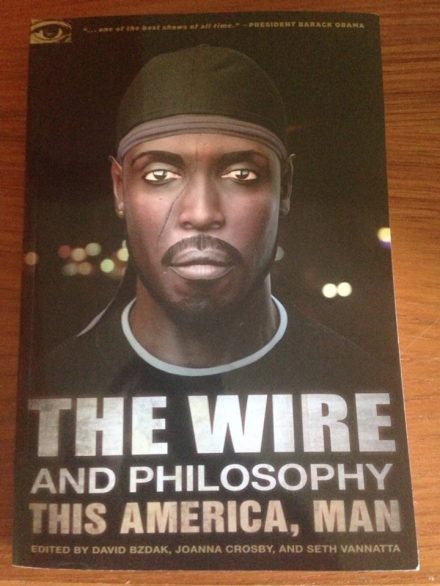
I showed you the cover of this book:


The Wire


I’ve read a chunk of it, and more than half of this book, too:


Source: http://hub.jhu.edu/


(Find it at Amazon here.)

From the product page of publisher Johns Hopkins University Press:

Did Omar Little die of lead poisoning? Would a decriminalization strategy like the one in Hamsterdam end the War on Drugs? What will it take to save neglected kids like Wallace and Dukie? Tapping into ‘The Wire’ uses the acclaimed television series as a road map for exploring connections between inner-city poverty and drug-related violence. Past Baltimore City health commissioner Peter Beilenson teams up with former Baltimore Sun reporter Patrick A. McGuire to deliver a compelling, highly readable examination of urban policy and public health issues affecting cities across the nation. Each chapter recounts scenes from episodes of the HBO series, placing the characters’ challenges into the broader context of public policy.

So far the main thrust of the book is to (mostly convincingly) suggest that decriminalizing (or “medicalizing”) drug use can go a long way to advance public health. More specifically, there is a call to keep non-violent drug offenders out of jail and get them into treatment options. I’ll have more to say on the matter when I review the book–which really will happen this summer.

So, yes, patient readers, more on The Wire is coming to Words on the Word.

Full PDF: Comparative Review of Software for Septuagint Studies

JSCS (2014) Cover
JSCS (2014) Cover


I’ve received permission to post the full .pdf of my comparative review of software for Septuagint studies. It appears in volume 47 (2014) of the Journal of Septuagint and Cognate Studies (JSCS). In the review I consider and evaluate Accordance 10, BibleWorks 9, and Logos 5, specifically with an eye toward their use and resources in the field of Septuagint studies.

Since I wrote that review, new versions of each of those programs have appeared: Accordance 11, BibleWorks 10, and Logos 6. Perhaps the biggest change worthy of mention is that BibleWorks now offers as part of its program the New English Translation of the Septuagint.

Here is the offprint of my review.

You can subscribe to JSCS and see information about the International Organization for Septuagint and Cognate Studies (IOSCS) at this link. Journal Table of Contents are on Eisenbrauns’s site here.

Apple Music Launches Today

Apple Music
Image via MacRumors/Apple


Apple Music launches today, and you can jump right in with a free, three-month trial. Individual user subscriptions will be $9.99/month thereafter.

The big question will be: How does it compare to similar subscription-based, streaming services like Spotify? MacRumors has a nice round-up of some early reviews here. From that article:

Everyone will be able to test out Apple Music for themselves soon enough, with the official launch of the updated music app in just a few hours at 9 AM Pacific. Those interested should remember to first download the new iOS 8.4 update an hour before in preparation for the streaming music service’s debut.

Get all the details at Apple’s page here.

Review of Anker PowerDrive 2 Lite 12W 2-Port Car Charger

Impossibly Cute (and a Good Charger)

Yeah, I know: it’s weird to refer to a phone charger as “impossibly cute,” but this little guy (pictured at left) from Anker looks great. More important, it charges a device (or two at once) just as fast as your typical wall charger.

It’s the Anker PowerDrive 2 Lite 12W 2-Port Car Charger.

You can connect any USB cable to it, allowing you to charge your iPhone (of any generation), iPad, or other device. The best thing about it is that you can charge two devices at once–so you and your friend don’t have to fight over whose turn it is to charge a phone on a long road trip.

Here are a few things I like about the charger (with no counterbalancing complaints so far to lodge):

  • As with another Anker charger I tested, the PowerDrive 2 Lite charges a device quickly. I have an Apple wall charger that gets warm when plugged in, but this one maintains a normal temperature.
  • It’s small. You can easily fit it in your pocket, or stash it in even the smallest compartment of your car. Anker lists its weight as 0.7 ounces. (!)
  • The design isn’t fancy, but it looks great. The red and black color combo gives it an attractive look.
  • It pops in and out of the cigarette lighter (what else do you call that port in your car?) really easily. It’s nice and secure when plugged in.

Despite its size and being 12W as opposed to a 24W model Anker makes, this model gets the charging job done just fine. At the time of writing, the 12W model appears out of stock on Amazon, but the (comparable) 24W model is here. (UPDATE: Here‘s the in-stock link to the model I’m reviewing here.)

And you can check out the 12W PowerDrive 2 Lite at Anker’s page here, with all the specs.


Thanks to Anker for the review sample, offered for my honest impressions.

Quit Trying New Writing Apps and Just Write

The post headline is directed to myself. (Though I’m glad to have just downloaded Mellel on the iPad, which I’ll be reviewing shortly–couldn’t quite help myself. No, really, maybe this will be the app that cures me of writer’s block!)

But seriously: a favorite procrastinating pastime of writers is checking out the latest and greatest writing apps. Not this guy, however:


They That Go Down to the Sea in Ships

Joy vs. Facts, Sleeping in a Storm

 
One place I like to go, from time to time, to rouse my spirits and draw me closer to the heart of God is Wendell Berry’s Manifesto: The Mad Farmer Liberation Front.

I’ve been chewing on one line in particular the last part of this week: “Be joyful though you have considered all the facts.”

Berry’s words are good for us to hear right now, because “all the facts” include the reality of living in a country with a deeply ingrained racism habit that we just can’t seem to kick. The Deacons and I were praying Wednesday night in the back of our sanctuary, right about the same time another group of believers was praying in a Charleston, South Carolina church…. People of color in this country continue to suffer at the hands of racist persons and racist systems that perpetuate their mistreatment.

But, Berry says, “Be joyful though you have considered all the facts.”

If Wendell Berry were narrating Jesus’ state of mind in Mark 4:35-41, he would have said, “Jesus relaxed and took a nap, though he had considered all the facts.”

The disciples are thinking, “Oooh, nice—we’re going to go out in a boat with Jesus into this serene lake:”
 

Sea of Galilee


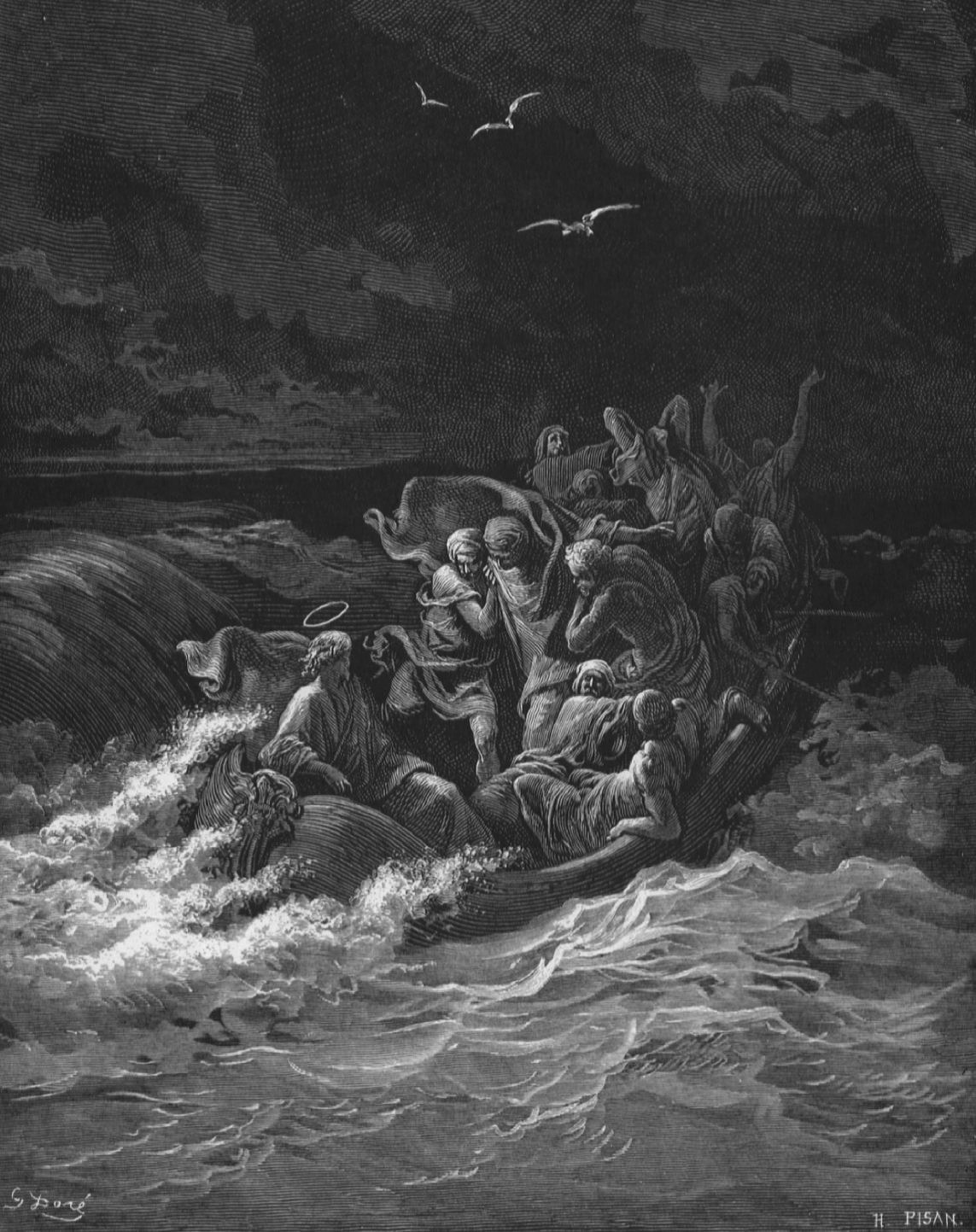
Whereas Jesus probably knows that this was in the offing:


Jesus Calms the Storm, Gustave Doré


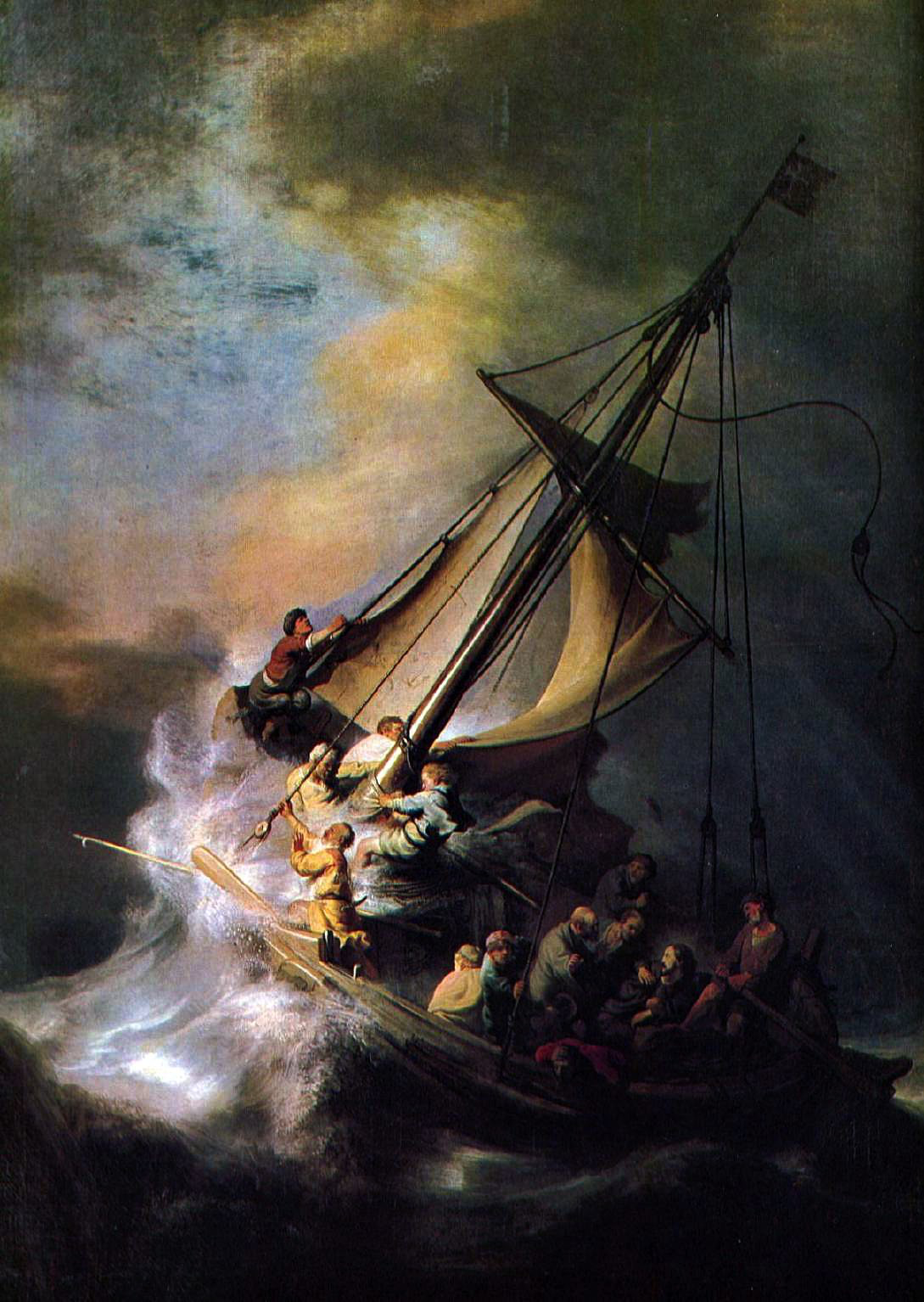
Here’s Rembrandt’s rendition of it:


The Storm on the Sea of Galiee


And yet Jesus “lies down and sleeps in peace,” as the Psalm says.


A Furious Squall…


Mark 4:35 says, “That day when evening came, [Jesus] said to his disciples, ‘Let us go over to the other side.’” From what I can tell, evening can be a good time to catch fish, but to traverse a lake…? When you’re out camping and sunset comes, you try to set up camp, not embark on a new leg of your expedition.

But God’s ways are not our ways, and Jesus’ ways are not the disciples’ ways, so off they go. Verse 36 says, “Leaving the crowd behind, they took him along, just as he was, in the boat. There were also other boats with him.”

“Just as he was”—it’s like when you’ve made a spontaneous decision to pick up a friend and go out for coffee, and you are in a hurry and you say, “Just come like that, just come how you are. Atomic Cafe doesn’t care if you wear your pajama pants and fleece-lined Crocs. Get in the car.”

Jesus and the disciples just went.

Next verse, verse 37: “A furious squall came up, and the waves broke over the boat, so that it was nearly swamped.”

I love this genius storytelling of Mark. If you’re reading or listening to this story, you don’t know yet where Jesus is. “A furious squall came up, and the waves broke over the boat, so that it was nearly swamped.” And then, you expect, verse 38 will say, “And Jesus, with power and authority, stood up and made the waves stand still.”

But, no, verse 38 says, “Jesus was in the stern, sleeping on a cushion.” He needed his introvert time. He found a pillow, or a big sandbag, and put his head on it.

The disciples take this as apathy, some kind of a cruel joke.

If the boat is nearly swamped, and Jesus is still sleeping, he must not be wet yet. It’s possible the stern was raised. The boat could have looked something like this:


Raised Stern


Which probably makes the disciples all the more upset. You wonder… if Jesus knew this storm was coming, is that why he was at the stern, elevated above the rest of the boat? And if so, the reader of this text wonders, why didn’t he quell the storm before it started? Or give the disciples a heads-up? Mark doesn’t tell us.

But his students ask, “Teacher, don’t you care if we down?”

The specific wording Mark uses in the text suggests that the boat was filled “to the extent of its capacity” (HT).

And doesn’t this imagery of a flooding boat go against the axiom that “God won’t give you more than you can handle?” Maybe it’s more like, “Sometimes we get more than we can handle, and God’s not necessarily the one who gave it to us, but he’ll be right by our side anyway.”


…And an Omnipotent God


If Mark’s given us the full humanity of Jesus—he was sleeping on a cushion—now we see his full divinity. Verse 39 says, “He got up, rebuked the wind and said to the waves, ‘Quiet! Be still!’ Then the wind died down and it was completely calm.”

“Who is this?” the disciples ask. “Even the wind and the waves obey him!”

The text says it goes from a “great” windstorm to a “great” calm.

Jesus talks directly to the wind and the waves. Can you think of another person in biblical history who talked to the waves and the sea, and told them to do something?

Jesus, they are starting to see, is more than just an amazing teacher. Listen to how God questioned Job:

Who shut up the sea behind doors
when it burst forth from the womb,
when I made the clouds its garment
and wrapped it in thick darkness,
when I fixed limits for it
and set its doors and bars in place,
when I said, ‘This far you may come and no farther;
here is where your proud waves halt’?

I don’t know if the disciples, in that moment of fear, would have had Job in mind, but the kind of thing Jesus is doing in this passage is the kind of thing that only the LORD God Almighty does.

Here he is. God himself, in the boat with the disciples.

Psalm 107 says, “He stilled the storm to a whisper; the waves of the sea were hushed.”
 

But They That Go Down to the Sea in Ships…


I wonder if Jesus had this Psalm in mind as he went out into the Sea of Galilee with his disciples. Maybe he thought, “Alright—it’s Psalm 107 time. Let me show these young ‘uns what I can do.”

Listen to part of Psalm 107 in the King James Version:

They that go down to the sea in ships,
that do business in great waters;
These see the works of the LORD, and his wonders in the deep.
For he commandeth, and raiseth the stormy wind,
which lifteth up the waves thereof.
They mount up to the heaven,
they go down again to the depths: their soul is melted
because of trouble.
They reel to and fro, and stagger like a drunken man,
and are at their wits’ end.
Then they cry unto the LORD in their trouble,
and he bringeth them out of their distresses.
He maketh the storm a calm, so that the waves thereof are still.

Did part of that ring a bell? You might recognize this guy:


FishermanMemorialGloucester


Here’s a close-up of the Fisherman Memorial overlooking the Harbor:


They That Go Down


“They that go down to the sea in ships,” the inscription reads, 1623-1923.

They that go down to the sea in ships, that do business in great waters;
These see the works of the LORD, and his wonders in the deep.


…These See the Works of the LORD


What about those who go unrescued?

And the Psalm goes on to describe the wind and the waves. Those at sea “reel to and fro… and are at their wits’ end.” Surely this describes the lives of those lost at sea from 1623 to 1923, and before and since.

Then they cry unto the LORD in their trouble,
and he bringeth them out of their distresses.
He maketh the storm a calm,
so that the waves thereof are still.

That very much sums up the experience of the disciples in Mark 4. They’re living out that Psalm with Jesus

But herein lies a theological difficulty. I don’t know how many fishermen cried “unto the LORD in their trouble” in stormy seas, but the memorial in Gloucester stands there to honor those who were not brought out of their distress… or at least, not brought out of a storm. There are some storms–literal and metaphorical–that God just does not make calm. Unlike the ones the Psalm 107 goes on to describe, these men and women that the man at the wheel stands for were not rescued.

“Teacher, don’t you care if [they] drown? …Why didn’t you save them?”

It’s one of the perplexing questions that confronts us—why a God who can and does intervene so often… just lets some things go… lets some evils move ahead. Allows men and women to get lost at sea.

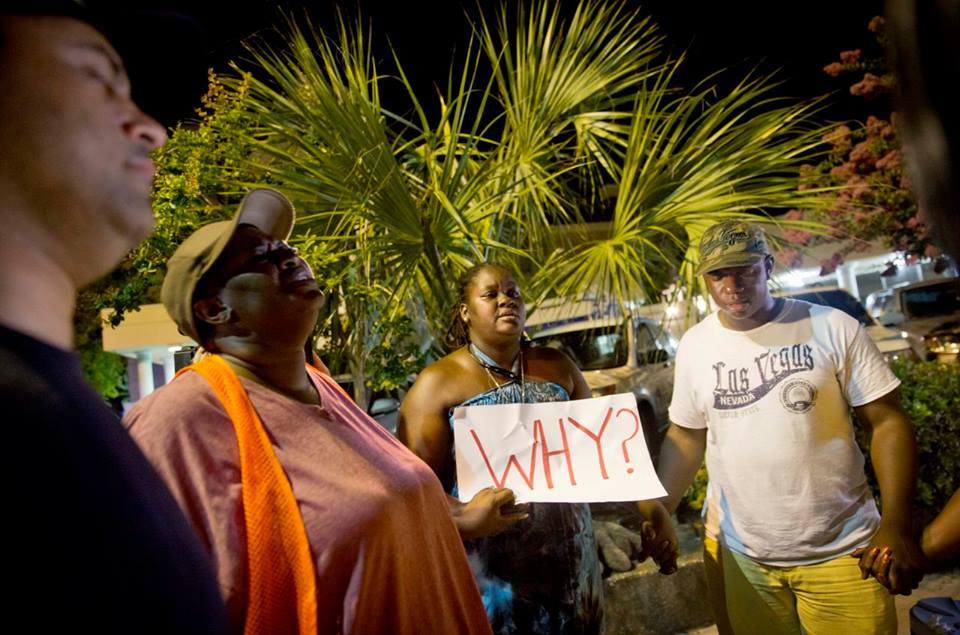
That existential question has come up again this week in Charleston:


Why
Source: David Goldman (AP)


You can’t kill love

The 9 members of Mother Emanuel African Methodist Episcopal Church barely had time to “cry to the LORD in their trouble.” And though Jesus was in attendance at that Bible study and prayer time—“Where two or three are gathered in my name, there I am with them”—he didn’t stop the hateful actions of a deeply racist young man.

Surely those 9 didn’t have to die. I don’t know how many more of these things it will take for our nation and lawmakers to finally move ahead in a serious conversation about gun control. I don’t know how many more unarmed black people will have to die before our country wakes up to the pervasive racism in our midst.

They didn’t have to die. But, you know what? In the lexicon of the Kingdom of God, dead isn’t really dead.

Because you can kill a person, but you can’t kill love.
You can try to cut somebody down, but “the blood of the martyrs is the seed of the church.” From even horrible death can come new and powerful expressions of life.

Rev. Clementa Pinckney was the Pastor of Mother Emanuel, one of those who died. There’s a short YouTube video you can easily find: a couple years ago he welcomed a group of folks who were on tour in historic Charleston. Here’s what he said:

The African American Church… really has seen it as its responsibility and its ministry and its calling to be fully integrated and caring about the lives of its constituents and the general community. We… don’t see ourselves as just a place we come to worship, but as a beacon, and as a bearer of the culture and a bearer of what makes us a people.

But I like to say this is not unique to us. It’s really what America is about. Could we not argue that America is about freedom? Whether we live it out or not… but America’s about freedom, equality, and the pursuit of happiness. And that’s what church is all about. Freedom to worship and freedom from sin, freedom to be fully what God intends us to be… and have equality in the sight of God. And sometimes you gotta make noise to do that. Sometimes you maybe have to die… to do that.

We saw this week how the family members of the victims responded. They called on Dylann Roof to repent of his sins and believe in Jesus. As Rev. Pinckney suggested, they called him to a life of “freedom from sin, freedom to be fully what God intends [him] to be.” They said things like, “Though every fiber of my being is hurting, I forgive you.” And the nation watched, amazed at the witness of the families in that church.

And so God, working through the amazing mercy of the families, calms the storm, after all. The winds of hatred and the breaking waves of destruction die down as Christ works in the hearts of his disciples in Charleston who choose faith over fear.

When God’s children find themselves in choppy waters, our Lord, Jesus, is right there with us in the boat.

And because they know Jesus is in the boat with them, the families of Mother Emanuel have chosen to be joyful, “though [they] have considered all the facts,” though their loved ones have been lost at sea, as it were.

Not a sudden storm, not even a tragic shipwreck can keep Christ’s disciples from making it to the other side. There they see the works of the LORD, and their witness lives on.


The above is adapted from the sermon I preached today at church.