
After casting an unclean spirit out of a boy, Jesus takes his disciples away privately. Where does Jesus direct their attention after a triumphant encounter? Surprisingly, he points them to his own death:
And going out from there, they passed through Galilee, but Jesus did not want anyone to know, because he was teaching his disciples and saying to them, “The Son of Man is to be handed over into the hands of people, and they will kill him, and—despite being killed—after three days he will rise again.”
—Mark 9:31-32, my translation
The repetition of “kill” is fascinating. Here’s a wooden read of the Greek, where the verb for kill (ἀποκτείνω/apokteinō) is repeated:
…and they will kill (ἀποκτείνω/apokteinō) him, and—being killed (ἀποκτείνω/apokteinō)—he will rise again.
The first use of “kill” is an active indicative verb: “they will kill him.” Jesus is the object of that verb, the recipient of the action of killing.
The second use of “kill” is a passive participle, with Jesus the subject, translated something like: “and despite his being killed….” Here Jesus is grammatical subject, not object, because he is also the subject of the main indicative verb that the participle modifies: “he will rise again.”
I draw two conclusions from this:
First, Jesus has gone from passive recipient of a heinous action (“they will kill him”) to active agent that overcomes it (“despite being killed, he will…”). As my friend Mark used to say, “That’ll preach!” I think of the oft-used protest mantra, that I preached about the other week: “They tried to bury us; they didn’t know we were seeds.”
Second, Jesus is repetitive in saying, “they will kill him… and being killed he will….” I think Jesus is emphasizing his death on purpose.
Mark and Jesus don’t need to use “kill” (ἀποκτείνω/apokteinō) twice. In fact, in Mark 8:31, when Jesus predicts his death to his disciples, even a similar verbal formula uses “kill” just once. Perhaps because you can only kill a person once! Dead is dead.1
And yet in Mark 9, Jesus says “kill” twice. Maybe it’s because the disciples didn’t understand his impending death in Mark 8. So Jesus recapitulates the prediction here and adds some emphasis in hopes that they’ll get it this time in Mark 9.2 Maybe Jesus also wants to highlight the power of his resurrection—that he rose from the actual dead. He didn’t wake up from a merely “mostly dead” state:
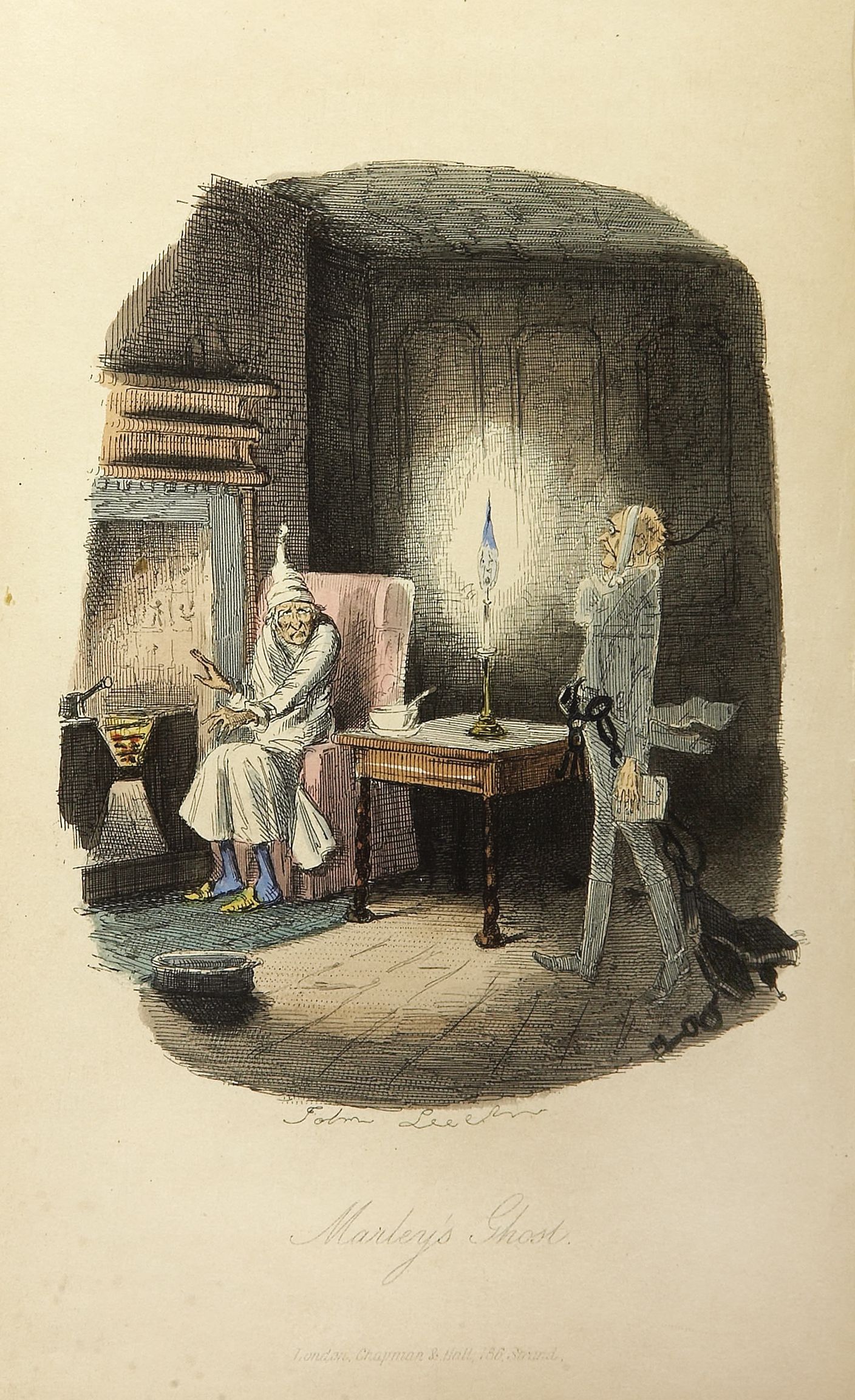
In Charles Dickens’s A Christmas Carol it says, “Old Marley was as dead as a doornail.” Dickens could have just said “Old Marley was dead!” Dead is dead. You either are or you aren’t.
But since Ebenezer Scrooge will see the ghost of Marley, Dickens wants to emphasize that it really is a ghost, because Marley really is dead when the story begins.
I think Mark and Jesus are doing the same thing here: “they will kill me, and—even though I’ve really been killed, dead as a doornail—I will rise again.”
Mark sets the stage here for a powerful response of awe when Jesus does rise again—from full-on, actual death, over which Jesus has authority.
- Disclosure: I did not read through any commentaries before posting this, but I’m sure many commentators have seen the same thing. Fascinatingly, the NET Bible chooses NOT to translate the second “kill,” inexplicably chalking it up to “redundancy in the statement” in the Greek text. ↩
- They don’t. ↩


 Faith is closely connected with healing in Mark. Jesus heals the paralytic on the basis of the faith of his friends (and of the paralytic himself, too?) in 2:5. Mark 5:34, 7:29, 10:52 feature similar healings where the faith of the healed seems to be at least a partial basis for Jesus’ healing.



 Words on the Word