To get the discount, you’ll need to sign up here, using your .edu email address. Sign-ups are open through June 12. Baylor sends the discount code June 13. Then you can apply the discount code to orders placed from June 14-18.
The Septuagint Studies Soirée is back. You can find all previous months gathered here, where I post links to what I find around the blogosphere in Septuagint studies. This soirée covers two months: April and May.
T. Michael Law continues to dominate the Septuagintablogosphere with his Septuagint Sessions podcast. Since the last soirée he posted episode 4 (on Greek Isaiah’s style), episode 5 (“Your BHS is safe with me!”), and episode 6 (“about a problem in research on the LXX that stems from a canonical bias”).
Suzanne McCarthy at BLT asks whether Judith was originally written in Greek or Hebrew. She also looked at our two “prototypical parents” in Greek Genesis 3 and 4. Her co-blogger J.K. Gayle examined the use of “baptism” in Plato and the LXX. BLT is one of the more substantive biblioblogs I read. You would do well to bookmark BLT’s Septuagint tag page, which includes even more recent LXX-related posts. (Also, add this one to your slate of BLT posts to read.)
Linguae Antiquitatum posted a nice review (with some interesting pedagogical musings) of a book about teaching beginning Greek and Latin. The same blog posted the first ever “Ancient Languages Carnival.”
William Ross posted about papyri.info, and offered this and this post as to how to use it for LXX research.
Summer beach reading?
Brian Davidson at LXXI suggests some summer reading. If you have made it this far in reading this post, you might even consider his recommendations to be good beach reading.
Here is Ed Gallagher on “The Greek Bible among the Jews.” And here he is with an illuminating post on the word “deuterocanonical.”
We’ve been in Easter season. And the LXX may have had “an increasing awareness of resurrection theology.” Read a short but fascinating post about it here.
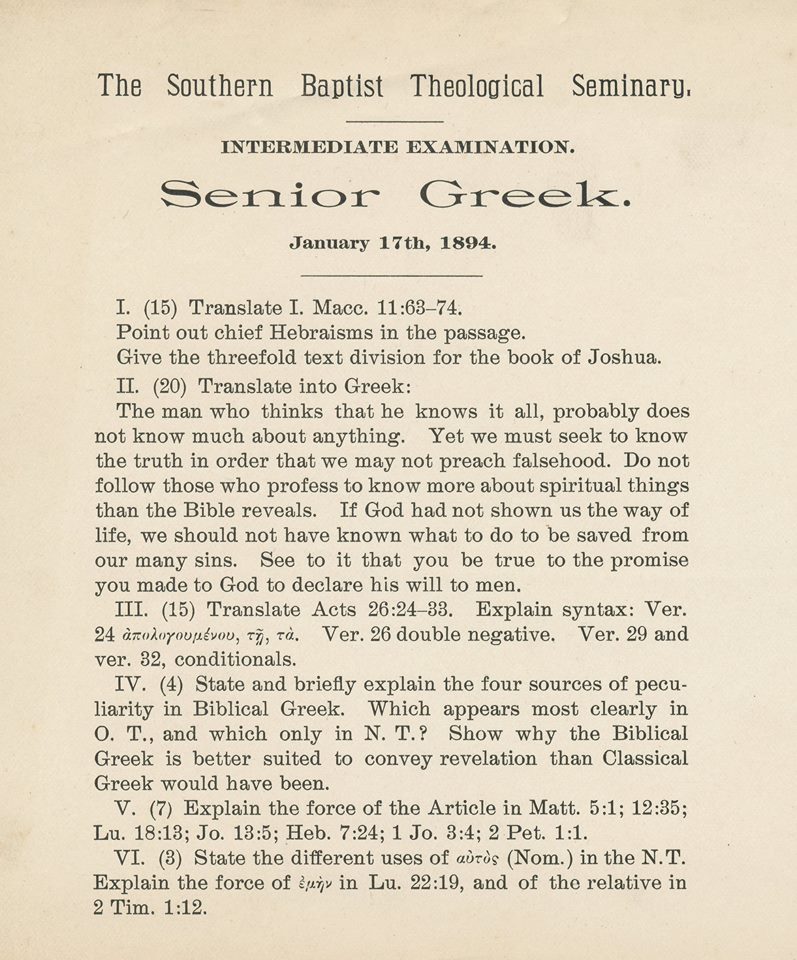
Finally, check out Jacob Cerone’s post of a Greek exam given in the late 19th century by John Broadus and A. T. Robertson (pictured at the top of this post). He even takes part of it and posts his answers. Nice work, Jacob!
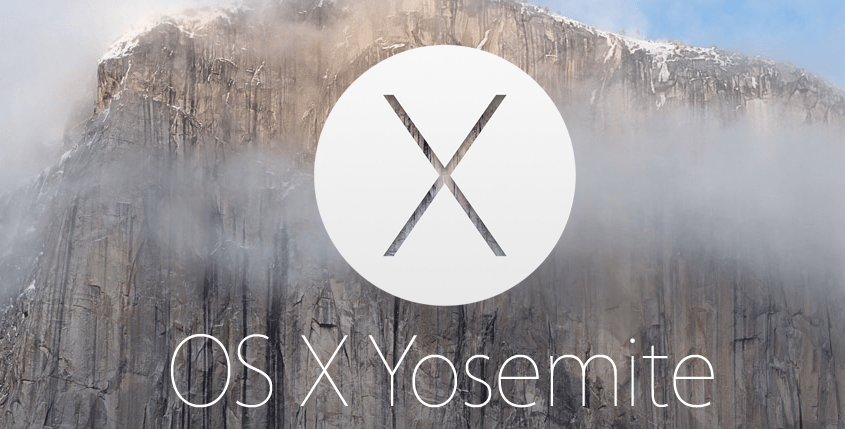
Today Apple announced its new OS X update, Yosemite, to be released this fall. They have also offered free access to the beta version, which is available not only to developers but also to others.
Check out more about Yosemite at the Apple site here, from which the above screen capture comes. The full press release is here.
More information about the Beta Seed Program is here. Here’s what you’ll see once you sign up:
As with any beta testing, there are caveats to consider, but those who want access to the new OS this summer can check it out:
To join the OS X Beta Program, just sign up using your Apple ID. When the beta software is ready, you’ll receive a redemption code that will allow you to download and install OS X Yosemite Beta from the Mac App Store. Then go ahead and start using it. When you come across an issue that needs addressing, report it directly to Apple with the built-in Feedback Assistant application.
I was checking to see what Fortress Press books Logos was offering, when I saw–to my very pleasant surprise–that they are offering Walter Brueggemann’s Spirituality of the Psalms for free. You can get it by clicking the image above.
I’ll be preaching through some Psalms this summer, so will be glad to have this short volume at hand. I’ll also be reviewing it from a print edition from Fortress, so keep an eye out for that in the coming months, too.
A reminder: Wipf and Stock Publishers is offering Words on the Word readers 40% off anything in their online store through the month of May. Just use the coupon code LETTERS at checkout. Last week I reviewed their Reading Bonhoeffer (pictured above). Here are a couple of ideas of books you could get from them.
Wipf and Stock Publishers is offering Words on the Word readers 40% off anything in their online store through the month of May. Just use the coupon code LETTERS at checkout. Yesterday I reviewed their Reading Bonhoeffer (pictured above). Here are a couple of ideas of books you could get from them.
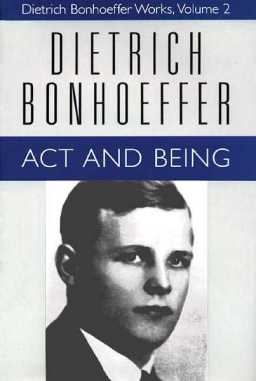
For just a few more days, Dietrich Bonhoeffer Works (DBW) (16 volumes) are $100 in Olive Tree Bible software. I have not seen DBW in Olive Tree, but have reviewed the app here. Their iOS and desktop apps are free, so if you like Bonhoeffer and have the cash, this is probably the best price for his complete works in English that one will ever find.
(Except for checking the books out from your local theological library, which is even cheaper!)
UPDATE: It would appear this sale has ended, a couple days before the date Olive Tree had given me via FB. Despite the miscommunication, the folks at Olive Tree have let me know the set may go on sale again in the future. To your library!
Fall 2014 UPDATE: The UBS5 is out. Go here for a chance to win one of two free copies.
******
On the heels of the release of the NA28 Greek New Testament, the UBS4 is giving way to a revised UBS5. Find the book’s product page here. Just as I reviewed the NA28 (plus LXX), I hope to post more in the future about the UBS5 edition, which is geared more toward translators than academics, per se.
Here’s a sample pdf of the first few chapters of Mark, posted by Hendrickson.
The most noticeable change right off the bat is that the italicized font of the UBS4 has been replaced with something I find much more readable and aesthetically pleasing:
Other than punctuation and paragraph divisions, the text is the same as that of the NA28, with the differences between the two coming in the critical apparatus.
T. Michael Law posted two more installments of his Septuagint Sessions podcast, here and here.
BLT blog wrote about God’s first Greek puns (brought to you largely by the letters γ and ν).
William Ross promises upcoming LXX Resource Reviews. You can see a resource page he has up now, here. Also, in the last soiree I missed his February review of Abi T. Ngunga’s Messianism in the Old Greek of Isaiah. (It’s on my shelf, too, and I’ve worked with it a little.) Here it is, in excerpted form.
Daniel Streett uses the LXX to venture an answer to the question: Did Enoch Die? He also mentions a couple options for a bound LXX-Greek NT combo.
Mosissimus Mose continues a review of T. Michael Law’s When God Spoke Greekin dialogic form. The fourth part posted in March.
Here’s a post on “ditching flashcards” (via here).
Jacob Cerone has been posting his way through LXX Jonah. See here, here, and here.
Did I miss anything? Feel free to post an LXX-related link in the comments.

 This week at Accordance the Essential IVP Reference Collection is on sale for $99.90.






 Words on the Word