
To be fair, I was going to read these books anyway. But I’m going to read them and talk about them and teach them in an even more focused way now:

To be fair, I was going to read these books anyway. But I’m going to read them and talk about them and teach them in an even more focused way now:
This is the sermon I preached to my congregation last Sunday, after the U.S. Presidential Election. If you prefer audio, that is here, with a downloadable podcast version here. (It’s the sermon at the top, “The Long View.”) The text follows.
“Not by might, nor by power, but by my spirit, says the LORD of hosts. What are you, O great mountain? Before Zerubbabel you shall become a plain….”
In the name of God: Father, Son, and Holy Spirit. Amen.
What I share this morning comes from one of about four possible outlines I struggled through this week. I’m still not sure if this is the right one. You may find it too weak, you may find it too strong, but I hope you will at least find it to be true… that these words will bear witness faithfully to the truth and love of God that is in Jesus Christ our Lord. That has been my prayer.
If you’ve been on social media or tuned in to the news this week you’ve had no shortage of people telling you how to feel and what to do.
How can there be so many words, so many possible responses, so many angles to consider… and yet a feeling of uncertainty remains? Who are we? How did we get here? What will the next four years look like? What should we do now?
I’ve found myself seeking to console and encourage and maybe even challenge this congregation, even as I’ve been consoled and encouraged and challenged by members of this congregation. I’ve watched YouTube clips of preachers uttering “Jesus is Lord” and, though I fully agree, have told them to go preach to somebody else right now.
I’ve found myself troubled by the new access to power of someone I’m deeply concerned may not stand up for the dignity and needs of all citizens, someone who has bragged about sexual assault and unapologetically mocked his female accusers, and who has repeatedly spoken disparagingly about African Americans and other minority groups.
I’ve wished for a direct hotline to the President-elect—even just one phone call—to implore him to speak out against the anti-Semitic and race-related attacks committed already after the election in his name. That Donald Trump and that we would condemn such hatred–both in the name of America and in the name of Jesus–should be a given. Ours is the message of Christ’s love and hope, fellowship across lines of difference. We followers of Jesus in our prophetic voice need to hold even the leaders of a secular state to certain standards, and hope and pray they will measure up.
I acknowledge and bless the political diversity in this sanctuary. I affirm that we are a church and not a political party. You came to a worship service, not a rally. Mapping Christian virtues onto political candidates and platforms is difficult and messy, and can be—at least for me—deeply unsatisfying. We know that some in the Church in the U.S. are rejoicing that their candidate won (or that the other candidate lost), some are reluctantly at ease with the results, others voted third party or didn’t vote, and still others remain in a state of shock and anger and mourning at the election results. We need to own this reality.
I have not always felt like my best self this week. Maybe you haven’t, either. I think that’s okay.
We were getting out of the van to go into a friend’s house this week, and my four-year-old said, “Carry me.” I didn’t have that good of a grip on her, so she said, “Carry me harder!” I said, that’s a good prayer.
Lament takes time, and we’ve had our eyes opened this election to places where there is no shalom, hurt that calls for lament. It is not true that everything is okay. We need Jesus to carry us harder. Like the prophet Jeremiah, we cannot and should not say “Shalom, shalom” where there is no shalom. Our God is a God of truth, of bringing deeds of darkness out of hiding, and into the light of Christ. What we see may need transforming.
Since Tuesday I’ve second-guessed myself for not being charitable toward our President-Elect, and then the next second I’ve third-guessed myself for second-guessing myself, and wished I had more courage to be a strongly prophetic voice. At least my ongoing uncertainty in how to move forward has led to a renewed impulse to pray fervently for our country’s President-Elect, and for other elected officials.
After today we have plenty more worship services and Scripture readings and hymns and Bible studies… lots of chances to gather in small groups and prayer times and conversations over coffee, where we can keep exploring what it means to be faithful to Jesus in a time of national tension.
This week in the midst of my exasperation and uncertainty about how we best move ahead, in the midst of the divisions in our country and in the Church, in the midst of the cries of people who fear for their safety in what should be a secure home for them… in the midst of it all, I am certain of a few things. Even if we woke up to a new world on Wednesday, some things have not changed since then. I offer four such convictions this morning.
One conviction is that the church is the conscience of the state. Martin Luther King gave us this. I know Israel was a theocracy and we live in a non-theocratic democracy, but I think we’ve inherited something of the prophetic task we see in the Hebrew Bible. Isaiah and Jeremiah and Micah and all the other prophets came alongside kings and people, and said, “Exhibit A: how things are. Exhibit B: how things should be.” They held before the people visions of shalom, the world as God would re-create it one day, and a world in-between the times that could move more faithfully toward wholeness.
As prophets challenged kings, as Jesus pushed the local ruling religious establishment of his day, so we Christians have the responsibility to speak the truth even to positions of power. It’s a scary task, but it’s our task.
We just can’t normalize race-based dismissiveness, the devaluing of women’s bodies, xenophobia, inflammatory rhetoric, nor any other sinful behavior. We must not explain it away or look past it as if it’s not there, or as if we could somehow just “make the best of it,” leaving it as it is.
And we ought to have a sincere desire for the repentance of any perpetrator. We’re called to speak the truth, not spitefully but in love, not vindictively but with the hope for repentance. We hold ourselves to Gospel standards, too, looking for ways we need to repent. As ones who have received the outpouring of Holy Spirit, as the prophet Joel says, we all–men and women, young and old–have a prophetic task. We can be a conscience for power brokers and systems that are so easily corrupted by power.
We tell the truth about who we know God to be, and what we see in the world–for better or for worse. Having drunk deeply of the well of the Scriptures, which any prophet must do, we speak up for ones who have been marginalized, taken advantage of, for the fatherless and the widow that Scripture speaks so frequently about. We say, “These are God’s dearly loved children. Let justice for them and for everyone roll down like waters, and righteousness like an ever-flowing stream.” And we proclaim that “Christ has died, Christ is risen, Christ will come again” to bring a vision of shalom to reality.
There’s freedom in knowing that the church is not the state, and this country is not all we have. It’s not that the two should never be integrated in how we think about positive social action. But there is freedom in remembering that our ability to effect change is not limited by what we can do through the power structures of an election, legislation, and the Supreme Court. We can discharge our duty as citizens of the United States by being active as citizens of the Kingdom of God, who bring conscience to bear on politics.
“The church is the conscience of the state.” Among those who call Jesus Christ Lord, there should be no bystanders.
Bill Hybels, long-time pastor at Willow Creek in Illinois, loves to say that “the local church is the hope of the world.” “The local church is the hope of the world.” That’s been a second bedrock certainty for me this week.
Why? He says:
There’s only one power on planet earth that can turn a hate-filled heart to a loving heart, a greedy heart to a generous heart, a selfish heart to a selfless or serving heart. There is only one power in the universe that can do that. It’s the power of the transforming love of Jesus Christ, which has been given to the church to steward.
“The local church is the hope of the world.” Not just “the Church.” But the local church. Bill Hybels’s church: Willow Creek Community Church. Our church: Union Congregational Church in Magnolia. Other local churches in and beyond the North Shore.
We need to pray that we would steward well the “transforming love of Jesus Christ,” and even look inward and repent for ways in which we have not taken that role seriously. I hold fast to that truth: “the local church is the hope of the world,” because we have the message of Jesus.
A third truth I cling to: come what may, Jesus is stronger.
Some months ago we were in Ephesians. Paul prays in the first chapter that his churches would have the “eyes of [their] heart enlightened” so that they would know God’s “incomparably great power for us who believe.”
Nothing compares to this power, the power that raised Jesus from the dead and is at work in us now–as a local church and as individuals, as contemplatives and as Christian activists.
Paul says, Jesus is “far above every ruler and authority and power and dominion and every name that is named”, not only in this age, but also in the age to come! (1:21)
Come what may, Jesus is stronger! Come who may, Jesus rules over them! In a world giving ground to idolatry and fear-mongering and greed and apathy and hatred and a distaste for holiness… Jesus will still prevail. Every “rule and authority, power and dominion” must submit to the name of Jesus.
Christ is in a position of authority that cannot be breached by any other power. All other names, all other titles, all governors and Senators and Representatives and Supreme Court Justices and President and Cabinet—these God has placed at the feet of Jesus.
Every authority that would dare to set itself up against the ways of God finds its proper place as a footstool where Jesus Christ stretches out his feet from his throne.

This is what we pastors mean when we say, “Jesus is still Lord.” I know it may sound like a platitude in a time of distress, but boy do I believe it with every inch and every pound of my body. And the truth that “Jesus is Lord” matters for how we live our lives, for how we work as ambassadors for shalom, for how we share with others the great news of the love of Jesus.
Come what may, Jesus is stronger.
Finally, I am quite certain that we will one morning wake up into another new world:
Behold, I will create
new heavens and a new earth.
The former things will not be remembered,
nor will they come to mind.
But be glad and rejoice forever
in what I will create,
for I will create Jerusalem to be a delight and its people a joy.
I will rejoice over Jerusalem
and take delight in my people;
the sound of weeping and of crying
will be heard in it no more.
Can you see this vision, even now? “Never again,” Isaiah says, “will there be in [this world] an infant who lives but a few days, or an old man who does not live out his years.” Doesn’t your heart burn within you? “They will not toil in vain or bear children doomed to misfortune.” Don’t you want to live there now? “Before they call I will answer; while they are still speaking I will heart.”
I’m not always so convinced that “the moral arc of the universe bends toward justice.” Maybe it scatters toward entropy. But we at least can look ahead to justice, a day of total shalom, where God will be perfectly present to his people. There will be no more injury and pain and animosity. Jesus himself will be our light, and we will bask in his love.
We live for those times when this vision of tomorrow breaks in to today.
If God can create a new heavens and a new earth, can he not also, create a new United States?
If God can create a new heavens and a new earth, can he not also, renew his church? Can he not embolden us to co-create a more just and peaceable world with him?
If God can create a new heavens and a new earth, if God can raise Jesus Christ from the dead, can he not also, raise your heart to new life?
The road ahead might be long. So we need to take the long view, and Isaiah 65 is it.
So, my good friends, you who are some of my favorite people on earth: may we be renewed, deep in our souls, by God’s vision of a perfect future. May we be faithful in our prophetic call to be both conscience and hope of the world in this present moment. May we remember that at all times, come what may, Jesus is stronger.
May we walk freely and joyfully in the truth that tomorrow will be another sunrise. And more than that–may we affirm that with every sunrise comes the ruling Son of God: “Jesus shall reign where’er the sun // does its successive journeys run, // his kingdom stretch from shore to shore, // till moons shall wax and wane no more.”
In the meantime…
God give us courage
to suit up and work together
on that perfect campaign,
the campaign that will one day end
with no ruler but Jesus.
I wrote this letter to my congregation yesterday with only them in mind, but then thought I’d post here in case any others wanted to read.
Dear church,
There’s a scene in Hoosiers (maybe a future pastor will quote different movies) where the team from tiny, rural Hickory High scopes out the giant and intimidating basketball stadium where they’ll play the state championship game:
Coach Dale: Buddy, hold this [tape measure] under the backboard. [They measure from free throw line to underneath backboard.] What is it?
Buddy: 15 feet.
Coach: 15 feet!
Coach: Strap, put Ollie on your shoulders. Measure this from the rim [hands them tape measure; they measure from rim to floor]. Buddy… how far?
Buddy: 10 feet.
Coach: 10 feet!
Coach: I think you’ll find it’s the exact same measurements as our gym back at Hickory.
Team: [laughs]
Coach: Okay, let’s get dressed for practice.
I was happy this morning at home to see our coffeemaker had reliably brewed the coffee. The sun had risen. Another day was here.
Sufficiently wired from yet more coffee and a breakfast at Friendly’s with a friend and mentor, I went to the church with that Hoosiers clip in mind. The office was still there. The sanctuary is just as we left it Sunday: fresh candles at the altar, a cross, pews where God has been praised for over 100 years, a stack of chord charts for the band in the first pew. All the measurements and implements were the same.
Today I know that even while some rejoice, or reluctantly greet the election results as the best available option, many in our country are mourning, confused, and frustrated.
However you feel, this is a good day to take care of yourself, and for us to take care of our loved ones and each other. Be liberal with hugs!
I stand by what I preached Sunday, which I preach again now to myself, if you’d like to listen in:
Whatever happens on Tuesday, whatever rebuilding is ahead of us, our country right now needs more of God’s presence. We little temples need to get to work in bringing the holiness of God, the power of God, the joy of God, and the goodness of God to would-be worshipers. I truly believe we can hear the same words spoken to Esther that we cannot remain silent “at such a time as this.” Maybe also like Esther, we have come to our position—as bearers of God’s presence—for such a time as this.
“Do not fear,” God says, “for I am with you.”
Might this be a kairos moment for the church? We have much soul-searching, rebuilding and national identity negotiation ahead of us. What would it look like if the church somehow took up the mantle and led the way? What if we re-doubled our efforts to do justice, love mercy, and walk humbly with our God? (Micah 6:8) What if we re-committed ourselves to the spiritual disciplines of prayer, Scripture reading, corporate repentance, and social action?
If that kind of talk feels overly moralizing or too soon for you, I hope you feel free to take your time and feel what you need to feel right now.
If you would find it helpful, I’m available to talk and to pray these next few days—just text or call ahead to make sure I haven’t stepped out of the office for a bit. Not claiming to have any answers or great political insights—but I would love to listen and pray with anyone who wants to. (To blog readers: you can contact me here.)
If the full vision of God’s shalom “seems to tarry,” Habakkuk said, “wait for it.” And, empowered by the Lord, he would also have us work for it: “The Sovereign LORD is my strength; he makes my feet like the feet of a deer, he enables me to go on the heights.”
Peace and hope,
Abram
Dear friends,
Perhaps none of us needs a reminder of the importance of today’s Election Day–not to mention the accompanying issues, conversations, and implications around our vote. Allow me, then, to hold before us the importance of prayer in this national moment.
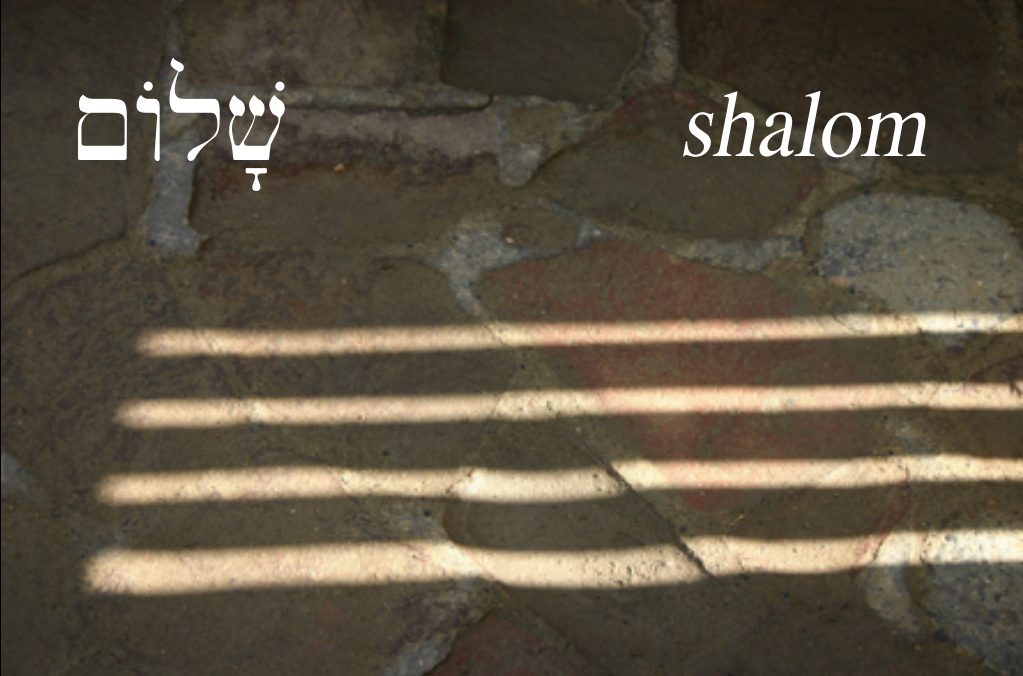
In our worship services we’ve been mining our Old Testament lectionary readings for “Glimpses of Shalom.” Jeremiah 29 encourages ones in exile to “Seek the shalom” of their city, which includes praying for the shalom of the city:
Also, seek the peace (shalom) and prosperity of the city to which I have carried you into exile. Pray to the LORD for it, because if it prospers, you too will prosper.
I wanted to suggest some features of shalom that could become prayer points to guide our intercessions for our cities and country, today and in the coming days and weeks. This is what the Hebrew Bible calls the people and land to when it speaks of shalom:
Let’s pray that where shalom exists, it would deepen. Let’s pray that where there is no shalom, God would bring it into being–even through our prayers and efforts!
“To clasp the hands in prayer is the beginning of an uprising against the disorder of the world” (Karl Barth).
Praying with you for God’s shalom,
Abram
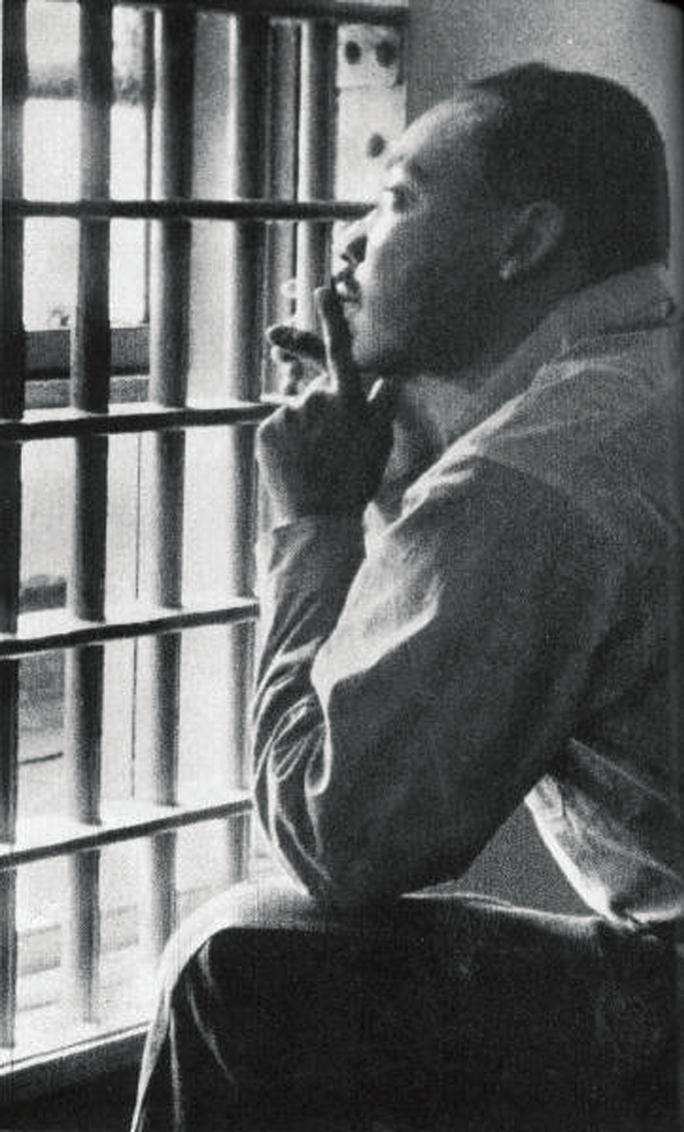
Tomorrow our church’s adult Sunday school class will discuss white privilege and Martin Luther King’s compelling “Letter from a Birmingham Jail.” I think I’ve marked up at least 50% of the words in his moving piece of writing. Here’s one section that stood out:
There was a time when the church was very powerful–in the time when the early Christians rejoiced at being deemed worthy to suffer for what they believed. In those days the church was not merely a thermometer that recorded the ideas and principles of popular opinion; it was a thermostat that transformed the mores of society.
King continues:
But the judgment of God is upon the church as never before. If today’s church does not recapture the sacrificial spirit of the early church, it will lose its authenticity, forfeit the loyalty of millions, and be dismissed as an irrelevant social club with no meaning for the twentieth century. Every day I meet young people whose disappointment with the church has turned into outright disgust.
Perhaps I have once again been too optimistic. Is organized religion too inextricably bound to the status quo to save our nation and the world?
Reading and preaching through the Old Testament lectionary (prophets!) has been reminding me of the dual proclamation of the prophets: both God’s hope (which I prefer to think about and preach on) and God’s judgment on those who practice injustice and sin (not as easy to talk about; no less true). Rev. Dr. King was a prophet in the tradition of Joel, Amos, Isaiah, Jeremiah, and all the rest. Of course the church today is not immune from God’s judgment for too easily capitulating to a non-Christlike status quo.
Also intriguing is the idea, as Joel has it in tomorrow’s reading, that all believers have not only the Holy Spirit, but also the charge of prophesying and proclaiming the truth of the God who judges with justice, in whom we can put our hope. All of God’s people are called to the prophetic office!
James Davison Hunter makes helpful contributions to the discussion of how Christians should orient themselves toward the world and its need for improvement. His idea of “faithful presence” is a good one, if not especially novel. The idea’s rootedness in the faithful presence of God in Christ offers a theologically sound and relatable paradigm. Because of God’s love for and presence with us, any Christian, whether walking in the so-called halls of power or not, can exercise faithful presence.
Hunter offers a robust view of faithful presence as “the exercise of leadership in all spheres and all levels of life and activity” (260). One thinks of the oft-quoted Abraham Kuyper: “There is not a square inch in the whole domain of our human existence over which Christ… does not cry, ‘Mine!'”
 Hunter sees the need for faithful presence to bring about both individual and institutional change, as it “generates relationships and institutions that are fundamentally covenantal in character, the ends of which are the fostering of meaning, purpose, truth” (263, my emphasis). Further, Hunter writes, “Culture is intrinsically dialectical” (34). His drawing on the Hegelian dialectic allows him to articulate a Christian relation to the world that avoids extremes: “Christians are called to relate to the world within a dialectic of affirmation and antithesis” (231).
The author spends more time than the reader might like in debunking other people’s ideas as to how to make the world a better place. This is a noble enough endeavor, but one wonders: On what authority does he offer his critiques? He begins, “I contend that the dominant ways of thinking about culture and cultural change are flawed, for they are based on both specious social science and problematic theology” (5). (That’s a big claim to have to defend.) He continues with broad, sweeping statements like, “Cultures change from the top down, rarely if ever from the bottom up,” (41) and, “Change of this nature [i.e., cultural change] can only come from the top down” (42).
Evidence, however, seems to be in short supply. One does not have to wade deep into the history of the African American civil rights movement, for example, to find figures who effected change from the bottom up. No doubt Martin Luther King, Jr. found support from “the top” in Lyndon B. Johnson, but King led a movement of the people, many of whom (King included) did not have positional power in the society they changed.
And to take a current example, there is the Black Lives Matter movement. While its long-term impact remains to be seen—and while the movement itself may not always speak with one voice—one would be hard-pressed to suggest that this “grassroots political mobilization” (42) has not “penetrate[d] the structure of our imagination, our frameworks of knowledge and discussion, the perception of everyday reality” (42). Already the Black Lives Matter movement can claim victory in that there is a greater societal awareness of race-motivated police brutality, as well as police departments taking increasingly deliberate measures (body cameras, and so on) to prevent it.
I do appreciate Hunter’s giving “priority to what is right in front of us–the community, the neighborhood, and the city, and the people of which these are constituted” (253). But in some ways his “faithful presence” still reads just a little as, “Just try harder… this way is sure to work!”
Of course he is right in saying, “Christians have failed to understand the nature of the world they want to change and failed even more to understand how it actually changes” (99). But the reader rightly wonders: what makes Hunter immune? In short, while Hunter’s larger framework has much to commend it, his work seems to lack attention to important details—and fails to convince that all other visions of world change that preceded him are faulty.
Book info: Publisher’s Page (OUP) // Amazon
Thanks to Oxford University Press for sending me a review copy, which—I assume will be evident—did not influence my attempts at objectivity in assessing the book.
This is the text of the sermon I preached the Sunday after Alton Sterling, Philando Castile, and five Dallas police officers were shot to death.
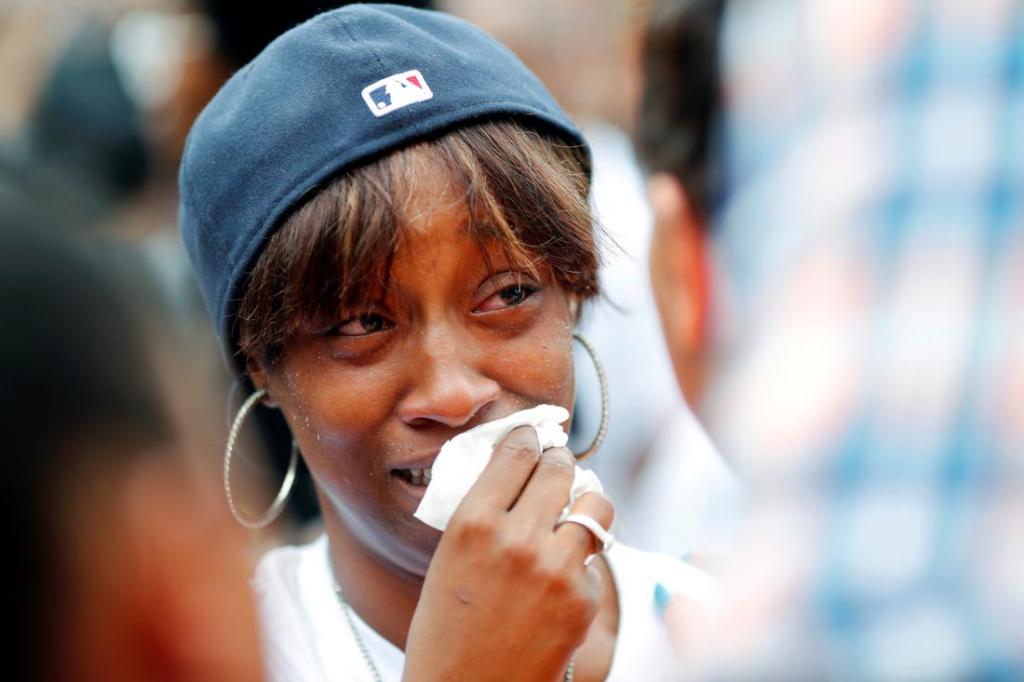
Michael Brown’s homicide in Ferguson, Missouri was almost two years ago. His encounter with a police officer set off a wave of protests and brought a conversation about institutionalized racism once again into the public square.
This week Michael Brown’s mother expressed the numbness and wordlessness that often comes after unjust killing:
When their children are killed, mothers are expected to say something. To help keep the peace. To help make change. But what can I possibly say? I just know we need to do something. We are taught to be peaceful, but we aren’t at peace. I have to wake up and go to sleep with this pain everyday. Ain’t no peace. If we mothers can’t change where this is heading for these families — to public hearings, protests, un-asked-for martyrdom, or worse, to nothing at all — what can we do?
We can at least remember the names of the deceased as we are gathered in the presence of God.
37-year-old Alton Sterling of Baton Rouge, Louisiana.
32-year-old Philando Castile of Saint Paul, Minnesota.
And then five police officers killed while they were protecting the people’s right to protest police brutality: Patrick Zamarripa, Lorne Ahrens, Michael Smith, Michael Krol, and Brent Thompson.
Let us remember their names and their faces and their families. They were and are loved deeply by God. May the Lord receive them into his loving arms, into his eternal care.
In one sense it would be missing the point for white folks to dwell on our cluelessness in what to say after another spate of gun violence. Though the thought keeps crossing my mind, I would be selfish to complain about having to find words for this pulpit after yet another week of killing in the United States.
Because as much as we may struggle in figuring out what to think and how to pray, there is an entire segment of our population that is worrying about how—worrying about if—they can live under these conditions.
Ty Burr, a writer for the Boston Globe, expressed it this way:
I understand; it’s exhausting. Social change asks a lot of us, but most of all our attention. To process all that incoming outrage, we have to become stronger in heart and clearer of head, and we have to decide when it’s time to stop watching the slipstream and dive into it instead.
If you hadn’t already, a week like this one all but demands that we followers of Christ dive in.
But… “what can [we] possibly say?” And “what can we do?”
Well, I don’t know. But I sure have read Ephesians 4 in a different light. And, so help me, God, may I not be shaken in my faith that Scripture always—always—will have something to say to us, even in our darkest hours.
With that conviction, hear again the first three verses of Ephesians 4:
As a prisoner for the Lord, then, I urge you to live a life worthy of the calling you have received. Be completely humble and gentle; be patient, bearing with one another in love. Make every effort to keep the unity of the Spirit through the bond of peace.
Ephesians 4:1 is the pivot point of the whole letter. Paul moves from the theologically rich prayers and beautiful expression of Christian identity—chapters 1 through 3—to what we should do about it—in chapters 4 through 6.
“Therefore,” he says, “I—a prisoner of the Lord!—urge you strongly to live worthily of the calling with which you have been called.”
Paul lays a nice guilt trip on his listeners: Look, I’m in chains here! I’m a prisoner! The least you could do is live up to your calling as a Christian, like your poor Paul is urging you to do.
If you’ve been thinking about memorizing part or all of Ephesians recently, you could at least memorize 4:1, since it summarizes the whole book. Paul’s told them what their calling is in the first half of the letter.
He’s said: you Christians have been chosen by God, God delights in you, and you are sealed with the promise of the Holy Spirit. He’s encouraged the church by saying: we are a people called to hope. We are God’s riches. And God’s power for us who believe—even for those who feel powerless—God’s power for us is immense. Nothing compares to it, and we who believe have the power of God.
Paul has also written: we were dead in sin, but God was rich in mercy, and God intervened. He made as alive with Christ, he raised us with Christ, and he seated us with Christ in the heavenly realms.
When he says, “Therefore,” or “Live a life, then,”—he’s got all of that in mind, everything in the first three chapters.
From here on out he’s going to get specific about how to live a life worthy of that calling. You are this, this, and this… so here’s how you can live like it.
“Live a life”—or as Paul first put it in his letter: “walk” in a worthy way.
It was a Jewish metaphor to talk about life as a walk. A sort of ongoing journey: active, with movement. “Walk the walk,” your “Christian walk”—that didn’t come from your evangelical youth pastor, it came from the Hebrew Bible!
Paul starts in right away with some of the ways Christians should walk.
He says in verse 2, “Be completely humble and gentle; be patient, bearing with one another in love.”
Completely humble. Gentle. Patient.
As I studied the passage this week, I was surprised to learn that the particular word for humility in this verse was not really in Greek literature before the Bible. And then finally there was a Greek writer outside of the New Testament, Epictetus, who mentioned “humility” in the first century. He said it was the first character trait to avoid.
That could help explain why a humble and even humiliated Jesus was mocked on the cross. God had said, through Isaiah, “This is the one I esteem: he who is humble and contrite in spirit, and trembles at my word” (66:2). But humility is a counter-cultural value; it always has been.
“Be completely humble,” Paul says, “and gentle.” Be gentle.
Jesus told Peter to put away his sword in the garden. Those who live by the sword, he said, will die by the sword. Or as I’ve heard it paraphrased, “When you fight fire with fire, the whole world burns down.”
Micah prophesies about a day when “they will beat their swords into plowshares and their spears into pruning hooks. Nation will not take up sword against nation, nor will they train for war anymore.”
There will be a day, when what happened this last week, and all the evils leading up to it (that still exist!)—will not happen anymore. Nations will not go to war with other nations. Nations will not even feel like they are engaging civil war within their own borders.
This is what it means to be gentle. Loretta Lynch said, “After the events of this week, Americans across our country are feeling a sense of helplessness, uncertainty and fear … but the answer must not be violence.” Paul would agree: the answer must not be violence, but the answer must be gentleness.
Yeah, gentleness.
I know… I almost picked another passage and didn’t preach on this one today because after Alton and Philando and five officers died, a gentle response felt like a cop-out.
I might as well have been reading, “Be tepid. Let it go. Don’t do anything about it. Just watch.”
Turns out, that’s not what Paul is saying. Harold Hoehner, who taught at Dallas Seminary for many years, says, “The word [gentleness] never connotes the idea of weakness. Rather, it implies the conscious exercise of self-control, exhibiting a conscious choice of gentleness as opposed to the use of power for the purpose of retaliation.” Self-control, not retaliation.
Aristotle talks about gentleness as coming between two extremes: “never being angry with anything” on the one hand and “excessive anger against everyone and on all occasions” on the other. Gentleness is somewhere in the middle. As another interpreter put it, if you’re gentle as Paul urges, you are “always angry at the right time and never angry at the wrong time.”
Our model again is Jesus, the one who said, “Take my yoke upon you and learn from me, for I am gentle and humble in heart, and you will find rest for your souls.” Jesus was “always angry at the right time and never angry at the wrong time.”
When Jesus saw oppression, hatred, and racial injustice—he got angry. But that didn’t mean he wasn’t gentle.
“Be completely humble,” Paul says, “and gentle.” That gentleness is a fruit of the Spirit, a piece of evidence that we Christians are living lives worthy of the calling we have received.
Then to humility and gentleness, Paul adds this one more: patience.
The Old Testament talks about patience as long-suffering. Being patient doesn’t mean letting injustice go unprotested, but it does mean persistence… holding out hope… slowing down to wait and listen to the voice of another.
Those of us who have not been racially profiled and probably never will be, would do well to slow down and listen to our brothers and sisters who have. We need to exercise patience to hear the stories and pain of others… even to let it transform our own view of the world.
And now Paul gets into church territory—he says one mark of patience is “bearing with one another in love.”
“Be completely humble and gentle; be patient, bearing with one another in love.”
“Put up with each other,” he’s saying! This is the same word Jesus uses when he is exasperated by his faithless disciples: “How long shall I put up with you?”
Well… how long did Jesus put up with his disciples? He’s still doing it, right? He is still, even right now, interceding for us while we worship.
Patience—putting up with each other’s differences and even annoying habits—is required if the church is going to be a bastion of unity… a witness of one love to a divided world.
Paul says, then, ”Make every effort to keep the unity of the Spirit through the bond of peace.” He tells them to be eager to keep the peace.
But here’s a nice twist—he’s calling on them to be peacekeepers. The peace has already been made. Paul had said earlier, Jesus himself is peace. Jesus is the one who made peace—it’s the work he did when he broke down the dividing wall between so-called races—Jew and Gentile in the first century, a work that extends to black and white America in the 21st century.
“Keep the unity of the Spirit through the bond of peace.”
Paul calls for Christians to be humble, gentle, patience, and eager to keep the peace that Christ himself established. Even as Jesus made peace, others try to snuff it out. But we’ve got to guard and protect the peace of unity—and for Paul that starts in the church and then emanates outward.
Paul reminds the church that the reason we can be practice a peaceful witness of unity is that God is not divided. God is one. And God is everywhere. God is, Paul says, “Over all and through all and in all.”
In other words, he’s still on this throne, though evil powers try unsuccessfully to unseat him. He’s still working through his church and his followers. And he’s still making his home with us. He walks alongside us, even as Paul calls us to walk faithfully in the world. It’s because of the strength of the God who is over all, through all, and in all that we can be faithful to our calling. God is with us. He walks with us to enable us to walk strong in our call.
I heard an echo of this promise in the horrific video of the Falcon Heights shooting.
A four-year-old girl saw what no child should ever have to see. Afterwards she says to her grieving mother, “It’s okay, Mommy. It’s okay. I’m right here with you.” That little girl had to have been full of the power of the Holy Spirit to be able to say that.
She was the mouthpiece of God: “It’s okay. I’m right here with you.”
There’s a scene in Hoosiers, the greatest basketball movie, greatest sports movie, and—yea, verily—greatest movie in human history. The assistant coach, Shooter, stumbles out onto the court in the middle of a game, totally inebriated.
One of the players is Shooter’s son, who’s utterly embarrassed by his dad.
Coach Norman Dale pulls his player aside and says, “Hey, you keep your head in the game. I need you out there.”
Brothers and sisters in Christ, friends: we’ve got to keep our heads in the game. God chooses to need us. God calls us to witness with humility to a world filled with the arrogant who are still getting their way. God urges us to witness with gentleness to a world where violence continues to make headlines. God needs us to show patience with each other, to work together as one body to witness to a hurting world.
So let’s keep our head in the game. As a classic lament Psalm says, “none of us knows how long this will be.” But as best as I can tell, God encourages us to wait it out anyway, to walk out our call every day.
And we don’t walk alone. Our generous God gives us each other, and even himself. He’s like that precious little girl telling us, “It’s okay. I’m right here with you.”
The one who calls us is faithful—he will freely give us his power so we can live out the humility, gentleness, and patience that seem at first blush too weak to us. But those virtues are, in fact, our strong and powerful witness. Humility, gentleness, patience, and peacekeeping—they’re all an expression of the calling we’ve received.
And we need to live it out now more than ever before.

I read through the United Church of Christ’s 2015 Annual Report this afternoon and was delighted to learn about a forthcoming curriculum to help congregations think through white privilege.
It’s slated for a September 1 release: good timing since I’m eager to once again explore and offer resources to my congregation that will aid in racial identity development and help us bolster anti-racism efforts.
Here is an excerpt from the May press release:
“As an extension of our ongoing commitment to Sacred Conversations on race, it is time that this still largely white denomination wrestle with its investment in whiteness, and learn all it can about the manifestations and impact of White Privilege,” said the Rev. John Dorhauer, UCC general minister and president. “This Curriculum, written by five gifted authors with decades of experience teaching about race and privilege, is presented to enable such dialogue to take place at every level of the Church.”
Due to traveling, I missed the related Webinars in June, but more information is available about them here. (I plan to watch recordings.) I already love the title of one session: Spiritual Autobiography through the Lens of Race. Brilliant.
If you, dear reader, are aware of any other resources (specifically already structured as group curriculum) for congregational racial identity development (especially for predominantly white churches), I’d love to hear about it in the comments. Or you can contact me here.
This week’s blog sponsor is MailButler for Mac Mail, a productivity-enhancing app for Mac Mail with a robust feature set. Find out more about it here or download and try it free here.
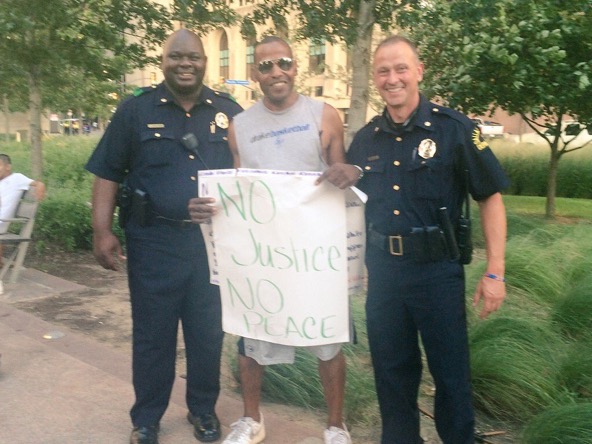
It’s getting way past old: Senseless murder. Institutionalized bias and racism. Sheer evil in action. Too-easy-to-access AR-15s used to kill in times of peace.
There’s more to say than any single blog post could. I simply want to suggest here a resource for worship service planning for this Sunday. After looking through a host of lament prayers, both ancient and modern, I’ve come to Psalm 74.
It doesn’t take much imagination to update its striking imagery of “men wielding axes” and ones who “smashed all the carved paneling with their axes and hatchets” to the context of this last week in the United States. Verse 9 offers the poignant observation, “None of us knows how long this will be.”
Here’s Psalm 74 in its entirety, which our congregation will use as our Call to Worship on Sunday, mindful of and mourning for this week’s tragic loss of life.
O God, why have you rejected us forever?
Why does your anger smolder against the sheep of your pasture?
2 Remember the nation you purchased long ago,
the people of your inheritance, whom you redeemed—
Mount Zion, where you dwelt.
3 Turn your steps toward these everlasting ruins,
all this destruction the enemy has brought on the sanctuary.4 Your foes roared in the place where you met with us;
they set up their standards as signs.
5 They behaved like men wielding axes
to cut through a thicket of trees.
6 They smashed all the carved paneling
with their axes and hatchets.
7 They burned your sanctuary to the ground;
they defiled the dwelling place of your Name.
8 They said in their hearts, “We will crush them completely!”
They burned every place where God was worshiped in the land.9 We are given no signs from God;
no prophets are left,
and none of us knows how long this will be.
10 How long will the enemy mock you, God?
Will the foe revile your name forever?
11 Why do you hold back your hand, your right hand?
Take it from the folds of your garment and destroy them!12 But God is my King from long ago;
he brings salvation on the earth.13 It was you who split open the sea by your power;
you broke the heads of the monster in the waters.
14 It was you who crushed the heads of Leviathan
and gave it as food to the creatures of the desert.
15 It was you who opened up springs and streams;
you dried up the ever-flowing rivers.
16 The day is yours, and yours also the night;
you established the sun and moon.
17 It was you who set all the boundaries of the earth;
you made both summer and winter.18 Remember how the enemy has mocked you, Lord,
how foolish people have reviled your name.
19 Do not hand over the life of your dove to wild beasts;
do not forget the lives of your afflicted people forever.
20 Have regard for your covenant,
because haunts of violence fill the dark places of the land.
21 Do not let the oppressed retreat in disgrace;
may the poor and needy praise your name.
22 Rise up, O God, and defend your cause;
remember how fools mock you all day long.
23 Do not ignore the clamor of your adversaries,
the uproar of your enemies, which rises continually.
This week’s blog sponsor is MailButler for Mac Mail, a productivity-enhancing app for Mac Mail with a robust feature set. Find out more about it here or download and try it free here.


 Words on the Word