In July 1944, less than a year before Dietrich Bonhoeffer’s death (69 years ago today), Bonhoeffer wrote a poignant and self-probing poem called, “Who Am I?” It is found in his Letters and Papers from Prison. Here it is, in its entirety:
Who Am I?
Who am I? They often tell me
I step out from my cell
calm and cheerful and poised,
like a squire from his manor.
Who am I? They often tell me
I speak with my guards
freely, friendly and clear,
as though I were the one in charge.
Who am I? They also tell me
I bear days of calamity
serenely, smiling and proud,
like one accustomed to victory.
Am I really what others say of me?
Or am I only what I know of myself?
Restless, yearning, sick, like a caged bird,
struggling for life breath, as if I were being strangled,
starving for colors, for flowers, for birdsong,
thirsting for kind words, human closeness,
shaking with rage at power lust and pettiest insult,
tossed about, waiting for great things to happen,
helplessly fearing for friends so far away,
too tired and empty to pray, to think, to work,
weary and ready to take my leave of it all?
Who am I? This one or the other?
Am I this one today and tomorrow another?
Am I both at once? Before others a hypocrite
and in my own eyes a pitiful, whimpering weakling?
Or is what remains in me like a defeated army,
Fleeing in disarray from victory already won?
Who am I? They mock me, these lonely questions of mine.
Whoever I am, thou knowest me; O God, I am thine!
Dietrich Bonhoeffer was hanged in the Nazi concentration camp of Flossenbürg on April 9, 1945, just two weeks before the U.S. military came to liberate it.
John W. de Gruchy describes the lead-up to that day in his Editor’s Introduction to Letters and Papers from Prison (Dietrich Bonhoeffer Works, volume 8):
On October 8 [of 1944], Bonhoeffer was taken to the cellar of the Gestapo prison on Prinz-Albrecht-Straße, where he stayed until February 7, 1945. From then on, all correspondence came to an end, and contact between Bonhoeffer and the family and [Eberhard] Bethge was broken. From there Bonhoeffer was taken first to Buchenwald and then, via the village of Schönberg in Bavaria, to the Flossenbürg concentration camp, where he arrived on April 8. That evening he was tried by a hastily rigged court and condemned to death. Early the next morning Bonhoeffer was executed along with several other coconspirators.
He was hanged April 9. His family would not learn about it for several months.
The July before he had written to his trusted friend (and later biographer) Eberhard Bethge, one day after the failed assassination attempt on Hitler’s life. He wrote:
How should one become arrogant over successes or shaken by one’s failures when one shares in God’s suffering in the life of this world? You understand what I mean even when I put it so briefly. I am grateful that I have been allowed this insight, and I know that it is only on the path that I have finally taken that I was able to learn this. So I am thinking gratefully and with peace of mind about past as well as present things. …
May God lead us kindly through these times, but above all, may God lead us to himself.
His final recorded words before his hanging–appropriate in this Lenten season that is about to give way to Easter–were:
This is the end–for me the beginning of life.
This post is part of “Tuesdays in Lent with Bonhoeffer.” See other gathered posts here.
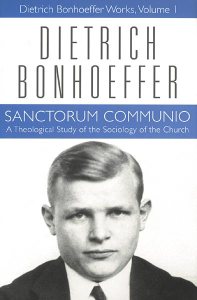
At the age of 21 Dietrich Bonhoeffer successfully defended his doctoral dissertation, Sanctorum Communio: A Theological Study of the Sociology of the Church. (Click on the cover image at right for more information about the book.) Bonhoeffer’s biographer Eberhard Bethge notes that Karl Barth said of Bonhoeffer’s early work:
I openly confess that I have misgivings whether I can even maintain the high level reached by Bonhoeffer, saying no less in my own words and context, and saying it no less forcefully, than did this young man so many years ago.
I’ve been reading excerpts from Sanctorum Communio (translated into English), from The Bonhoeffer Reader. And… wow. It’s unbelievably good–and would be even if Bonhoeffer had written it years later, but it’s especially remarkable coming at the age of 21.
For now, one quotation will suffice. This is Bonhoeffer on the “vicarious representation” of Christ:
God does not ‘overlook’ sin; that would mean not taking human beings seriously as personal beings in their very culpability; and that would mean no re-creation of the person, and therefore no re-creation of community. But God does take human beings seriously in their culpability, and therefore only punishment and the overcoming of sin can remedy the matter. Both of these have to take place within concrete time, and in Jesus Christ that occurs in a way that is valid for all time. He takes the punishment upon himself, accomplishes forgiveness of sin, and, to use Seeberg’s expression, stands as surety for the renewal of human beings. Christ’s action as vicarious representative can thus be understood from the situation itself.
In recent weeks I’ve gotten more consistent in fulfilling this blog’s original intent to offer Worship Leading Wednesdayseach week. I’m not sure if in my capacity as worship leader–whether past or present–I would necessarily read the above paragraph in a service of worship… but it sure does inspire me to praise God, with a spirit of gratitude for the miraculous work of the cross.
My wife recently checked out a Bonhoeffer DVD for me, which we started watching the other night. We’re halfway through, and it’s already quite moving. First Run Features put it out, called Bonhoeffer: Pastor, Pacifist, Nazi Resister (pictured above).
Here is the film synopsis:
The German theologian Dietrich Bonhoeffer was one of the first, and strongest, voices of resistance to Adolf Hitler. An acclaimed preacher, pacifist and author, Bonhoeffer came to the famed Abyssinian Baptist Church in Harlem on a teaching fellowship. When Bonhoeffer returned to Germany in 1932 he had a new awareness of racial prejudice and challenged Christian churches to stand with the Jews in their moment of need. Bonhoeffer eventually joined the unsuccessful plots to assassinate Hitler and was executed three weeks before the end of the war.
Here’s part of the movie, “Bonhoeffer Speaks Out Against Hitler”:
You can find the DVD here (affiliate link) or, most likely, at your local library. With how much Bonhoeffer I’ve been reading lately, it’s been nice to watch a filmic representation of his life–although further study of his life and struggle against Nazism is not for the faint of heart.
This is the fourth post in “Tuesdays in Lent with Bonhoeffer.” See the first one (on forgiveness) here. The second post covers Bonhoeffer’s early life, here. Some brilliance from 19-year-old Dietrich is noted here.
In 1932 Dietrich Bonhoeffer co-wrote a draft for a catechism called, “As You Believe, So You Receive.” The catechism is “for students in a confirmation class and yet is intended not only for them.” Bonhoeffer and his co-writing friend Franz Hildebrandt wrote it as a Lutheran catechism, but almost all of it is ecumenically appropriate.
Here are a few excerpts:
What is the gospel?
This is the message of God’s salvation that has appeared to us in Jesus Christ and has been conveyed to us through his Spirit. This is the message of the kingdom of God that is contested in the world and intended for God’s righteous. This is the message of God’s will, which speaks today and decides over life and death.
How does Jesus of Nazareth help me today?
To know about Jesus does not yet mean to believe in him. Merely considering him to be true is, of course, lifeless. Faith depends not on lifeless letters but rather on the living Lord who stands commandingly before us, above all doubt about the Bible and its stories.
Why is actually Jesus the Lord?
He is the answer to every human question. He is the salvation in all the sufferings of the world. He is the victory over all our sins. In him, you have God himself in his power and the human being in complete powerlessness.
Does the church, then, act according to the will of Christ?
The church knows today more than ever how little it obeys the Sermon on the Mount. Yet the greater the discord in the world becomes, the more Christ wants to have proclaimed the peace of God that reigns in his kingdom. The church still continues daily in prayer for the return of its divine Lord, and he lays his hand upon it, until he leads the church to its fulfillment.
What do we know of eternal life?
Whether we want it or not—as truly as God lives—our life has come under God’s judgment and has been sustained by God’s hand. Not flesh and blood, but rather spirit, soul, and body are to rise up from the dead. We know not when the hour will come, but the church looks forward with all creation to a new earth and a new heaven.
The catechism is short–barely 10 pages in volume 11 of Dietrich Bonhoeffer Works. (This particular catechism is also included in The Bonhoeffer Reader.) But even in its brevity there is much to take in, and the “carefully focused reading” that the introduction to the catechism calls for is greatly rewarded.
This month Bonhoeffer for Armchair Theologians is free in Logos Bible Software. You can find it here.
Here is part of the product description from Logos:
This volume in the ever-popular W. J. K. Armchair series turns its sights on contemporary theologian Dietrich Bonhoeffer (1906–1945). Born in Breslau, Germany, Bonhoeffer led quite an intriguing life. This book, with dozens of illustrations by artist Ron Hill, highlights Bonhoeffer’s background and theological education; his time at Union Seminary in New York City; his involvement in the resistance movement against Adolf Hitler; and his participation in the plot to assassinate Hitler.
When I was a vocational youth minister, I tried to help young people (and myself) read the Bible not just for information, but for transformation. I had a number of zealous starts in my own teenage years with an overly ambitious Bible-reading plan, only to find by January 22 that no, I can’t actually read and absorb three chapters a day. This is not to disparage Bible-reading plans, even ones that have you reading through the whole Bible in a year, but it is to say that it’s all too easy to just read the Book for the sake of being able to say, “I’ve read it.”
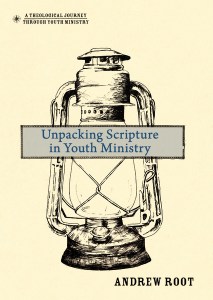
Andrew Root, author and professor of family and youth ministry at Luther Seminary, makes a similar suggestion. In Unpacking Scripture in Youth Ministry, he offers a short volume of “dogmatic theology written through youth ministry.” The book is part narrative, part theological mini-treatise, and follows the story of a fictional youth worker named Nadia. Throughout the book Nadia wrestles with her own views on Scripture, how to engage youth in Bible reading, and how to respond to the parents, pastors, and facilities committee members with whom she is in community.
The book is just over 100 pages and part of a larger series called A Theological Journey Through Youth Ministry. (See the other three volumes here.) A blend of fictional narrative and theology is hard to pull off in any book, but the transitions here between the two are smooth. From the very beginning scene (Nadia is called at 7 a.m. by a not-entirely-happy facilities coordinator at the church), Root’s storytelling is compelling, funny, and sometimes painfully relatable. Nadia is not the only youth minister, I’m sure, to have been grilled on her biblical theology by the building and grounds committee.
There are discussion questions for each chapter at the back of the book, which would make it easy for a youth minister to lead a team of volunteer leaders or staff through it. Unpacking Scripture and its series fill a gap in youth ministry literature–it’s great to see serious theological reflection coupled with practical application (and done creatively with Nadia’s narrative throughout).
Insatiable Interpreters
Root makes a fascinating point (that I’m still mulling over): “Today, access is more important than memory; we surrender our memory over to gigabytes.” Youth, then, and youth ministers should not see the Bible as a source of knowledge, Root suggests, but as a locus for the construction of meaning. Young people are insatiable “hermeneutical animals,” so Root warns against “frozen biblical knowledge,” since “adolescents interpret everything” in life anyway. He calls for youth ministers to ask:
What does this text mean in the midst of my life? And what does it mean in relation to my existence between possibility and nothingness? What does it say to this struggle I know in the world and in my bones? And…What does this text mean in relation to how God is moving and acting?
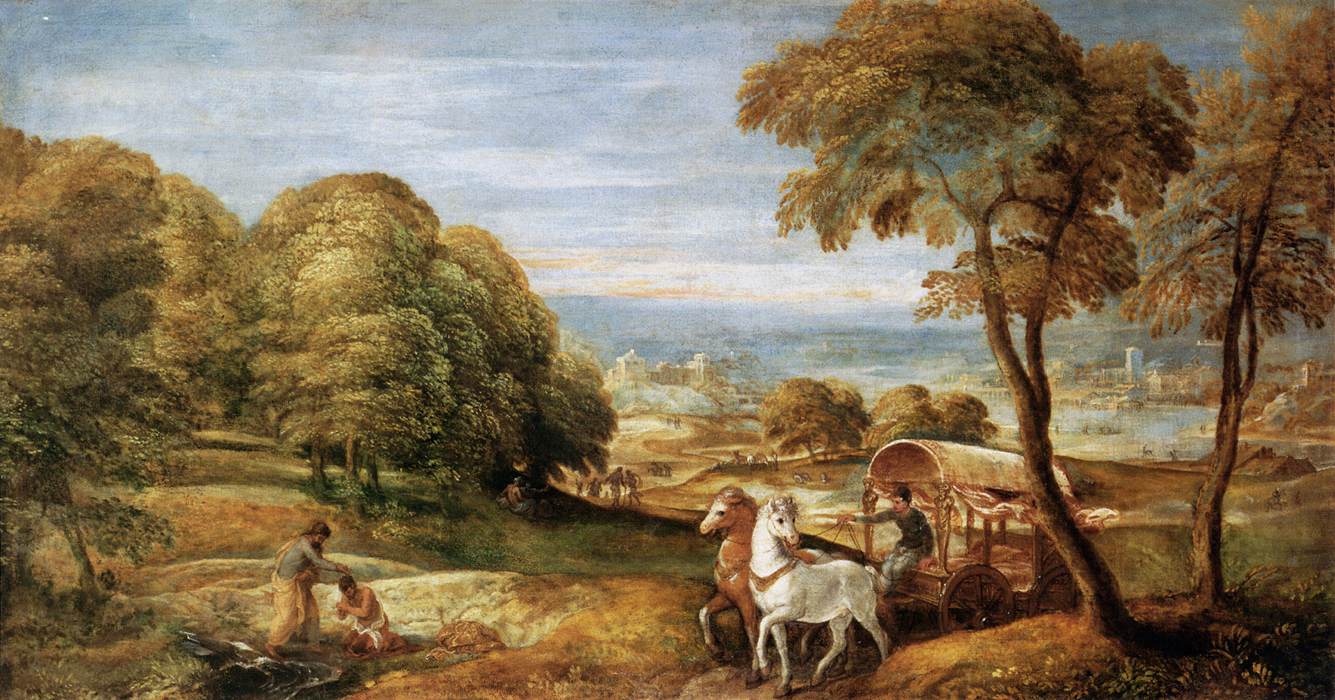
Root uses the story in Acts 8 of Philip and the eunuch to unpack his own vision of how to read and interpret the Bible. Philip, he writes, “is not only concerned with helping the eunuch understand the text, he wants to help the man experience it next to his own existence.” Right on.
100% Human, and…?
Root, in his chapter, “The Authority of Scripture,” leads off by talking about the paradox of Christ’s two natures–fully human and fully divine. He uses that as a springboard to look at “the Bible’s two natures,” which I expected to be an articulation of its having been written by human people (who were all too human) who were yet divinely inspired to write. However, Root goes farther than I’m comfortable accepting by saying that the “contradiction of the Bible is that the story of the divine action comes to us in a book that is simply, and profoundly human.” The Bible “contains all the shortcomings and fallibilities of any written text.” And, “The Bible is a 100 percent human book.”
I would have been on board, had he followed up with the ways in which the Bible is also “100 percent divinely inspired” or “breathed-into,” etc., but the emphasis seems to be largely on its human production. To be fair, this “human book,” Root notes, “is essential for encountering the living God,” but other than Acts 8, there wasn’t much discussion about what the Bible says about itself (with due respect to all the footnoted Barth). If this Word is “living and active,” and capable of transforming us (because it is God’s Word/words), doesn’t its inspiration go beyond just the fact that it is a “witness,” the purpose of which “was to reveal God’s action by articulating what God has done”? In other words, could there also be something about these very words that can transform? (Darrell W. Johnson, in his book The Glory of Preaching, notes, “[T]he word of the living God is a performative word” (my italics).)
Maybe I’m splitting hairs here, and I don’t know Root personally–I suspect that given more pages, or over a cup of coffee, he might say more about the divine inspiration of the Bible, or about its performative power. But I thought at least this book may have put too much emphasis on the human element, as it described “what the Bible is not” and “what the Bible is.”
What is the Goal in Youth Ministry?
Where I find myself agreeing with Root is in his articulation of the goal of youth ministry in relation to Scripture:
So our goal in youth ministry is not to get kids to know the Bible, but for them to use the Bible–to become familiar with its function–so they might encounter the living God, participating in God’s own action through its story.
Of course, the goal in youth ministry could/should be both of those things. We want young people to know the Bible and know how to use it, just as Root describes the eunuch’s both understanding and experiencing Scripture. Youth ministers will still need to help young people differentiate between genres (just as English teachers do) and help them know how to dig into the historical background of a text, which often helps to explain it more than just a surface read.
So we need to get both “behind the text” (“boring” or not) and “in front of the text” to be faithful interpreters. To say, as Root does, that the Bible “only can live, then, by being drawn into our world, into the world in front of the text” has the potential to turn into a me-centric way of reading.
Perhaps the length of this review is an indication that Root has succeeded in getting ministers to think about their own views of Scripture, and how they would engage others in reading the Bible. That is a good thing! I’m not sure I would use this book for youth minister training, since there’s a good deal I’d feel compelled to qualify or further nuance. (Though it’s hard to think of an alternative book along similar lines to suggest.) Unpacking Scripture in Youth Ministry has, however, very much provoked me to a great deal of reflection. I hope that Root continues to write more about theology, Scripture, and youth ministry, and that others follow suit.
Thanks to Zondervan for the review copy, given without expectation as to the nature and content of this review. The publisher’s product page is here. You can find it on Amazon here. A sample .pdf is here.
For the New Testament authors, the original text, that is, the text they drew on, was primarily the Septuagint. To make up the first part of the Bible which has the New Testament as the other part, the Old Testament in the shape it has in the Septuagint would therefore seem the obvious choice.
—First Bible of the Church: A Plea for the Septuagint, by Mogens Müller (p. 144)
Mogens Müller provocatively asks, “What caused the displacement of the Septuagint? …Today it is an open question whether the Septuagint should be reinstalled as the Old Testament of the Church” (p. 7). First Bible of the Church is part reception history, part biblical theology, and part apologetic work that suggests the Greek translation of the Hebrew Bible should be brought (back) into canonical status. It should be “at least part of a canon” (p. 122), if not the better choice than Biblia Hebraica for today’s “original text” of the Old Testament/Hebrew Bible.
What follows is a brief summary of the book’s contents, followed by some evaluative comments.
Müller’s Plea
Chapter 1 is the introduction to the book. In it Müller raises the question of just what should qualify as “the original text” of the Old Testament. If we see “what the early church regarded as its Bible” (p. 23), already one has to take the Septuagint seriously. This is not a question Müller addresses exclusively on textual grounds; for him the issue is also a theological one. To wit: In Isaiah 7:14/Matthew 1:23, “the ‘wrong’ text gains a significance of its own by being used” (p. 23).
Chapter 2, “The Jewish Bible at the Time of the New Testament,” looks at the canonization and textual history of the Jewish Bible, including various Greek recensions. Müller makes a key (and helpful) distinction in canonization between “the recognition of a writing as sacred” and “the final fixing of its wording” (p. 32). Evaluating various source materials, and dismissing the idea of an Urtext, the author notes the (accepted) fluidity of the process of textual transmission, where the actual wording in the sacred books only became important some centuries after the books themselves had become part of a canon. The implications of this, of course, are that New Testament writers may not have cared–in the way modernists do–about making sure they were using “the original” Hebrew text when quoting Scripture–if such a thing even ever existed as such.
Nonetheless, as chapter 3 points out, there was a very early historical concern about the authority of the Greek translation of the Hebrew Scriptures. Would the former be on par with the latter? Müller examines various defenses of the Septuagint (the Law books, specifically): Aristeas, Aristobulus, Philo, and Josephus. Chapter 4, “The Reception of the Septuagint Legend into the Church up to and Including Augustine” continues the historical inquiry into attitudes toward the Septuagint, especially when compared to the Hebrew text it was said to have translated. Justin and Irenaeus (among others) are given as examples of early interpreters who saw the Septuagint translation as inspired. Jerome, Müller suggests:
saw the Biblia Hebraica as the basic text as far as the Old Testament was concerned, and thus he contributed, at least for the Latin-speaking part of Christianity, to bring about the final abandonment of the Septuagint, which had very early come to be acknowledged as the Bible of the Gentile, Christian Church. (p. 86)
Biblia Graeca
Chapters 5 (“Hebraica sive Graeca Veritas?“) calls the Septuagint “a witness to the process of transmitting tradition” (p. 99), a process which Müller sees in ancient Judaism as having “a very creative character” (p. 104). Translation in antiquity included a measure of interpretation. The author’s foray into translation theory gives refreshing context to a world that valued lexical equivalency in translation less than many do today.
Chapter 6 (“Vetus Testamentum in Novo Receptum“) provides a short biblical theology, in which the New Testament is seen primarily as the story of Jesus, who himself fulfills what is written in the Old Testament. Müller notes that it is for this reason that the Hebrew Bible became the Old Testament, and yet its use by New Testament writers solidified its importance and sacredness for Christians. The Old Testament is necessary–“it remains the Holy Writ of the Christian community.” But it is not sufficient–“the Old Testament per se represents a limited epoch in salvation history” (p. 135).
The conclusion calls for the Septuagint to (re-)take its canonical place alongside the New Testament.
Is Müller’s Plea Worth Paying Heed To?
Yes. Readers of this blog and its Septuagint posts will not be surprised by my saying so. Müller makes a good case and generally succeeds in making a compelling plea for the LXX. If readers don’t accept his call to (re-)canonize the Greek OT, they will at least take seriously his petition to take it more seriously (as the NT writers did).
The book is short (some 150 pages) but dense. There is untranslated German and Latin in the footnotes, as one would expect in a scholarly monograph, but the writing is no less engaging for its density. The Greek font used throughout is easy to read, and the Greek is often translated into English.
Müller’s brief biblical theology at the end of the book is excellent. It left me wanting to read more. His notion of fulfillment as a motif that links together the OT and NT was convincing and well-articulated.
I found some typographical errors, as well as a number of sentences that just seemed to have wanted closer editing. This could be in part due to the book’s translation from a Danish manuscript. I was distracted in a few places as a result, but not consistently.
Evangelicals will find a few things they disagree with. For example, Müller cites Wellhausen approvingly to note that “the prophets were not reformers anxious to lead the people back to an original Mosaic religion.” The Law, then, “is not the starting-point but the result of Israel’s spiritual development” (p. 102). This line of reasoning is not essential to following the rest of Müller’s arguments, but his “redactional-critical attitude” (p. 100) does lead to a few assertions that some (including myself) don’t agree with.
Müller’s logic and historical inquiry is generally careful and robust, not to mention more readable than one might expect from a work of this nature. Perhaps it is due to the short length of the book, but there are still some unanswered questions. If “the Septuagint” is to comprise the Old Testament in Christian Bibles (as Müller suggests on p. 144, among other places), which Septuagint should we use? On which codex or codices should we base it? And given that Septuagint manuscripts vary on which books are included, how would we decide which books to place in a reconstituted OT? Simply those books that are now in the Hebrew OT, but in their Greek iterations? What about the Apocrypha?
And yet it appears that Müller’s aim is more to address “whether the Septuagint should be reinstalled as the Old Testament of the Church” (p. 7, my emphasis), not how and by what methodology such a reinstallation would take place. With this aim in mind, Müller’s short yet substantive book offers a compelling plea that deserves the reader’s careful consideration.
You can find First Bible of the Church: A Plea for the Septuaginthere at Amazon. Its publisher’s product page is here. Thanks to Bloomsbury for the review copy, given with no expectation as to the content of the review.
When I was little, I often wondered, didn’t God get lonely before creating humans? If it is true that God has always existed, which I believe it is, hasn’t all that existing gotten boring by now? Or, at least, wasn’t it boring before we human beings came on the scene to liven things up a bit? What did God do up there, I wondered?
The idea of the Trinity is central to our faith. Christians are baptized into “the name of the Father, and of the Son, and of the Holy Spirit.” You will often hear in a benediction when church is ending, “Father, Son, and Holy Spirit.” Each Sunday as we bring our tithes and offerings to God, we “praise God from whom all blessings flow, praise him, all creatures here below, praise him above, ye heavenly host, praise Father, Son, and Holy Ghost.”
Wrapped up in the Trinity is an answer to my childhood question of, “Didn’t God used to get lonely before he created us?”
Starting with Scripture
You may already know that the word Trinity does not appear anywhere in the Bible. But the idea of the Trinity is all over the pages of both testaments. Genesis 1:2 talks about the Spirit of God as hovering over the waters. We know from John 1 that Jesus the Son was present in creation and even before. John writes, “In the beginning was the Word [or, Jesus], and the Word was with God, and the Word was God. He was with God in the beginning. Through him all things were made; without him nothing was made that has been made.” From the very beginning of creation, even long before creation, God was Father, Son, and Holy Spirit.
Romans 8:12-17 is another Trinity-revealing passage. It says that we are led by the Holy Spirit to call out to God our Father, and that as we do so we become aware that we are not only God’s children, but that we have a most holy and awesome sibling: Jesus, the Son of God.
But lest we be tempted to think that this Father, Son, and Holy Spirit language is speaking of three distinct gods, we have the words of Jesus in John 10:30: “I and the Father are one.” And Jesus prays to the Father in John 17, “All I have is yours, and all you have is mine” (17:10), “You are in me and I am in you” (v. 21), and, “We are one.”
So on the one hand the Scriptures reveal Father, Son, and Holy Spirit, with distinct roles at times, and you have Jesus praying to the Father just as you and I do… but on the other hand, you have Jesus saying things like, “I and the Father are one.”
Nicaea
I once read somewhere that God is not and never has been confused about his identity. But it took the early church a good four centuries to make sense of all this! The early church councils gave us the Nicene Creed and the Apostles Creed, both of which contain this understanding of one God as three persons. The “one God” part of it means that Father, Son, and Holy Spirit all are of the same substance, or essence. The “three persons” part of it means that Father, Son, and Holy Spirit have distinct parts to play, with each other and throughout human history. The “three persons” also means that this is a personal God we worship.
Theologians use words like “co-equal, co-eternal,” and “of the same substance” when describing the Trinity.
Just go outside for some analogies
As we try to wrap our head around this core Christian doctrine, nature gives us a few analogies. They’re all imperfect and break down somewhere, but they at least get us in the ballpark.
Saint Patrick of Ireland is said to have used the three-leaf clover in his missionary efforts–though the clover is one, it has three leaves that join together.
And we have H2O. It’s one molecule or group of atoms: two Hydrogen atoms bonded to one Oxygen atom. Yet we see H2O in three different expressions: in liquid form it is water; in solid form it is ice; and in gaseous form it is steam.
Or, we can think about music, where a building block is the triad–three distinct notes which, when sounded together, make one chord.
A few years ago my wife and I were in Minnesota, visiting family. We received a wonderful gift of tickets to see the St. Paul Chamber Orchestra. The first piece they played was by 19th Century composer Felix Mendelssohn, “Piano Trio No. 1 in D Minor.” Here is the first movement:
I was mesmerized from the very beginning. Mendelssohn wrote the trio for piano, violin, and cello. At times the three instruments blended into one beautiful unity, at other times I could hear each distinctly. The program notes put it well, saying, “There is great equality among the voices, and their exchanges show Mendelssohn’s gift for instrumental interplay.” Equality, yet interplay. 1, yet 3.
Rublev Writes an Icon
This idea of interplay in the nature of God is fascinating to me. Though Mendelssohn’s Piano Trio was 30 minutes long, I never once got bored. The music was too beautiful for that. We’ve seen from Genesis and John that God was Father, Son, and Holy Spirit even before creation. There were three persons living in community together. And if any of you have ever had a roommate or are married or have lived with other people, you know that living in community is anything but boring.
We start to get an answer to my childhood question. God was not bored before he created us. God was never lonely. The three persons of the Godhead were in constant, joyous, life-giving community with each other.
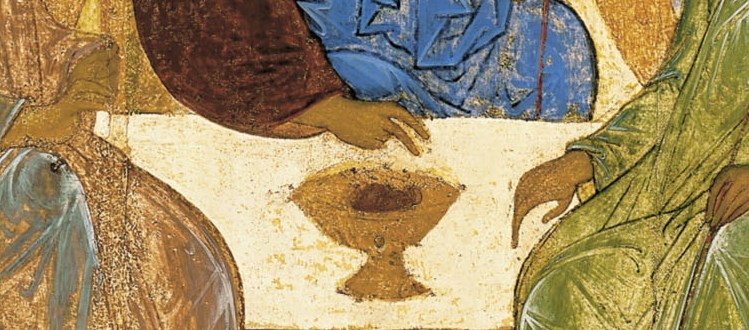
In the early 1400s, a Russian painter and devout Christian named Andrei Rublev painted a famous icon called The Icon of the Trinity (above). This icon is also known as The Hospitality of Abraham, since it is based on one level on the story in Genesis 18 where Abraham and Sarah show hospitality to three angelic strangers who come to them to share the good news that they will have a son at long last. (We had this as part of the lectionary a couple of weeks ago.) But the icon on a deeper level represents the three persons of the Trinity, sitting around a table together. The persons of the Trinity are here shown to be in community with each other.
Rublev shows that God is of one substance or essence by showing identical faces on the three figures and an identical staff that each holds. The same color blue clothes each figure, showing the unity even in the diversity of persons, but Rublev also varies the clothing on each to highlight the three distinct persons of the Trinity. Their heads tilted at different angles and their hands making different gestures also show the diversity found among the Trinity. Yet Rublev shows that God is of one substance in that the three persons are seated around one cup and table.
When we want to get to know a person better or deepen bonds of intimacy, that often takes place over a shared bite to eat, a cup of coffee, a dessert, or a full-blown lunch or dinner. This meal in the icon, this table shows God’s communal nature. So if this is going on long before the creation of the world, God would have never been bored or lonely.
In Rublev’s painting the three persons of the Trinity are not only gathered together in the communion of a meal, but they also appear to be sitting together around a literal communion. On the table is a cup with a small piece of meat inside. The immediate reference here is to Genesis 18:7 where it says Abraham “ran to the herd and selected a choice, tender calf and gave it to a servant, who hurried to prepare it.” But Henri Nouwen writes that in the icon this meat is also “the sacrificial lamb, chosen by God before the creation of the world.” It is the body of Christ, right there on the table, together with the cup. The Trinity is in communion or community with itself, and also, it seems, preparing to share this with others.
Communion that invites you to come on over
God invites us into this communion of the Trinity. 2 Peter 1:4 says, “Through these he has given us his very great and precious promises, so that through them you may participate in the divine nature….” We participate in this community of the Godhead. Jesus prays in John 17:21, “As you, Father, are in me and I am in you, may they also be in us.”
In writing about the communal nature of God, author and Episcopal priest Tim Jones, writes:
…That multilayered communion [of the Trinity] doesn’t become a clique, doesn’t turn inward upon itself; it overflows. It spreads out into an embracing larger whole, inviting others (like you and me!) in, saying , “Come on over.” …God is used to conversation. Used to dialogue. …ready. This God invites me, in fact, to join in on a conversation already going on, one that has been going on for a very, very long time.
We become part of the family. We are adopted into this communion.
And as we grow closer to God, as we participate in the communion of the Trinity, we realize that we share this same communion with each other.
Key to our human existence is our connectedness to each other. No one is an island. We are not merely individuals left to find our way in this world. To live individualistically is to miss out on what God has modeled for us from the beginning of time. We do with each other what we see God doing in himself. That is, joining together in loving community.
We never have to be lonely again!
As we join with each other at the table, we join with God in a conversation that is already going on, “one that has been going on for a very, very long time.”
The above is adapted from the sermon I preached today. See my other sermons, if you desire, here.
Within minutes of each other I had Facebook connections posting on Google Glass and linking to Luci Shaw’s poem “Knitting in the Wild.”
First I watched the trailer for a new Google-pioneered technology. It’s sort of like having a smartphone on your face, which is perhaps best experienced through this clip rather than described:
The technology is astounding. To be able to see where I’m supposed to drive without having to touch or click on anything? I’d benefit from that. But I got a little sad at 0:36 when I saw a special moment between father and daughter recorded by Glass. Not because I don’t value taking photos and videos of my kids (I do it a lot here and on Facebook), but because there was something about Google Glass–a physical and technological object standing between, recording, mediating–that seemed to interrupt the here-ness of that moment, the now-ness of it.
Having flight info show up in my glasses when I’m at the airport would be cool, but this feels a little too much like the apocalyptic Overbrain my friends David and Tim keep warning us about. (I.e., when all of our thoughts, actions, and moments are connected to and subsumed by one giant Cloud.)
Minutes earlier someone in my news feed had posted a link to Luci Shaw’s “Knitting in the Wild”:
The pale bits—twigs, fibers, pine needles—sun-struck, fall through the lazy air as if yearning to be embodied in my knitting, like gold flecks woven into a ceremonial robe.
Then surprise—a new marvel! Like a parachutist, a very small beetle lands on the greeny stitch I have just passed from left needle to right; the creature’s burnished carapace mirrors precisely the loop of glowing, silky yarn that he has chosen.
When this shawl ends up warming someone’s shoulders, will she sense the unexpected— this glance, this gleam, this life spark?
I don’t know how to knit. But, amazing as Google’s new technology is, I imagine that I will pick up a pair of single-point needles long before I put on Google Glass.








 fall through the lazy air
 Words on the Word