Unpacking Scripture in Youth Ministry, reviewed

Unpacking Scripture in YMWhen I was a vocational youth minister, I tried to help young people (and myself) read the Bible not just for information, but for transformation. I had a number of zealous starts in my own teenage years with an overly ambitious Bible-reading plan, only to find by January 22 that no, I can’t actually read and absorb three chapters a day. This is not to disparage Bible-reading plans, even ones that have you reading through the whole Bible in a year, but it is to say that it’s all too easy to just read the Book for the sake of being able to say, “I’ve read it.”

Andrew Root, author and professor of family and youth ministry at Luther Seminary, makes a similar suggestion. In Unpacking Scripture in Youth Ministry, he offers a short volume of “dogmatic theology written through youth ministry.” The book is part narrative, part theological mini-treatise, and follows the story of a fictional youth worker named Nadia. Throughout the book Nadia wrestles with her own views on Scripture, how to engage youth in Bible reading, and how to respond to the parents, pastors, and facilities committee members with whom she is in community.

The book is just over 100 pages and part of a larger series called A Theological Journey Through Youth Ministry. (See the other three volumes here.) A blend of fictional narrative and theology is hard to pull off in any book, but the transitions here between the two are smooth. From the very beginning scene (Nadia is called at 7 a.m. by a not-entirely-happy facilities coordinator at the church), Root’s storytelling is compelling, funny, and sometimes painfully relatable. Nadia is not the only youth minister, I’m sure, to have been grilled on her biblical theology by the building and grounds committee.

There are discussion questions for each chapter at the back of the book, which would make it easy for a youth minister to lead a team of volunteer leaders or staff through it. Unpacking Scripture and its series fill a gap in youth ministry literature–it’s great to see serious theological reflection coupled with practical application (and done creatively with Nadia’s narrative throughout).

Insatiable Interpreters

Root makes a fascinating point (that I’m still mulling over): “Today, access is more important than memory; we surrender our memory over to gigabytes.” Youth, then, and youth ministers should not see the Bible as a source of knowledge, Root suggests, but as a locus for the construction of meaning. Young people are insatiable “hermeneutical animals,” so Root warns against “frozen biblical knowledge,” since “adolescents interpret everything” in life anyway. He calls for youth ministers to ask:

What does this text mean in the midst of my life? And what does it mean in relation to my existence between possibility and nothingness? What does it say to this struggle I know in the world and in my bones? And…What does this text mean in relation to how God is moving and acting?

Root uses the story in Acts 8 of Philip and the eunuch to unpack his own vision of how to read and interpret the Bible. Philip, he writes, “is not only concerned with helping the eunuch understand the text, he wants to help the man experience it next to his own existence.” Right on.

100% Human, and…?

Root, in his chapter, “The Authority of Scripture,” leads off by talking about the paradox of Christ’s two natures–fully human and fully divine. He uses that as a springboard to look at “the Bible’s two natures,” which I expected to be an articulation of its having been written by human people (who were all too human) who were yet divinely inspired to write. However, Root goes farther than I’m comfortable accepting by saying that the “contradiction of the Bible is that the story of the divine action comes to us in a book that is simply, and profoundly human.” The Bible “contains all the shortcomings and fallibilities of any written text.” And, “The Bible is a 100 percent human book.”

Eunuch and PhilipI would have been on board, had he followed up with the ways in which the Bible is also “100 percent divinely inspired” or “breathed-into,” etc., but the emphasis seems to be largely on its human production. To be fair, this “human book,” Root notes, “is essential for encountering the living God,” but other than Acts 8, there wasn’t much discussion about what the Bible says about itself (with due respect to all the footnoted Barth). If this Word is “living and active,” and capable of transforming us (because it is God’s Word/words), doesn’t its inspiration go beyond just the fact that it is a “witness,” the purpose of which “was to reveal God’s action by articulating what God has done”? In other words, could there also be something about these very words that can transform? (Darrell W. Johnson, in his book The Glory of Preaching, notes, “[T]he word of the living God is a performative word” (my italics).)

Maybe I’m splitting hairs here, and I don’t know Root personally–I suspect that given more pages, or over a cup of coffee, he might say more about the divine inspiration of the Bible, or about its performative power. But I thought at least this book may have put too much emphasis on the human element, as it described “what the Bible is not” and “what the Bible is.”

What is the Goal in Youth Ministry?

Where I find myself agreeing with Root is in his articulation of the goal of youth ministry in relation to Scripture:

So our goal in youth ministry is not to get kids to know the Bible, but for them to use the Bible–to become familiar with its function–so they might encounter the living God, participating in God’s own action through its story.

Of course, the goal in youth ministry could/should be both of those things. We want young people to know the Bible and know how to use it, just as Root describes the eunuch’s both understanding and experiencing Scripture. Youth ministers will still need to help young people differentiate between genres (just as English teachers do) and help them know how to dig into the historical background of a text, which often helps to explain it more than just a surface read.

So we need to get both “behind the text” (“boring” or not) and “in front of the text” to be faithful interpreters. To say, as Root does, that the Bible “only can live, then, by being drawn into our world, into the world in front of the text” has the potential to turn into a me-centric way of reading.

Perhaps the length of this review is an indication that Root has succeeded in getting ministers to think about their own views of Scripture, and how they would engage others in reading the Bible. That is a good thing! I’m not sure I would use this book for youth minister training, since there’s a good deal I’d feel compelled to qualify or further nuance. (Though it’s hard to think of an alternative book along similar lines to suggest.) Unpacking Scripture in Youth Ministry has, however, very much provoked me to a great deal of reflection. I hope that Root continues to write more about theology, Scripture, and youth ministry, and that others follow suit.

Thanks to Zondervan for the review copy, given without expectation as to the nature and content of this review. The publisher’s product page is here. You can find it on Amazon here. A sample .pdf is here.

I Met N.T. Wright Once, and You’ll Never Guess What He Told Me

I’ve been seeing too much Upworthy in my Facebook news feed lately! Apologies for the sensational blog post headline.

NT WrightBut I really did meet N.T. Wright once. And you might actually guess what he told me, when I tell you what I asked him. I introduced myself to him briefly after a message he delivered a Calvin College worship symposium, and asked him how to improve my Greek. He said, “Read the text, read the text, read the text.”

He told me to really get the feel of the language. I shouldn’t think of Greek just as a one-to-one code for English; I should get into the Greek itself. I asked him what he thought about reading with a diglot, but he encouraged me to check the English translation only after reading an entire Greek paragraph, and then, only as necessary.

It’s challenging, but I’ve benefited from that advice multiple times.

The For Everyone Series

Wright for EveryoneOver the years I’ve made occasional use of his For Everyone Bible commentary series. Written under the name Tom Wright, the series brings Wright’s extensive knowledge of the biblical text and history to a general audience. Anyone wanting to know more about a passage–whether they are preaching from it or reading it in their personal devotions–would benefit from the series. It’s decidedly non-scholarly, but even scholars will find useful information here (if a bit simplified at times). Here is how Wright introduces the series:

But the point of it all is that the message can get out to everyone, especially to people who wouldn’t normally read a book with footnotes and Greek words in it. That’s the sort of person for whom these books are written.

Though Wright is a prolific writer of scholarly works, he writes well for a general audience–a rare combination. Throughout the series Wright puts key terms in bold, which the reader can then look up in a corresponding glossary (e.g., Gehenna/Hell, Covenant, Age to Come, Law, Faith, Son of Man, and more).

Between this package and this upgrade, Logos Bible Software offers the entire 18 vol. set. In a future post I will review Logos’s presentation of the series. Here I post about its content.

A Refreshing (One-Man) Translation

The Kingdom NTWright splits each biblical book up into manageable passages. His original translation does a good job of striking the balance he seeks of faithfulness to the original and readability. Here is a passage in Wright’s translation:

Romans 4:18-25

Abraham’s Faith—and Ours

18 Against all hope, but still in hope, Abraham believed that he would become the father of many nations, in line with what had been said to him, ‘That’s what your family will be like.’ 19 He didn’t become weak in faith as he considered his own body (which was already as good as dead, since he was about a hundred years old), and the lifelessness of Sarah’s womb. 20 He didn’t waver in unbelief when faced with God’s promise. Instead, he grew strong in faith and gave glory to God, 21 being fully convinced that God had the power to accomplish what he had promised. 22 That is why ‘it was calculated to him in terms of covenant justice’.

23 But it wasn’t written for him alone that ‘it was calculated to him’.24 It was written for us as well! It will be calculated to us, too, when we believe in the one who raised our Lord Jesus from the dead, 25 the one who was handed over because of our trespasses and raised because of our justification.

Wright explains, “The older language, ‘it was reckoned to him as righteousness’, gives off so many different messages now that it’s hard for us, hearing it, to think the thoughts Paul had in his head.” His translation is fresh, yet is not a paraphrase (like Eugene Peterson’s Message, for example).

“Come to Him, by Whatever Route You Can”

The For Everyone series, though divided into discrete passages, shows a literary sensitivity so that the reader can see how a given section connects to the larger flow of the book. For example, of the above passage, Wright writes:

The last verse of the chapter anticipates something Paul is going to do throughout chapters 5-8. He rounds off every stage of the argument in this long section with a reference to Jesus. This isn’t a mere pious gesture, smuggling in a mention of Jesus in case we thought he’d forgotten about him. It shows, rather, what the whole argument is all about. It brings us back home to the source and power of Paul’s thought.

Though preachers are not the target audience, the series is a good one for preachers to have on their shelves. There is not the same sort of explicit homiletical guidance that Feasting on the Word offers on every passage under consideration, but Wright is not short on practical application. For the Romans passage above, he concludes:

Do we share Abraham’s faith? Do we look in love, gratitude and trust to the creator God who promises impossible things and brings them to pass? Have we learned to celebrate this God, and to live as one family with all those who share this faith and hope?

Similarly, in Matthew’s account of the Magi’s visit to Jesus, Wright notes that the inclusion of the Gentile Magi already in chapter 2 shows one of Matthew’s themes–that Jesus is king of the Jews, and of all people. He concludes:

Listen to the whole story, Matthew is saying. Think about what it meant for Jesus to be the true king of the Jews. And then—come to him, by whatever route you can, and with the best gifts you can find.

This application comes after Wright succinctly answers who the Magi were, what the “star” they saw might have been, and what Old Testament passages are at play in the Epiphany narrative.

In Conclusion (So Far): One of the Best Reading Guides

Luke for EveryoneWright’s style is conversational, engaging, highly readable, and stimulating on both an intellectual and devotional level. As I make my way through more of the series, I’ll post more about it (with screenshots of how it looks in Logos for computer and iOS). But so far I’m a big fan of what I’ve seen. The Luke volume was a frequent reference as I preached through parts of Luke this fall.

If you’re reading through the Bible, and want to have a substantive yet concise reading guide for the journey, Wright’s For Everyone series is hard to top.

Thanks to Logos Bible Software for the review copy of New Testament for Everyone (16 vols. here; 2 vols. upgrade here). You can find my other Logos reviews here.

NA28 Greek New Testament in Olive Tree iOS, reviewed

Olive Tree logo

Which Bible software program should I buy? As 2014 begins, my answer to that question is still by far the most-visited post at Words on the Word.

Olive Tree is another popular Bible software option, running on just about any platform and device, whether iOS, Mac, Windows, or Android. I began to review their Bible Study App (for Mac desktop/laptop) here, with the Greek NA28 New Testament in view. In this post I look more in-depth at the NA28 in Olive Tree, with screenshots from their iPad (mini) app.

The Bible Study App for iOS

The Bible Study App is smooth, visually appealing, and easy to learn and use.

Here are a few things I especially like about the app:

You can use “flick scrolling” (as in iBooks) or “page scrolling” (as in Kindle). This accommodates just about any user. I prefer the flick scrolling, so that the books move as a Webpage on my computer would move.

You can search any resource, and view both the results-in-context and individual hits together. As in this screenshot:

Search Results

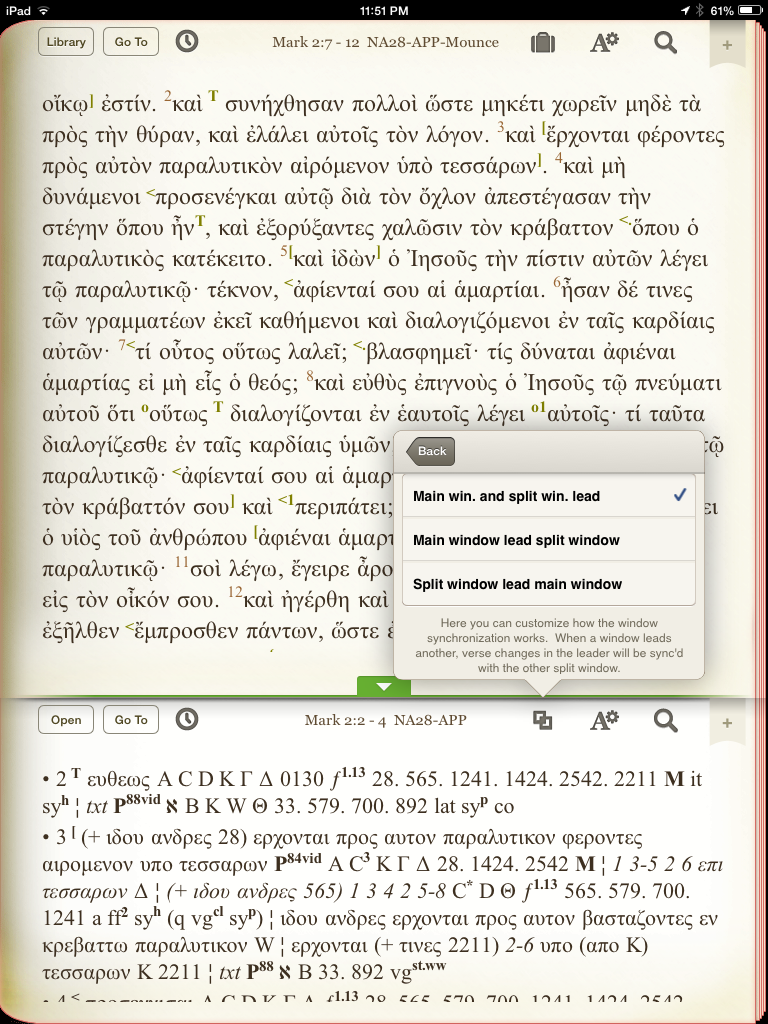
The app allows for you to view one or two resources at a time. This is the same as the iOS apps in Accordance and Logos. What I like about this app is that you can choose whether you want to sync the two windows or not. You can also choose which of the two windows “leads” the other, if you tie them together. Or you can set it up so that whichever one you move (top or bottom/left or right) causes the other to move:

Main and Split Window

There is a whole host of “Gestures/Shortcuts” preferences in the “Advanced Settings” menu. You can assign shortcuts to various gestures. I don’t know of any other iOS Bible app that is this versatile. My two favorites:

  • Two finger swipe left and right takes you through your viewing history, which makes navigation through various passages all the easier. This even works across modules, so that I can swipe between the NA28 and the iPad User Guide I might have just had open. No need to go through menus.
  • Two finger tap takes you from any screen right to your library so you can quickly get at your resources.

NA28 in Olive Tree

There are a few purchase options for the NA28 in Olive Tree. I’ll look here at the “NA28 with Critical Apparatus, Mounce Parsings, and Concise Dictionary,” which you can find hereAt the time of this blog post, it’s on sale for 50% off, so $45 instead of $90. You won’t find it cheaper elsewhere, in any format. The text and apparatus are what you’d get if you bought a print version; the parsings give morphological information, and the dictionary gives lexical detail.

There are some distinct differences between the NA28 and the NA27. If you go about halfway down this post, you can see more detail (as well as click through to some good links) as to what the changes are.

Here I have the text and apparatus open, and have simply tapped once on a Greek word to bring up a pop-up window with a gloss and parsing:

parsing popup

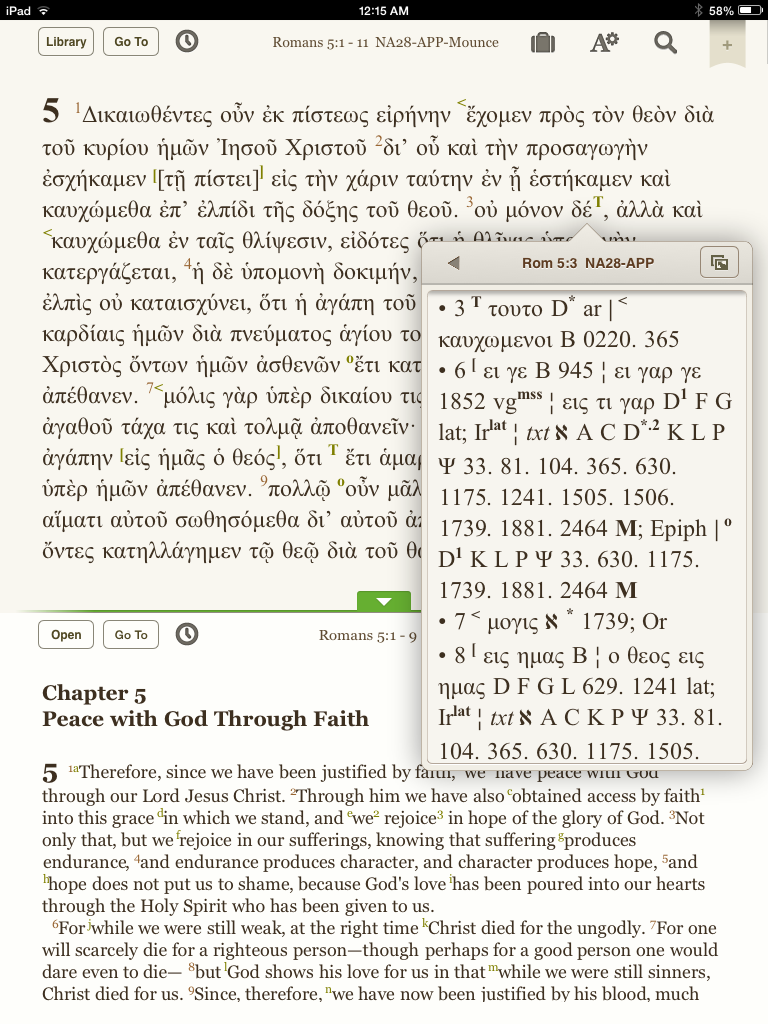
Another possible arrangement would be to use one window for the Greek text, and a second window for an English translation. In that case, one can click on the sigla in the NA28 text for a pop-up with the apparatus. (And still get parsing popups from the surface text, when needed.) This is a good way to economize space:

diglot with apparatus

I appreciate that just a short tap is all that’s required to bring up details about a word or information on a text-critical sign. I find the app overall to be quite intuitive and aesthetically pleasing.  It’s fast on word searches, too.

One critique of the NA28 apparatus is that the text-critical sigla are not hyperlinked to their meanings. In the Accordance version of NA28, for example, when you hover/click/tap on sigla and abbreviations from the apparatus, you instantaneously see (in a popup window or instant details window) what they represent or stand for. In Olive Tree, there is a workaround (described here: bookmark the relevant section of the introduction for quick reference), but this is not an improvement on what one would have to do with a print text anyway. It’s not unmanageable, but also not what one might hope for in this medium. So one will need to regularly consult the NA28 introduction, which is included with the text.

Olive Tree has one of the more active and better Bible software blogs I’ve seen. I’ve learned a good deal from it. Check it out here, especially this post that shows how to use a dictionary in the iOS app.

Since Olive Tree is new to me, and since I already use other Bible softwares, I’m still trying to figure out how it will make its way into my overall workflow. But its smooth interface, speed, and snazzy iOS app will have me coming back for further exploration.

Thanks to Olive Tree for the NA28 with Critical Apparatus, Mounce Parsings, and Concise Dictionary for the purposes of this blog review, offered without any expectations as to the content of the review. You can find the product here

Feasting on the Word (concluding thoughts)

Feasting on the Word

Among preachers, there are books known as “Monday books” because they need to be read thoughtfully at least a week ahead of time. There are also “Saturday books,” so called because they supply sermon ideas on short notice. The books in this series are not Saturday books. Our aim is to help preachers go deeper, not faster, in a world that is in need of saving words.

–Feasting on the Word

I continue to utilize the 12-volume Feasting on the Word commentary series most weeks in my sermon preparation. As I described at greater length here, the 12 volumes cover the three-year lectionary cycle (A, B, and C), split into four volumes per year. Each week offers four different “perspectives” (theological, pastoral, exegetical, and homiletical) for each lectionary passage in the Revised Common Lectionary.

As far as its layout and usability in Logos, I covered that here. My favorite part about having Feasting on the Word in Logos is that I find Logos to be the most robust e-reader currently on the market. It syncs seamlessly across devices and platforms, and easily allows for highlights and notes to be made directly within the text.

In this final post, I want to interact a bit more with some of the content of the series.

The diversity of the contributors is a strong point. They come from different vocations (preachers, professors, Bishops), and reflect diversity in race, sex, and denominational affiliation, as well. I’ve found this refreshing.

There is a general evenness in style, tone, and substance across the volumes I’ve used. As one might expect with a commentary series with this many contributors, some entries end up being more helpful than others.

Rembrandt Holy FamilyWhile I have found the “Exegetical Perspective” and “Homiletical Perspective” sections to be of some value, the “Homiletical Perspective” and “Preaching Perspective” are the ones I use most often. Each of these help the preacher imagine how she or he might orient herself/himself and the congregation to a given text. For example, the “Homiletical Perspective” on John 1 begins with a description of Rembrandt’s “Holy Family” painting, then goes on:

I can imagine a sermon that would begin with a description of Rembrandt’s painting and that would develop the idea of the necessary dialogue between Mary’s studying the Bible and studying the child, the Word made flesh. Like Mary, we come to understand the Word more and more fully as we oscillate between the book and the child, between the Word through words and the Word made flesh.

Few commentaries offer homiletical suggestions this practical. The “Pastoral Perspective” for the same passage is worth quoting at length. After quoting Eugene Peterson’s rendering of John 1:14, preacher Frank Thomas writes:

I love this rendering of this text because of the choice of the word “neighborhood.” The Word was made flesh and blood and moved into the neighborhood. Neighborhood reminds me of the place where I grew up and the people with whom I grew up. I remember the street corner where we played baseball that had four sewer covers; one sewer cover was first base, another second, another third, and the final one home. I ran around those bases thousands of times, dreaming that I was a professional baseball player. I remember the playground, where what seemed like millions of kids played basketball, Ping-Pong, pool, volleyball, dodgeball, and tons of games. I remember block parties, where all the neighbors would sit out on the front lawns with the streets blocked off, and all day we would just have food, games, and fun together. I remember the girl across the street. That’s what I think of when I hear, “The Word was made flesh and moved into the neighborhood.” The Word was made flesh and moved into my south-side neighborhood.

He concludes, “When Peterson says that the Word was made flesh and moved into the neighborhood, I hear that the Word moved into my neighborhood.”

There is much for the preacher to mine and adapt and re-contextualize in the above, in a way that fits one’s own setting. Reading Pastor Thomas’s writing above makes it easy to think about Jesus moving into our neighborhoods, too. (Which immediately raises interesting questions for congregations–would we be a good neighbor to him? Would we need to change anything about our community life? Would we recognize him?) I find that Feasting on the Word is constantly suggesting good questions for reflection and stimulating even more.

There is a claim in the series introduction that, “Wherever they begin, preachers will find what they need in a single volume….” While the exegesis and theological analysis in these volumes is substantive, I still find myself turning to more in-depth commentaries for exegesis, before using Feasting on the Word to think through how to move from passage to sermon. That has been how I’ve most benefitted from the commentary.

I’ll continue to use the commentary series on a regular basis. While I love print books, there are advantages to the electronic version, and Logos integrates Feasting on the Word with any other Logos resources you may have. For those who preach regularly, this set is well worth checking out.

Thanks to Logos Bible Software for the review copy of Feasting on the Word (12 vols.). Find it here. The publisher’s page for the series is here. You can find my other Logos reviews here.

Three Septuagint books I’m reading

There are three good (so far) books I’m reading on the Septuagint. Links and publisher’s descriptions are below.

1. LXX-Isaiah as Translation and Interpretation: The Strategies of the Translator of the Septuagint of Isaiah, by Roland L. Troxel (Brill, 2007)

LXX-Isaiah_TroxelThis book offers a fresh understanding of how Isaiah was translated into Greek, by considering the impact of the translator’s Alexandrian milieu on his work. Whereas most studies over the past fifty years have regarded the book’s free translation style as betraying the translator’s conviction that Isaiah’s oracles were being fulfilled in his day, this study argues that he was primarily interested in offering his Greek-speaking co-religionists a cohesive representation of Isaiah’s ideas. Comparison of the translator’s interpretative tacks with those employed by the grammatikoi in their study of Homer offers a convincing picture of his work as an Alexandrian Jew and clarifies how this translation should be assessed in reconstructing early textual forms of Hebrew Isaiah.

2. The Reception of the Hebrew Bible in the Septuagint and the New Testament: Essays in Memory of Aileen Guilding, edited by David J.A. Clines and J. Cheryl Exum (Sheffield Phoenix Press, 2013)

Reception of Hebrew Bible in LXXAileen Guilding was Professor of Biblical History and Literature in the University of Sheffield from 1959 to 1965, and was known especially for her monograph The Fourth Gospel and Jewish Worship: A Study of the Relation of St. John’s Gospel to the Ancient Jewish Lectionary System (Oxford, 1960), which enjoyed a succès d’estime in its day as an exceptionally fascinating and learned book. She is celebrated in Sheffield as the first female professor in the University; she was also the first woman to hold a chair in theology or religion in the United Kingdom. After her death at the age of 94 a conference on themes relevant to her special interests was held in Sheffield as part of a meeting of the Society for Old Testament Study, and the papers read there are presented in this volume, published in the 101st year after her birth.

3. Messianism in the Old Greek of Isaiah: An Intertextual Analysis, by Abi T. Ngunga (Vandenhoeck & Ruprecht, 2013)

Messianism Old Greek IsaiahAbi T. Ngunga explores the theme of messianism in the entire corpus of the Old Greek of Isaiah (LXX-Isaiah). This is done through the lens of an intertextual hermeneutic employed by the Isaiah translator as a mode of reading this text.

Its introductory chapter looks at the need in scholarship to investigate the topic of messianism in the Greek Bible in general, and in the whole of the LXX-Isaiah in particular. After dealing with a few issues related to the LXX-Isaiah as a translation, Ngunga also surveys thoroughly the topic of intertextuality from its inception to its use in biblical studies including LXX research. Particular attention is given to its application in research done, to date, on the Greek text of Isaiah.

Chapter two re-examines a few arguments pertinent to the scholarly opinion that messianic hopes were not prominent among the Alexandrian Jews in comparison to their co-religionists in Palestine. It also explores the relationships between the non-Jewish citizens of the Ptolemaic kingdom and the Alexandrian Jews, with the aim to ascertain the legitimacy of investigating the theme of messianism in a piece of Jewish literature such as the LXX-Isaiah authored in the Hellenistic period. Chapter three analyses in-depth nine selected messianic passages within the LXX-Isaiah (7:10–17; 9:1–7 (8:23–9:6); 11:1–10; 16:1–5; 19:16–25; 31:9b–32:8; 42:1–4; 52:13–53:12; and 61:1–3a). The study concludes by highlighting the detected particular messianic imprints left on the LXX-Isaiah. Given the results, the study dismisses any doubt concerning the contention that there is a dynamic messianic thought running through the whole of the Greek Isaiah. It also sheds some light on the understanding of some of the messianic beliefs later echoed in early Christianity.

Reviews of each of these three will come soon.

The Göttingen Septuagint in Accordance

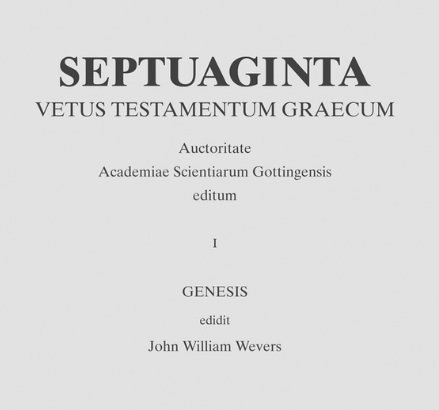
Septuaginta.band 1Accordance Bible has just released the Esther module in its Göttingen Septuagint. More volumes are on the way and scheduled for this month: Psalms with Odes, Jeremiah, the 12 Prophets, and Sirach. The Göttingen Septuagint is a text criticism workout. I’ve posted here and here about how to understand and use its apparatuses.

When I reviewed Göttingen in Logos earlier this year, I compared Isaiah modules between Logos and Accordance. At that time I wrote that the Logos text was more accurate to the print edition than the Accordance text, because it initially was. I was surprised, and saw this as a fluke for Accordance, whose texts–especially their original language ones–generally are the “research-grade” quality they seek to produce.

There’s been a recent update to Göttingen Isaiah in Accordance, so that it is now quite accurate in relation to the print edition. Accordance has also since dropped the price on its Isaiah module.

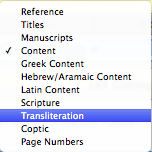
Search fields for Göttingen Isaiah Apparatus I

Where Accordance really excels in its presentation of Göttingen is the multiple ways it offers to search an apparatus. (See image at right.) The most helpful search field is “Manuscripts,” and one can also search by “Greek Content,” which greatly facilitates searching for a given text variant. Searching an apparatus in Logos doesn’t have nearly the options, and manipulating what search results one can get is more difficult.

The “List Text Differences” feature in Accordance is one I’ve used often, to see where Göttingen and Rahlfs differ on Isaiah, for example. Logos has a “Text Comparison” tool, similar to the “Compare” feature in Accordance, but “List Text Differences” is unique to Accordance.

One remaining fix in the Accordance apparatus (at least for the Isaiah module I’ve examined) is a symbol rendering issue. When the apparatus notes a case of homoioteleuton, what appears in print as 1°◠2° shows up in the apparatus as 1°  2°. (UPDATE: See Rick’s comment below; update is planned. UPDATE 12/14/13: This has now been corrected in Accordance.) This renders correctly in Logos.

Logos still doesn’t have the Kopfleiste (Source List) for the Göttingen volumes that have one in print, while Accordance does include it. On the one hand, the Kopfleiste makes most sense in a print edition, but one can imagine that serious students of the Septuagint may still want to be able to access it. Accordance’s Esther includes it, for example.

All the Göttingen volumes that have been published in print are in Logos already, but Accordance seems to be making fast progress of late in completing their own offering. Göttingen is more affordable in Logos (especially if you have their academic discount), but there are more advanced search options available in Accordance (both in the text and the apparatuses) that may make the user want to consider the latter software instead. If one wants just a single volume in Göttingen, that option is currently only available in Accordance.

Speaking of the Septuagint, I’ve just finished Greek Isaiah in a Year with a group of folks, and so will take recommendations for what to read next!

First Bible of the Church: A Plea for the Septuagint, reviewed

First Bible of the ChurchFor the New Testament authors, the original text, that is, the text they drew on, was primarily the Septuagint. To make up the first part of the Bible which has the New Testament as the other part, the Old Testament in the shape it has in the Septuagint would therefore seem the obvious choice.

First Bible of the Church: A Plea for the Septuagint, by Mogens Müller (p. 144)

Mogens Müller provocatively asks, “What caused the displacement of the Septuagint? …Today it is an open question whether the Septuagint should be reinstalled as the Old Testament of the Church” (p. 7). First Bible of the Church is part reception history, part biblical theology, and part apologetic work that suggests the Greek translation of the Hebrew Bible should be brought (back) into canonical status. It should be “at least part of a canon” (p. 122), if not the better choice than Biblia Hebraica for today’s “original text” of the Old Testament/Hebrew Bible.

What follows is a brief summary of the book’s contents, followed by some evaluative comments.

Müller’s Plea

Chapter 1 is the introduction to the book. In it Müller raises the question of just what should qualify as “the original text” of the Old Testament. If we see “what the early church regarded as its Bible” (p. 23), already one has to take the Septuagint seriously. This is not a question Müller addresses exclusively on textual grounds; for him the issue is also a theological one. To wit: In Isaiah 7:14/Matthew 1:23, “the ‘wrong’ text gains a significance of its own by being used” (p. 23).

Chapter 2, “The Jewish Bible at the Time of the New Testament,” looks at the canonization and textual history of the Jewish Bible, including various Greek recensions. Müller makes a key (and helpful) distinction in canonization between “the recognition of a writing as sacred” and “the final fixing of its wording” (p. 32). Evaluating various source materials, and dismissing the idea of an Urtext, the author notes the (accepted) fluidity of the process of textual transmission, where the actual wording in the sacred books only became important some centuries after the books themselves had become part of a canon. The implications of this, of course, are that New Testament writers may not have cared–in the way modernists do–about making sure they were using “the original” Hebrew text when quoting Scripture–if such a thing even ever existed as such.

Nonetheless, as chapter 3 points out, there was a very early historical concern about the authority of the Greek translation of the Hebrew Scriptures. Would the former be on par with the latter? Müller examines various defenses of the Septuagint (the Law books, specifically): Aristeas, Aristobulus, Philo, and Josephus. Chapter 4, “The Reception of the Septuagint Legend into the Church up to and Including Augustine” continues the historical inquiry into attitudes toward the Septuagint, especially when compared to the Hebrew text it was said to have translated. Justin and Irenaeus (among others) are given as examples of early interpreters who saw the Septuagint translation as inspired. Jerome, Müller suggests:

saw the Biblia Hebraica as the basic text as far as the Old Testament was concerned, and thus he contributed, at least for the Latin-speaking part of Christianity, to bring about the final abandonment of the Septuagint, which had very early come to be acknowledged as the Bible of the Gentile, Christian Church. (p. 86)

Biblia Graeca
Biblia Graeca

Chapters 5 (“Hebraica sive Graeca Veritas?“) calls the Septuagint “a witness to the process of transmitting tradition” (p. 99), a process which Müller sees in ancient Judaism as having “a very creative character” (p. 104). Translation in antiquity included a measure of interpretation. The author’s foray into translation theory gives refreshing context to a world that valued lexical equivalency in translation less than many do today.

Chapter 6 (“Vetus Testamentum in Novo Receptum“) provides a short biblical theology, in which the New Testament is seen primarily as the story of Jesus, who himself fulfills what is written in the Old Testament. Müller notes that it is for this reason that the Hebrew Bible became the Old Testament, and yet its use by New Testament writers solidified its importance and sacredness for Christians. The Old Testament is necessary–“it remains the Holy Writ of the Christian community.” But it is not sufficient–“the Old Testament per se represents a limited epoch in salvation history” (p. 135).

The conclusion calls for the Septuagint to (re-)take its canonical place alongside the New Testament.

Is Müller’s Plea Worth Paying Heed To?

Yes. Readers of this blog and its Septuagint posts will not be surprised by my saying so. Müller makes a good case and generally succeeds in making a compelling plea for the LXX. If readers don’t accept his call to (re-)canonize the Greek OT, they will at least take seriously his petition to take it more seriously (as the NT writers did).

The book is short (some 150 pages) but dense. There is untranslated German and Latin in the footnotes, as one would expect in a scholarly monograph, but the writing is no less engaging for its density. The Greek font used throughout is easy to read, and the Greek is often translated into English.

Müller’s brief biblical theology at the end of the book is excellent. It left me wanting to read more. His notion of fulfillment as a motif that links together the OT and NT was convincing and well-articulated.

I found some typographical errors, as well as a number of sentences that just seemed to have wanted closer editing. This could be in part due to the book’s translation from a Danish manuscript. I was distracted in a few places as a result, but not consistently.

Evangelicals will find a few things they disagree with. For example, Müller cites Wellhausen approvingly to note that “the prophets were not reformers anxious to lead the people back to an original Mosaic religion.” The Law, then, “is not the starting-point but the result of Israel’s spiritual development” (p. 102). This line of reasoning is not essential to following the rest of Müller’s arguments, but his “redactional-critical attitude” (p. 100) does lead to a few assertions that some (including myself) don’t agree with.

Müller’s logic and historical inquiry is generally careful and robust, not to mention more readable than one might expect from a work of this nature. Perhaps it is due to the short length of the book, but there are still some unanswered questions. If “the Septuagint” is to comprise the Old Testament in Christian Bibles (as Müller suggests on p. 144, among other places), which Septuagint should we use? On which codex or codices should we base it? And given that Septuagint manuscripts vary on which books are included, how would we decide which books to place in a reconstituted OT? Simply those books that are now in the Hebrew OT, but in their Greek iterations? What about the Apocrypha?

And yet it appears that Müller’s aim is more to address “whether the Septuagint should be reinstalled as the Old Testament of the Church” (p. 7, my emphasis), not how and by what methodology such a reinstallation would take place. With this aim in mind, Müller’s short yet substantive book offers a compelling plea that deserves the reader’s careful consideration.

You can find First Bible of the Church: A Plea for the Septuagint here at Amazon. Its publisher’s product page is here. Thanks to Bloomsbury for the review copy, given with no expectation as to the content of the review.

Feasting on the Word Commentary for Preachers (more thoughts)

Feasting on the Word

Whether the sermon is five minutes long or forty-five, it is the congregation’s one opportunity to hear directly from their pastor about what life in Christ means and why it matters.

–Feasting on the Word

Since getting it in Logos, I’ve been reading Feasting on the Word as a regular part of my sermon preparation each week. I describe the commentary series here.

Feasting on the Word is a lectionary-based commentary series in 12-volumes, four volumes for each of three years of the lectionary. Each Sunday has theological, pastoral, exegetical, and homiletical “perspectives” from which a variety of contributors assesses the texts. Feasting on the Word covers the OT, Psalm, Epistle, and Gospel readings each week.

As to the contributors, the publisher’s product page notes:

The editors of these resources are from a wide variety of disciplines and religious traditions. These authors teach in colleges and seminaries. They lead congregations by preaching or teaching. They write scholarly books as well as columns for newspapers and journals. They oversee denominations. In all of these capacities and more, they serve God’s Word, joining in the ongoing challenge of bringing that Word to life.

Noting a few contributors will give a sense of the diversity of perspective in the commentary:

  • Paul J. Achtemeier, Jackson Professor of Biblical Interpretation Emeritus, Union Theological Seminary, Richmond, Virginia
  • Michael B. Curry, Bishop, Diocese of North Carolina, Raleigh, North Carolina
  • Paul Simpson Duke, Co-Pastor, First Baptist Church, Ann Arbor, Michigan
  • Stacey Simpson Duke, Co-Pastor, First Baptist Church, Ann Arbor, Michigan
  • Edith M.Humphrey, William F. Orr Professor of New Testament, Pittsburgh Theological Seminary, Pittsburgh, Pennsylvania
  • Barbara Brown Taylor, Butman Professor of Religion, Piedmont College, Demorest, Georgia
  • Frank A. Thomas, Senior Servant, Mississippi Boulevard Christian Church, Memphis, Tennessee
  • David Toole, Associate Dean, Duke Divinity School, Durham, North Carolina

Here’s what a Feasting on the Word volume looks like in Logos on a laptop or desktop, next to a couple of other (not included) resources. Click to expand or open the image in new tab, and see my corresponding notes below.

Feasting on the Word in Logos with notes

(1) User annotations: Highlighting and making notes is easy–you can mark up the texts with various styles. Like Amazon’s Kindle app, the annotations made on one machine or device sync with other machines or devices. The note and highlights made above were done on an iPad and popped up automatically when I opened Logos on a computer. Logos is probably the most robust e-reader on the market in this sense.

(2) Hyperlinks: You can hover over a hyperlink for a pop-up with more info, or click on it to be taken to the biblical text (or footnote) that it references.

(3) Expandable/collapsable Table of Contents: Logos is not unique in offering this, but it does make it easy to quickly navigate between passages or “perspectives” on a given Sunday.

(4) Sync with other resources in Logos library: This is simple to set up. I can have Feasting on the Word open next to the full biblical text and other commentaries and resources.

(5) A single Sunday: on the left navigation sidebar you can see what a single Sunday looks like.

(6) Paused indexing: one challenge in using Logos is its frequent need to index. This optimizes searches, and it varies due to a user’s library size, but especially on a Mac, where Logos can already be sluggish compared to other apps, it slows the rest of the computer down. If I’m working on a sermon and using Logos, Accordance, Kindle, and Google Drive or Pages, for example, I almost always have to pause indexing to be able to keep working efficiently. I tend to resume indexing when I don’t need to use Logos.

I continue to find the “Homiletical Perspective” and “Preaching Perspective” the most useful parts of the commentary. The sections I’ve read offer a variety of vantage points and are creative and imaginative on a fairly consistent basis. In my third and final part of this review series, I’ll interact more in-depth with the content of the series.

Thanks to Logos Bible Software for the review copy of Feasting on the Word (12 vols.). Find it here. The publisher’s page for the series is here. You can find my other Logos reviews here.
Review of INVELLOP Leatherette iPad Mini Case

As a friend and I were geeking out over iPad mini cases lately, he recommended his to me. Since its arrival in my mailbox, I’ve rarely taken the mini out of this case. It’s got just the right combination of slim and sturdy for my tastes. It’s by INVELLOP, which I had never heard of. Here it is, closed, with no iPad mini in it:

The case closed, in landscape orientation

Here is what the inside looks like:

The inside of the case

The cutouts for earbuds, volume buttons, camera, etc. are all measured well. The material is “leatherette,” but smells fine and has held up well for the six or more weeks I’ve used it. The stitching is all still firmly in place. You can see in the above that the hard plastic back is connected to the front cover. When the screen flap closes, it puts the device to sleep; when it opens, it wakes it up. This function works just as it should (and is standard with these sorts of cases).

Here are a few more things I like about it:

  • This is the easiest time I’ve had holding my encased device with one hand–the case covers the device but does not extend past it much, so it’s low on bulk
  • The price on Amazon is at the moment $19.95, which is worth it for the quality
  • Good craftmanship
    Good craftmanship

    The screen flap is split into thirds so that you can set your iPad upright (in landscape mode) in two different positions (viewing or typing)

  • It has magnets that help the front cover snap even more securely onto the back case
  • The plastic back is stronger than other cases of this size
  • The inside’s microfiber has protected (and not scratched) the iPad
  • It’s easy to manipulate the front screen flap to take photo or video (it folds back quickly)
  • It’s thin and light, yet not at the expense of protecting a device (though I haven’t done a test drop)

There is really not much to critique. For the first few weeks the front cover didn’t lay flat very well. It still doesn’t lay flat perfectly, but that’s improved a good deal over time. And the magnets make sure the sleep/wake function isn’t compromised by this.

Most significantly, even though I’ve reviewed other iPad mini cases I could house my device in, this one is my go-to.

Thanks to INVELLOP for the review sample. The case reviewed above can be found at Amazon hereYou can find my other iOS and gear reviews here.

Feasting on the Word Commentary for Preachers

Feasting on the Word

Alas, the burden and the glory of preaching consist in proclaiming things that are not yet fully realized, but the hope for them holds a powerful grip upon the faithful imagination.

–Feasting on the Word

Here is a 12-volume commentary set that covers all the lectionary readings from multiple angles. Feasting on the Word offers four different “perspectives” (theological, pastoral, exegetical, and homiletical) for each lectionary passage in the weekly Revised Common Lectionary.

The 12 volumes cover the three-year lectionary cycle (A, B, and C), split into four volumes per year:

  • Advent through Transfiguration
  • Lent through Eastertide
  • Pentecost and Season after Pentecost 1 (Propers 3-16)
  • Season after Pentecost 2 (Propers 17—Reign of Christ)

The Scripture index makes it accessible to preachers who are not following the lectionary, too. From the Logos product page:

The editors and contributors to this series are world-class scholars, pastors, and writers representing a variety of denominations and traditions. And while the twelve volumes of the series will follow the pattern of the Revised Common Lectionary, each volume will contain an index of biblical passages so that non-lectionary preachers, as well as teachers and students, may make use of its contents.

Logos Bible Software has the full set in a format that is hyperlinked, laid out well, and easy to navigate by date or Scripture reference. Here’s the Table of Contents in the Logos iOS app for the current volume:

Table of Contents
Table of Contents

Here’s how a given Sunday looks:

FotW Proper 25
Four lectionary readings of Proper 25

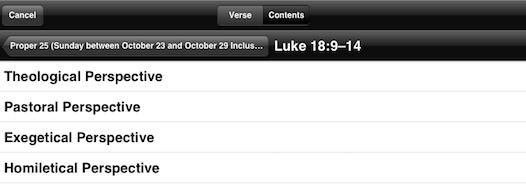
And then each of the passages splits into the four “perspective” sections.

Four perspectives on Luke 18:9-14

Since being able to access Feasting on the Word, it’s actually jumped toward the beginning of my pile (or bytes) of resources that I consult when preaching. I try to pray through my preaching ideas from the text and in conversation with others before consulting commentaries, but the “Homiletical Perspective” (and the other sections, for that matter) do a good job of helping the preacher think about how to preach a text.

The Theological Perspective and Exegetical Perspective might be the best starting points in this commentary. Perhaps by design and due to the constraints of this resource, they are not as in-depth as you would find with a commentary on a given book of the Bible. But those two sections do show a general awareness of the major interpretive issues a preacher needs to be aware of.

The Pastoral Perspective differs from the Homiletical Perspective in that the former helps the preacher be aware of pitfalls and opportunities in preaching a text. For example, Stacey Simpson Duke offers the following pastoral suggestion on Isaiah 11:1-10 (which is the OT text for the 2nd Sunday of Advent in a couple of weeks):

Our fear for children’s safety and future is especially acute. Some in our congregations may have had the tragic experience of a child’s death; they may be particularly fragile when it comes to Isaiah’s images of vulnerable children living and playing in safety. That grief may not be confined to those who have suffered the loss of near ones. We are intimately acquainted with suffering children through heartbreaking images broadcast via the electronic media. This produces its own brand of grief. Isaiah’s word is for all, but the pastor must be sensitive to the grief in the room. Isaiah promises future security; how might this be a word of hope for those from whom security has already been stolen? Answers are not easy, but the pastor who wants to care for congregants in grief will want to wrestle with the question.

This has been the section of the commentary that I most consult.

I appreciate the overall depth and thoughtfulness of the series. This portion from the series introduction is apropos:

We also recognize that this new series appears in a post-9/11, post-Katrina world. For this reason, we provide no shortcuts for those committed to the proclamation of God’s Word. Among preachers, there are books known as “Monday books” because they need to be read thoughtfully at least a week ahead of time. There are also “Saturday books,” so called because they supply sermon ideas on short notice. The books in this series are not Saturday books. Our aim is to help preachers go deeper, not faster, in a world that is in need of saving words.

So far, I not only can recommend Feasting on the Word, but have begun drawing on it as a regular part of my preaching preparation each week. I’ll write more about the series in a future post.

Thanks to Logos Bible Software for the review copy of Feasting on the Word (12 vols.). Find it here. You can find my other Logos reviews here.