Healing Pastors

An image of a pier, the ocean, and the sun.


This is my third post in a row pointing to other places I’m writing. I haven’t abandoned Words on the Word, but I am excited to have started a new blog that had been an idea for months: Healing Pastors.

What it’s about:

Healing Pastors helps pastors bring greater trauma sensitivity to their congregations, while also helping pastors process and heal from their own trauma.

So far there are five posts:

    1. Healing Pastors: A Fragmentary Manifesto   
      Cometh the hour, cometh the (hu)man.

    2. Trauma-Informed Worship Leading of “It Is Well”: Something I Think Worked, Something that Definitely Didn’t   
      What if it’s not “well with my soul”?

    3. Prayer that Despairs, Even of God?   
      “I want to hit you… and hug you… and run away… all at the same time!”

    4. 4 Bluebirds Before an Interval Run: The Easy Yoke of Healing   
      The only way out is through? Tell it to the birds.

    5. Speaking—or Not—in the Aftermath: (Post) Trauma Rock   
      A genre of music that needs to be a THING.


Substack has paid subscriptions available. Anyone can become a “paid subscriber” to Healing Pastors, which as of now offers the sole benefit of supporting the work. Everyone can read everything there for free.

And more will follow. (Now writing: Where are the Psalms of Bathsheba?)

Find it all here, and feel free to subscribe to have future posts delivered to your probably already overcrowded inbox, but I hope that Healing Pastors emails/posts will be life-giving to you!

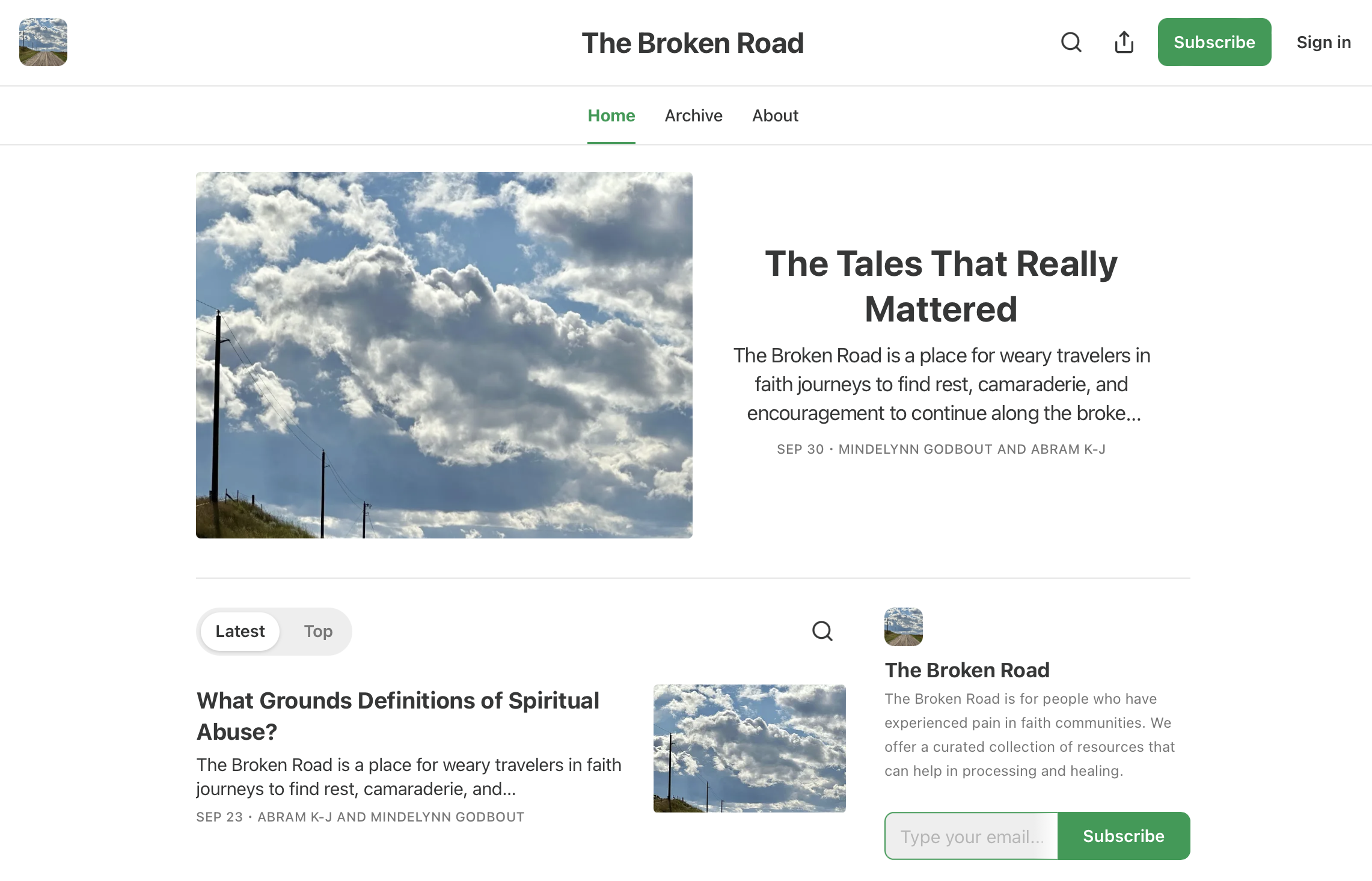
 

I’m Writing at The Broken Road

A screenshot of The Broken Road Substack home page
still here


This blog has been quiet, but I am still writing.

I’ve been focusing especially on spiritual abuse in church settings—recognition, prevention, response, and healing. I’ve been privileged to join my friend Mindelynn in launching her Website and Substack, The Broken Road. There we seek to offer resources and connection to folks who have experienced harm, especially in church and religious settings.

Substack is new to me. It’s both a blog and an email newsletter subscription. The subscribe link gives you paid options, but for now everyone can access everything free.

Each post has something Mindelynn or I have written, followed by a collection of resources we are fans of. Here are the posts where I’ve written the lead article:

You Are Not Alone
Right, Just Not Right Enough (with wisdom from Flannery O’Connor)
Spiritual Abuse: It’s Not Fetch (with wisdom from Mean Girls)
What Grounds Definitions of Spiritual Abuse?

The Broken Road has new posts every Monday. In tomorrow’s post I’ll share some reflections on advocacy.


I’m Published: Book Review, Interview, Essay

I post to share three recent pieces I’ve had published, all centering around child liberation theology, especially as articulated by R.L. Stollar.

First, my review of Stollar’s book, The Kingdom of Children: A Liberation Theology, is published in print and online at The Christian Century.

Second, the Century was kind enough to interview me about the review and child liberation theology more generally. That is linked here and below at the thumbnail:


Third, I interact with Stollar and Jesus and Rabbi Irving Greenberg and others in Currents in Theology and Mission. Best part: a cameo paragraph by my pre-teen daughter. The article is free to access, linked here. It’s called: “A Burning Child in the Midst: The Promise and Power of R.L. Stollar’s Child Liberation Theology.”

What I’m most excited about in all of the above is my daughter’s writing. What I’m next-most excited about is my realization that Jesus’s healing of a child in Mark 9 directly and literally satisfies Rabbi Greenberg’s halting claim: “No statement, theological or otherwise, should be made that would not be credible in the presence of burning children.” I want to expand on this later.

I have come to see the Kingdom of God anew through the lens of childhood and actual children, which has influenced how I see and interact with the world and people around me. The above three pieces will give you just a taste.

Writing Seeking Understanding

Photo by Aaron Burden on Unsplash

I’ve read a few book prefaces recently that have quoted Toni Morrison’s inspiring advice: “If there’s a book you want to read, but it hasn’t been written yet, then you must write it.”

It seems to me that one barrier to writers’ practice of this good advice is a concern that they lack the expertise to write the book they want to see in the world.

In his Four Thousand Weeks: Time Management for Mortals, Oliver Burkeman helpfully writes:

It’s alarming to face the prospect that you might never truly feel as though you know what you’re doing, in work, marriage, parenting, or anything else. But it’s liberating, too, because it removes a central reason for feeling self-conscious or inhibited about your performance in those domains in the present moment: if the feeling of total authority is never going to arrive, you might as well not wait any longer to give such activities your all—to put bold plans into practice, to stop erring on the side of caution. It is even more liberating to reflect that everyone else is in the same boat, whether they’re aware of it or not.

So why not start writing that book, or song, or painting that piece you can all but already see? Why not tackle that project that feels ambitious because it is, but also feels ambitious because our standards for it are unreasonably high?

Hannah Arendt offered a useful way for writers to think of themselves. In her 1964 interview with Günter Gaus, in response to his question about her desire to “achieve extensive influence” through her work, she responds:

What is important for me is to understand. For me, writing is a matter of seeking this understanding, part of the process of understanding…. What is important to me is the thought process itself. As long as I have succeeded in thinking something through, I am personally quite satisfied. If I then succeed in expressing my thought process adequately in writing, that satisfies me also.

She goes on:

Do I imagine myself being influential? No. I want to understand. And if others understand—in the same sense that I have understood—that gives me a sense of satisfaction, like feeling at home.

Writing as an ongoing “process of understanding” helps relieve some of the pressure of it, and it helps keep writers—and creators of other kinds—humble. Writers are “questing,” as a writing coach once told me. Good writers invite readers to come along with them and learn together.

New from This Is Ground: Mod Tablet 5

It’s the Everyday Carry for your Everyday Carry: the Mod Tablet 5 from This Is Ground.


First thing I did when it arrived: I emptied out my pockets and satchel pouches and put my EDC into this suave, all-grown-up version of a Trapper Keeper.

Behold:


There are more compartments than I have been able to use this first week of owning it, but I think that is sort of the point here: maximum versatility.


Here it is from the front. You can see at the left that it’s got a collapsable carry handle, and a front pocket for a phone or notebook that you want to regularly reference.


The construction is careful:


The logo on the back is subtle and done well:


Here’s a closer look at some of the lines and zippers:


It’s got a pretty slim profile. It measures 8 x 11 inches and weighs 1.4 pounds—not light, but pretty compact for all it does. It’s easy to throw into a satchel or carry around on its own.

So far there are two things I find wanting:

  1. There are tons of loops for pens or cords, but most of them are too big for just one pen or pencil to securely stay put.
  2. There are lots of little pockets (and the mesh insert pictured above is awesome), but just one big pocket for an iPad or larger notebook. One more large pocket would help.

However, the “modular case” is “built to solve the needs of those that carry tech and other small gear,” so perhaps it’s best conceived as one part tech Dopp kit, one part notebook/writing utensil holder.

Where it really excels is in its versatility in helping the user stay organized… plus it looks and feels really good. The leather pictured above (“Rhum”) comes from South America. And it’s full grain!

The Mod Tablet 5 isn’t cheap: $385. In that sense I’d consider it a luxury item.

It’s been a lot of fun to use this first week—I’ll post more after further use. The color of the Mod shown above is “Rhum,” a beautiful, dark, rich brown.

You can read more about it and find purchase information here.


Thanks to This Is Ground for the review sample, sent without expectation as to the content of my review. See our other This Is Ground reviews here and here. Cross-posted also at Words on the Goods.

Now Reading: How to Break Up With Your Phone

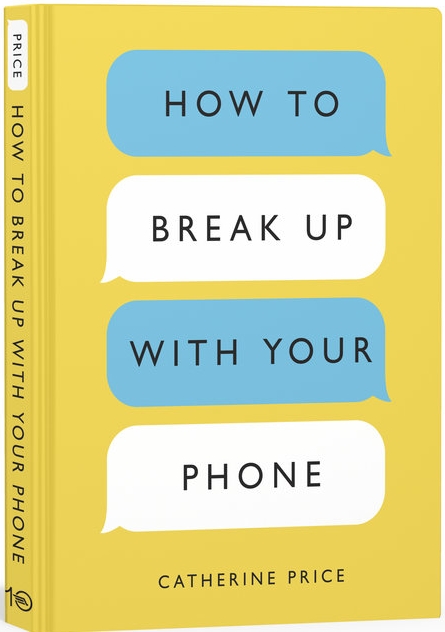
3d+Book+Cover+HTBUWYP+jpgYes, the book you’ve always wanted to read (and that I was starting to write!) is now available: How to Break Up With Your Phone, by Catherine Price.

Despite the book’s title, Price teaches us not how to break up with our phones per se, but how to renegotiate the relationship–which requires a break of sorts, at least at the outset.

I’ve just finished the first part, where she builds a compelling (and alarming) case for limiting screen use. Part Two is the “how-to,” which I’ll share more about later.

I learned about the book from a New York Times piece of hers. It’s relatable from the very beginning:

The moment I realized I needed to break up with my phone came just over two years ago. I had recently had a baby and was feeding her in a darkened room as she cuddled on my lap. It was an intimate, tender moment — except for one detail. She was gazing at me … and I was on eBay, scrolling through listings for Victorian-era doorknobs.

We all have our “Victorian-era doorknobs.” And, until users rightly started jumping ship this last week, Facebook.

Many of us will nod our way through the book’s description:

Is your phone the first thing you reach for in the morning and the last thing you touch before bed? Do you frequently pick it up “just to check,” only to look up forty-five minutes later wondering where the time has gone? Do you say you want to spend less time on your phone—but have no idea how to do so without giving it up completely? If so, this book is your solution.

Check out the book here. Ten Speed Press has been kind to send me a review copy, so I’ll write more about it when I’m done, but I already know this is the rare book I’ll re-read once a year.

Resist Injustice, Reshape the World (My Article at Sojourners)

abram-sojo-article


Yesterday Sojourners online published my article, “Resist Injustice, Reshape the World.”

In it I reflect on the challenges a Trump presidency presents and say:

Being honest about reality is a primary role Christians can play in society.

And:

The prophetic task of all believers is not just to react to reality rightly named, but to reframe it in the light of a grander vision of the future.

Read the whole thing here.

My Writing Week at Collegeville Institute in MN

apart20group202016202-1024x768


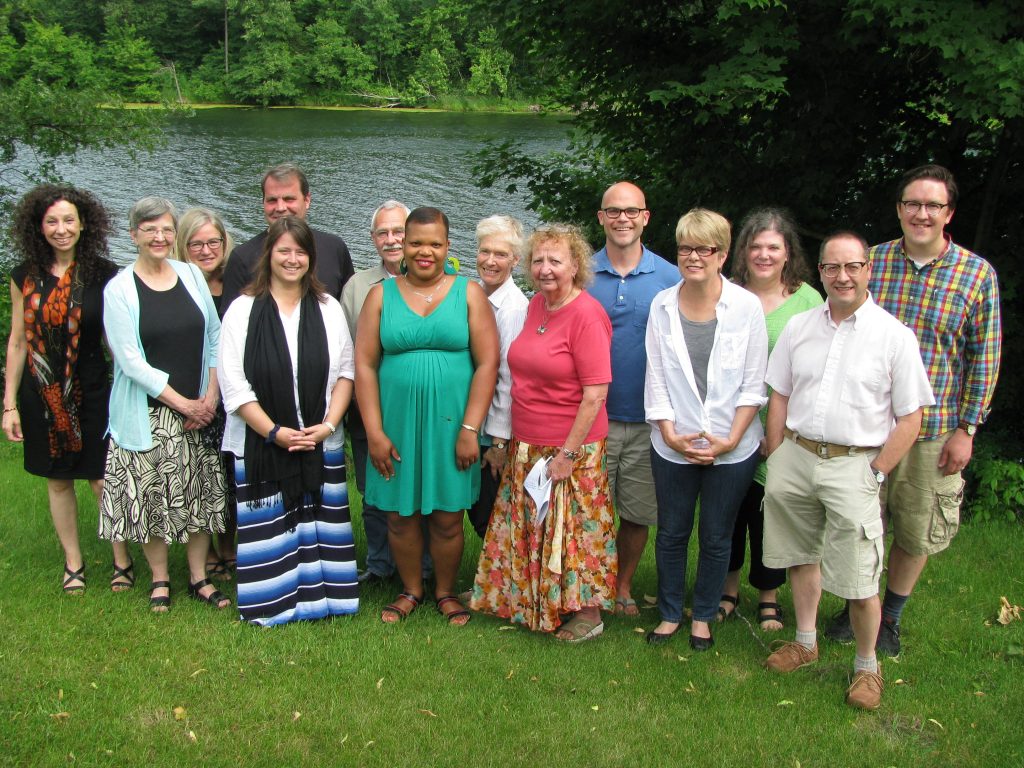
A few weeks ago I had the privilege of attending “Apart, and Yet a Part,” a writing week at Collegeville Institute in Minnesota. (I am at far right in the image above.)

Here‘s a short write-up of the week. And here is a full description of it. Days were ours to structure as we liked–for writing, reflection, walking or running around on the beautiful grounds of St. John’s University.

The people at Collegeville Institute were fantastic. The cohort of fellow writers was a smart, kind, and sensitive group of souls. The writing coach, Michael McGregor, helped me immensely. I can’t say enough good things about the week away.

My progress was more in the realm of quality (conceptual breakthroughs) than quantity (sheer word count). I’m working on a project that I might share more about on this blog down the road. (Though this article and this one offer a hint.)

What a week! I’m looking forward to hopefully taking advantage of future offerings at Collegeville.


This week’s blog sponsor is MailButler, the feature set you always wished your Mac Mail had (and that I’m glad mine does). Find out more about it here or download and try it free here.

The Writing Life (Annie Dillard)


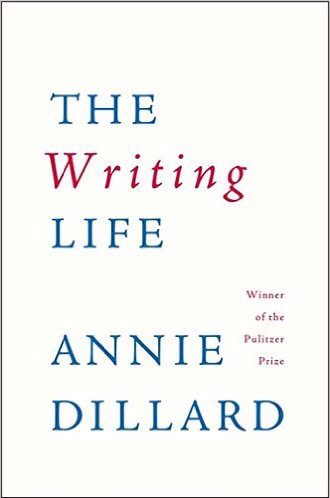
I have just become aware of Annie Dillard’s funny and smart little book, The Writing Life. She perfectly captures the ebb and flow–the exhilaration and desperation–that awaits any writer who is serious about putting life to paper.

I’ve only read one chapter so far, but look how it begins:

When you write, you lay out a line of words. The line of words is a miner’s pick, a woodcarver’s gouge, a surgeon’s probe. You wield it, and it digs a path you follow. Soon you find yourself deep in new territory. Is it a dead end, or have you located the real subject? You will know tomorrow, or this time next year.

If it is this way for Annie Dillard, I have hope as a writer, too.

Dillard knows the paradoxes of writing, and will help the writer to not feel insane, if only by acknowledging the (hopefully temporary) insanity of all who try to write a book:

Writing every book, the writer must solve two problems: Can it be done? and, Can I do it? Every book has an intrinsic impossibility, which its writer discovers as his first excitement dwindles. The problem is structural; it is insoluble; it is why no one can ever write this book. Complex stories, essays, and poems have this problem, too–the prohibitive structural defect the writer wishes he had never noticed. He writes it in spite of that. He finds ways to minimize the difficulty; he strengthens other virtues; he cantilevers the whole narrative out into thin air, and it holds. And if it can be done, then he can do it, and only he. For there is nothing in the material for this book that suggests to anyone but him alone its possibilities for meaning and feeling.

One more:

Write as if you were dying. At the same time, assume you write for an audience consisting solely of terminal patients. That is, after all, the case. What would you begin writing if you knew you would die soon? What could you say to a dying person that would not enrage by its triviality?

If this piques your interest, Brain Pickings did a lengthier post about this miraculously true book here.

A Modest New Year’s Resolution (8 Minutes a Day)

2016 writing


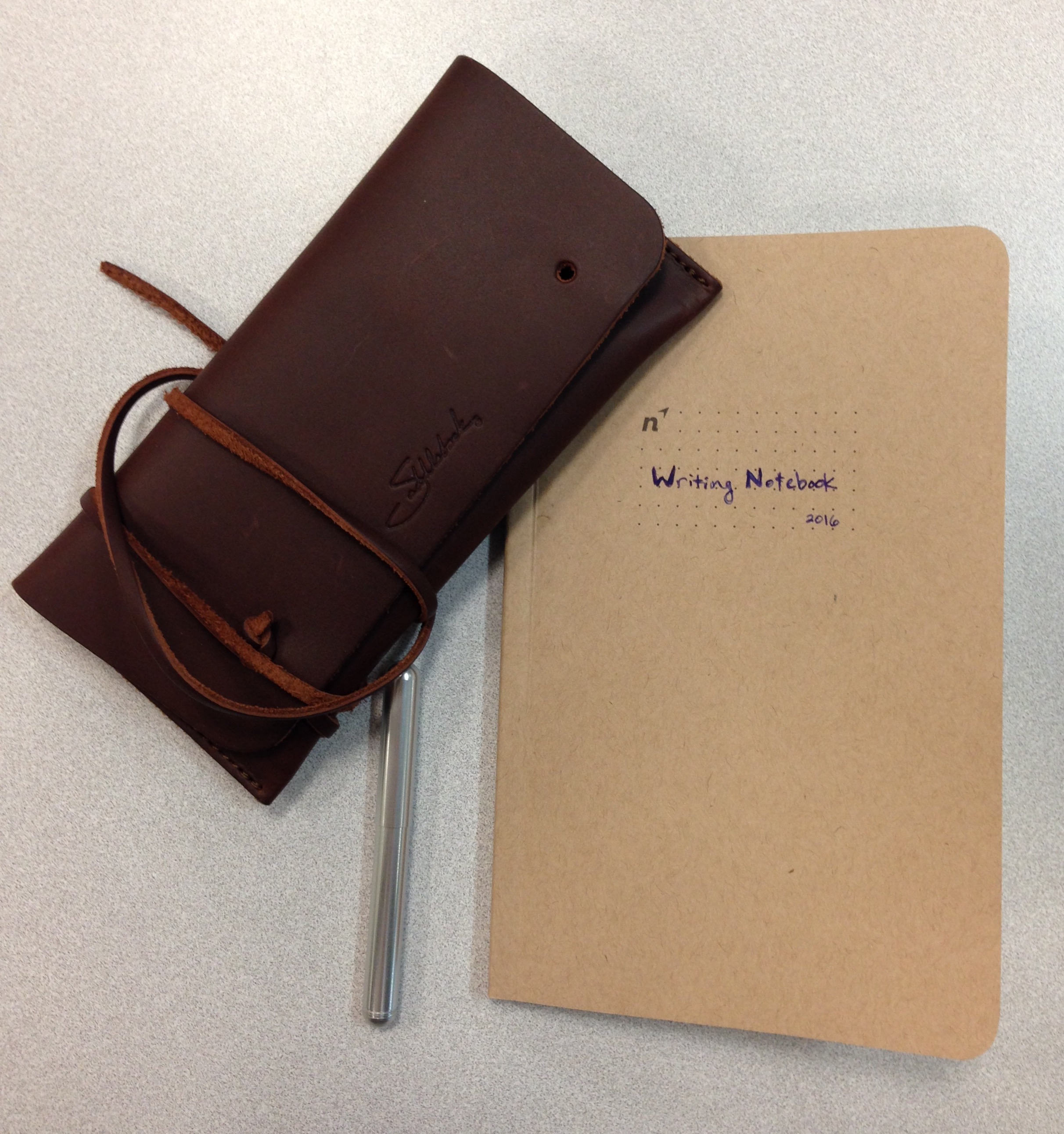
Of my too many New Year’s resolutions, perhaps the most important one is to write at least eight minutes a day.

You might have noticed a lot more posts with the “writing” tag since the fall. Much of my writing recently has been by hand. Though, make no mistake, I still feel most agile and fluent with a keyboard.

So far I’m 4-for-4 with eight minutes a day! There’s plenty of 2016 left for me to change my mind, lose interest, give up, etc. But I have already found an eight-minute-a-day habit easier to keep up than other daily goals I’ve set for myself in the past.

Another resolution that hurts a lot more but takes just as little time: 50+ push-ups a day. I hope to work up to 100 by spring.