Gone for a Run’s 13.1 Mile Running Journal

It’s often said that all you really need to run is shoes, shorts, and a shirt (even that is optional). True, but for those of us who want to combine running with data tracking, a little introspection, and the #analoguelife, there are running journals.

I reviewed the Believe Training Journal here. It’s a robust journal that includes training tips, articles, mini-essays (!) and more. Although much of it is guided, there’s plenty of blank space to just write down the runs you did.

GoneForaRun.com makes a series of running journals that are simpler. Here’s their description of the features:

  • 160 Pages with 280 daily Training log entries
  • Convenient 7.5″ x 5″ size with protective cover
  • Over 140 unique motivational + inspirational quotes
  • Includes pages for goals, weekly & monthly mileage summary, my race log, PR’s, bucket list + race registration log

So all the essentials are there, especially if the Believe journal is too much for you.

GoneForaRun was kind to send me a review copy of one of their journals, so I could write about it here (and write in it). They sent the 13.1 Math Miles journal.

The cover is a great-looking yellow and blue.


The cover brings makes me think of the old Langenscheid dictionary covers, a pleasant memory:



Each page has room for you to log two runs, so that a full spread with the journal open shows you four runs at a time. A downside to this is if you run more than four times a week, you can’t see an entire week’s workouts on a two-page spread. There are 70 front-and-back sheets in the journal for a total of 280 runs you can log. This number also is funny to me, since you’d have to run 5.3846 times a week to fill up this journal in a year. More serious runners (who run or work out six times a week) will need another journal before a year is up. There are two pages of weekly and monthly summary, which is enough for two years, but even for a more casual 3x/week runner, the total number of pages won’t be enough for two years.

At any rate, the layout is clean and simple:


There are places for goals, tracking PRs, and a bucket list:


There is lots of room (four pages!) for tracking your races separately, too:


I’m a sucker for sewn binding, and this journal has it! That combined with the plastic slip case will prolong the life of the journal.



My favorite part is the weekly and monthly summary, where you can track just mileage.


There are also six notes pages in the back, where you could do longer-range planning or perhaps sketch out your training plan.

The simplicity of this journal is great. The amount of runs it records (280) is odd; I would have rather seen seven spaces for runs spread out over two pages, like most weekly planners have. But everything else you need in a training log is here, so if you want a journal without the extras, take a look.

The 13.1 Math Miles journal is here (in four different colors). All the other GoneForaRun journals are here.

Chemex Might Make You Not Want to Use Your Regular Coffee Maker Again

It was fawning interest at first sight and then love at first drink with the Chemex Filter-Drip Coffeemaker.

I love to drink coffee, and the fact that our coffee of choice is Peet’s made me think I was kind of a coffee snob. (Wonderfully, our local grocery store sells Peet’s whole bean by the package, and often on sale.) But deep down inside I knew that my reliance on a standard coffee maker–and only very occasional use of a French press–meant coffee brewing snobbery was still an aspiration.

Chemex scratches that itch, but in a non-pretentious way. I’ve been enjoying regular use of the Ten Cup Glass Handle Chemex for the last couple weeks, which Chemex kindly sent my way for review.

It comes with its own filters. Behold:

Chemex even included an awesome leather coaster to put the glass on.

Now, it’s time to make the coffee. Pretty simple (and there was an instruction sheet included):

  • Grind the beans, medium coarse
  • Put them in the filter on top of the glass brewer
  • Boil the water (Chemex has this sweet looking thing, but I just used my tea kettle)
  • Pour the water over the beans and let them “bloom” for 30 seconds (Chemex tells me the bloom is “escaping gas that has been trapped in the beans during the roasting process”
  • Pour water over the beans, so that it goes almost to the top of the glass
  • Repeat

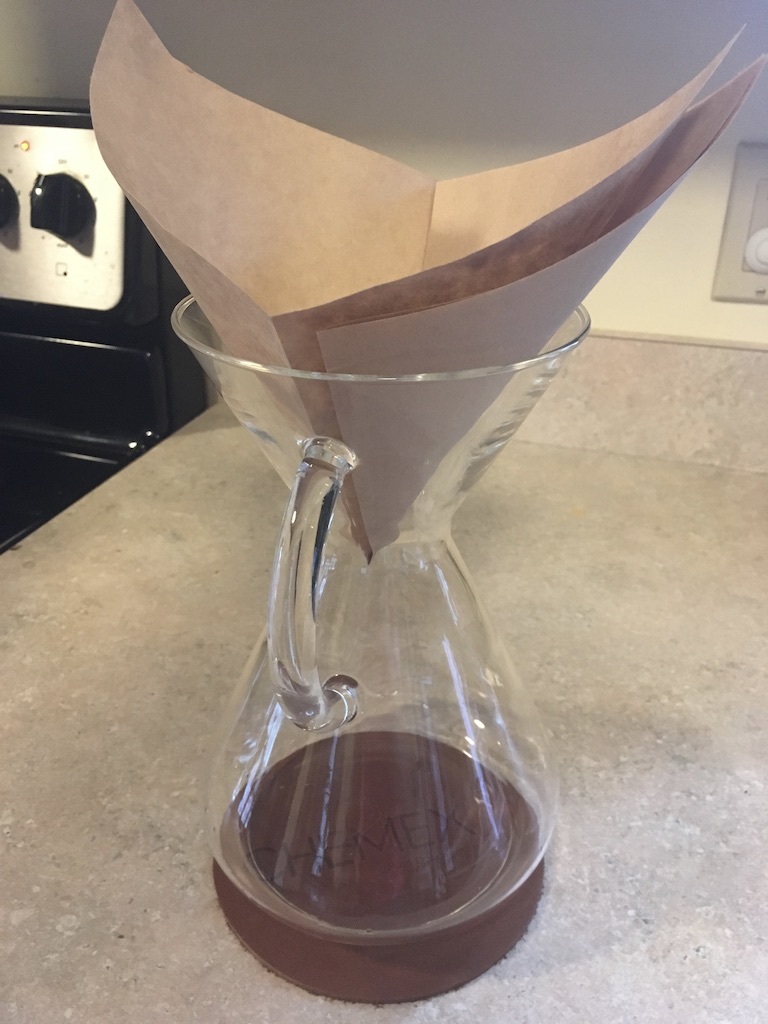
This is the smoothest cup of coffee I’ve ever had at home. There’s not an ounce of sludge, anywhere in sight. Even the pour from the Chemex to mug is perfectly clear and clean. Here’s an image of the drip brewing:

Mmmmmmm.

Drinking coffee from the regular coffee maker the next day was a serious step down. (Don’t get me wrong; I’m grateful for coffee in all its forms!) I had no idea what I was missing.

The design is awesome. The glass is strong. The filters are easy to use and don’t leak. The handle makes pouring easy. Maybe the only thing I’d add is some kind of cozy or heat cover. You can put this on the stove on low heat (if gas or glass stove top), but then I’d have to remember it’s there! (I.e., no auto-off.) But I put the brewed coffee right into a Thermos, so that works out well.

Learn more about the Chemex at its product page here. Two thumbs (or in this case, mugs) up!

5 Forthcoming Reviews

Just a short “in the mail” post today to share five reviews you can expect to read here in the coming weeks and months:


IMG_7101

 
  1. First Raise a Flag: How South Sudan Won the Longest War but Lost the Peace (Oxford University Press)  

    This book just arrived in the mail yesterday. Some years ago I read a few books on the Rwandan genocide, and have had occasional interest in African history. Time to reactivate that interest and learn more about what’s been happening in Sudan. (LINK)


    IMG_7084

     
  2. The 13.1 GoneForaRun running journal  

    It will be hard to top the Believe training journal I use now, but this one looks good so far. (LINK)


    fullsizeoutput_39c7

     
  3. Old Testament Hebrew vocabulary cards  

    I learned Hebrew using these more than 10 years ago; now the Basics of Biblical Hebrew suite from Zondervan is in a new edition, so I’m re-learning with the updated cards. (LINK)


    fullsizeoutput_39cd

     
  4. A sweet leather wallet from Galen Leather  

    It holds a pen! Cards! A notebook! Money! (money sold separately) It looks, feels, and smells amazing. (LINK)


    IMG_6953

     
  5. Harvard Business Review’s new book, Why Do So Many Men Become Incompetent Leaders? (and how to fix it)  

    I just finished the book yesterday, so will probably post about that next. (LINK)

Bonhoeffer’s Last Words, Before He Was Hanged (74 Years Ago Today)


Source: German Federal Archive


Dietrich Bonhoeffer was hanged in the Nazi concentration camp of Flossenbürg on April 9, 1945, just two weeks before the U.S. military came to liberate it.

John W. de Gruchy describes the lead-up to that day in his Editor’s Introduction to Letters and Papers from Prison (Dietrich Bonhoeffer Works, volume 8):

On October 8 [of 1944], Bonhoeffer was taken to the cellar of the Gestapo prison on Prinz-Albrecht-Straße, where he stayed until February 7, 1945. From then on, all correspondence came to an end, and contact between Bonhoeffer and the family and [Eberhard] Bethge was broken. From there Bonhoeffer was taken first to Buchenwald and then, via the village of Schönberg in Bavaria, to the Flossenbürg concentration camp, where he arrived on April 8. That evening he was tried by a hastily rigged court and condemned to death. Early the next morning Bonhoeffer was executed along with several other coconspirators.

He was hanged April 9. His family would not learn about it for several months.

The July before he had written to his trusted friend (and later biographer) Eberhard Bethge, one day after the failed assassination attempt on Hitler’s life. He wrote:

How should one become arrogant over successes or shaken by one’s failures when one shares in God’s suffering in the life of this world? You understand what I mean even when I put it so briefly. I am grateful that I have been allowed this insight, and I know that it is only on the path that I have finally taken that I was able to learn this. So I am thinking gratefully and with peace of mind about past as well as present things. …

May God lead us kindly through these times, but above all, may God lead us to himself.

His final recorded words before his hanging are especially appropriate in these days that lead up to Easter Sunday:

This is the end–for me the beginning of life.


This post is adapted from a post I wrote around this time five years ago, as part of the “Tuesdays in Lent with Bonhoeffer” I was doing. See other gathered posts here.
Two More Winners from Run Fast. Cook Fast. Eat Slow.

We’re continuing to enjoy the recipes from Run Fast. Cook Fast. Eat Slow. by Shalane Flanagan and Elyse Kopecky (publisher page / Amazon). (And we still use its predecessor, Run Fast. Eat Slow.) I think it’s safe to say that recently the majority of prepared foods in our house has used one of those two cookbooks.

Two more yummy ones to show in this post. First, the ultra-healthy Grain Salad, for which you can use quinoa or any other grain you have in the house.


A snippet of what’s in the book


Yum yum.


That salad was dee-lish-us.

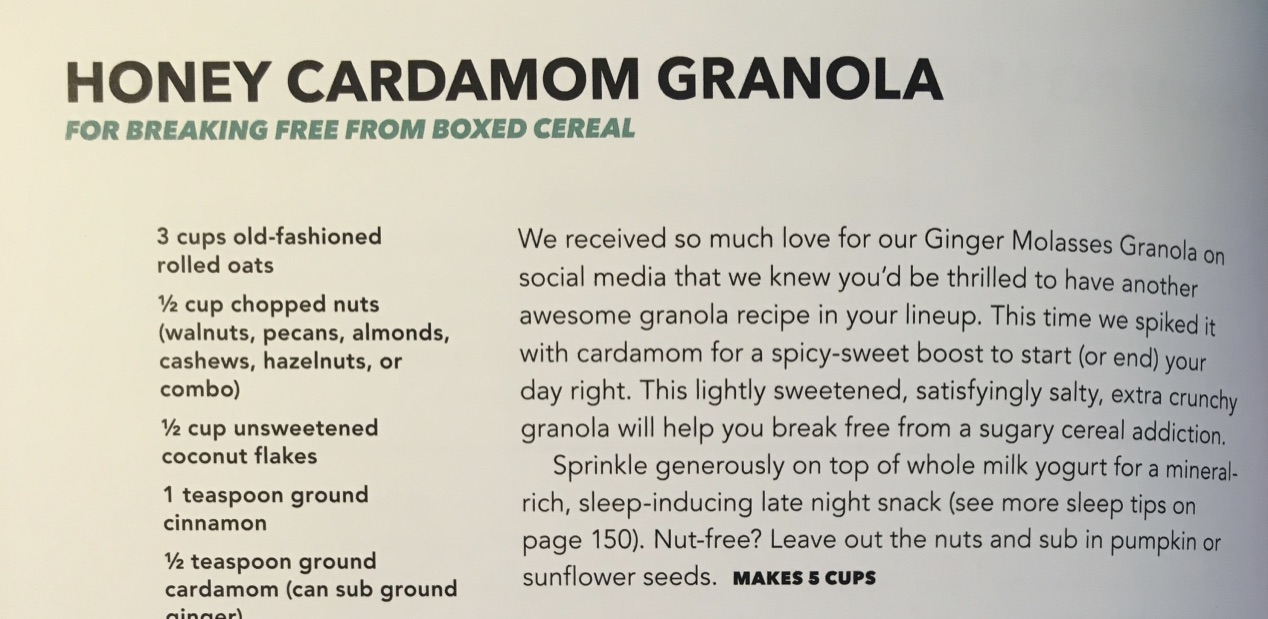
I was eager to try the cardamom granola recipe, however aged our cardamom might be! I tripled the recipe so that we’d have some to share.


Recipe snippet


Used the biggest bowl I could find


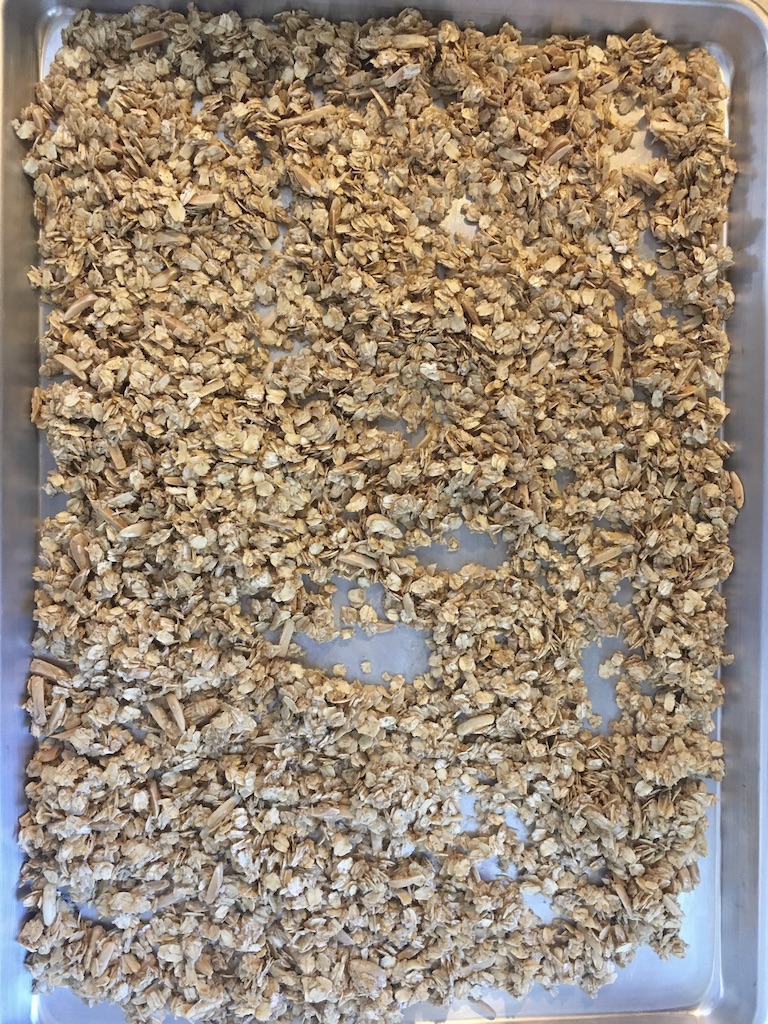
It came out great. If anything, the recipe could have called for more cardamom; its taste wasn’t very pronounced, but that could be because some of my spice had lost its flavor over time.

Oh, and have I mentioned the superhero muffins? If you loved them from the first cookbook, this follow-up offers more variations. Lots of great grab-and-go (but healthy and nourishing) snack ideas here.

I’ve barely even gotten into the book’s racing tips and overarching eating/kitchen strategies; we’ve been so eager to just go the the recipes. But it’s got some really useful big picture stuff, too, like a compelling section on why the book doesn’t include calorie counts. And there are chapters devoted to things like “Jump-Start Your Kitchen” (chapter two) and some of Shalane’s training routine (the third chapter, “Rise & Run”).

This cookbook/guidebook is definitely a worthy sequel, and has a prominent place among our cookbooks. You can check out the Run Fast. Eat Slow. website here.


Thanks to the publisher for sending a copy of Run Fast. Cook Fast. Eat Slow., sent so I could review it, but with no expectation as to the nature or content of my review.

American Football’s New LP3: Best In Class, Ever

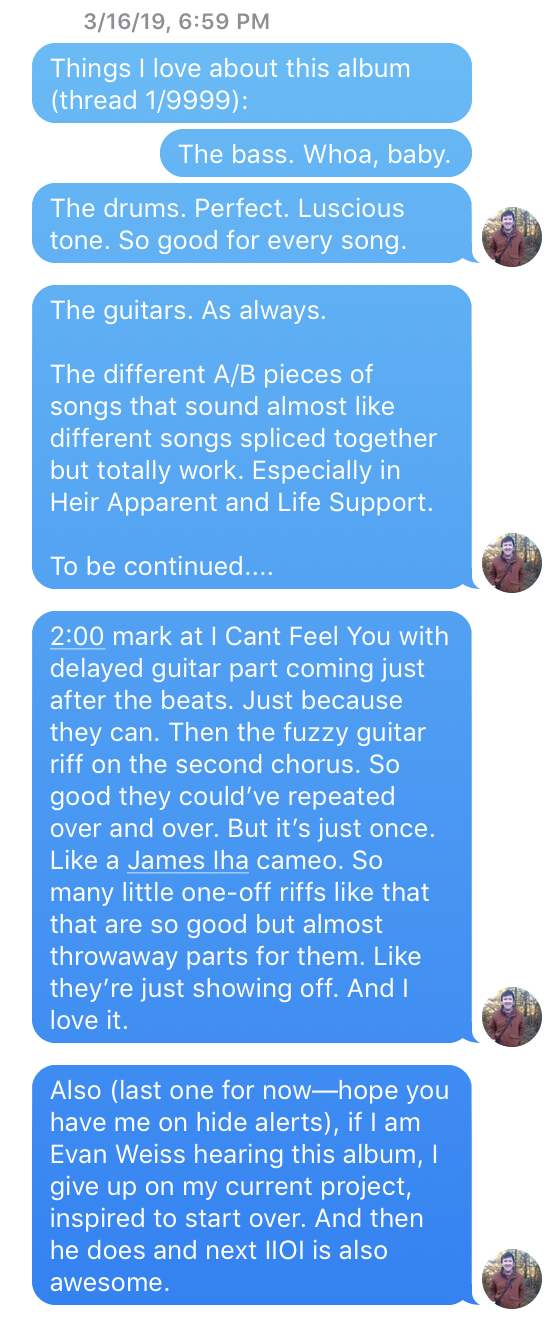
A couple dozen listens in, here’s how I was feeling about American Football’s new LP3, released last Friday through Polyvinyl Records. These are messages I sent to a good friend and guitarist I used to rock out with:


Five stars. And—you heard it here first—it’s not only American Football’s best album, but the best album this genre has produced to date.

The other reviews I’ve read or skimmed talk a lot about the lyrics. This one is more about the music itself, all written when I first listened a month and a half ago.


Whoever called this album “post-house” is a genius


American Football’s third full-length LP has my new favorite album beginning. The band released the album’s first track (its first single) well before the album’s release date. I remember when I first heard its sparse, gradually building intro. Xylophone, vibraphone, then bass. The first LP didn’t even have bass… was this even the same band? Then, and only then, does the band come in, sounding fuller, tighter, more confident, and more creative than ever before. The string swells, chimey guitars, fat (phat?) bass line, vibraphone, silky vocals, and totally perfect drums make this the best American Football song I’ve ever heard. Easily. Its 7 minutes and 22 seconds passed in an instant.

I felt like Bill and Ted must have felt when they went up to heaven and heard the future Bill and Ted’s new jams. If there were a Platonic form of an American Football song, “Silhouettes” would be it. Steve Holmes, Mike Kinsella, Nate Kinsella, Steve Lamos might be my first choice for the soundtrack of heaven.

Where do you go from the epic opening track? To vocal duets! The next two tracks feature Hayley Williams (Paramore) and Elizabeth Powell (Land of Talk). Mike Kinsella’s vocals and the interlocking guitar parts—whether as Owen or as American Football—are already so full and so good, I’d never even considered what an outside-the-band singer could do for them. It’s an awesome sound. (Track 6 features another vocalist: Rachel Goswell of the just reunited Slowdive, and it’s an amazing song.)

The flute on track 4 (“Heir Apparent”) is about the last instrument I expected to hear, but, man, is that a cool song. Just as it starts soothingly hypnotizing the listener at the 4-minute mark, in comes… well, I won’t spoil it for you. It’s yet more sweet instrumentation I never would have thought to have in an American Football song, but it works great (even if the instrumentation and the lyrics feel like a mismatch).

Thank God there’s another nearly 8-minute track on this record. The fifth track (“Doom in Full Bloom”) begins with a reverb-y trumpet (just like old times), which gives way to more ethereal goodness, this one with layered vocals, guitars, piano, and a smooth, laid back drum beat. It’s not hard to imagine this song—with its syncopated rhythms and detuned guitars—being covered by a metal band. In its current form, though, it’s smooth and beautiful.

They could have stopped after five songs and still had a genre-changing album. But the sixth track (“I Can’t Feel You,” with Goswell) is just nuts. The drum and bass combo calls to mind my favorite Radiohead track of all time, “Where I End and You Begin,” but this is very much its own song. I wouldn’t be surprised if it got radio airplay.

The last two tracks are awesome, too. The closing song “Life Support” is spellbinding.

The only thing I don’t love about this album is—years later—I still can’t tell if I think of some of Mike Kinsella’s lyrics as “overly dramatic” or if he’s just speaking openly and “honestly.” Maybe somewhere in between. Either way, the sublime music more than makes up for any impatience the listener may have with continued reference to “relentless adolescence”—a theme which, in fact, Kinsella treats beautifully in the last song.

American Football is making music on a whole new level right now—both compared to their previous stuff and compared to the rest of what’s in the emo and indie rock scene. Nothing else is close. There are few better musical experiences than putting on headphones and listening to a brand new American Football album for the first time (and it’s been two years since the last time), so once you’ve downloaded this album via the provider of your choice, block out some time and space and enjoy.

Here’s the record at Polyvinyl.


Thanks to the powers-that-be for the advance release download of this fine album, so I could write a review.

In the Mail: Updated Zondervan Greek and Hebrew Grammars

Zondervan has just released updated editions of Basics of Biblical Hebrew Grammar and Basics of Biblical Greek Grammar, as well as related aids for students working through those textbooks. Behold:


Zondervan Academic has sent these for review. It feels like a long time ago (though it was only 10 years) that I began learning biblical languages. I spent hours and hours combing through the previous editions of these Greek and Hebrew textbooks, filling out almost every page of the workbooks, and learning the vocabulary with the cards. So I’m excited to work through these resources and report back.

In the meantime, you can click the links below to learn more. When I post I’ll point out differences in the new editions, but please also leave comments or questions if you’re wondering about a specific aspect of these new resources, and I’ll do my best to address them in the reviews.

Basics of Biblical Greek: Grammar / Workbook / Vocab Cards / Compact Guide (not yet released)
Basics of Biblical Hebrew: GrammarWorkbookVocab Cards / Compact Guide (not yet released)

Oatmeal Banana Pancakes for Shrove Tuesday (from Run Fast. Cook Fast. Eat Slow.)

Yesterday in the mail I received a review copy of Run Fast. Cook Fast. Eat Slow. by Shalane Flanagan and Elyse Kopecky (publisher page / Amazon). We’ve loved its predecessor, Run Fast. Eat Slow. This new volume says you can “cook the recipes that Shalane Flanagan ate while training for her 2017 TCS New York City Marathon historic win!”

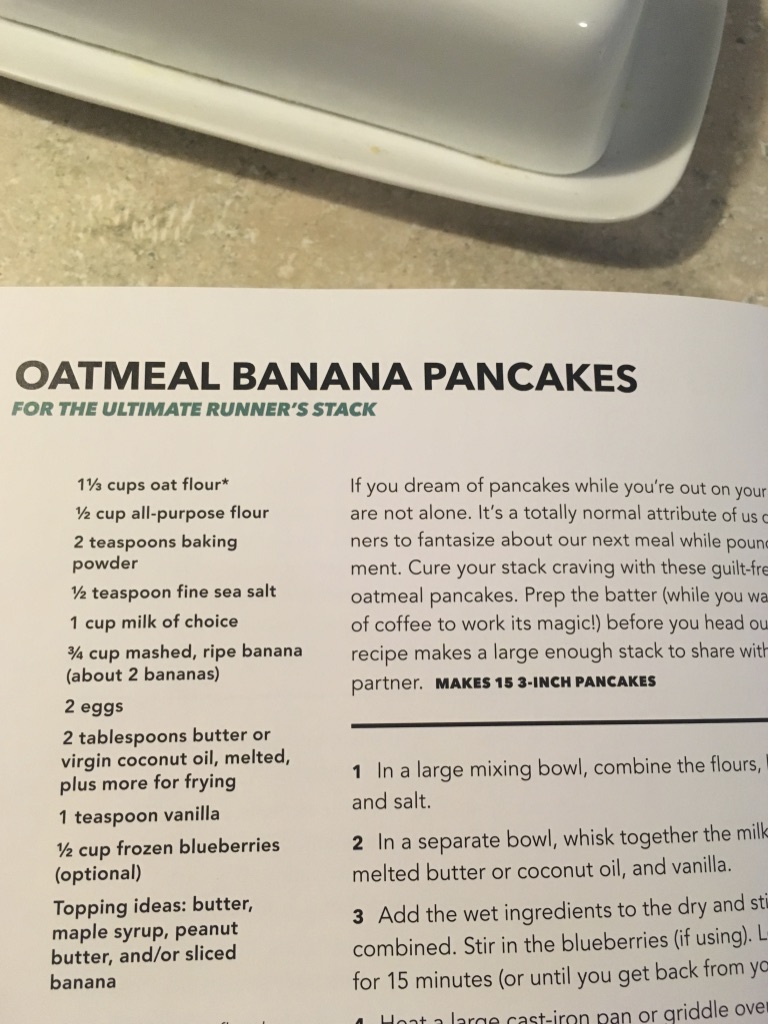
Last night I wasn’t thinking about marathons; just how to make a good dinner for the family. As yesterday was Shrove Tuesday, I went right to the index to see if there were any pancake recipes. Lo and behold, I found one for oatmeal banana pancakes:


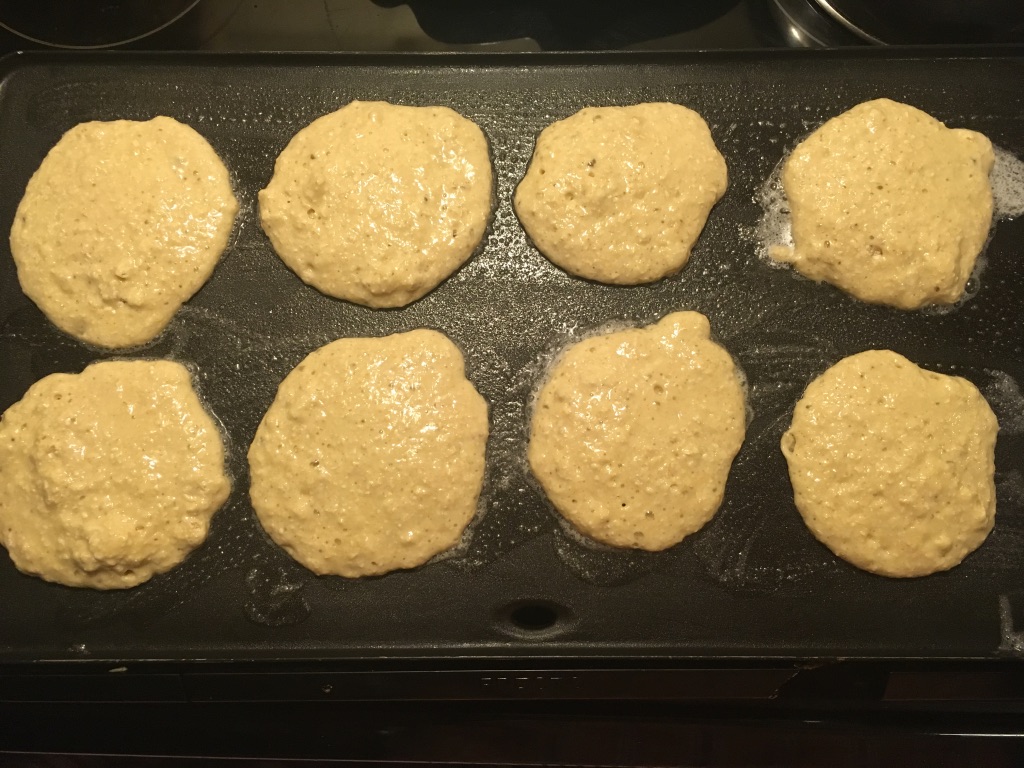
I did not have oatmeal flour on hand, but had some organic rolled oats, which I could easily grind up in a food processor. My wife and I went to work: she mixed the wet ingredients; I mixed the dry ones (there were hungry mouths waiting). Before long, this:


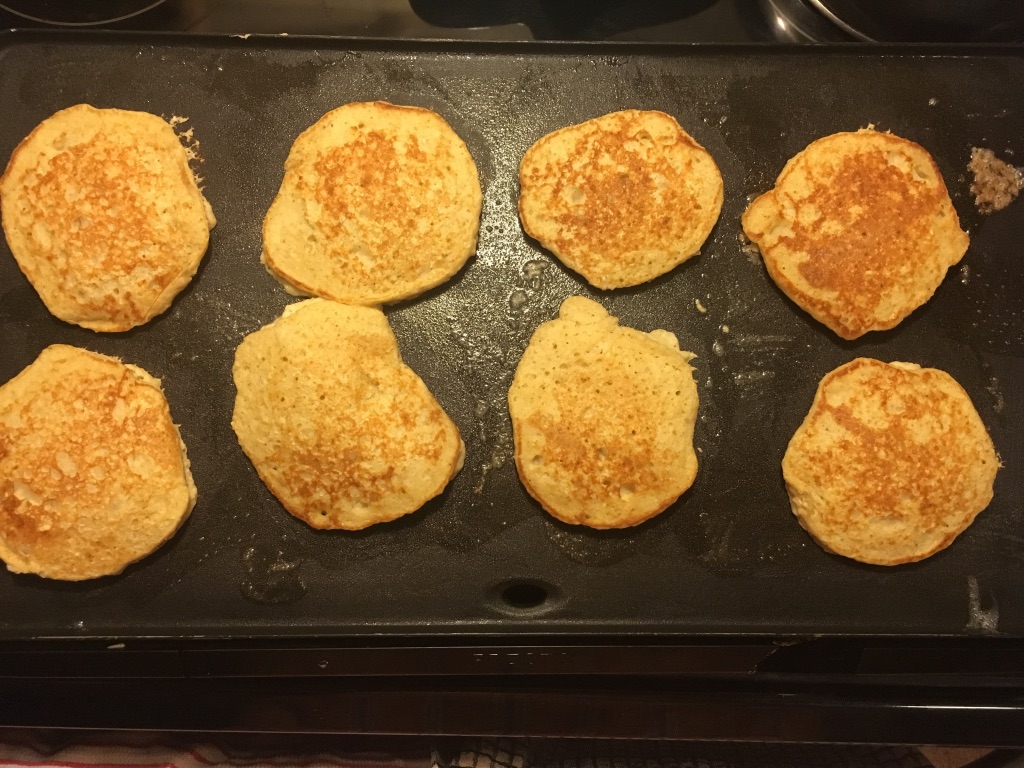
became this:


They were tasty!

Between the previous cookbook and now this newer one, we have yet to find a dud of a recipe. (Although I’m not sure I’ll repeat the first cookbook’s blueberry scones made with corn meal.)

There are also racing tips and bigger picture eating strategies in Run Fast. Cook Fast. Eat Slow. So far it looks like a worthy follow-up to our current go-to cookbook. More to follow!

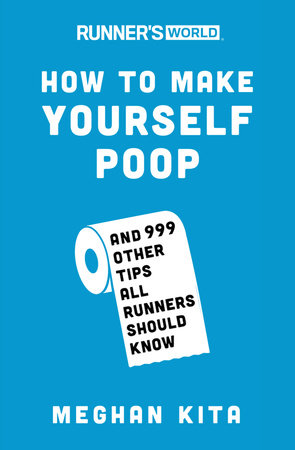
How to Make Yourself Poop: And 999 Other Tips All Runners Should Know (Book Review)

9781635651836


Yes, it’s a funny title, but it also is a needed skill for runners who are going to be on the road for a while.

This has been a fun book to read. The full title is Runner’s World How to Make Yourself Poop: And 999 Other Tips All Runners Should Know.

Think of this book as a few years of the Runner’s World website printed out, all in list form. There’s barely a running detail that’s not mentioned here. There are 34 chapters, split into 6 sections:

  • Section 1: 205 Training Tips
  • Section 2: 193 Nutrition Tips
  • Section 3: 126 Gear Tips
  • Section 4: 158 Motivation Tips
  • Section 5: 169 Tips for Staying Healthy
  • Section 6: 157 Racing Tips

I’ll save you the time–that’s 1,008 tips, assuming the section titles are right. But this is at it should be, since 9 tips (a list of 3 and a later list of 6) are on how to poop; then 999 other tips give you 1,008 pieces of digestible advice you can put into practice.

I mentioned this in the book note I wrote a few months ago, but from the very start, the book is practical and offers good guidance. Here are “The 5 Golden Rules of Training”:

  1. The vast majority of your miles should feel easy.
  2. Your “easy effort” should be really, really easy.
  3. Increase milage gradually.
  4. Aim for three… quality workouts each week: a speed workout, a long run, and an in-between workout at a comfortably hard pace (a “tempo run”).
  5. Follow every hard or long run with at least one easy or rest day.

You won’t find philosophical reflection on running here, nor detailed exercise science. But there’s not much else missing. You get, for example, tips on how long to warm up for different races, whether a 1-miler, a 5K or 10K, a half marathon, or a full marathon. There’s lots of good advice about injury prevention, race etiquette, hydration, and even some sample interval workouts–one of which (a “pyramid fartlek”) I tried and loved.

You can check out the book at Amazon here, and at its publisher’s site (where you can read an excerpt) here. Definitely a book most runners will want to have on their shelf and keep referring back to, as I will in the months and years ahead.


Thanks to the publisher, who sent me a review copy, but with no expectation as to the content of my review.

A Call for Presidential Repentance

Shortly after Donald Trump was elected president in 2016, I wrote an “Appeal to Christians Regarding President-Elect Donald Trump,” which local and nationally known faith leaders, scholars, and ministers co-signed.

The petition began with an expression of concern about Trump’s character:

President-elect Donald Trump has bragged about sexual assault and berated his female accusers. He has repeatedly disparaged African Americans, Latinos, and other communities. He has denied what is true and promoted what is not. He has threatened political opponents, called for torture of U.S. enemies, and has failed to quickly and unequivocally denounce and distance himself from race-based crimes committed in his name.

Character matters, and a position of power brings out more of what is already there. People can change, yes—that’s the power of the Gospel! But Trump has expressed no interest in asking for forgiveness of wrongdoing, as he famously said in 2015.

My concerns about Trump’s character have only grown—perhaps a post for another time. Today, I simply want to say that more than ever, I stand by the five commitments in that “Appeal to Christians” petition:

  1. We will pray for President Trump, elected officials, our nation, our churches, and each other.
  2. Rooted in the teachings of Jesus and the prophets, we will tell the truth about the world around us, and we will speak up for those who have been marginalized and taken advantage of.
  3. We will actively resist the temptation to overlook or normalize values, speech, and behavior that are in conflict with what Scripture calls us to.
  4. In the name of Jesus, we call President Trump to repentance for dishonoring the image of God in others.
  5. We will fix our eyes on Jesus and, by the power of the Holy Spirit, redouble our efforts to honor the image of God in all people and to love all our neighbors as ourselves.

I’ve prayed for this presidential administration more than for any other. But the third commitment has been more difficult for me. Saying nothing or ignoring the news is easier. We can easily be desensitized, or lose our sense of shock. But it’s important that we keep our moral bearings.

Trump knew the other night that he would say in his State of the Union address: “We must reject the politics of revenge, resistance, and retribution.” Those words themselves are right. Did he mean them?

I don’t think so. Earlier that same day he is reported to have called Chuck Schumer a “son of a b*tch.” He called Omarasa “that dog” after she published a book about working for the Trump administration. He referred to the pornographic film actress he cheated with on his then pregnant wife as “Horseface.” The list goes on.

Trump doesn’t “reject the politics of revenge,” as his SOTU address called for. By his own admission practicing “politics of revenge” is, for him, a way of life. In a previous speech in which he shared advice for achieving success, he said: “Get even with people. If they screw you, screw them back 10 times as hard. I really believe it.”

So why is he pretending he believes otherwise? And are we being discerning in putting his words to the test?

Monday night’s talk of putting away revenge is not Trump turning over a new leaf (though we wish it were!)—it’s disingenuous lying (and gaslighting). In other contexts we would readily identify this as an abuser’s means of keeping control: he wants to keep others from pushing back on him while he continues to say whatever vindictive thing he wants to say.

Just as we would want our children to stand up to bullies at school, I hope the media and citizens alike point this discrepancy out—because as Marilyn Chandler McEntyre writes, we have “the responsibility not to tolerate lies.”

Frank Bruni was right on the money the morning after the address:

He pretends to care about matters that don’t move him in the least. He feigns blamelessness in situations where he’s entirely culpable and takes credit in circumstances where he has more to apologize for. He presents himself in a positive light, as one kind of person, when his actions paint him in a negative light, as a different character altogether. Many of his biggest lies are to himself.

Jeremiah warned the people about false prophets who said, “Peace, peace,” where there was no peace. So let’s acknowledge that Trump’s own words—about himself and directed to others—testify against him: he does not want to move beyond revenge politics. He just wants to quiet any who oppose him. That is not “peace.”

Consider this short post, then, one citizen’s small effort to make good on the third and fourth commitments from the petition above: to “actively resist the temptation to overlook or normalize values, speech, and behavior that are in conflict with what Scripture calls us to,” and “to call President Trump to repentance for dishonoring the image of God in others.”

Those are commitments that those who voted for Trump and those who voted for Hillary (and those who voted for Evan and those who voted for Jill!) can all get behind.

In his State of the Union address, Trump called on America to “choose greatness.”

I call on him to repent, come clean, begin telling the truth, and choose the greatness that he will only know when he asks God for forgiveness and begins to walk, as Scripture says, in the light of the Lord.