
 My friend Katie told me about this Website. “Crappy pictures” to depict parenting. Recommended if you like Honest Toddler!

“This multigrain bread looks like eczema. Not eating it.”

Honest Toddler (which I’ve blogged about perhaps too much already) has a Twitter that I just found out about. Much more frequent than the blog posts, and just as funny. Check it out here, in celebration of Family Friday!
Share this:

Leaving it all on the field
I took a Septuagint test today. It was about Micah generally, the passage where Micah and Isaiah have basically the same text, the verse in Matthew that quotes Micah, and a verse in Joel that on first glance seems to say the opposite of a verse in Micah. I was asked to explain these things and do a bunch of translating.
This is how I felt before, during and after the test:

Yes, I’m a nerd, but the Septuagint really is awesome. I hope in future posts (perhaps on Septuagint Sundays) to share more about what I’ve been learning in my Septuagint directed study.
Share this:

It All Starts Here: The Soul of Worship (Facedown)

Mark D. Roberts is a pastor, author, speaker, and blogger. A few years ago I came across a mini-book he wrote, The Soul of Worship. It is a series of blog posts about worship leading, based on Matt Redman’s album Facedown. Roberts was asked to do a review of the album for Worship Leader magazine. He writes:
I was eager to review Facedown because I have deeply appreciated Matt’s music in the past. Among other things, he is an outstanding lyricist, combining strengths as a poet and theologian. Thus I began to listen to Facedown with high expectations. But nothing prepared me for what I heard. This is an exceptional album musically, but a unique album lyrically. In fact, from a theological point of view, Facedown is the premier praise and worship album in the world today.
You can listen to all of Facedown free and legally here. I agree with Roberts–it’s some of the best stuff I’ve seen in the contemporary worship music scene.
Roberts’s mini-book, then, draws its inspiration from Redman’s album, and discusses it at length. Read all of The Soul of Worship here. I know of no better place for worship leaders to begin.
Here’s Redman:
Share this:

The 4th of July, according to the blogs


Words on the Word in Biblical Studies Carnival
Check out the June “Carnival of Biblical Studies” (a compilation of many, many posts on all things Biblical studies on the blogosphere in June). I’m grateful to have been mentioned!
Share this:

I want a subcontracting co-father

Remember that essay, “I Want a Wife”? Read it here. Judy Brady (Syfers) first read this essay to a San Francisco crowd in 1970 (story here). It begins like this:
Not too long ago a male friend of mine appeared on the scene fresh from a recent divorce. He had one child, who is, of course, with his ex-wife. He is looking for another wife. As I thought about him while I was ironing one evening, it suddenly occurred to me that I, too, would like to have a wife.
She goes on to say she wants a “wife” who will clean, not complain about it, and work her through school while also supporting the children and managing the household. The satirical essay was meant to be an indictment of restrictive and unrealistic gender expectations placed on women.
In many ways I have it easy as a man. Because of who I am, I am the beneficiary of white privilege and male privilege–among others, living in this country as I do. I can’t help this, so I simply hope I use such “privileges” for good. (If talk of white/male privilege doesn’t make sense to you, consider reading this article about the pay gap between men and women.)
I also think I have it easy compared to my wife. She’s been through three (count ’em) C-sections, two of which were preceded by much labor, and does all manner of things to make life work for all of us. She’s also playing point right now on middle-of-the-night baby meet-ups, and for that I’m grateful. I’ll never begin to understand the pain of childbirth. So I make that disclaimer upfront.
That said… I want a subcontracting co-father. I don’t quite “need a wife” (or, in my case, “need a husband,” which didn’t quite fit right for me). But just a little help around the house with some of my ongoing (and often unfinished) projects would be nice. Here are a few jobs that I’d contract out to anyone interested:
- Poop and pee. Yesterday I changed poopy diapers on two children, and in the evening singlehandedly moved a couch out of the living room and onto the porch because our potty-trained child had peed all over it in the middle of the night (My bad–we were out of pull-ups. Also, sweetie, sorry if blogs still exist and you’re reading as a teenager.)
- Air conditioner. We got two new air conditioners recently, and then one of the units pooped out on us (speaking of poop) a day later. I don’t need the subcontracting co-father to help with the return–I already boxed up the darned thing and sent it back to Amazon. I just need someone to whom I can farm out the task of opening, assembling, and installing the new replacement unit that came, and putting it in my son’s window… again.
- Poop and pee, green edition. Ha. Poop is sometimes green when it comes from children, but that’s not what I mean. I wrote a couple weeks ago about cloth diapering. We’ve actually put cloth diapering on hold for the two-year-old, since that much laundry is impossible for us to do right now in the wake of a newborn coming to our house. But we want to go back to cloth.
- Nighttime book reading (second shift only). I love reading to my children. It’s one of my great joys as a father. But I often fall asleep about 10 minutes in. (Okay, 3.) I just need someone to jump in and pick up the slack from time to time. Your cue is when I get punched on the shoulder and you hear, “Daddy, wake up!”
- Manage car stress. We’ve had both cars in the shop the last month, and the day on which we have to make both an airport drop-off and airport pick-up, both cars are in the shop at the same time. I have all the records, and my mechanic’s name is George. Just make sure you’re in front of Google when he calls to tell you what’s wrong with the car, so you at least sound like you know what you’re talking about.
- Take out the trash. Obviously. Warning: there’s poop in it.
- Other duties as prescribed (by the children).
The pay is meager, but the fringe benefits are… incomparable. It’s a good thing my father is coming in to town this week.
Share this:

Magnificent Monograph Monday: The Later New Testament Writings and Scripture, Reviewed
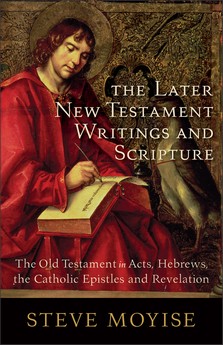 Eisegesis. Not a label most evangelical Biblical interpreters want to wear. If exegesis is drawing the meaning out of a text–with a careful eye toward its original context and authorial intention–eisegesis is taking one’s own set of meanings and intentions into the text. Evangelical scholars aim to practice the former and avoid the latter, although of course everyone comes to any text with some presuppositions. (And new hermeneutics like reader response criticism may see this as a good thing anyway.)
My seminary teaches an exegetical method that majors on reading a text in its original context and understanding its original purpose. I’ve often thought that if New Testament writers submitted any of their works as exegesis papers, they’d fail because of the various “hermeneutical fallacies” they commit! It seems that New Testament writers freely appropriate or proof-text Old Testament passages for their own purposes, no matter the original context or intention of the passage at hand. They might even be accused of eisegesis, were they employing their methods today.
Baker Academic has just published the third volume of Steve Moyises’s de facto trilogy, in which he examines how Jesus, Paul, and the later New Testament writers use Scripture. He seeks to “give an account of” and “consider the use of Scripture” in the later NT writings. This is a “study” of “important engagements with Scripture.”
Just picking up the book before reading it was a pleasure–the layout is great, the paper quality is high, the font is clear and easy to read, and the cover design is appealing. Especially for a paperback, it’s an attractive volume to have on a bookshelf. (I note here that I received a free copy from Baker in exchange for an unbiased review.)
Moyise treats Acts, 1 Peter, Jude/2 Peter, James, Hebrews, Revelation, and includes a brief excursus on 1-3 John. He is thorough in the Scriptures he treats, which is especially aided by a UBS index in the back that serves as an index of all the quotations of the Old Testament in the above books. (There are full Scripture and author/subject indeces, too.)
The author groups the Scriptures thematically or by Old Testament book, rather than going verse by verse through each of the New Testament writings under consideration. In Acts, for example, he considers how the author Luke uses Old Testament Scripture to address themes like “Salvation for Jews and Gentiles,” “Christ’s death, resurrection, and exaltation,” “Judgement,” and so on. In 1 Peter Moyise has sections devoted to I Peter’s use of the Psalms, of Isaiah, etc. Moyise does this so as not to “miss the wood for the trees,” and he is successful. The reader, then, can conclude each portion of the book with a solid overview of how each NT writer uses the OT.
The text is accessible to a non-scholar or non-specialist in this field. For example, Moyise explains on p. 4:
[I]n some cases the New Testament authors appear to know a version of the text that differs from the majority of manuscripts that have come down to us. The discovery of the Dead Sea Scrolls (1948–) has shown that the biblical text existed in several forms in the first century and it is not always clear which form is being quoted.
He uses gray shaded boxes at various points to succinctly explain key concepts such as “typological interpretation” or to address things like 2 Peter’s use of the largely unknown 1 Enoch. The endnotes include more textual details and point the reader in the direction of the scholarly writings about each book. One does not need knowledge of the original language to read Moyise, but he does at times use transliteration of various Greek words if it helps his explanation.
The potential reader might be concerned that a book about intertextuality could end up as just a dry list of references. Moyise does thoroughly catalog the quoted OT passages, yet he draws conclusions from such use, as well:
Although James’s use of Scripture is not christological in a doctrinal sense, it bears comparison with Jesus’ own interpretation of the law, particularly his emphasis on seeing the law in the light of the twin commands to love God and neighbour. (63)
Moyise presents various interpretations in an even-handed, balanced way. I felt more than once like I was reading R.T. France, a favorite commentator of mine. He includes, too, the full text of many of the verses he cites, eliminating the need to flip back and forth through other reference works while reading this one. Jude and 2 Peter have a helpful table of comparisons where the two are lined up side-by-side, and this feature is present for other passages also.
There were a couple times where I thought Moyise might be guilty of the fallacy of post hoc ergo propter hoc (inferring causation just because one thing chronologically follows the other). In Revelation, for example (which he notes quotes no Scripture explicitly but is full of allusions), he speaks in terms of the “source” of (129, 137) or “inspiration behind” (130) John’s descriptions of his visions. My response to this was–just because John’s language has much in common with the Scriptures that came before him, do they therefore have to be his source? What if his source was, in fact, the vision he had, and he just used Scriptural language to express it?
Finally in the conclusion to his section on Revelation, Moyise addresses this very question. In fact, he is quite aware of questions like mine, and in the end treats it thoroughly and fairly, citing those who advocate a “scribal model” (where John is said to have basically just compiled Scriptures into a new presentation) and those who advocate a “rhetorical model” (where John uses OT language to express something new that he actually saw).
My question about whether or not NT writers are in some sense eisegetes is not an uncommon one. Students often ask: If we’re not supposed to handle Scripture that way, how can they? Though Moyise doesn’t necessarily set out to answer that question in this volume, he answers it beautifully:
The important point in all this is that the Scriptures did not exist in a vacuum. They were part of a living tradition where text and interpretation were transmitted together. (148)
In describing Revelation’s use of Daniel, for example, he says it is “not necessarily an ‘improper’ use of Scripture but hardly what Daniel had in mind” (140).
Moyise (87) quotes Susan E. Docherty from her book The Use of the Old Testament in Hebrews:
The author of Hebrews as much as any ancient Jewish exegete…regarded it as legitimate interpretation to seek out what scriptural texts imply as much as what they actually say, presumably believing that the new meaning he gave them was inherent in the original revelation, which he regarded as having endless depths of meaning and real contemporary relevance.
That Moyise’s trilogy of books on NT use of Scripture exists is a testament to the depth of Scripture. Moyise is a fantastic guide for exploring what can be confusing and difficult territory.
(Here’s the book at Amazon.)
Share this:

“If you slap a friend on the back of the head with a plastic shovel…”
 I just can’t get enough of Honest Toddler. Several out-loud laughs and snorts may or may not have been heard from the room in which I read today’s post on Santa.
Share this:

Resources for Septuagint Study
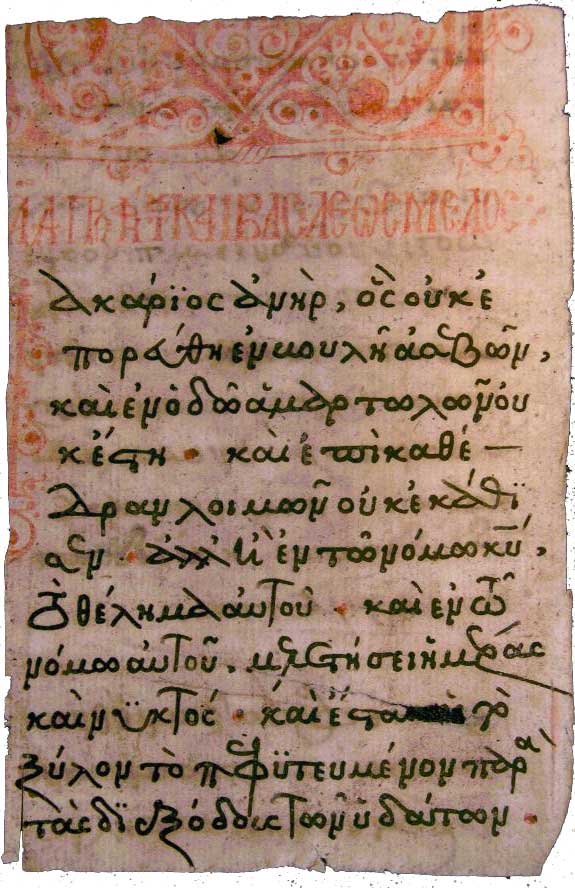 Yet another reason to love Sunday: it’s Septuagint Sunday at Words on the Word. (Settle down.) Here are some resources I’ve found helpful for the study of the Septuagint:
Resources Relating to the LXX. From the Codex biblical studies blog by Tyler Williams. This is up-to-date and probably the best place to start working your way through what’s out there in Septuagint land right now. Williams lists available English translations, introductions, Greek editions, language tools, topical studies, and electronic resources for the study of the Septuagint. He includes brief and helpful descriptions of each resource he links to. The page looks to have been last updated in 2009, but it’s still pretty current.
Rod Decker’s LXX Resources page. Decker is behind the ever-helpful Koine Greek Reader, which includes grammar review, vocabulary lists, and graded readings in the Greek of the New Testament, the Septuagint, the Apostolic Fathers, and a few early church creeds. His resources page has some very helpful Septuagint vocabulary lists. This one (PDF) has all words occurring more than 100 times in the Septuagint. And this one (PDF) has words that occur more than 100 times in the Septuagint but less than 25 times in the New Testament. The second list is ideal for those who know their NT Greek, but want to branch out into the much larger vocabulary pool of the Septuagint.
Septuagint Online. By Joel Kalvesmaki. He gives a great historical overview of the Septuagint, including clarifying some terminology (see here). And here is his link to other Septuagint resources.
The International Organization for Septuagint and Cognate Studies (IOSCS). The IOSCS is “a nonprofit, learned society formed to promote international research in and study of the Septuagint and related texts.” Yes, I’m a member, as of this last week (honey, sorry you had to hear about it on the blog, but it was only $15). The IOSCS puts out an annual journal, has published some Septuagint monographs, and even has a book-by-book commentary series on the Septuagint in the works.
Albert Pietersma’s page. Pietersma co-edited the New English Translation of the Septuagint (NETS, all online for free here). His page contains, among many other useful resources, a couple of .pdfs on various Psalms, where he does a verse-by-verse commentary that examines both the Greek and the Hebrew. He prints the Greek and the Hebrew before commenting on it, too, so it’s a great way to increase one’s language skills. This allows one to see the kinds of issues that Septuagint translators were working on.
You may also wish to bookmark this link, which gathers all my posts that have a “Septuagint” tag (including this one, previous ones, and future ones I post).

 Words on the Word