Three Worthy Loci of Study, Part 2: The Works of God

Last Sunday I preached about the discipline of study: “Paying Attention to Word, Works, and Table.” I am sharing my reflections on each of those three loci of study in a series of blog posts over the next few days: the Word of God, the works of God, and the table of God.


Studying the Works of God


We ought to study—pay careful attention to—the works of God. Richard Foster notes how quick we are, when thinking about study, to go the verbal route—to books and texts. He suggests we can profitably study the non-verbal, too: nature, relationships, even ourselves. We do well, especially, I think, to carefully attend to the works of God.

We see God’s works especially through creation and through salvation history. God worked in the world to create it, and he works today to sustain all that he made.

The Bible describes creation as a worthy locus of our study. The Psalmist praises God (143:5), “I remember the days of long ago; I meditate on all your works and consider what your hands have done.” And Psalm 8: “I look at your heavens, the work of your fingers the moon and the stars, which you have set in place….” The Psalmist studies God’s creation.

More specifically, Evelyn Underhill says:

As to the object of contemplation, it matters little. From Alp to insect, anything will do, provided that your attitude be right.

We see the works of God, too, through salvation history. “I will remember the deeds of the Lord; yes, I will remember your wonders of old. I will ponder all your work, and meditate on your mighty deeds” (Psalm 77:11-12).


Study God’s Works: How?


How can we study the works of God in creation, and throughout all of human history?

One verse you could think about memorizing this week provides a pretty neat answer to the question. Proverbs 6:6:

Go to the ant, you sluggard; consider its ways and be wise!

There’s a sense in which the giver of the Proverb excepts the ways of the ant to be self-evident: life is simple for them. But they’re industrious. They get it done, even if they don’t have a supervisor micro-managing them, as the next verse goes on to say.

But when Proverbs says, “consider its ways,” we can only get so far from memory. Go outside and actually find some ants and watch them! For, like, 20 minutes! See what you observe. Write it down or paint or draw a picture (or write a song about) what you’re seeing. Solomon implies that there is wisdom to be had in this exercise of studying a tiny creature in God’s good earth.

So, too, when Jesus says, “Look at the birds of the air” and “Consider how the wild flowers grow”… go bird watching with a field guide and some binoculars. Even if you don’t really know what you’re doing. Go find a field full of flowers and sit and stare.

And when it comes to the works of God that constitute what we call “salvation history,” you might bookmark those great chapters of the Bible that recount the story in short form: Nehemiah 9, Psalm 78, Peter’s speech starting in Acts 2:14. Read those passages and really pore over them. Get a good study Bible and let yourself get lost, following all the cross-references and study notes.

Study the works of God in the world: creation and the ongoing narrative of salvation.

Next up: the Table of God as a worth site of our careful study.

Three Worthy Loci of Study, Part 1: The Word of God

And we have the word of the prophets made more certain, and you will do well to pay attention to it, as to a light shining in a dark place, until the day dawns and the morning star rises in your hearts. (2 Peter 1:19)

In one sense, God’s gifts of presence and love come to us whenever they come, however they come, and wherever they come. But in another sense, there are things we can do to at least try to put ourselves in the path of God’s mercy.

Sunday I preached about the discipline of study. I subtitled the sermon: Paying Attention to Word, Works, and Table. I’ll share my reflections on each of those three loci of study in a series of blog posts over the next few days: the Word of God, the Works of God, and the Table of God.

Study is, at its heart, paying close attention. Study is carefully observing a text, an event, a creature, a relationship. To study something is to mull it over and to know it and to comprehend it more fully. To study is to go beyond a surface skimming and into the depths.

Think of study as a door to your mind and heart that you open, wider and wider… it is still the Holy Spirit who comes into the space you’re opening and dwells with you… but by repetition, and by devoting your time to the object of your study, you prop open a door the Holy Spirit can come through.

Romans 12:2 urges us to “be transformed by the renewing of [our] mind.” That call is preceded by another summons: “Do not conform any longer to the pattern of this world.” Conformity is the default, whether to the patterns of the world, or to the same cycles we develop in our thought life.

Something is going to make up our minds’ preoccupations anyway, so it might as well be, as Philippians puts it, those things which are true, noble, right, pure, lovely, admirable—whatever has these traits, “if anything is excellent or praiseworthy—think about such things.”

We need to practice the habit of study so our minds and hearts are themselves renewed, so we can be Christ’s agents of renewal in the world.
 

God’s Word: Pay Attention


Scripture is probably the first thing we think of when we ask, “What can we study?”

Ironically, we don’t have to study very long at all before we find many Scripture passages that call its readers to careful engagement.

  • 2 Timothy 2:15: “Do your best to present yourself to God as one approved, a worker who does not need to be ashamed and who correctly handles the word of truth.” (To do so requires more than just vague familiarity.)
  • Psalm 119: “I meditate on your precepts and consider your ways. I delight in your decrees; I will not neglect your word.” And, “Your word is a lamp to my feet and a light for my path.”
  • And Psalm 1: “Their delight is in the law of the LORD, and on his law they meditate day and night.”

For us Christians, we read these verses and have two Testaments to meditate on. But even in the Old Testament, the Law, or Torah, was not just a set or rules, but all the life-giving words that proceeded from the mouth of God.

So we give our mental energies to understanding Scripture, the words of God. We do well to read it, as best we can, on its own terms.

We can cut the poets more slack, and take them line by line.

We can appreciate the genealogies—even if we read through them as fast as we can, or skip them—as testaments to God’s faithfulness to particular people at specific times and places.

We can do our best to let Jesus speak for himself, and take seriously his radical calls to discipleship.

God repeatedly calls his people to the discipline of study, and he wants his words to be our focus.

  • Deuteronomy 28:13: “The LORD will make you the head, not the tail. If you pay attention to the commands of the LORD your God that I give you this day and carefully follow them, you will always be at the top, never at the bottom.”
  • Proverbs 4:20: “My son, pay attention to what I say; listen closely to my words.”
  • Proverbs 22:17: “Pay attention and listen to the sayings of the wise; apply your heart to what I teach….”
  • Hebrews 2:1: “ We must pay more careful attention, therefore, to what we have heard, so that we do not drift away.”

God wants us to pay attention.

And think about the word pay in pay attention: to pay is to agree to a cost, to give up a kind of currency in hope of gaining some good.

There is sacrifice involved in taking the time to pay attention to the words of God. We might consider how we forego multi-tasking when reading the Bible, and making it our sole focus. We might decide this week that we need to put some Bible reading into our calendar like we would any other appointment, to make sure it doesn’t get just two minutes here, three verses there.
 

Study God’s Word: How?


Nuts and bolts: how can we study the words of God? How can we pay attention closely?

You could read through a book of the Bible, start to finish, taking notes and writing down questions as you go. If it doesn’t kill you to write in your Bible, take notes in the margins, highlight, color coordinate. Or use a little pocket notebook to write down all those things that move you, that you want to hold on to, or whatever incites your curiosity and requires further study to really understand. Or you could find a small group of fellow church folk to meet with and dive in to study together.

Repetition is helpful—you might take a single Psalm or chapter from a Gospel and read it once every day in a week. See how your understanding of it progresses as you spend more prayerful time working through the text.

Another tried and true method for paying closer attention to Scripture is through a word study. Perhaps you’re on Psalm 23 and you read, “The LORD is my shepherd,” and you start thinking about shepherds. Our default might be to say, “Oh, that’s really nice. God is my shepherd. Baaa baaa.” And then we move on.

But really take time to consider “shepherds” in the Bible. Use a concordance or study Bible, or if you don’t have one of those, visit biblegateway.com to find all the other times the Bible uses “shepherd.” Who are the good ones and who are the bad ones? What does it mean to be under the care of a good shepherd?

You would probably uncover pretty quickly, in such a study, that many titles or aspects of God’s character are quickly followed by some kind of human response. “The Lord is my shepherd… (response) I shall not want.” How do the ones a shepherd guards respond?

And don’t go it alone, either—there are many centuries of devotional classics and rich commentaries on the Bible that can aid us in our study.
 

Memorize the Bible


In addition to studying the Bible in greater depth, we can memorize it.

Adele Calhoun, who writes about spiritual disciplines like study, says that memorization “gives the mind somewhere to go when all the media is turned off.”

Memorizing the Bible also gives your mind a good place to go when there is too much media turned on, and you need to regroup!

If you need to start small, you could work through a compendium of the shortest verses in the Bible: “Jesus wept” and, “Pray continually” … but then study the context and get behind what they mean and what they say to us today. You could memorize well-known passages like Philippians 2 or John 1 or Psalm 46.

We should study the Word of God.

Next up: the Works of God—both as seen in creation, and as seen in salvation history.

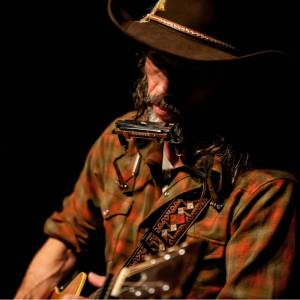
Bill Mallonee’s Lands & Peoples: Review and Ruminations

Bill Mallonee is a man of many albums–some 80 by the last count.

His 2015 album Lands & Peoples begins with a folksy steel-string guitar and upright bass, lifted up to the stratosphere by ambient loops in the background.

Then, before you know it, it’s all about that bass and Mr. Mallonee’s tried and true vocals:

Somewhere between a border town and outside Santa Fe
Where the moonlight casts her heavy sigh and sent me on my way
You learn to trust the compass stars woven in her hair
And you learn to read the poetry hanging in the thin air

This has to be autobiographical. How else could a songwriter produce so many meaningful lyrics, album after album after album? He finds them “hanging in the thin air”–the secret revealed.

Why, then, is Mr. Mallonee still “a drifter”? The music industry embraced him at one time, especially through the commercial success he experienced with Vigilantes of Love. (Yes, I even remember hearing them on the radio!) Mr. Mallonee, however, still has friends in earthy places:

Should you become a drifter, the Good Earth is your friend
And you learn to read her language till the bitter end

His vulnerability on the first song is what his listeners have come to expect and love about his music:

There was a Rosary on the rearview; this time it went unsaid
But, if Love gets the last word, maybe, I’ll be “ok.”

After the opening confessional, Lands & Peoples moves into the grooving “Hide Me in the Darkness,” a song where the upbeat tempo and its closing lines are a mismatch:

Just look on the bright side…just tend to your homestead
Just look on the dark side…plow’s broke and the horses are dead

But this is Bill Mallonee, gosh darnit, so the juxtaposition is surely intentional. It does not go unnoticed by the careful listener.

I think my favorite track on the album is “Steering Wheel is a Prayer Wheel,” which calls to mind everything I loved about Winnowing, his previous full-length album. And have I mentioned how much I like the drumming on this album, at its best on this fourth track? Who does it, you ask? You guessed it–Mr. Mallonee himself, the same one who sings/prays:

There’s only so much you can freight on your heart’s shaky scaffold
And the steering wheel is a prayer wheel on the open road

Mallonee-Lands and PeoplesOne of Mr. Mallonee’s enduring gifts is being able to turn on a dime from a heart-wrenching tune like “String of Days” to the gratitude-laced “Sangre de Christos.” The former is an addict’s lament, bemoaning the “losing streaks” that go “on for miles.” But he follows it with a prayer of appreciation uttered “under the blue skies.”

For Mr. Mallonee, it seems, life is all of one piece–ups and downs, joys and sorrows, laments and thanksgivings. All of it is as “poetry hanging in the thin air,” and he continues to pull it out, jot it down, and sing it like he means it–because he does. I love that about him.

I found myself having a hard time hanging in there with the second half of the album, but even so, there are more gems:

There’s a story that I’m writing
Would you help me hold the pen?
On every page you will shine just like a star
And if that deck is stacked?
We’ll just laugh and leave the table
And leave the dealer all alone there in the dark

And then “Hope the Kids Make it Out” came on, the second to last track. Ah, those interlocking guitars! The pulsing bass, the perfectly toned drums… the rock and roll. That’s one of my favorite Bill Mallonee songs in the last decade.

I still have a preference for Winnowing, perhaps in part because I randomly stumbled on it late one Friday night, not having kept abreast of Mr. Mallonee’s catalogue for some time. I stayed up and listened to the whole thing all the way through, a moment of being-ministered-to that I needed then. So perhaps it’s unfair to compare this newer full-length to that work of genius, but so it goes.

One way or the other, Lands & Peoples is pretty easily a top 10 Bill Mallonee record, through and through. (About how many artists can you say their album is one of their best 10… and it be a compliment?) That he covers so much territory–drums, vocals, guitars, bass, etc.–makes it all the richer a listen, musically and lyrically.

You can learn more about the album, read the lyrics, and listen and download here.


My sincerest thanks to the musical powers that be, who gave me the album to download for review, but with no expectation as to the content of my write-up.

Review: HEX Century Icon Folio for iPad Air 2

Last month I reviewed an iPad Air 2 case from KAVAJ and said:

As with iPad Mini cases, there are a lot on the market–so many that one could easily get lost in the three-hour rabbit hole of trying to find just the right one.

I’m not sure I have found just the right one for the iPad Air 2. There are a couple that are close–I’ll share about those in due course.

One of the cases that is close to being just right is the Century Icon Folio for iPad Air 2, from HEX Products.


What I Like About the Icon Folio


It’s not all leather, but the external material is primarily waxed canvas of high quality. The casing around the iPad itself is hard rubber. The HEX case strikes a neat balance of professional, classy, and casual.


Front


Back


The cut-outs for volume buttons, headphone jack, and camera are 100% A++.


Hole Cut-Outs


It’s a slim case, which makes it a good one for pulling in and out of a satchel a lot. It doesn’t add any bulk to the iPad.

You’ll have seen in the images above the elastic strap–you can use this to secure the bi-fold case, so that it doesn’t inadvertently open in your bag. The strap is thick and has the perfect amount of tension.

A key feature of the folio is the inside compartment where you can put three cards, cash, and a few notes, as you like:


Left Inside Card Slots


You can squeeze enough in here that you could take literally just this case and its contents to your favorite working spot (if you didn’t need an external keyboard).


Open


What I Don’t Like About the Icon Folio


Just two minor critiques to offer:

1. There’s no mechanism whereby you can make the case stand or prop up. In other words, the front of the case doesn’t fold as other cases do, for when you want to sit your device on a table and watch something or use an external keyboard with it.

2. After only a little use, part of the (faux?) leather strip on the side was starting to separate from the hard rubber. Nothing major, but one does hope this doesn’t worsen with time, especially given that this is not an off-brand, $20 option.


Bonus Feature, and Where to Get It


Bonus feature: though I haven’t seen HEX advertise it anywhere for this case, it does have a sleep/wake feature, so that when you close the case with the iPad on, it puts the screen to sleep automatically to save battery. This functions as it should consistently.

You can learn more about the HEX case at their Website here. And it’s available on Amazon here.


The kind folks at HEX provided me the case for the review, without expectation as to my review’s content.

New Teen Daze Music! New Teen Daze Music! New…

Teen Daze Célébrer

I’d never heard of Teen Daze before last August. His/their Morning World was one of my favorite new releases in a very long time.

Today I received an email that there is more Teen Daze music. I’m listening to each of these mini-releases, song by song. The feel of the lead single “Célébrer” is pretty different from Morning World, even different from his other more synth-heavy stuff. But it’s pretty sweet.

Here–I’ll just quote a chunk of the email/press release, since it hyperlinks to all the songs. Enjoy!

After releasing last year’s full length, Morning World, Teen Daze has announced that 2016 will see the release of several new, dance-oriented singles.  The first, Célébrer, is already available to stream and download.  Along with the single, you can dive into the first episode of Célébrer Radio, a new, hour long mix series, featuring 60 mins of upbeat dance music.

In other new release news, Teen Daze has contributed a new song to the latest alaya. compilation.  The serene, spacious track, Narrow Road, Too Deep, was created in several different countries and was inspired by “cyclonic weather in Northern Australia, the great new age artist Laraaji, and humid days exploring the labyrinth of Hatsudai, a neighbourhood in Tokyo.”

On top of all of this, there have been two new Teen Daze remixes that have dropped in the last two months.  Check out the dreamy rework of Japanese Wallpaper’s beautiful song, Forces, and the dance floor-ready edit of Drake’s Hotline Bling.

For *Whom* Is Prayer?

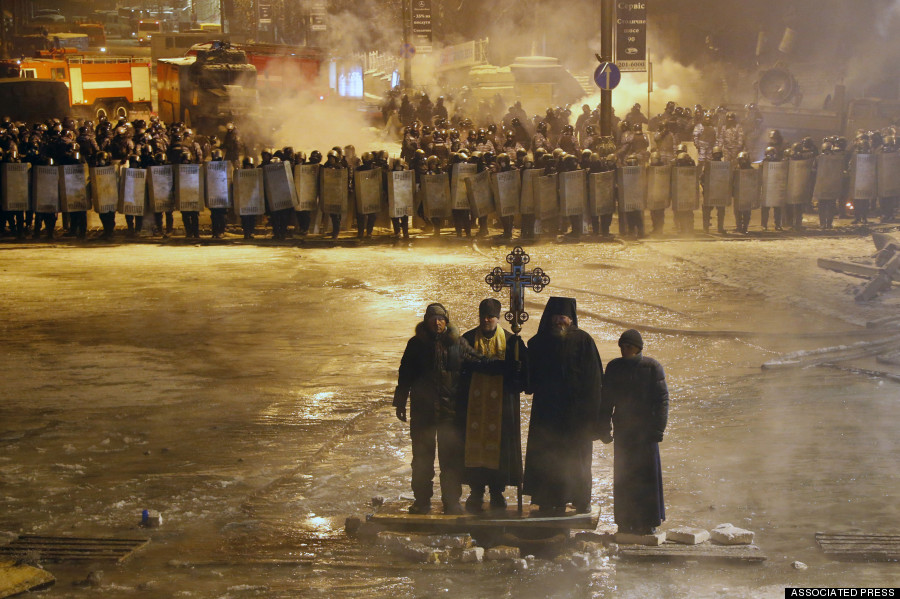
(AP Photo/Sergei Grits)


Who is prayer for? Or if we’re going to be grammatically proper and stylistically sensitive, “For whom is prayer?”

I want to suggest:

  1. Prayer is for us.
  2. Prayer is for God.
  3. Prayer is for the world.


1. Prayer Is for Us


It’s not selfish to say that prayer is for us.

Prayer changes us and shapes us into God’s image.

When we spend time with another person, they rub off on us. This is especially true with a family member, close friend, or romantic partner. A relationship with God works this way, too. The more we spend time with God–and prayer is a way we do this–the more like God we can become.

Richard Foster says,

To pray is to change. Prayer is the central avenue that God uses to transform us…. In prayer we learn to think God’s thoughts after Him: to desire the things He desires, to love the things He loves, to do the things He wills.

Prayer centers us.

How many times have you been in the throes of indecision or stress or frustration, and realized that you hadn’t prayed about it… and you stop and pray… and even if all of life’s challenges don’t go away, you feel focused. A little bit more at peace. Re-calibrated. Prayer centers us.

Prayer is how we express our need for God, and how God responds.

To pray, then, is to build a relationship with God.

Thomas Keating, a Catholic who is perhaps best known for his work on centering prayer, puts it like this:

When we say, ‘Let us pray,’ we mean, ‘Let us enter into a relationship with God,’ or, ‘Let us deepen the relationship we have,’ or, ‘Let us exercise our relationship with God.’

Prayer is for us. It changes us and shapes us into God’s image. Prayer centers us. And prayer is the way we cultivate our relationship with God.
 

2. Prayer Is for God


Our praying is for God, too. Prayer is an offering we give to God. With our tithes and offerings in church we pray, “All things come from thee, O Lord, and of thine own have we given thee.” This is true not just about our money but about our time, about our very selves.

To pray when we would rather be thinking about nothing, or thinking about something else, or plotting our own course by our own wits–to pray is to sacrifice. It’s to give our time to God. It is to devote our attention to God. It is to be ready for an encounter where our desires, instincts, and inclinations may be changed. To pray is to seek to grow our relationship with God.

Because of who we know God to be, we return thanks, we praise him, we glorify him, we honor him… prayer, in this sense, is for God.
 

3. Prayer is for the World


Finally, if prayer is for us, and if prayer is for God, then it’s also for the world.

What better way is there for us to link together the grace of God with the hurts of others? You don’t even have to ask a person’s permission to start praying for them! You can just do it.

A writer I’m quite fond of writes about it like this:

Intercessory prayer can be thought of as incarnational prayer. It saves us from the worst kind of fixation on internal states by turning us outward, and in that turn, finding ourselves turned Godward, gathering the needs and suffering of others, reconnecting them to a Divine Source. That Presence in turn catches us up in its living, out-reaching activity.

Through prayer we connect the grace of God to the needs of others.

I suspect every preacher (let alone blogger!) has a hobby horse or two. As much as we pastors try to preach the whole counsel of God, and as much as we try to offer variety… these are the things we keep repeating, knowingly and unknowingly.

For me, one of these truths worth repeating is that prayer is not something you do before you act or after you act or even as you act. To pray is to act. To pray for another is to act on that person’s behalf. To pray for justice is to work for justice. Prayer is action. It’s not the only kind of action God wants us to take… but in and of itself, it is perhaps the most important kind of action. Because in prayer we connect ourselves and our efforts to a power and a love that is far greater than anything we ourselves have to offer.

In this way, to pray is to act for the good of the world.

We pray for our own sake… we pray as homage to God… and we pray for the good of the world.


The above is adapted from the first half of a sermon I preached Sunday.

Lazarus: You Don’t Have to Wait, Because Jesus is Resurrection NOW

Do you notice how often John, in chapter 11 of his Gospel, defines Lazarus by his sickness?

“Sick” or “sickness” appears five times in the first six verses.

v. 1: “ a man named Lazarus was sick
v. 2: “Mary, whose brother Lazarus now lay sick
v. 3: “Lord, the one you love is sick.”
v. 4: “This sickness will not end in death.”
v. 6: “he heard that Lazarus was sick

Add to that: he was from Bethany, a town meaning “house of the the poor” or sick. “Sick” is the main description of Lazarus.

Lazarus: Brother, Beloved

Who else was he? Lazarus was brother to Mary and Martha.

These were sisters John’s audience knew well enough that John could just identify Mary by a single story: “the same one who poured perfume on the Lord and wiped his feet with her hair.”

It was “this Mary, whose brother Lazarus now lay sick.”

Lazarus was a brother. And Lazarus was a beloved. Verse 3 says, “So the sisters sent word to Jesus, “Lord, the one you love is sick.””

Some say the so-called “disciples Jesus loved” is not John but Lazarus… this verse would be evidence for that view. Lazarus was a brother and beloved friend.

Lazarus: DEAD

As the account progresses, Lazarus becomes defined by his being dead. “He’s that guy who died.”

v. 11: “Our friend Lazarus has fallen asleep
v. 13: “Jesus had been speaking of his death
v. 14: “Lazarus is dead
v. 16: “Let us… die with him
v. 17: “Lazarus had already been in the tomb for four days”
v. 19: “the loss of their brother”
v. 21: “If you had been here, my brother would not have died
v. 37: “Could not he who opened the eyes of the blind man have kept this man from dying?”
v. 38: “’But, Lord,’” said Martha, the sister of the dead man”

Even in verse 44 after Jesus has said, “Lazarus, come out,” John doesn’t say: And Lazarus came out… he says, “The dead man came out, his hands and feet wrapped with stops of linen, and a cloth around his face.”

John primarily describes Lazarus as either sick or dead.

And he heightens the pathos of the narrative by noting he is a brother and a loved one.

Lazarus: Locus of God’s Glory

But there’s one more thing that John says about Lazarus—he is the site of the revelation of God’s glory. He is the locus of God’s Son being glorified.

The miracle sets the stage for the rest of the book of John.

It’s the 7th of the 7 Signs of Jesus in John. We’ve seen Jesus turn water into wine, perform three healings, feed the multitudes, walk on water, and now he’s about to raise a man from the dead.

This paves the way for Jesus’ own resurrection from the dead, which John will narrate at the end of the Gospel.

Look at verse 4: “When he heard this, Jesus said, ‘This sickness will not end in death. No, it is for God’s glory so that God’s Son may be glorified through it.’”

Lazarus is the one through whom Jesus reveals himself to be the resurrection and the life. Lazarus’s death is an occasion for Jesus to show everyone more about himself, leading up to his own resurrection.

Remember that—I’ll come back to that in a bit: Lazarus is the one through whom Jesus reveals himself to be the resurrection and the life.


The Story of Lazarus


So that’s Lazarus, as John tells it: Sick… a brother… a beloved friend… then dead… but ultimately the locus of Jesus’ revelation and God’s glory.

The Setup

Jesus gets news of Lazarus’s sickness, and even though John’s about to describe Lazarus as “the dead man,” Jesus says, “This sickness will NOT end in death.”

But Jesus stays put for two days.

And he hears about it from Mary and Martha. Both sisters, independently of each other, say, “Lord, if you had been here, my brother would not have died!”

God, if you had intervened—and you could have—this man I love would have been healed. Or maybe he wouldn’t have even gotten sick in the first place.

Theodicy: Jesus Mourns with Us

This chapter actually makes an enduring contribution to Christian theodicy, or the practice of trying to justify how an all-powerful God could stop evil but doesn’t.

John doesn’t address the question directly, but he does show a Jesus who comes alongside his loved ones in adversity, and mourns with them.

John 11:35 is the shortest verse in the Bible, and the best one to start with if you want to up your Scripture memory game. It just says, “Jesus wept.” “Jesus wept.”

It’s not the only time in the New Testament that someone cries, but John uses a word for weeping that is only used here in the New Testament. A richer translation is: “Jesus burst into tears.”

He mourns when death seems to have gotten dominion—Jesus is even angry at the injustice of it all. We Christians don’t need to fear death, but it’s awful to lose a friend, a family member, a loved one.

Jesus mourns—bursts into tears, even—right along with us.

The Jewish co-mourners—the ones who were comforting Mary and Martha—are taken aback and say, “See how he loved him!”

Jesus’s weeping was motivated by love.

So that’s a nice sidebar in this story, I think—it doesn’t solve the problem of evil, not at all. But Jesus’s response does remind us that where there is suffering, where there is death, where the unfair and unthinkable happen… in those places, Jesus weeps with us, because he is a loving, compassionate, and empathetic God.

The Sign

And then the sign comes—verse 43, Jesus says in a loud voice: “Lazarus, come out!”

We don’t even get a response from Lazarus—he walks out like a mummy, all his death clothes still wrapped around him.

And then, you kind of feel bad for the guy…. After Lazarus is resurrected, in chapter 12 the religious leaders would make a decision about him. They decide not only do they want to kill Jesus, they want to kill Lazarus, too! Even after this awesome miracle, he might be dead again soon.

Jesus is like, “Come on! I just… got him out of there.”


Jesus is Resurrection NOW


The Crux of the Passage

As I’ve read and re-read this passage, as I’ve studied and puzzled over it… I keep coming back to verses 21-27.

They are the crux of the passage.

“Lord,” Martha said to Jesus, “if you had been here, my brother would not have died. But I know that even now God will give you whatever you ask.”

Jesus said to her, “Your brother will rise again.”

Martha answered, “I know he will rise again in the resurrection at the last day.”

Jesus said to her, “I am the resurrection and the life. He who believes in me will live, even though he dies; and whoever lives and believes in me will never die. Do you believe this?”

“Yes, Lord,” she told him, “I believe that you are the Christ, the Son of God, who was to come into the world.”

There’s a cosmic interplay in their conversation between present and future, between resurrection later and resurrection now.

Martha says, “I know Lazarus will rise again in the resurrection at the last day.”

This is common Jewish teaching. The Pharisees believed in a resurrection. The Sadducees didn’t—that’s why they’re so sad, you see. Martha’s response is not unexpected.

Especially since Jesus in John 6 said, about a million times, “I will raise them up at the last day.” Anyone who comes to me, who eats this bread of life (that is me, Jesus), will never die, will live forever, and I will raise them up at the last day.

Martha is tracking with the best of Jesus’ students here.

Resurrection at the last day is not only standard Jewish teaching—it is standard Christian teaching. We affirm that we will experience the joy of resurrection, in body and soul, at some future day we call “the last day.”

At Funerals and during Easter are the two times we’re most aware of the promise of resurrection.

Jesus doesn’t argue with Martha, about raising people up at the last day. There’s nothing for him to correct in her future eschatology. Hope in a future resurrection is kind of the anchor for our faith.

But Jesus pushes a step further and says, “I am—RIGHT NOW—the resurrection and the life. Whoever believes in me will live, even though they die, and whoever lives and believes in me will never die.”

“I am—not just tomorrow, not just in the last day, but right now, present tense, in this very moment—I am the resurrection and the life.”

Immediately after saying so, Jesus gives a manifestation—a pretty literal one—as to what it means that Jesus is the resurrection right now for those who believe. He raises Lazarus from the dead.

By a supernatural sign Jesus shows that the power of the resurrection is not just for tomorrow or some later date, but for this day.
 

We are Lazarus


I suspect John wants us to use Lazarus as a sort of mirror, a character in whom we find ourselves.

Lazarus was sick. We get sick. We have physical ailments.

And if we allegorize a bit, we have mental lapses, emotional breakdowns, and plenty of imperfections. We see lack of health in ourselves.

Also like Lazarus, we were dead.

“As for you,” Ephesians says, “You were dead in your transgressions and sins…. All of us also lived among them at one time, gratifying the cravings of our flesh and following its desires and thoughts. Like the rest, we were by nature deserving of wrath.” Before coming to know Jesus, we were as good as tomb-dwellers.

Lazarus is also the one Jesus loves. His beloved. John himself, in one of his short church letters, will call his recipients beloved. We are loved by Jesus, just like his friend Lazarus.

We’re like Lazarus in his sickness… like Lazarus in his death… and like Lazarus in resurrection.

That Ephesians passage continues:

But because of his great love for us, God, who is rich in mercy, made us alive with Christ even when we were dead in transgressions—it is by grace you have been saved.

Even now we are raised to new life in Christ, remade in him from sickness to health, and from death to life.

Resurrection People

Scripture is rife with passages that suggest resurrection isn’t just for later, but for right now, for those who are people of God.

Paul says in Philippians 3, “I want to know Christ and the power of his resurrection.”

Romans 8:4 says:

Therefore we have been buried with him by baptism into death, so that, just as Christ was raised from the dead by the glory of the Father, so we too might walk in newness of life.” (Right now!)

Had we been protesting the lack of resurrection in our lives, we might have shown up to a rally, chanting, “What do we want? Resurrection! When do we want it? Now!”

Later in Romans 8, we hear:

And if the Spirit of him who raised Jesus from the dead is living in you, he who raised Christ from the dead will also give life to your mortal bodies because of his Spirit who lives in you.


Resurrection Now


In Living the Resurrection Eugene Peterson (whose Message translation inspired the title of this post) observes that the ones who witnessed Christ’s resurrection were afterwards “walking the same old roads over the same old ground they had grown up on and talked and worked on, with the same old people they had grown up with.” He says:

Now it was becoming clear to them… that the resurrection also had to do with them and the ongoing circumstances of their lives. … They were beginning to get the sense that Jesus’ resurrection had everything to do with their ordinary lives. They needed practice in this reorientation, and they plunged into ordinariness—the old familiar workplace of sea and the fishing boat.

Because Jesus is the resurrection and the life, right now, we live in the light of the resurrection… right now. We already walk and live and work in a new reality—we don’t have to wait for it.

How do we receive such a gift? If we are to be resurrection people right now, how do we practice living out that identity?

Answering this question will actually be a churchwide focus in Lent.

Lent might feel more like crucifixion than resurrection for you. But we have already been raised to new life, just like Lazarus. And there are methods of engagement we can employ to put ourselves in a position to receive God’s grace, God’s new life.

In Lent our congregation will be trying out a series of weeklong habits—“spiritual disciplines” is the familiar name for them. Each Sunday I’ll preach about one practice Christians throughout the centuries have used to open up to God, to receive Jesus as resurrection and life… and then we’ll practice on our own that week.

And as we re-gather Sunday after Sunday in Lent, we’ll do it at this same communion table. At the table we receive a taste of that new life, and a reminder that the resurrected life is ours to receive and live, every day.

We don’t have to be defined—as Lazarus was—by our sickness, by our imperfections, by our falling short.

We don’t have to be identified—as Lazarus was—as being dead… in our case, dead in our transgressions and stupid sins. We are no longer cut off in darkness from the land of the living.

We are, like Lazarus, identified as God’s dearly loved children. Jesus, the resurrection and the life, calls us to put our full trust and faith in him.

And through his resurrection power, he calls us (right now!) into newness of life.


The above is adapted from a sermon I preached last Sunday, the last in a series on the Seven Signs of Jesus in John.

New Story of God Bible Commentary Volumes: Genesis and Romans

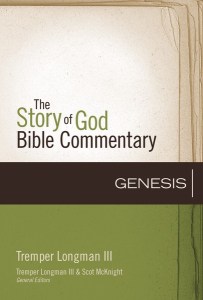
SGBC GenesisScot McKnight set the bar high with his Sermon on the Mount volume in The Story of God Bible Commentary series.

Now there are two more volumes: Genesis, by Tremper Longman III, and Romans, by Michael F. Bird.

As Tremper Longman III describes in the video below, The Story of God Bible Commentary has three primary focuses:

  1. Listening to the Story
  2. Interpreting the Story
  3. Living the Story


You can read my review of McKnight’s Sermon on the Mount volume here. Also published so far have been Lynn H. Cohick’s Philippians and John Byron’s 1 and 2 Thessalonians. You can find the series landing page here.

Feb. 8: Happy International Septuagint Day!

International Septuagint Day


Today, February 8, is International Septuagint Day. Happy LXX Day! So read yerself some Septuagint today, in Greek or English.

A few more links to explore:

The Word from Words on the Word on Word. Pocket Notebooks

Here, in one page, is my assessment of the Dot Grid pocket notebooks from Word. Notebooks:


Review IN SUM


Here are a few more notes I took before summarizing, if you want some more details:


Review Text Notes 1


Review Text Notes 2


Here are the hyperlinks:

Word. Notebooks // Word. Dot Grid


And now… images follow–click or tap to enlarge. (All the images above are of text written in Word. notebooks themselves.)


0_Package


1_In wrapper


2_Back wrapper


3_Back inside cover


4_Inside dot grid


5_Front cover


Thanks to the friendly folks at Word. Notebooks for the review samples, given to me with no expectation as to the content of my review.