Betrayed


Who betrayed Jesus? People, institutions, and… God? Who has betrayed you? And how can the cross speak to your betrayal?

I was honored to be invited to preach at The 7 Last Words of Jesus Christ worship service at St. John Missionary Baptist Church in Roxbury, MA, hosted by the Black Ministerial Alliance Ten Point Coalition.

I preached on: “My God, My God, why have you forsaken me?” Recording above (with an awesome congregation of saints), transcript below.


Jesus was betrayed

Who betrayed Jesus?

Judas comes to mind.

Judas would move from a loving disciple and a safe person, to a treacherous informant. Judas would not protect Jesus but would turn him over. Judas betrayed Jesus.

Who betrayed Jesus?

Peter betrayed him, too.

Peter was even part of an inner circle of Peter, James, and John. Peter had VIP access to miracles and teachings. If anyone should defend Jesus, if anyone should show up for him, it’s Peter.

Yet when Jesus predicts his own death and resurrection, Peter rebukes him! Even before Holy Week Peter starts to deny Jesus: “Far be it from you, Lord!,” he says. “This shall never happen to you” (Matt. 16:22). That’s a betrayal of Jesus and his mission.

Peter’s betrayal of Jesus would go even deeper, when he denied Jesus—publicly and loudly—three more times during Holy Week.

More: when Jesus gets to the Garden of Gethsamene, he pleads with his disciples, “My soul is overwhelmed with sorrow to the point of death. Stay here and keep watch” (Mark 14:34). He just wanted his disciples to stay awake with him, to show some solidarity. 

He was “overwhelmed with sorrow to the point of death”—that’s the language of the traumatized, even before Jesus was arrested.

Jesus finds his crew sleeping. “Could you not keep watch for one hour?” (Matt. 26:40) he says. Betrayed by loved ones, yet again!

Surely Jesus’s family would stick with him.

Very early in Jesus’s adult ministry. Jesus appoints the 12, pulls them together, and then (Mark 3:21): “When his family heard about this, they went to take charge of him, for they said, ‘He is out of his mind.’”

His family—whom he relied on for safety and support and nurture for 30+ years—tried to seize him. And they called him crazy!

I get we might say, “Well, family is crazy.” But his family’s “intervention” was also a betrayal. They want to sideline Jesus, clip his wings, undermine his God-given mission.

Jesus Christ was betrayed at just about every turn—by one of his 12, by one of his 3, even by family.

That’s just at the personal level.

There’s still more to Who betrayed Jesus?

Jesus also experienced “institutional betrayal.”

I only learned that phrase recently: institutional betrayal. But as soon as I heard it I thought—oh, I know what that is!

There were institutions that were supposed to provide for and protect Jesus but didn’t, in the end.

Like: the temple. Like: the religious leadership, the chief priests and the elders and the Bible scholars of his day that he amazed at age 12 when he taught them.

Jesus was as observant and as close to God as you could get, and yet time and time again, he found himself betrayed by the religious institutions that were supposed to treat him with dignity. Many religious leaders handed him over, and parts of his religious community shouted “Crucify!”

And then, Jesus found himself betrayed by the political institutions of his day. The Roman Empire had the power to actually do something. Jesus deserved a fair trial. He deserved an advocate in Pontius Pilate, and instead he got, I wash my hands of him.

Jesus betrayed again, by a person, Pilate, and with the full weight of the institution of the Roman empire behind him.

The researcher Jennifer Freyd says institutional betrayal is a “fail[ure of institutions] to intervene,” on behalf of people who depend on those institutions.

Institutional betrayal is when ones appointed to protect and to serve instead neglect and betray.

And it’s so much worse when all these people—Judas, Peter, Jesus’s family—and these institutions—the Temple, Rome… they all have provided Jesus with support… until they withdraw it. They all loved him and nurtured him and respected his rights… until they betrayed those rights. They were all so trusted and trustworthy… until they weren’t.

So when Jesus cries out from the cross, “My God, My God, why have you forsaken me?” behind those words is the weight and pain and trauma of a lifetime of betrayals.

And now, even you, O LORD, are forsaking me? Et tu, Yahweh?

The personal betrayal was bad enough.

The institutional betrayal put Jesus up on this cross.

And now, Jesus asks, with the whole world listening: is there divine betrayal, too?

What happened to “I and the Father are one?” What happened to, “This is my Son, whom I love; with him I am well pleased”???

Whatever we make of the theology of it, Jesus’s prayer is a powerful portrayal of how a deeply traumatized person feels:

Abandoned.

Disoriented.

Fragmented.

Fractured.

Alienated.

A stranger to the world. A stranger to yourself.

“My God, My God, why have you forsaken me?”

You have been betrayed

Maybe, on some level, you can relate to this Jesus who knew so much betrayal. Maybe you have held in your body the overwhelming pain that betrayal trauma causes.

Like Jesus, do you know what it feels like to be betrayed by a friend or a family member? Have you been working with colleagues for a common cause, and you thought you were together, only to have them undermine what you had all agreed to?

Like Jesus, do you know what it feels like to be betrayed and exploited by the institutions that were supposed to be there for you? Have you brought your deep pain to the institution we call Church, only to get hurt even more? Have you been betrayed by a religious leader or political leader, when you turned to them for safety, and instead they tried to devour you?

And like Jesus, after all this betrayal you’ve felt, have you prayed—or wanted to pray—“My God, my God, why have you forsaken me?” Have you wondered if God—whom you trusted—had betrayed you?

However we wrestle with the theology of Jesus’s prayer, we know this: Jesus said it. Jesus prayed that prayer for all to hear: “My God, My God, why have you forsaken me?”

So Jesus knows that prayer when he hears it from you. 

Jesus knows what you feel like, when you’ve been betrayed: by people, by institutions, when you wonder if you’ve been betrayed by God.

When you ask Jesus to get you out of this “Godforsaken mess,” Jesus remembers the cross.

Resurrection, already on Good Friday

After Jesus prays, “My God, My God, why have you forsaken me?” he cries out again, he dies, and then…

“Behold! The curtain of the temple was torn in two from top to bottom. The earth shook, the rocks split and the tombs broke open. The bodies of many holy people who had died were raised to life.” (Matt. 27:51-52). 

“Raised to life”!

Jesus just died. We are just seconds away from betrayal trauma and torture overwhelming his faculties to the point of death, and we hear:

“The bodies of many holy people who had died were raised to life.”

Something with resurrection happened, not just Sunday at the tomb, but Friday at the cross. Something must have happened with that prayer—“My God, My God, why have you forsaken me?” Because already Jesus’s death was bringing wholeness, power, and resurrection.

The temple curtain ripped. The temple—that institution that had betrayed Jesus. A dividing curtain is ripped in half.

The ground shook and rocks split in two—this is a new, powerful world that only Jesus can bring. “Even the rocks will cry out” with life.

Those tombs—that included saints of old who were betrayed unto death—those tombs opened up. The dead were raised to life.

Being betrayed and feeling Godforsaken… violates even your ability to make meaning of life. Yet Jesus’s betrayal, Jesus’s trauma at the cross, Jesus’s cry of Godforsakenness… gives new meaning to all pain and suffering.

The cross means you have new life, right now, even when you are betrayed and feel like you’re dying. Even on your Good Friday, the cross means resurrection.

Bodies are already raised to life, even while Jesus is still on the cross.

The cross means that even when people and institutions betray you, God will, in fact, not betray you, because the dead—even the dead are raised! God will not forsake you. God will not leave you for dead.

God has brought you back to life, and God will bring you back to life as many times as you need,

so you can breathe again,

so you can walk again,

so you can live again,

so you can trust again.

There is resurrection even on Good Friday. “My God, My God, why have you forsaken me?”

And the answer comes—even before Easter! The answer to Jesus’s fourth word on the cross comes on Friday:

Here I am, tearing the curtain in two!

Here I am, shaking the earth. Here I am, splitting the rocks!

Here I am breaking open the tombs. Here I am, raising the dead to life!

Here I am, raising your bodies, your bodies that have known so much hurt and have held so much injury and have borne so much pain.

Here I am, raising your bodies that have been betrayed again and again and again.

Here I am raising your body to new life, right now, even on Good Friday.

anImage_2.tiff

The above is cross-posted at Healing Pastors.

Why do we call it GOOD Friday? Should we stop?

“I think Job’s friends should have gone to therapy school.” –my pre-teen


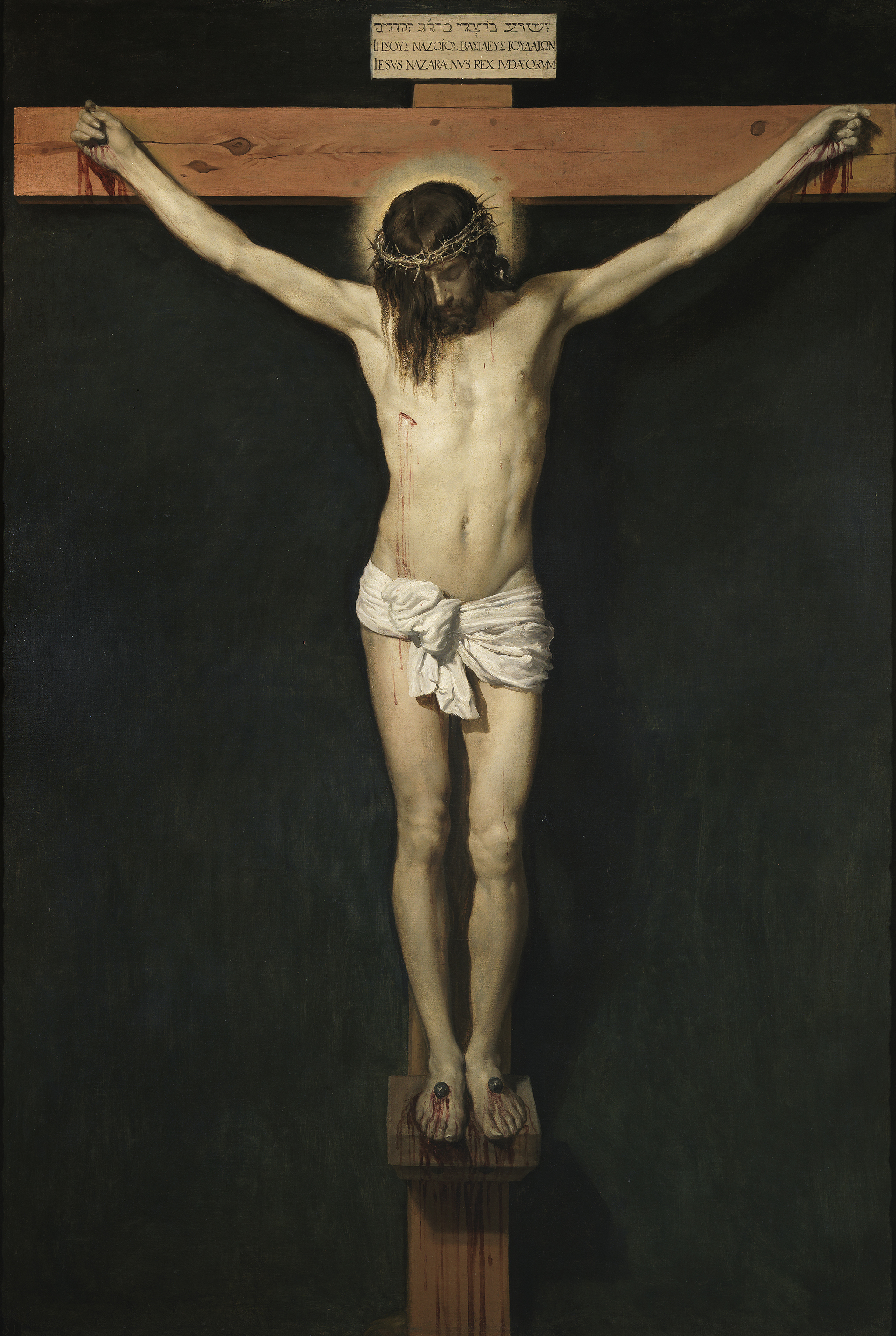
Christ Crucified, Diego Velázquez (17th cent.)

Around this time every year, I join my voice to the chorus of dressed-up church children everywhere, asking: “Wait, why do we call it GOOD Friday?”

My stock answer goes something like this: Even though Jesus died on Friday, he came back to life on Sunday, defeating sin and death, and giving the promise of new, resurrection life to all people! His death on Friday became good, even though it didn’t look so good at first.

And there are implications for us: what looks not-so-good at first, even suffering and death, can turn into good, especially when God is at work. In Genesis 50:20 Joseph says to his brothers: “You intended to harm me, but God intended it for good to accomplish what is now being done, the saving of many lives.” God brought wholeness out of harm, good out of evil. Joseph, without meaning to, foreshadows what would happen with Jesus on Easter weekend.

I still stand by this understanding of “Good” Friday. But I also worry about a human tendency to underestimate suffering, or to fetishize it. Theologian Christopher B. Hays says, “Indeed, there are times when suffering is simply evil, and must be resisted rather than embraced. The suggestion that other people’s suffering is redemptive is particularly dangerous; it risks making the observer complicit in the evil.”

Job’s friends wanted to find “other people’s suffering” (Job’s) redemptive, somehow. They wanted to see a cause-and-effect answer to why Job lost everything. Eliphaz, Bildad, and Zophar went to great lengths and used many, many words to try to find greater meaning in Job’s suffering. 

They must have really wanted to turn his Terrible, Horrible, No Good, Very Bad (Fri)Day into Easter Sunday. 

Maybe their pontifications weren’t for Job’s sake, but to ease their own theological cognitive dissonance.

After hearing one too many times that “Everything happens for a reason,” Job said: “I have heard many things like these before. What miserable comforters are you all!” (Job 16:2) 

Thou shalt neither minimize nor romanticize my suffering, in other words.

We can be like Job’s friends: downplaying suffering because we can’t handle how awful it is, or over-glorifying it because of the power of post-traumatic growth. Both are strong human impulses—in which I’m sure I’ve participated.

But even with Good Friday soon to give way to Resurrection Sunday, the horrors of crucifixion invite—even demand—that we take seriously pain and suffering and loss and trauma and torture and abuse.


The church traditions of The Stripping of the Altar and not-celebrating Eucharist on Good Friday are embodied ways of locating ourselves at the foot of the cross, as if in real time. 

If you’ve ever sat in a quiet and dark sanctuary with an eerily bare altar in Holy Week, you might have felt trapped in time. Or dislodged from your day-to-day travels through the space-time continuum. You might have even been able to inhabit a space where—even if only for a moment—you couldn’t conceive how it was going to all turn out.

I think we need such quiet moments. They help us avoid a triumphalism that skips past Good Friday and goes right to Easter, that skips death and goes right to life. So we linger at the cross a little longer, before we run to the tomb. We actually observe Good Friday.

But this Holy Week I’m wondering about going a step further. Even within Good Friday, what if I slowed down some aspects of the day itself?

I am asking: 

How might my participation in Good Friday change if I tarried a little longer with Jesus’s suffering, and with the suffering of the world borne on his shoulders? 

What would a Good Friday be like that didn’t hurry to ascribe greater cosmic significance to Jesus’s suffering, but just took it in, looking the crucified, tortured, abused Lord in the eyes? 

What if I tried to neither minimize Christ’s suffering (because I can’t handle the atrocity of it) nor romanticize Christ’s suffering (because I need suffering be redeemed)?

What if, this Good Friday, I put the meaning-making on hold and tried to just sit quietly with Jesus in his agony?

anImage_2.tiff

The above is cross-posted at Healing Pastors.
Healing Pastors

An image of a pier, the ocean, and the sun.


This is my third post in a row pointing to other places I’m writing. I haven’t abandoned Words on the Word, but I am excited to have started a new blog that had been an idea for months: Healing Pastors.

What it’s about:

Healing Pastors helps pastors bring greater trauma sensitivity to their congregations, while also helping pastors process and heal from their own trauma.

So far there are five posts:

    1. Healing Pastors: A Fragmentary Manifesto   
      Cometh the hour, cometh the (hu)man.

    2. Trauma-Informed Worship Leading of “It Is Well”: Something I Think Worked, Something that Definitely Didn’t   
      What if it’s not “well with my soul”?

    3. Prayer that Despairs, Even of God?   
      “I want to hit you… and hug you… and run away… all at the same time!”

    4. 4 Bluebirds Before an Interval Run: The Easy Yoke of Healing   
      The only way out is through? Tell it to the birds.

    5. Speaking—or Not—in the Aftermath: (Post) Trauma Rock   
      A genre of music that needs to be a THING.


Substack has paid subscriptions available. Anyone can become a “paid subscriber” to Healing Pastors, which as of now offers the sole benefit of supporting the work. Everyone can read everything there for free.

And more will follow. (Now writing: Where are the Psalms of Bathsheba?)

Find it all here, and feel free to subscribe to have future posts delivered to your probably already overcrowded inbox, but I hope that Healing Pastors emails/posts will be life-giving to you!


I’m Writing at The Broken Road

A screenshot of The Broken Road Substack home page
still here


This blog has been quiet, but I am still writing.

I’ve been focusing especially on spiritual abuse in church settings—recognition, prevention, response, and healing. I’ve been privileged to join my friend Mindelynn in launching her Website and Substack, The Broken Road. There we seek to offer resources and connection to folks who have experienced harm, especially in church and religious settings.

Substack is new to me. It’s both a blog and an email newsletter subscription. The subscribe link gives you paid options, but for now everyone can access everything free.

Each post has something Mindelynn or I have written, followed by a collection of resources we are fans of. Here are the posts where I’ve written the lead article:

You Are Not Alone
Right, Just Not Right Enough (with wisdom from Flannery O’Connor)
Spiritual Abuse: It’s Not Fetch (with wisdom from Mean Girls)
What Grounds Definitions of Spiritual Abuse?

The Broken Road has new posts every Monday. In tomorrow’s post I’ll share some reflections on advocacy.


The Good News of God’s Groans

The Scream, by Edvard Munch

Sometimes when we lament a problem to another person, we want help finding solutions. Other times we want to be heard, seen, understood. We want to know another person is really there with us.

More than that, there’s power in knowing that what we lament, someone else laments too. That messed up reality I see? You see it too. I hear you say with me, “Yeah… that’s not okay!” Such solidarity brings comfort, validation, and even strength.

The apostle Paul addresses “the sufferings of the present time” in Romans 8. He points us to glory and calls us to hope, but not without deep empathy as he considers our current pain.

In response to suffering, there are three groaning parties in Romans 8:

  1. All of creation groans as it suffers under the weight of its “bondage to decay” (vv. 21-22).
  2. We ourselves—“who have the firstfruits of the Spirit” groan within ourselves (v. 23).
  3. The Holy Spirit groans in wordless intercession for us (v. 26).

I am just beginning to appreciate how the Holy Spirit is standing in solidarity with us, specifically by groaning.

The “groan” roots are all there in Greek. (“Sighs too deep for words” in the NRSV is beautiful, but obscures the “groan” language.) But I missed the connections until reading a compelling essay this morning from Richard B. Hays’s Reading with the Grain of Scripture: “Pneumatology: The Spirit in Romans 8.” In considering what the Holy Spirit does, Hays makes powerful intertextual connections to Ezekiel, Isaiah, and especially Israel’s exodus narrative.

Hays says that all this groaning in Romans 8 is “describing creation’s bondage to death as analogous to Israel’s slavery in Egypt.” The groaning we hear and make now connects to the Israelites’ groaning under slavery in Exodus 2:23-24. Paul is now “envisioning the eschatological redemption of all creation as a new and final exodus, in which the whole created world will share in Israel’s experience of redemption and freedom” (p. 216, my emphasis). A “new and final exodus”? Yes, please!

In the meantime—and it’s a very long meantime, isn’t it?—we’re all groaning for freedom from suffering, “like a woman in labor”:

  1. All creation groans
  2. We children of God groan
  3. The Holy Spirit groans

Hays shows these three as existing in a sort of chain of solidarity: (1) Creation groans, and (2) “the children of God share fully in creation’s suffering and agonized groaning.” The children of God groan, and (3) “God’s Spirit joins in the groaning.”

By groaning, the Holy Spirit is passionately expressing solidarity with God’s children and with all of creation.

The Spirit’s wordless groans are not just disconnected intercessions. I don’t think Paul is making an interesting but stand-alone point about how prayer really works. He’s saying that the Spirit’s groaning is God joining himself in active solidarity with an already-groaning creation and with an already-groaning family of children who are exhausted from their bondage.

The great I AM is also with us as the great I GROAN. “I will be with you” includes “I will groan with you.”

Just as Yahweh rescued Exodus, Paul speaks of hope and deliverance in Romans 8. God’s children and all of creation will be liberated, brought into freedom and glory! Thanks be to God.

Until then, we have a great fellow-Groaner who laments with us in the waiting.

Jesus, Dead as a Doornail

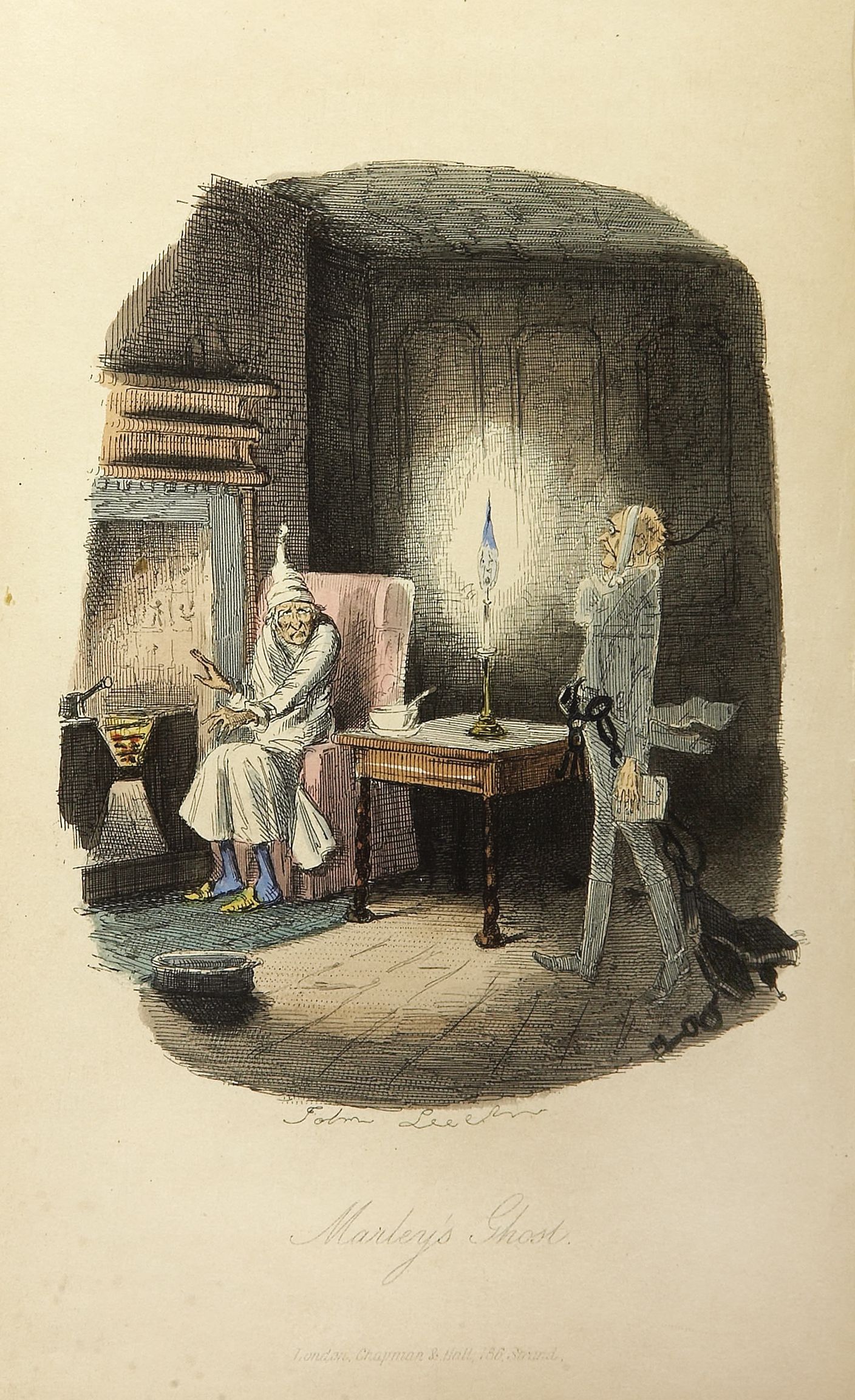
Marley’s Ghost, by John Leech, Public domain, via Wikimedia Commons

After casting an unclean spirit out of a boy, Jesus takes his disciples away privately. Where does Jesus direct their attention after a triumphant encounter? Surprisingly, he points them to his own death:

And going out from there, they passed through Galilee, but Jesus did not want anyone to know, because he was teaching his disciples and saying to them, “The Son of Man is to be handed over into the hands of people, and they will kill him, and—despite being killed—after three days he will rise again.”
—Mark 9:31-32, my translation

The repetition of “kill” is fascinating. Here’s a wooden read of the Greek, where the verb for kill (ἀποκτείνω/apokteinō) is repeated:

…and they will kill (ἀποκτείνω/apokteinō) him, and—being killed (ἀποκτείνω/apokteinō)—he will rise again.

The first use of “kill” is an active indicative verb: “they will kill him.” Jesus is the object of that verb, the recipient of the action of killing.

The second use of “kill” is a passive participle, with Jesus the subject, translated something like: “and despite his being killed….” Here Jesus is grammatical subject, not object, because he is also the subject of the main indicative verb that the participle modifies: “he will rise again.”

I draw two conclusions from this:

First, Jesus has gone from passive recipient of a heinous action (“they will kill him”) to active agent that overcomes it (“despite being killed, he will…”). As my friend Mark used to say, “That’ll preach!” I think of the oft-used protest mantra, that I preached about the other week: “They tried to bury us; they didn’t know we were seeds.”

Second, Jesus is repetitive in saying, “they will kill him… and being killed he will….” I think Jesus is emphasizing his death on purpose.

Mark and Jesus don’t need to use “kill” (ἀποκτείνω/apokteinō) twice. In fact, in Mark 8:31, when Jesus predicts his death to his disciples, even a similar verbal formula uses “kill” just once. Perhaps because you can only kill a person once! Dead is dead.1

And yet in Mark 9, Jesus says “kill” twice. Maybe it’s because the disciples didn’t understand his impending death in Mark 8. So Jesus recapitulates the prediction here and adds some emphasis in hopes that they’ll get it this time in Mark 9.2 Maybe Jesus also wants to highlight the power of his resurrection—that he rose from the actual dead. He didn’t wake up from a merely “mostly dead” state:


In Charles Dickens’s A Christmas Carol it says, “Old Marley was as dead as a doornail.” Dickens could have just said “Old Marley was dead!” Dead is dead. You either are or you aren’t.

But since Ebenezer Scrooge will see the ghost of Marley, Dickens wants to emphasize that it really is a ghost, because Marley really is dead when the story begins.

I think Mark and Jesus are doing the same thing here: “they will kill me, and—even though I’ve really been killed, dead as a doornail—I will rise again.”

Mark sets the stage here for a powerful response of awe when Jesus does rise again—from full-on, actual death, over which Jesus has authority.


  1. Disclosure: I did not read through any commentaries before posting this, but I’m sure many commentators have seen the same thing. Fascinatingly, the NET Bible chooses NOT to translate the second “kill,” inexplicably chalking it up to “redundancy in the statement” in the Greek text.
  2. They don’t.

Yet Another Beautiful Hebrew-English Bible

Someone at Koren Publishers invited me to review their new Hebrew-English Tanakh (The Magerman Edition). After taking one look at a picture of the book, I was convinced. (Thanks to Koren for the review copy, which did not consciously affect the objectivity of this review.)

Check it out:


Yes, I judged this book by its cover, but the judgment was proven right by its insides.

The edition above has both the Hebrew text (beautifully typeset) with a new English translation that I’ve found to be significantly more readable than the previous one Koren published.

For example, there is more gender accurate (i.e., “gender inclusive”) language where it did not exist in the previous edition, although I thought this translation didn’t go as far in the direction of gender accuracy as it could have.

The transliteration decisions are more fluid. This English reader still stumbled over, for example, Yeḥezkel for Ezekiel, but this was a conscious decision on the translation’s part to “convey the authenticity of the Hebrew original.” I respect that.

Not only is this Bible beautiful, but the binding is sewn. It will last a long time.

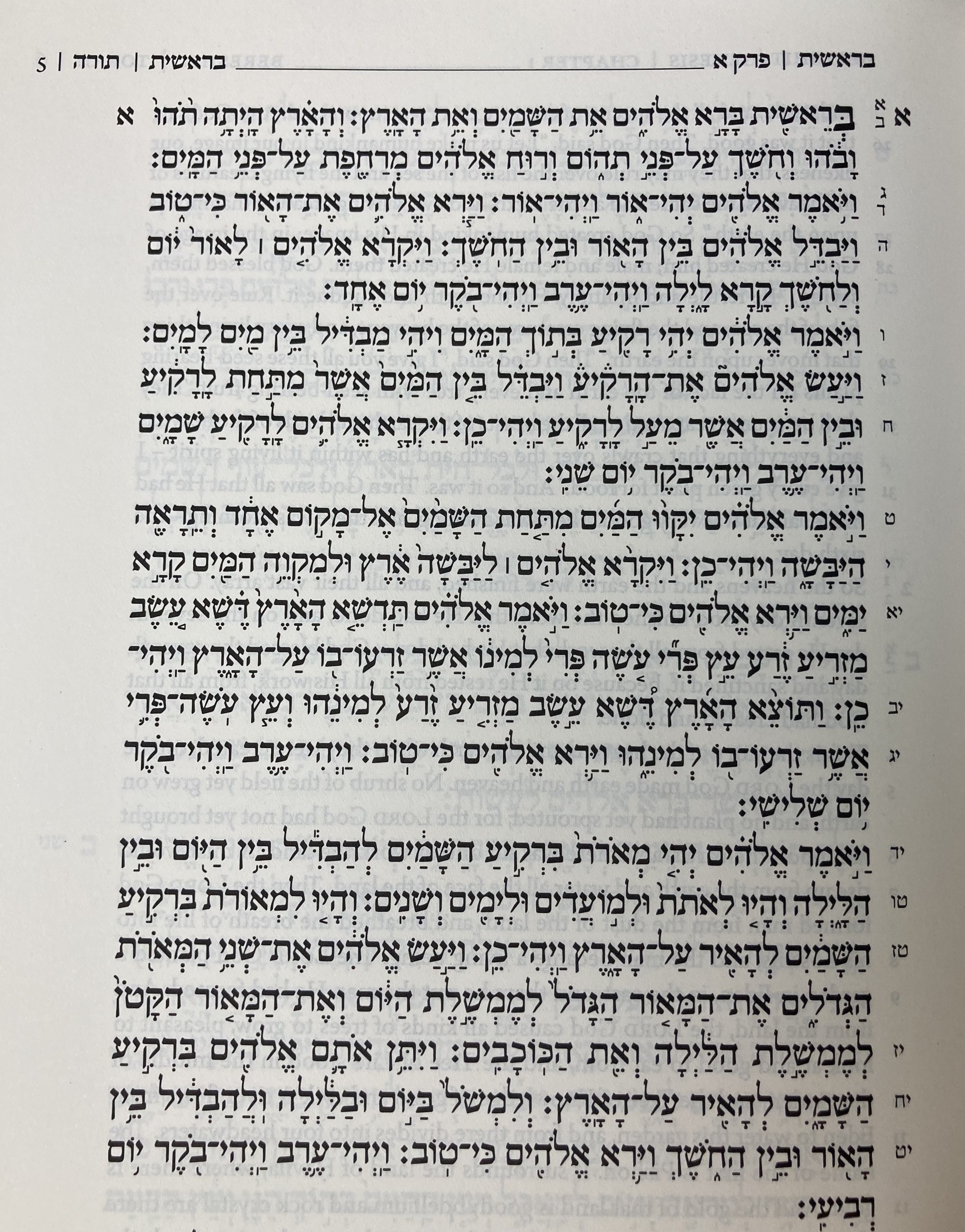
Here is the lovely Hebrew typography:


Especially awesome is that the shewa appears differently in the text whether it is silent or vocalized. I have repeatedly found that helpful as I’ve tried to read the text aloud:


There are ribbon markers:


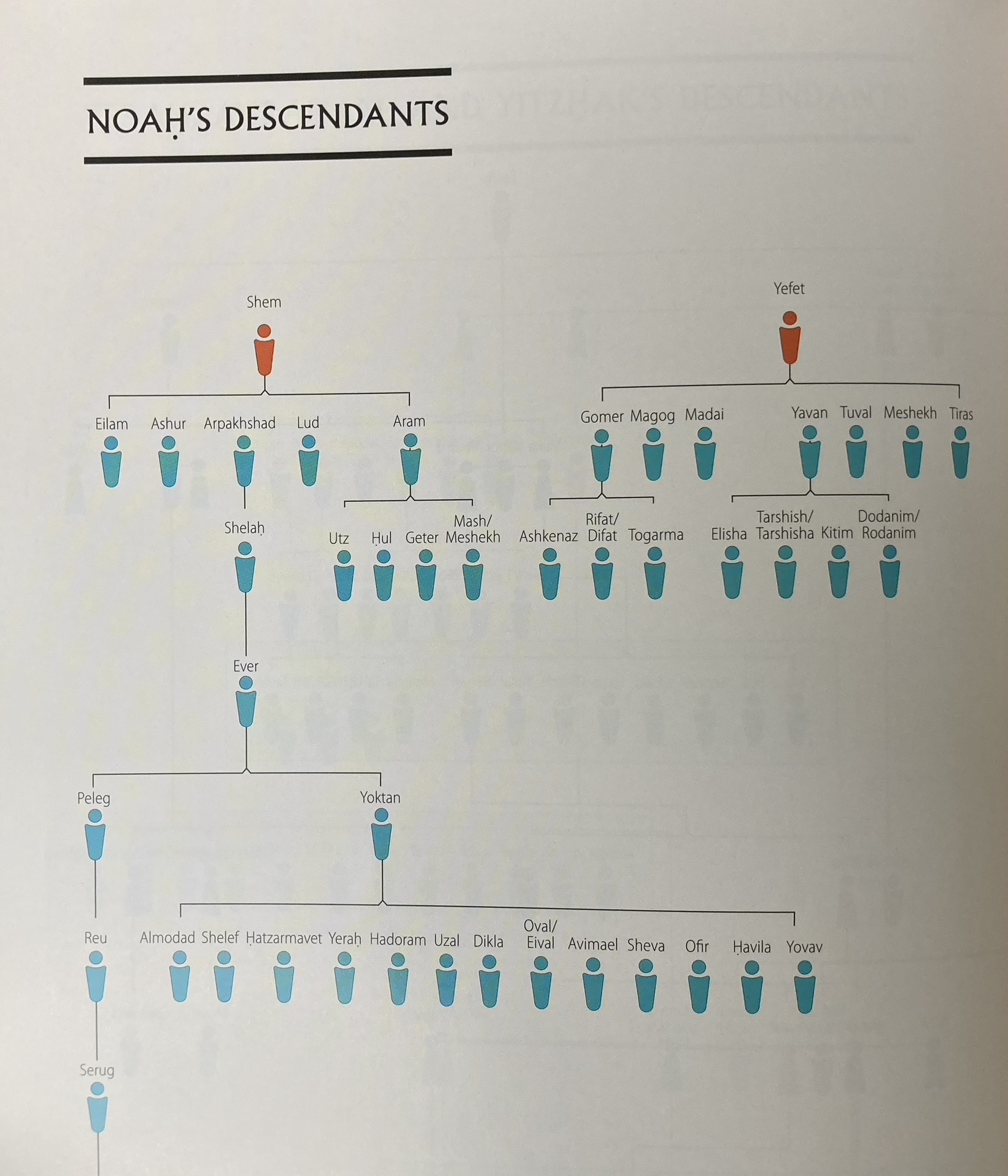
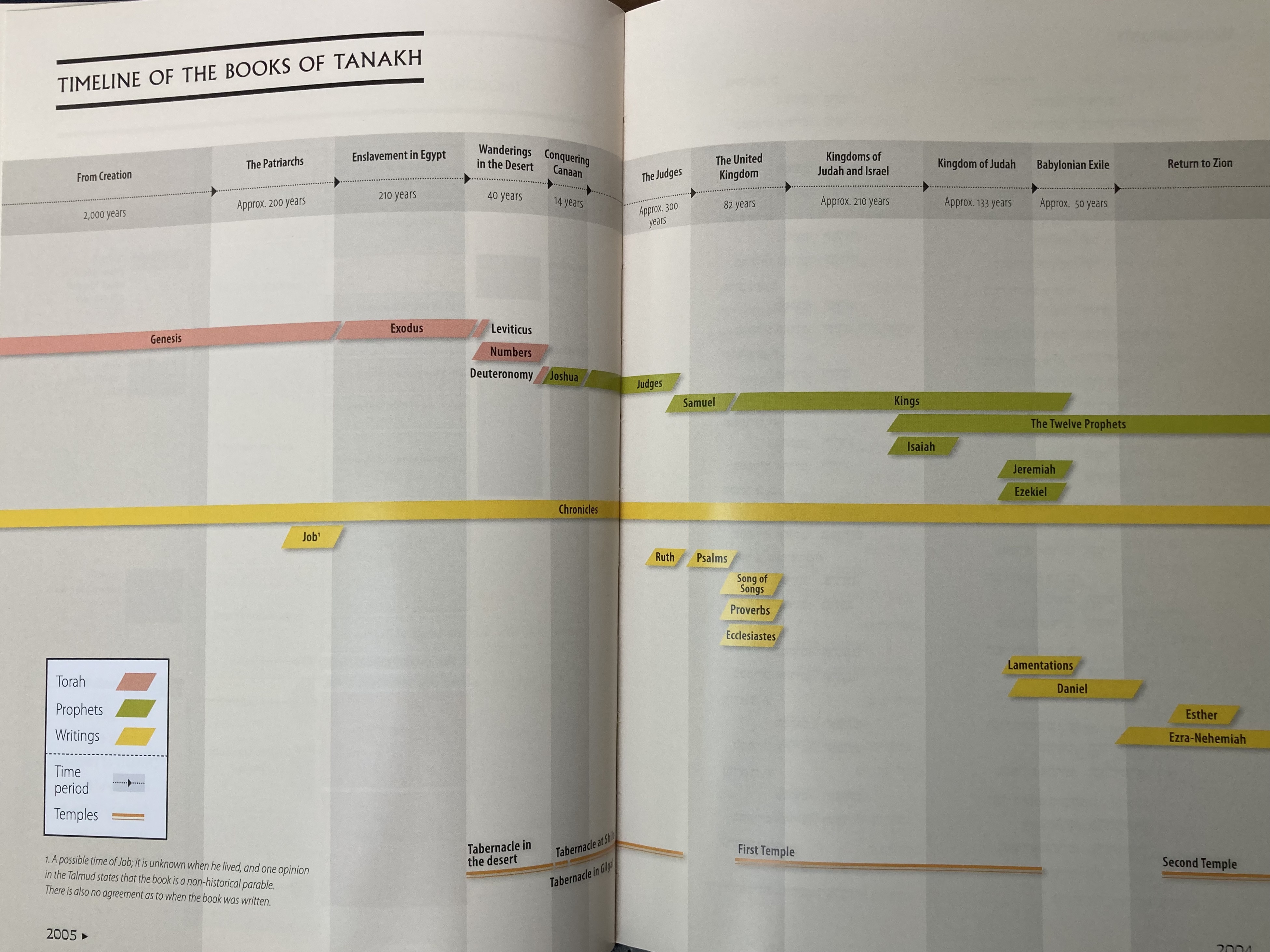
There are colorful charts and tables and diagrams and timelines throughout. Not so many that this already heavy Bible gets heavier, but not so few that the reader needs an additional study Bible for background overviews.


Here is a bit more from the publisher:

The Hebrew-English Koren Tanakh respects the classical Jewish interpretive tradition, while being cognizant of contemporary scholarship. It includes simple notes to aid comprehension of words and names, and features extensive, full-color reference material including genealogies, timelines, maps, charts, archaeological artifacts, and more. Proper names have been transliterated (Yaakov, not Jacob; Moshe, not Moses) to convey the authenticity of the Hebrew original. This edition also includes a thumb tab index to aid in finding sources and references, making the Tanakh easily accessible for its readers.

You can find The Magerman Edition of the Hebrew-English Koren Tanakh here, with more available here.

What Does It Mean to Call the Bible “Inspired”?

“St. Paul Writing His Epistles,” by Valentin de Boulogne (17th Cent.)


I preach from the Bible whenever I preach. God spoke through and to humanity by the Word. My primary goal as a preacher is to create a space where we can hear God speaking to us today again through that Scripture that is “living and active.” And that we would respond faithfully.

Rare, however, is the full sermon I preach about the Bible: what it is, how we got it, what it does, and how we can respond. I had that privilege this last Sunday, as I preached on the first of five parts of our church’s vision: Scripture guides us. To say Scripture guides us invites reflection on at least two questions: (1) what is Scripture and (2) why should that be what guides us? (Not to mention: how would we know, months and years from now, if Scripture actually were guiding us?)

Despite 40+ years of my life steeped in the Bible, despite memorizing whole books of the New Testament as a kid, despite reading the Bible through multiple times, and despite reading it in Hebrew and Greek… I found it surprisingly challenging to concisely share about, “What is the Bible?” and the follow-on question: “So what?”

In the end I broke it down broadly into two -ations: Revelation and Invitation. God’s Word is revelation. God’s word is an invitation.

To call the Bible revelation means that it is a received word. It is a given word. It is not something we went looking for and figured out by pure reason or emotion or will—in contrast to starting points in other disciplines, like philosophy. All the world’s Pulitzer Prize winners combined couldn’t conjure up God’s Word if they tried. Scripture is God’s self-revelation, and we have it, available to us. Deuteronomy 30:11-14 says:

This command I am giving you today is not too difficult for you, and it is not beyond your reach. It is not kept in heaven, so distant that you must ask, ‘Who will go up to heaven and bring it down so we can hear it and obey?’ It is not kept beyond the sea, so far away that you must ask, ‘Who will cross the sea to bring it to us so we can hear it and obey?’ No, the message is very close at hand; it is on your lips and in your heart so that you can obey it.

Notice who is doing the work, so to speak, in finding “the message”—not you! Not me! God says the people of Israel already have it—on their lips and in their heart. Not because they set it there, but because God put it there. In the 21st century, we might add that we have God’s Word at our very fingertips—just a search string and a click away.

The more specific word Scripture uses for revelation is inspiration. 2 Timothy 3:16-17 says:

All Scripture is God-breathed and is useful for teaching, rebuking, correcting and training in righteousness, so that the servant of God may be thoroughly equipped for every good work.

Maybe a better English word (or at least a more literal one) for “God-breathed” would be theo-spired. God breathed his words into the Bible. Just as he breathed life into Adam and Eve and created them in his image, he breathed himself into Scripture, showing us even more of his image. Scripture is not just humans guessing at who God is; it’s God himself telling us who he is.

Millard Erickson, in his wonderful Christian Theology, puts it this way:

By inspiration of Scripture we mean that supernatural influence of the Holy Spirit on the Scripture writers that rendered their writings an accurate record of the revelation or that resulted in what they wrote actually being the Word of God.

Just how does inspiration work? If the Bible was both written by God and written by humans, what percentage of each author is at play in each passage, or across the whole Bible? Or is that the wrong way to think about it? Is it more like the incarnation: fully divine, fully human, both at once?

I think the best answer to this question is: we just don’t know. Erickson says it more articulately:

It is our contention here that inspiration involved God’s directing the thoughts of the writers, so that those thoughts were precisely the ones that he wished expressed. At times these thoughts were very specific; at other times they were more general. When they were more general, God wanted that particular degree of specificity recorded, and no more.

I suppose Erickson’s claim could be seen as a case of post hoc ergo propter hoc , where someone infers causation (or intent) just because one thing chronologically follows the other. In other words, “We have it how we have it, so God must have wanted it that way.” But I believe he’s right, and so do millennia of interpreters.

Speaking of philosophy, Erickson tells this story about Edmund Husserl:

Edmund Husserl, the phenomenologist, had a devoted disciple and assistant, Eugen Fink. Fink wrote an interpretation of Husserl’s philosophy upon which the master placed his approval. It is reported that when Husserl read Fink’s article, he exclaimed, “It is as if I had written it myself!””

So, too, God’s relationship to Scripture.

That’s all revelation. But this revelation of God calls for a response: it’s also an invitation. I’ll write more about this in a future post.

François Fénelon on Not Knowing What to Pray

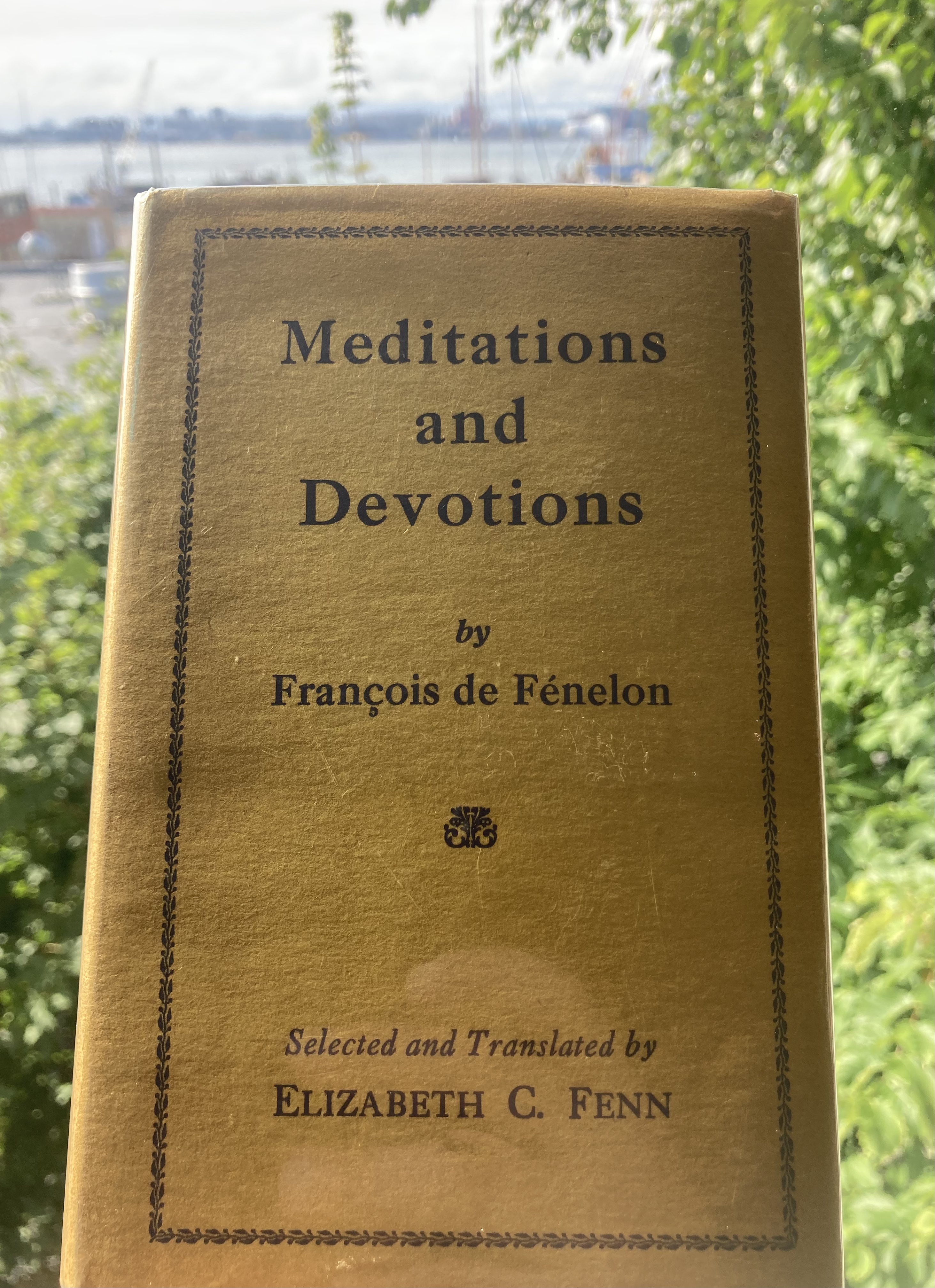
Quite some time ago I purchased this little book by François Fénelon from a used theological bookstore:


Meditations and Devotions by François Fénelon (book cover)


The first section of the book has meditations on some sentences of Scripture. Here is one I appreciated reading yesterday:


Image from text is reproduced below


Here is the text from the image above:

Teach us to pray.–ST. LUKE 11:1.

LORD, I know not what to ask of Thee. Thou only knowest what I need. Thou lovest me better than I know how to love myself. O Father, give to Thy child what he knows not how to ask. I dare not ask either crosses or consolations. I stand before Thee. I open my heart to Thee. Behold my needs that I know not of; behold and do Thou according to Thy mercy. Smite me or heal me, depress me or lift me up: I adore all Thy purposes without knowing them. I am silent. I offer myself to Thee. I yield to Thee. I no longer have any desire but to do Thy Will. Teach me to pray. Pray Thou Thyself in me.