It’s fitting that I drove the family minivan into Boston last night with a friend to see Mineral in concert. When I first listened to them in the mid-90s, I was driving a minivan, too.
What an outstanding show. Though they’re 20 years older than when they co-invented the emo rock scene, they still rocked out and drew listeners in to an experience of spiritual transcendence.
Here is the set list, with the few lyric snippets or reactions I tapped into my phone during the set:
1. Lovelettertypewriter
2. Palisade
(The above being tracks 1 and 2 from their second album, back-to-back)
3. Slower
“I’d really rather lay here and pretend…”
4. Unfinished
5. February
6. A Letter
7. Five, Eight, and Then
“The humble and righteous and meek
Are teaching me whose will to seek
But who really knows how to speak
About these things”
8. Gloria
One of the most awesome songs in the set.
9. For Ivadell
They had a little trouble playing this, but it was still great.
10. Sounds Like Sunday
11. If I Could
Wow.
12. &Serenading
Best song in the whole set.
“When I was a boy I saw things
That no one else could see
So why am I so blind at twenty-two
To the hope that is all around me
Filling up this room?”
Psalm 23 is a Psalm of Trust. A Declaration of Confidence in God.
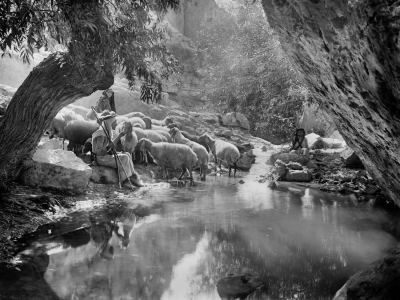
The imagery and tone of the Psalm are peaceful: “green pastures,” “quiet waters,” a restored soul, the promise of God’s presence even when death and darkness are near. The LORD is my shepherd: he provides, he guides, he restores, he is with his sheep, and he comforts.
“He makes me lie down in green pastures.” With God as my comforting shepherd, there is time to rest. Time to stop. Time to be still.
Image Credit: LifeintheHolyLand.com (Todd Bolen), used with permission
Typically a shepherd leads sheep to a pasture where they can graze. The sheep still do work; the shepherd does the leading but not necessarily the feeding. As the Psalm progresses, God as comforting shepherd becomes welcoming host, who sets out a whole banquet for his flock.
Image Credit: LifeintheHolyLand.com (Todd Bolen), used with permission
Psalm 23: It Just Got Personal
Psalm 23 is intensely personal. It’s a prayer of an individual to God; a song from one soul, who recognizes that the ruling king of the universe has taken the time to lead him to a restful spot to get a drink… to rest.
The LORD is my shepherd, I shall not be in want.
He makes me lie down in green pastures,
he leads me beside quiet waters,
he restores my soul….
David uses the first person singular pronoun throughout the Psalm. God is the shepherd of each individual who would follow him.
This may seem slightly unremarkable to us. We live in a North American society that already tends toward individualism. Our cultural construction of the self tends to be individually-focused.
The culture in which David found himself was much more communally-oriented. The sins of an individual and the corporate sins of the community were not always distinguished. A person’s sense of self was constructed and informed and shaped in a communal context.
Identity for a Hebrew man or woman had much more to do with being a part of a chosen and called-out community. A chosen people, plural.
Even in other Psalms, when God is prayed to as shepherd, there’s a sense in which he’s understood as a shepherd of a whole people:
For he is our God,
and we are the people of his pasture,
and the sheep of his hand.
So it’s at least a little remarkable, in the larger context of Hebrew worshiping society, that David begins–the Lord is MY shepherd.
The idea of God as personal shepherd is consistent with Jesus’ interpretation of himself as shepherd. You remember the Christlike image of the shepherd who–even though he has 100 sheep–will stop and go find the one who goes missing.
So it really is okay, and probably even closest to the original intent of this Psalm, to put your own name in there as you read it.
Psalm 23 as Prayer of Defiance
Maybe it’s because I’ve been reading this Psalm through the lens of the news this week, but I’m beginning more and more to see Psalm 23 not only as an affirmation of trust and confidence in God, but also as a counter-circumstantial prayer of defiance. It’s a subversive prayer when you compare it to what you see around you.
Verse 4 says, “Even though I walk through the valley of the shadow of death…” David seems to just take it as a given that life contains dark and death-filled valleys.
I saw in a bookstore yesterday a little book called 11,002 Things to Be Miserable About. It’s a work of satire, mostly, though not all of it is. Here are a few of the things it listed:
Exaggerated vows of love
Abysses of regret
Tipping over backward in your chair
The misery of goldfish
Heel pain caused by flip-flops
But we don’t need a book to think of all the ways in which life is full of dark valleys.
You’ve been in a dark valley before. Maybe you’re in one now. It can be a valley of darkness and shadows that you’ve found yourself in due to no choice of your own: some hurt or frustration someone has caused you; prayers that continue to go unanswered in the way you’d like to see answered; illness and physical ailment; unexpected and sudden grief.
You could be in a valley of darkness and shadows that is more of your own making, too. Maybe your whole life doesn’t feel like a valley, but maybe you’re aware of your “shadow side” that you wouldn’t dare bring to church, that part or those parts of you that you don’t want anyone to see. Maybe you’ve looked inside and seen something in your heart that—it pains you to see—doesn’t please God.
Or, to see some “valleys of the shadow of death,” you could just pay attention to global events this week. 4 children in Gaza—cousins—playing at the beach and shot dead from the ocean. An Israeli ground invasion into the Gaza Strip. Another Malaysian Airline plane crash full of passengers, this one shot down by a ground to air missile as it was flying over Ukraine.
And if you really want to lose some faith in humanity, you probably have already heard that that airplane had something like 100 of the world’s top HIV/Aids researchers on their way to an international Aids conference.
So, yes, there are plenty of valleys of the shadow of death and darkness that we walk through.
And yet, even though—“even though I walk through through the valley of the shadow of death, I will fear no evil, for you are with me.” “Even though,” David says, in a hope-filled prayer of defiance.
There’s an old story of a young preacher who was preaching in a rural church in Louisiana during the depression. This church had just one lightbulb coming down from the ceiling that gave light to the whole sanctuary. As Pastor Taylor was preaching, the electricity went out. He was a newish preacher and didn’t know what to do in the now-dark sanctuary. But an elderly deacon in the church, from the back of the room, shouted, “Preach on, preacher! We can still see Jesus in the dark.”
“We can still see Jesus in the dark.”
For whatever reason, when I hear “shepherd,” there’s part of me that thinks of a humble, young boy (or girl) walking sheep through beautiful country fields on a quiet, sunny day. And that’s right. Leading your sheep to serenity is part and parcel of what it means to be a shepherd.
But there’s this fascinating passage of Scripture, Micah 5, which says:
When the Assyrian invades our land
and marches through our fortresses,
we will raise against him seven shepherds, even eight leaders of men.
Maybe it’s just me, but reading about a coming invasion by an Assyrian superpower, my first reaction is: What kind of a country would send their shepherds out to battle?
But Micah is drawing on a rich tradition in the Scripture—especially in the Old Testament—of using “shepherd” imagery to describe kings, to describe commanders, to describe strong and mighty leaders.
When Micah says “shepherd,” he is talking about a ruling king who goes to battle for his people.
David, as a ruler himself, surely had this aspect of shepherding in mind. The readers and prayers and singers of this Psalm surely saw not just a shepherd to comfort me, not just a host to welcome me, but God as a ruler to protect me. This ruler won’t do away with all of life’s dark valleys—not yet, anyway—but he will be with me while I walk through them.
The Lord is my shepherd, and his rod and his staff—weapons of protection in the hands of a skilled shepherd—fend off that which would attack us.
When Jesus describes himself as the Good Shepherd, we see his gentleness in his willingness to lay down his life for the sheep, and we see his ferocity, his power, his authority over all things when he says, “No one can snatch them out of my hand.”
Even the presence of enemies in verse 5 cannot keep this ruling shepherd from playing banquet host, setting out a feast for the ones he loves.
So good shepherds are not to be trifled with, because they protect their flock. They walk with them through darkness. The Good Shepherd is a ruling king, and he keeps our modern-day enemies—shame, guilt, fear, anxiety, the accusations of others, stress, hatred… he keeps our modern-day enemies at bay. Even though life is full of valleys of the shadow of death, tens of thousands of things to potentially be miserable about, Jesus the Good Shepherd is a ruling king who STILL is sovereign over all he has made, no matter how fouled up it gets.
“We can still see Jesus in the dark.”
So—when you’re riddled with doubt and self-loathing, or just questioning your worth? Say this Psalm.
When you hear about wars and rumors of wars, say this Psalm.
When your best friend gets sick, say this Psalm.
When someone in your family grieves you by their seeming lack of care for you, say this Psalm.
When you don’t know what the next year of your life holds, say this Psalm.
When you have to do the hard work of reconciling with someone you have hurt or that has hurt you, say this Psalm.
When you can’t pay your mortgage on time, say this Psalm.
When you don’t want to get out of bed in the morning, say this Psalm.
When you get scared of the dark, say this Psalm.
As a holy act of defiance against the darkness,
as an affirmation of trust and confidence in Jesus,
when you come up on one of life’s dark valleys, get ready to walk through….and say:
The LORD is my shepherd, I shall not be in want.
He makes me lie down in green pastures,
he leads me beside quiet waters,
he restores my soul.
He guides me in paths of righteousness
for his name’s sake.
Even though I walk
through the valley of the shadow of death,
I will fear no evil,
for you are with me;
your rod and your staff,
they comfort me.
You prepare a table before me
in the presence of my enemies.
You anoint my head with oil;
my cup overflows.
Surely goodness and love will follow me
all the days of my life,
and I will dwell in the house of the LORD
forever.
The above is adapted from the sermon I preached today. Scripture quotations are from the 1984 NIV. See my other sermons gathered here, including the first Psalm of Summer sermon here.
Scrivener is 50% off at the Mac App Store right now. Not sure how long this sale will last, but it’s now $22.99, which is well worth the value Scrivener looks to provide, especially to writers. I posted about writing a paper with Scrivener here. The link to the sale in the App Store is here. (HT: Brian Renshaw for pointing it out!)
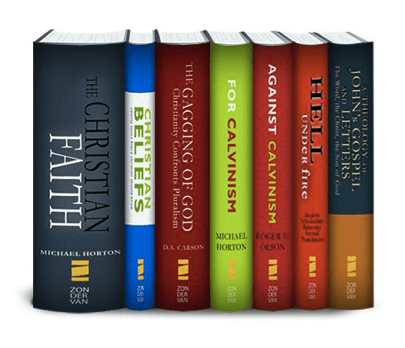
Want to enter for a chance to get some free theology books? These ones won’t even take up shelf space. I’m joining with a few other bloggers and Logos Bible Software for a giveaway of Logos’s Zondervan Theology Collection.
What’s Up for Grabs
The collection can be found here. It includes these books:
(It probably goes without saying that by posting about this collection, I don’t necessarily endorse or agree with the theologies of each of these authors.)
How to Enter the Giveaway
Logos will choose the winner at random on August 1, with the collection sent to that person’s Logos account. If you don’t have a Logos account, you can register for free here. An iOS app for Logos (and other mobile apps can be found here, also free.
To enter, log in below using either your email address or Facebook account, and the Punchtab widget walks you through the rest. You can choose which methods of entry to use. Each prompted action is its own entry.
Logos has this disclaimer: By entering this giveaway you consent to being signed up to Logos’ “Product Reviews” email list. (This just means you’d get emails with Logos-related content written by bloggers such as yours truly.)
UPDATE: WordPress doesn’t want to show the Punchtab widget for some reason. For now you can enter here.
Before anyone ever cared where I would play basketball, I was a kid from Northeast Ohio. It’s where I walked. It’s where I ran. It’s where I cried. It’s where I bled. It holds a special place in my heart. People there have seen me grow up. I sometimes feel like I’m their son. Their passion can be overwhelming. But it drives me. I want to give them hope when I can. I want to inspire them when I can. My relationship with Northeast Ohio is bigger than basketball. I didn’t realize that four years ago. I do now.
Whether you care much for him or not, it’s a beautifully written article, touching on themes of home, family, forgiveness, and making change in your community. Read the whole thing here.
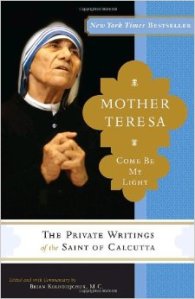
These are good but difficult words from Mother Teresa. They were noted today on Plough, the Website where I mentioned finding the free Oscar Romero book. I’ve just subscribed to Plough Quarterly and am already enjoying the content of the site greatly.
Today I came across this arresting, powerful, and difficult quote from Mother Teresa:
God cannot fill what is full. He can fill only emptiness – deep poverty – and your “yes” [to Jesus] is the beginning of being or becoming empty. It is not how much we really “have” to give – but how empty we are – so that we can receive fully in our life and let him live his life in us. In you today, he wants to relive his complete submission to his father – allow him to do so. Take away your eyes from yourself and rejoice that you have nothing.
Peter Kirby has his now quarterly list of the Top 50 Biblioblogs, just published yesterday. You can find it here. There is some good reading to be found on that list!
A little more than a month ago a 27-year-old woman, Meriam Yehya Ibrahim, was sentenced to death by the Sudanese government for not recanting her Christian faith in favor of Islam. She has a just-under-two-year-old son and was eight months pregnant at the time of her arrest. (She has since given birth, in prison.)
Were the sentence to be carried out, she would have been a martyr in her death, but she is already even now a martyr in life.
Yesterday her appeal to have the sentence overturned was accepted by a higher court. She was released.
If you are inclined to join me, as I post any more about Meriam Yehya Ibrahim on Facebook and Twitter, I’ll use the hashtag #LetHerGoFree. See here.
I have my own qualifications and occasional reservations about so-called hashtag activism, but hashtag praying as activism seems a good way to go. Among all the other factors that led to Ibrahim’s being freed in the first place, I’m convinced that prayer played a major role. So let’s keep it up. And–dear God–please, let her go free!
“Beautiful is the moment,” Archbishop Oscar Romero said, “Beautiful is the moment in which we understand that we are no more than an instrument of God; we live only as long as God wants us to live; we can only do as much as God makes us able to do….”
The book above–La Violencia del Amor, or, The Violence of Love–is available as a free download from the publisher, here (Spanish) and here (English).












 Words on the Word