The first thing I noticed when we got to my parents’ new home in South Carolina was the smell of the pines. The boys spent time outside there almost every day these last two weeks–the “cold” days there were high 40s, low 50s. It was truly good to celebrate Christmas and New Year’s with beloved and loving family. I thought I’d miss “our” beach, but the woods made a fine substitute.
(Of course, as I watch the sun rise over the water and type back at home, I’m grateful for the living room ocean view.)
One cause for prayer before traveling to see family is traveling logistics. How will the kids do on the plane? In the car on the way to the airport? Will they skip naps due to travel, and will this mean utter mayhem later?
But on the way home yesterday, on the plane, this happened:
Thing 3 sleeps on Thing 2, who sleeps on me
Great logistics, great trip. I’m thankful for my family, and so glad we K-Js got to be with them these last two weeks.
John Wesley (1703-1791) was an Anglican minister and theologian. His ministry (and that of his brother Charles Wesley) led to the creation of the Methodist Church, as well as other traditions that have their roots in Wesley: the Wesleyan holiness movement, Pentecostalism, and the Charismatic movement.
Wesley issued seven “Rules for Singing” in 1761. Here are some excerpts:
Sing all. See that you join with the congregation as frequently as you can. …If it is a cross to you, take it up and you will find a blessing.
Sing…with a good courage. Beware of singing as if you were half dead, or half asleep; but lift up your voice with strength…. (AKJ: This is particular pertinent for those services that take place in the morning hours.)
Sing in time. Whatever time is sung, be sure to keep with it. Do not run before, not stay behind it; but attend closely to the leading voices, and move therewith as exactly as you can;
And take care you sing not too slow. This drawling way naturally steals on all who are lazy; and it is high time to drive it out from among us, and sing all our tunes just as quick as we did at first.
Hymn tempo can be largely a subjective decision–some like it fast, some like it slow. But might singing “all our tunes just as quick” encourage more hearty singing? It seems Wesley thought so.
Regarding the call to “attend closely to the leading voices,” I find it particularly helpful when worshiping congregations have vocal leaders for hymns, especially if members of the congregation are not familiar with a given hymn. This may sound self-evident, but the majority of my hymn-singing experience has been in churches where the organist leads the hymn just from the organ. This works fine in a congregation that knows hymns and sings them well, but I’m not convinced it’s always the best approach to leading congregational hymns in worship.
Here’s my favorite part of Wesley’s rules:
Above all, sing spiritually. Have an eye to God in every word you sing. …[S]ee that your heart is not carried away with the sound, but offered to God continually.
I don’t think having “your heart… carried away with the sound” is mutually exclusive with offering it “to God continually,” but I love Wesley’s call to “have an eye to God in every word you sing.” We sing hymns best when we make them prayers to God, affirmations of our faith, even heartfelt confessions.
I’ve just recently learned about The Blog of the Twelve. Based on what I’ve seen so far, it’s recommended reading, especially for folks with an interest in the Minor Prophets.
The usefulness of this book can hardly be stated for those seeking to rightly handle the Scripture, whether student, pastor, or laity. Beale’s clear writing style, in addition to the uncharacteristic conciseness of the book, makes the method accessible to a wide audience. Furthermore, Beale, while emphasizing the indispensable value of learning the biblical languages, formats the book in such a way that those not familiar with Hebrew and Greek are able to profit just as well from the work.
We are now in Week 5 of Greek Isaiah in a Year. Below is the schedule and text for Monday through Friday, using the text from R.R. Ottley’s Book of Isaiah According to the Septuagint. (Ottley is here on Amazon, here in Logos, and here as a free, downloadable pdf, since it’s public domain.) The full reading plan for our group is here (pdf).
We’re here; we blog about the Bible; get used to it.
Charles Spurgeon is reported to have said, “If you have to give a carnival to get people to come to church, then you will have to keep giving carnivals to keep them coming back.”
And so we who blog in the fields of academic biblical studies and theology keep giving carnivals.
So let Words on the Word be among the first to wish you and yours a Happy New Year! Let’s welcome the year ahead with a recap of what went on in the so-called biblioblogosphere in December 2012.
Newtown, Connecticut, December 14
On December 14 there was the horrible news of a shooter who killed 26 other people at an elementary school in Newtown, CT, 20 of them young children. Peter Enns shared some thoughts from an unsettled state. Jim West wrote about it quite a bit and excoriated the NRA.
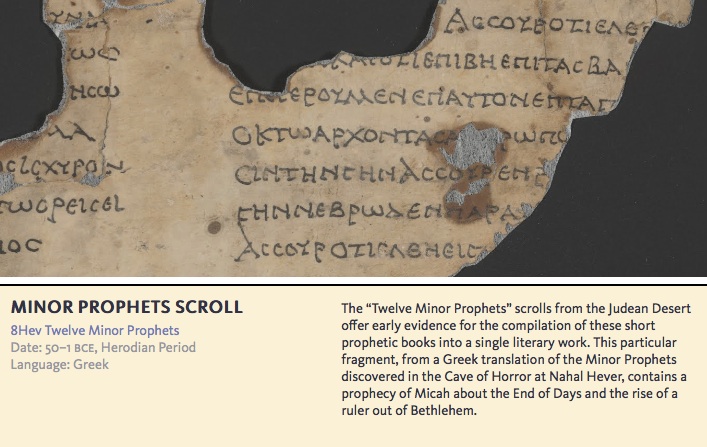
With the generous lead support of the Leon Levy Foundation and additional generous support of the Arcadia Fund, the Israel Antiquities Authority and Google joined forces to develop the most advanced imaging and web technologies to bring to the web hundreds of Dead Sea Scrolls images as well as specially developed supporting resources in a user-friendly platform intended for the public, students and scholars alike.
A number of bloggers wrote about this, not a few of whom Jim McGrath links to.
That wasn’t all that went online in December. Evangelical Textual Criticism notes quiteafewothermanuscriptsthatare now online. (As proven by the fact that every word of that last phrase is its own hyperlink.) Charles Halton of awilum.com highlights the availability of A. Leo Oppenheim’s Ancient Mesopotamia as a free pdf. Readers of this carnival may also like to take some time with ASOR’s weekly archaeology roundups in December, here, here, and here.
Septuagint
December saw a plethora of posts about παρθένος/עלמה in Isaiah 7:14, and Matthew’s use of that verse. Here is T.M. Law, saying that Greek Isaiah’s use of παρθένος for עלמה is not without precedent in the LXX (“The Greek translator of Isaiah used a perfectly acceptable rendering for עלמה.”). Here’s the Jesus Creed on the virgin birth. Krista Dalton notes, “[T]he author of Matthew is not saying that Isaiah was envisioning the birth of Jesus.” Kevin Brown of Diglotting posts here about it. And, looking at hermeneutics more generally, Brian LePort suggested three paradigms to use in studying the virgin birth.
J.K. Gayle at The WOMBman’s Bible (“An Outsider’s Perspective on the Hebrew Males’ Hellene Book”) posted reflections from Greek Isaiah not 1, not 2, not 3, not 4, not 5, not 6, but 7 times in December. Set aside some time and read them all.
Codex Sinaiticus dropped in price to just under $200 at CBD this month–a facsimile edition, that is. Theophrastus of BLT notes it here. He will later lament (which I, too, lament) that Oxford University Press no longer prints their wonderful Comparative Psalter. And while we’re on those Ψαλμοὶ, did their Greek translator(s) have Aristotle and Greek rhetoric in mind?
Anthony Le Donne is taking on the Wikipedia entry on “Historical Jesus” (best biblioblog comment of the month: here). James Tabor asked how December 25 got to be the day we observe Jesus’ birthday (with more thoughts here). Mark Goodacre produced a Christmas NT Pod in which he “explores the differences between the Birth Narratives in Matt. 1-2 and Luke 1-2 and asks how this can be the case if Luke is familiar with Matthew.” The Sacred Page produced a podcast on “the first Christmas.” For a fresh translation of Luke 1:34-38 (with the Greek reproduced beneath the English), see “She spoke yet-Miriam did.” Daniel Street even gave us some Christmas songs in Greek!
Anglican minister Rach Marszalek calls for nuance in discussions on the Trinity, as well as an appreciation of “the perichoretic beauty” of the Same. Read her “Eternal functional subordination and ontological equality?” here. While we’re on Anglicans, Brian LePort asks whether he needs a Bishop?
Gaudete Theology offers a feminist reading of “the bride of Christ” language. (“The image of the Bride of Christ needn’t be viewed only through the patriarchal perception of woman’s nature as inherently passive, docile, compliant, and receptive.”) Alice C. Linsley at Just Genesis would, I think, agree that the image and office of priest should also not be viewed through a patriarchal lens. She says, “Luther Was Wrong About the Priesthood.”
And, finally, may I offer thanks to Amanda at Cheesewearing Theology for this excellent December 2012 theology roundup? She covers yet more territory in theology than I have already covered here. If you’re disappointed that this carnival is about over, spend time reading the posts she collects.
Ευχαριστω/תודה/Thank you
Thanks for coming, and keep coming back! I blog regularly, so feel free to follow/subscribe by going back up to the right sidebar of the blog.




 John Wesley (1703-1791) was an Anglican minister and theologian. His ministry (and that of his brother Charles Wesley) led to the creation of the Methodist Church, as well as other traditions that have their roots in Wesley: the Wesleyan holiness movement, Pentecostalism, and the Charismatic movement.
 Hymn tempo can be largely a subjective decision–some like it fast, some like it slow. But might singing “all our tunes just as quick” encourage more hearty singing? It seems Wesley thought so.


 Scot McKnight lists the “Jesus Creed Books of the Year”
 Speaking of Greek Isaiah… more than 150 of us are reading through


 Words on the Word