Advent Wreath! Advent Wreath! Advent Wreath!

advent wreath

“Advent Wreath! Advent Wreath! Advent Wreath!”

This is the mantra my 2-year-old son repeats as soon as bedtime routines begin–and sometimes before that.

Each night since the beginning of Advent, our family has observed Advent together by praying, reading a Bible passage, lighting a candle, and singing a verse and the chorus of “O Come, O Come, Emmanuel.” There is perhaps nothing more heart-warming than hearing our two young boys sincerely belt out, “REJOICE! REJOICE!” each night around the Advent wreath. This will be a family tradition for years to come.

We made the wreath together as a family at our church before Advent. We use it to mark the time as we eagerly anticipate the celebration on Christmas of Christ’s first coming to earth, even as we await and long for his second coming. The waiting and yearning themes of Advent have been particularly appropriate given that we have yet again recently seen the evil we humans are capable of.

For those of you who plan worship services, or like to think deeply about them, the Calvin Institute of Christian Worship has a helpful Advent and Christmas Resource Guide. A reflection from that site says:

In Advent we hear the prophecies of the Messiah’s coming as addressed to us—people who wait for the second coming. In Advent we heighten our anticipation for the ultimate fulfillment of all Old Testament promises, when the wolf will lie down with the lamb, death will be swallowed up, and every tear will be wiped away.

There is something for me to learn from my two-year-old’s persistence as we gather each night. The anticipation with which he comes to our time of prayer (often clapping his hands) is what I want to offer God in this time of waiting.

More on the Connecticut school shooting: the haughtiness of humanity will collapse, says Isaiah

I wondered tonight whether this week’s Greek Isaiah readings might have something to say to the recent school shooting in Connecticut. Indeed, here is Isaiah 2:17-19 (my translation from the Greek):

Then every person will be brought low,
and the haughtiness of humanity will collapse,
and the Lord alone will be exalted in that day.

And they will hide everything that is made by hand,

as they bring them into caves
and into the clefts of rocks
and into the holes of the earth,
from before the fear of the Lord
and from the glory of his strength,
when he rises up to strike the earth.

The word for that which is made by hand (τὰ χειροποίητα) refers to idols. But as I read this I couldn’t help but think of the promise from Psalm 46:

He makes wars cease
to the ends of the earth.
He breaks the bow and shatters the spear;
he burns the shields with fire.

…bows, spears, and shields, of course, all being made by hand. I suggested here that a 21st century way of reading that verse could be something like, “He crushes guns and diffuses bombs, he destroys human weapons of destruction.”

One day either we or God himself will bring all our weapons of destruction–indeed, all our evil inclinations–into “caves” and “into the clefts of rocks and into the holes of the earth,” as we recoil at the glory of God’s strength. He will make wars cease; he will end all senseless violence; he will crush evil and wipe it away from the face of the earth.

Lord, as we mourn in the meantime, please hasten that day.

Greek Isaiah in a Year, Week 3=Isaiah 2:16-3:21

isaiah lxx

We’re through two weeks of Greek Isaiah in a Year. The Facebook group continues to grow–now 175 readers. Anyone can still join. And some are reading apart from the Facebook group, too.

Tomorrow (Monday) begins week 3. Below is the schedule and text for Monday through Friday, using the text from R.R. Ottley’s Book of Isaiah According to the Septuagint. (Ottley is here on Amazon, here in Logos, and here as a free, downloadable pdf, since it’s public domain.) The full reading plan is here (pdf).

Monday, December 17: Isaiah 2:16-21

16 καὶ ἐπὶ πᾶν πλοῖον θαλάσσης, καὶ ἐπὶ πᾶσαν θέαν πλοίων κάλλους· 17 καὶ ταπεινωθήσεται πᾶς ἄνθρωπος, καὶ πεσεῖται ὕψος ἀνθρώπων, καὶ ὑψωθήσεται Κύριος μόνος ἐν τῇ ἡμέρᾳ ἐκείνῃ. 18 καὶ τὰ χειροποίητα πάντα κατακρύψουσιν, 19 εἰσενέγκαντες εἰς τὰ σπήλαια καὶ εἰς τὰς σχισμὰς τῶν πετρῶν καὶ εἰς τὰς τρώγλας τῆς γῆς, ἀπὸ προσώπου τοῦ φόβου Κυρίου καὶ ἀπὸ τῆς δόξης τῆς ἰσχύος αὐτοῦ, ὅταν ἀναστῇ θραῦσαι τὴν γῆν. 20 τῇ ἡμέρᾳ ἐκείνῃ ἐκβαλεῖ ἄνθρωπος τὰ βδελύγματα αὐτοῦ τὰ ἀργυρᾶ καὶ τὰ χρυσᾶ, ἃ ἐποίησεν προσκυνεῖν, τοῖς ματαίοις καὶ ταῖς νυκτερίσιν, 21 τοῦ εἰσελθεῖν εἰς τὰς τρώγλας τῆς στερεᾶς πέτρας καὶ εἰς τὰς σχισμὰς τῶν πετρῶν, ἀπὸ προσώπου τοῦ φόβου Κυρίου καὶ ἀπὸ τῆς δόξης τῆς ἰσχύος αὐτοῦ, ὅταν ἀναστῇ θραῦσαι τὴν γῆν.

Tuesday, December 18: Isaiah 3:1-5

3 Ἰδοὺ δὴ ὁ δεσπότης Κύριος σαβαὼθ ἀφελεῖ ἀπὸ τῆς Ἰουδαίας καὶ ἀπὸ Ἰερουσαλὴμ ἰσχύοντα καὶ ἰσχύουσαν, ἰσχὺν ἄρτου καὶ ἰσχὺν ὕδατος, γίγαντα καὶ ἰσχύοντα καὶ ἄνθρωπον πολεμιστὴν καὶ δικαστὴν καὶ προφήτην καὶ στοχαστὴν καὶ πρεσβύτερον καὶ πεντηκόνταρχον καὶ θαυμαστὸν σύμβουλον καὶ σοφὸν ἀρχιτέκτονα καὶ συνετὸν ἀκροατήν· καὶ ἐπιστήσω νεανίσκους ἄρχοντας αὐτῶν, καὶ ἐμπαῖκται κυριεύσουσιν αὐτῶν. καὶ συμπεσεῖται ὁ λαός, ἄνθρωπος πρὸς ἄνθρωπον, καὶ ἄνθρωπος πρὸς τὸν πλησίον αὐτοῦ· προσκόψει τὸ παιδίον πρὸς τὸν πρεσβύτην, ὁ ἄτιμος πρὸς τὸν ἔντιμον.

Wednesday, December 19: Isaiah 3:6-10

ὅτι ἐπιλήμψεται ἄνθρωπος τοῦ ἀδελφοῦ αὐτοῦ ἢ τοῦ οἰκείου τοῦ πατρὸς αὐτοῦ λέγων Ἱμάτιον ἔχεις, ἀρχηγὸς ἡμῶν γενοῦ, καὶ τὸ βρῶμα τὸ ἐμὸν ὑπὸ σὲ ἔστω. καὶ ἀποκριθεὶς ἐρεῖ ἐν τῇ ἡμέρᾳ ἑκείνῃ Οὐκ ἕσομαί σου ἀρχηγός· οὐ γὰρ ἔστιν ἐν τῷ οἴκῳ μου ἄρτος οὐδὲ ἱμάτιον· οὐκ ἔσομαι ἀρχηγὸς τοῦ λαοῦ τούτου. ὅτι ἀνεῖται Ἰερουσαλὴμ καὶ ἡ Ἰουδαία συμπέπτωκεν, καὶ αἱ γλῶσσαι αὐτῶν μετὰ ἀνομίας, τὰ πρὸς Κύριον ἀπειθοῦντες· διότι νῦν ἐταπεινῶθη ἡ δόξα αὐτῶν, καὶ ἡ αἰσχύνη τοῦ προσώπου αὐτῶν ἀντέστη αὐτοῖς· τὴν δὲ ἁμαρτίαν αὐτῶν ὡς Σοδόμων ἀνήγγειλαν καὶ ἐνεφάνισαν. οὐαὶ τῇ ψυχῇ αὐτῶν, ὅτι βεβούλευνται βουλὴν πονηρὰν καθʼ ἑαυτῶν, 10 εἴπαντες Δήσωμεν τὸν δίκαιον, ὅτι δύσχρηστος ἡμῖν ἐστιν· τοίνυν τὰ γενήματα τῶν ἔργων αὐτῶν φάγονται.

Thursday, December 20: Isaiah 3:11-16

11 οὐαὶ τῷ ἀνόμῳ· πονηρὰ κατὰ τὰ ἔργα τῶν χειρῶν αὐτοῦ συμβήσεται αὐτῷ. 12 λαός μου, οἱ πράκτορες ὑμῶν καλαμῶνται ὑμᾶς, καὶ οἱ ἀπαιτοῦντες κυριεύουσιν ὑμῶν. λαός μου, οἱ μακαρίζοντες ὑμᾶς πλανῶσιν ὑμᾶς καὶ τὴν τρίβον τῶν ποδῶν ὑμῶν ταράσσουσιν. 13 ἀλλὰ νῦν καταστήσεται εἰς κρίσιν Κύριος, καὶ στήσει εἰς κρίσιν τὸν λαὸν αὐτοῦ· 14 αὐτὸς Κύριος εἰς κρίσιν ἥξει μετὰ τῶν πρεσβυτέρων τοῦ λαοῦ καὶ μετὰ τῶν ἀρχόντων αὐτοῦ. ὑμεῖς δὲ τί ἐνεπυρίσατε τὸν ἀμπελῶνά μου, καὶ ἡ ἁρπαγὴ τοῦ πτωχοῦ ἐν τοῖς οἴκοις ὑμῶν; 15 τί ὑμεῖς ἀδικεῖτε τὸν λαόν μου, καὶ τὸ πρόσωπον τῶν πτωχῶν καταισχύνετε;

16 Τάδε λέγει Κύριος Ἀνθʼ ὧν ὑψώθησαν αἱ θυγατέρες Σιών, καὶ ἐπορεύθησαν ὑψηλῷ τραχήλῳ καὶ νεύμασιν ὀφθαλμῶν, καὶ τῇ πορείᾳ τῶν ποδῶν ἅμα σύρουσαι τοὺς χιτῶνας καὶ τοῖς ποσὶν ἅμα παίζουσαι,

Friday, December 21: Isaiah 3:17-21

17 καὶ ταπεινώσει ὁ θεὸς ἀρχούσας θυγατέρας Σιών. καὶ Κύριος ἀποκαλύψει τὸ σχῆμα αὐτῶν 18 ἐν τῇ ἡμέρᾳ ἐκείνῃ· καὶ ἀφελεῖ Κύριος τὴν δόξαν τοῦ ἱματισμοῦ αὐτῶν, καὶ τοὺς κόσμους αὐτῶν καὶ τὰ ἐμπλόκια καὶ τοὺς κοσύμβους καὶ τοὺς μηνίσκους, 19 καὶ τὸ κάθεμα καὶ τὸν κόσμον τοῦ προσώπου αὐτῶν, 20 καὶ τὴν σύνθεσιν τοῦ κόσμου τῆς δόξης αὐτῶν, καὶ τοὺς χλιδῶνας καὶ τὰ ψέλια καὶ τὸ ἐμπλόκιον καὶ τὰ περιδέξια καὶ τοὺς δακτυλίους καὶ τὰ ἐνώτια, 21 καὶ τὰ περιπόρφυρα καὶ τὰ μεσοπόρφυρα,

…with the conclusion to the sentence coming on the following Monday.

See here for more resources and links to texts for Greek Isaiah. Readings from week 1 are here, from week 2 are here.

Devotions on the Greek New Testament: one day left to enter giveaway

Devotions GNT

There is still time to enter my giveaway for Zondervan’s new resource, Devotions on the Greek New Testament.

If you want to check out the book before you decide to enter, my review of it is here.

To enter the giveaway, go here.

He crushes guns and diffuses bombs; he destroys weapons of destruction (Psalm 46 speaks into the mass school shooting)

gun

Psalm 46, a Psalm for tragedies and disasters, reads:

God is our refuge and strength,
an ever-present help in trouble.
Therefore we will not fear, though the earth give way
and the mountains fall into the heart of the sea,
though its waters roar and foam
and the mountains quake with their surging.

There is a river whose streams make glad the city of God,
the holy place where the Most High dwells.
God is within her, she will not fall;
God will help her at break of day.
Nations are in uproar, kingdoms fall;
he lifts his voice, the earth melts.

The Lord Almighty is with us;
the God of Jacob is our fortress.

Come and see what the Lord has done,
the desolations he has brought on the earth.
He makes wars cease
to the ends of the earth.
He breaks the bow and shatters the spear;
he burns the shields with fire.
He says, “Be still, and know that I am God;
I will be exalted among the nations,
I will be exalted in the earth.”

The Lord Almighty is with us;
the God of Jacob is our fortress.

The third part of this Psalm begins, “Come and see the works of the LORD, the desolations he has brought on the earth. He makes wars cease to the ends of the earth.” God is stronger than war—he can demolish even the strongest weapons of warfare. So in some kind of cosmic sense we don’t have to be afraid when there is violence.

“He breaks the bow and shatters the spear, he burns the shields with fire.” We might read this today as, “He crushes guns and diffuses bombs, he destroys human weapons of destruction.”

And then there is the main point of the Psalm, verse 10, followed by the refrain in verse 11 that appeared earlier in the Psalm: “Be still, and know that I am God; I will be exalted among the nations, I will be exalted in the earth. The LORD Almighty is with us; the God of Jacob is our fortress.”

Nature can appear to be in chaos, human actions can leave us scratching our heads, but neither the chaos of nature nor the chaos of human sinfulness can ultimately stand up to the power of God. He is exalted over the earth and over all people. He is a warrior God who declares war on war and causes all violence to end.

“The LORD Almighty,” a title for God from verse 11 and earlier in verse 7, is also sometimes translated “LORD of hosts,” or God of the angel armies. Based on these verses Martin Luther wrote, “LORD Sabaoth his name, from age to age the same, and he must win the battle.”

This Almighty warrior God is with us, present in chaos and suffering. He is the God of heavenly hosts of armies, yet he is the God of Jacob, too, a title that speaks of God’s personal relationship with his people.

He is a personal God that people can know. He invites us into an intimate relationship with him, especially when we are hurting, especially when things are going wrong.

The above is adapted from part of a sermon I preached a couple of summers ago on Psalm 46. I post in now in light of today’s awful news.

Jesus weeps, we weep

Shannon Hicks/Newtown Bee, via Associated Press

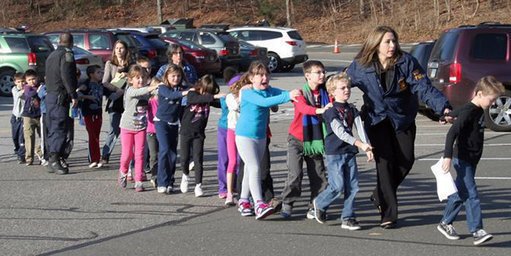
Jesus wept, and he weeps again today, with the horrible news of another school shooting in Newton, CT. From the New York Times:

A gunman killed 26 people, 20 of them children between the ages of 5 and 10, in a shooting on Friday morning at an elementary school in Newtown, Conn., about 65 miles northeast of New York City, the authorities said.

The gunman, who was believed to be in his 20s, walked into a classroom at Sandy Hook Elementary School where his mother was a teacher. He shot and killed her and then shot 20 students, most in the same classroom. He also shot five other adults, and then killed himself inside the school.

This evil deed is so heinous that even naming and describing it feels bad. May God have mercy on the souls of those poor children, and the grieving families they leave behind.

Christians have a rich Biblical tradition of lament that we can employ in times like this. This summer after the Colorado shooting, I posted this prayer, which was an aid to me in processing the grief, anger, and bewilderment I felt after hearing such awful news.

Prayer of Lament

O God, you are our help and strength,
our refuge in the time of trouble.
In you our ancestors trusted;
They trusted and you delivered them.
When we do not know how to pray as we ought,
your very Spirit intercedes for us
with sighs too deep for words.
We plead for the intercession now, Gracious One.

For desolation and destruction are in our streets,
and terror dances before us.
Our hearts faint; our knees tremble;
our bodies quake; all faces grow pale.
Our eyes are spent from weeping
and our stomachs churn.

How long, O Lord, how long
must we endure this devastation?
How long will destruction lay waste at noonday?
Why does violence flourish
while peace is taken prisoner?
Rouse yourself! Do not cast us off in times of trouble.
Come to our help;
redeem us for the sake of your steadfast love.

For you are a gracious God
abounding in steadfast love and faithfulness.

By the power of the cross,
through which you redeemed the world,
bring to an end hostility
and establish justice in the gate.
For you will gather together your people into that place
where mourning and crying and pain
will be no more,
and tears will be wiped from every eye.
Hasten the day, O God for our salvation.
Accomplish it quickly! Amen.

**From Let the Whole Church Say Amen! A Guide for Those Who Pray in Public, by Laurence Hull Stookey, pp 94-95 (Copyright 2001 by Abingdon Press). Reproduced by permission. Formatted print-friendly pdf of prayer here.

The Scriptures that the above prayer draws on are: Psalm 124:8, Psalm 37:39, Psalm 22:4, Romans 8:26, Isaiah 59:7, Job 41:22, Nahum 2:10, Lamentations 2:11, Isaiah 6:11, Psalm 91:6, Psalm 44:23, Psalm 44:26, Exodus 34:6, 1 Corinthians 1:17, Ephesians 2:14, Amos 5:15, Revelation 21:4, Isaiah 60:22.

Biblical Studies Carnival: please send me links

carnival

I am hosting the next Biblical Studies Carnival. (See here for the last one, by Bob MacDonald.)

The carnival is basically a long list of links, and anthology of analyses, a précis of posts, etc., etc., on all things biblical and theological in the blogosphere.

If you know of good links I should include (anything that has been or will be posted in December), please let me know.

And, since I have you here, don’t forget about the book giveaway going on now of Devotions on the Greek New Testament.

Free book giveaway: Devotions on the Greek New Testament

Devotions GNTYesterday I reviewed Zondervan’s new resource, Devotions on the Greek New Testament.

I have an extra copy to give away (not my review copy). I recommend this volume, for either you or the Greek language-lover in your life.

To enter the giveaway, simply comment on this blog post and say why it is you would want to win a copy. I will accept entries through next Monday afternoon, December 17, with 3pm EST being the cutoff.

Then if you link to this post on your Facebook, Twitter, blog, etc., come back here to tell me in the comments section that you did, and you’ll receive a second entry. I will announce the winner just before 5pm EST Monday.

If you want to check out the book before you decide to enter, my review of it is here.

Which came first, Isaiah or Micah? Comparing Isaiah 2:2-4 with Micah 4:1-3

Isaiah Micah

Isaiah 2:2-4 shares much in common with Micah 4:1-3. But who quoted whom?

Isaiah and Micah both prophesied in the 8th century B.C. Their prophetic oracles were delivered in Hebrew, and the Greek below is translated from that. But because I’m doing Greek Isaiah in a Year right now, I’ll confine my comments to the Greek text. Of course a more thorough examination of these two passages needs to consider the Hebrew, too.

Isaiah is in black and on top below. Micah is in red and on bottom.

ὅτι  ἔσται ἐν    ταῖς ἐσχάταις ἡμέραις   ἐμφανὲς τὸ ὄρος κυρίου,
καὶ ἔσται ἐπ᾽   ἐσχάτων τῶν ἡμερῶν   ἐμφανὲς τὸ ὄρος τοῦ κυρίου,

καὶ ὁ οἶκος τοῦ θεοῦ ἐπ᾽ ἄκρων τῶν ὀρέων,
ἕτοιμον ἐπὶ τὰς κορυφὰς             τῶν ὀρέων,

καὶ ὑψωθήσεται         ὑπεράνω τῶν βουνῶν.
καὶ μετεωρισθήσεται ὑπεράνω τῶν βουνῶν·

καὶ ἥξουσιν ἐπ᾽ αὐτὸ πάντα τὰ ἔθνη.
καὶ σπεύσουσιν πρὸς αὐτὸ λαοί,

καὶ πορεύσονται ἔθνη πολλὰ, καὶ ἐροῦσιν,
καὶ πορεύσονται ἔθνη πολλὰ  καὶ ἐροῦσιν,

δεῦτε καὶ ἀναβῶμεν εἰς τὸ ὄρος κυρίου,
δεῦτε,      ἀναβῶμεν εἰς τὸ ὄρος κυρίου,

καὶ εἰς τὸν οἶκον τοῦ θεοῦ Ιακωβ, καὶ ἀναγγελεῖ ἡμῖν τὴν ὁδὸν αὐτοῦ,
καὶ εἰς τὸν οἶκον τοῦ θεοῦ Ιακωβ· καὶ δείξουσιν ἡμῖν τὴν ὁδὸν αὐτοῦ,

καὶ πορευσόμεθα ἐν αὐτῇ·
καὶ πορευσόμεθα ἐν ταῖς τρίβοις αὐτοῦ·

ἐκ γὰρ Σιων ἐξελεύσεται νόμος, καὶ λόγος κυρίου ἐξ Ιερουσαλημ
ὅτι ἐκ  Σιων ἐξελεύσεται νόμος, καὶ λόγος κυρίου ἐξ Ιερουσαλημ.

καὶ κρινεῖ ἀνὰ μέσον τῶν ἐθνῶν,
καὶ κρινεῖ ἀνὰ μέσον λαῶν πολλῶν,

καὶ ἐλέγξει λαὸν πολύν·
καὶ ἐξελέγξει ἔθνη ἰσχυρὰ ἕως εἰς γῆν μακράν·

καὶ συγκόψουσιν    τὰς μαχαίρας αὐτῶν εἰς ἄροτρα,
καὶ κατακόψουσιν τὰς ῥομφαίας αὐτῶν εἰς ἄροτρα,

καὶ τὰς ζιβύνας αὐτῶν εἰς δρέπανα·
καὶ τὰ δόρατα   αὐτῶν εἰς δρέπανα,

καὶ οὐ λήμψεται ἔτι     ἔθνος ἐπ᾽ ἔθνος μάχαιραν,
καὶ οὐκέτι μὴ ἀντάρῃ ἔθνος ἐπ᾽ ἔθνος ῥομφαίαν,

καὶ οὐ        μὴ μάθωσιν ἔτι πολεμεῖν.
καὶ οὐκέτι μὴ μάθωσιν πολεμεῖν.

The Isaiah and Micah passages are similar thus:

  • The content is virtually the same; this is clearly the same prophetic oracle
  • Both use parataxis (lots of καὶ to conjoin clauses), as was common in the Greek OT
  • Whole phrases are identical (e.g., καὶ πορεύσονται ἔθνη πολλὰ  καὶ ἐροῦσιν…)
  • The general ordering of phrases/concepts and the flow of the oracle is the same in each

The Isaiah and Micah passages differ thus:

  • Preceding this passage in Isaiah (actually part of the same passage in Isaiah, though not reprinted above) is a superscription. Isaiah 2:1 says, Ὁ λόγος ὁ γενόμενος παρὰ κυρίου πρὸς Ησαιαν υἱὸν Αμως περὶ τῆς Ιουδαίας καὶ περὶ Ιερουσαλημ (“The word which came from the Lord to Isaiah, son of Amos, concerning Judah and Jerusalem”)
  • (Micah lacks any such superscription)
  • There is minor variation in the prepositions; e.g., Micah has ἐπ᾽ ἐσχάτων τῶν ἡμερῶν where Isaiah has ἐν ταῖς ἐσχάταις ἡμέραις
  • Different synonyms are used for the same idea; e.g., “swords” in Micah is ῥομφαίας but in Isaiah is μαχαίρας. And μετεωρισθήσεται in Micah is ὑψωθήσεται in Isaiah
  • Isaiah has the emphatic πάντα τὰ ἔθνη in 2:2 (though this just follows the Hebrew, where this is not in the Hebrew in Micah)
  • Other than this phrase, Micah seems more expansive
  • What follows/concludes the oracle is different in each

If Micah is original, the changes between the two texts could just be stylistic and poetic variation. One author I read on this passage suggests that inverted quotations (e.g., the variations between λαός and ἔθνος) are deliberate and purposely show that a passage at hand is being quoted. If this oracle originates with Micah, then perhaps Isaiah 2:5 differs so much from Micah 4:4-7 because Isaiah used just what he needed, then made the application in his own way with, “And now, house of Jacob, let us walk in the light of the Lord.”

But if this is true, then why Isaiah 2:1? I’m not the first to notice this, but couldn’t “The word of the Lord which came to Isaiah” be perceived as Isaiah claiming the oracle as originally his own?

In the end it’s impossible to be sure. My best guess is that this is some kind of shared liturgical material that the people would have been familiar with–not just a once-delivered oracle. Each prophet used it, I suspect, for his own purposes, as God guided. Where or with whom did the oracle originate? As Origen said regarding the author of the book of Hebrews… God only knows!