BibleWorks out of the box: Review of BibleWorks 9, part 1 (setup and layout)

The perennial question: Should I upgrade my BibleWorks program? I was perfectly happy with BibleWorks 7 until I upgraded to 8. (Then I was really happy with 8.) I thought 8 was such a vast improvement that when 9 came out, I saw no need… at least until I got to know version 9 a little better. Versions 7 or 8 are certainly still powerful in their own right, but my upgrade to 9 has been a great experience so far. In this and future posts, I’ll highlight why. Today: BibleWorks 9, out of the box.

The installation is easy and quick. I consider myself somewhat proficient when it comes to computer know-how, but certainly don’t have programming expertise. No matter. BibleWorks is easy to install and keep updated. And the BibleWorks staff is constant in making updates available if and as they find bugs in the program. Better than any other computer software I’ve used, in this sense.

BibleWorks 9 comes with a “Quick-Start Guide,” which has the Installation Instructions (they are mercifully short–three pages and easy to follow) and a 12-page Orientation to BibleWorks guide. The guide focuses on the Search Window, the Browse Window, and the Analysis Window, and gives instructions and specific examples as to how to best utilize each in studying the Biblical text. My only quibble with the helpful guide is that the images contained therein seem to be from BibleWorks 8, not 9. But that doesn’t really keep it from doing what it needs to, namely, quickly and effectively orienting the new or only somewhat experienced user to using the program well. (The instructions do detail the contents of the new tabs in version 9.)

BibleWorks 9 adds a delicious fourth column (essentially, a second analysis window). It looks like this (click on the png below for a larger view, if you wish):

Already this opens more options. There are also more available tabs in the Analysis Window. For example, the new “Use” tab, in my third column above, instantaneously shows you all the uses of a word with how many occurrences it has in that book and version (here, the WTT=Hebrew Bible). You had to search on a word in previous versions to do this (using the first column above). I find this particularly useful for vocabulary acquisition. As I come across a word I don’t know in the text, I can easily see–does this occur 121 times and I should know it? Or is it just in the text two or three times, so I was okay in not knowing right away what it means?

The “Verse” tab and the “Mss” tabs are new, too–those are worthy of their own post. (Anyone familiar with BibleWorks, whether they have 9 or not, may already know that this new version allows you to look at and work with images of original manuscripts.)

And, what I find best of all, you can drag and drop the tabs between the third and fourth columns so that you can customize your setup. I had already figured out a setup so that I had my own equivalent of a “fourth column” in BibleWorks 8. Now I can do even more! Check this out (from a previous post):

It’s a thing of beauty.

BibleWorks has unbeatable customer service. The user forums are active and always helpful. (Good things to know when you’re considering getting set up with them.) And they’ve provided quite a few videos to show users their way around the program. If you don’t want to wait for the rest of my review, you can see all that’s new in BibleWorks 9 here. You can order the full program here or upgrade here. It’s even on Amazon!

I received a free upgrade to BibleWorks 9 in exchange for an unbiased review. See my prolegomenon to a review here.

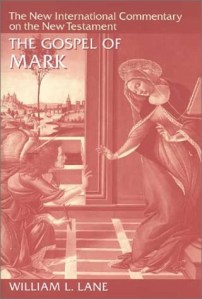
William L. Lane free downloads on the Gospel of Mark

Here’s a link to a Mark teaching series that Dr. William L. Lane led at Christ Community Church in Franklin, TN in 1998. He’s the author of the commentary pictured at right, one of the best for the Gospel of Mark. (Click on the image to look inside the book at Amazon.) From the By/For site:

This Mark teaching series is led by Dr. William L. Lane, author of The Gospel According to Mark from the New International Commentary on the New Testament series. This series was the final time Dr. Lane lectured on Mark.

The study page includes a pdf file of class notes and 13 lectures by Dr. Lane. See it all here.

“Septuagint” is the wrong word to use


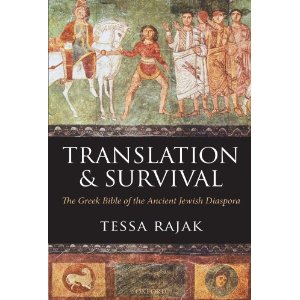
“Septuagint” is perhaps the wrong word to use to describe the Greek translation of the Hebrew Scriptures. Just about every author I’ve read so far on the Septuagint is quick to point this out. In the mail the other day I was happy to receive my review copy of Tessa Rajak’s Translation & Survival: The Greek Bible of the Ancient Jewish Diaspora (Oxford University Press, 2009). She puts it this way:

The term “Septuagint” does not appear in the title of this book, and that is no accident. It is in fact an inappropriate description for the Jewish Bible in Greek. The problem is that “Septuagint” is a term which evolved in the usage of the early Church and refers to the corpus created there as we find it in the great biblical codices of the fourth century CE. It is precisely these layers of reception that we shall need to strip away, at any rate until the last chapter of this book. But even were we to resolve to stick with the name, as one of convenience, we would soon find that the ambiguities and complications of its usage outweighed that convenience. (14-15)

Larry Hurtado recommends the book here. Keep checking back here–I’ll have a full review up some time next month.

Review of The Greek of the Septuagint: Supplemental Lexicon

This, then, is the single dominant characteristic of the LXX vocabulary: it is normal, idiomatic Greek. I base my construal of it on this hypothesis whenever I can.

–Gary Alan Chamberlain in The Greek of the Septuagint: A Supplemental Lexicon

Not long ago I noted that “the challenging nature of Septuagint vocabulary is … one reason why even students of New Testament Greek stay away from the Septuagint. How can one make her or his way through the Septuagint in Greek in a way that is not entirely frustrating?” To begin, you could read about why you need the Septuagint here, and some helpful resources here to get started. Also, I recently reviewed Bernard A. Taylor’s Analytical Lexicon to the Septuagint: Expanded Edition, a one-stop reference work to guide readers through the LXX.

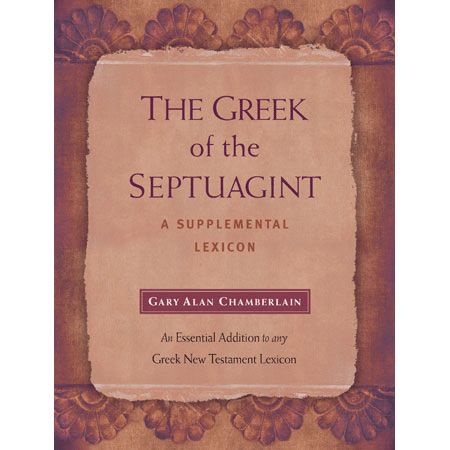
I have now had the occasion (and privilege) to spend some time with The Greek of the Septuagint: A Supplemental Lexicon, by Gary Alan Chamberlain. (Thanks to Hendrickson for the review copy, provided in exchange for an unbiased review.)

Chamberlain intends his lexicon to be a supplemental one, an addition to any Greek New Testament lexicon. (He has BDAG specifically in view.) The vocabulary of the Septuagint is more expansive and potentially different enough from New Testament vocabulary that a lexicon like this is warranted. Many Greek students, especially Biblical studies ones, come to the LXX after first studying the New Testament. So if they already own BDAG or some other New Testament lexicon, the potential need for something like this to “fill in the gaps” could make sense.

The Greek of the Septuagint contains lexicon entries for 5,000 LXX words not in the NT, as well as 1,000 words with LXX-specific uses that a NT lexicon would not carry. For the latter, Chamberlain simply adds to the BDAG numbering system, so that the entry for καθίστημί, for example, begins, “3.b. seek to establish, declare.” Words that the lexicon does fully treat have morphological information (e.g., principal parts for verbs) and citations of word usage in the LXX and beyond.

There is “no treatment of the most common words” in the LXX, so not just a cursory knowledge but a solid grasp of Greek vocabulary would be needed to use this lexicon on its own. I.e., a first- or second-year Greek student really would have to use this as the “supplemental” lexicon it intends to be. “Throughout this work,” Chamberlain notes, “I have assumed that the user has sufficient command of ancient Greek to cope with articular infinitives, genitive absolutes, and the varied means of expressing volition and command. The thousand or so most common LXX words should convey relatively few difficulties.” This work won’t serve the Greek initiate, in other words, but Chamberlain does not intend for his work to be “elementary.”

One might ask, Why not just purchase a full-on Septuagint lexicon? Here is where Chamberlain makes the “distinctive contribution…to LXX studies” that he aims to make.

The dense 19-page introduction explains several classifications of LXX words, and is complemented by an exceedingly useful set of word lists in the appendices. (Hendrickson has the intro in pdf here.) Chamberlain includes word lists and discussion of:

  1. Precise parallels between the LXX and extrabiblical texts. This is where he asserts that LXX vocab is “normal, idiomatic Greek.” He accounts for what others have claimed are examples to the contrary (e.g., “Semitisms”) with the following categories.
  2. Transliterations of the Hebrew into Greek.
  3. Hapax Legomena–Greek words that occur once in the LXX and nowhere else in ancient Greek literature, as well as words that occur multiple times in the LXX but nowhere else (he notes all this and all these categories throughout the lexicon in the appropriate entries, a sample pdf of which is here).
  4. Greek words that occur first in the LXX.
  5. Words with no parallel in other ancient Greek sources.
  6. Stereotypical translations (“calques,” where “translators faced severe challenges in rendering a few common Hebrew terms for which no equivalent was possible within the framework of Greek language”).
  7. Mistranslations (where “LXX translators misconstrued the meaning of their sources’ words, through a confusion of roots or a misunderstanding of meaning of the source”).
  8. Textual variants (more than 200 instances, including his suggested emendations, helpfully organized in canonical order).
  9. More complicated words “involving multiple factors” (“We are simply trying to explain how a Greek word was placed in a context that does not make good sense if we read it as a Greek sentence”).

Having read the descriptions of each of these categories and looked through the corresponding word lists, this reader is convinced that The Greek of the Septuagint offers something that neither BDAG nor any other LXX lexicon on the market (of which I’m aware) currently does. Even without the actual lexicon entries, the word lists and explanations are an invaluable contribution to LXX studies. (The lexical entries themselves are appropriately concise yet substantive.)

His Appendix II is the place to start when looking up a word. It shows (through the use of bold, italics, and regular font) if a word is in this lexicon but not BDAG; if it is in BDAG and supplemented here; or if the word is sufficiently covered in BDAG and therefore not in Chamberlain’s lexicon. Appendix III has a neat listing of LXX book titles in English and Greek, as well as a table that shows the differing versification between the two.

The Greek and English fonts are clear and easy to read (the Hebrew font is a bit small).

I found The Greek of the Septuagint to be a lexicon one has to work at. In other words, it’s not like Taylor’s lexicon, which one could easily pick up and use right away off the shelf. Carefully reading the 4-page preface and 19-page introduction is pretty much required to be able to make use of Chamberlain’s work. But that’s true of BDAG, too, and sort of the point of a preface and introduction in the first place. So that’s not at all a strike against this lexicon. In fact, the user who is willing to put in the work will find great reward in a deepened understanding of the LXX and its vocabulary.

Chamberlain concludes his introduction in this inspiring way:

For many years I have been reflecting upon and experimenting with the question of what the faithful reading of Scripture is in relation to life lived very much “in the world.” Both the method and the goal of preparing this lexicon have been the reading of the LXX text itself (alongside the Hebrew Bible, the Greek NT, and not infrequently the Vulgate) with the prayerful attention the Benedictines call lectio divina. I have made constant and grateful use of the astonishing resources of biblical and classical scholarship, with an embarrassed and hopeless inability to be in any sense in command of those resources. I want simply to apprehend the text, and beyond that to engage the living reality of which the text intends to speak.

Chamberlain’s lexicon is available here.

BibleWorks in the pew? (Not quite, but the next best thing)

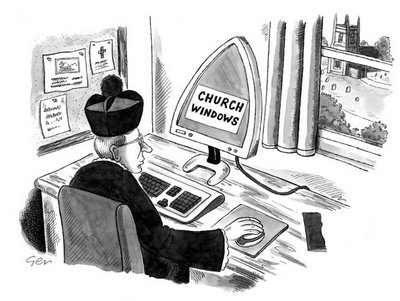
[GEEK ALERT] In an effort to integrate my learning of Biblical languages with church attendance and participation, I can be spotted at my church carrying this and this around. If I had an extra hand, I’d bring this, too. At first I feared it would look pretentious–it still may–but my motives are just to use my Greek and Hebrew in the context of corporate worship, while Scripture is being read aloud (in English, in my church’s case). So I follow along the Scripture readings, as best I can, in the original languages.

By Gerard Whyman (http://www.gerardwhyman.co.uk/)

To take it a step further, some time ago on the BibleWorks forums there was a user-initiated discussion about whether it is appropriate to have a laptop with BibleWorks open in the middle of a church service.

While I personally find the idea of a pew-sitter with a laptop tacky, I do understand the sentiment behind wanting to look at the Bible in the original languages while it’s being read and exposited in church. Hence my solution of having a print Bible with me. That’s not quite as out of place as a laptop would be.

So having my Greek and Hebrew Bibles with me is the next best thing to having BibleWorks open during church. However, there are two other next best things that do involve BibleWorks. First, there is a free user-created module that has the Revised Common Lectionary, linked to texts in BibleWorks. I rarely have time to use it on Sunday morning as we rush out the door, but I have at times been able to look ahead to the texts we’d be reading in church that week and use BibleWorks to work my way through them. The RCL module is really nifty. More about it here.

Today I found myself with the unexpected blessing of some time to play around with BibleWorks a bit. (I just received BibleWorks 9 in exchange for an unbiased review, which I will be offering in parts in coming weeks. Consider this a prologue of sorts.) Using the Report Generator, I was able to create a “Reader’s” version of Jeremiah 23:1-6, the Old Testament reading in church from the RCL this morning. Here’s the screen shot of how to get there, which also shows how I have my BibleWorks set up for Septuagint study. (Click on image for larger, or open it in a new tab.)

Once there, I set the Report Generator in the following way:

Then I clicked on “Build Report” and got a report with the text of Jeremiah 23:1-6 in Greek, followed by the listing of all words used in that passage, with frequency counts, followed by lexicon entries. After some manual organizing, I ended up with the below. Resources like this exist for the Hebrew Bible and the Greek New Testament (what I take to church with me), but there is not as of yet a “Reader’s” Septuagint.

Fellow language-lovers… what do you think? And do you take your languages with you to church? If so, how?

Jeremiah 23:1-6 (Rahlfs Septuagint)

–with footnoted vocabulary (glosses) for words that appear less than 200 times in entire Greek Bible (LXX+NT together). Glosses from here: print / BibleWorks module.

1 Ὦ[1] οἱ ποιμένες[2] οἱ διασκορπίζοντες[3] καὶ ἀπολλύοντες τὰ πρόβατα τῆς νομῆς[4] μου.
2 διὰ τοῦτο τάδε λέγει κύριος ἐπὶ τοὺς ποιμαίνοντας[5] τὸν λαόν μου Ὑμεῖς διεσκορπίσατε[6] τὰ πρόβατά μου καὶ ἐξώσατε[7] αὐτὰ καὶ οὐκ ἐπεσκέψασθε[8] αὐτά, ἰδοὺ ἐγὼ ἐκδικῶ[9] ἐφ’ ὑμᾶς κατὰ τὰ πονηρὰ ἐπιτηδεύματα[10] ὑμῶν·
3 καὶ ἐγὼ εἰσδέξομαι[11] τοὺς καταλοίπους[12] τοῦ λαοῦ μου ἀπὸ πάσης τῆς γῆς, οὗ ἐξῶσα[13] αὐτοὺς ἐκεῖ, καὶ καταστήσω αὐτοὺς εἰς τὴν νομὴν[14] αὐτῶν, καὶ αὐξηθήσονται[15] καὶ πληθυνθήσονται·
4 καὶ ἀναστήσω αὐτοῖς ποιμένας[16], οἳ ποιμανοῦσιν[17] αὐτούς, καὶ οὐ φοβηθήσονται ἔτι οὐδὲ πτοηθήσονται[18], λέγει κύριος.
5 Ἰδοὺ ἡμέραι ἔρχονται, λέγει κύριος, καὶ ἀναστήσω τῷ Δαυιδ ἀνατολὴν δικαίαν, καὶ βασιλεύσει βασιλεὺς καὶ συνήσει[19] καὶ ποιήσει κρίμα καὶ δικαιοσύνην ἐπὶ τῆς γῆς.
6 ἐν ταῖς ἡμέραις αὐτοῦ σωθήσεται Ιουδας, καὶ Ισραηλ κατασκηνώσει[20] πεποιθώς, καὶ τοῦτο τὸ ὄνομα αὐτοῦ, ὃ καλέσει αὐτὸν κύριος Ιωσεδεκ[21].


[1] ὦ (109) woe (to)
[2] ποιμήν (99) shepherd
[3] διασκορπίζω (64) scatter
[4] νομή (39) pasture
[5] ποιμαίνω (65) shepherd
[6] διασκορπίζω (64) scatter
[7] ἐξωθέω (31)  force out
[8] ἐπισκέπτομαι (181) visit
[9] ἐκδικέω (97) exact vengeance
[10] ἐπιτήδευμα (58) practice, way of living
[11] εἰσδέχομαι (20) gather
[12] κατάλοιπος (98) remnant
[13] ἐξωθέω (31)  force out
[14] νομή (39) pasture
[15] αὐξάνω (63) grow
[16] ποιμήν (99) shepherd
[17] ποιμαίνω (65) shepherd
[18] πτοέω (39) tremble
[19] συνίημι (144) have understanding
[20] κατασκηνόω (70) dwell, settle
[21] Ιωσεδεκ (18) proper noun (name)

Hipster Septuagintalist

The Septuagint has become cool–or at least a bit hip.

–Ben Wright in “The Septuagint and Its Modern Translators,” from Die Septuaginta—Texte, Kontexte, Lebenswelten

(quoted in Wolfgang Kraus’s excellent review of the New English Translation of the Septuagint)

I’m not sure that a Septuagintalist (yet another word you can use when you study the Septuagint!) is necessarily the best judge of what’s cool or hip… but I’m going to concur with Wright. As yet another LXX post on Words on the Word is attesting (Happy Septuagint Sunday!), the Translation of the Seventy is at least becoming very hip with me. Also, with this guy:

Greek Vocabulary Guide: Another Book Giveaway by Zondervan

Head over to Koinonia, Zondervan Academic’s blog, for another Wednesday giveaway. Now they are giving away Complete Vocabulary Guide to the Greek New Testament. Details are here.

Koinonia is accepting submissions until Thursday midnight.

The book is available on Amazon here.

BibleWorks and the Septuagint

I recently blogged on why you need the Septuagint. And here are some great resources to begin and further pursue Septuagint study.

One indispensable resource for Septuagint study that I use almost daily is the computer program BibleWorks. I have not yet made the upgrade from version 8 to version 9, but much if not all of what I have to say here will still be applicable to users of version 9 (and 7, for that matter).

Here is what my BibleWorks looks like for 1 Maccabees (click or open in a new tab to view larger):

The following features help me navigate my way through the Septuagint:

  • A nice, big Browse Window (middle column in the top window) so that I can see the whole Greek verse easily at once, with English translations below. Both the LXA (Brenton’s Septuagint with Apocrypha, in English) and the NRS (NRSV, which includes the Apocrypha) are part of BibleWorks.
  • A stand-alone Word Analysis Window (bottom right of the screen) so I can better use my other columns. I set the default lexicon to LEH (Lust/Eynikel/Hauspie’s Greek-English Lexicon of the Septuagint, Revised Edition).
    Not only is this a fantastic Septuagint-specific lexicon; it also includes word frequency counts. What I particularly like about this is that I can use the Stats window (in the Analysis Window, the right column in the top window) to find out how many times a word appears in the whole Greek Bible (LXX+New Testament). Then using the LEH frequency counts, I can get a quick number on how many times a word is used in the LXX and the NT. This is helpful if I see an LXX word that occurs 200+ times, have never heard of it, and then see it only appears 10 times in the NT.
  • The Resource Summary Window (bottom left of the screen). Here I can access Conybeare’s Grammar of Septuagint Greek, which comes with BibleWorks and is hyperlinked both by part of speech and Scripture index. Another nice feature is that I can pull up BibleWorks paradigms quickly for a given part of speech–a helpful grammatical refresher! The IVP Dictionary of Jesus and the Gospels in that window is an add-on from WordSearch, but their IVP Dictionary package has a bunch of great Septuagint articles.
  • Note: There is no punctuation in the BibleWorks Septuagint text. This is not a display error; it’s just how it is. There are accents and breathing marks, though. And, the way I see it, even if Rahlfs in print has punctuation, the original manuscripts did not, so no huge loss.
  • I hesitate to write too much more about the Analysis window (right column in the top window), because BibleWorks 9 has significantly changed (=improved) the layout. In fact, there are now four columns, as seen here. However, for anyone using 8 or less, the above configuration allows you to work with the LXX profitably. For BibleWorks 9, I’m sure you could use the above layout as is (BW9 lets you use just three columns if you want, I believe) or make whatever modifications you wanted in BW9.

1 Maccabees has no existing Hebrew text. The scholars I’ve read on it all think that the Greek of 1 Maccabees has the flavor of translation Greek, and so translated a Hebrew original. But we don’t have it. (BibleWorks is powerful, but not quite that powerful!)

How I use the LXX when there is a corresponding Hebrew text (e.g., when I’m reading Micah) looks a little different. For example, in addition to the above, I’ll have the Hebrew text and English translation displayed. BibleWorks has the amazing Tov-Polak Parallel Hebrew/LXX Database, too, that comes with the base package.

BibleWorks allows me to read through the Septuagint in Greek with English translations displayed underneath. (I can also hide them–that’s what my “No Eng.” tab is in the left column of the top window.) It gives me instant word analysis (its parsing and then word definition and frequency count through LEH). I get grammatical helps from Conybeare and BibleWorks paradigms. I can search on a word to see how it’s used throughout the Septuagint and/or New Testament (note the highlighted word above). And with the IVP add-ons, I get historical background, too.

Using BibleWorks is a fabulous way to read through the Septuagint. I feel very blessed to have access to such a tool as this.

And I know there is much more BibleWorks can do. Fellow BibleWorks users and lovers of the Septuagint, how do you use BibleWorks for LXX success?

Septuagint Sunday is a regular feature of Words on the Word. All my LXX posts are here. The full contents of BibleWorks (now in version 9) are listed here. You can buy the program here or here.