

…where you can read my review of Public Faith in Action: How to Think Carefully, Engage Wisely, and Vote with Integrity, by Miroslav Volf and Ryan McAnnally-Linz. Just a few days before the election!
The review is here.

From David Lang at the Accordance blog:
Pssssttt! I’m going to let you in on a little secret. We’ve been hard at work on Accordance 12, a major upgrade to the Accordance application with a host of new features you’ll soon be wondering how you ever got along without. We’re not ready to tell you about the big stuff just yet, but here’s a sneak peek at one of the many minor enhancements you can look forward to in version 12.
Read more here.

One of my favorite and most-used apps–MindNode–is free in the iOS App Store this week. After thinking mind mapping wasn’t for me, I tried it just over a year ago and loved it. Now it’s a regular part of my brainstorming and writing workflow.
Here‘s the link–download it while you can, for iPhone and iPad. (Regular price is something like $10.)
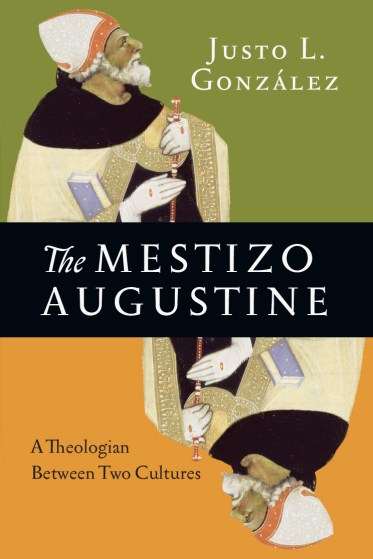
A forthcoming book from IVP combines one of my favorite lenses for theology (mestizaje) with one of my favorite theologians (Augustine). And the author is none other than Justo González. I believe Michael Scott calls that win-win-win.
Here’s the publisher’s description:
Few thinkers have been as influential as Augustine of Hippo. His writings, such as Confessions and City of God, have left an indelible mark on Western Christianity. He has become so synonymous with Christianity in the West that we easily forget he was a man of two cultures: African and Greco-Roman. The mixture of African Christianity and Greco-Roman rhetoric and philosophy gave his theology and ministry a unique potency in the cultural ferment of the late Roman empire.
Augustine experienced what Latino/a theology calls mestizaje, which means being of a mixed background. Cuban American historian and theologian Justo González looks at the life and legacy of Augustine from the perspective of his own Latino heritage and finds in the bishop of Hippo a remarkable resource for the church today. The mestizo Augustine can serve as a lens by which to see afresh not only the history of Christianity but also our own culturally diverse world.
Coming in November! If you go to the publisher’s page, you can see the Table of Contents. Amazon has it up for pre-order. I’ll do my best to review it here this fall.

I’m honored to have a piece on Sabbath-keeping featured on the new CTPastors.com site. It starts out:
The lack of correlation between time at work and quality of work has been a recurring theme in Harvard Business Review over the last decade. Not long ago, I received an email newsletter with yet more research showing that working more hours does not mean working more effectively. The article cited a study where managers could not tell the difference in work output between employees who worked 80 hours a week and those who only pretended to work 80 hours a week.
The article summarized its findings with this statement….
You can read the whole thing here.
A lot of students and professors read this blog, so today’s news affords (among other things) an opportunity to clarify (whether for yourself or others) what plagiarism is. Two tutorials that could be useful are this one from Duke and this one from Indiana University.
I also like this post from a few years ago by Charles Halton, where I first learned about the Duke site.
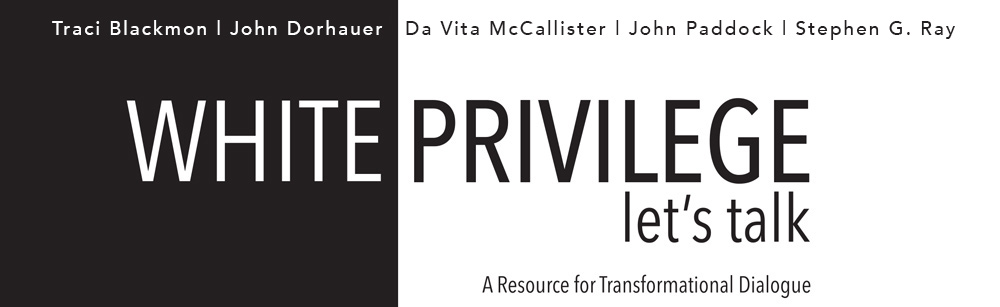
I read through the United Church of Christ’s 2015 Annual Report this afternoon and was delighted to learn about a forthcoming curriculum to help congregations think through white privilege.
It’s slated for a September 1 release: good timing since I’m eager to once again explore and offer resources to my congregation that will aid in racial identity development and help us bolster anti-racism efforts.
Here is an excerpt from the May press release:
“As an extension of our ongoing commitment to Sacred Conversations on race, it is time that this still largely white denomination wrestle with its investment in whiteness, and learn all it can about the manifestations and impact of White Privilege,” said the Rev. John Dorhauer, UCC general minister and president. “This Curriculum, written by five gifted authors with decades of experience teaching about race and privilege, is presented to enable such dialogue to take place at every level of the Church.”
Due to traveling, I missed the related Webinars in June, but more information is available about them here. (I plan to watch recordings.) I already love the title of one session: Spiritual Autobiography through the Lens of Race. Brilliant.
If you, dear reader, are aware of any other resources (specifically already structured as group curriculum) for congregational racial identity development (especially for predominantly white churches), I’d love to hear about it in the comments. Or you can contact me here.
This week’s blog sponsor is MailButler for Mac Mail, a productivity-enhancing app for Mac Mail with a robust feature set. Find out more about it here or download and try it free here.

It’s getting way past old: Senseless murder. Institutionalized bias and racism. Sheer evil in action. Too-easy-to-access AR-15s used to kill in times of peace.
There’s more to say than any single blog post could. I simply want to suggest here a resource for worship service planning for this Sunday. After looking through a host of lament prayers, both ancient and modern, I’ve come to Psalm 74.
It doesn’t take much imagination to update its striking imagery of “men wielding axes” and ones who “smashed all the carved paneling with their axes and hatchets” to the context of this last week in the United States. Verse 9 offers the poignant observation, “None of us knows how long this will be.”
Here’s Psalm 74 in its entirety, which our congregation will use as our Call to Worship on Sunday, mindful of and mourning for this week’s tragic loss of life.
O God, why have you rejected us forever?
Why does your anger smolder against the sheep of your pasture?
2 Remember the nation you purchased long ago,
the people of your inheritance, whom you redeemed—
Mount Zion, where you dwelt.
3 Turn your steps toward these everlasting ruins,
all this destruction the enemy has brought on the sanctuary.4 Your foes roared in the place where you met with us;
they set up their standards as signs.
5 They behaved like men wielding axes
to cut through a thicket of trees.
6 They smashed all the carved paneling
with their axes and hatchets.
7 They burned your sanctuary to the ground;
they defiled the dwelling place of your Name.
8 They said in their hearts, “We will crush them completely!”
They burned every place where God was worshiped in the land.9 We are given no signs from God;
no prophets are left,
and none of us knows how long this will be.
10 How long will the enemy mock you, God?
Will the foe revile your name forever?
11 Why do you hold back your hand, your right hand?
Take it from the folds of your garment and destroy them!12 But God is my King from long ago;
he brings salvation on the earth.13 It was you who split open the sea by your power;
you broke the heads of the monster in the waters.
14 It was you who crushed the heads of Leviathan
and gave it as food to the creatures of the desert.
15 It was you who opened up springs and streams;
you dried up the ever-flowing rivers.
16 The day is yours, and yours also the night;
you established the sun and moon.
17 It was you who set all the boundaries of the earth;
you made both summer and winter.18 Remember how the enemy has mocked you, Lord,
how foolish people have reviled your name.
19 Do not hand over the life of your dove to wild beasts;
do not forget the lives of your afflicted people forever.
20 Have regard for your covenant,
because haunts of violence fill the dark places of the land.
21 Do not let the oppressed retreat in disgrace;
may the poor and needy praise your name.
22 Rise up, O God, and defend your cause;
remember how fools mock you all day long.
23 Do not ignore the clamor of your adversaries,
the uproar of your enemies, which rises continually.
This week’s blog sponsor is MailButler for Mac Mail, a productivity-enhancing app for Mac Mail with a robust feature set. Find out more about it here or download and try it free here.

I’ve had fun getting the new Words on the Goods off the ground the last couple months. This site’s sister blog now has its first co-author, Brian Davidson. I’m excited about the possibilities having multiple writers opens up.
Words on the Goods focuses on reviewing high-quality, high-utility gear, as well as the best productivity and life management apps.
Here are a few highlights from recent weeks:
Find Words on the Goods at www.wordsonthegoods.com. If you scroll to the bottom, you can sign up to follow or subscribe to the blog.
This week’s blog sponsor is MailButler, the feature set you always wished your Mac Mail had (and that I’m glad mine does). Find out more about it here or download and try it free here.

…the Brill Septuagint Commentary Series is nearing availability on Logos Bible Software.
Here is how Brill describes its series:
This multi-volume series fills a significant gap in biblical studies by providing a literary commentary on the Greek text of the Septuagint. The Septuagint is widely recognized as one of the most important interpretations of the Old Testament and one of the most important sources for New Testament study. Whereas there has been much attention devoted to the two testaments, with numerous commentary series having been written, the Septuagint has been virtually neglected as a set of primary texts used by Jewish and Christian religious communities in the Greco-Roman world.
All 13 published titles will be released in late July through Logos, now available for the steep pre-order price of $1,773.99. It’s a good time to consult your local theological library. All the same, I’m encouraged to see the expanding availability of electronic resources for Septuagint studies.
Find out more here.


 Words on the Word