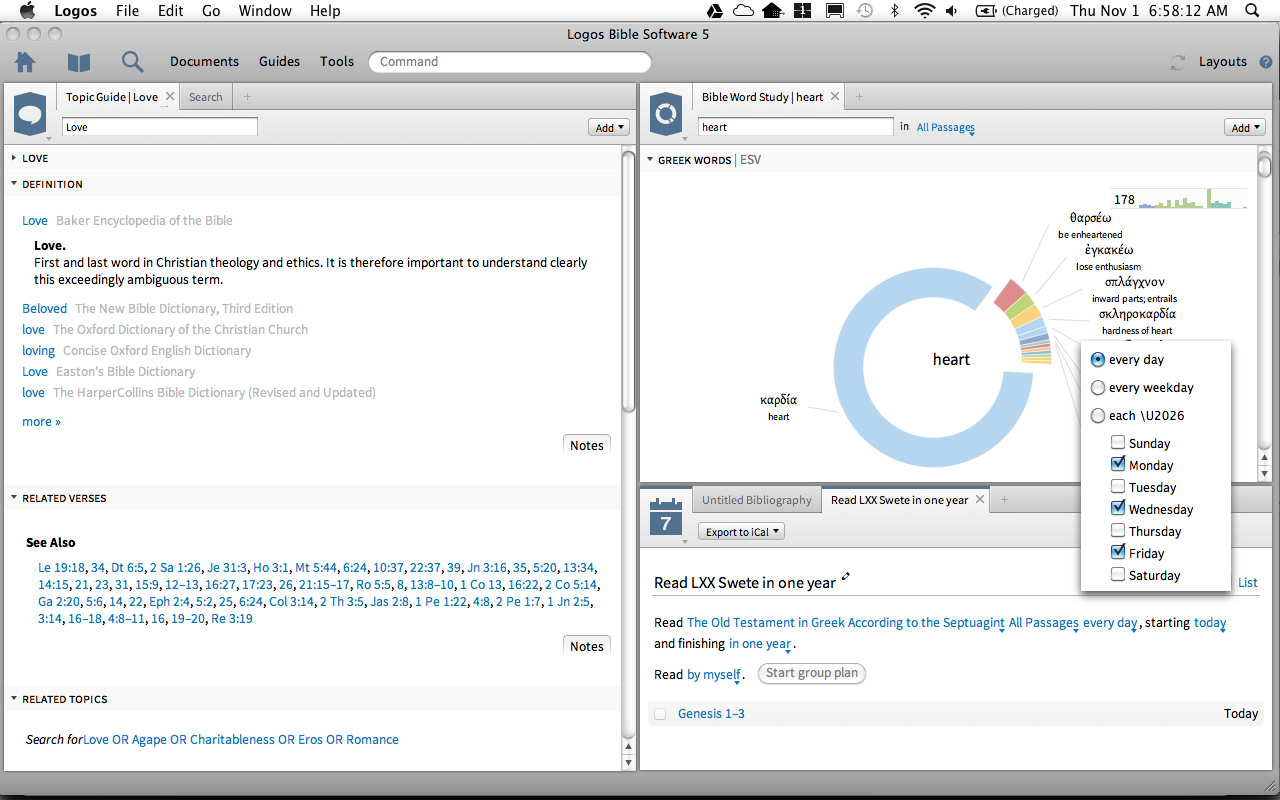
Katharine Bushnell (1856-1946): “God does not curse women because of Eve”

Two days after All Saints Day, I express my admiration now for a perhaps even lesser-known “saint” than Perpetua, Moses the Black, or John Huss.

Katharine Bushnell lived from 1856 to 1946. She was a doctor, a missionary, an advocate for those without other advocates, and a theologian.  Her commitment to the authority of Scripture was strong. About the Bible she said, “No other basis of procedure is available for us.” She learned Greek and Hebrew, and was particularly interested in applying her knowledge of biblical languages to understanding what the Bible had to say about gender. She spoke seven languages.

Author and theologian Mimi Haddad (where I first learned about Bushnell, via this PDF article) writes about her:

Bushnell grounds the ontological equality of men and women first in the early chapters of Genesis where, according to Bushnell, we learn that Adam and Eve were both created in the image of God, that Adam and Eve were both equally called to be frutiful and to exercise dominion in Eden, that Eve was not the source of sin, and that God does not curse women because of Eve.

Bushnell began a hospital of pediatrics in Shanghai, was part of the Women’s Christian Temperance Union, and helped found a homeless shelter for women in Chicago.

Psalm 68:11 says, “The Lord announces the word, and the women who proclaim it are a mighty throng.”

Bushnell joins Perpetua and countless others as part of a mighty throng of women who have proclaimed God’s word in ways that continue to inspire today.

What’s new in Logos 5

This video from Logos shows what’s new in Logos 5. It mentions some of the same features I wrote about in my early review. Of special note, though, is the explanation of the Bible Sense Lexicon, new in Logos 5, beginning at 2:23. The Silver package I received for review does not have the Bible Sense Lexicon, but the Gold package and packages above Gold do have it.

More Logos-created videos introducing version 5 are here.

Thanks to Logos for the review copy of Logos 5 with the Silver package, provided to me simply with the expectation that I offer my honest impressions of the program, which I began here.

John Huss (c. 1372-1415), who said the Psalms as he burned at the stake

Though All Saints Day was yesterday, I want to highlight two more lesser-known saints today and tomorrow.

John Huss is nowhere near the household name (well… Christian household name) that Martin Luther or John Calvin is. But he tilled the ground for these and others.

Huss taught and pastored in Prague. Like the better-known reformers that would follow him, Huss criticized the established church of his day. He held that the Bible should be in the hands of the masses.  In his view, the only proper “head” of the Church was not any humanly established church government, but Jesus Christ. He advanced the Reformation idea of “Sola scriptura”—that the Bible alone should be the authority in issues pertaining to life and doctrine.

Christian History writes of his death this way:

In November 1414, the Council of Constance assembled, and Huss was urged by Holy Roman Emperor Sigismund to come and give an account of his doctrine. Because he was promised safe conduct, and because of the importance of the council (which promised significant church reforms), Huss went. When he arrived, however, he was immediately arrested, and he remained imprisoned for months. Instead of a hearing, Huss was eventually hauled before authorities in chains and asked merely to recant his views.

When he saw he wasn’t to be given a forum for explaining his ideas, let alone a fair hearing, he finally said, “I appeal to Jesus Christ, the only judge who is almighty and completely just. In his hands I plead my cause, not on the basis of false witnesses and erring councils, but on truth and justice.” He was taken to his cell, where many pleaded with him to recant. On July 6, 1415, he was taken to the cathedral, dressed in his priestly garments, then stripped of them one by one. He refused one last chance to recant at the stake, where he prayed, “Lord Jesus, it is for thee that I patiently endure this cruel death. I pray thee to have mercy on my enemies.” He was heard reciting the Psalms as the flames engulfed him.

Luther, who later would stumble on Huss’s writings, said, “I was overwhelmed with astonishment. I could not understand for what cause they had burnt so great a man, who explained the Scriptures with so much gravity and skill.”

(I remembered Moses the Black yesterday, Perpetua on Wednesday, and wrote about All Saints Day more generally the day before that.)

Logos 5 Review: Initial Impressions

Logos 5 has arrived.

I started using Logos 4 two months ago for a review I finished last week. Now version 5 is released today. But 4 had been out several years, so v. 5 has been in the works for some time. Having had and used Logos 5 for a few days now, I want to offer an initial set of impressions by way of review.

As I installed Logos 5, it was nice to know that I’d have access to all of my same resources, layouts, and highlights in books from Logos 4 when version 5 downloaded. This is one of my favorite things about Logos, and a feature that sets it apart from other Bible software. Logos works best with Internet enabled; you use a log-in that works across multiple computers and devices. After using Logos on a Mac, yesterday I opened it on my PC, and it opened exactly as I had left it on the Mac–all the same windows opened to all the same pages, like I had never stopped working. This is an immense time saver and a great feature.

Knowing this made the thought of installing 5 in place of 4 easier to deal with. And, sure enough, when I opened Logos 5, even though I had a new Logos engine, all was as I had left it the last time I had used 4. The installation itself took 2.5 hours (on a machine with no Logos 4 on it at the time), with a long indexing process of some 5 hours or more to follow.

The icon in my dock for Logos 5 is the same as Logos 4 (unless this is still to be updated?)–I would have expected a change here to set apart the new product even more.

Logos has also changed the structuring of their base packages, so that I am reviewing something called “Silver,” a new combination of resources. There are, in fact, seven new base packages in Logos, as noted in their table below. The sale price is offered in conjunction with the new release.

Full Title Resource Count Print List Prices Retail Sale (15% off)
1 Starter 207 $3,500 $294.95 $250.71
2 Bronze 426 $8,000 $629.95 $535.46
3 Silver 699 $13,000 $999.95 $849.96
4 Gold 1,037 $21,000 $1,549.95 $1,317.46
5 Platinum 1,327 $28,700 $2,149.95 $1,827.46
6 Diamond 1,993 $52,500 $3,449.95 $2,932.46
7 Portfolio 2,563 $78,000 $4,979.95 $4,232.96

The Silver package is certainly an upgrade from the Original Languages Library I reviewed in Logos 4. The Silver package includes Swete’s Cambridge Septuagint, the entire New American Commentary series, a ton of preaching/illustration resources, and more. My library expanded significantly upon downloading Silver.

The default font changed (across resources) to a font I found less readable. It took me all of 30 seconds, though, to figure out how to go into preferences and change it back to a font called “Default (Logos 4).”

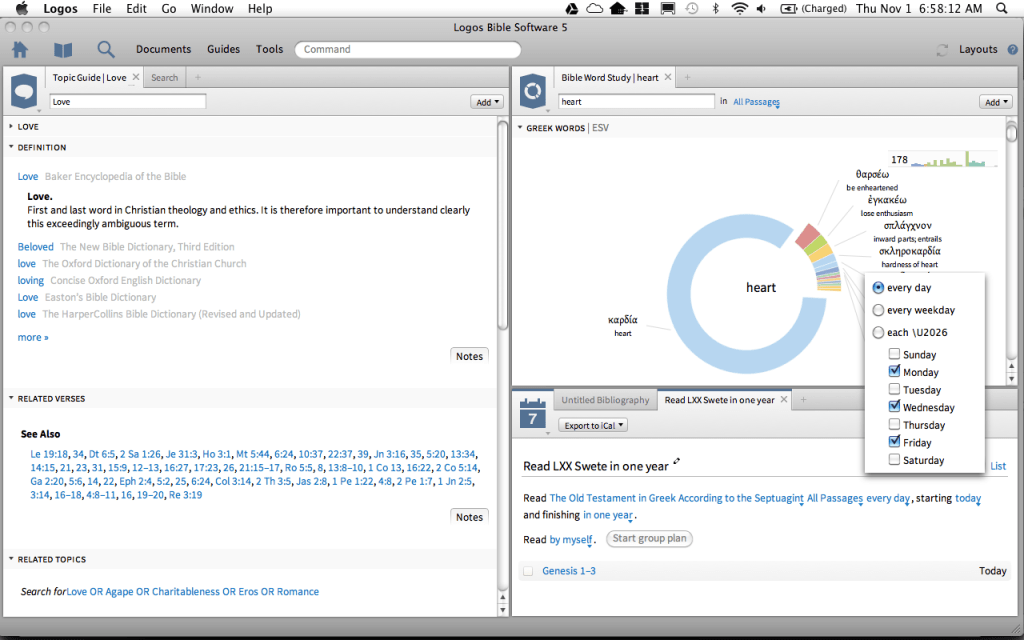
What’s new in Logos 5? The two most obvious changes are visible below (click image for larger). For one, the icons and command bar at top are joined by three additions: “Documents,” “Guides,” and “Tools.” This gives the user quicker access to more features and tasks in Logos.
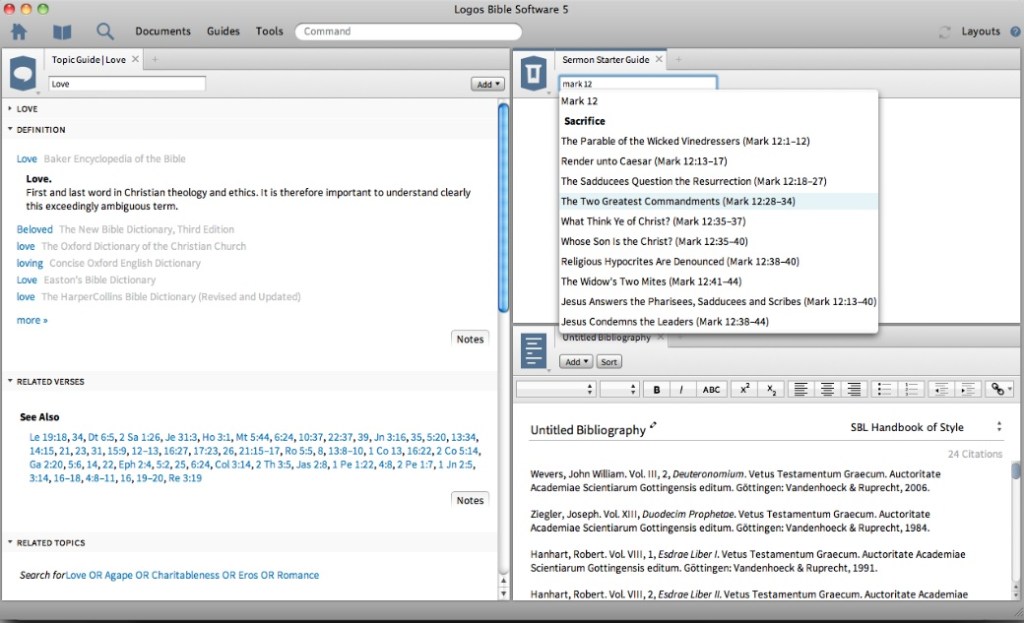
The second big noticeable change is the addition of more “Guides” (it becomes obvious why it has its own place right next to the command bar). Note above the “Topic Guide,” Bibliography, and “Sermon Starter Guide.” (These join the Exegetical and Passage Guides.) The Bibliography is especially helpful to this occasional writer of academic papers, and can be adjusted to various styles.

Note also a neat customizable reading plan guide (below at bottom right, how I could read the Septuagint in a year) and a “Bible Word Study” (at top right) with graphic, among other results that come up.
I have mixed feelings about the additions of new Guides in Logos. Though my initial skepticism about the Exegetical and Passage Guides changed to appreciation the more I used them in Logos 4, it’s hard to know at this early stage of using Logos 5 whether these guides will prove helpful or just seem like clutter. The Sermon Guide holds promise, as it gathers resources in one place that would take time to compile by hand. However, the Exegetical and Passage Guides already do this, albeit with a slightly different focus.

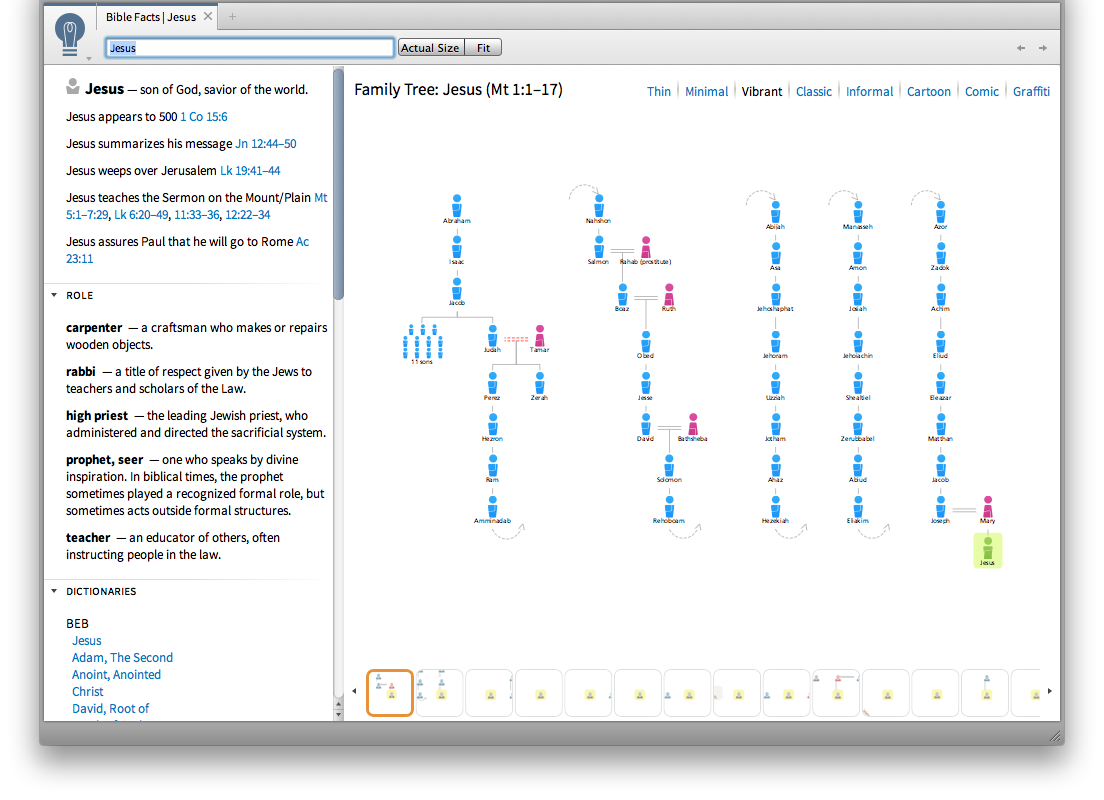
The Bible Facts feature (new in Logos 5) is pretty cool, and could be useful in teaching settings. See here:
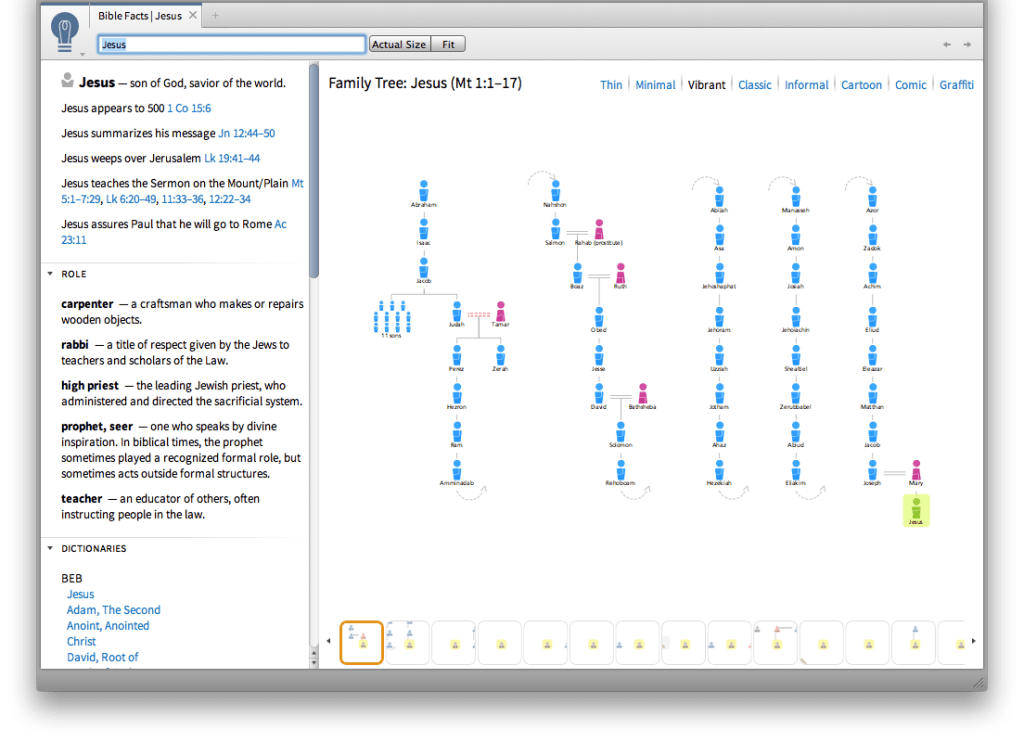
Whoever does graphic design at Logos is aces. Follow them on Facebook and you’ll see well-done graphics for verses each day. Bible Facts incorporates that. This is a good addition in Logos. It auto-suggests search terms and returns results quickly.

More about Logos 5, including full details of what’s new, can be found here, with some brand new videos here. I’ll provide an additional review installment once I’ve had chance to spend more time with the program.

UPDATE: A bit more from me on Logos 5 here.

UPDATE 2: A week later, further impressions on Logos 5.

Thanks to Logos for the review copy of Logos 5 with the Silver package, provided to me simply with the expectation that I offer my honest impressions of the program.

St. Moses the Black (4th century)

Happy All Saints Day!

Moses the Black was a 4th century African saint. He has some sweet aliases, too: Abba Moses the Robber and Moses the Strong. As in the image above (which is from here), he is also known as St. Moses the Ethiopian.

The Brotherhood of St. Moses the Black gives a short biography of the saint, which I have also seen (unsourced) elsewhere:

St. Moses the Black was a former gang leader, murderer, and thief in ancient Africa. However, he became a model of transformation. His is one of the most inspiring stories among the African saints.

Moses, an escaped slave, was the leader of a group of 75 robbers. He was a large and powerful man, who with his gang terrorized the entire region. Moses was transformed after he and his group attacked a monastery, intending to rob it. He was met by the abbot, whose peaceful and warm manner overwhelmed him. He immediately felt remorse for all his past sins, sincerely repented, and begged to remain at the monastery.

Moses was tortured by his past and for years was tempted to return to his old ways. One day, as he was confessing his sins to St. Macarius, it was reported that an angel appeared with a tablet full of his sins. As he confessed, the angel began wiping the tablet clean. The more he confessed, the more the angel was said to have wiped, until by the end it was completely clean. After meeting St. Macarius and St. Isidore, he completely left his old ways behind him and became a monk.

Later, St. Moses was ordained to the priesthood — a rare honor among the Desert Fathers– and founded a monastery of 75 monks, the same number as his former group of thieves. He was known for his wisdom, humility, love, and non-judgment of others. Once a brother had been caught in a particular sin, and the abbot asked St. Moses to come to the church and render judgment. He came reluctantly, carrying on his back a leaking bag of sand. When he arrived, the brothers asked him why he was carrying such a thing. He simply said, “This sand is my sins which are trailing out behind me, while I go to judge the sins of another.” At that reply, the brothers forgave the offender and returned to focusing on their own salvation rather than the sins of their brother.

In 405 A.D., at age 75, St. Moses suffered a martyr’s death when his monastery was attacked by a group of barbarians. He is remembered on the 28th of August. Today he is considered the patron saint of African Americans.

More on Moses the Black can be found here.

(I remembered Perpetua yesterday and wrote about All Saints Day more generally the day before that.)

The Martyrdom of Perpetua (d. 203)

Perpetua was a nursing mother who rejected her father’s pleadings to deny her Christian faith and make the requisite sacrifice to the Roman emperor. As the story goes, depicted above, she had to help guide the sword of her trembling executioner to her throat.

The book 131 Christians Everyone Should Know, by Mark Galli and Christian History magazine, recounts her story:

Her father immediately came to her in prison. He was a pagan, and he saw an easy way for Perpetua to save herself. He entreated her simply to deny she was a Christian.

“Father, do you see this vase here?” she replied. “Could it be called by any other name than what it is?”

“No,” he replied.

“Well, neither can I be called anything other than what I am, a Christian.”

In the next days, Perpetua was moved to a better part of the prison and allowed to breastfeed her child. With her hearing approaching, her father visited again, this time, pleading more passionately….

The day of the hearing arrived; Perpetua and her friends were marched before the governor, Hilarianus. Perpetua’s friends were questioned first, and each in turn admitted to being a Christian, and each in turn refused to make a sacrifice (an act of emperor worship). Then the governor turned to question Perpetua.

At that moment, her father, carrying Perpetua’s son in his arms, burst into the room. He grabbed Perpetua and pleaded, “Perform the sacrifice. Have pity on your baby!”

…When [Perpetua and her friends] entered the stadium, wild beasts and gladiators roamed the arena floor, and in the stands, crowds roared to see blood. They didn’t have to wait long.

Immediately a wild heifer charged the group. Perpetua was tossed into the air and onto her back. She sat up, adjusted her ripped tunic, and walked over to help Felicitas. Then a leopard was let loose, and it wasn’t long before the tunics of the Christians were stained with blood.

This was too deliberate for the impatient crowd, which began calling for death for the Christians. So Perpetua, Felicitas, and friends were lined up, and one by one, were slain by the sword.

The whole account can be found here.

It’s easy for me to “want to be in that number” when saints like Perpetua “go marching in,” but the courage and faithfulness she exhibited in the moments leading up to her martyrdom are qualities I can only pray to attain. The Wisdom of Solomon passage I quoted yesterday is apropos:

But the souls of the righteous are in the hand of God,
and no torment will ever touch them.

In the eyes of the foolish they seemed to have died,
and their departure was considered to be suffering,

and their going from us to be destruction,
but they are at peace.

As All Saints Day approaches tomorrow, I find myself moved and inspired by this committed follower of Jesus. Perpetua, though she was mercilessly separated from her husband, family, and precious little baby, is at peace.

“As sparks through the stubble, they will run about” (All Saints Day)

The Forerunners of Christ with Saints and Martyrs, by Fra Angelico (15th century)

November 1 is All Saints Day.  It’s a holiday in the church calendar of multiple Christian traditions: Catholic, Anglican, Lutheran, Methodist, and others. Halloween gets its name from All Saints Day.  All Saints Day used to be known as All Hallows Day, and Halloween was a contraction of All-Hallows-Even, or All Hallows Eve.

All Saints Day is meant to remember the saints, or fellow believers, who have gone on before us, walking in the way of Jesus.  The author of Hebrews writes, “We are surrounded by such a great cloud of witnesses.” We have the example of men and women who have walked with God, who have struggled with God, and who have triumphed in life with God.  As we look ahead to All Saints Day we can pause today to remember their example, and ask God to strengthen our faith, too.  We are part of that number.

Psalm 85:8 in the NIV says, “I will listen to what God the LORD will say; he promises peace to his people, his saints.”  Some 30 times Paul addresses congregations of believers as “saints.”  We who follow Jesus are rightfully called “saints.”  We are part of a narrative that is much bigger than ourselves, much bigger than any one community, and much bigger than this period in history.  We are a part of a timeless, worldwide communion of saints—the body of Christ.

Wisdom of Solomon (yes, it’s from the Septuagint!) puts it beautifully:

But the souls of the righteous are in the hand of God,
and no torment will ever touch them.

In the eyes of the foolish they seemed to have died,
and their departure was considered to be suffering,

and their going from us to be destruction,
but they are at peace.

For even if in the sight of human beings they were punished,
their hope is full of immortality,

and having been disciplined a little, they will be greatly benefited,
because God tested them and found them worthy of himself;

as gold in the furnace, he tested them,
and as a sacrificial whole burnt offering, he accepted them.

And in the time of their visitation they will shine out,
and as sparks through the stubble, they will run about.

They will judge nations and rule over peoples,
and the Lord will be king over them for ever.

Those who trust in him will understand truth,
and the faithful will remain with him in love,

because grace and mercy are upon his holy ones,
and he watches over his chosen ones.

–Wisdom of Solomon 3:1-9 (NETS)

In the coming days I’ll post about a series of lesser-known “saints” in the Church’s history, righteous ones whose “souls…are in the hand of God.”

Christian Apologetics winner

We have a winner in the giveaway contest at Words on the Word for Zondervan’s primary source compendium, Christian Apologetics: An Anthology of Primary Sources, edited by Khaldoun A. Sweis and Chad V. Meister.

I have weathered the storm, several flickers of the power on and off, and have selected the winner at random. (Actually, a random number generator is to thank/blame.)

And the winner is… Matthew Hamrick! Congratulations, Matthew, and enjoy the book. Thank you to everyone who participated and spread the word.

I reviewed the book here if you’d like to learn more.

Almost every Monday at Words on the Word (and other days, too) I review new books in the field of biblical studies, original languages, and theology. I also review Bible software. Check or bookmark this link to see all my reviews.