Book Review: Raise Your Voice: Why We Stay Silent and How to Speak Up

Kathy Khang’s new book from InterVarsity Press addresses an important question:

You have a voice. And you have God’s permission to use it.

In some communities, certain voices are amplified and elevated while others are erased and suppressed. It can be hard to speak up, especially in the ugliness of social media. Power dynamics keep us silent and marginalized, especially when race, ethnicity, and gender are factors. What can we do about it?

In the introduction (“The Risk of Silence Versus the Risk of Raising Your Voice”) Khang gets right to it: “More often than not, raising my voice comes at some cost” (3). But not speaking up has a cost, too: “I learned that even when I chose to be silent and do nothing, I was still choosing to communicate something” (10). She says, “I want you to know that you have a voice. God wants you to use it, and the world needs to hear, see, and experience it” (10).

Khang roots our voice in the image of God and says, “Creation was not meant to be silent” (35). The God who spoke creation into being calls us to speak and even speaks through us.

This doesn’t mean raising our voice will be easy. Khang talks about fear, failure, and the risk of upsetting others. She shares experiences where speaking up for peace has been difficult for her—even times when trusted colleagues have (literally!) tried to silence her. Her sharing of her and her family’s life stories are a compelling part of her showing readers what finding our voice can look like.

I marked up quite a bit in this book. Here are some of the passages that especially helped me:

Rather than waiting for fear to pass, we must be willing to make small yet courageous steps toward the unfamiliar. We must simply be willing to “do it afraid.” (65, from a friend of Khangs that she interviews)

Speaking out is often labeled as rocking the boat or causing trouble, but silence is just as dangerous. (83)

Another thing to consider is what issue is pulling at your heart and soul so much that it might make you do something you never thought you’d do? (57-58)

I found the following idea especially compelling, and a great antidote to those who complain about “division” or “playing the race card” or whatever other reasons people give for avoiding difficult conversations:

Speaking up doesn’t increase division. It brings injustice and sin to the forefront. (66)

The book is not quite the step-by-step how-to guide I expected from the chapter titles, but Khang offers plenty of practical advice:

What issues do you care most deeply about? Identify what compels you to speak up. What people, problems, dreams, and values are near and dear to your heart? What things make you angry and question humanity? Where do you find hope? (57)

And her use of the Esther narrative as a lens through which to view using one’s voice is inspiring.

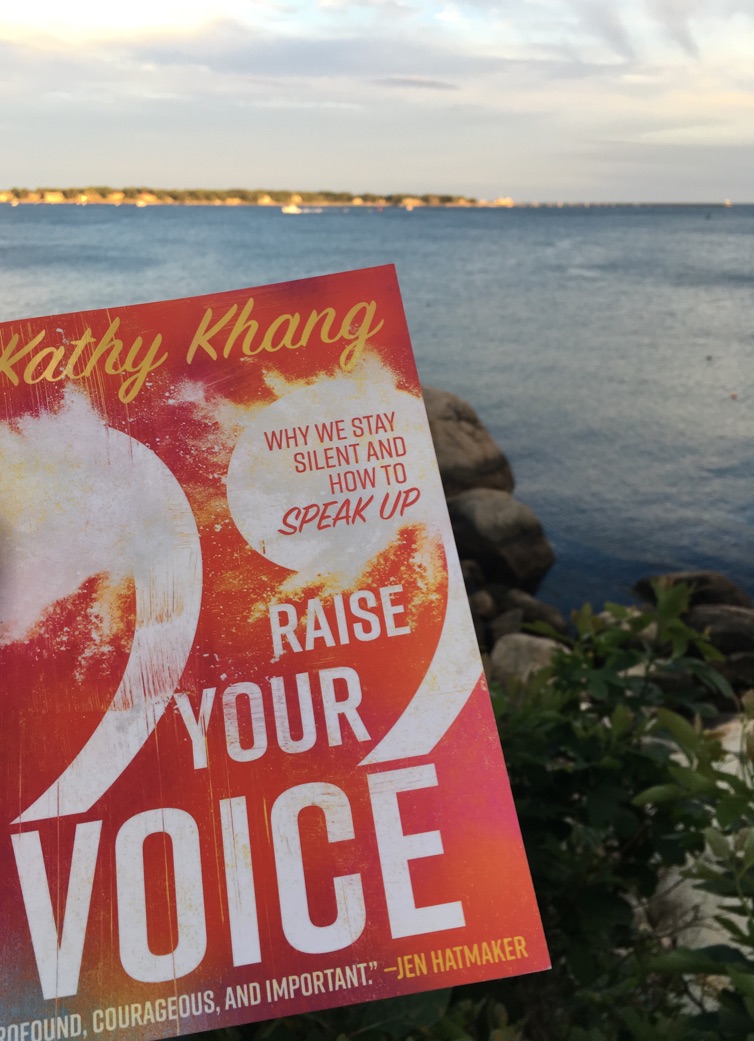
The book, by the way, is an excellent oceanside companion…


… and a good dinner partner:


It’s especially timely, given everything the current president does and says, as Christians try to navigate what to say and how to say it and in what venues.


Raise Your Voice releases July 31 and is available here (IVP) and here (Amazon).


Thanks to the good folks at IVP for the review copy, sent without expectations of the content of my review.

How Did We Go About Handling the LXX Double-Texts?

Greg Lanier's avatarSeptuaginta: A Reader's Edition

EstherTobitS

As is well known in the field of Septuagint studies, certain books developed over time into distinct textual forms. That is, in some cases there are what look like two different Greek versions of the same book in the Septuagint corpus. In such cases, the manuscript evidence preserves two textual traditions that are substantially different enough that Rahlfs decided to differentiate them in his edition of the Septuagint.* Since we decided to use Rahlfs-Hanhart as a base text, when it came to producing the Reader’s Edition we had to ask ourselves how we would handle these “double texts,” as they are often called.

View original post 522 more words

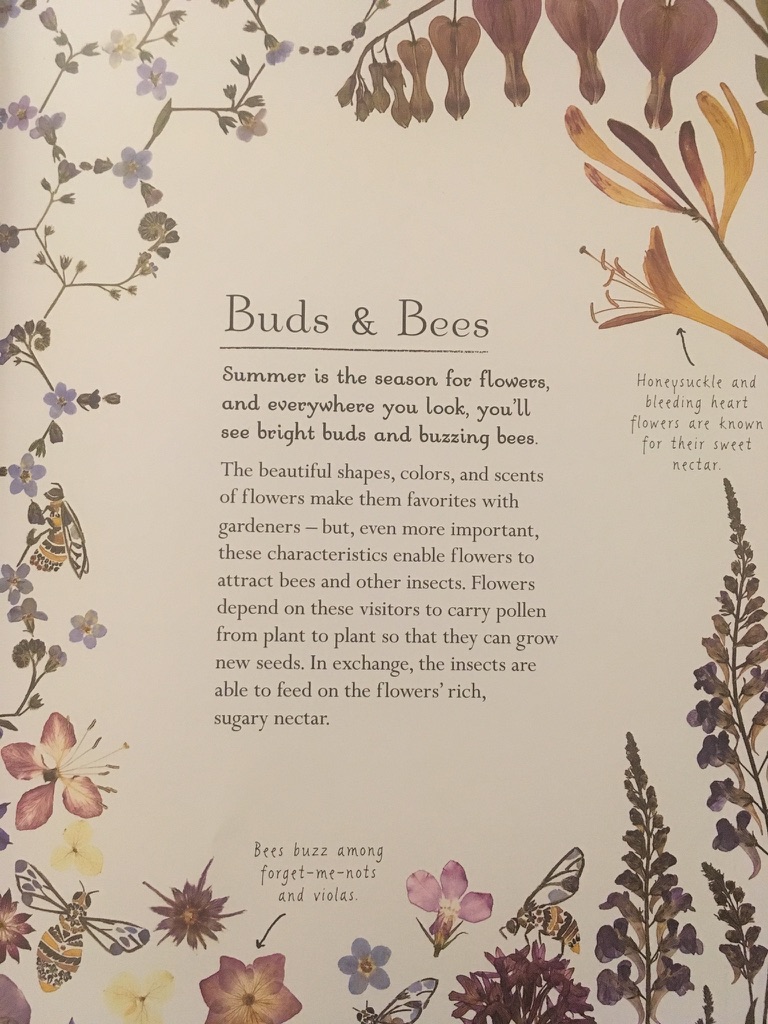
Drawn from Nature: A Stunning Children’s Book

Helen Ahpornsiri’s Drawn from Nature might be the most beautiful children’s book we’ve ever read. (And we’ve read a lot of them over the years.)

Ahpornsiri uses plants pressed by hand to lead the reader through the four seasons: Spring, Summer, Autumn, Winter. The text itself is informative and lyrical, but the artwork is stunning.

Here are some pictures:


I can’t imagine how long it takes to illustrate a book (let alone do one page!) with hand-pressed plants. This 64-page book invites staring and wonder at the beauty of creation… not just that Ahpornsiri created from pressed plants, but how she did it. The creations that emerge are gorgeous.

My kids have gotten lost in this book already, as have I. It’s really fun to read a section at bedtime, but any child—reader or not—can easily find themselves swept up in these pages.

You can go here to look inside. Find the book at Amazon here, or through its publisher here.


Thanks to the good folks at Candlewick/Big Picture Press for sending the book for review, though that did not influence my opinions.

Book Note: John Fea’s Believe Me: The Evangelical Road to Donald Trump

unnamed
Image via Eerdmans

You’re probably tired of hearing the Pew statistic that 81% of white evangelicals who voted in 2016 voted for Donald Trump. (Joe Carter’s early clarifications of the statistic are helpful.)

As I have written elsewhere, I believe it is incumbent on the 81% to explain why they supported a candidate who so publicly disregards and even opposes basic biblical values. (There have been some attempts at this, albeit unsatisfying ones.) It’s not that people always vote all their values or in their own best interest (and a limited two-party system makes voting values tricky for many, myself included), but the disconnect between the professed tenets of classic evangelicalism and the words and actions of Trump is remarkable.

John Fea, a historian and evangelical at Messiah College, offers an explanation in his just-released Believe Me: The Evangelical Road to Donald Trump (Eerdmans, 2018):

“For too long, white evangelical Christians have engaged in public life through a strategy defined by the politics of fear, the pursuit of worldly power, and a nostalgic longing for a national past that may have never existed in the first place. Fear. Power. Nostalgia. These ideas are at the heart of this book, and I believe that they best explain that 81 percent.” (6)

That’s the thesis of the book, which I will be reviewing here in the coming weeks. “This book,” Fea says, “is the story of why so many American evangelicals believe Donald Trump” (10).

In the meantime you can read more about the book here.

The Biblioblog Top 50 for June 2018

The Biblioblog Top 50 lives!

Nice to see Words on the Word nearly crack the top 20!

The Biblioblog Top 50's avatarThe Biblioblog Top 50

We are pleased to present the Biblioblog Top 50 for June 2018!

The Biblioblog Top 50 is the official ranking of biblical studies blogging. Although posting somewhat less regularly in recent years, the Biblioblog Top 50 is pleased to celebrate its tenth anniversary this year. Yet those whom we really want to celebrate are the many bibliobloggers who continue to inform and entertain us – with their views and opinions at the cutting edge of biblical studies.

Congratulations in particular to the Number One Biblioblogger for June 2018: Jim West.

And the moment you have all been waiting, and waiting for: here is the Biblioblog Top 50 for June 2018:

1Jim WestZwinglius Redivivus
2James McGrathReligion Prof
3Bart EhrmanThe Bart Ehrman Blog
4Ben WitheringtonThe Bible and Culture
5Peter EnnsThe Bible for Normal People
6Jim DavilaPaleoJudaica
7Michael F. Bird, et…

View original post 280 more words

BibleWorks Announces Closing

20180601banner
Image via BibleWorks.com


I was surprised and saddened to receive an email the other day announcing that BibleWorks is closing:

BibleWorks has been serving the church for 26 years by providing a suite of professional tools aimed at enabling students of the Word to “rightly divide the word of truth”. But it has become increasingly apparent over the last few years that the need for our services has diminished to the point where we believe the Lord would have us use our gifts in other ways. Accordingly as of June 15, 2018 BibleWorks will cease operation as a provider of Bible software tools. We make this announcement with sadness, but also with gratitude to God and thankfulness to a multitude of faithful users who have stayed with us for a large part of their adult lives. We know that you will have many questions going forward and we will do our best to answer some of them here.

The use of Bible software has been integral to my sermon preparation and teaching and small group leading these last five years. BibleWorks was my first foray into Bible software and always will hold a special place in my heart. One of my very first blog posts was this one on BibleWorks and the Septuagint, followed by a post called “BibleWorks in the Pew?” That led to a six-part review of BibleWorks 9, followed by some posts on BibleWorks 10, the 2015 and most recent release. From there I reviewed Accordance and Logos, culminating in this 2012 comparative review, which is by far the most-visited post at this blog.

The BibleWorks transition to Mac has been a little bumpy, so I haven’t used it nearly as much in the last couple years, although I still remember buying a used PC laptop for the sole purpose of having a machine to run BibleWorks on!

In the meantime, BibleWorks 10 is set to receive support for existing users for the foreseeable future, and until June 15, you can purchase it at $199, by far the lowest price the program has ever been.

There is some ambiguity remaining with the program’s future, although founder Michael Bushell has since elaborated on a forum post here. It looks like either open-sourcing BibleWorks or selling it are not on the table.

BibleWorks has been a big part of my ongoing journey through the Bible via Hebrew and Greek, so like many others, I am sad to see it close. Thanks be to God and to the staff for the many years of ministry and good programming BibleWorks has offered!

A Book You Should Read: Amy L. Sherman’s Kingdom Calling

Any church is an outpost of the Kingdom of God. There is the mission of the church, expressed in terms of what it does together as a congregation. Then there are the myriad ways members of a congregation—especially but certainly not limited to ones involved in teaching, social services, and other care-taking roles—live out the church’s call to love, to be salt and light, to share the good news of God’s love..

Even if we are at church four hours a week, we churchgoers spend some 98% of our lives not gathered with the congregation as a whole. How can churchgoing folks continue to build the Kingdom of God, not just when we are together, but when we are apart?

3809There exists among congregations an impressive amount of what Amy L. Sherman in Kingdom Calling refers to as “vocational power–knowledge, platform, networks, position, influence, skills and reputation.” As a pastor I am keenly aware of the importance of equipping the body of believers to use their “vocational power” for the growing of the Kingdom of God. How, as Ephesians says, can we “equip the saints for the work of ministry”—ministry not just at church but in our day-to-day lives, in all the places in which God has set us?

Sherman sets the course with a definition of vocational stewardship: “the intentional and strategic use of one’s vocational power (skills, knowledge, network, platform) to advance the values of the Kingdom of God.” In calling for “foretastes” of the Kingdom of God, she speaks of a righteousness that has three dimensions: up (God and me), in (myself), and out (the world and me). This robust understanding of righteousness gets at the heart of the Old and New Testament’s definition of righteousness as right relationship with God, self, and others.

Throughout Kingdom Calling Sherman tells inspiring stories of non-profit owners, teachers, pastors, small groups, construction workers, cleaning service providers, and many others who are helping to advance the Kingdom of God by offering foretastes of it in their own spheres.

As a pastor I appreciated Sherman’s focus on “four pathways for deploying congregants in the stewardship of their vocations” (22). These are:

  1. “Blooming where we are planted by strategically stewarding our current job,”
  2. “Donating our vocational skills as a volunteer,”
  3. “Launching a new social enterprise,” and,
  4. “Participating in a targeted initiative of our congregation aimed at transforming a particular community or solving a specific social problem.”

Sherman shares inspiring stories of church-school partnerships and congregation-wide initiatives, although it is hard to know how to replicate some of the successes Sherman mentions, absent more specific implementation suggestions. But insofar as her aim is to cast a vision to church leaders and attendees of vocational stewardship and the great potential found in vocational power, Sherman’s work has excited me to move ahead in my own church with what I’ve learned from Kingdom Calling.

Family Puzzle (1,000 Pieces)

No, the post title isn’t a metaphor or new song title. We completed a 1,000 piece puzzle last month! It’s a beautiful one, too:


rM0eU5AkTUao3BpSdBzF5A_thumb_64a7


It was challenging but not too hard. The mostly black pieces were most difficult, although the guide lines helped. Especially fun was to see how different family members (down to age five) took different approaches: one person on color, another on edges, another on text, another going by piece shape.


OYy9eEoXTTSNT0Z5d6S+qQ_thumb_23


We picked it up at Yankee Bookshop in Vermont, which is one of the best little bookstores I’ve been to. The puzzle is made by Galison, which has some other cool-looking puzzles here.