
I’ve already mentioned my excitement about hearing some new Postal Service tracks. One of those new tracks is now released. Listen to “A Tattered Line of String” here.

The Boston Blizzard of ’13 is Over…


Boston Blizzard of 2013 (PHOTOS)
How my 5-year-old son responds to the blizzard:

What my 2-year-old son does:

What our car looks like:

Share this:

Göttingen in Logos is On Sale Friday

$369.95 for the Göttingen Septuagint in Logos Bible Software. It’s on sale for International Septuagint Day, all day Friday (midnight to midnight). If you click here, it adds to your cart, and you can purchase from there–whether you already have the academic discount or not. Marked down from $700.
I reviewed the Göttingen Septuagint in Logos here. Its product page is here.
Share this:

The Göttingen Septuagint in Logos Bible software
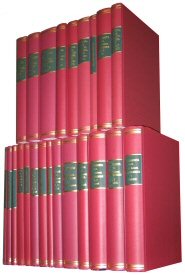
Göttingen. Not just a city in Germany, but a word that instills awe and fear in the hearts of every student of the Septuagint who must eventually consult the set of Old Greek editions by that name.
Okay, that’s maybe a bit dramatic. I do suspect, however, that if one finds it challenging to learn how to read the leading critical edition of the Hebrew Bible–the Biblia Hebraica Stuttgartensia or BHS–the Göttingen Septuagint will prove even more difficult to decipher.
Not impossible, though.
In celebration of International Septuagint Day Friday, here I review the Göttingen Septuagint in Logos Bible Software. The full name is Septuaginta: Vetus Testamentum Graecum Auctoritate Academiae Scientiarum Gottingensis editum. It’s published by Vandenhoeck & Ruprecht in Göttingen, Germany. The Göttingen Septuagint has published over 20 volumes covering some 40 biblical books (counting the minor prophets as 12). Publication of additional volumes, while slow-going, is in progress.
The typical contents of a volume include:
- The introduction (“Einleitung”)
- The reconstructed Greek critical text (“Der kritische Text”)
- The Source List (“Kopfleiste”) (not every Göttingen volume has this)
- The First Critical Apparatus (“Apparat I”)
- The Second Critical Apparatus (“Apparat II”)
In two previous posts I wrote a primer on how to read and understand the Göttingen Septuagint. In part 1 I wrote about the reconstructed Greek critical text and the source list (full post is here). In part 2 I explained how to understand the first critical apparatus, here. Each of those posts contains additional explication of Göttingen, so the one who is new to it may want to pause here to read more there. Having written at length about numbers 2-4 above, a future post will cover 1 (the introduction) and 5 (the second critical apparatus).
Logos is the only Bible software that has available all of the published volumes of the Göttingen Septuagint. Though Logos offers the set in 67 volumes, that corresponds to the 24 existing print volumes. This includes the 2004 Supplementum, which offers a “list of Greek manuscripts of the Old Testament,” sorted by date, region, writing material, and more, and which also cross-references various editors’ classifications of manuscripts against each other, so that differing systems can easily be compared.
There is, of course, the question of which Bible software to use in general. I’ve written about issues like layout, functionality, cost, and so on here, which includes both praises and critiques of Logos, Accordance, and BibleWorks. So what about Göttingen in Logos?
From what I’ve seen, the text of Göttingen in Logos is the most accurate digital text available. I am aware of others who have found typos in Göttingen for Logos, but based on a verse-by-verse read of Isaiah 1-11, I found just one error in Logos compared to the print text. The Accordance text of Göttingen for Isaiah, by contrast, had 14 spelling mistakes, misplaced words, or wrong inflections in that same span. This was a surprise to me, since Accordance aims to produce “research-grade” texts, a goal which sometimes means their texts take longer to complete than other software companies. (Accordance currently has some, but not all, of the Göttingen volumes that exist in print.) As of right now, as far as the actual critical text of Göttingen, Logos seems to be the best bet for consistent correspondence to the print text.
It’s easy to set up the critical text and both apparatuses in three separate areas in Logos, syncing them to scroll together. One can also easily add a tab with an English translation, Hebrew Masoretic text, and more, so as to use Göttingen in conjunction with other resources. Here’s how I use Göttingen in Logos (click for larger):

Assuming you have other versions of the Septuagint available in Logos (Rahlfs, Swete, etc.) you can use the Text Comparison feature (top right in the shot above) to see where the critical text of Göttingen differs from another Septuagint text. I’ve found this to be a useful and time-saving feature. (One can do the same with the Compare tool in Accordance, though there’s an unresolved issue with that tool that impacts use of Göttingen. [UPDATE: It’s now resolved.] Accordance’s comparison tool is, however, a bit more versatile with its “List Text Differences” feature.)
You can use the critical text as any other text in Logos–double-click on a word to look it up in a lexicon (I have LEH open at bottom center above), right-click to do a variety of other searches, word study, etc. It doesn’t take long to see how many times the Göttingen text uses a given word.
As to the critical apparatuses, you can mouse over blue hyperlinked abbreviations to find out what they stand for. Or you can have an Information window open, as here (click to enlarge):

The apparatus abbreviates Latin and German, which is what the Information tab shows. (The Göttingen introductions are in German.) Miles Van Pelt’s short chart (in English) is helpful with the Latin (pdf here). And there is an English translation of the Pentateuch introductions available here (with Exodus being the most complete one). But there is no mechanism in Logos to translate the German or to decipher the apparatus. Accordance is the same here, and neither Logos nor Accordance offer a German-English dictionary, so one couldn’t even link to that. The general academic assumption, of course, is that by the time someone is using Göttingen in their study of the Septuagint, they are already learning (or have learned) German. (Ah, but academic assumptions….) I’m not sure it’s fair to fault Logos (or Accordance) for this lack, but a German-English dictionary as a future module would help a lot of users.
Speaking of the introduction, the introductions to each volume are nicely laid out with plenty of hyperlinks for easy reference:

You’ll have to know German to get very far in the introduction, but note the link above to English translations for some of the introductions. Also, though one ought not to rely too much on it, Google Translate takes the user surprisingly far if she or he simply copies from Logos and pastes here.
One thing lacking in the Logos Göttingen is the Kopfleiste (Source List). Not every print volume has it, but the five Pentateuch volumes, Ruth, Esther, and others do. Accordance, by contrast, includes this feature for the Göttingen volumes that have it. The Kopfleiste makes the most sense in a print edition (since it is a list of manuscripts cited on a given page), but someone doing serious textual research using Göttingen in Logos would still feel its lack. No word yet from Logos on if/when that will come available.
What about searching the apparatuses? Less than ideal here, though not unmanageable. If I want to see every time the First Critical Apparatus in Isaiah cites the Minuscule manuscript 301, I right click to “Search this resource,” but the results are grouped as follows (click to enlarge):
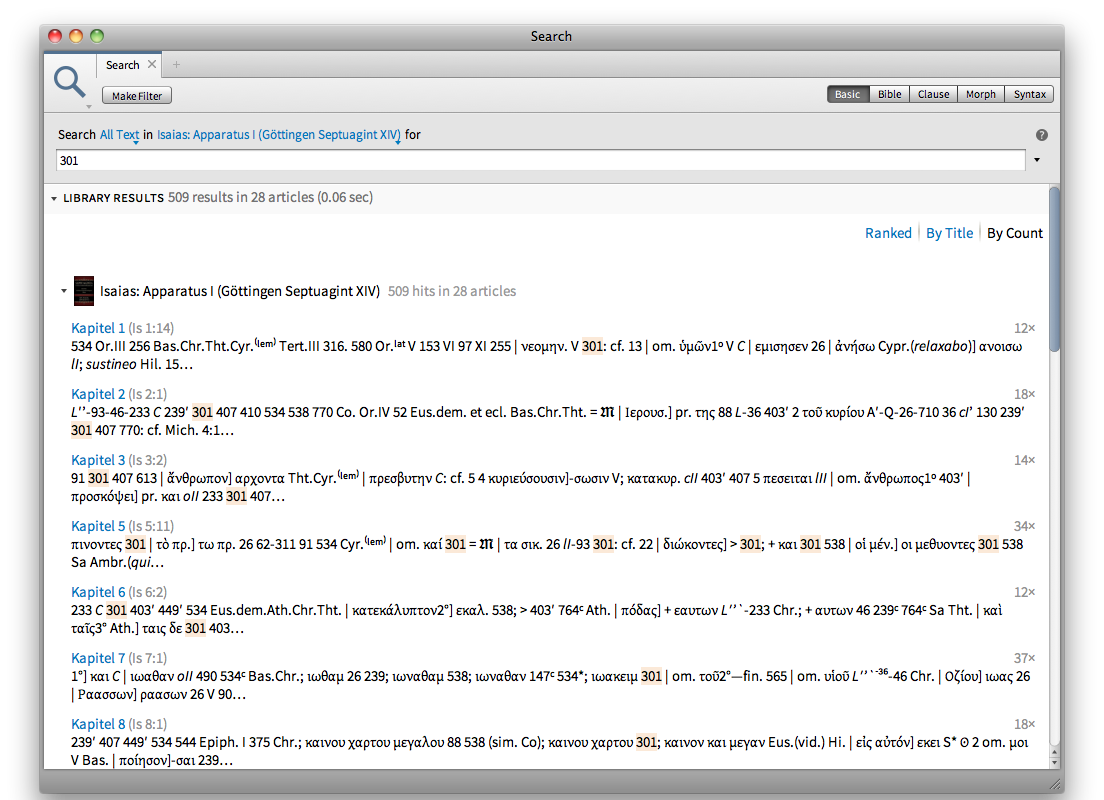
To my knowledge it is not possible to expand these results in this screen (pane) to see every use of MS 301, which is what I really want to be able to do. (If I am mistaken and find a way, I’ll post here again.) The shortcut command+F (in Mac) or control+F (in Windows) is an alternate way to search a text in Logos. The apparatuses are searchable using this keyboard shortcut; in this case all the instances of MS 301 are highlighted as you scroll through the apparatus, so you can still see all its occurrences.
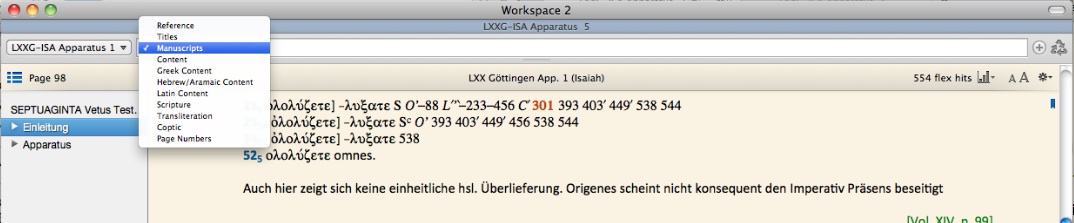
Accordance, by contrast, offers multiple ways of searching an apparatus: by references, titles, manuscripts (most helpful), Hebrew, Greek, or Latin content, and more. This makes Accordance’s apparatuses really usable and easy to navigate in multiple ways.
The price for the Logos Göttingen is a bargain. I mean, $700 is not cheap, but considering that the same sum would get you just a few volumes of the print edition, it’s a great deal. The academic program gives you a significant discount in this case, too.
By the way, a tip for using Göttingen efficiently in Logos: Brian Davidson of LXXI has a neat way to set up a Logos layout to include multiple Göttingen books. (They list in the Logos library all as separate volumes, not as one Septuagint.) His suggestion (here) is a good way to go.
All in all, the Logos Göttingen is a worthwhile investment, especially if you primarily want Göttingen for the critical text itself, and for the chance to compare it with other Septuagint editions. The lack of a Kopfleiste is not an immense loss, but the inability to search apparatuses by multiple search fields (and with expandable results) is a drawback. So the potential purchaser will just have to consider what his or her needs are. Accordance nails it in apparatus searching, but their critical text in Isaiah had more mistakes than one who needs an accurate text would like.
Logos has a fully digitized Göttingen Septuagint, so if you need access to everything that exists in print, know that this is the only Bible software where you can get it. Accordance continues production on their volumes and, as far as I know, will see the project through to completion. (Though see here and here, a project of Computer Assisted Tools for Septuagint Studies.)
In Logos it’s convenient to be able to scroll through all of the Göttingen Septuagint with additional resources open and a click away. The electronic availability (and affordability) of Göttingen is a significant step forward in text criticism and Septuagint studies.
Many thanks to Logos Bible Software for the review copy of the Göttingen Septuagint, given to me for the purposes of review, but with no expectation as to the content of my review. Accordance provided me with their Göttingen Isaiah for purposes of comparison.
Share this:

A Few Thoughts on Leading without Authority
 Ron Heifetz, in his Leadership Without Easy Answers, says, “The scarcity of leadership from people in authority, however, makes it all the more critical to the adaptive successes of a polity that leadership be exercised by people without authority” (183).
In other words, even though leaders should expect good leadership from those above them, they should perhaps not wait for it such that its absence affects their own leadership adversely.
I’m fortunate to work for a boss who leads well. But any person in a position of middle management should be prepared to lead effectively regardless of what leadership they see coming from “people in authority.”
And effective leadership requires proactivity. Stephen Covey in 7 Habits of Highly Effective People talks about being proactive as taking “the initiative and the responsibility to make things happen” (71).
I wonder whether we might at times fear taking on responsibility beyond what is in our job description, or beyond what our supervisors have explicitly asked of us. We may worry that we’ll do the wrong thing, or try to do the right thing but in the wrong way. Worse is not doing anything at all. Our work energies can always be redirected if misapplied; a mistake can always be tweaked and corrected.
But, as Heifetz points out, leadership and authority are not the same thing. Having a position of authority does not make one a good leader, nor does leading well require a position of authority. For organizations to succeed, workers at all levels–those with authority and those without–need to be proactive in their exercise of leadership. Lacking positional authority is not an excuse to do otherwise.
Share this:

More Books For Sale
I’ve got a few more books to offer for sale–largely an effort to make a bit more space on the shelf.
Here are some books and reference works (including a little bit of Bible software) that I’m offering for sale at a discounted rate. All prices include free shipping to U.S. addresses. Interested in anything? Contact me using this form, and we’ll talk.

IVP Bible Background Commentary: New Testament
Like New
ISBN: 978-0830814053
Used just a few times. No markings. In great shape.
$22 (SOLD)

Greek-English Lexicon of the New Testament (BDAG)
for BibleWorks Software
Compatible with BibleWorks 5, 6, 7, 8, and 9. I’ve been in touch with BibleWorks to confirm that on completion of sale, one user license transfers to the buyer with no fee, so that you can use BDAG in your BibleWorks. (Must have purchased and own BibleWorks to be able to use this.)
Significant discount from buying new (where it’s $150).
$99 (SOLD)

Paradigms and Principal Parts of the New Testament
Very Good
Inside clean, no marking. Sticker on back and ink/scuff mark on the front, other slight markings on cover, but nothing that obscures text
$22 SOLD
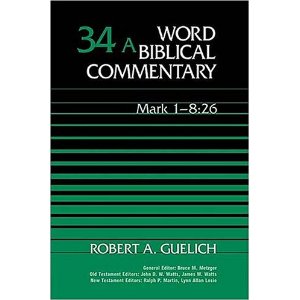
Word Biblical Commetary: Mark 1-8:26 (Guelich)
Very Good
Clean inside. Strong binding. Barely used. Some wear to dust cover (small tear, small fold).
$20 SOLD

Ezra and Nehemiah: Biblia Hebraica Quinta (BHQ)
Like New
Taken out of shrink wrap and used just once or twice.
Excellent condition.
$45 (SOLD)

Greek Grammar Beyond the Basics
Very Good/Like New
Just some edge and cover wear. Light blue cover as pictured, but same contents as dark blue cover.
$22
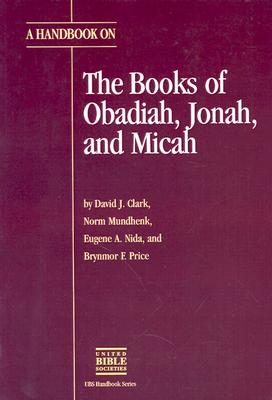
A Handbook on the Books of Obadiah, Jonah, and Micah
(UBS Handbook)
Like New condition
Barely used at all. Pulled off shelf just a couple of times.
$29 SOLD

The Hebrew and Aramaic Lexicon of the Old Testament,
2 volume set (HALOT)
Very Good condition
ISBN: 978-9004124455
In great shape. Just some wear and tear (rubbing on page edges, e.g.).
No internal markings. 2 volume study edition (same full contents as 5 vol. edition).
$179 SOLD
Note: I also have HALOT in BibleWorks (see BDAG note above). Would possibly consider an offer.

A Reader’s Hebrew-English Lexicon of the Old Testament
Very Good condition
ISBN: 978-0310369806
Former owner’s name on inside, no other markings. Small rip on top left corner of dustjacket, which has some other wear. Small crease on back cover of book, but does not affect integrity of book. Book itself in great shape. 720 pages.
All words that occur less than 50x in OT are listed in canonical order, verse-by-verse.
$39 SOLD
Free shipping on all orders. If you’re interested in buying–or just have questions–you can reach me using this form, and we’ll go from there.
Share this:

The Postal Service… back on tour and two new songs
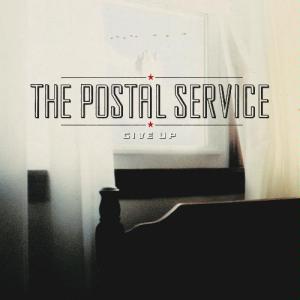 Well. This is some good news.
In the early to mid-2000s Ben Gibbard decided to spend all his music energies on Death Cab for Cutie and not do any more with side project The Postal Service. The latter’s Give Up (2003) is a classic. Dance music for indie kids, I always thought, but as the years have passed, I see it now as just downright great music. Fans of the duo have long wanted more than that one full-length album and the handful of EPs that followed.
With HT to my friend Mike (of the great band We Were Pirates), I’ve just found out that Give Up is getting a 10-year anniversary release. Here are the details from the band’s Website:

There’s a tour, too. New album to follow? That would be great. In the meantime, here’s The Postal Service’s “Sleeping In.” You can read more at their Website. Full album tracklist (via Pitchfork) is below the video.
Disc 1 (Original Album):
01 The District Sleeps Alone Tonight
02 Such Great Heights
03 Sleeping In
04 Nothing Better
05 Recycled Air
06 Clark Gable
07 We Will Become Silhouettes
08 This Place Is a Prison
09 Brand New Colony
10 Natural Anthem
Disc 2 (New Tracks, Rarities, B-Sides, Remixes, Cover Versions, Etc.)
01 Turn Around
02 A Tattered Line of String
03 Be Still My Heart
04 There’s Never Enough Time
05 Suddenly Everything Has Changed
06 Against All Odds (Take a Look at Me Now) (Phil Collins cover)
07 Grow Old With Me
08 Such Great Heights (John Tejada Remix)
09 The District Sleeps Alone Tonight (DJ Downfall Persistent Beat Mix)
10 Be Still My Heart (Nobody Remix)
11 We Will Become Silhouettes (Matthew Dear Remix)
12 Nothing Better (Styrofoam Remix)
13 Recycled Air (Live on KEXP)
14 We Will Become Silhouettes (performed by the Shins)
15 Such Great Heights (Performed by Iron and Wine)
Share this:

Greek Isaiah in a Year, Week 10=Isaiah 10:30-Isaiah 12

First things first: Friday is International Septuagint Day. I’ll post again more then. This week in Greek Isaiah in a Year covers Isaiah 10:30 through the end of Isaiah 12 (a six-verse chapter). Friday we celebrate International Septuagint Day by reading a whole chapter of the Old Greek of Isaiah.
Here is the schedule and text for Monday through Friday, using again the text from R.R. Ottley’s Book of Isaiah According to the Septuagint. (As always, Ottley is here on Amazon, here in Logos, and here as a free, downloadable pdf in the public domain.) The full reading plan for our group is here (pdf).
Monday, February 4: Isa 10:30-34
30 ἡ θυγάτηρ Γαλείμ, ἐπακούσεται ἐν Σά, ἐπακούσεται ἐν Ἀναθώθ· 31 ἐξέστη Μαδεβηνὰ καὶ οἱ κατοικοῦντες Γιββείρ. 32 παρακαλεῖτε σήμερον ἐν τῇ ὁδῷ τοῦ μεῖναι, τῇ χειρὶ παρακαλεῖτε τὸ ὄρος τὴν θυγατέρα Σιών, καὶ οἱ βουνοὶ οἱ ἐν Ἰερουσαλήμ. 33 ἰδοὺ γὰρ ὁ δεσπότης Κύριος σαβαὼθ συνταράσσει τοὺς ἐνδόξους μετὰ ἰσχύος, καὶ οἱ ὑψηλοὶ τῇ ὕβρει συντριβήσονται, καὶ ταπεινωθήσονται οἱ ὑψηλοί, 34 <καὶ πεσοῦνται ὑψηλοὶ> μαχαίρᾳ, ὁ δὲ Λίβανος σὺν τοῖς ὑψηλοῖς πεσεῖται.
Tuesday, February 5: Isa 11:1-5
11 1 Καὶ ἐξελεύσεται ῥάβδος ἐκ τῆς ῥίζης Ἰεσσαί, καὶ ἄνθος ἐκ τῆς ῥίζης ἀναβήσεται. 2 καὶ ἀναπαύσεται ἐπʼ αὐτὸν πνεῦμα τοῦ θεοῦ, πνεῦμα σοφίας καὶ συνέσεως, πνεῦμα βουλῆς καὶ ἰσχύος, πνεῦμα γνώσεως καὶ εὐσεβείας· 3 ἐμπλήσει αὐτὸν πνεῦμα φόβου θεοῦ. οὐ κατὰ τὴν δόξαν κρινεῖ, οὐδὲ κατὰ τὴν λαλιὰν ἐλέγξει, 4 ἀλλὰ κρινεῖ ταπεινῷ κρίσιν, καὶ ἐλέγξει τοὺς ταπεινοὺς τῆς γῆς, καὶ πατάξει γῆν τῷ λόγῳ τοῦ στόματος αὐτοῦ, καὶ ἐν πνεύματι διὰ χειλέων ἀνελεῖ ἀσεβῆ· 5 καὶ ἔσται δικαιοσύνῃ ἐζωσμένος τὴν ὀσφὺν αὐτοῦ, καὶ ἀληθείᾳ εἱλημμένος τὰς πλευράς.
Wednesday, February 6: Isa 11:6-11
6 καὶ συν βοσκηθήσεται λύκος μετὰ ἀρός, καὶ πάρδαλις συναναπαύσεται ἐρίφῳ, καὶ μοσχάριον καὶ ταῦρος καὶ λέων ἅμα βοσκηθήσονται, καὶ παιδίον μικρὸν ἄξει αὐτούς· 7 καὶ βοῦς καὶ ἄρκος ἅμα βοσκηθήσονται, καὶ ἅμα τὰ παιδία αὐτῶν βοσκηθήσονται, καὶ λεὼν καὶ βοῦς ἅμα φάγονται ἄχυρα· 8 καὶ παιδίον νήπιον ἐπὶ τρώγλην ἀσπίδων, καὶ ἐπὶ κοίτην ἐκγόνων ἀσπίδων τὴν χεῖρα ἐπιβαλεῖ. 9 καὶ οὐ μὴ κακοποιήσωσιν, οὐδʼ οὐ μὴ δύνωνται ἀπολέσαι οὐδένα ἐπὶ τὸ ὄρος τὸ ἅγιόν μου, ὅτι ἐνεπλήσθη ἡ σύμπασα τοὐ γνῶναι τὸν κύριον, ὡς ὕδωρ πολὺ κατακαλύψαι θαλάσσας. 10 καὶ ἔσται ἐν τῇ ἡμέρᾳ ἐκείνῃ ἡ ῥίζα τοῦ Ἰεσσαὶ καὶ ὁ ἀνιστάμενος ἄρχειν ἐθνῶν, ἐπʼ αὐτῷ ἔθνη ἐλπιοῦσιν. καὶ ἔσται ἡ ἀνάπαυσις αὐτοῦ τιμή. 11 Καὶ ἔσται ἐν τῇ ἡμέρᾳ ἐκείνῃ προσθήσει Κύριος τοῦ δεῖξαι τὴν χεῖρα αὐτοῦ τοῦ ζηλῶσαι τὸ καταλειφθὲν ὑπόλοιπον τοῦ λαοῦ, ὃ ἂν καταλειφθῇ ἀπὸ τῶν Ἀσσυρίων καὶ ἀπὸ Αἰγύπτου καὶ Βαβυλωνίας καὶ Αἰθιοπίας καὶ ἀπὸ Αἰλαμιτῶν καὶ ἀπὸ ἡλίου ἀνατολῶν καὶ ἐξ Ἀραβείας.
Thursday, February 7: Isa 11:12-16
12 καὶ ἀρεῖ σημεῖον εἰς τὰ ἔθνη, καὶ συνάξει τοὺς ἀπολομένους Ἰσραήλ, καὶ τοὺς διεσπαρμένους Ἰούδα συνάξει ἐκ τῶν τεσσάρων πτερύγων τῆς γῆς. 13 καὶ ἀφαιρεθήσεται ὁ <ζῆλος> Ἐφράιμ, καὶ οἱ ἐχθροὶ Ἰοὺδα ἀπολοῦνται· Ἐφράιμ οὐ ζηλώσει Ἰούδαν, καὶ Ἰούδας οὐ θλίψει Ἐφράιμ. 14 καὶ πετασθήσονται ἐν πλοίοις ἀλλοφύλων· θάλασσαν ἅμα προνομεύσουσιν καὶ τοὺς ἀφʼ ἡλίου ἀνατολῶν καὶ Ἰδουμαίαν, καὶ ἐπὶ Μωὰβ πρῶτον τὰς χεῖρας ἐπιβαλοῦσιν, οἱ δὲ υἱοὶ Ἀμμὼν πρῶτοι ὑπακούσονται. 15 καὶ ἐρημώσει Κύριος τὴν θάλασσαν Αἰγύπτου, καὶ ἐπιβαλεῖ τὴν χεῖρα αὐτοῦ ἐπὶ τὸν ποταμὸν πνεύματι βιαίῳ, καὶ πατάξει ἑπτὰ φάραγγας ὥστε διαπορεύεσθαι αὐτὸν ἐν ὑποδήμασιν· 16 καὶ ἔσται ὁδὸς τῷ καταλειφθέντι μου λαῷ ἐν Αἰγύπτῳ, καὶ ἔσται τῷ Ἰσραὴλ ὡς ἡ ἡμέρα ὅτε ἐξῆλθεν ἐκ γῆς Αἰγύπτου.
Friday, February 8: Isa 12 (1-6)
12 1 Καὶ ἐρεῖς ἐν τῇ ἡμέρᾳ ἐκείνῃ Εὐλογήσω σε, Κύριε, διότι ὠργίσθης μοι, καὶ ἀπέστρεψας τὸν θυμόν σου καὶ ἠλέησάς με. 2 ἰδοὺ ὁ θεός μου σωτήρ μου, πεποιθὼς ἔσομαι ἐν αὐτῷ, καὶ οὐ φοβηθήσομαι· διότι ἡ δόξα μου καὶ ἡ αἴνεσίς μου Κύριος, καὶ ἐγένετό μοι εἰς σωτηρίαν. 3 καὶ ἀντλήσετε ὕδωρ μετʼ εὐφροσύνης ἐκ τῶν πηγῶν τοῦ σωτηρίου. 4 καὶ ἐρεῖς ἐν τῇ ἡμέρᾳ ἐκείνῃ Ὑμνεῖτε Κύριον, βοᾶτε τὸ ὄνομα αὐτοῦ, ἀναγγείλατε ἐν τοῖς ἔθνεσιν τὰ ἔνδοξα αὐτοῦ· μιμνήσκεσθε ὅτι ὑψώθη τὸ ὄνομα αὐτοῦ. 5 ὑμνήσατε τὸ ὄνομα Κυρίου, ὅτι ὑψηλὰ ἐποίησεν· ἀναγγείλατε ταῦτα ἐν πάσῃ τῇ γῇ. 6 ἀγαλλιᾶσθε καὶ εὐφραίνεσθε, οἱ κατοικοῦντες ἐν Σιών, ὅτι ὑψώθη ὁ ἅγιος τοῦ Ἰσραὴλ ἐν μέσῳ σου.
See here for more resources and links to texts for Greek Isaiah. Here are previous weeks’ readings: Week 1 / Week 2 / Week 3 / Week 4 / Week 5 / Week 6 / Week 7 / Week 8 / Week 9
And here are the Week 10 readings above, but in pdf form.
Share this:

How to Effectively Use the 2nd Person “We” (Parental Communication Tip #427)
You’ve heard of the royal We? It’s all too present in seminarian papers with just a single author:
Careful consideration of the textual data leads us to conclude….
Or:
We read with the majority of scholars in this case that….
And then there is simply, “We are not amused.”
 For some time now my wife and I have had the materials in hand to make a star chart for our five-year-old son. Through this chart we (actual We) seek to motivate him to do what is right (treat us with respect, pee when he has to instead of holding it) and not what is wrong (tell his younger brother to “Go to jail!”, get the Gorilla glue out without asking). Good behavior earns stars, and multiple stars earn a new Wild Kratts DVD, or (better yet) a trip out for coffee with Dad or Mom. (The no longer jail-threatened brother stays at home.)
But we still haven’t made the chart. So tonight at dinner I said to my wife, “Can we make our son’s star chart this weekend?”
To which she replied, “Can you make the star chart this weekend?”
I actually had meant We literally in this case, but I can see why she thought I was using the 2nd person We, asking her to do the chart. It’s a special grammatical usage that often crops up around here:
- #1/Me: Honey, can we make some time to do the laundry this weekend? (Translation: I’m out of clean undershirts for work; will you wash them?)
- #2/She: Abram, can we try to keep our clothes hung up around here? (Translation: Why are you strewing your jacket, dress pants, etc., etc. all across the bed so I can’t sleep in it?)
- #3/She: Can we clear our dishes from the table when we’re done with breakfast? (Translation: AM I YOUR MAID?)

towels. clean towels. - #4/Me: Sweetheart, could we possibly distinguish between a hand towel and a drying towel? (Translation: What’s with this MASSIVE HEAP OF UNDIFFERENTIATED MOSTLY WET TOWELS ON THE COUNTER?)
See? It’s softer, gentler, more effective. In #1 above, my wife sees right through my alleged effort at mutual janitorial cooperation. In #2, I know that she’s really trying for some cleanliness equity. In #3, well… if I expect our kids to clear their dishes, I ought to do the same. As for #4? Please expect a future post to address the merits of keeping separate the towels you use to dry clean dishes versus dirty hands.
But enough blogging about it. We’ve got a chart to make for Our son.

 Words on the Word