4 Ways to Practice Sabbath Keeping

This Sunday I preached about Sabbath-keeping as a way of life. The below is the concluding, application-based portion of the message.


Keep Calm It's Sabbath Day


Let’s get specific for a minute, and talk about how a Sabbath way of life can make its way onto our calendars.


For an hour


You could think small, to begin with: one hour. Right, God didn’t say, “Remember a Sabbath hour and keep it holy,” but I think observing a Sabbath hour is very much in line with God’s intentions for our God-centered rest.

I’ve alluded a couple of times from the pulpit to my inordinate love for personal productivity literature and related apps. There’s a classic book called Getting Things Done by David Allen. His basic goal is to get his readers and clients to a point where they are not using their brains to keep track of commitments—get everything out of your head and into a trusted system you know you’ll keep coming back to. The end result of implementing such a system is that in any given moment, you know that you are doing what you should be doing. What you are saying yes to is what you should be saying yes to, and what you are saying no to is out of mind.

This may seem simplistic, but if you don’t have a dedicated hour like this each day or at least every other day, the alternative is that every hour available to you is an hour where you could be doing something… anything… 100 hundred different things. A Sabbath lifestyle, on the other hand, includes setting apart chunks of time where we put all work aside and rest. And we don’t feel guilty about it, because we are doing it deliberately, as a way to train our attentions on God.


A Daylong Sabbath


Another way that we can put Sabbath-ing into our schedules is through a weekly Sabbath day. Sunday is a good candidate here. It didn’t take the early church very long to move from the observance of Saturday as Sabbath to Sunday as Sabbath. One big reason for this was that Sunday was the day of resurrection, so it became the day the church gathered weekly for worship. To make their Sabbath about both leisure and Lordship, it shifted to Sunday.

Which day we take a Sabbath is less important than that we have one every week. And times when we can least afford to take a Sabbath are the times we most need to. So put it into your day planner or phone or wherever you keep your schedule—make it a daylong appointment: “Sabbath.” And if one of your primary vocations is parenting or caretaking, and those sweet loved ones of yours won’t let you observe a “day off,” talk to one of your church leaders and we’ll help you get childcare lined up!


Get Away


You could go even bigger with Sabbath-keeping: a day or half day every month where you go on retreat… not just taking a day off, but actually physically going somewhere else—to the beach, for a daylong hike in the woods, for an overnight camping trip.


Techno Sabbath


Finally—one more suggestion for a specific way to practice keeping a holy, God-focused Sabbath: one of our former church attenders shared with me his regular practice of a techno Sabbath. No, it’s not a day devoted to Electronic Dance Music (though that’s not a bad idea), but it’s a Sabbath from technology. I’d heard of these and always thought about taking one, but there was something about a conversation with him that made me feel like I finally had permission to unplug, to disconnect.

Of course, you can turn all your devices off for a short period of time—an hour, for the morning, during dinner and after it. But I’ve found a full 24-hour break each week from technology is both embarrassingly difficult and surprisingly life-giving. It serves the same purpose as fasting. Rather than reaching for a device that has a potentially life-changing notification on it, I try to offer those energies instead to God.

At first, there are feelings of withdrawal—no access to notifications that increase the rush of adrenaline and excitement when someone replies to that email you were so eager about, or when someone hearts your Instagram photo or retweets your witty observation about humanity. All that stuff just goes on… without you. At least for a day.

You could even try to have your techno Sabbath coincide with your weekly Sabbath.


Establish Your School Year Practices Now


As we begin a new school year, we have the opportunity to establish and re-establish practices of faithful living. Take some time this week, if you haven’t already, and think about what Sabbath-keeping this fall is going to look like for you. If you have other people with whom your schedule is interdependent, involve them in the conversation—sit down with your calendar and actually write in your Sabbath-keeping practices, so that they don’t get forgotten, or scheduled on top of.

I pray that God would give us the strength to be deliberate about making Sabbath observances central to how we go through our hours, days, and weeks. As we do so, may we find that prayer of Isaiah fulfilled: “O God, you will keep in perfect peace those whose minds are fixed on you; for in returning and rest we shall be saved; in quietness and trust shall be our strength.”

(More) Free Online Accordance Webinars, Including Sermon Prep on Wednesday

Accordance 11 Bible Study

Yep, that’s right… another Accordance Webinar coming your way! Check all of this week’s sessions out here. I’m leading this one Wednesday:

Sermon Preparation in Action
Wednesday, August 26, 12:00 – 1:15 PM EDT

Learn how to tap Accordance’s power for sermon preparation from brainstorming sermon ideas to finished message.

We had a great turnout last week at the session I led on setting up workspaces. Sign up is free, even if you don’t have Accordance. Learn more and save a spot here.

Free Online Accordance Webinar Today at Noon (EST)

Accordance Live Online Training


There’s still time to sign up for today’s Accordance Webinar I’m leading at noon. You can sign up here. Here are the details:

Setting Up Workspaces with Abram K-J
Friday, August 21, 12:00 – 1:00 PM

Abram will gear this session toward the basic-level Accordance user. The webinar is interactive throughout, offering users a chance to see how to set up, customize, and save a Workspace in Accordance.

Here is what I’ll cover:

1. Terminology: Panes, Tabs, Zones, Workspaces


2. Setting Up a Simple Workspace: Bible, Commentary, User Notes


3. Setting Up a More Robust Workspace: Multiple Bible Texts, Multiple Commentaries, and Tools


4. Creating Different Workspaces for Different Tasks


5. Multiplying the Power of Workspaces: Sessions


6. Additional Q and A

Here‘s the link to sign up.

Free Online Accordance Webinars Next Week

Accordance Live Online Training


The new school year is almost year. (Some folk in the South have already started!)

If you’re a pastor or professor who is looking to reinvigorate your sermon prep or teaching workflow, Accordance Bible Software is a great tool. It’s also an indispensable aid for seminarians. (Speaking of which: Back to School sale.)

This coming week Accordance is offering a host of free webinars. I’ve attended a few of these, and they’re always informative and well-done. I also teach a couple webinars now, which is a lot of fun. I’m leading one on Friday:

Setting Up Workspaces with Abram K-J
Friday, August 21, 12:00 – 1:00 PM

Abram will gear this session toward the basic-level Accordance user. The webinar is interactive throughout, offering users a chance to see how to set up, customize, and save a Workspace in Accordance.

Here is what I’ll cover:

1. Terminology: Panes, Tabs, Zones, Workspaces


2. Setting Up a Simple Workspace: Bible, Commentary, User Notes


3. Setting Up a More Robust Workspace: Multiple Bible Texts, Multiple Commentaries, and Tools


4. Creating Different Workspaces for Different Tasks


5. Multiplying the Power of Workspaces: Sessions


6. Additional Q and A

See all of next week’s free webinars here.

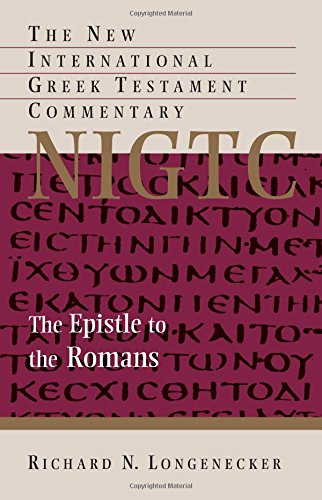
NIGTC Romans: A Look Inside

romans nigtc

Does the Church need another commentary on Romans?

Time will tell. But Richard N. Longenecker’s Romans volume in the NIGTC series is about to be released.

Today Eerdmans announced a sneak peek PDF with Table of Contents and Preface, which you can find here.

I like Longenecker’s turn of phrase when he says Romans “has been, in very large measure, the heartland of Christian thought, life, and proclamation.”

He also notes:

Indeed, 2 Pet 3:16 bears eloquent testimony to the church’s mingled attitudes of (1) deep respect for Paul’s letters generally (and Romans in particular), yet also (2) real difficulties in trying to understand them, and (3) a realization of possibilities for serious misinterpretation, when it says of Paul’s letters that they “contain some things that are hard to understand, which ignorant and unstable people distort, as they do the other Scriptures, to their own destruction.” In fact, despite all its appearances of being straightforward and clear, no other NT writing presents greater difficulties with respect to “style,” “stance,” and “audience” (to recall Erasmus’s three categories of difficulty) than does Romans.

You can pre-order the book on Amazon here.

You Asked and Asked, Now It’s Coming: A Septuagint Reader

LXX decalOn the one hand, the burgeoning field of Septuagint studies still has few enough publications that any new work is potentially significant. On the other hand, there still seems to be an acute need for works that bridge the gap between New Testament Greek readers and LXX specialists.

Resources like †Rod Decker’s Koine Greek Reader (which pays decent attention to the Septuagint) or even the old Conybeare and Stock (which has some LXX portions with explanatory footnotes) are few and far between.

I’ve been asking Kregel for probably three years now whether they’d consider publishing a dedicated Septuagint reader. Little did I know one was already in the works.

It releases this fall. Karen Jobes is its author. Here’s some copy from Kregel that describes the book:

Interest in the Septuagint today is strong and continues to grow. But a guidebook to the text, similar to readers and handbooks that exist for students of the Greek New Testament, has been lacking. Discovering the Septuagint: A Guided Reader fills that need. Created by an expert on the Septuagint, this groundbreaking resource draws on the editor’s experience as an educator to help upper-level college, seminary, and graduate students cultivate skill in reading the Greek Old Testament.

This reader presents, in canonical order, ten Greek texts from the Göttingen Septuaginta Vetus Testamentum Graecum and the Rahlfs-Hanhart Septuaginta critical edition. It explains the syntax, grammar, and vocabulary of more than 700 verses from select Old Testament texts representing a variety of genres, including the Psalms, the Prophets, and more.

The texts included in this volume were chosen to fit into a 15-week semester, reading about 50 verses a week. The texts selected 1) Are examples of distinctive Septuagint syntax or word usage and/or 2) Exemplify the amplification of certain theological themes or motifs by the Septuagint translators within their Jewish Hellenistic culture and/or 3) Are used significantly by New Testament writers.

More specifically:

  • Each study includes:
    • Introduction—briefly discussing the particular Greek text and its key features.
    • English translation—using the New English Translation of the Septuagint.
    • Text notes—providing verse/phrase–level explanations of the Greek syntax and grammar.
    • Use in the New Testament.
    • Select bibliography.
  • Parses more difficult verbal forms, gives alternate ways of reading the text, and discusses significant critical issues of the text.
  • Calls attention to vocabulary and syntax unique to the Septuagint.
  • References standard Septuagint grammars, lexicons, and other resources.

No cover art yet, but the book is a-coming. You’ll hear more here later.

Advances in the Study of Greek: New Book. It’s Awesome.

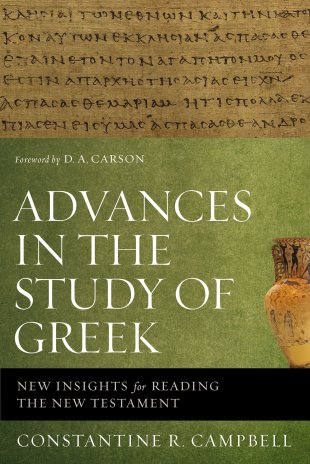
Advances in the Study of Greek


Now that I’ve spent considerable time with Advances in the Study of Greek (book announcement here), I’m reporting back to say: It’s awesome.

I have a review submitted for an upcoming issue of Bible Study Magazine.

Two observations that didn’t fit into that review, with one that did:

  1. Campbell’s writing is good. Compelling, clear, cogent, coherent, etc.
  2. He has a further reading section after each chapter, and his footnotes point to even more related literature that I already want to check out.
  3. I didn’t expect there to be as many practical, exegetical examples as there were, but this made me more engaged with the book, and helped me see more explicitly how its contents could better inform my sermon preparation.

Advances in the Study of Greek is available now. Check out the book here.

Book Note: Advances in the Study of Greek

Advances in the Study of Greek


I really appreciated Constantine R. Campbell’s Basics of Verbal Aspect in Biblical Greek. Yes, I read it cover to cover. And no, it was not even for a book review or class! Just for fun. I don’t know enough to wade intelligently into the minutiae of the verbal aspect debate, but I do know that Campbell presented his view succinctly and clearly in that work. I felt like I had a good, basic grasp on aspect after working through that book.

Now Advances in the Study of Greek releases this month. It surveys the thoughts, studies, and work of many Greek scholars. It’s got a chapter on aspect, but covers much more territory than just that.

Here is the description from the publisher’s page:

Advances in the Study of Greek offers an introduction to issues of interest in the current world of Greek scholarship. Those within Greek scholarship will welcome this book as a tool that puts students, pastors, professors, and commentators firmly in touch with what is going on in Greek studies. Those outside Greek scholarship will warmly receive Advances in the Study of Greek as a resource to get themselves up to speed in Greek studies. Free of technical linguistic jargon, the scholarship contained within is highly accessible to outsiders.

Advances in the Study of Greek provides an accessible introduction for students, pastors, professors, and commentators to understand the current issues of interest in this period of paradigm shift.

I’m looking forward to reading it and writing the review, which will be published in an upcoming issue of Bible Study Magazine. Check out the book here.

Hot Off the LXX Presses: The Text-Critical Use of the Septuagint in Biblical Research (New Edition)

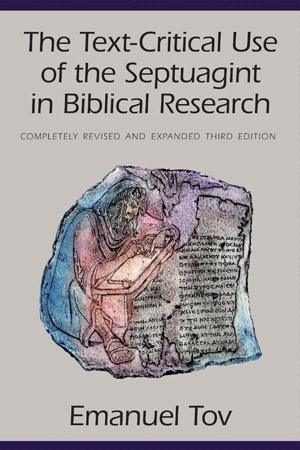
TCLXX_Tov


Emanuel Tov’s Text-Critical Use of the Septuagint in Biblical Research is a key text in Septuagint studies. But it’s been out of print… until now. Eisenbrauns has just published a “Completely Revised and Expanded” third edition of the book.

Here’s the publisher’s write-up:

This handbook on the Septuagint (LXX) provides a practical guide for the student and scholar alike in the perusal of that translation in the text-critical analysis of the Hebrew Bible. It does not serve as another theoretical introduction to the LXX, but it provides all the practical background information needed for the integration of the LXX in biblical studies. The LXX remains the most significant source of information for the study of ancient Scripture together with the Masoretic Text and several Qumran scrolls, but this translation is written in Greek and many technical details need to be taken into consideration when using this tool. The author presents this handbook after half a century of study of the Septuagint, four decades of specialized teaching experience in that area, and involvement in several research projects focusing on the relation between the Hebrew and Greek Bibles.

The first two editions of this handbook, published by Simor of Jerusalem (Jerusalem Biblical Studies 3 [1981] and 8 [1997]), received much praise but have been out of print for a considerable period. This, the third, edition presents a completely revised version of the previous editions based on the many developments that took place in the analysis of the Septuagint, the Hebrew Bible and the Qumran Scrolls.

I’d link to the book on Amazon, but you really should just buy directly through Eisenbrauns. They are good folk, make great resources, and have put this book on sale now. Get it here. You can also find a PDF info sheet (with Table of Contents) here.

Free Online Tutorial on Sermon Prep, Thursday at Noon (with Accordance)

Acc 11_Simply Brilliant_logo


I’ll be presenting an online training webinar–Sermon Preparation in Action–tomorrow (Thursday the 16th) at 12 noon (EST) for Accordance Bible Software.

The webinar is free, and you can register here.

Accordance has quite a few other online trainings coming up. Check them all out.