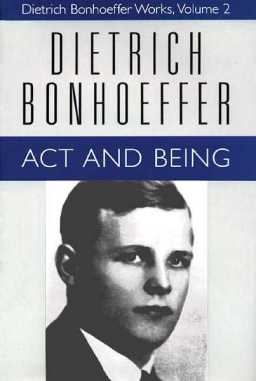
One-Day Olive Tree Sale: Dietrich Bonhoeffer Works (16 Volumes) for $99

Bonhoeffer in Olive Tree


Today (Wednesday), Dietrich Bonhoeffer Works, English Edition (DBWE, 16 volumes) are $99 in Olive Tree Bible software. I have not seen DBWE in Olive Tree, but have reviewed the app here.

Their iOS and desktop apps are free, so if you like Bonhoeffer and have the cash, this is probably the best price for his complete works in English that one will ever find. (It does not include the just released Volume 17.)

Accordance 11: Coming (Very) Soon

Accordance 11 Collections


Accordance 11 is coming soon. Very soon–by the end of October.

In an email announcement today, Accordance noted:

Exciting news! We are preparing our next major upgrade for release towards the end of October. During the next several weeks we’ll be telling you more about Accordance 11 and the many advances it will bring to your studies.


This week we are announcing the exciting new modules that are being added to each Version 11 Collection. Each of these Collections includes Accordance 10 and 11, so you can use Accordance 10 now, and get 11 immediately upon release.

New to the store already in Accordance 11 is the chance to “Custom Upgrade,” which provides users with a discounted collection rate if they already own modules contained in that collection.

See the announcement here.

They haven’t said much yet about what Accordance 11 contains, but today’s newsletter does note “23 new and useful categories for your books for better organization and easier access” in Tools, as shown here:


23 Tools Categories


I use Accordance every day (or almost every day). Accordance 10 is already an excellent program. Can’t wait to see what 11 brings. Subscribe to this blog or check back to hear more as it unfolds.

A First-Year Textbook that Gets You Reading Hebrew A.S.A.P.

First Hebrew Primer“But when do we get to start reading Hebrew?”

The question was a near-refrain in my first semester of Hebrew class at seminary. After months of memorizing verbal paradigm charts and individual vocabulary words, I wondered he same thing.

I don’t mind a memorization-based or paradigm-based model for second language acquisition. I did fairly well in first learning Hebrew from the Pratico and Van Pelt Basics of Biblical Hebrew (see here and here).

But as I noted in my Pratico/Van Pelt reviews:

Some people disagree that paradigm memorization outside the context of a text or conversation is ideal pedagogy for language learning. … Even dead or ancient languages should be taught as “living languages,” proponents say. So some Hebrew textbooks encourage instead a text-based inductive approach.


Getting to Read Hebrew A.S.A.P.


The First Hebrew Primer (Third Edition, EKS Publishing) takes more of a reading-based inductive approach:

The goal of the Primer is to teach students to read and understand Biblical Hebrew as quickly as possible; therefore, the lessons emphasize recognition and translation – not memorization.

It succeeds well in this aim. Indeed, as soon as chapter 10 (out of 30), the student will be excited to begin her or his guided reading of Ruth:

Congratulations! You have learned enough Hebrew to begin reading the Bible—revised for your reading level. We have chosen Ruth because it is short, simple, and beautiful. In the beginning, the Hebrew text will be simplified, but as we progress, the text will approach the original. Before we finish the Book of Ruth, you will be reading the actual biblical text.

As soon as the Primer teaches the alphabet, it offers a host of a exercises for out-loud reading practice. The “Tall Tales” (folk tales) readings give students yet another chance to put into a reading context what they have learned. All the expected charts for nouns and verbs, vocabulary lists (with occurrence of 200x or more in the Hebrew Bible), and exercise sets are present throughout the book. But I especially appreciated its emphasis on reading early.


Updates to the Third Edition


What’s different in the Third Edition? Primarily, there is more grammatical detail offered.

This revised third edition introduces several new terms and clarifies grammatical points, but will look the same to long-time Primer readers. The key change we have made is the inclusion of new explanatory endnotes. Many readers have expressed a desire to deepen their knowledge of Biblical Hebrew, but have unanimously endorsed the clear, uncomplicated tone of the Primer. We have responded by adding these optional supplementary notes. Students may read the notes to enrich their understanding of Hebrew grammar or concentrate solely on the main text. Either way, the Primer provides a sound foundation for more advanced studies in the Hebrew Bible.

One gets the feeling that in the absence of those clarifying notes, some of the grammatical concepts are oversimplified. So the additional nuances expressed in the endnotes are imperative for laying a good foundation for later Hebrew learning. EKS Publishing uses its own name for some grammatical terms (“Word Pair” instead of “construct chain” and “regular infinitive” instead of “infinitive construct”).

I can see this being something a student would need to re-learn if she or her goes further in learning Hebrew grammar; I’m not sure the level of simplification here is always helpful or necessary. (And the lack of an index makes it difficult to trace discussion throughout the book of a given concept.) All the same, page 368 provides a “Guide to Grammatical Terms” with a table of “Our Name” and the “Traditional Name” for key concepts.


The Primer for Kids?

 

Hebrew Learning


Though the book is for “adult beginners,” my six-year-old son, whose Hebrew-learning adventures I have chronicled here, took an interest in The First Hebrew Primer once he saw it on the shelf. Chapter 3 (“The Sheva, Odd Vowels, and the Dagesh”) was particularly helpful, as the sheva had been giving him trouble. The Primer explains how to pronounce the sheva depending on where in a word it is:

  • Sheva at the beginning of a word: “always pronounced with a short, slurred sound”
  • Sheva at the end of a word: “always a silent vowel, and it is not pronounced at all”
  • Sheva in the middle of a word: “When a sheva appears alone in the middle of a word, it usually falls at the end of a syllable and is not pronounced.” (An endnote at this point offers additional illuminating detail.)

My son did astutely ask, “How do I correct myself if I get something wrong?” So I’ve gone through the Primer with him, rather than letting him use the Primer much on his own (even though he can read just fine). There is a companion audio CD available, which has to be purchased separately; self-guided learners will need it to be able to take full advantage of the oral exercises in the Primer.


Concluding Evaluation


The Hebrew font in The First Hebrew Primer is clear and easy to read. The exercises strike a nice balance between appropriateness for each lesson and being challenging. For example, in chapter 7 (“The Perfect Tense”), there is this:

EKS First Hebrew Primer

If you prefer an interactive, digital edition, Accordance Bible Software has a Primer package available for purchase here. The Accordance edition includes the primer, the answer key (otherwise a separate purchase), and more than an hour’s worth of accompanying audio. In other words, Accordance puts everything needed in one integrated and easy-to-use place.

Would I use The First Hebrew Primer as a textbook for a first-year Hebrew student? Definitely–despite the occasional lack of nuance in the grammatical explanations, its emphasis on oral practice, its engaging exercises, its inclusions of basic paradigms, and especially its introduction of reading early on make it a solid option for a first-year Hebrew text. As an added bonus, there are plenty of English to Hebrew exercises (and even an English-Hebrew Glossary), which will go a long way to help the student solidify Hebrew comprehension.


Thanks to EKS Publishing for the review copy of the Primer and answer key, offered for the purposes of this review, but with no expectation as to my review’s content. The publisher’s book page is here (answer key here). It’s also on Amazon (affiliate link) here (answer key here).

Do You Want to Contribute to a Septuagint Dictionary?

Scholar’s Publisher is seeking contributors:

The aim of the DSEGJS [Dictionary of the Septuagint and Early Greek Jewish Scriptures] is to provide a comprehensive reference guide to the Greek Jewish Scriptures (GJS) in their Greco-Roman context as well as their subsequent influence on the early church and post Second Temple Judaism. The field as well as the general interest in matters related to the GJS has grown significantly in the past 30 years, but the discipline is lacking an informative reference tool for students and specialists, as well as scholars and students in related fields. The scope of the dictionary is to provide factual information about books, persons, places, and events, as well as define words and explain theories as they relate to the GJS. In most cases, the next step is to read an article or volume that is devoted to the topic itself, though in some cases the nature of this new endeavour means the DSEGJS is the primary source of information.

Find out more here.

And the Winners of the UBS5 Greek NT Are….

UBS5 Infographic


There were more than 50 entries into the UBS5 Greek New Testament giveaway. (Click here to read more about that new edition of the GNT.)

Using a random number generator, the two winners are:

  • spencerclark2013 (see here)
  • thanksgutenberg (see here)

Congratulations! I’ll get in touch with both of you via email in order to get the Bible shipped out to you.

And check back here, too, or subscribe to the blog at the right of the top of the page. Just as I reviewed the impressive LXX-NA28 combo, I will soon be reviewing the UBS5 Greek New Testament.

Scot McKnight’s Sermon on the Mount Commentary, Reviewed

SGBC SMount


My mild obsession with the writings of Dietrich Bonhoeffer can be traced back to a question I asked myself and the congregation with whom I worship in early March: How can Ukraine love its Russian occupiers? And what would Bonhoeffer suggest?

The questions came from my wrestling through Matthew 5:38-48, which I find the be the most difficult passage in the Sermon on the Mount. I concluded, in part,

What seems a fairly straightforward statement, “Love your enemy,” is difficult. What does it mean to love enemies? In what spheres must that take place, and how should it happen, especially in the presence of an inordinately powerful evil? How categorical is Jesus in his forbidding of force? Was he speaking to disciples, or to disciples and states?

You can see how I landed (at least in a sense) at the end of this post.


Enter Scot McKnight


Scot McKnight’s Sermon on the Mount (The Story of God Bible Commentary, Zondervan, 2013) helped me wrestle through the difficult question of just what it means to “turn the other cheek.” While some interpreters (such as Luther) have sought to distinguish between private (interpersonal) and public (political) applications of this text, McKnight responds: “Utter nonsense.” Instead:

One of the main thrusts of the ethic of Jesus is the radicalization of an ethic so that we live consistently, from the so-called “private” to the “public” spheres. There is for Jesus no distinction between a secular life and spiritual life: we are always to follow him. His ethic is an Ethic from Beyond. But others, in words not so wrongheaded as Luther’s, have continued Luther’s personal vs. public or spiritual vs. secular distinction when it comes to ethics.

Jesus, McKnight persuasively argues, was not distinguishing between how the disciples should live in their private lives (whatever that would have meant) as opposed to in public. “The question every reader of the Sermon must ask,” McKnight goes on, is:

Does that world begin now, or does it begin now in private but not in public, or does it begin now for his followers in both private and to the degree possible in the public realm as well?


A New Commentary Series: SGBC


The Story of God Bible Commentary is a new series, with McKnight’s volume and Lynn Cohick’s Philippians volume being the first two published. As the name implies, the series is concerned to interpret and apply Scripture with an eye to how each passage relates to the larger biblical story:

We want to explain each passage of the Bible in light of the Bible’s grand Story. The Bible’s grand Story, of course, connects this series to the classic expression regula fidei, the “rule of faith,” which was the Bible’s story coming to fulfillment in Jesus as the Messiah, Lord, and Savior of all.

There are three primary sections in each passage:

1. Listen to the Story. With the assumption that “the most important posture of the Christian before the Bible is to listen,” the SGBC series begins with the full text of the passage under consideration (using the 2011 New International Version). The section also includes an introduction to the passage.

2. Explain the Story. From historical background to cultural context, from theological explanation to individual word studies, here is where SGBC unpacks “a sound and living reading of the text in light of the Story of God in the Bible.”

3. Live the Story. This is the “digging deeper” into “our world” section. The commentary series is not geared for an academic audience, which allows authors to spend more time imagining 21st century applications of a passage to life. This is especially helpful for preachers and anyone wanting to know how to live out a passage they are studying.


“Better People” or “Better Liars”?


McKnight wastes no time in convicting the reader, much as the Sermon on the Mount itself does. Just before the introduction he quotes Bonhoeffer, who says of the Sermon:

Its validity depends on its being obeyed.

And here’s Dean Smith, via McKnight:

The Sermon on the Mount has a strange way of making us better people or better liars.

(Ouch! But so true.)

McKnight agrees that the incongruence “between Jesus’ vision and our life bothers many of us.” Various interpretive attempts, he suggest, have made Jesus say what he did not really say. By contrast:

There is something vital—and this is a central theme in this commentary—in letting the demand of Jesus, expressed over and over in the Sermon as imperatives or commands, stand in its rhetorical ruggedness.

Jesus intended the Sermon on the Mount as “the claim of Jesus upon our whole being.”

So you can’t just read this commentary in a detached way or use it for dry or “objective” research (as if there were such a thing!). Throughout the commentary McKnight helps the reader hear Jesus’ demanding (yet life-giving) message in resounding terms.


McKnight on Jesus and Ethics


The commentary’s introduction has a substantive (and surprisingly helpful) section called, “The Sermon and Moral Theory,” where McKnight compares “Jesus’ moral vision” to other moral theories, whether Aristotle’s virtue ethics, Kant’s categorical imperative (deontology), or Bentham and Mill’s utilitarianism.

McKnight presents Jesus’ ethics through the conjoining lenses of:

  • “Ethics from Above”—Jesus speaks as God
  • “Ethics from Beyond”—”kingdom ethics” that seek to bring “God’s future to bear on the present”
  • “Ethics from Below”—based on human “inductive observation”
  • An ethical theory that is “messianic, ecclesial, pneumatic”—in Jesus’ “messianic vocation,” he believes that “an ethic can only be lived out in community (the kingdom manifestation in the church) and through the power of the Spirit now at work.”

The introduction offers no structural outline of the Sermon on the Mount. There is just a paragraph about its structure, saying that the matter is “incapable of any kind of firm resolution.” So the omission of an outline seems deliberate, but at least something preliminary would have helped–even a Table of Contents that shows the pericope divisions/commentary chapters at a glance, which this volume lacks.


The Commentary Proper


McKnight breaks the Sermon into 23 chapters in his commentary proper (chapter 1 treats both the very first and very last verses of the Sermon on the Mount together). Each chapter prints the full biblical text (it’s nice to have everything in one place), then proceeds with the sections noted above: Listen to the Story, Explain the Story, Live the Story. His experience in teaching and ministry is obvious throughout the book, which is a refreshing balance of deep exegesis, lucid prose, and convicting application.

To look briefly at just one passage, Matthew 7:12 says:

So in everything, do to others what you would have them do to you, for this sums up the Law and the Prophets.

McKnight writes:

Of the many ways to describe or articulate the Torah, two are pertinent in our text: one can either multiply laws so as to cover all possible situations, or one can reduce the law to its essence.

The verse, which he sets in biblical and rabbinical context, “summarizes the essence of the Sermon” (emphasis in original). And it has much to say to how we ought to live now:

But the Golden Rule is of direct value in relationships in churches. It takes but a moment’s thought to think it through: How do I want to treat others? How would I want to be treated?

*****

This is a fantastic commentary. It’s smart, well-researched, deep, engaging, challenging, and–perhaps best of all–like the Sermon it addresses, issues a clear call to righteous living according to God’s will.


Thanks to Zondervan Academic for the review copy, offered for the purposes of an unbiased review. Find it at Zondervan here or Amazon here.

The Westminster Dictionary of Theological Terms, Reviewed

Westminster Dictionary of Theological Terms


The Westminster Dictionary of Theological Terms (Westminster John Knox Press, 2014) is a succinct compendium of key theological words and concepts.

One obvious advantage to the book is its portability. It’s less than 400 pages and easy to carry around in a satchel… though since receiving it, I’ve kept it on my desk with a few other works I reference a lot.

What sorts of “theological terms” does this dictionary cover? The publisher’s product page notes:

This second edition of The Westminster Dictionary of Theological Terms provides a comprehensive guide to nearly 7,000 theological terms—1,000 more terms than the first edition. McKim’s succinct definitions cover a broad range of theological studies and related disciplines: contemporary theologies, biblical studies, church history, ethics, feminist theology, global theologies, hermeneutics, liberation theology, liturgy, ministry, philosophy, philosophy of religion, postcolonial theology, social sciences, spiritually, worship, and Protestant, Reformed, and Roman Catholic theologies.

There is also a short annotated bibliography, list of works consulted, and set of abbreviations at the back of the book. The “Major Topics and Distinctive Terms and Concepts” section at the beginning gives the reader a framework of overarching topics into which the dictionary’s terms will fit. (E.g., “Bible,” “theology,” “worship,” “ethics and moral theology,” and so on.)

McKim himself has overseen much larger dictionaries. An initial point of skepticism for me was whether a theological dictionary this small and short could still be substantive. Definitions are somewhere in the 15-75 word range, depending on the term.

Yet as a quick-reference guide, it does well. Consider McKim’s definition of feminist criticism:

A critical approach to reading the Bible that focuses on the political, social, and economic rights of women. Diverse goals and methods are employed, with a common recognition that all texts are gendered. This implies not only that they reflect sexual differences between males and females, but also that they involve power. Feminist criticism seeks to make clear culturally based presuppositions found in texts.

Here’s another example, the entry for “agrapha,” a term one finds shortly after delving into studies of the Gospels:

(Gr. “unwritten sayings”) Sayings attributed to Jesus that circulated as traditions during the period of the early church. Also those sayings attributed to Jesus found outside the canonical Gospels.

The reader will also find terms like “Griesbach hypothesis,” “haggadah,” “Muratorian Canon,” perspectivalism,” “cuneiform,” “body-soul dualism,” “Trisagion,” “interiority,” “rechte Lehre” (German for “right teaching on doctrine”), and many more.

McKim’s goal was to provide a “wider, synthetic work that gives short, identifying definitions over a more comprehensive range of theological disciplines,” as opposed to something more “specialized” and “extensive.” The beginning theological students that McKim seeks to reach will find such a dictionary an especially useful entry point into the large and growing world of biblical and theological studies. McKim seeks to be more “broad” than “deep”; in this he succeeds, but the definitions are still plenty substantive to be useful to students at various stages.

The annotated bibliography is just five pages and glosses over important works (e.g., the commentaries section lists Anchor but omits Hermeneia). It does include a good page on Web-based resources for theological studies. The abbreviations include a couple pages of textual criticism abbreviations (including Latin), which will save the new reader of the Hebrew Bible from having to look most terms up elsewhere.

One feature I felt to be missing was a lengthier set of introductory essays on the nature and methods of theological study. I’m assuming Dr. McKim didn’t include this because it might exceed the intended scope of the work, but perhaps future editions could include–as many dictionaries do–at least two or three introductory essays to further orient the reader to theological study.

I’ve had the dictionary at my desk all summer, and each time I’ve looked up a word or phrase, I’ve found what I was looking for (with the exception of dereliction or “cry of dereliction”).

Especially for its price and accessibility, The Westminster Dictionary of Theological Terms is an excellent starting point for seminary students or for pastors who want to stay up-to-date on theological terminology.

Many thanks to WJK Press for the review copy, given to me with no expectation as to the content of my review. You can find the dictionary here on Amazon (affiliate link), or here at WJK Press.

Win a Free Copy of the New UBS5 Greek New Testament with Dictionary

UBS5
By now many of you Words on the Word readers will have heard that the UBS edition of the Greek New Testament has recently been published in its fifth revised edition, the UBS5. See here for more.

Check out this smart graphic from Hendrickson Publishers announcing the edition (academia needs more good infographics):
UBS5 Infographic

Just as I reviewed the amazing LXX-NA28 combo, I will soon be reviewing the UBS5 Greek New Testament.

While I work my way through it, with just about a minute of your time and a few clicks, you can enter to win your own copy of the UBS5, thanks to the great people at Hendrickson Publishers.

You Can Earn Up to 8 Entries: Here’s How

Simply comment on this blog post with a short sentence on what interests you in the Greek New Testament. That will give you one entry.

If you share on Facebook and/or Twitter, and then come back and post the link to your share in the comments, you get two additional entries.

If you want to earn five additional entries, you can record a (however lo-fi) video of yourself answering the questions: Why does Bible translation matter? and: What does translating the Bible mean to you personally?

To receive those five additional entries, post the url to your video (whether you’ve uploaded to YouTube, Facebook, Vimeo, etc.) in the comments. Then others can see your video, too.

I’ll select two winners using a random number generator.

If you don’t want to wait for the results of the giveaway, you can find the UBS5 on sale at Amazon here (affiliate link) or through Hendrickson here.

A Bit of Fine Print

The giveaway is open through Sunday, September 7, 11:59 p.m. EDT. On Monday I’ll notify the winner and post about it both here and in the comments below. Then Hendrickson will mail you your UBS5 GNT! (Note: Only domestic/U.S. shipping addresses are eligible for this contest, with apologies to the rest of the world!)

Make sure in when you leave a comment that you include your email address—I can use that to contact you, and the email address isn’t public.

Happy entering, and the folks at Hendrickson and I look forward to seeing your videos. Drop me a line if you have any questions.