
I’ve already mentioned my excitement about hearing some new Postal Service tracks. One of those new tracks is now released. Listen to “A Tattered Line of String” here.
Tag: Music

The Postal Service… back on tour and two new songs
 Well. This is some good news.
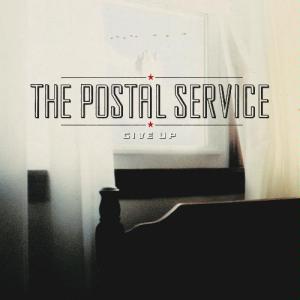
In the early to mid-2000s Ben Gibbard decided to spend all his music energies on Death Cab for Cutie and not do any more with side project The Postal Service. The latter’s Give Up (2003) is a classic. Dance music for indie kids, I always thought, but as the years have passed, I see it now as just downright great music. Fans of the duo have long wanted more than that one full-length album and the handful of EPs that followed.
With HT to my friend Mike (of the great band We Were Pirates), I’ve just found out that Give Up is getting a 10-year anniversary release. Here are the details from the band’s Website:

There’s a tour, too. New album to follow? That would be great. In the meantime, here’s The Postal Service’s “Sleeping In.” You can read more at their Website. Full album tracklist (via Pitchfork) is below the video.
Disc 1 (Original Album):
01 The District Sleeps Alone Tonight
02 Such Great Heights
03 Sleeping In
04 Nothing Better
05 Recycled Air
06 Clark Gable
07 We Will Become Silhouettes
08 This Place Is a Prison
09 Brand New Colony
10 Natural Anthem
Disc 2 (New Tracks, Rarities, B-Sides, Remixes, Cover Versions, Etc.)
01 Turn Around
02 A Tattered Line of String
03 Be Still My Heart
04 There’s Never Enough Time
05 Suddenly Everything Has Changed
06 Against All Odds (Take a Look at Me Now) (Phil Collins cover)
07 Grow Old With Me
08 Such Great Heights (John Tejada Remix)
09 The District Sleeps Alone Tonight (DJ Downfall Persistent Beat Mix)
10 Be Still My Heart (Nobody Remix)
11 We Will Become Silhouettes (Matthew Dear Remix)
12 Nothing Better (Styrofoam Remix)
13 Recycled Air (Live on KEXP)
14 We Will Become Silhouettes (performed by the Shins)
15 Such Great Heights (Performed by Iron and Wine)
Share this:

Calvin Symposium 2013 Recap
We sent five student worship leaders to the Calvin Worship Symposium this year. Here is the Symposium recap from Calvin. You can watch the final communion service here.
Share this:
New Mark Kozelek track (Sun Kil Moon+Album Leaf)

Like the rest of the entire human race, I have trouble waiting for things I want. I especially have trouble waiting for new music I know has been recorded but not yet released to said human race. This morning I checked the Caldo Verde Records site in hopes of hearing some new Mark Kozelek. I was not disappointed.
If you click on the image above you can listen to a new track from the Koz’s collaboration with The Album Leaf. (Language warning for last portion of song: much as I love the man’s music and most of his words, there are the occasional, less-than-edifying lyrics.)
I reacted here to the idea of a Sun Kil Moon collaboration with The Album Leaf. I like this track better than the first (to which I linked in my earlier post). Still not much by way of guitar, but that will come with Koz’s February release of a covers album.
This new track had me going until the end (see comment on lyrics above). I’ll try to post a cute baby picture later as recompense.
Share this:

How shall we sing hymns?
 John Wesley (1703-1791) was an Anglican minister and theologian. His ministry (and that of his brother Charles Wesley) led to the creation of the Methodist Church, as well as other traditions that have their roots in Wesley: the Wesleyan holiness movement, Pentecostalism, and the Charismatic movement.
Wesley issued seven “Rules for Singing” in 1761. Here are some excerpts:
Sing all. See that you join with the congregation as frequently as you can. …If it is a cross to you, take it up and you will find a blessing.
Sing…with a good courage. Beware of singing as if you were half dead, or half asleep; but lift up your voice with strength…. (AKJ: This is particular pertinent for those services that take place in the morning hours.)
Sing in time. Whatever time is sung, be sure to keep with it. Do not run before, not stay behind it; but attend closely to the leading voices, and move therewith as exactly as you can;
And take care you sing not too slow. This drawling way naturally steals on all who are lazy; and it is high time to drive it out from among us, and sing all our tunes just as quick as we did at first.
 Hymn tempo can be largely a subjective decision–some like it fast, some like it slow. But might singing “all our tunes just as quick” encourage more hearty singing? It seems Wesley thought so.
Regarding the call to “attend closely to the leading voices,” I find it particularly helpful when worshiping congregations have vocal leaders for hymns, especially if members of the congregation are not familiar with a given hymn. This may sound self-evident, but the majority of my hymn-singing experience has been in churches where the organist leads the hymn just from the organ. This works fine in a congregation that knows hymns and sings them well, but I’m not convinced it’s always the best approach to leading congregational hymns in worship.
Here’s my favorite part of Wesley’s rules:
Above all, sing spiritually. Have an eye to God in every word you sing. …[S]ee that your heart is not carried away with the sound, but offered to God continually.
I don’t think having “your heart… carried away with the sound” is mutually exclusive with offering it “to God continually,” but I love Wesley’s call to “have an eye to God in every word you sing.” We sing hymns best when we make them prayers to God, affirmations of our faith, even heartfelt confessions.
The rules in their entirety are here.
Share this:

Advent Wreath! Advent Wreath! Advent Wreath!

“Advent Wreath! Advent Wreath! Advent Wreath!”
This is the mantra my 2-year-old son repeats as soon as bedtime routines begin–and sometimes before that.
Each night since the beginning of Advent, our family has observed Advent together by praying, reading a Bible passage, lighting a candle, and singing a verse and the chorus of “O Come, O Come, Emmanuel.” There is perhaps nothing more heart-warming than hearing our two young boys sincerely belt out, “REJOICE! REJOICE!” each night around the Advent wreath. This will be a family tradition for years to come.
We made the wreath together as a family at our church before Advent. We use it to mark the time as we eagerly anticipate the celebration on Christmas of Christ’s first coming to earth, even as we await and long for his second coming. The waiting and yearning themes of Advent have been particularly appropriate given that we have yet again recently seen the evil we humans are capable of.
For those of you who plan worship services, or like to think deeply about them, the Calvin Institute of Christian Worship has a helpful Advent and Christmas Resource Guide. A reflection from that site says:
In Advent we hear the prophecies of the Messiah’s coming as addressed to us—people who wait for the second coming. In Advent we heighten our anticipation for the ultimate fulfillment of all Old Testament promises, when the wolf will lie down with the lamb, death will be swallowed up, and every tear will be wiped away.
There is something for me to learn from my two-year-old’s persistence as we gather each night. The anticipation with which he comes to our time of prayer (often clapping his hands) is what I want to offer God in this time of waiting.
Share this:

Sun Kil Moon + Album Leaf=???
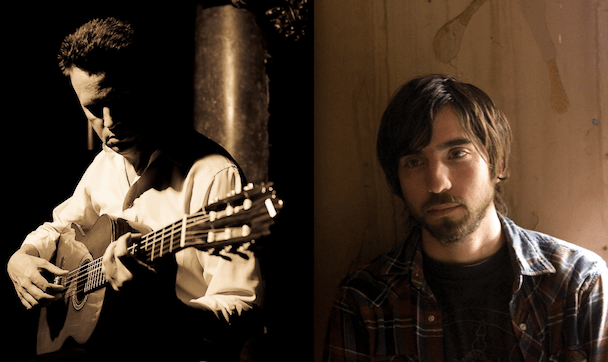
Though I inexplicably have not yet shared on this blog about my abiding love for the music of Mark Kozelek (of Red House Painters and Sun Kil Moon), let me rectify that right now.
The current Mark Kozelek news is that he’s joined with The Album Leaf to record a new album, due out in–well, not soon enough for us fanatics.
From the Caldo Verde Records site:
‘Perils From The Sea’ is the debut collaboration by The Album Leaf’s multi-instrumentalist Jimmy LaValle and Sun Kil Moon singer Mark Kozelek. The project began on Sept 11, 2011, when Kozelek, a fan and acquaintance of LaValle, asked Jimmy to co-write a song. LaValle, a long time admirer of Kozelek’s work, said yes, and the track ‘What Happened To My Brother’ came together quickly. Pleased with the results, the two agreed to record an entire album. Kozelek and LaValle continued to work together over the following year, until ‘Perils From The Sea’ was completed. For the album LaValle chose a more minimalist approach to the music than The Album Leaf’s large sonic soundscapes. The lyrics to the song, ‘You Missed My Heart’, Kozelek says were inspired by a nightmare he had in an Ontario hotel room. Kozelek’s story-telling narratives playing against LaValle’s hypnotic synth sounds and drums beats should come as a pleasant surprise to fans, and should serve as a great introduction to those previously unacquainted with these prolific and acclaimed artists. “Sun Kil Moon & The Album Leaf” will play their debut concert at UE Festival, Dordecht, Holland May 11, and an additional show at Shepard’s Bush Empire, London, May 13.
Whether Mark Kozelek+beatz will be a “pleasant surprise” remains to be seen. For now, you can hear “What Happened to my Brother” right here. I heard not a single guitar on the recording. Not sure what I think about that yet. I do like the couple Album Leaf albums I’ve heard, though.
In February 2013, however, the Koz has a new album of his own coming out, this one of covers. It’s called “Like Rats” and releases February 19. You can hear “I,” the first track from that record, here. It’s a nice chaser to follow the electronica foray I linked to above.
Though I will say–I have not yet not liked a single Mark Kozelek album, even if the most recent Sun Kil Moon was not my favorite work of his. So I’ll eagerly wait for both the covers record and the Album Leaf collaboration. The Koz is a musical genius, an amazing guitar player, and has a voice like buttah.
Share this:

Bedtime Lullaby #1 in D Major, by Abram K-J
A bedtime lullaby I wrote for my two boys tonight.
Share this:
Growing in Christ through worship in chapel (VIDEO)
I did this interview with my friend Ben Rey last spring about worship at Gordon College.
 Words on the Word