Zondervan’s NIV Application Commentary series is on sale, with each of the ebooks selling at $4.99–or less on Amazon.
I really liked Psalms vol. 1 in this series. There are a lot of really good volumes in NIVAC; I just picked up Genesis (now that I’m almost done preaching through it this fall-ha!), Peter Enns’s Exodus, and a few others.
All the Table of Contents now are hyperlinked, so navigating via Kindle or iBooks should be relatively manageable. You won’t get the same sort of search power you’d get in Accordance or Logos, but the price is tough to beat.
See everything here on Amazon or here at Zondervan’s page.
This is the sermon I preached Sunday on Jacob, us, and wrestling with God. Text: Genesis 32:22-32.
Jacob was a trickster. He had managed to trade a meal of lentil stew for his older brother Esau’s birthright, to be next in line in his family. Lentil stew! I like lentils, but as soup goes, this wasn’t even chicken tortilla soup.
With the help of his mother, Rebekah, he tricked his blind father Isaac into blessing him instead of Esau. Esau was getting ready to go all Cain and Abel on his brother Jacob.
Esau Comin’
Since Esau had made a vow to kill his brother—the Bible says, “Esau hated Jacob”—Jacob left his home and his family. He moved in with his uncle Laban and started a family of his own.
Some 20 years later, Jacob is coming back home. He’s days away from meeting up with Esau, so has sent ahead some gifts—you know, the usual: goats, sheep, cows… bowls of piping hot lentil stew. (No, wait, I shouldn’t send him that!)
Jacob knows Esau is coming.
Jacob and his crew come up to a river. It’s dark. The majestic mountains on either side of them and the starry night overhead are no match for the utter fear that grips Jacob now.
He helps his family cross to safety, and then in v. 24: “So Jacob was left alone.”
“So Jacob was left alone.”
Before he could worry whether Esau would pounce on him in his vulnerable state, a man jumps out of the shadows and they start to wrestle. Surely this is Esau! Jacob must be thinking.
There’s a well-represented strand of Jewish interpretation that sees this mysterious man as Esau’s patron angel… a proxy for Esau. But the story goes on to reveal this is more of a divine than human character he is wrestling with.
The fight seems to be pretty even. Verse 25 says, “The man saw that he could not overpower [Jacob],” but then he pops him in the hip so that Jacob begins to limp.
Jacob—ever the trickster, ever the procurer of blessings where they are not his to procure—says to the guy he has in a headlock, “I will not let you go unless you bless me.”
Come to Jesus
“What is your name?” the man asks him. “What is your name?”
The answer is, “Jacob,” but naming in the book of Genesis and Ancient Near East was deeply significant. Your name was your personality. Your name was your reputation. Your name was your future calling and destiny. Your name was who you are.
“What is your name?” the godlike wrestler said. “Who are you?”
Jacob has a come-to-Jesus moment here, to use a religiously anachronistic phrase.
At this point he can dodge the question. He can say, “I’m not telling you that. Why should you know anything about me?” He can run off, though he’ll be hobbling and probably won’t get very far. He can lie and say he is somebody else.
“What is your name? Who are you?”
“I’m Jacob—I’m a trickster. I don’t trust people very well. My family was dysfunctional, my parents played favorites, and my family role was the conniving one. I want so deeply to be loved, that I’ll cheat, lie, and steal my way to it.”
Just one word in the text, “Jacob,” he says, but when I visualize this encounter, I think of Jacob’s answer as almost a confession of who he is, warts and all. By this point, surely, he must realize it’s not Esau he’s been wrestling with. “I saw God face to face,” Jacob would say at the end of this encounter, and face-to-face with God, he tells God his name. By saying, “I am Jacob,” he admits to God—freely—who he is, what he’s done, what his own internal struggles have been.
Go to the Mattresses
Growing up my family had a few go-to movies that we’d watch on a Friday night. One of them was You’ve Got Mail. Tom Hanks and Meg Ryan are two competing bookstore owners who also happen to be falling in love over AOL’s now archaic Instant Messenger service online, under the screen names of “ShopGirl” and “NY152.” They don’t at first that they already know each other in real life, too.
Meg Ryan’s character complains from her computer screen, as ShopGirl, to Tom Hanks’s character, as NY152, about Hanks’s ruthless efforts to put her local, neighborhood bookstore out of business.
Hanks’s character summons the Godfather and tells her, “Go to the mattresses.”
Befuddled at that reference, she asks him about it and he replies:
The Godfather is the I Ching. The Godfather is the sum of all wisdom. The Godfather is the answer to any question. What should I pack for my summer vacation? “Leave the gun, take the cannoli.” What day of the week is it? “Maunday, Tuesday, Thursday, Wednesday.” And the answer to your question is “Go to the mattresses.” You’re at war. “It’s not personal, it’s business. It’s not personal it’s business.” Recite that to yourself every time you feel you’re losing your nerve. I know you worry about being brave, this is your chance. Fight. Fight to the death.
Jacob has gone to the mattresses. He’s fighting—if not to the death, then he’s fighting for some favor. He’s wrestling for a blessing.
Let’s not forget how the book of Genesis started—the God of the universe separated vast expanses of sky, water, and land; he created light; he made all kinds of beings and vegetation, culminating in the creation of male and female in his image.
This Lord of the cosmos, this magnificent God of the universe who spoke and breathed all things and people into being—this could be a God we puny humans choose to avoid. Out of fear. Out of a sense of unworthiness. Due to a notion that we don’t want to trouble God with our concerns, our struggles, our anxieties. Maybe we think we have to be strong, or keep it together, or look like we’re keeping it together.
Maybe we feel guilty for the questions we have, for how distant we’ve been, for how hard it is to pray.
But if that’s you, go to the mattresses. Go to the mattresses with God.
Are you angry, at your brother or sister, or at God? Are you nervous about your life? Go to the mattresses—take it to God. Do you feel betrayed, passed over, or left out to dry by God? Go to the mattresses—take it up with him and have it out.
Go to the mattresses with God, if you think you have a need to clear the air.
Go be alone, like Jacob was, and wrestle a little bit.
Jacob Wrestles with the Angel of the LORD, Eugène Delacroix (1798–1863)
The stakes are higher for us than in the Godfather because we can’t say, “It’s not personal; it’s business.” With God, it’s all personal, and the blessing of our future seems to entirely depend on whether we can have an encounter with God.
I realize this is potentially dangerous advice to give to a group of Christians, to encourage us to go to the mattresses with God. You see Jacob limping around here, with a strained hip. And who wants another injury to have to worry about?
But there’s something about this human-divine struggle that is holy. There’s something sacred about grappling more deeply with the wonder and the mystery–even the sometimes elusive nature–of God.
Jacob Became Who He Was Always Supposed to Be
Jacob, the trickster, the one who contends on his own behalf, receives the new name Israel, meaning, “God strives,” “God contends,” “God struggles for you and for your good.”
Jacob became even more of who he was always called to be.
I think there are two main reasons we don’t go to the mattresses with God when we know we should, or could.
First, we think that God can’t handle it. We’re worried that the whole edifice will come crumbling down and we’ll have nothing left to believe in, when we really examine just who this God is, and just what this Word is, and just why justice does not prevail as it should in the world. We think God is either easily offended, quickly angered, or readily deconstructed, and so we stay at home. We don’t fight. We don’t engage in the struggle that is needed.
But if God is truly omniscient, if God really knows everything, then he already knows your questions, your frustrations, the things you protest about him, or others, or about the world. So why not give voice to them?
God can handle our frustrations, our consternation, our jadedness, even if we see him as the source of it.
Another reason we don’t go to the mattresses with God is we think we can’t handle it. We’re nervous that we’re right about God not being able to handle our complaints, our indictments, our protestations, and what would I have left anymore if that were true?
But if you’re keeping a midnight, solo encounter with God at bay for fear of what will happen—what do you have left anymore right now, anyway?
God can handle the struggle. You can manage to get in the ring—respectfully, of course—and go a few rounds.
Jacob, on that long, dark night, became even more of who he was always called to be. From the struggle emerged a new expression of God’s favor. From the wrestling came a blessing. Because he dared to face God—in all his honesty and uncertainty, and with all his passion—God gave him a new name, an altered identity, and declared Jacob to be a new person in God.
When we wrangle with God, we are not the same afterwards. We may come out of a period of holy wrestling a little worse for the wear, as Jacob did with his limp—which healed in due time—but we do so with a blessing. We get back up with a new name, a refined identity.
So if you need to, go to the mattresses with God. You don’t have to do it alone, like Jacob did; take a friend with you. Make a vulnerable new step of really chasing down some of your unfinished business with God, and sharing that journey with a friend, inviting them to walk with you, to pick you up and carry you when you’re limping.
And as the sun rises after your dark night, you will be able to rejoice at the new name and the even more abundant blessings you’ve received from God.
But sometimes, to get there, you’ve got to be willing to wrestle.
This fall I’m preaching through Genesis. Two Jewish commentaries have been exceedingly helpful and illuminating as I prepare each week. Yesterday I praised Nahum M. Sarna’s Genesis (JPS Torah Commentary). Here I highlight another commentary I’ve thoroughly enjoyed reading.
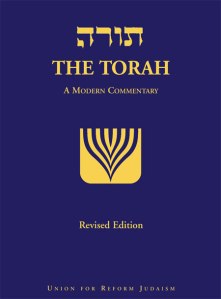
2. The Torah: A Modern Commentary
Like the JPS Torah Commentary, the Modern Commentary includes the Hebrew text (with pointed vowels and cantillation marks) and English translation. Most of the Torah is in the new Jewish Publication Society (JPS) translation (with updates for gender-sensitivity), but the English translation of Genesis is the work of the late Rabbi Chaim Stern.
Most noticeable in Stern’s translation is his use of “the Eternal” to translate the tetragrammaton (YHVH). The Preface to the Revised Edition explains:
The root meaning of the divine name in Hebrew is “to be,” and the name “Eternal” renders that name according to its meaning rather than its sound. That is, it conveys the overtones that an ancient Israelite would have heard when encountering YHVH as a name.
Between introductions, verse-by-verse Commentary, Essays, and Gleanings (insights from rabbinic commentaries and modern-day interpreters), there’s a wealth of useful information here.
For example, last Sunday I began to wonder whether the story of Babel (Genesis 11:1-9) was, among other things, an anti-empire polemic. Moving through the “Gleanings” in the Modern Commentary, I found the following early sources:
As the tower grew in height it took one year to get bricks from the base to the upper stories. Thus, bricks became more precious than human life. When a brick slipped and fell the people wept, but when a worker fell and died no one paid attention.
MIDRASH
And:
They drove forth multitudes of both men and women to make bricks; among whom, a woman making bricks was not allowed to be released in the hour of childbirth, but brought forth while she was making bricks, and carried her child in her apron, and continued to make bricks.
BARUCH
The commentary nicely blends cultural background, sensitivity to the history of Jewish interpretation, and application-ready insights, as here in the comment on Genesis 12:1-9:
For while Abram’s story must be read as the biography of an individual, he (and this applies to the other patriarchs as well) is more than an individual. The Torah sees the patriarch as the archetype who represents his descendants and their fate.
This fall I’m preaching through Genesis. Two Jewish commentaries have been exceedingly helpful and illuminating as I prepare each week. In a short series of two brief posts, I highlight each.
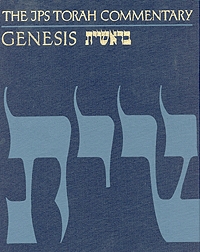
1. The JPS Torah Commentary: Genesis
I’m a sucker for beautifully constructed books, and this is one. Nahum M. Sarna’s Genesis has the full Hebrew text of Genesis (with vowel points and cantillation marks), an English translation (the Jewish Publication Society’s New JPS translation), incisive commentary, and 30 Excursuses at the back of the book.
Already at Genesis 1:2 I found the commentary quoteworthy enough to cite it in a sermon. It notes that the Hebrew term create is used only of God:
It signifies that the product is absolutely novel and unexampled, depends solely on God for its coming into existence, and is beyond the human capacity to reproduce.
There’s this gem on Cain and Abel, where Cain’s sacrifice points to “a recurrent theme in the Bible–namely, the corruption of religion.” Sarna tersely (yet effectively) comments:
An act of piety can degenerate into bloodshed.
And in Genesis 6, where the reader struggles to understand how a loving God could all but eradicate his creation, the introductory essay to “Noah and the Flood” reads:
The moral pollution is so great that the limits of divine tolerance have been breached. The world must be purged of its corruption.
He goes on:
The totality of the evil in which the world has engulfed itself makes the totality of the catastrophe inevitable.
Every passage of the commentary I read is like this–the perfect blend of lexical analysis and devotional implication. Sarna makes good use of ancient Jewish sources, so the reader gets the sense that she or he is really being exposed to thousands of years of Jewish interpretation.
This has often been the first commentary to which I turn after reading the text.
You can find it here at the publisher’s page or here at Amazon. I waited a long time to purchase this volume, since it’s not cheap. This summer I found it on ebay, and have been grateful to own it since!
Next post, I’ll highlight the second of two Jewish commentaries on Genesis that I’ve been enjoying–The Torah: A Modern Commentary. UPDATE 10/16/14: See that review (part 2) here.
Before the mid-50 degree winds blow Psalms of Summer too far back into my homiletical consciousness, I want to highlight two Psalms commentaries I used every week this summer.
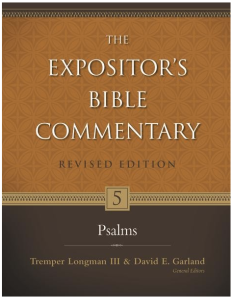
They are Willem A. VanGemeren’s Psalms (Expositor’s Bible Commentary, Revised edition) and Gerald H. Wilson’s Psalms Volume 1 (NIV Application Commentary), both from Zondervan.
1. Revised EBC
In the EBC set’s previous edition, Psalms was only available in a larger volume that also contained Proverbs, Ecclesiastes, and Song of Solomon. Now, with some expansions and revisions, it is its own 1,000-page volume.
VanGemeren’s introduction is detailed, offering the kind of thorough but not verbose overview anyone reading or preaching on the Psalms would want. Among other issues, he writes about Psalm types, the formation of the Psalter, theology in the Psalms, and literary/poetic devices–in addition to parallelism, he lists and describes 16 devices.
The typical pattern is for each Psalm to begin with an Overview (covering its themes, structure, authorship, and so on). Then follow “Commentary” and “Notes” for each passage. The Commentary section is verse-by-verse exposition; the Notes include more detailed technical insights, especially delving into the Hebrew text. 22 “Reflections” throughout the commentary offer additional explanation of important themes.
To take just one look inside the commentary, Psalm 13:5-6 in the NIV (1984) reads:
But I trust in your unfailing love;
my heart rejoices in your salvation.
I will sing to the LORD,
for he has been good to me.
Of these verses VanGemeren says:
Though he has experienced deep despair, the psalmist does not give up. His feet did not slip. He held on to the promise of God’s covenant love: “your unfailing love” (hesed). He is not overwhelmed by his troubles, but in his depression he says, “But I trust.” The emphatic “But I” (v.5) is a surprising response from the heart of a depressed person. Because life may be so bitter for some, it is only by God’s grace that the heart of faith may groan, “but I.”
2. NIVAC
As with the Revised EBC volume, the introduction to Psalms Volume 1 in the NIV Application Commentary series (NIVAC) covers good ground: authorship, historical use of Psalms (in temple worship, as well as the move “from public performance to private piety”), poetic conventions, Hebrew poetry specifically (parallelism, use of refrains, acrostics), Psalm headings, and types of Psalms.
Wilson–after an informative historical survey of attempts to categorize Psalms–highlights three “main” Psalm types: Praise, Lament, and Thanksgiving. He also notes other types, like royal Psalms and wisdom Psalms. The introduction spans more than 60 pages and (thankfully) exceeds what one might expect to find in an “application commentary.”
The NIVAC series has as its primary goal “to help you with the difficult but vital task of bringing an ancient message into a modern context.” It employs three sections for each Psalm to (quite successfully) accomplish the aim:
Original Meaning: “the meaning of the biblical text in its original context.”
Bridging Contexts: “to help you discern what is timeless in the timely pages of the Bible–and what is not,” i.e., what applies only particularly to a context and not universally.
Contemporary Significance: the application section, including suggestions for the preacher or teacher or reader of the passage.
The text of each Psalm is printed in full before its commentary, which I appreciated. This first volume covers Psalms 1-72 (Books I and II of the Psalter). The author is as adept in the text’s Original Meaning as he is in Bridging Contexts or discussing its Contemporary Significance. Wilson won’t write your sermon for you, but he gives the preacher or teacher plenty to chew on, both for herself and for her congregation. Especially illuminating in the application section is Wilson’s Christological read of many Psalms.
Here are just two examples of the kind of edifying insights that fill Wilson’s NIVAC volume:
1. He notes the walk…stand…sit progression of Psalm 1, and does so with a nice turn of phrase:
The order of these verbs may indicate a gradual descent into evil, in which one first walks alongside, then stops, and ultimately takes up permanent residence in the company of the wicked.
2. When Sons of Korah in Psalm 46 call the congregation to a counterintuitive praise session, they do so in the midst not just of some tragic events befalling God’s people—it’s the complete disintegration of all of life that is the dominant metaphor in these verses. Wilson says that when the Psalm speaks of mountains falling into the sea, this “amounts to a moment of uncreation.”
Praying with Many, Many Others
Wilson puts it well:
Thus, whenever you read the psalms, when you sing them or pray them, you are praying, singing, and reading alongside a huge crowd of faithful witnesses throughout the ages. The words you speak have been spoken thousands–even millions–of times before: in Hebrew, Greek, Latin, English, and a myriad of other languages. As you read or sing or pray, off to your right stand Moses and Miriam, in front of you David and Solomon kneel down, to your left are Jesus, Peter and Paul, Priscilla and Aquila, while from behind come the voices of Jerome, St. Augustine, Theresa of Avila, Luther, Calvin, and more–so many more!
Thanks to Zondervan for review copies of each of the above, given to me with no expectation as to the content or trajectory of my review. Find the Revised EBC volume here (Amazon) or here (Zondervan). The NIVAC Psalms volume is here (Amazon) or here (Zondervan).
One of the many things New Englanders are good at is taking a summer vacation. You see the evidence of this if you are driving on 128, 95, or 93 on a Sunday afternoon or evening, when everyone is coming back from a weekend or day away.
Nonetheless, our life’s work can easily take over if we’re not careful. We forget the truths of Psalm 127—that it is God who makes our work truly come alive. We do our work with a sort of Tower of Babel mentality… I’m just going to get this done really quick by myself.
Unless the Lord Builds….
Psalm 127:1-2 says:
Unless the LORD builds the house, its builders labor in vain. Unless the LORD watches over the city, the watchmen stand guard in vain. In vain you rise early and stay up late, toiling for food to eat— for he grants sleep to those he loves.
The other day I finished an intensive summer class on Cross Cultural Counseling. The final paper I turned in was in its 7th or 8th draft when I finally clicked the Send button to submit it to my professor.
So recently I can relate to “rise early and stay up late.” If your life’s work involves taking care of other people, early mornings or late nights when they are asleep might be your best time to work through your task list. These two verses don’t say not to do that. But they do caution us against squeezing more hours out of our day without deliberately inviting and acknowledging God’s presence in those working hours.
I can stand watch early over my work, but that work is good only because God stands watch with me. Work without God, Solomon says, is in vain.
Besides that, you need to sleep. God knows that. Sleep is part of the benefits package, if you will, of those who work with the God of Israel.
“He grants sleep to those he loves.” (I.e., to everyone.)
Our bodies have an amazing way of getting sleep when they need it. If we go for too long without enough sleep, our bodies just shut down. We may fall asleep involuntarily. This is one of the ways, I think, that God grants sleep to those he loves: When we’re tired enough, our bodies will sleep, whether we want them to or not. So you might as well get out of your chair or off the couch, brush your teeth, and get in your bed.
Why We Should Take a Sabbath
Another manifestation of God’s granting of sleep—rest—to the ones he loves is the gift of a Sabbath day. A Sabbath day of rest is part of the natural, biological rhythm that God set up from the very beginning of creation. God did his work—created the heavens and the earth, life and all that is in them—in six days. And on the seventh day, he rested. He didn’t do or create anything. Six days on, one day off.
We don’t need much intellectual convincing of the value of Sabbath-keeping. We know that practicing the Sabbath follows God’s pattern of six days on, one day off. (Work and rest, work and rest… not: work and work, work and work.)
We know that keeping a Sabbath re-orients us to God, in case we forgot about God during the rest of the week. We experience Sabbath as a gift of refreshment when we most need it, part of the full life that Jesus promised. (A Sabbath-less life is really only half a life.)
And who wants to eat what verse 2 of this Psalm calls “the bread of anxious toil”? We’ve ordered and eaten that dish, right? It’s disgusting. The bread of anxious toil leaves a bad aftertaste; it gives you heartburn.
Besides, we can’t really be productive 7 days a week anyway. Even multitasking doesn’t really give us an edge. A New York Times article says, “In fact, multitasking is a misnomer. In most situations, the person juggling e-mail, text messaging, [on] Facebook and [at] a meeting is really doing something called ‘rapid toggling between tasks,’ and is engaged in constant context switching.” We can’t just keep switching contexts and rapidly “[toggle] between tasks” for 7 days. That’s exhausting.
Sabbath: Not Just a Day, A Mindset
The practice and mentality and posture of Sabbath-keeping is not just for one day, but we can practice a Sabbath mindset in all of life, turning to God and acknowledging his presence in our work and in our rest, in our waking hours and in our sleeping hours.
Clement of Alexandria, one of those highly quotable early church dudes, said,
Practice husbandry if you’re a husbandman, but while you till your fields, know God. Sail the sea, you who are devoted to navigation, yet call the while on the heavenly pilot.
Here’s how The Message puts Jesus’ words in Matthew:
Are you tired? Worn out? Burned out…? Come to me. Get away with me and you’ll recover your life. I’ll show you how to take a real rest. Walk with me and work with me—watch how I do it. Learn the unforced rhythms of grace. I won’t lay anything heavy or ill-fitting on you. Keep company with me and you’ll learn to live freely and lightly.
That’s what we want. That sounds amazing. We need no convincing whatsoever of the value of Sabbath-keeping, both as a distinct day of the week and as an ongoing daily mindset.
Why We Don’t Keep Sabbath, Really: Internal Competing Values
And yet, we don’t take a Sabbath as we should. Or we do, but three days into the week, we forget to practice a daily Sabbath orientation toward God with complete reliance on him. We turn to our own inner resources to face our life’s work.
Euguene Peterson warns against “un-Sabbathed workplace” when he says,
[W]ithout a Sabbath…the workplace is soon emptied of any sense of the presence of God. The work itself becomes an end in itself. It is this ‘end in itself’ that makes an un-Sabbathed workplace a breeding ground for idols. We make idols in our workplaces when we reduce our relationships to functions that we can manage. We make idols in our workplaces when we reduce work to the dimensions of our egos and our control.
Why do we do this? We don’t really think about other people as just relationships to be managed, do we? We’re not really egomaniacs, right? At least, in the depths of our beings, we don’t want to live like that.
Is this as simple as just saying, “Okay, well, I guess we need to take a Sabbath more. We should practice a Sabbath mentality more often in our daily endeavors”? We’re just a forgetful and disobedient people and we need to obey to this 4th commandment.
There is some truth to that. But I don’t think it’s just disobedience or forgetfulness or laziness that leads to an un-Sabbathed life.
I think the main Christians don’t take a Sabbath, or don’t practice a daily Sabbath mentality, is because of our competing internal values.
Two educators at Harvard—Kegan and Lahey—have a diagnostic grid that I’ve found immensely helpful for unearthing my sometimes subtle competing values. It’s from their book How the Way We Talk Can Change the Way We Work.
The essence of their diagnostic is to begin with a commitment or value or belief—something where we say it’s really great if this happens. In this case, to adapt their language, “We are committed to the value or importance of… Sabbath-keeping,” both as a distinct day and as a mentality throughout the week.
Then we ask, “What are we doing or not doing that prevents this from happening?” So think for a moment, what are you doing or not doing that prevents Sabbath-keeping and rest from happening?
There may be some forces outside of your control—small children, an overbearing boss. But what are you doing that prevents a Sabbath rhythm in your life?
Underneath the answer to that question is a competing commitment or value or belief. Based on what I’m doing to undermine my Sabbath-keeping—checking email on a day off, not calling in anyone else for help–“I may also be committed to…” getting everything done myself and making sure it gets done right. Or, “I may also be committed to” just keeping going, because I have to.
Where Kegan and Lahey’s grid gets really fascinating is in what comes after you’ve unearthed your competing value. They suggest that each competing value carries with it a big assumption that may or may not be true.
If I don’t do this task, it will never get done, and there is no one else in the entire universe who can do it as well as I would.
Or, I’m committed to working 7 days a week (competing value), because (here’s the big assumption) if I stop and take a Sabbath, I’ll be so stressed out the day after the Sabbath with catching up, that it won’t have been worth it.
Or, if I slow down enough to practice a Sabbath mentality, I might become less productive.
Walter Bruegemmann talks about this kind of assumption as a scarcity mentality. He says:
There’s never enough time; there’s never a moment’s rest. … But how willing are we to practice Sabbath? A Sabbath spent catching up on chores we were too busy to do during the week is hardly a testimony to abundance. [It] does nothing to weaken the domain of scarcity. Honoring the Sabbath is a form of witness. It tells the world that ‘there is enough.’”
There is enough. There is enough time for us to stop on the 7th day, and to slow down on the other 6 days and to dwell in the watching presence of God.
It’s true that we have a bundle of competing values, commitments, and assumptions that keep us from fully practicing God’s call to a Sabbath rest.
But ultimately, a Sabbath way of life acknowledges that God is God and we are not.
God can and does complete building projects that we cannot finish. God can and does stay awake watching, guarding, protecting, so we can sleep.
A Modest Experiment: Four Weeks of Sabbath
Here’s the final square in Kegan and Lahey’s competing values diagnostic: Try “a modest, safe test.”
NO.
I had to pinch myself the other day when I saw a “Back to School” sign up at the store. Our summer just started! But we’re just a few weeks away from Labor Day.
It’s time to start planning your fall, if you haven’t already. And I would propose that as you do, you try a “modest, safe test,” with regard to Sabbath-keeping.
Plan a Sabbath each week for the next four weeks and keep it. Make it a Sabbath from technology. From your job. From household chores. And after four weeks, evaluate it. See how it went. See if all the things you thought would go wrong (if you took a break), actually did go wrong.
Or… see if you find yourself refreshed and living with a heightened awareness of God’s watching presence. See if you find the scarcity you feared… or, if you find instead an abundance of good gifts from the God who gives rest to the ones he loves.
I preached on Psalm 127:1-2 this last Sunday, from which the above is adapted. See my other Psalms sermons here.
Especially since Eerdmans has a large number of resources in production right now at Logos Bible Software, I’ve started paying more attention to Logos’s Pre-Publication program.
Logos puts titles into “Pre-Pub” to help gauge user interest in various resources. When users pre-order a resource, that helps to cover the cost of production. If/when enough users pre-order, the title goes into development and the user gets it at the discounted pre-pub price when it “ships” (i.e., when it is completed).
Here is a short description from Logos’s Pre-Pub About page:
Prices start low and increase over time so the sooner you pre-order, the less you pay. We don’t charge you until your pre-order is ready, and we’ll send you a reminder email a few weeks before. If you decide you don’t want the resource anymore, you can cancel your pre-order at any time.
Here is a compilation of the newest Pre-Pub titles. (This one from Oxford University Press is pricey but looks good; here is When God Spoke Greek, which had enough pre-pub orders that it’s already under development and will probably ship within a month.)
Here is the Pre-Pub list sorted by Progress or “ship date,” so you can see which ones are almost ready to go–with the pre-order discount still applying, at least for now. There’s a bunch of Eerdmans stuff that will go out on August 6, including this collection that looks especially useful to pastors, including the book that is pictured above.
Here’s a short overview video of how Pre-Pub in Logos works:
Psalm 46 begins with some liturgical instructions, one of which is unclear. Here is the superscription to the Psalm, a sort of post-it note tacked onto the sheet music:
For the director of music. Of the Sons of Korah. According to Alamoth. A song.
The Psalm itself will divide thematically this way:
Natural Disasters: But God is a strong refuge (vv. 1-3)
Human Violence and Tragedies: But God rules over violence (vv. 4-7)
Be Still and Know: Despite both of the above, God is God; God is with us (vv. 8-11)
11 Psalms are attributed to the Sons of Korah. Korah himself is not a major Biblical figure, but he and his descendants were Levites, involved in musical leadership. This portion of the inscription is clear enough—it’s “a song.”
Alamoth, a Hebrew word that goes untranslated in the 1984 NIV, means “young women.” Alamoth could have been just the name of a musical setting—like singing the doxology to the tune of Old 100th. Or Alamoth could have meant that this song was to be sung by young women—by sopranos—and so it is high-pitched. (HT: P. C. Craigie)
Or Alamoth could have just been how the choirmaster preferred to take his apple pie.
(Sorry.)
But—back to business—the fact that this is a song, and marked as a song, with details about how to sing it, is significant.
Here you have a people confronted with natural disasters, human violence, and tragedies… and their worship leaders call them in response to sing!
Lord, open our lips. And our mouth shall proclaim your praise.
I preached on Psalm 46 this last Sunday, from which the above is adapted. This is the final of three posts this week about that Psalm. I wrote about it here and here, too.
On September 16, 2001, I was planning to deliver my first ever message as a vocational youth minister. It would have been about Philippians 3.
I had just taken a position at an Episcopal church in Illinois as part-time youth minister. In my excitement to start ministering among youth and families, I invited all the parents of youth to come to our first youth worship service that Sunday. In the weeks leading up to that service I worked hard on my sermon, which was going to be about Paul’s pressing on toward the goal and striving to know Jesus Christ more and more. I hoped this would be a central theme in my new ministry.
On Monday, September 10, 2001, I went for a long run and mapped out the outline to my talk. I came back from my run refreshed and ready to go; I couldn’t wait to begin that Sunday.
The next morning, as I walked to a youth ministry class, my friend Michael asked me if I had heard the news. What news, I asked? He told me about a plane, commandeered by terrorists, crashing into the Twin Towers of the World Trade Center in New York, taking the lives of thousands of people. When I arrived at class, my professor turned on the TV as our session was set to begin and just said, “I’m going to stay here and watch the news about this; feel free to stay if you like; feel free to go home if you need to.”
Maybe it goes without saying, but I didn’t preach to the youth and their families that following Sunday about Philippians. Instead, I turned to Psalm 46, and tried to convey some sense of hope, because of the strength we can find in God, even when awful things happen.
To try to do that I used a collection of projected images (that we had been seeing in the news all week anyway), with the text of Psalm 46, bit-by-bit, underneath, next to, or on top of the images.
Here is a .pdf version (unedited since then) of our worship focus that morning. Though it’s been almost 13 years since that Sunday, I’ve found myself–still–turning to this Psalm in the wake of tragic events.
I preached on Psalm 46 this last Sunday, from which the above is adapted. See also here.
As I have read and preached on some Psalms this summer, I’ve appreciated the importance of trying to practice intercultural sensitivity in reading the Bible (and in all of life).
I am working on a course on intercultural counseling this summer, one purpose of which has been to help build intercultural competence and sensitivity.
The readings, lectures, and class discussions have reminded me of the important truth that reading and interpreting the Bible is an exercise–whether we realize it or not–in intercultural relations.
Intercultural Sensitivity=Better Bible Reading
The culture, values, and practices, for instance, of ancient Israel differ from those of 21st century North America in a number of ways. If I read a passage with only an awareness of the cultural values I carry with me, I very well may miss an important truth or robust reading of a text. Or I may map a “truth” or value judgment onto the text that the author didn’t necessarily intend to be there.(I’m not discounting the potential value of so-called reader-response criticism, but I am suggesting we seek to avoid a monocultural or culturally hegemonic interpretation of a text, if possible.)
In a 2008 article for Journal of Spiritual Formation & Soul Care (“Relational Spirituality and Transformation: Risking Intimacy and Alterity”), Steven J. Sandage, Mary L. Jensen, and Daniel Jass write:
Since hermeneutical understanding is always intercultural and contextual, cultural self-awareness is a prerequisite to responsibly interpreting Scripture and spiritual experience.
I mentioned here how the idea of intercultural sensitivity helped me read Psalm 23 in a fuller way. The same thing happened as I prepared to preach on Psalm 46 this week. I got a little extra help this time from a Bible atlas I’ve been reading.
Psalm 46: God Is Our Refuge
Psalm 46 begins:
1 God is our refuge and strength,
an ever-present help in trouble.
2 Therefore we will not fear, though the earth give way
and the mountains fall into the heart of the sea,
3 though its waters roar and foam
and the mountains quake with their surging.
How should we understand the scenario the Sons of Korah (writers of this Psalm) describe?
The sons of Korah don’t just paint a picture of tragic events befalling God’s people—it’s the complete disintegration of all of life that is the dominant metaphor in these verses. A number of commentators point out here that the effective merging of the land (mountains) and waters (sea) harken back to the pre-creation state of chaos that existed before God separated the land from the waters, bringing order to life. The sons of Korah, then, describe a sort of uncreation.
But even in the midst of an envisioned chaos and uncreation of the world (!), “God is our refuge and strength.”
Verse 2 says, “though the earth give way,” or, though the land give way. Here is where an interculturally aware read of the Psalm helps it to come alive even more profoundly. (The below was inspired, in part, by Paul H. Wright’s Rose Then And Now Bible Map Atlas® With Biblical Background And Culture.)
Life for Israel: Location, Location, Location
Before there was such a thing as real estate, life for Israel already was location, location, location.
The topography or shape of the land had a lot to do with whether a given area would be suitable for habitation. Mountains, in particular, provided a sort of natural buffer of protection against enemies… a hiding place to run to, if need be. Water, of course, was necessary for life and the production of crops.
Mountains in Edom (photo: Garo Nalbandian, from Carta’s Sacred Bridge atlas)
The congregation of Israelites who would sing this Psalm understood their identity as intricately tied to the land. The land—which God had given them—was part and parcel of his covenant relationship with them. It was part of his blessing, a sign of his love. If we don’t have this land, how can we really call ourselves God’s people? This is still a live question for many.
Yet even if we were to lose this fundamental aspect of our identity, the Psalm declares, even if the world were to be uncreated and fall back into chaos, “we will not fear.”
The congregation can still say—can still sing, “God is our refuge and strength, an ever-present help in trouble.”
Given how important land was to the people of Israel and the construction of their collectivistic identity, this is an amazing affirmation of trust in God.
Intercultural Insight from a Bible Atlas
Paul H. Wright’s cultural awareness and sensitivity is present from the very first chapter (“The Landed Context of the Biblical Story”) of his biographically-arranged atlas:
To start, it is perhaps appropriate to define a few aspects of location that have impacted living conditions in the lands of the Bible over time. The building blocks of biblical geography include the following….
He lists topography, climate, and available resources. He goes on:
The particular mix of elements such as these plays a significant role in determining whether any given plot of ground can support permanent settlements and how large and well-established these might have become, or if the land is better suited for herding or desert lifestyles.
Here’s the intercultural piece, which I so appreciated:
Specific geographical realities have also helped to shape cultural values and norms that defined individual societies. For instance, protocols of cooperation, hospitality and defense that functioned well in arid, shepherding societies in biblical times developed differently than did those that attained to urban centers located in fertile areas, or to sailors who frequented foreign ports-of-call. And aspects of geography gave rise to specific images that biblical writers used to describe God and the people of ancient Israel.
Understanding the value of land to the people singing Psalm 46–it was an essential component of their identity and experience of God’s love for them!–makes the affirmation of trust in this Psalm even more remarkable.
Though the sons of Korah envision a scenario in which their land is gone–having slipped into the ocean–they call on the congregation to praise God still.
The above is adapted from a portion of a sermon I preached yesterday. Rose Publishing has sent me the Wright atlas for review purposes. A full review is forthcoming. You can find the atlas in the following places: Rose Publishing, Amazon (affiliate link), Carta (as Greatness, Grace, and Glory: Carta’s Atlas of Biblical Biography), and Eisenbrauns (same title as Carta).









 As with the Revised EBC volume, the introduction to Psalms Volume 1 in the NIV Application Commentary series (NIVAC) covers good ground: authorship, historical use of Psalms (in temple worship, as well as the move “from public performance to private piety”), poetic conventions, Hebrew poetry specifically (parallelism, use of refrains, acrostics), Psalm headings, and types of Psalms.

 We don’t need much intellectual convincing of the value of Sabbath-keeping. We know that practicing the Sabbath follows God’s pattern of six days on, one day off. (Work and rest, work and rest… not: work and work, work and work.)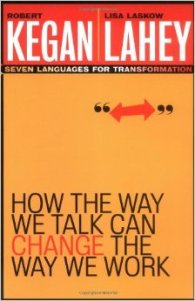






 Words on the Word