Learning to Love God’s Wrath?

“But when we continued to sin against your ways, you were angry. How then can we be saved?” — Isaiah 64:5

Passages about God’s anger might not be the best worn pages in our Bibles. Our great and merciful God, a God of wrath also?

A few months into the pandemic I read an excellent book called, But What About God’s Wrath?: The Compelling Love Story of Divine Anger, by Kevin Kinghorn, with Stephen Travis. The sub-title drew me right in: “The Compelling Love Story of Divine Anger.” Love story? It might be enough for me to make peace with God’s wrath. Or be saved from it somehow! But could I learn to love God’s wrath, too?

For Kinghorn, God’s wrath is “God pressing the truth on us.” We need the truth, but sometimes we’re more motivated to hide than seek it. As Scott Sunquist says, “It’s not loving to hide the truth, and the truth is we’re not healthy…; we need to be restored, even revived.” Or if you prefer Jay-Z, by way of Omar: “You cannot heal what you don’t reveal.”

God’s wrath, then, illuminates the truth, even “pressing” it “on us.” In his wrath, God is restoring us, reviving us, and seeking to free us from the deceptions we too often tolerate or wink at or—worse—embrace.

Isaiah 64, cited at the top of this post, goes on:

All of us have become like one who is unclean, and all our righteous acts are like filthy rags; we all shrivel up like a leaf, and like the wind our sins sweep us away. No one calls on your name or strives to lay hold of you; for you have hidden your face from us and made us waste away because of our sins.

Isaiah remembers how “all of us” have failed to call on God’s name; we have not strived to lay hold of God. So God in his loving wrath has given over his people to the consequences of their sins. At times we see these just as natural consequences, but ones that are imbued with the intended goal of restoration, of returning to the Lord.

In this way Kinghorn successfully makes the point that God’s wrath does not stand in contrast to God’s love; rather, God’s wrath is perfect and in fact is “entirely an expression of God’s love, in specific contexts.” Everything God does is motivated by love and is loving, because God is love.

This is not just a neat apologetic trick to avoid some kind of epic, Star Wars-like Wrath vs. Love saga. Kinghorn makes the compelling case from Scripture that “the starting point” is God’s love, and that wrath is a sub-trait of God’s love. Is it loving, after all, to simply leave someone to their own folly, without at least first attempting to press the truth upon them? “If there is one kind of truth that we humans are adept at avoiding, it is the thought that we have been acting in a morally defective way,” writes Kinghorn. Chapter 6 (“Truth as God’s Response to Sin and Self-Deception”) is especially powerful in developing these thoughts. We need God’s wrath, because it saves us from ourselves.

The Psalms, especially the Psalms of vengeance, virtually require God’s wrath for God to be just, loving, faithful to his promises. Will this God right wrongs, or won’t he? Kinghorn puts it like this:

God is not like a judge in a courthouse, suspending his personal feelings in order to act objectively. He is more like a partner who feels affronted when her daughter is bullied in school and who takes steps to confront the offender.

This confrontation, by the way, is a kindness to both offended and offender. This is true even when the offender and offended are the same person, as in the case of “self-destructive behavior.” Hurting oneself angers God, too. Kinghorn cites Jeremiah 7:18-19:

“They pour out drink offerings to other gods to arouse my anger. But am I the one they are provoking?” declares the LORD. “Are they not rather harming themselves, to their own shame?”

“A God who cares about us would naturally be troubled,” Kinghorn concludes, “for our sake, at our sins against him.”

God’s wrath is “more than an emotion,” though. It seeks to lead people to repentance, which leads to fullness of life.

In the end, there’s a sense in which “wrath” is in the eye of the beholder: “Whether we experience God pressing the truth as God’s wrath or as God’s faithful care is, in the end, up to us.” How will we respond to God’s overtures, even when they are uncomfortable?

When I read the book two years ago, it profoundly affected me. It encouraged and strengthened me in my ministry practice. The blend of philosophy and biblical studies (assisting author Stephen Travis) is like enjoying delicious, freshly baked tortilla chips, only to have homemade guac come out a minute later to dip the chips in.

It’s no exaggeration to say I loved this book. It both fired up my theological/philosophical synapses and ministered to me, heart and soul. Never would I have expected that about a book on God’s wrath! But that may just speak to how anemic my understanding of God can be. Kinghorn and Travis will help any willing reader grow in their understanding (and love) of God.

I highly recommend the book. Check it out here.


Thanks to IVP Academic for sending the review copy, which did not (at least not consciously) affect how I reviewed the book.

Bonhoeffer’s Last Words, Before He Was Hanged (76 Years Ago Today)

Source: German Federal Archive

Dietrich Bonhoeffer was hanged in the Nazi concentration camp of Flossenbürg on April 9, 1945, just two weeks before the U.S. military came to liberate it.

John W. de Gruchy describes the lead-up to that day in his Editor’s Introduction to Letters and Papers from Prison (Dietrich Bonhoeffer Works, volume 8):

On October 8 [of 1944], Bonhoeffer was taken to the cellar of the Gestapo prison on Prinz-Albrecht-Straße, where he stayed until February 7, 1945. From then on, all correspondence came to an end, and contact between Bonhoeffer and the family and [Eberhard] Bethge was broken. From there Bonhoeffer was taken first to Buchenwald and then, via the village of Schönberg in Bavaria, to the Flossenbürg concentration camp, where he arrived on April 8. That evening he was tried by a hastily rigged court and condemned to death. Early the next morning Bonhoeffer was executed along with several other coconspirators.

He was hanged April 9. His family would not learn about it for several months.

The July before he had written to his trusted friend (and later biographer) Eberhard Bethge, one day after the failed assassination attempt on Hitler’s life. He wrote:

How should one become arrogant over successes or shaken by one’s failures when one shares in God’s suffering in the life of this world? You understand what I mean even when I put it so briefly. I am grateful that I have been allowed this insight, and I know that it is only on the path that I have finally taken that I was able to learn this. So I am thinking gratefully and with peace of mind about past as well as present things. …

May God lead us kindly through these times, but above all, may God lead us to himself.

His final recorded words before his hanging are especially appropriate in these days that lead up to Easter Sunday:

This is the end–for me the beginning of life.


This post is one I’ve re-posted a few times on April 9. It began as part of the “Tuesdays in Lent with Bonhoeffer” I wrote when I first got into Bonhoeffer. See other gathered Bonhoeffer posts here.

Bonhoeffer: Lying Destroys Community


Source: German Federal Archive

Dietrich Bonhoeffer from his Cost of Discipleship:

Because the first and last concern of truthfulness is the revealing of persons in their whole being, in their evilness before God, such truthfulness is resisted by the sinner. That is why it is persecuted and crucified. The truthfulness of the disciples has its sole basis in following Jesus, in which he reveals our sins to us on the cross. Only the cross as God’s truth about us makes us truthful. Those who know the cross no longer shy away from any truth. Those who live under the cross can do without the oath as a commandment establishing truthfulness, for they exist in the perfect truth of God.

There is no truth toward Jesus without truth toward other people. Lying destroys community. But truth rends false community and founds genuine fellowship. There is no following Jesus without living in the truth unveiled before God and other people.

Bonhoeffer’s Last Words, Before He Was Hanged (74 Years Ago Today)


Source: German Federal Archive


Dietrich Bonhoeffer was hanged in the Nazi concentration camp of Flossenbürg on April 9, 1945, just two weeks before the U.S. military came to liberate it.

John W. de Gruchy describes the lead-up to that day in his Editor’s Introduction to Letters and Papers from Prison (Dietrich Bonhoeffer Works, volume 8):

On October 8 [of 1944], Bonhoeffer was taken to the cellar of the Gestapo prison on Prinz-Albrecht-Straße, where he stayed until February 7, 1945. From then on, all correspondence came to an end, and contact between Bonhoeffer and the family and [Eberhard] Bethge was broken. From there Bonhoeffer was taken first to Buchenwald and then, via the village of Schönberg in Bavaria, to the Flossenbürg concentration camp, where he arrived on April 8. That evening he was tried by a hastily rigged court and condemned to death. Early the next morning Bonhoeffer was executed along with several other coconspirators.

He was hanged April 9. His family would not learn about it for several months.

The July before he had written to his trusted friend (and later biographer) Eberhard Bethge, one day after the failed assassination attempt on Hitler’s life. He wrote:

How should one become arrogant over successes or shaken by one’s failures when one shares in God’s suffering in the life of this world? You understand what I mean even when I put it so briefly. I am grateful that I have been allowed this insight, and I know that it is only on the path that I have finally taken that I was able to learn this. So I am thinking gratefully and with peace of mind about past as well as present things. …

May God lead us kindly through these times, but above all, may God lead us to himself.

His final recorded words before his hanging are especially appropriate in these days that lead up to Easter Sunday:

This is the end–for me the beginning of life.


This post is adapted from a post I wrote around this time five years ago, as part of the “Tuesdays in Lent with Bonhoeffer” I was doing. See other gathered posts here.

A Book You Should Read: Amy L. Sherman’s Kingdom Calling

Any church is an outpost of the Kingdom of God. There is the mission of the church, expressed in terms of what it does together as a congregation. Then there are the myriad ways members of a congregation—especially but certainly not limited to ones involved in teaching, social services, and other care-taking roles—live out the church’s call to love, to be salt and light, to share the good news of God’s love..

Even if we are at church four hours a week, we churchgoers spend some 98% of our lives not gathered with the congregation as a whole. How can churchgoing folks continue to build the Kingdom of God, not just when we are together, but when we are apart?

3809There exists among congregations an impressive amount of what Amy L. Sherman in Kingdom Calling refers to as “vocational power–knowledge, platform, networks, position, influence, skills and reputation.” As a pastor I am keenly aware of the importance of equipping the body of believers to use their “vocational power” for the growing of the Kingdom of God. How, as Ephesians says, can we “equip the saints for the work of ministry”—ministry not just at church but in our day-to-day lives, in all the places in which God has set us?

Sherman sets the course with a definition of vocational stewardship: “the intentional and strategic use of one’s vocational power (skills, knowledge, network, platform) to advance the values of the Kingdom of God.” In calling for “foretastes” of the Kingdom of God, she speaks of a righteousness that has three dimensions: up (God and me), in (myself), and out (the world and me). This robust understanding of righteousness gets at the heart of the Old and New Testament’s definition of righteousness as right relationship with God, self, and others.

Throughout Kingdom Calling Sherman tells inspiring stories of non-profit owners, teachers, pastors, small groups, construction workers, cleaning service providers, and many others who are helping to advance the Kingdom of God by offering foretastes of it in their own spheres.

As a pastor I appreciated Sherman’s focus on “four pathways for deploying congregants in the stewardship of their vocations” (22). These are:

  1. “Blooming where we are planted by strategically stewarding our current job,”
  2. “Donating our vocational skills as a volunteer,”
  3. “Launching a new social enterprise,” and,
  4. “Participating in a targeted initiative of our congregation aimed at transforming a particular community or solving a specific social problem.”

Sherman shares inspiring stories of church-school partnerships and congregation-wide initiatives, although it is hard to know how to replicate some of the successes Sherman mentions, absent more specific implementation suggestions. But insofar as her aim is to cast a vision to church leaders and attendees of vocational stewardship and the great potential found in vocational power, Sherman’s work has excited me to move ahead in my own church with what I’ve learned from Kingdom Calling.

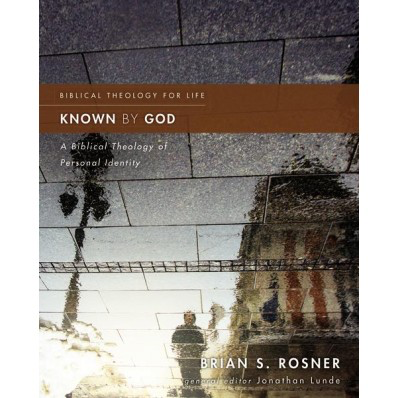
Known By God: A Biblical Theology Of Personal Identity (Book Note)

NewImage


Brian S. Rosner has just published a book I’m excited about working through. It’s called Known By God: A Biblical Theology Of Personal Identity. Here is the overview from the publisher:

Who are you? What defines you? What makes you, you?

In the past an individual’s identity was more predictable than it is today. Life’s big questions were basically settled before you were born: where you’d live, what you’d do, the type of person you’d marry, your basic beliefs, and so on. Today personal identity is a do-it-yourself project. Constructing a stable and satisfying sense of self is hard amidst relationship breakdowns, the pace of modern life, the rise of social media, multiple careers, social mobility, and so on. Ours is a day of identity angst.

Known by God is built on the observation that humans are inherently social beings; we know who we are in relation to others and by being known by them. If one of the universal desires of the self is to be known by others, being known by God as his children meets our deepest and lifelong need for recognition and gives us a secure identity. Rosner argues that rather than knowing ourselves, being known by God is the key to personal identity.

He explores three biblical angles on the question of personal identity: being made in the image of God, being known by God and being in Christ. The notion of sonship is at the center – God gives us our identity as a parent who knows his child. Being known by him as his child gives our fleeting lives significance, provokes in us needed humility, supplies cheering comfort when things go wrong, and offers clear moral direction for living.

The book is part of Zondervan’s Biblical Theology for Life series. (Check the first results here to see more in the series.)

Especially with a new year approaching—and the potential resolutions that come with it—I’m looking forward to reading Rosner’s theology of personal identity.

The book is here (Zondervan) and here (Amazon). I’ll write more about it as I am able.

Leaders Should Be a Non-Anxious Presence

steinkeThis bit of wisdom in the post title comes from Peter Steinke. He affirms that anxiety itself is not bad; it can provoke positive change, but only if regulated.

In his Congregational Leadership in Anxious Times: Being Calm and Courageous No Matter What, Steinke says leaders should be non-anxious presences in their churches. He says, “Nothing new under the sun—especially nothing controversial—happens without confusion, resistance, or emotional reactivity.”

So leaders should “keep calm for the purpose of reflection and conversation,” “maintain a clear sense of direction,” and what I thought was hardest but maybe best, “tolerate high degrees of uncertainty, frustration, and pain.”

“To be a non-anxious presence,” he says, “means to acknowledge anxiety but not let it be the driver of behavior.” Don’t deny anxiety, but don’t let it defeat you or your people.

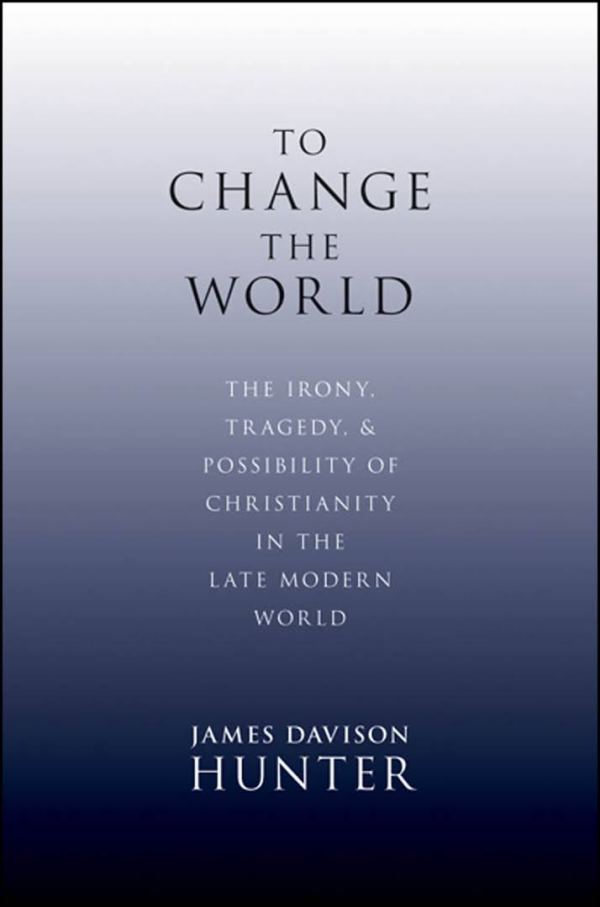
To Change the World (James D. Hunter): A Brief Review and Critique

James Davison Hunter makes helpful contributions to the discussion of how Christians should orient themselves toward the world and its need for improvement. His idea of “faithful presence” is a good one, if not especially novel. The idea’s rootedness in the faithful presence of God in Christ offers a theologically sound and relatable paradigm. Because of God’s love for and presence with us, any Christian, whether walking in the so-called halls of power or not, can exercise faithful presence.

Hunter offers a robust view of faithful presence as “the exercise of leadership in all spheres and all levels of life and activity” (260). One thinks of the oft-quoted Abraham Kuyper: “There is not a square inch in the whole domain of our human existence over which Christ… does not cry, ‘Mine!'”

to-change-the-worldHunter sees the need for faithful presence to bring about both individual and institutional change, as it “generates relationships and institutions that are fundamentally covenantal in character, the ends of which are the fostering of meaning, purpose, truth” (263, my emphasis). Further, Hunter writes, “Culture is intrinsically dialectical” (34). His drawing on the Hegelian dialectic allows him to articulate a Christian relation to the world that avoids extremes: “Christians are called to relate to the world within a dialectic of affirmation and antithesis” (231).

The author spends more time than the reader might like in debunking other people’s ideas as to how to make the world a better place. This is a noble enough endeavor, but one wonders: On what authority does he offer his critiques? He begins, “I contend that the dominant ways of thinking about culture and cultural change are flawed, for they are based on both specious social science and problematic theology” (5). (That’s a big claim to have to defend.) He continues with broad, sweeping statements like, “Cultures change from the top down, rarely if ever from the bottom up,” (41) and, “Change of this nature [i.e., cultural change] can only come from the top down” (42).

Evidence, however, seems to be in short supply. One does not have to wade deep into the history of the African American civil rights movement, for example, to find figures who effected change from the bottom up. No doubt Martin Luther King, Jr. found support from “the top” in Lyndon B. Johnson, but King led a movement of the people, many of whom (King included) did not have positional power in the society they changed.

And to take a current example, there is the Black Lives Matter movement. While its long-term impact remains to be seen—and while the movement itself may not always speak with one voice—one would be hard-pressed to suggest that this “grassroots political mobilization” (42) has not “penetrate[d] the structure of our imagination, our frameworks of knowledge and discussion, the perception of everyday reality” (42). Already the Black Lives Matter movement can claim victory in that there is a greater societal awareness of race-motivated police brutality, as well as police departments taking increasingly deliberate measures (body cameras, and so on) to prevent it.

I do appreciate Hunter’s giving “priority to what is right in front of us–the community, the neighborhood, and the city, and the people of which these are constituted” (253). But in some ways his “faithful presence” still reads just a little as, “Just try harder… this way is sure to work!”

Of course he is right in saying, “Christians have failed to understand the nature of the world they want to change and failed even more to understand how it actually changes” (99). But the reader rightly wonders: what makes Hunter immune? In short, while Hunter’s larger framework has much to commend it, his work seems to lack attention to important details—and fails to convince that all other visions of world change that preceded him are faulty.


Book info: Publisher’s Page (OUP) // Amazon


Thanks to Oxford University Press for sending me a review copy, which—I assume will be evident—did not influence my attempts at objectivity in assessing the book.

Review and Reflection: Greek for Preachers

Greek for Preachers (Chalice Press, 2002) divides into three primary parts. Part 1 is “The Preliminaries,” where authors Joseph M. Webb and Robert Kysar suggest initial tools for preachers who want to use Greek. Part 2 offers “Ten Principles for Uncovering Greek Meaning,” which makes up the majority of the book. Part 3 focuses on “Using the Greek Text in Sermon Preparation,” and is a hands-on application of the principles the authors have taught in the second part. The book’s aim is simple: “to bring the Greek text of the New Testament within reach of anyone who wishes to explore its riches” (x). The authors want preachers who have lost their Greek (or not had any) to find the language “both usable and exciting” for use in sermon preparation (7).


Part 1: “The Preliminaries”


I worried a bit when I saw “uncovering Greek meaning” as the title for Part 2. Somewhere along the way I learned that Greek is not just a language to decode, as if there could be one-to-one equivalents for everything, with “hidden gems” available to ones with secret inside knowledge. But the authors are balanced here. In the Preface they say, “We do not believe there is anything intrinsically magic or even necessarily sacred about the original language of the New Testament, even though we both assert the importance of biblical languages for the Christian tradition” (ix). This approach resonates with me, especially as they go on to affirm, “But, judiciously and frugally handled, the joys of the Greek language of our New Testament are as bright as newly cut diamonds sitting in a store window waiting for someone to pick them up and share them with others” (7).

The first part focuses primarily on introducing the preacher to two tools: a Greek-English interlinear and an analytical lexicon. From there the authors go over the Greek alphabet, syllabification, pronunciation, and helpful immersion in a few practice texts. (The Greek font in this book looks good and is readable.) It is also in this first part that the authors introduce their approach to words and meaning, one that I am fully on board with: “[W]e should never assume that a word is used in the exact same way in different passages. The context in which a word is used is more important than how another writer in a different document might use the same word…” (5). This, in fact, has preaching implications for me, because I can make points like this in my sermons without even bringing “the underlying Greek” into the picture.


Part 2: “Ten Principles for Uncovering Greek Meaning”


Part 2 is the heart of the book. The authors give ten principles around specific grammatical features. Concepts they explore include: articles (and how their presence or absence adjusts meaning), verbs, participles, infinitives, cases, and more. There are lots of examples from the Greek New Testament, including possible sermon angles to derive from interpreting the Greek grammar. There’s a wealth of interaction with the Greek text for the reader to work through. There are charts, glosses, and plenty of material that any Greek reader will benefit from reviewing.

A highlight of the second part for me was the authors’ good distinction between grammatical gender and what they call human gender (also called social gender). They would support, for example, not using the generic “man” in English translations where the Greek has ἄνθρωπος. I am similarly deliberate in reading from the pulpit gender-accurate translations whenever I can.

While most of the instruction in this section is consistent with what I’ve learned from various grammars and exegesis courses at Gordon-Conwell (and reading Greek regularly since), there are a couple of surprising hermeneutical moves that I didn’t think were on firm footing.

For example, here is John 1:1:

Ἐν ἀρχῇ ἦν ὁ λόγος, καὶ ὁ λόγος ἦν πρὸς τὸν θεόν, καὶ θεὸς ἦν ὁ λόγος.

The authors say, “Look for the articles, especially the ones associated with God” (39). With the last part of the verse (θεὸς ἦν ὁ λόγος), the authors rightly point out that ὁ λόγος becomes the subject because of the article. So, “the Word was God.” However, they go on to explore “the nature of the articular nouns as they differ from the anarthrous nouns “(39), considering that the anarthrous θεὸς could simply mean something less specific like “God-like.” They approach the translation with humility, but unfortunately conclude, “Theologically, it raises the issue of whether or not the text means that God and the ‘word’ are identical” (39). Though it’s tempting to criticize this interpretation on account of what sounds like heterodoxy, Greek grammar alone (at least I thought!) settles the issue, that, “the Word was God” (and not just God-like). I can recall at least two Greek professors at GCTS making a similar point that the anarthrous θεὸς should not be interpreted in the way the authors explore.

greek-for-preachersAlso a curious was the interpretation of participles in the Great Commission of Matthew 28:19-20. The authors point out the three participles in those two verses, the first of which is aorist. “But the aorist participle,” they say, “that begins the sentence gives the idea of ‘going’ before it mentions the command to ‘make learners.’ Those who are addressed in this passage are already going” (65). As Roy Ciampa (from a 2008 Every Thought Captive blog post called, “As You Go, Make Disciples?“) and others have argued, that aorist participle is actually a participle of attendance circumstance, and it simply has the force of an imperative: nothing more, nothing less.

How does this interaction impact my own preaching, beyond my desire to critically engage with anything I read for my ministry development?

The authors model humility in how they approach the Greek, even when I disagree with them. I want to follow suit here.

On the other hand, some of their Greek-based hermeneutical moves seem like classic anecdotes of “what not to do” when moving from Greek New Testament to interpretation to pulpit. One wants to be careful not to make too much of subtle grammatical points that may reflect merely on what wording the author felt like using at the time of writing. As with the John 21 example where John and Peter dance between two different Greek words for love, a given author could simply be using a rhetorical flourish, and not intending us to derive any meaning more than that the author writes with creative style. (John 21 seems less clear-cut to me, though, than the examples above.)


Part 3: “Using the Greek Text in Sermon Preparation”


In the third part, “Using the Greek Text in Sermon Preparation,” the authors move the process into the pulpit. They list seven steps, each of which is easy enough to implement. And they have a stance on commentaries that I really appreciate, even as I’m aware of the discipline required: “We suggest that you use commentaries to learn what others have said about the passage but not necessarily to learn what you should say” (172). Great advice. I also resonated with their explanation of a topical sermon, where “the text gives you entry into an extensive issue that reaches beyond the text itself” (163).

The book closes with two full sample sermons using Greek, the first of which was a really interesting (and helpful) take on “submission” (as mutual) in Ephesians 5.


Concluding Assessment


Greek beginners will want to turn to Part 1 right away, although I’ve had it drilled into me that interlinears are bad. I think they have their place, but a preacher who really wants to learn Greek might better avoid them and use a footnoted Reader’s Greek New Testament instead. The authors suggest that pastors actively using Greek can profitably skim Part 2 as a refresher–it can be consulted later as a reference–and cut right to Part 3 for the meat of using Greek in preaching.

I appreciate the desire of this book. On the one hand, the authors are right on when they say,

“A little learning is a dangerous thing.” Novices in the Greek New Testament are in danger of slipping into the same mold. Greek is not a cure-all for biblical interpretation nor the key that unlocks truth. It is only one more tool to help us (176).

On the other hand, I really like the idea of teaching pastors the basics of Greek so that they can begin to get their feet wet with word studies.

Again, the drawback to using this book is that readers need enough Greek already to be able to discern what the authors are doing with John 1:1 and Matthew 28:19-20. The humility they model is admirable, though, and the majority of the other examples don’t make the same kind of questionable (in my opinion) conclusions those ones do.

For me, I try to use Greek as much as possible in my study. I’m reading through the Greek New Testament this year with a friend, and we’re taking (and sharing) notes as we go. I often find that insights from our conversations about the Greek text make their way into my sermons. So I wholeheartedly affirm with the authors that the integration of Greek reading and sermon preparation is a beautiful thing. Reading Greek for Preachers compels me to re-double my efforts in turning over the Greek (or Hebrew) text as an essential part of sermon preparation.

Greek for Preachers is at Amazon here, and at Chalice Press here.


Thanks to Chalice Press for sending me a review copy, which—I trust will be evident—did not influence my attempts at objectivity in assessing the book.

This Will Almost Undoubtedly Be the Best Theology Book This Fall: The Mestizo Augustine

Mestizo Augustine


A forthcoming book from IVP combines one of my favorite lenses for theology (mestizaje) with one of my favorite theologians (Augustine). And the author is none other than Justo González. I believe Michael Scott calls that win-win-win.

Here’s the publisher’s description:

Few thinkers have been as influential as Augustine of Hippo. His writings, such as Confessions and City of God, have left an indelible mark on Western Christianity. He has become so synonymous with Christianity in the West that we easily forget he was a man of two cultures: African and Greco-Roman. The mixture of African Christianity and Greco-Roman rhetoric and philosophy gave his theology and ministry a unique potency in the cultural ferment of the late Roman empire.

Augustine experienced what Latino/a theology calls mestizaje, which means being of a mixed background. Cuban American historian and theologian Justo González looks at the life and legacy of Augustine from the perspective of his own Latino heritage and finds in the bishop of Hippo a remarkable resource for the church today. The mestizo Augustine can serve as a lens by which to see afresh not only the history of Christianity but also our own culturally diverse world.

Coming in November! If you go to the publisher’s page, you can see the Table of Contents. Amazon has it up for pre-order. I’ll do my best to review it here this fall.