I’m reading Dietrich Bonhoeffer’s Life Together for the first time. As I near completion of the book, here is a convicting passage that jumped out at me:
But Christians who can no longer listen to one another will soon no longer be listening to God either; they will always be talking even in the presence of God. The death of the spiritual life starts here, and in the end there is nothing left but empty spiritual chatter and clerical condescension which chokes on pious words. Those who cannot listen long and patiently will always be talking past others, and finally no longer will even notice it. Those who think their time is too precious to spend listening will never really have time for God and others, but only for themselves and for their own words and plans.
You can find the book here (affiliate link) or here (they sent me a review copy). I’ll post again soon when I finish.
School is starting soon. (Groans ensue.) But new school year, new possibilities, right?
Regardless of how you feel about going back, the start of a new school year is an occasion for prayer. One of the most popular Web searches that leads to this blog is “prayer for the first day of school,” which lands here.
Below is an adapted version of that prayer. It can be used responsively with your family, in a congregational worship setting, or individually. The prayer offers both gratitude and intercession to God at the beginning of the new academic year.
Prayer for the First Day of School
For the start of a new semester and all the promise that it holds:
We give you thanks, our God.
For the joy we have in seeing friends and teachers again:
We give you thanks, our God.
For those with whom we live and share meals:
We give you thanks, our God.
For the chance to come to you freely in prayer and worship:
We give you thanks, our God.
For all that we will learn, in the classroom, in labs, in practice rooms, in the library, on the field, in relationships, at school and away from it:
We give you thanks, our God.
For wisdom for all students, staff, and teachers, as they seek to offer their best in all they do:
Lord, please be near us.
For family relationships that now transition in their expression:
Lord, please be near us.
For perseverance and diligence in studies:
Lord, please be near us.
For healthy sleep patterns, motivation to play and exercise, and self-control in eating good, healthy foods:
Lord, please be near us.
For those areas of life in which we struggle, where we despair, and for those things of which we are ashamed:
One of the many things New Englanders are good at is taking a summer vacation. You see the evidence of this if you are driving on 128, 95, or 93 on a Sunday afternoon or evening, when everyone is coming back from a weekend or day away.
Nonetheless, our life’s work can easily take over if we’re not careful. We forget the truths of Psalm 127—that it is God who makes our work truly come alive. We do our work with a sort of Tower of Babel mentality… I’m just going to get this done really quick by myself.
Unless the Lord Builds….
Psalm 127:1-2 says:
Unless the LORD builds the house, its builders labor in vain. Unless the LORD watches over the city, the watchmen stand guard in vain. In vain you rise early and stay up late, toiling for food to eat— for he grants sleep to those he loves.
The other day I finished an intensive summer class on Cross Cultural Counseling. The final paper I turned in was in its 7th or 8th draft when I finally clicked the Send button to submit it to my professor.
So recently I can relate to “rise early and stay up late.” If your life’s work involves taking care of other people, early mornings or late nights when they are asleep might be your best time to work through your task list. These two verses don’t say not to do that. But they do caution us against squeezing more hours out of our day without deliberately inviting and acknowledging God’s presence in those working hours.
I can stand watch early over my work, but that work is good only because God stands watch with me. Work without God, Solomon says, is in vain.
Besides that, you need to sleep. God knows that. Sleep is part of the benefits package, if you will, of those who work with the God of Israel.
“He grants sleep to those he loves.” (I.e., to everyone.)
Our bodies have an amazing way of getting sleep when they need it. If we go for too long without enough sleep, our bodies just shut down. We may fall asleep involuntarily. This is one of the ways, I think, that God grants sleep to those he loves: When we’re tired enough, our bodies will sleep, whether we want them to or not. So you might as well get out of your chair or off the couch, brush your teeth, and get in your bed.
Why We Should Take a Sabbath
Another manifestation of God’s granting of sleep—rest—to the ones he loves is the gift of a Sabbath day. A Sabbath day of rest is part of the natural, biological rhythm that God set up from the very beginning of creation. God did his work—created the heavens and the earth, life and all that is in them—in six days. And on the seventh day, he rested. He didn’t do or create anything. Six days on, one day off.
We don’t need much intellectual convincing of the value of Sabbath-keeping. We know that practicing the Sabbath follows God’s pattern of six days on, one day off. (Work and rest, work and rest… not: work and work, work and work.)
We know that keeping a Sabbath re-orients us to God, in case we forgot about God during the rest of the week. We experience Sabbath as a gift of refreshment when we most need it, part of the full life that Jesus promised. (A Sabbath-less life is really only half a life.)
And who wants to eat what verse 2 of this Psalm calls “the bread of anxious toil”? We’ve ordered and eaten that dish, right? It’s disgusting. The bread of anxious toil leaves a bad aftertaste; it gives you heartburn.
Besides, we can’t really be productive 7 days a week anyway. Even multitasking doesn’t really give us an edge. A New York Times article says, “In fact, multitasking is a misnomer. In most situations, the person juggling e-mail, text messaging, [on] Facebook and [at] a meeting is really doing something called ‘rapid toggling between tasks,’ and is engaged in constant context switching.” We can’t just keep switching contexts and rapidly “[toggle] between tasks” for 7 days. That’s exhausting.
Sabbath: Not Just a Day, A Mindset
The practice and mentality and posture of Sabbath-keeping is not just for one day, but we can practice a Sabbath mindset in all of life, turning to God and acknowledging his presence in our work and in our rest, in our waking hours and in our sleeping hours.
Clement of Alexandria, one of those highly quotable early church dudes, said,
Practice husbandry if you’re a husbandman, but while you till your fields, know God. Sail the sea, you who are devoted to navigation, yet call the while on the heavenly pilot.
Here’s how The Message puts Jesus’ words in Matthew:
Are you tired? Worn out? Burned out…? Come to me. Get away with me and you’ll recover your life. I’ll show you how to take a real rest. Walk with me and work with me—watch how I do it. Learn the unforced rhythms of grace. I won’t lay anything heavy or ill-fitting on you. Keep company with me and you’ll learn to live freely and lightly.
That’s what we want. That sounds amazing. We need no convincing whatsoever of the value of Sabbath-keeping, both as a distinct day of the week and as an ongoing daily mindset.
Why We Don’t Keep Sabbath, Really: Internal Competing Values
And yet, we don’t take a Sabbath as we should. Or we do, but three days into the week, we forget to practice a daily Sabbath orientation toward God with complete reliance on him. We turn to our own inner resources to face our life’s work.
Euguene Peterson warns against “un-Sabbathed workplace” when he says,
[W]ithout a Sabbath…the workplace is soon emptied of any sense of the presence of God. The work itself becomes an end in itself. It is this ‘end in itself’ that makes an un-Sabbathed workplace a breeding ground for idols. We make idols in our workplaces when we reduce our relationships to functions that we can manage. We make idols in our workplaces when we reduce work to the dimensions of our egos and our control.
Why do we do this? We don’t really think about other people as just relationships to be managed, do we? We’re not really egomaniacs, right? At least, in the depths of our beings, we don’t want to live like that.
Is this as simple as just saying, “Okay, well, I guess we need to take a Sabbath more. We should practice a Sabbath mentality more often in our daily endeavors”? We’re just a forgetful and disobedient people and we need to obey to this 4th commandment.
There is some truth to that. But I don’t think it’s just disobedience or forgetfulness or laziness that leads to an un-Sabbathed life.
I think the main Christians don’t take a Sabbath, or don’t practice a daily Sabbath mentality, is because of our competing internal values.
Two educators at Harvard—Kegan and Lahey—have a diagnostic grid that I’ve found immensely helpful for unearthing my sometimes subtle competing values. It’s from their book How the Way We Talk Can Change the Way We Work.
The essence of their diagnostic is to begin with a commitment or value or belief—something where we say it’s really great if this happens. In this case, to adapt their language, “We are committed to the value or importance of… Sabbath-keeping,” both as a distinct day and as a mentality throughout the week.
Then we ask, “What are we doing or not doing that prevents this from happening?” So think for a moment, what are you doing or not doing that prevents Sabbath-keeping and rest from happening?
There may be some forces outside of your control—small children, an overbearing boss. But what are you doing that prevents a Sabbath rhythm in your life?
Underneath the answer to that question is a competing commitment or value or belief. Based on what I’m doing to undermine my Sabbath-keeping—checking email on a day off, not calling in anyone else for help–“I may also be committed to…” getting everything done myself and making sure it gets done right. Or, “I may also be committed to” just keeping going, because I have to.
Where Kegan and Lahey’s grid gets really fascinating is in what comes after you’ve unearthed your competing value. They suggest that each competing value carries with it a big assumption that may or may not be true.
If I don’t do this task, it will never get done, and there is no one else in the entire universe who can do it as well as I would.
Or, I’m committed to working 7 days a week (competing value), because (here’s the big assumption) if I stop and take a Sabbath, I’ll be so stressed out the day after the Sabbath with catching up, that it won’t have been worth it.
Or, if I slow down enough to practice a Sabbath mentality, I might become less productive.
Walter Bruegemmann talks about this kind of assumption as a scarcity mentality. He says:
There’s never enough time; there’s never a moment’s rest. … But how willing are we to practice Sabbath? A Sabbath spent catching up on chores we were too busy to do during the week is hardly a testimony to abundance. [It] does nothing to weaken the domain of scarcity. Honoring the Sabbath is a form of witness. It tells the world that ‘there is enough.’”
There is enough. There is enough time for us to stop on the 7th day, and to slow down on the other 6 days and to dwell in the watching presence of God.
It’s true that we have a bundle of competing values, commitments, and assumptions that keep us from fully practicing God’s call to a Sabbath rest.
But ultimately, a Sabbath way of life acknowledges that God is God and we are not.
God can and does complete building projects that we cannot finish. God can and does stay awake watching, guarding, protecting, so we can sleep.
A Modest Experiment: Four Weeks of Sabbath
Here’s the final square in Kegan and Lahey’s competing values diagnostic: Try “a modest, safe test.”
NO.
I had to pinch myself the other day when I saw a “Back to School” sign up at the store. Our summer just started! But we’re just a few weeks away from Labor Day.
It’s time to start planning your fall, if you haven’t already. And I would propose that as you do, you try a “modest, safe test,” with regard to Sabbath-keeping.
Plan a Sabbath each week for the next four weeks and keep it. Make it a Sabbath from technology. From your job. From household chores. And after four weeks, evaluate it. See how it went. See if all the things you thought would go wrong (if you took a break), actually did go wrong.
Or… see if you find yourself refreshed and living with a heightened awareness of God’s watching presence. See if you find the scarcity you feared… or, if you find instead an abundance of good gifts from the God who gives rest to the ones he loves.
I preached on Psalm 127:1-2 this last Sunday, from which the above is adapted. See my other Psalms sermons here.
Psalm 46 begins with some liturgical instructions, one of which is unclear. Here is the superscription to the Psalm, a sort of post-it note tacked onto the sheet music:
For the director of music. Of the Sons of Korah. According to Alamoth. A song.
The Psalm itself will divide thematically this way:
Natural Disasters: But God is a strong refuge (vv. 1-3)
Human Violence and Tragedies: But God rules over violence (vv. 4-7)
Be Still and Know: Despite both of the above, God is God; God is with us (vv. 8-11)
11 Psalms are attributed to the Sons of Korah. Korah himself is not a major Biblical figure, but he and his descendants were Levites, involved in musical leadership. This portion of the inscription is clear enough—it’s “a song.”
Alamoth, a Hebrew word that goes untranslated in the 1984 NIV, means “young women.” Alamoth could have been just the name of a musical setting—like singing the doxology to the tune of Old 100th. Or Alamoth could have meant that this song was to be sung by young women—by sopranos—and so it is high-pitched. (HT: P. C. Craigie)
Or Alamoth could have just been how the choirmaster preferred to take his apple pie.
(Sorry.)
But—back to business—the fact that this is a song, and marked as a song, with details about how to sing it, is significant.
Here you have a people confronted with natural disasters, human violence, and tragedies… and their worship leaders call them in response to sing!
Lord, open our lips. And our mouth shall proclaim your praise.
I preached on Psalm 46 this last Sunday, from which the above is adapted. This is the final of three posts this week about that Psalm. I wrote about it here and here, too.
You may have read Bonhoeffer on the Sermon on the Mount, but did you know that he has a compelling and inspiring set of published lectures of Genesis 1-3, too?
for whom the terms “God spoke” and “it became so” are identical.
In Creation and Fall this idea reaches fuller expression:
That God creates by speaking means that in God the thought, the name, and the work are in their created reality one. What we must understand, therefore, is that the word does not have ‘effects’; instead, God’s word is already the work. What in us breaks hopelessly asunder–the word of command and what takes place–is for God indissolubly one. With God the imperative is the indicative.
This month Logos Bible Software offers Creation and Fall for free. I haven’t read the whole thing, but what I have read has helped even familiar chapters of Scripture come alive in new ways. Highly recommended.
You can find Creation and Fall for Logos here. As part of the same promotion, Logos is also offering Bonhoeffer’s Fiction from Tegel Prisonfor $0.99.
If you’re not already set up with Logos, feel free to message me here, and I’ll tell you how to do it.
On September 16, 2001, I was planning to deliver my first ever message as a vocational youth minister. It would have been about Philippians 3.
I had just taken a position at an Episcopal church in Illinois as part-time youth minister. In my excitement to start ministering among youth and families, I invited all the parents of youth to come to our first youth worship service that Sunday. In the weeks leading up to that service I worked hard on my sermon, which was going to be about Paul’s pressing on toward the goal and striving to know Jesus Christ more and more. I hoped this would be a central theme in my new ministry.
On Monday, September 10, 2001, I went for a long run and mapped out the outline to my talk. I came back from my run refreshed and ready to go; I couldn’t wait to begin that Sunday.
The next morning, as I walked to a youth ministry class, my friend Michael asked me if I had heard the news. What news, I asked? He told me about a plane, commandeered by terrorists, crashing into the Twin Towers of the World Trade Center in New York, taking the lives of thousands of people. When I arrived at class, my professor turned on the TV as our session was set to begin and just said, “I’m going to stay here and watch the news about this; feel free to stay if you like; feel free to go home if you need to.”
Maybe it goes without saying, but I didn’t preach to the youth and their families that following Sunday about Philippians. Instead, I turned to Psalm 46, and tried to convey some sense of hope, because of the strength we can find in God, even when awful things happen.
To try to do that I used a collection of projected images (that we had been seeing in the news all week anyway), with the text of Psalm 46, bit-by-bit, underneath, next to, or on top of the images.
Here is a .pdf version (unedited since then) of our worship focus that morning. Though it’s been almost 13 years since that Sunday, I’ve found myself–still–turning to this Psalm in the wake of tragic events.
I preached on Psalm 46 this last Sunday, from which the above is adapted. See also here.
My two-year-old gave me an unexpected opportunity yesterday to practice what I just preached Sunday. I noted in my sermon that I had been understanding Psalm 23 as a “counter-circumstantial prayer of defiance,” a “subversive prayer when you compare it to what you see around you.”
I mentioned some potential circumstances which make us feel far from the idyllic pastoral imagery of the Psalm, and then suggested that those are some of the best times to (defiantly) pray Psalm 23:
When you hear about wars and rumors of wars, say this Psalm.
When your best friend gets sick, say this Psalm.
When someone in your family grieves you by their seeming lack of care for you, say this Psalm.
When you don’t know what the next year of your life holds, say this Psalm.
An instance I didn’t think to include was:
When your two-year-old daughter draws with permanent marker all over the brand-new cork floor that the church graciously put in last year in the parsonage kitchen… say this Psalm.
When I noticed the damage, this image is about the opposite of how I was feeling:
Image Credit: LifeintheHolyLand.com (Todd Bolen), used with permission
I was feeling more like this:
For at least 10 minutes as I frantically scrubbed, I didn’t even remember there was a Psalm 23, let alone think to say it.
But then I took a step back (by God’s grace) and began to quietly say–through gritted teeth:
The LORD is my shepherd, I shall not be in want.
He makes me lie down in green pastures,
he leads me beside quiet waters,
he restores my soul….
And when my gracious and patient wife came home, she gently reminded me of the “magic sponge” we have under the sink that takes permanent marker off of everything. Within minutes, the green marker drawing on the floor was gone. Gone. The cork floor is good as new.
True, there are much darker valleys in life to walk through, but I think sometimes in parenting those little mini-valleys of frustration and exasperation can add up pretty quickly. And for us parents, they can be the regular “stuff” of our everyday existence. We need good Psalms to pray for the big valleys, and good Psalms to pray for the little valleys.
For those moments–should my two-year-old again somehow elude my watch like she has been so eager to do lately–I will try again (and again) to remember to “say this Psalm.”
This October Fortress Press will publish a new–and the final–volume of the Dietrich Bonhoeffer Works (English edition). This is Volume 17: Index and Supplementary Materials.
Here is the description from Fortress Press:
The completion of the Dietrich Bonhoeffer Works, the definitive English translation of the Critical Edition, represents a milestone in theological scholarship. This wonderful series is a translation from the German editions of Dietrich Bonhoeffer Werke. The product of over twenty years of dedicated labor, the comprehensive and thoroughly-annotated sixteen-volume series will be the essential resource that generations of scholars will rely upon to understand the life and work of this seminal thinker in the wider frame of twentieth-century thought and history.
Now, the editorial team has offered an essential companion to the entire series in the form of an index volume.
Here are the book’s contents. It is more than just an index, per se:
General Editor’s Foreword to the Dietrich Bonhoeffer Works, English Edition—Victoria J. Barnett
The Translation of the Dietrich Bonhoeffer Works, English Edition: An Overview—Victoria J. Barnett
The Dietrich Bonhoeffer Works, English Edition: A Retrospective—Clifford J. Green
The Dietrich Bonhoeffer Werke: Afterword to the German Edition—Wolfgang Huber
Part I: Additional Letters and Documents
Part II: Comprehensive Chronology and Master List of Documents
1. Chronology 1906–1945
2. Master List of Documents for DBWE 8–17
Part III: Master Indexes
1. Master Index of Scriptural References
2. Master Index of Names
3. Master Index of Subjects
New to Bonhoeffer? I collected some reflections on his writings after spending much of Lent reading him. All my Bonhoeffer posts are gathered here. I’m currently reading Life Together and Prayerbook of the Bible (DBWE 5) and will post a review some time this summer.
As for DBWE 17, here is its product page at Fortress Press. It’s also here at Amazon.
My understanding is that the “Additional Letters and Documents” (Part I) have been published elsewhere, but not necessarily in English, and not in the German Dietrich Bonhoeffer Werke. So DBWE 17 will include material that is new to the Works series, some of it appearing in English for the first time anywhere.
The Dietrich Bonhoeffer Works series in English is described here, available for purchase (hardcover) through Fortress Press here. Fortress Press tells me that once DBWE 17 is published, there will be a discounted purchase rate available for the whole set for a short time this fall.
Psalm 23 is a Psalm of Trust. A Declaration of Confidence in God.
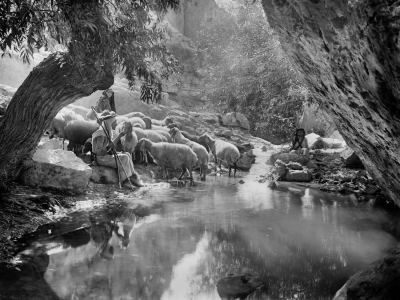
The imagery and tone of the Psalm are peaceful: “green pastures,” “quiet waters,” a restored soul, the promise of God’s presence even when death and darkness are near. The LORD is my shepherd: he provides, he guides, he restores, he is with his sheep, and he comforts.
“He makes me lie down in green pastures.” With God as my comforting shepherd, there is time to rest. Time to stop. Time to be still.
Image Credit: LifeintheHolyLand.com (Todd Bolen), used with permission
Typically a shepherd leads sheep to a pasture where they can graze. The sheep still do work; the shepherd does the leading but not necessarily the feeding. As the Psalm progresses, God as comforting shepherd becomes welcoming host, who sets out a whole banquet for his flock.
Image Credit: LifeintheHolyLand.com (Todd Bolen), used with permission
Psalm 23: It Just Got Personal
Psalm 23 is intensely personal. It’s a prayer of an individual to God; a song from one soul, who recognizes that the ruling king of the universe has taken the time to lead him to a restful spot to get a drink… to rest.
The LORD is my shepherd, I shall not be in want.
He makes me lie down in green pastures,
he leads me beside quiet waters,
he restores my soul….
David uses the first person singular pronoun throughout the Psalm. God is the shepherd of each individual who would follow him.
This may seem slightly unremarkable to us. We live in a North American society that already tends toward individualism. Our cultural construction of the self tends to be individually-focused.
The culture in which David found himself was much more communally-oriented. The sins of an individual and the corporate sins of the community were not always distinguished. A person’s sense of self was constructed and informed and shaped in a communal context.
Identity for a Hebrew man or woman had much more to do with being a part of a chosen and called-out community. A chosen people, plural.
Even in other Psalms, when God is prayed to as shepherd, there’s a sense in which he’s understood as a shepherd of a whole people:
For he is our God,
and we are the people of his pasture,
and the sheep of his hand.
So it’s at least a little remarkable, in the larger context of Hebrew worshiping society, that David begins–the Lord is MY shepherd.
The idea of God as personal shepherd is consistent with Jesus’ interpretation of himself as shepherd. You remember the Christlike image of the shepherd who–even though he has 100 sheep–will stop and go find the one who goes missing.
So it really is okay, and probably even closest to the original intent of this Psalm, to put your own name in there as you read it.
Psalm 23 as Prayer of Defiance
Maybe it’s because I’ve been reading this Psalm through the lens of the news this week, but I’m beginning more and more to see Psalm 23 not only as an affirmation of trust and confidence in God, but also as a counter-circumstantial prayer of defiance. It’s a subversive prayer when you compare it to what you see around you.
Verse 4 says, “Even though I walk through the valley of the shadow of death…” David seems to just take it as a given that life contains dark and death-filled valleys.
I saw in a bookstore yesterday a little book called 11,002 Things to Be Miserable About. It’s a work of satire, mostly, though not all of it is. Here are a few of the things it listed:
Exaggerated vows of love
Abysses of regret
Tipping over backward in your chair
The misery of goldfish
Heel pain caused by flip-flops
But we don’t need a book to think of all the ways in which life is full of dark valleys.
You’ve been in a dark valley before. Maybe you’re in one now. It can be a valley of darkness and shadows that you’ve found yourself in due to no choice of your own: some hurt or frustration someone has caused you; prayers that continue to go unanswered in the way you’d like to see answered; illness and physical ailment; unexpected and sudden grief.
You could be in a valley of darkness and shadows that is more of your own making, too. Maybe your whole life doesn’t feel like a valley, but maybe you’re aware of your “shadow side” that you wouldn’t dare bring to church, that part or those parts of you that you don’t want anyone to see. Maybe you’ve looked inside and seen something in your heart that—it pains you to see—doesn’t please God.
Or, to see some “valleys of the shadow of death,” you could just pay attention to global events this week. 4 children in Gaza—cousins—playing at the beach and shot dead from the ocean. An Israeli ground invasion into the Gaza Strip. Another Malaysian Airline plane crash full of passengers, this one shot down by a ground to air missile as it was flying over Ukraine.
And if you really want to lose some faith in humanity, you probably have already heard that that airplane had something like 100 of the world’s top HIV/Aids researchers on their way to an international Aids conference.
So, yes, there are plenty of valleys of the shadow of death and darkness that we walk through.
And yet, even though—“even though I walk through through the valley of the shadow of death, I will fear no evil, for you are with me.” “Even though,” David says, in a hope-filled prayer of defiance.
There’s an old story of a young preacher who was preaching in a rural church in Louisiana during the depression. This church had just one lightbulb coming down from the ceiling that gave light to the whole sanctuary. As Pastor Taylor was preaching, the electricity went out. He was a newish preacher and didn’t know what to do in the now-dark sanctuary. But an elderly deacon in the church, from the back of the room, shouted, “Preach on, preacher! We can still see Jesus in the dark.”
“We can still see Jesus in the dark.”
For whatever reason, when I hear “shepherd,” there’s part of me that thinks of a humble, young boy (or girl) walking sheep through beautiful country fields on a quiet, sunny day. And that’s right. Leading your sheep to serenity is part and parcel of what it means to be a shepherd.
But there’s this fascinating passage of Scripture, Micah 5, which says:
When the Assyrian invades our land
and marches through our fortresses,
we will raise against him seven shepherds, even eight leaders of men.
Maybe it’s just me, but reading about a coming invasion by an Assyrian superpower, my first reaction is: What kind of a country would send their shepherds out to battle?
But Micah is drawing on a rich tradition in the Scripture—especially in the Old Testament—of using “shepherd” imagery to describe kings, to describe commanders, to describe strong and mighty leaders.
When Micah says “shepherd,” he is talking about a ruling king who goes to battle for his people.
David, as a ruler himself, surely had this aspect of shepherding in mind. The readers and prayers and singers of this Psalm surely saw not just a shepherd to comfort me, not just a host to welcome me, but God as a ruler to protect me. This ruler won’t do away with all of life’s dark valleys—not yet, anyway—but he will be with me while I walk through them.
The Lord is my shepherd, and his rod and his staff—weapons of protection in the hands of a skilled shepherd—fend off that which would attack us.
When Jesus describes himself as the Good Shepherd, we see his gentleness in his willingness to lay down his life for the sheep, and we see his ferocity, his power, his authority over all things when he says, “No one can snatch them out of my hand.”
Even the presence of enemies in verse 5 cannot keep this ruling shepherd from playing banquet host, setting out a feast for the ones he loves.
So good shepherds are not to be trifled with, because they protect their flock. They walk with them through darkness. The Good Shepherd is a ruling king, and he keeps our modern-day enemies—shame, guilt, fear, anxiety, the accusations of others, stress, hatred… he keeps our modern-day enemies at bay. Even though life is full of valleys of the shadow of death, tens of thousands of things to potentially be miserable about, Jesus the Good Shepherd is a ruling king who STILL is sovereign over all he has made, no matter how fouled up it gets.
“We can still see Jesus in the dark.”
So—when you’re riddled with doubt and self-loathing, or just questioning your worth? Say this Psalm.
When you hear about wars and rumors of wars, say this Psalm.
When your best friend gets sick, say this Psalm.
When someone in your family grieves you by their seeming lack of care for you, say this Psalm.
When you don’t know what the next year of your life holds, say this Psalm.
When you have to do the hard work of reconciling with someone you have hurt or that has hurt you, say this Psalm.
When you can’t pay your mortgage on time, say this Psalm.
When you don’t want to get out of bed in the morning, say this Psalm.
When you get scared of the dark, say this Psalm.
As a holy act of defiance against the darkness,
as an affirmation of trust and confidence in Jesus,
when you come up on one of life’s dark valleys, get ready to walk through….and say:
The LORD is my shepherd, I shall not be in want.
He makes me lie down in green pastures,
he leads me beside quiet waters,
he restores my soul.
He guides me in paths of righteousness
for his name’s sake.
Even though I walk
through the valley of the shadow of death,
I will fear no evil,
for you are with me;
your rod and your staff,
they comfort me.
You prepare a table before me
in the presence of my enemies.
You anoint my head with oil;
my cup overflows.
Surely goodness and love will follow me
all the days of my life,
and I will dwell in the house of the LORD
forever.
The above is adapted from the sermon I preached today. Scripture quotations are from the 1984 NIV. See my other sermons gathered here, including the first Psalm of Summer sermon here.
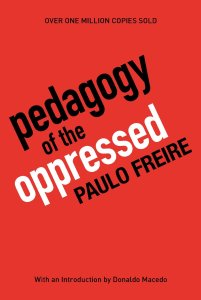
Some 12 years ago I wrote the following poem-prayer after reading Paulo Freire’s Pedagogy of the Oppressed and some of his other writing on the church. I found it again the other day so am posting it here:
Hasta que haya la paz, no descansaré. Hasta que las guerras cesen, no abandonaré la lucha. Hasta que la justicia reine, seguiré leyendo, predicando, y gritando. Hasta que haya una verdadera liberación humana, no dormiré. Que vengas, Jesucristo. Que venga tu voluntad y tu reino, como en el cielo, así también en la tierra.



 We don’t need much intellectual convincing of the value of Sabbath-keeping. We know that practicing the Sabbath follows God’s pattern of six days on, one day off. (Work and rest, work and rest… not: work and work, work and work.)








 Words on the Word