Change Your “Pas5w0rd,” Change Your Life

Psalms of Summer

This summer we’re going to delve more deeply into the Psalms. “The Psalms of Summer,” I’m calling the preaching series. (Or, as a pastor friend of mine called it, the Psalms of Psummer.)

We’ll find ourselves here in these poems and see our heart’s desires expressed in the Psalms. Some days we’ll walk out of church with new prayers to pray: prayers we’ve been longing to pray and have already been feeling, but maybe couldn’t put words to.

We’ll seek, too, to be shaped and formed by these prayers.

Psalm 1 as Preface, and Picking a Password

Psalm 1 is, as one early church theologian called it, the “foundation” of the house. It sets up the whole book of 150 Psalms. You could almost even think of it as a sort of “Psalm 0.”

The ones who are blessed, this Psalm says, the ones with the richest, most God-filled lives, the ones who flourish, are the ones who meditate on God’s word. Over and over.

Blessed are those… who delight in the law of the LORD and meditate on his law day and night.

I found myself this week being redirected to an article on NBC’s Today Website, because I had to click on the link that said, “How a password changed one man’s life for the better.”

And how can you not click on that, you know?

Mauricio Estrella had just gone through a painful divorce and was depressed. He says:

One day I walk into the office, and my computer screen showed me the following message:

“Your password has expired. Click ‘Change password’ to change your password.”

His work required a change of password every 30 days. He writes:

I was furious that morning. A sizzling hot Tuesday, it was 9:40 a.m and I was late to work. I was still wearing my bike helmet and had forgotten to eat breakfast. I needed to get things done before a 10 a.m. meeting and changing passwords was going to be a huge waste of time.

As the input field with the pulsating cursor was waiting for me to type a password — something I’d use many times during every day — I remembered a tip I heard from my former boss.

And I decided: I’m gonna use a password to change my life.

He reasoned like this–he has to type in his password several times a day–when his screen saver came up or his lock screen kicked in when he was away from his desk for extended periods of time.

So, freshly wounded from the divorce, he set a password: “Forgive her.”

Except he had to have at least one capital letter, one lowercase letter, one symbol, and one number, so it was “Forgive@h3r.”

Every day for a month he wrote, “Forgive her.” And Estrella said:

That simple action changed the way I looked at my ex wife. That constant reminder that I should forgive her led me to accept the way things happened at the end of my marriage, and embrace a new way of dealing with the depression that I was drowning into.

A month later, his password expired, so his new password–reflecting a new mantra he wanted to take on–became: Quit@smoking4ever.

It was a great article–a little self-help-y for my tastes, and it is true that we find ourselves in way too many situations that we can’t just positive think our way out of. But Mauricio Estrella knew what the writer of Psalm 1 knew–what we meditate on has the power to transform us. 

Two Ways

Here is one way of outlining Psalm 1:

What are the two ways? (Ps. 1:1-2)

What are they like? (Ps. 1:3-4)

What do they lead to? (Ps. 1:5-6)

This Psalm tells us, especially, that what we meditate on has the power to transform us.

What are the two ways? (Ps. 1:1-2)

Ps 1:1    Blessed are those
who do not walk in step with the wicked
or stand in the way that sinners take
or sit in the company of mockers,

2 but who delight in the law of the LORD
and meditate on his law day and night.

Or, get this–I’d never read Psalm 1 in this translation until this week:

Happy the man
who did not walk by the counsel of the impious,
and in the way of sinners did not stand,
and on the seat of pestiferous people did not sit down.

(Stay away from the pestiferous ones!)

Walk… stand…sit. There’s a progression into wickedness here. At first you might be walking on by, just taking a look at–thinking about–going down a road you shouldn’t. If you slow down enough to stand there and look at the way of the wicked–that’s worse… when you stop to sit in the chair of those pestiferous people, well, then… you’re done for. Because what we meditate on has the power to transform us. And the ones that we spend time with also have the power to transform us, for better or for worse.

These are the two ways: the way of the wicked, the way of the righteous.

Righteous ones “delight in the law of the LORD and meditate on [it] day and night.”

Remove@clothingm1ldew?

Later Psalms will echo this. In Psalm 119, verse 97, it says, “Oh, how I love your law! I meditate on it all day long.” Then in verse 103, the Psalmist writes, “How sweet are your words to my taste, sweeter than honey to my mouth!”

I suspect that this idea of loving the law of God can sound a bit strange to us. We all see the value in laws and rules and regulations, sure, but to love somebody’s laws more than the summer season’s first ice cream?

We hear the word “law” and might think about some of the detailed instructions given in, say, Leviticus, regarding physical hygiene and ritual purity, such as Leviticus 14, which is about cleansing from infectious skin diseases and what to do when you notice mildew on your clothes.

So your new computer password becomes: Remove@clothingm1ldew.

Or we hear the word “law” and think of it as opposed to “grace.”  They were living under “law”; we are living under “grace.”

So what’s the Psalmist talking about?

He’s talking about his equivalent to our Bible. The Torah–the first five books: Genesis, Exodus, Leviticus, Numbers, Deuteronomy. This is “the Law”–it’s “God’s Word.” And not just the laws part of God’s law–but the revelation of God that it brings, the story that it tells of a compassionate God who is, in fact, slow to anger and eager to show compassion on all he has made.

In meditating on God’s law–God’s very words–the Psalmist is meditating on God: his guidance, instructions, blessings, love, character.

And I think Psalm 1 is self-referential, too–those who meditate on these Psalms will be blessed, will experience the favor of God.

What are they like? (Ps. 1:3-4)

3 [The righteous] are like a tree planted by streams of water,
which yields its fruit in season
and whose leaf does not wither—
whatever they do prospers.

4
Not so the wicked!
They are like chaff
that the wind blows away.

Those who meditate on God’s word are rooted, strong, nourished, bearers of good and visible fruit to all who walk by them. The wicked–in this case those who ignore God’s truth and go their own way–they are the chaff that has fallen to the floor. The grain is kept and preserved, the chaff just blows away. No roots, no fruit, no nothing.

What do they lead to? (Ps. 1:5-6)

5 Therefore the wicked will not stand in the judgment,
nor sinners in the assembly of the righteous.

6 For the LORD watches over the way of the righteous,
but the way of the wicked will be destroyed.

Then in verses 5 and 6 there is what one interpreter calls a “parting of the ways.” God watches over them. What we meditate on has the power to transform us, so the righteous one now is a rooted and well-watered tree, bearing fruit like it should. She or he receives God’s blessing, God’s preservation.

The wicked one has been transformed by the bad company he keeps, so he just floats away with the next wind, on his way to judgment.

It’s God who does the planting and watering and blessing here, but it’s the righteous person who has done his or her part to meditate on God’s word. And that meditation has caused a transformation.

Scripture Memory

Over the last month or so I’ve gotten back into Scripture memory. I have these little cards I bring in my pocket with verses on them. The pocket is a great place for them because I might reach for my phone to check for messages, and I’ll feel the little packet of cards instead. This is a prompt for me to either pull a card out and learn a verse, or if I already know it, to try to say it and pray it.

There are many ways to meditate on God’s Word. We’re going to try one particular way this summer, and that is Scripture memory….

[AKJ note: Here we looked at some Scripture memory cards I made up for Psalm 1:1-2, as a way to put into practice what this Psalm preaches. Make your own, using this document, if you want!]

The above is adapted from the sermon I preached last Sunday. Scripture quotations are from the TNIV. See my other sermons gathered here.

Mother Teresa: Some Difficult Words

Mother TeresaThese are good but difficult words from Mother Teresa. They were noted today on Plough, the Website where I mentioned finding the free Oscar Romero book. I’ve just subscribed to Plough Quarterly and am already enjoying the content of the site greatly.

Today I came across this arresting, powerful, and difficult quote from Mother Teresa:

God cannot fill what is full. He can fill only emptiness – deep poverty – and your “yes” [to Jesus] is the beginning of being or becoming empty. It is not how much we really “have” to give – but how empty we are – so that we can receive fully in our life and let him live his life in us. In you today, he wants to relive his complete submission to his father – allow him to do so. Take away your eyes from yourself and rejoice that you have nothing. 

The Bible’s Other* Hymnal

Psalms with OdesMany Greek Septuagint manuscripts do not contain them, but the Odes are a fascinating collection of texts appended to the end of the Greek Psalter in Codex Alexandrinus and a few other manuscripts.

The Odes compile some beautiful prayers from Scripture. A few of them are in the Book of Common Prayer’s Morning Prayer canticles.

Good information on the Odes is hard to come by, though. In part this is because they are generally not accorded the same status as, say, the Psalms. The NETS introduction to the Psalms, for instance, has:

One “book” not included in NETS, however, is Odes since it has dubious integrity as a literary unit, and, in any case, almost all of the individual Septuagint odes have already been included in their native setting in other books. The sole exception is Ode 12 in Rahlfs’ edition, the Prayer of Manasses, which for that reason has been separately appended to the Psalter.

I’ve just discovered, however, that David Lincicum has a nice rundown of the Odes, their numbering, and their contents. He also includes a bibliography for further reading. Check it out here.


*HT to a member of the Yahoo! LXX email group for the idea of the Odes as a sort of “little hymnal.”

“O God, is this any way to run a world?”

Psalms of Lament

Whether it’s another school shooting, a cancer diagnosis, an unjust imprisonment, violence perpetrated against the peaceful, or an unkind word that brings tears to the eyes of the one who received it… there’s a lot to lament in this world–too much.

A year-and-a-half ago I read a fantastic book called Psalms of Lament by Ann Weems (see more here). I continue to come back to her modern-day lament psalms from time to time. Of course, it’s hard to top the lament psalms in the biblical book of Psalms, so really Weems and David go together. I appreciate the freshness with which Weems approaches the important practice of lament.

Weems tragically lost her son just after his 21st birthday. It is out of that sense of loss and grieving that she writes many of her lament psalms. She says:

This book is not for everyone. It is for those who weep and for those who weep with those who weep. It is for those whose souls struggle with the dailiness of faithkeeping in the midst of life’s assaults and obscenities. This book is for those who are living with scalding tears running down their cheeks.

So if you are weeping right now, or weeping with someone who is weeping… or if you feel like maybe you should be weeping but can’t, or don’t know how… here is Weems’s Lament Psalm Thirty-two (posted with publisher’s permission), which can help to give shape and voice to a heartfelt prayer of lament:

O God, explain to me
the cruelty of your world!
Make sense of those
who make no sense!
Tell me why the innocent die,
and evil people live
to kill again!
Tell me why the faithful
are shunned,
and the self-righteous
point their fingers!
Tell me why the wounded
are wounded,
and sorrow falls
on the shoulder of sorrow!
Tell me why the abused
are abused,
and the victims
victimized!
Tell me why the rains
come to the drowning,
and aftershocks
follow earthquakes.
O God, is this any way
to run a world?
O Merciful One, let us rest
between tragedies!

Speak to us
for we are your people.
Speak to us of hope
for the hopeless
and love for the unloved
and homes for the homeless
and dignity for the dying
and respect for the disdained.

Speak to us, O God,
of the Resurrected One!
Speak to us of hope,
for in spite of
the tidal wave of tears,
we remember your story
of new life!

Tell the world again,
O God of creation!
Tell us that winter will fade,
and spring will wash us new,
and the world will green again,
and we will be new creations
in the garden of our God.
Free us from these tentacles
of sorrow,
and we will fall on our faces
and worship you,
O God of goodness,
O God of a new green world!

Hashtag Praying as Activism? #LetHerGoFree (Meriam Yehya Ibrahim)

Meriam-Ibrahim

A little more than a month ago a 27-year-old woman, Meriam Yehya Ibrahim, was sentenced to death by the Sudanese government for not recanting her Christian faith in favor of Islam. She has a just-under-two-year-old son and was eight months pregnant at the time of her arrest. (She has since given birth, in prison.)

Were the sentence to be carried out, she would have been a martyr in her death, but she is already even now a martyr in life.

Yesterday her appeal to have the sentence overturned was accepted by a higher court. She was released.

But frustratingly, the BBC reports today that she has been detained:

About 40 security agents detained Mrs Ibrahim – along with her husband, Daniel Wani and two children – at the airport, the sources said.

You can read the whole article here.

If you are inclined to join me, as I post any more about Meriam Yehya Ibrahim on Facebook and Twitter, I’ll use the hashtag #LetHerGoFree. See here.

I have my own qualifications and occasional reservations about so-called hashtag activism, but hashtag praying as activism seems a good way to go. Among all the other factors that led to Ibrahim’s being freed in the first place, I’m convinced that prayer played a major role. So let’s keep it up. And–dear God–please, let her go free!

Before and After #NoFilter

A sermon on Romans 6:1-11, on the day of ocean baptisms.

I’ve always been a little suspicious of Before and After photos. It’s as if Before photos are bad on purpose, and After photos do everything they can to try to enhance the actual improvements that have taken place, whether the subject is a human body or a newly improved, re-stained back deck.

I just found an article about a Before and After set of photos of an Australian fitness trainer. On first glance the After photo looks like about three months worth of exercise and nutritional improvement, compared to the Before.

Before and After

But, in fact, one scrolls down past the Before and After to see a note: “Check out my transformation! It took me 15 minutes.” Meaning, the Before and After photos were 15 minutes apart.

A paragraph accompanying the photos goes on, in part:

Wanna know my secret?  I…. smothered on some fake tan, clipped in my hair extensions, stood up a bit taller, sucked in my guts, popped my hip, threw in a skinny arm, stood a bit wider…pulled my shoulders back…Zoomed in on the before pic, zoomed out on the after and added a filter. Cause filters make everything awesome.

It seems that actual transformation–whether it’s of our bodies or of our inner selves–is elusive. We often try to short-change the process, or make things look better than they really are. And yet it’s a burning human desire to be different, to look better, to grow, to change.

Paul’s Before and After

The apostle Paul understands that. He speaks in Romans 6 of true transformation, a fundamental shift in the selfhood of the one who believes in Jesus. There is no doctoring of Before or After photos needed, because the picture of transformation that Paul paints is the most real kind of personal change there is.

For we know that our old self was crucified with him so that the body of sin might be done away with, that we should no longer be slaves to sin—because anyone who has died has been freed from sin.

When we give ourselves to Jesus, we understand that sin does not rule over us. We are free from having to sin. We are free from the inevitability of it.

In the same way, count yourselves dead to sin but alive to God in Christ Jesus.

Even as we are being sanctified, we’re far from sinless–and the next chapter in Romans will emphasize this frustrating reality. But we are to consider ourselves dead to sin, or, we might say, that sin is dead to us, because we are “alive to God in Christ Jesus.”

This is “Before and After” for the child of God:

Before: living in a body of sin, slaves to sin, an old, listless, aimless self.

After: dead to sin, alive to God, united with Jesus in his death, and so united also with him–and other Christians–in his resurrection glory, in new life.

This true transformation, the Christian’s inward change, Paul points out, is marked by baptism:

Or don’t you know that all of us who were baptized into Christ Jesus were baptized into his death? We were therefore buried with him through baptism into death in order that, just as Christ was raised from the dead through the glory of the Father, we too may live a new life.

The old self walks to the edge of the water, wades in, is dipped under–washed in the ocean of God’s love and forgiveness–and the new self comes up, freed to live a new life in Jesus.

Or as God’s prophet Ezekiel so eloquently put it:

I will sprinkle clean water on you, and you will be clean; I will cleanse you from all your impurities and from all your idols. I will give you a new heart and put a new spirit in you; I will remove from you your heart of stone and give you a heart of flesh.

What Baptism Is

Baptism is a physical, visible, experiential sign of this inward transformation that takes place when a person says, “Yes,” to the gift of God’s grace.

In just a few moments I will ask our candidates, “Do you renounce the powers of evil and desire the freedom of new life in Christ?” They will say, “I do.” Before: we were slaves to sin, afraid to even try to cast off the “powers of evil.” Or maybe we didn’t want to. After: we have renounced those powers. We celebrate our freedom. We have new life in Christ.

Also in just a few moments, all of us, as a congregation, will say: “Out of the waters of baptism, we rise with new life, forgiven of sin, and one in Christ, members of Christ’s body.” We affirm this “Before and After” that baptism represents, and we do it in a larger, communal context. We are “one in Christ, members of Christ’s body.”

Ancient Baptismal Pool (Source: Zondervan Illustrated Bible Backgrounds Commentary)

As we’ve gone through our high school confirmation class last month and this month, we’ve been talking about baptism and confirmation as a multi-faceted commitment. On the one hand, baptismal candidates and confirmands are themselves making a public commitment to God in the presence of us, the church. And on the other hand, we promise our commitment to them as they seek to carry out their baptismal vows. Ultimately, the waters of baptism signify God’s commitment to us to continue and one day complete his work in us.

So please do support these young people who are about to be baptized, as best you are able. When they go out of state for college and then come back on breaks to worship here, ask them how they’re doing–not just in school, but in their relationship to God. Seek them out during coffee hours in future Sundays. Commit to pray for them. You might even pick one or two of the folks you see being baptized today and decide that you will pray for them by name, for the next month, six months, two years.

Identity

We began our confirmation class with a short teaching video and discussion centered around the question, “Who Am I?” How do I understand my identity as a person? We watched and discussed a short video by a teacher from Grand Rapids, Michigan named Rob Bell.

Bell talked about our tendencies to compare ourselves with others, to measure ourselves against those around us. As he talked, the camera followed a cast of actors who had t-shirts with a single word printed on the back: baker, consultant, double degree, Southern, apathetic, ashamed, listener… single words that can define how we think about ourselves, especially in relation to others.

But Bell says:

We need to be saved from all the times we haven’t been our true selves. All the times we’ve tried to be someone else.

All of the lies we’ve believed about who God made when God made us. All the times we’ve asked the wrong questions:

‘What about him? What about her? What about them?’

And we’ve missed the voice of Jesus saying, ‘You, follow me.’

To those who are about to be baptized, I want to say, this is who you are: one who is loved dearly by God, one who is saying “yes” to Jesus’ invitation to follow him. You are choosing to not miss that voice. You are saying, “Yes, I will follow.”

Your decision to be baptized means that you are affirming your identity in Jesus–as one who is “forgiven of sin, and one in Christ with the members of Christ’s body, the church.” “The old has gone, the new has come,” as Scripture says. Baptism is a physical sign of the ultimate “Before and After” transformation.

Remember Your Baptism

This Baptism Sunday is also a chance us who have already been baptized to remember our baptism. We know that we at times wander away from God, but we can never be un-baptized. We always come back to our fundamental identity as ones forgiven by God’s grace, and given new life.

So, whether your baptism was years ago or is about to happen today: remember your baptism.

Whenever you look at the ocean, may God remind you of the cleansing, washing power of his forgiveness.

May the vast waters call to mind the immensity and intensity of Christ’s love for you.

Remember who you were before you said “yes” to following Jesus, but especially remember the new life to which you are now called.

Just as Jesus Christ died, was buried, and rose again, “In the same way, Paul says, “count yourselves dead to sin but alive to God in Christ Jesus.

Scripture quotations above are from the 1984 NIV. See my other sermons gathered here.

Free Oscar Romero Book (The Violence of Love)

Violence of Love

“Beautiful is the moment,” Archbishop Oscar Romero said, “Beautiful is the moment in which we understand that we are no more than an instrument of God; we live only as long as God wants us to live; we can only do as much as God makes us able to do….”

The book above–La Violencia del Amor, or, The Violence of Love–is available as a free download from the publisher, here (Spanish) and here (English).

Highly recommended reading.

Because I Said So

We fathers and mothers learn early on, in our roles as parents, that “Because I said so” isn’t usually enough to get a determined child to change course and listen.

It’s the same thing your parents said to you, that you swore you’d never say as a parent. At the same time, you do want your own children to know that you have authority over them, as a parent.

Whether this ends up being an effective parenting move or not, it’s difficult, especially in moments of desperation, to not just point to our own authority as parents. “I’m the dad, you’re the son, you listen.”

Jesus’ Authority–“Because I Said So”?

rublev trinityIt’s fitting that on this Father’s Day, today in the liturgical church calendar is Trinity Sunday.

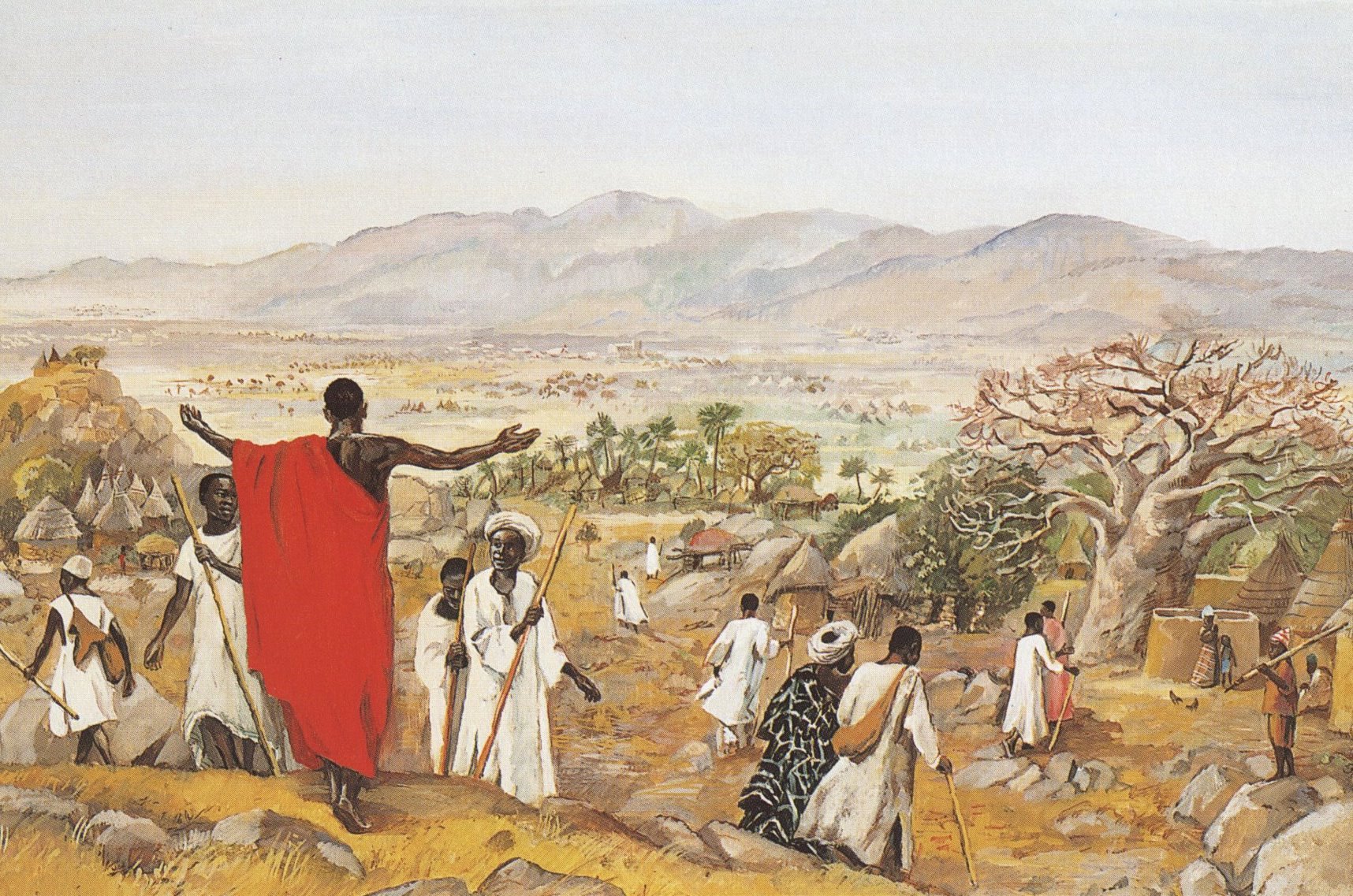
The so-called Great Commission in Matthew 28 includes an appeal to baptize disciples in the three-fold name of the Trinity: Father, Son, and Holy Spirit. To be a disciple of Jesus is to enter into communion with a God who is one God, three persons. To be a disciple also means to learn Jesus’ teachings, and then pass them on to others to follow.

19 Therefore go and make disciples of all nations, baptizing them in the name of the Father and of the Son and of the Holy Spirit, 20 and teaching them to obey everything I have commanded you.

As many times as I’ve heard this passage, growing up in the church, I was especially struck this time around by the single word, “Therefore.” “Therefore” is a word that points ahead to what’s next in the sentence, but it also points back to something. X is true. Therefore, Y and Z.

Therefore, Jesus says, “go and make disciples.” On what basis is Jesus calling his disciples to go make more disciples, to essentially replicate themselves?

18 Then Jesus came to them and said, “All authority in heaven and on earth has been given to me.  19 Therefore go….

It would be easy to read this as the sort of move that fathers and mothers make when we want to try to ensure that we’re going to be obeyed.

“Because I said so….” “Because I am Jesus.…” “Because I have authority, you need to listen to me and make disciples….”

Matthew does tell us, after all, in verse 17

17 When they saw him, they worshiped him; but some doubted.

What’s especially disheartening about this is the fact that the sum total of disciples who are with Jesus for this important commissioning is… 11. Judas has committed suicide at this point, so they’re down a guy… they’re short-handed. And then, how many doubted? 2? 3? 5?

Maybe, since Jesus knew of their doubt, maybe he had to say, “Look–all authority has been given to me. So you need to listen to what’s next.”

Some of you grew up in an era in which our country was experiencing an allergic reaction to authority. Some of you, no matter when you were born, may recoil a bit at the very use of the word “authority,” especially when it shows up in a relational context.

I wonder, too, especially about those doubting disciples–usually for those who are doubting, second-guessing, wondering, calling into question… usually for somebody like that, an appeal to authority goes nowhere fast.

Jesus’ Authority–He Goes Before Us Through the Holy Spirit

I’m not convinced that’s what Jesus is doing here. His disciples were spiritually dim-witted at times, like we can be, but I’m not so sure he’s appealing to his authority just so that they will listen to him.

See–Jesus knows he’s about to give the disciples a tall order. He knows before he commissions the disciples, that even two thousand years later, some Christians will have a hard time with the “d”-word: discipleship. Or the “e”-word: evangelism.

Jesus has doubters in his midst, among the 11. And he’s supposed to start a worldwide missionary movement out of them!

The Mission to the World by JESUS MAFA (1973)

Preacher and writer Tom Long puts it like this:

Telling this little band of confused and disoriented disciples that they were to herd all the peoples of the earth toward Mount Zion in the name of Jesus would be like standing in front of most congregations today—many of them small and all of them of mixed motives and uncertain convictions—and telling them, ‘Go into all the world and cure cancer, clean up the environment, evangelize the unbelieving, and, while you are at it, establish world peace.’

Long goes on:

That is the point, or close to it. The very fact that the task is utterly impossible throws the disciples completely onto the mercy and strength of God. The work of the church cannot be taken up unless it is true that “all authority” does not belong to the church or its resources but comes from God’s wild investment of God in Jesus the Son and the willingness of the Son to be present always to the church in the Spirit.

Jesus’ mention of his authority isn’t a power play–it’s an encouragement, a life-giving reminder, a move that enables his disciples to go.

Jesus’ authority has just been established by his resurrection from the dead. Alfred, Lord Tennyson once wrote, “Authority forgets a dying king.”

But Jesus was no dying king. Or, at least, he was a dying king who didn’t stay dead. He is the Risen King!

If Jesus has power over death, he has power over all of life. And if he has power over all of life, he has power and influence over all who are living. And if he has power and influence over all who are living, there is nowhere his disciples can go that he has not already been.

There is no heart that God cannot soften. There is no human being that is beyond the reach of God’s saving love in Jesus.

Jesus has authority over all people everywhere. As Ephesians would later put it, God the Father “raised Christ from the dead and seated him at his right hand in the heavenly realms, far above all rule and authority, power and dominion, and every name that is invoked, not only in the present age but also in the one to come.”

Because of Jesus’ authority, his power, his rule… disciples who are commissioned to draw others into the life of faith do not have to be scared to do it.

Jesus empowers his followers, by his authority, to fulfill the Great Commission.

Furthermore, after the Great Commission there is the promise of Christ’s presence:

And surely I am with you always, to the very end of the age.

This is an upgrade. Jesus was not actually “with” the disciples “always” before he said this. He often went off by himself to pray. He didn’t engage everyone who wanted his attention. He wasn’t with the disciples always.

But now, there is this new promise, a promise we saw fulfilled in our Acts passage last week, when the Holy Spirit came at Pentecost.

Through the power of the Holy Spirit, Jesus is present with us always, and will be present always with his disciples until the end of time.

All authority is his, and he is always with us. Therefore, we can preach.

Jesus empowers us, by his authority and his presence, to fulfill the Great Commission.

Through the presence of the Holy Spirit, Jesus goes ahead of us. God works on hearts before it even occurs to us to reach out to another. If we want to use the language of “witnessing” to others about our faith, that’s fine, but only if we remember that we are really the second witness.

The Holy Spirit is the first witness, preceding us everywhere, making it possible for us to witness to the goodness of God in our own lives.

We can call to mind again the idea of evangelism and disciple-making as “one beggar telling another beggar where to find bread.” We ourselves are not the bread, but we know where the bread is found.

And so, undergirded, strengthened, and equipped by Jesus, we can say, “Come, taste and see. Come and see what I have found.”

Don’t Be Great, Just Have a Great Message

Jesus empowers us, by his authority and his presence, to fulfill the Great Commission. He equips us to do what he calls us to.

And we don’t have to be “great” to go out in faith to try to build a kingdom of disciples for Jesus.

It’s reported that Graeme Keith, a lifelong friend of evangelist Billy Graham and treasurer of the Billy Graham Association, was once riding in an elevator with Billy Graham. Another passenger got in and recognized Graham: “You’re Billy Graham, aren’t you?”

“Yes,” said Billy Graham.

“You’re a truly great man,” the guy said.

“No, I’m not a great man,” Graham replied, “I just have a great message.”

Great or not, courageous or not, fully comfortable with what this passage calls us to or not–we have a great message. And Jesus empowers us, by his authority and his presence, to deliver it, near and far. Because he said so–because he ultimately has authority over every living person, because he goes before us, we can go and witness to our God.

It would be daunting to share the good news of God’s love with others if we had no backup, if we were cutting a new trail. But Jesus promises to go ahead of us and walk beside us, always.

The above is adapted from the sermon I preached on Matthew 28:16-20 today. Scripture quotations above are 1984 NIV. The second image in this post is used and covered under the Creative Commons Attribution Noncommercial ShareAlike 3.0 License.

Holy Spirit Power

With the omission of the Holy Spirit and demon monkey dream I described having in college, the below is adapted from the sermon I preached on Acts 2:1-21 today. (Message me if you’re curious about the dream.) You can read the Acts text here. Scripture quotations below are 1984 NIV.

Surprise Birthday Parties

Party HornIf you’ve been to a surprise birthday party, you know how much fun it is. Whether you’re the one lying in wait for your unsuspecting friend or family member, or the one about to be surprised… it’s hard to match the buzz of a room waiting to yell, “Surprise!”

There’s some nervousness and jitteriness involved, too. You’re gathered to celebrate someone who could walk in at any moment, but you’re not sure when. She’s here–oh, wait. That’s just a late arrival.

Waiting for God to Come

The disciples in Acts 2 had gathered on the day of Pentecost–“all together in one place,” the text says.

They had gathered, in part, to celebrate a Jewish festival. Pentecost was the Greek name for the Feast of Weeks, one of three major yearly celebrations the people of Israel observed. It came 50 days after Passover. In this Feast of Weeks, or Pentecost, the people offered God their gratitude for the crops that had come in.

Jerusalem was hopping. There were lots of pilgrims there, a whole host of international visitors, to observe the feast.

Jesus’ followers, who were Jewish, were gathered, “all together in one place,” for this festival of Pentecost.

But they had convened to worship for another reason. They were waiting for something–waiting for someone.

The disciples must have felt that same anticipation you have when you’re waiting to blow your party horn, but your expected guest is still maybe a ways off.

The disciples were waiting for the Holy Spirit.

In Acts 1, the risen Jesus–as he was about to ascend into heaven–had said something rather provocative to them. He had made an intriguing promise:

Do not leave Jerusalem, but wait for the gift my Father promised, which you have heard me speak about. For John baptized with water, but in a few days you will be baptized with the Holy Spirit….

[Y]ou will receive power when the Holy Spirit comes on you; and you will be my witnesses in Jerusalem, and in all Judea and Samaria, and to the ends of the earth.”

A baptism with the Holy Spirit–you will receive power, and the result would be an international witness, to the ends of the earth.

So the idea of a birthday party at Pentecost is fitting. Except the Holy Spirit wasn’t the one born then. The Holy Spirit has been with the Father and the Son from all eternity. The Christian church as we know it was born on Pentecost. On that day the church received a special gift for which it had been waiting: The Holy Spirit. As presents go, it doesn’t get any better than that.

In the power of the Holy Spirit, the church began its mission of preaching the Gospel to all nations.

The Ultimate Power Source

“[Y]ou will receive power when the Holy Spirit comes on you….”

Talk about power. It says:

Suddenly a sound like the blowing of a violent wind came from heaven and filled the whole house where they were sitting. They saw what seemed to be tongues of fire that separated and came to rest on each of them. All of them were filled with the Holy Spirit and began to speak in other tongues as the Spirit enabled them.

Though Scripture speaks elsewhere about speaking in tongues as possibly being its own sort of heavenly language, in this passage, the disciples actually start speaking other languages!

It’s like an instant upload of Pimsleur into their brains and mouths.

And the Holy Spirit came “suddenly,” Acts says. The disciples didn’t conjure God’s Spirit and make him appear. The Spirit just came.

This reminds us of what we usually know, but often forget: our lives can change in an instant. In a second, God can descend on you, infuse you with the Holy Spirit, and set you on a completely new course. He may not choose to work this way all of the time, but it is possible–well within his power.

As the disciples spoke a catalog of languages, a bewildered crowd asked:

Are not all these [people] who are speaking Galileans? Then how is it that each of us hears them in his own native language?

The Linguistic Territory Acts 2 Covered (Source: Zondervan Atlas of the Bible)

Presumably, this rag-tag, humble, scared, not highly educated gathering shouldn’t know this many languages between them. They’re not world-traveling, cosmopolitan polyglots!

But…

[Y]ou will receive power when the Holy Spirit comes on you; and you will be my witnesses in Jerusalem, and in all Judea and Samaria, and to the ends of the earth.

When the Holy Spirit comes on you, you receive a new power that allows you to do what you couldn’t do before. The Holy Spirit is the ultimate power source, the provider of strength to even weak and confused Christians.

We who have accepted Jesus’ invitation to walk with him, by virtue of our new life in Christ, receive the Holy Spirit that the church received on Pentecost.

Being a Christian means you have the Holy Spirit living in and with you.  And with the Holy Spirit comes supernatural power.

You … receive power when the Holy Spirit comes on you, so that you may prevail against what Ephesians calls “the rulers, against the authorities, against the powers of this dark world and against the spiritual forces of evil in the heavenly realms.”

You … receive power when the Holy Spirit comes on you, so that you may be strengthened in the core of your being (Ephesians 3:16).

You … receive power when the Holy Spirit comes on you, “so that you may abound in hope,” Paul would later write, “by the power of the Holy Spirit.”

You … receive power when the Holy Spirit comes on you, so that you can produce the fruit of the Spirit (Galatians 5:22-23): “love, joy, peace, patience, kindness, goodness, faithfulness, gentleness and self-control.”

You … receive power when the Holy Spirit comes on you, so that you will have the right words to say in a difficult conversation that would otherwise stump you.

You … receive power when the Holy Spirit comes on you, so that you will have patience–supernatural patience–when you’re at your wits end.

You … receive power when the Holy Spirit comes on you, so that you may heal the brokenhearted around you, with the healing power of God’s love.

You … receive power when the Holy Spirit comes on you, so that you can share the good news of Jesus, even if the thought of mentioning Jesus by name to somebody else makes you a little squeamish.

After all, if the Holy Spirit can give fluency in languages to the disciples, so they can praise God in dialects that others understand… the Holy Spirit can surely give us words to tell other people about Jesus.

You … receive power when the Holy Spirit comes on you, so that we can transform this world more into the place God wants it to be.

Desire the Holy Spirit

Did the disciples fully understand what Jesus meant when he promised “the Holy Spirit”?

I’m not sure. But they were waiting for the fulfillment of that promise–not passively, but proactively. After Jesus’ ascended into heaven, Acts says, “They all joined together constantly in prayer.”

They desired the gift of the Holy Spirit. They wanted that power, so that they could be God’s witnesses near and far.

This Thursday our almost-four-year-old son had his closing program at his pre-school.

Everyone in his class with summer birthdays had received a birthday pin earlier this week. It’s a dove with a cross behind it. “A Holy Spirit pin,” they call it.

The closing program this last Thursday was every bit as cute and funny and well-performed as you’d expect from a well-coached group of exuberant pre-schoolers. Our son seemed to enjoy the program until we were talking afterwards, when he realized… he couldn’t find his Holy Spirit pin.

So he said: “I want my Holy Spirit! I want my Holy Spirit! I want my Holy Spirit right now!”

We knew where the pin was–not there with us. So we consoled him with this fact and gave it to him later, at which point he happily showed his big brother: “my Spirit!”

He sure desired that Holy Spirit pin and all the significance that it held for him.

You will receive power when the Holy Spirit comes on you.

The Holy Spirit has come, giving birth to the church at Pentecost.

The Holy Spirit is with us here, as we gather in one place to seek the Lord.

The Holy Spirit lives inside each one of us who has acknowledged Jesus as Lord.

We who have the Holy Spirit have the Holy Spirit’s power. Power to hope. Power to bear good fruit, to live lives of exemplary Christian character.

We who have the Holy Spirit have the Holy Spirit’s power to speak words of wisdom at just the right time. Power to be patient when we least feel able. Power to heal. Power to love. Power to prevail over the forces of darkness and evil.  Power to proclaim the good news of Jesus to people from all nations, vocations, and walks of life.

We receive power from the Holy Spirit–power that comes even and especially in our weakness. Power to face each new day.

Let us desire the Holy Spirit. Let us want the Spirit and his power. Let us admit to each other and to God our need to live lives that are wholly directed by the Holy Spirit’s power. Let us pray together, in this sacred space, “Come, Holy Spirit.” Let us pray when we are apart, every hour of every day, “Come, Holy Spirit.”

As we wait for God–even if we’re not sure of what might happen when we pray this way–let us say, as Christ’s gathered church: “Come, Holy Spirit.”

One Year to Better Preaching

One Year to Better Preaching

Here’s a recommended preaching resource for you: One Year to Better Preaching: 52 Exercises to Hone Your Skills, by Daniel Overdorf (Kregel, 2013).

A couple of weeks ago I reviewed the inspiring Preaching in an Age of Distraction. Whereas that book took a largely big picture approach, building on itself chapter by chapter, One Year to Better Preaching contains 52 exercises (plus a few “Bonus Exercises”) that give preachers a tangible, nuts-and-bolts set of practices to engage.

Overdorf wants to help preachers “sharpen preaching skills.” Just “an hour or two of effort” is required for most of these practices, so it’s an easy book to pick up, get right into, and use right away in preparing next week’s sermon.

The 52 exercises can be weekly ones for a year, or can easily be spread out over more than a year. Overdorf wisely suggests that preachers could focus on exercises that help them overcome their particular preaching weaknesses.

To try to achieve a “process similar to cross-training,” the 52 exercises are grouped into eight categories:

  1. Prayer and Preaching
  2. Bible Interpretation
  3. Understanding Listeners
  4. Sermon Construction
  5. Illustration and Application
  6. Word Crafting
  7. The Preaching Event
  8. Sermon Evaluation

Exercises include an introduction and setup to that exercise, a description of the exercise itself, an “I Tried It” testimonial section, and “Resources for Further Study.” A preacher could easily make the benefits of this book stretch out beyond a year.

To take just one example, Exercise Two, “Balance Your Biblical Diet,” suggests that preachers be sure they are preaching from both Testaments and from a variety of literary genres. Overdorf suggests charting out recent sermons to see where they fall, and shows a chart of his last 175 sermons in various biblical genres as an example. As balance in this sense is one of my preaching priorities, I appreciated this section.

Overdorf also makes the welcome suggestion that even a preacher’s illustrations be well-balanced:

Additionally, you may consider charting your recent illustrations. What aspects of life have you used most to illustrate biblical truth? How many illustrations have come from the world of sports? From your family? How many stories have you told from the Civil War, or from popular movies? How often have you quoted Tozer, Bonhoeffer, or your favorite contemporary authors?

Other exercises that I found helpful (and have tried put to use in the pulpit) have been: “Show, Don’t Tell” (on phrasing), “Have Listeners Evaluate You,” “Listen to a Storyteller,” and especially, “Craft Evocative Words.”

Despite how truly thorough the book is, one lack I noticed was any mention of the lectionary. For as many preachers as use the lectionary, some reference to it would have been useful. Or especially for preachers who don’t ever use the lectionary, suggesting they at least try it for a while would have been a good exercise.

One Year to Better Preaching is the kind of book you put right on your desk (not your bookshelf) where you can reference it repeatedly. I’m looking forward to continuing to mine its riches in the weeks and months of preaching ahead.

Thanks to Kregel for the review copy, offered with no expectation as to the content of this review. Find the book on Amazon here (affiliate link), at Kregel’s site here, and check out a pdf sample of the book here.