“Beautiful is the moment,” Archbishop Oscar Romero said, “Beautiful is the moment in which we understand that we are no more than an instrument of God; we live only as long as God wants us to live; we can only do as much as God makes us able to do….”
The book above–La Violencia del Amor, or, The Violence of Love–is available as a free download from the publisher, here (Spanish) and here (English).
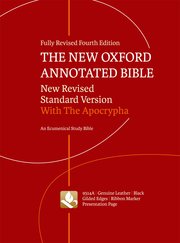
On the top of my bookshelf at home sits an old, falling-apart, heavily marked-up edition of The New Oxford Annotated Bible. So it has been with anticipation and appreciation that I’ve been able to use the The New Oxford Annotated Bible in its most current, 4th edition.
What the Annotated Bible Is
The Bible text in The New Oxford Annotated Bible is the New Revised Standard Version (NRSV). I’ve always appreciated this translation’s blend of readability and fidelity to the original languages.
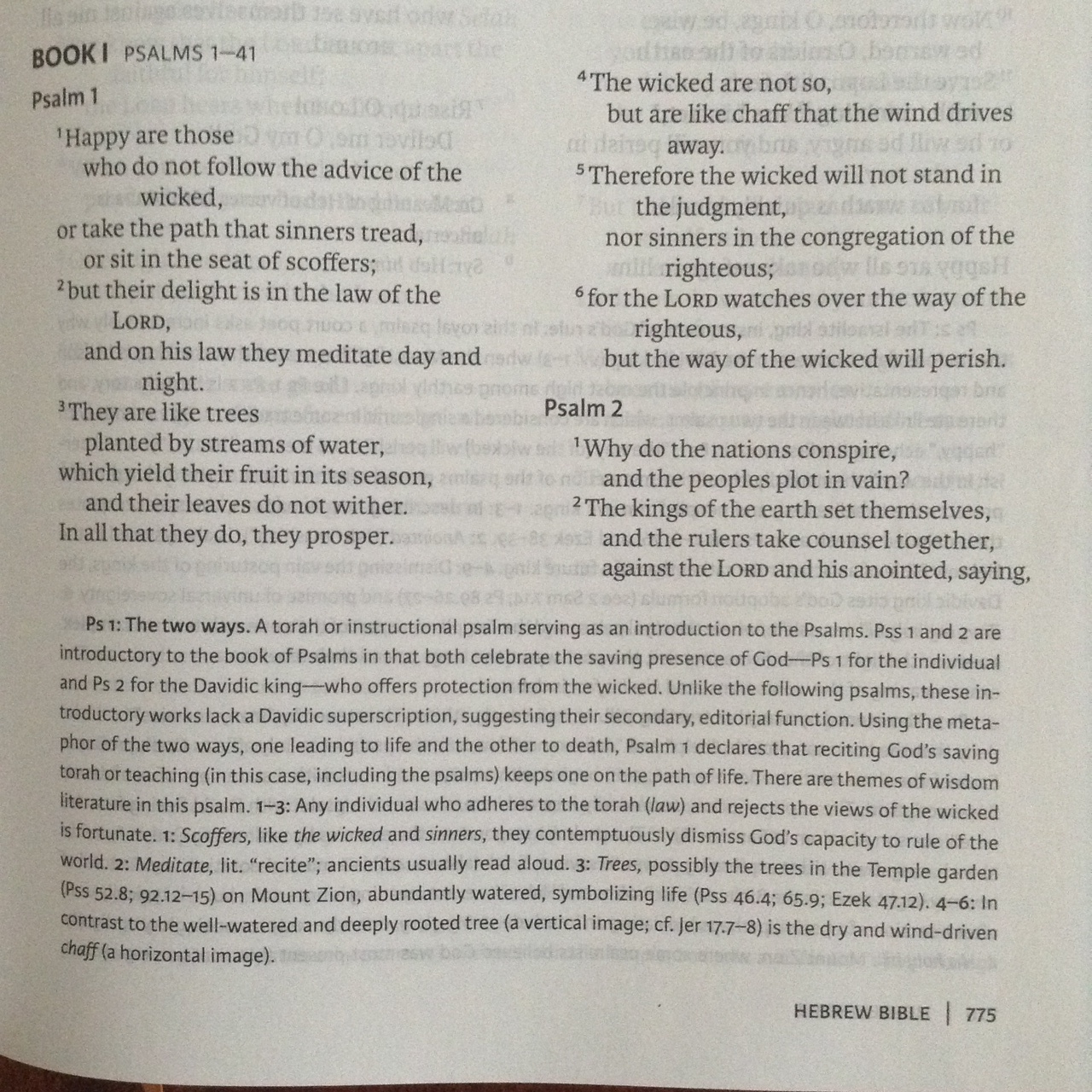
Each biblical book receives a short introduction, covering topics like authorship, date of composition, literary structure, and interpretive helps for reading. (The “guide to reading” that precedes most books is especially helpful when doing a book study or reading through a whole book of the Bible.) The biblical text itself appears in a clear, uncluttered font, with the study notes appearing at the bottom of the page. The brief but illuminating notes address each passage of the text (as a passage), and then comment more specifically on individual verses, terms and words.
Here is Psalm 1 with study notes:
Psalm 1
The title page bills this as “An Ecumenical Study Bible.” Its balance in this regard is, indeed, fair. The Editors’ Preface reads:
We recognize that no single interpretation or approach is sufficient for informed reading of these ancient texts, and have aimed at inclusivity of interpretive strategies.
The editors and contributors have succesfully met this aim. The introduction to Colossians, for example, does not make a heavy-handed assessment one way or the author as to Pauline authorship, but lays out the different views (with support) so the reader can decide. I appreciated this.
At the end of the Bible are some “General Essays,” covering topics at considerable length, such as:
The Canons of the Bible
Translation of the Bible into English
The Persian and Hellenistic Periods
The Geography of the Bible
and more. Also included are a glossary, concordance, 14 color maps, and other study helps.
“With the Apocrypha”
One thing that sets this study Bible apart from others is its inclusion of the Apocrypha. Not only is the text included, but its contributors are top in their field: John J. Collins (3 Maccabees), Lester Grabbe (Wisdom of Solomon), Amy-Jill Levine (Additions to Daniel, Tobit), and David A. deSilva (4 Maccabees), to name just a few. The introductory articles are clear and concise, yet contain the sort of information most users of this Bible will be looking for. For example, after a section on “Definitions” of terms like “Apocrypha” and “deuterocanonical,” the introduction to the Apocryphal section has “The Roman Catholic, Orthodox, and Protestant Canons of the Old Testament.” The comparison chart in that part of the introduction is especially useful, so readers can see “which religious communities accept [the Apocryphal/Deuterocanonical books] as scripture.”
In Mattathias’s speech on his deathbed in 1 Maccabees, to explore just one passage, the explanatory note for 1 Maccabees 2:49-70 simply reads:
Jacob (Gen 49), Moses (Deut 33), and Samuel (1 Sam 12) utter similar speeches; compare also the praises of famous men in Sir 44-50.
The biblical characters that Mattathias extols (Abraham, Joseph, Phinehas, Joshua, and so on) have accompanying biblical references in the study notes so readers can explore their stories further. It’s, of course, not nearly as in-depth as a commentary would be, but neither does it intend to be. It covers the basics well, and addresses most initial questions readers would have of the text.
Construction and Aesthetics
The leather-bound edition (what I am considering for review) is a well-constructed Bible. Despite its weight–to be expected of a Study Bible–it is a pleasure to hold and read. And to smell. Its gilded edges and two ribbon markers give it a classic feel. Its sewn binding and leather cover mean that it lays flat anywhere you have it open, even at Genesis 1:
Laying Flat at Genesis 1 (click to enlarge)
The pages are a bit thin, though this may be inevitable. (A delicate balance in Bible production is how thick the pages can be without weighing down an already bulky Bible). I was aware of bleed-through but not really distracted by it as I read. Note, too, the book name tabs in the image above, which help readers to quickly get to a desired spot.
Three Ways I’ve Used the Annotated Bible
There have been three primary ways in which I’ve made use of the Annotated Bible. One is for personal, devotional reading. In this context I have found the book introductions and notes to be just enough to answer my top-of-mind questions, but not so much that I was distracted from a focus on the text itself.
Second, this is the Bible I had in my hands while leading a small group Bible study last Lent on the Sermon on the Mount. Again, I found that most of our questions of the text were addressed in the notes by succinct, summary statements. And the NRSV was a good version for group reading.
Third, I’ve found the introductions and essays to be helpful in teaching and preaching preparation.
You can find the Bible here at Amazon and here at OUP’s site.
Many thanks to Oxford University Press for a copy of this beautiful Bible to review. They provided it with no expectation as to the nature of my review, except that I be honest.
We fathers and mothers learn early on, in our roles as parents, that “Because I said so” isn’t usually enough to get a determined child to change course and listen.
It’s the same thing your parents said to you, that you swore you’d never say as a parent. At the same time, you do want your own children to know that you have authority over them, as a parent.
Whether this ends up being an effective parenting move or not, it’s difficult, especially in moments of desperation, to not just point to our own authority as parents. “I’m the dad, you’re the son, you listen.”
Jesus’ Authority–“Because I Said So”?
It’s fitting that on this Father’s Day, today in the liturgical church calendar is Trinity Sunday.
The so-called Great Commission in Matthew 28 includes an appeal to baptize disciples in the three-fold name of the Trinity: Father, Son, and Holy Spirit. To be a disciple of Jesus is to enter into communion with a God who is one God, three persons. To be a disciple also means to learn Jesus’ teachings, and then pass them on to others to follow.
19 Therefore go and make disciples of all nations, baptizing them in the name of the Father and of the Son and of the Holy Spirit, 20 and teaching them to obey everything I have commanded you.
As many times as I’ve heard this passage, growing up in the church, I was especially struck this time around by the single word, “Therefore.” “Therefore” is a word that points ahead to what’s next in the sentence, but it also points back to something. X is true. Therefore, Y and Z.
Therefore, Jesus says, “go and make disciples.” On what basis is Jesus calling his disciples to go make more disciples, to essentially replicate themselves?
18 Then Jesus came to them and said, “All authority in heaven and on earth has been given to me. 19 Therefore go….
It would be easy to read this as the sort of move that fathers and mothers make when we want to try to ensure that we’re going to be obeyed.
“Because I said so….” “Because I am Jesus.…” “Because I have authority, you need to listen to me and make disciples….”
Matthew does tell us, after all, in verse 17
17 When they saw him, they worshiped him; but some doubted.
What’s especially disheartening about this is the fact that the sum total of disciples who are with Jesus for this important commissioning is… 11. Judas has committed suicide at this point, so they’re down a guy… they’re short-handed. And then, how many doubted? 2? 3? 5?
Maybe, since Jesus knew of their doubt, maybe he had to say, “Look–all authority has been given to me. So you need to listen to what’s next.”
Some of you grew up in an era in which our country was experiencing an allergic reaction to authority. Some of you, no matter when you were born, may recoil a bit at the very use of the word “authority,” especially when it shows up in a relational context.
I wonder, too, especially about those doubting disciples–usually for those who are doubting, second-guessing, wondering, calling into question… usually for somebody like that, an appeal to authority goes nowhere fast.
Jesus’ Authority–He Goes Before Us Through the Holy Spirit
I’m not convinced that’s what Jesus is doing here. His disciples were spiritually dim-witted at times, like we can be, but I’m not so sure he’s appealing to his authority just so that they will listen to him.
See–Jesus knows he’s about to give the disciples a tall order. He knows before he commissions the disciples, that even two thousand years later, some Christians will have a hard time with the “d”-word: discipleship. Or the “e”-word: evangelism.
Jesus has doubters in his midst, among the 11. And he’s supposed to start a worldwide missionary movement out of them!
Telling this little band of confused and disoriented disciples that they were to herd all the peoples of the earth toward Mount Zion in the name of Jesus would be like standing in front of most congregations today—many of them small and all of them of mixed motives and uncertain convictions—and telling them, ‘Go into all the world and cure cancer, clean up the environment, evangelize the unbelieving, and, while you are at it, establish world peace.’
Long goes on:
That is the point, or close to it. The very fact that the task is utterly impossible throws the disciples completely onto the mercy and strength of God. The work of the church cannot be taken up unless it is true that “all authority” does not belong to the church or its resources but comes from God’s wild investment of God in Jesus the Son and the willingness of the Son to be present always to the church in the Spirit.
Jesus’ mention of his authority isn’t a power play–it’s an encouragement, a life-giving reminder, a move that enables his disciples to go.
Jesus’ authority has just been established by his resurrection from the dead. Alfred, Lord Tennyson once wrote, “Authority forgets a dying king.”
But Jesus was no dying king. Or, at least, he was a dying king who didn’t stay dead. He is the Risen King!
If Jesus has power over death, he has power over all of life. And if he has power over all of life, he has power and influence over all who are living. And if he has power and influence over all who are living, there is nowhere his disciples can go that he has not already been.
There is no heart that God cannot soften. There is no human being that is beyond the reach of God’s saving love in Jesus.
Jesus has authority over all people everywhere. As Ephesians would later put it, God the Father “raised Christ from the dead and seated him at his right hand in the heavenly realms, far above all rule and authority, power and dominion, and every name that is invoked, not only in the present age but also in the one to come.”
Because of Jesus’ authority, his power, his rule… disciples who are commissioned to draw others into the life of faith do not have to be scared to do it.
Jesus empowers his followers, by his authority, to fulfill the Great Commission.
Furthermore, after the Great Commission there is the promise of Christ’s presence:
And surely I am with you always, to the very end of the age.
This is an upgrade. Jesus was not actually “with” the disciples “always” before he said this. He often went off by himself to pray. He didn’t engage everyone who wanted his attention. He wasn’t with the disciples always.
But now, there is this new promise, a promise we saw fulfilled in our Acts passage last week, when the Holy Spirit came at Pentecost.
Through the power of the Holy Spirit, Jesus is present with us always, and will be present always with his disciples until the end of time.
All authority is his, and he is always with us. Therefore, we can preach.
Jesus empowers us, by his authority and his presence, to fulfill the Great Commission.
Through the presence of the Holy Spirit, Jesus goes ahead of us. God works on hearts before it even occurs to us to reach out to another. If we want to use the language of “witnessing” to others about our faith, that’s fine, but only if we remember that we are really the second witness.
The Holy Spirit is the first witness, preceding us everywhere, making it possible for us to witness to the goodness of God in our own lives.
We can call to mind again the idea of evangelism and disciple-making as “one beggar telling another beggar where to find bread.” We ourselves are not the bread, but we know where the bread is found.
And so, undergirded, strengthened, and equipped by Jesus, we can say, “Come, taste and see. Come and see what I have found.”
Don’t Be Great, Just Have a Great Message
Jesus empowers us, by his authority and his presence, to fulfill the Great Commission. He equips us to do what he calls us to.
And we don’t have to be “great” to go out in faith to try to build a kingdom of disciples for Jesus.
It’s reported that Graeme Keith, a lifelong friend of evangelist Billy Graham and treasurer of the Billy Graham Association, was once riding in an elevator with Billy Graham. Another passenger got in and recognized Graham: “You’re Billy Graham, aren’t you?”
“Yes,” said Billy Graham.
“You’re a truly great man,” the guy said.
“No, I’m not a great man,” Graham replied, “I just have a great message.”
Great or not, courageous or not, fully comfortable with what this passage calls us to or not–we have a great message. And Jesus empowers us, by his authority and his presence, to deliver it, near and far. Because he said so–because he ultimately has authority over every living person, because he goes before us, we can go and witness to our God.
It would be daunting to share the good news of God’s love with others if we had no backup, if we were cutting a new trail. But Jesus promises to go ahead of us and walk beside us, always.
The above is adapted from the sermon I preached on Matthew 28:16-20 today. Scripture quotations above are 1984 NIV. The second image in this post is used and covered under the Creative Commons Attribution Noncommercial ShareAlike 3.0 License.
We saw a snapping turtle crawling up our street this morning. We’d seen deer and turkeys in the yard (e.g., the turkey who was trying to make a nest in our raised bed tomato plants earlier this week), but this oversized turtle was a first.
Turtle Power
After marveling at the creature with our kids and taking some family/turtle photos, my wife and I realized we had three options:
1. Leave it.
2. Call Animal Control to come rescue it.
3. Pick it up, put it into our wheelbarrow, and take it back into swampy, woodsy safety.
We ruled out Option 1. The backside of our house connects to a huge construction site, and even a large snapping turtle wouldn’t have stood a chance against a Link-Belt excavator.
Option 2 was easy—we called and left a message, but then realized a snapper was probably not super-high on the city’s priority list of things with which to be concerned.
So we were left with Option 3.
There’s a fine line between wise caution and being a chicken, and I had planted myself squarely between the two. It took me five minutes (maybe more?) before I could finally psych myself up enough to pick up the turtle to put it in the wheelbarrow. To help me over my caution/fear, my wife graciously offered to put a stick in front of the snapper’s mouth, so that it could be biting the stick while I picked it up, rather than biting me.
She gave him the stick. He bit it. Then I chickened out and lost my chance. (Or was being smart by trying to preserve all 10 fingers?) The stick was out of his mouth now. So my wife gently tapped him on the shell with the stick and… SNAP! All K-J fingers were still in place, but I jumped back. If I was going to do this, it had to be now.
So my fearless spouse tried the stick routine again, got it in the snapper’s mouth, and (with kitchen gloves on) I reached down and started to pick it up from the sides of its shell. SNAP! He missed me, but I knew he was going for me that time. I couldn’t even see his face when he snapped—he was all neck and mouth.
At this point we decided to stick with the aforementioned options 1 and 2. I was especially concerned that if I picked the turtle up and it snapped in/at my hands, I might jump away and drop him on the pavement. We didn’t want to hurt him.
But we had to get on with our morning, so, leaving the snapper where he was, I went to the assistant foreman in his trailer office behind the parsonage and told him about the turtle, so that he could tell his equipment operators to BE SURE NOT TO RUN HIM OVER (please).
His face lit up: “I have a guy who loves reptiles!” (He used a few additional adjectives and adverbs to make that clear.) Then he called across the worksite to someone in one of the new duplex units: “Bird!” A fitting nickname, I suppose.
With cigarettes and Dunkin’ Donuts coffee in hand, “Bird” and a couple others came over to where the turtle had now settled itself. Without batting an eye, he gently lifted it up by the tail to see that she (I had had the snapper’s gender wrong) was settling into a leaf pile in our yard to lay eggs. The turtle must have known Bird was a “reptile guy.” There was no snapping this time.
Animal Control still had not come, but Bird said he knew a place where the snapper would be safe. Minutes later, Bird and his co-worker were driving away from the site with the turtle in their pickup truck—taking it now (presumably… hopefully!) to safety.
This all began between 8:30 and 8:45. I don’t know what mornings are like in your house, O reader, but that tends to be crunch time for the K-Js. We have to make sure everyone is dressed, fed, and pottied, and we have to make our eldest son a lunch and drive him to the bus stop. Then my wife and I each have various responsibilities and places to get to. So the morning routine can be stress-filled, try as we might to make it not be so.
This morning wasn’t too bad, but I was already thinking about all that I had to get done this morning… and then we saw the snapper in the road. As we finally got into the car with the kids to drive to our different destinations, it was 9:45, a full hour later.
But I can tell you—whatever had been concerning us at 8:45 was far from our minds at 9:45!
It hasn’t been that long since I read through, studied, and preached on the passage from Matthew 6 where Jesus tells his disciples to “consider the birds of the air.” If God feeds them and cares for them—animals that presumably have no souls and have not the spiritual and emotional capacity that we have to experience God’s love—how much more will he care for us!
And if God can somehow be overseeing a process whereby a snapping turtle is brought to safety by our new construction working “friend,” how much more can he make sure we have all we need?
Or, as a college friend used to say: “Everything is going to be alright forever.”
Here’s another quick tip for Accordance users. This one has been there a long time, but I just noticed:
My most regular use of General Tools in Accordance (Bible dictionaries, books, etc.) is to search them for each week’s passage that I’m preaching on. For example, I’ll search the IVP Dictionary of Jesus and the Gospels first by Scripture reference and then by English content and/or section heading. (The tool may have information relevant to me that is best found with one or the other search.)
I already was aware that you could add a second search field for an “AND” search, but I just realized yesterday that you can also select “OR” (from a drop-down menu) before you select your second search field and term:
So now in one search setup (which I can save for next time), I can have this Accordance tool return hits for every time it mentions either Matthew 28 by reference or the Great Commission in the English content… and even throw in another “or” of “Discipleship” in the Entry field (dictionary section titles).
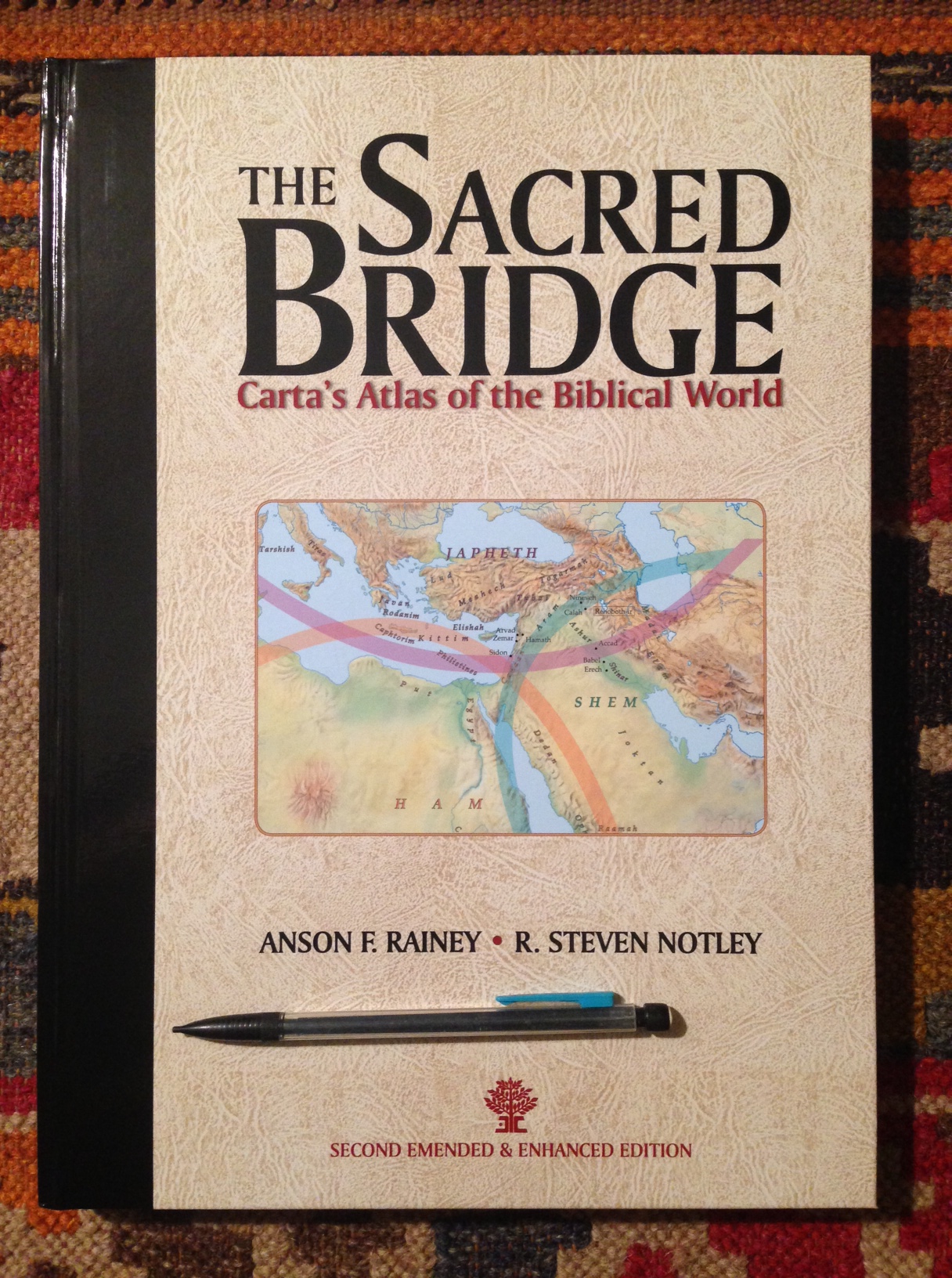
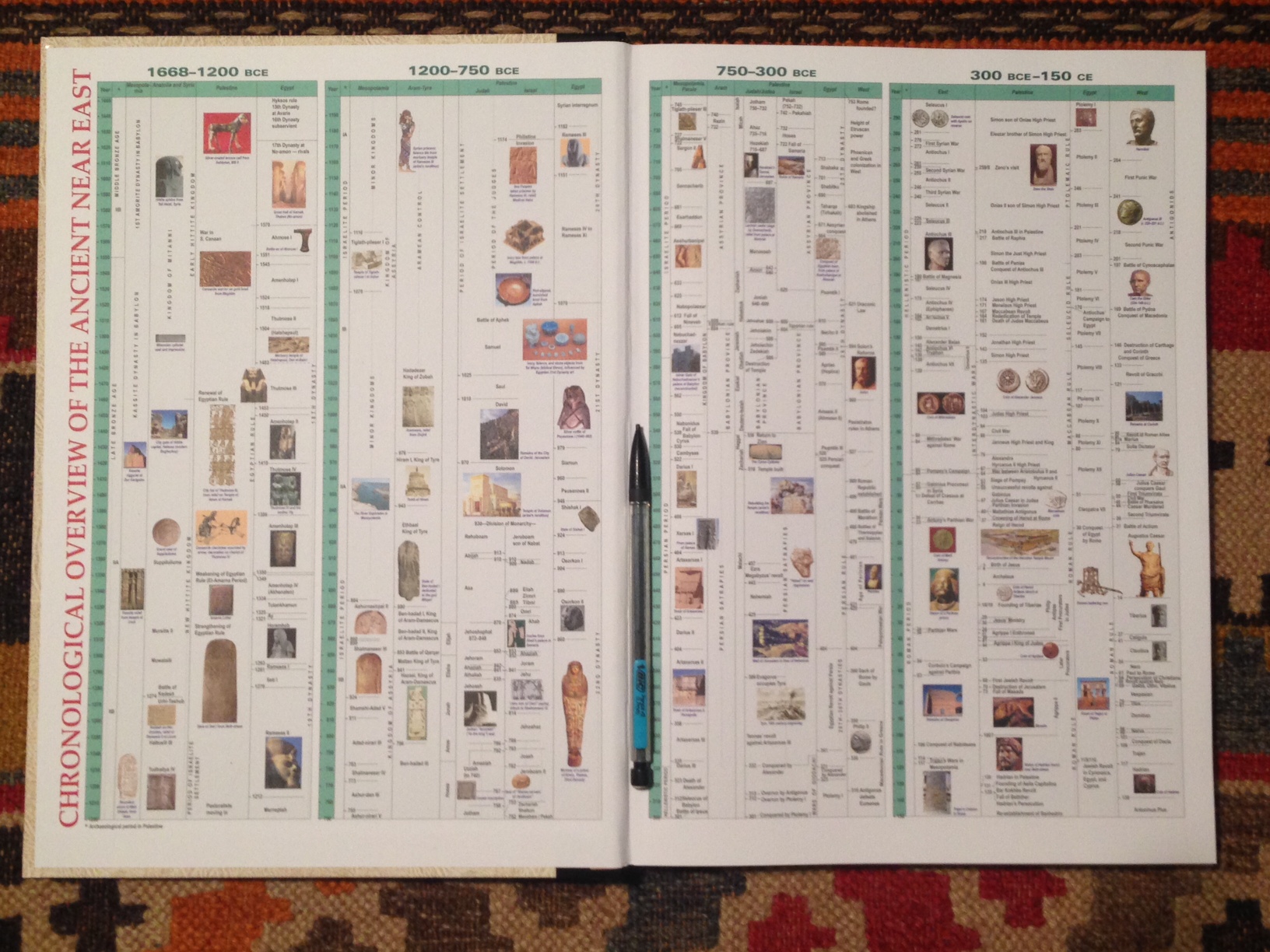
The one kind of blog post I’ve deliberately avoided till now is the “In the Mail” post. I have my reasons for this, but that’s not the point of this post. I simply wanted to say that the book I received in the mail the other day might be the first one that caused me to say, “Whoa,” when I opened to the front inside cover.
For future review I’ve received The Sacred Bridge: Carta’s Atlas of the Biblical World. This is the “Second Emended & Enhanced Edition” (copyright 2014). Here it is:
Carta Jerusalem, its publisher, describes the atlas in this way:
The Sacred Bridge will be the Bible Atlas of Record and Standard Work for the coming decades. Exhaustive in scope and rich in detail, with its comprehensive documentation of the Near Eastern Background to Biblical History, this latest Bible Atlas from Carta is one more stepping stone on the way to the study and understanding of the Holy Scriptures.
And:
This is the first Atlas to adopt the modern approach to the study of the Levant as a geographical/historical entity. Emphasis throughout the current work is on the ancient written sources – every ancient passage is interpreted firsthand, from its native language. Archaeological evidence has been taken into account whenever it is relevant.
Here is what’s inside the cover. You won’t be able to see much detail in the image (click image or open in new tab for larger), but it will give you an idea of the kind of thoroughness that seems to exist throughout the atlas. And that’s before you even get to the atlas itself.
I’m looking forward to digging in. It’s a beautiful, massive atlas, with a lot of text and full-color images packed into its large pages. The binding appears to be sewn, so it will last a long time. Here’s the product page for more information. You can also find the atlas here through Eisenbrauns, its North American distributor. More to follow.
At less than 400 Hebrew words, Obadiah is shorter than many Words on the Word blog posts, including this one. But its literary and rhetorical sophistication is by no means lessened by its length. Obadiah is the prophetical incarnation of the axiom, “Brevity is the soul of wit.” Or, in Obadiah’s case, “Brevity is the soul of calling out Edom and declaring God’s restoration of Jacob.”
Earlier this year Zondervan published the first two volumes of a new Old Testament commentary series, Hearing the Message of Scripture (HMS). If you want a brief overview of the series, I’ve posted about it here. Daniel I. Block is author of Obadiah: The Kingship Belongs to YHWH, as well as the general editor of HMS. I’ve had a chance to carefully work my way through the inaugural Obadiah volume, and review it in this post.
Block’s Introduction to Obadiah
The Introduction consists of three primary parts:
Historical Background to Obadiah’s Prophecies–outlining some options for dating the book’s composition, as well as describing the historical setting of Obadiah’s oracles.
Obadiah’s Rhetorical Aims and Strategy–the largest section in the introduction, with an excellent definition of “prophet,” as well as the idea that “Obadiah’s rhetorical aim was to rebuild his audience’s hope in the eternal promises of God.”
The Structure ofObadiah—here Block outlines the book, the “climax” of which is highlighted by the “marked structure” of verse 17a (“But on Mount Zion there shall be an escape…”).
Block later summarizes Obadiah’s style as “terse elevated prose, the style being chosen for maximum rhetorical effect.” After “the climax” of verse 17, the final verse 21 “brings his proclamation to a triumphant conclusion.”
Particularly useful in the introduction was this diagram of the arc of the book, to which I frequently found myself referring:
Block’s Plot Summary of Obadiah
The Commentary Proper
Hearing the Message of Scripture intends to help its readers “to hear the message of Scripture as biblical authors intended them to be heard.” Obadiah is typeset and laid out quite a lot like Zondervan’s Exegetical Commentary on the New Testament series (which I’ve reviewed–several volumes–here). Each passage of Obadiah includes this treatment:
Main Idea of the Passage–a short paragraph overview, good for getting bearings on what the prophet is trying to do.
Literary Context–Block explains the overall flow of Obadiah here and how the passage under consideration fits within the book. This might be the best section in the commentary.
Translation and Outline–the author’s original translation and spacing of the text.
Structure and Literary Form–this looks especially at the rhetorical aims of Obadiah in a given passage.
Explanation of the Text–the longest section of each passage, and the bulk of the commentary.
Block divides the commentary into five “chapters” (8-14 pages each) that follow the five sections of his structural outline.
A good example of the kind of rhetorical analysis Block does appears in his comment on the first verse of Obadiah:
Obadiah’s preference for the name Esau reflects his rhetorical concern. As noted, he is not interested in the political history of Edom or Edom’s economic standing among the nations. To him Edom is a person, the brother of Jacob (vv. 10b, 12a), who shares a common ancestry in the first two patriarchs, Abraham and Isaac, but whose history of violence against his twin brother will finally be answered.
And again, on verse 5:
Obadiah’s penchant for cutting of a thought by inserting an erratic mid-sentence is also evident in v. 5c, “How you have been destroyed!”
One thing I really appreciated about the commentary is Block’s sense of the larger literary context of Scripture. He keeps the parallel Jeremiah 49 in view throughout the commentary, as well as other prophetical literature like Ezekiel and Daniel. Block helps the reader see how Obadiah fits into the larger sweep of the Hebrew Bible. Especially noteworthy is his elaboration of what other prophets in the Hebrew Bible had to say about Edom. As I read the commentary, in other words, I was able to reflect on and learn about much more than just Obadiah.
At the end of the commentary, there is a section called “Canonical and Practical Significance,” in which Block, having worked carefully through Obadiah, draws out some theological implications of the book.
Evaluation of Block’s Obadiah
A few observations, by way of evaluation:
The footnotes serve as an excellent source of references for a given word’s use elsewhere in the Old Testament. Footnotes also keep other versions such as the Vulgate and Septuagint in view.
I found the transliterated Hebrew throughout the book to be distracting. The ZECNT, which in many ways is the NT counterpart to this HMS series, does not transliterate its Greek. It also includes the full Greek text of the New Testament book under consideration, verse-by-verse, so it would have been nice to have had the full Hebrew text of Obadiah reproduced here, as well.The Series Introduction does note that “electronic versions of this commentary series will also include the Hebrew font.”
One intangible I appreciated–the margins are nice and roomy for notes. (I made quite a few to help me process Obadiah as I read.)
In an excellent commentary that is hard to fault for much else, it has anunusually large amount of typos. Many of these occur when the same verses from Obadiah are not consistently translated when they occur in multiple spots in the commentary. I heartily recommend this volume, but would suggest that those interested perhaps wait until the second printing, when corrections can be made.
Though this series aims to focus more on the rhetorical features of Obadiah, there is a good focus throughout Obadiah on the Hebrew syntax. My grammatical knowledge of Hebrew increased just by reading this commentary.
I didn’t fully agree with Block’s interpretation at every turn, but even in such instances I generally found his arguments to be reasonable and well-argued.
Bottom line: this is a really good commentary, and I like this series a lot so far. Even with its lexical, grammatical, and rhetorical details, Hearing the Message of Scripture: Obadiah is an engaging and page-turning read. Block explains the challenging book of Obadiah well at every turn. There are other good commentaries on Obadiah already in print, but pastors especially should start here, and academicians, too, will want to make sure to pick this book up.
You can look at the volume yourself–a sample PDF of Obadiah is here.
I am grateful to Zondervan for the gratis review copy of this commentary, which was offered for an unbiased review. You can find the book on Amazon here. The Zondervan product page is here.
With the omission of the Holy Spirit and demon monkey dream I described having in college, the below is adapted from the sermon Ipreached on Acts 2:1-21 today. (Message me if you’re curious about the dream.) You can read the Acts text here. Scripture quotations below are 1984 NIV.
Surprise Birthday Parties
If you’ve been to a surprise birthday party, you know how much fun it is. Whether you’re the one lying in wait for your unsuspecting friend or family member, or the one about to be surprised… it’s hard to match the buzz of a room waiting to yell, “Surprise!”
There’s some nervousness and jitteriness involved, too. You’re gathered to celebrate someone who could walk in at any moment, but you’re not sure when. She’s here–oh, wait. That’s just a late arrival.
Waiting for God to Come
The disciples in Acts 2 had gathered on the day of Pentecost–“all together in one place,” the text says.
They had gathered, in part, to celebrate a Jewish festival. Pentecost was the Greek name for the Feast of Weeks, one of three major yearly celebrations the people of Israel observed. It came 50 days after Passover. In this Feast of Weeks, or Pentecost, the people offered God their gratitude for the crops that had come in.
Jerusalem was hopping. There were lots of pilgrims there, a whole host of international visitors, to observe the feast.
Jesus’ followers, who were Jewish, were gathered, “all together in one place,” for this festival of Pentecost.
But they had convened to worship for another reason. They were waiting for something–waiting for someone.
The disciples must have felt that same anticipation you have when you’re waiting to blow your party horn, but your expected guest is still maybe a ways off.
The disciples were waiting for the Holy Spirit.
In Acts 1, the risen Jesus–as he was about to ascend into heaven–had said something rather provocative to them. He had made an intriguing promise:
Do not leave Jerusalem, but wait for the gift my Father promised, which you have heard me speak about. For John baptized with water, but in a few days you will be baptized with the Holy Spirit….
[Y]ou will receive power when the Holy Spirit comes on you; and you will be my witnesses in Jerusalem, and in all Judea and Samaria, and to the ends of the earth.”
A baptism with the Holy Spirit–you will receive power, and the result would be an international witness, to the ends of the earth.
So the idea of a birthday party at Pentecost is fitting. Except the Holy Spirit wasn’t the one born then. The Holy Spirit has been with the Father and the Son from all eternity. The Christian church as we know it was born on Pentecost. On that day the church received a special gift for which it had been waiting: The Holy Spirit. As presents go, it doesn’t get any better than that.
In the power of the Holy Spirit, the church began its mission of preaching the Gospel to all nations.
The Ultimate Power Source
“[Y]ou will receive power when the Holy Spirit comes on you….”
Talk about power. It says:
Suddenly a sound like the blowing of a violent wind came from heaven and filled the whole house where they were sitting. They saw what seemed to be tongues of fire that separated and came to rest on each of them. All of them were filled with the Holy Spirit and began to speak in other tongues as the Spirit enabled them.
Though Scripture speaks elsewhere about speaking in tongues as possibly being its own sort of heavenly language, in this passage, the disciples actually start speaking other languages!
It’s like an instant upload of Pimsleur into their brains and mouths.
And the Holy Spirit came “suddenly,” Acts says. The disciples didn’t conjure God’s Spirit and make him appear. The Spirit just came.
This reminds us of what we usually know, but often forget: our lives can change in an instant. In a second, God can descend on you, infuse you with the Holy Spirit, and set you on a completely new course. He may not choose to work this way all of the time, but it is possible–well within his power.
As the disciples spoke a catalog of languages, a bewildered crowd asked:
Are not all these [people] who are speaking Galileans? Then how is it that each of us hears them in his own native language?
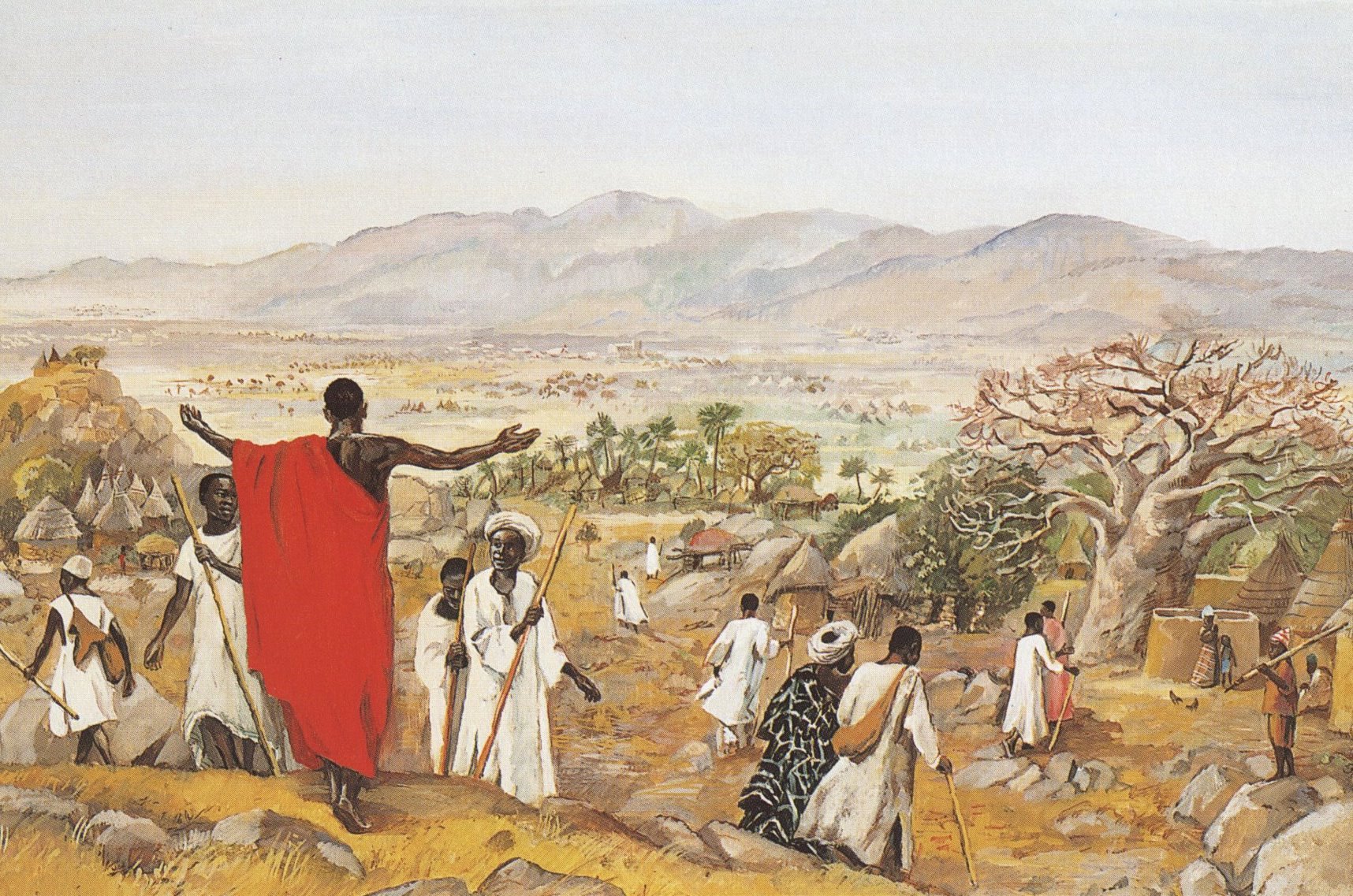
The Linguistic Territory Acts 2 Covered (Source: Zondervan Atlas of the Bible)
Presumably, this rag-tag, humble, scared, not highly educated gathering shouldn’t know this many languages between them. They’re not world-traveling, cosmopolitan polyglots!
But…
[Y]ou will receive power when the Holy Spirit comes on you; and you will be my witnesses in Jerusalem, and in all Judea and Samaria, and to the ends of the earth.
When the Holy Spirit comes on you, you receive a new power that allows you to do what you couldn’t do before. The Holy Spirit is the ultimate power source, the provider of strength to even weak and confused Christians.
We who have accepted Jesus’ invitation to walk with him, by virtue of our new life in Christ, receive the Holy Spirit that the church received on Pentecost.
Being a Christian means you have the Holy Spirit living in and with you. And with the Holy Spirit comes supernatural power.
You … receive power when the Holy Spirit comes on you, so that you may prevail against what Ephesians calls “the rulers, against the authorities, against the powers of this dark world and against the spiritual forces of evil in the heavenly realms.”
You … receive power when the Holy Spirit comes on you, so that you may be strengthened in the core of your being (Ephesians 3:16).
You … receive power when the Holy Spirit comes on you, “so that you may abound in hope,” Paul would later write, “by the power of the Holy Spirit.”
You … receive power when the Holy Spirit comes on you, so that you can produce the fruit of the Spirit (Galatians 5:22-23): “love, joy, peace, patience, kindness, goodness, faithfulness, gentleness and self-control.”
You … receive power when the Holy Spirit comes on you, so that you will have the right words to say in a difficult conversation that would otherwise stump you.
You … receive power when the Holy Spirit comes on you, so that you will have patience–supernatural patience–when you’re at your wits end.
You … receive power when the Holy Spirit comes on you, so that you may heal the brokenhearted around you, with the healing power of God’s love.
You … receive power when the Holy Spirit comes on you, so that you can share the good news of Jesus, even if the thought of mentioning Jesus by name to somebody else makes you a little squeamish.
After all, if the Holy Spirit can give fluency in languages to the disciples, so they can praise God in dialects that others understand… the Holy Spirit can surely give us words to tell other people about Jesus.
You … receive power when the Holy Spirit comes on you, so that we can transform this world more into the place God wants it to be.
Desire the Holy Spirit
Did the disciples fully understand what Jesus meant when he promised “the Holy Spirit”?
I’m not sure. But they were waiting for the fulfillment of that promise–not passively, but proactively. After Jesus’ ascended into heaven, Acts says, “They all joined together constantly in prayer.”
They desired the gift of the Holy Spirit. They wanted that power, so that they could be God’s witnesses near and far.
This Thursday our almost-four-year-old son had his closing program at his pre-school.
Everyone in his class with summer birthdays had received a birthday pin earlier this week. It’s a dove with a cross behind it. “A Holy Spirit pin,” they call it.
The closing program this last Thursday was every bit as cute and funny and well-performed as you’d expect from a well-coached group of exuberant pre-schoolers. Our son seemed to enjoy the program until we were talking afterwards, when he realized… he couldn’t find his Holy Spirit pin.
So he said: “I want my Holy Spirit! I want my Holy Spirit! I want my Holy Spirit right now!”
We knew where the pin was–not there with us. So we consoled him with this fact and gave it to him later, at which point he happily showed his big brother: “my Spirit!”
He sure desired that Holy Spirit pin and all the significance that it held for him.
You will receive power when the Holy Spirit comes on you.
The Holy Spirit has come, giving birth to the church at Pentecost.
The Holy Spirit is with us here, as we gather in one place to seek the Lord.
The Holy Spirit lives inside each one of us who has acknowledged Jesus as Lord.
We who have the Holy Spirit have the Holy Spirit’s power. Power to hope. Power to bear good fruit, to live lives of exemplary Christian character.
We who have the Holy Spirit have the Holy Spirit’s power to speak words of wisdom at just the right time. Power to be patient when we least feel able. Power to heal. Power to love. Power to prevail over the forces of darkness and evil. Power to proclaim the good news of Jesus to people from all nations, vocations, and walks of life.
We receive power from the Holy Spirit–power that comes even and especially in our weakness. Power to face each new day.
Let us desire the Holy Spirit. Let us want the Spirit and his power. Let us admit to each other and to God our need to live lives that are wholly directed by the Holy Spirit’s power. Let us pray together, in this sacred space, “Come, Holy Spirit.” Let us pray when we are apart, every hour of every day, “Come, Holy Spirit.”
As we wait for God–even if we’re not sure of what might happen when we pray this way–let us say, as Christ’s gathered church: “Come, Holy Spirit.”
Though Accordance for iOS currently offers the ability to just have two panes open at a time, I have found a good workaround that simulates the effect of having three texts or tools readily available at once.
This image is from an iPhone, in landscape mode. (Click or open in a new tab to enlarge.)
Reading Obadiah
The left pane is the Hebrew text of Obadiah. For my second pane (on the right) I select a tool (commentary) of some sort that has hyperlinked individual verses, which I can then tap (“19,” above) to have a popover English translation show up.
I’ve been making my way through Obadiah in Hebrew like this, for a forthcoming review (6/9/14 UPDATE: now posted here). This way I can read the Hebrew, have a commentary open, and easily get an English translation, all from the same screen.