A Ministry of Interruptions

The recipients of Hebrews had a good history of hospitality. The author of Hebrews encourages them to keep it up:

Heb 13:1-2    Keep on loving each other as brothers. Do not forget to entertain strangers, for by so doing some people have entertained angels without knowing it.

Love each other as brothers and sisters. There’s one word for this that the author uses, and it’s a word that most people know–philadelphia. Brotherly (or sisterly) love. Think of the city of Philadelphia. Filial love–it’s the love that family members show to each other.

Every time philadelphia shows up in the New Testament (Rom. 12:10; 1 Thess. 4:9; Heb. 13:1; 1 Pet. 1:22; 2 Pet. 1:7), it’s in a letter addressed to Christians, telling them to love each other. It’s the kind of love a family shows to each other. In this case, it’s the family of God. In fact, the New Testament does kind of a new thing in using this word. In other Greek literature up to this point, philadelphia was just used to refer to a literal family, for example, the bond that brothers and sisters share from nursing at the same breast.

When we are in Christ, we become part of the family of God. We are really brothers and sisters. So let’s love each other like that, Hebrews says.

And yet, don’t forget about the “strangers,” too. It will be a stunted love if we just show love to the family, to those who are “one of us.”

Do not forget to entertain strangers, for by so doing some people have entertained angels without knowing it.

Verse 1 is about love of brother and sister. Verse 2 is about love of the stranger, of the foreigner, the other. Don’t forget about those outside our zone of comfort and familiarity.

A Friendly Church vs. A Church of Friends

My father, who is himself a minister, has said that there is a difference between a friendly church and a church of friends. A church of friends does well with verse 1–love of the family. A friendly church does verse 1 and verse 2–loving each other, and being friendly to anyone with whom they cross paths. Even strangers.

rublev trinity
Hospitality (Rublev’s Trinity)

It sure seems like the author of Hebrews has Genesis 18 in mind. Genesis 18 is the story of Abraham and the three visitors who turned out to be angels of the LORD, though Abraham didn’t realize it at the time.

You never know when an unannounced visitor is going to turn out to be an angel, the author says. There’s something divine about good hospitality, so Hebrews encourages its readers (and us) to show it.

We hear echoes here of the passage in Matthew where Jesus himself says, “I was hungry, and you gave me food; I was thirsty, and you gave me a drink; I was a stranger, and you welcomed me.”

If hospitality isn’t its own motivation, Hebrews is saying, realize the stakes may actually even be higher than you think!

The early church was supposed to be a beacon of hospitality for travelers, visitors, strangers. Their brotherly and sisterly love was supposed to be so strong that it overflowed beyond their community into strangerly love, we might say.

And travelers in the ancient world needed good hospitality, too. There were hostels for travelers to stay in, but they weren’t exactly renowned for their hygiene. It could be a pretty seedy scene. Early inns were immoral. And expensive!

Hebrews calls for Christians to welcome in those who need hospitality.

Jesus in Prison and Today’s Prisons of Isolation

Heb 13:3    Remember those in prison as if you were their fellow prisoners, and those who are mistreated as if you yourselves were suffering.

We think of Jesus again: “I was in prison, and you came to me; I was naked, and you clothed me; I was sick and you visited me.” This is hospitality that leaves home. It’s possible that this verse means not just to call to mind those who are in prison, but to go visit them, to help provide for their daily needs of food and sustenance.

Prison

This could be literal prison, and we might also think metaphorically of the kinds of prisons of isolation that some people today live in. Catholic theologian Raymond Brown, in his commentary on this verse, says:

We also need to be reminded that some of our own neighbours may be suffering from other forms of ‘imprisonment’, less stark but no less distressing. Many elderly people are desperately ‘cut off’.

Brown goes on to quote the words of an 81-year-old widow:

I am still terribly lonely. It’s the evenings. The club closes at 4.30 p.m. and there’s nothing but long, empty hours until bed-time … I’ve heard so many old people say ‘There’s nothing for us now’. You’ve got to eat to sort of keep alive. But there’s nothing. The time is so long … the evenings … the weekends. I’ve heard several people say ‘I don’t care how soon the end comes for me’… I know lots of people. But that isn’t the same as a close friend.

Sex and Money… and Hospitality?

Heb 13:4     Marriage should be honored by all, and the marriage bed kept pure, for God will judge the adulterer and all the sexually immoral. 5a Keep your lives free from the love of money and be content with what you have…

These are dual threats to the faithful Christian life–sex and money. Or, not necessarily sex and money per se, but the misuse and abuse of sex and money.

Sex and marriage are a God-given good–a great good–to be “honored” and “kept pure” by all. Because God will judge the ones who do not keep “the marriage bed” “pure.”

And money–it’s not a bad thing in and of itself. But when we allow the love of money and the love of continuing to acquire new things–more things–then we run the risk of replacing our God with a new one.

Wait a minute–I thought this was a passage about hospitality. What’s the author doing now?

It’s fairly common for epistles in the New Testament to close with a string of parting commands like this, that the author may not take the time to fully unpack. If you were going to take a trip for a week and leave your family behind, you’d probably do the same thing– “Don’t forget to water the plants. Check the mail. The plumber is coming on Tuesday; let him in.” And so on. So that’s what the author is doing here.

But even so, the author seems to be tying all these things together–

verse 1: love of brothers and sisters in Christ.

verse 2: love of strangers, hospitality.

verse 3: love of those who suffer.

verse 4: love your spouse faithfully.

verse 5: don’t love money and let it crowd out contentment.

This passage seems to be about a right ordering of love. This is what love looks like.

When Plans are Interrupted

Heb 11:5b    because God has said,
“Never will I leave you;
never will I forsake you.”

We can love because God is with us. “We love because he first loved us,” John would write in a letter.

Our love-energies, then, rather than being focused on the things and stuff and possessions of our lives, can then be spent on caring for others. Rather than storing up things for ourselves, we can be generous with our time, attention, and resources, and give it to our families–husband and wife, brother and sister. We can even give our time, attention, and resources to strangers.

So we make plans to do this.

cow
Interrupting Cow

I was just talking the other day to a pastor friend of mine. I told him how my wife and I were this close to having our fall schedule worked out, where ministry and her school and the kids and their school and moving in would all fit together each week, down to the hour. As soon as I said that, he and I just both started laughing. I think we both realized that one can only make plans to a certain degree in life.

You know the old cliche: “Life is what happens to us while we are making other plans.”

And that’s the tough thing about hospitality. That’s the challenging thing about visitors or guests sometimes… they can be unannounced. They come to us not on our schedule, but on their schedule. We may experience other people’s claims for our attention as interruptions, not invitations to offer hospitality.

“Lord, when did we see you hungry? When did we see you a stranger?”

This can happen on a large or small scale. Parents, especially we parents of young children, encounter what can feel like a steady barrage of interruptions when trying to get something done. Or when trying to make a phone call.

And, of course, there are times when our kids do need to listen to us and stop interrupting, but it’s still our noble goal to be gracious in how we handle that interruption.

Remember Mary and Martha? Martha was showing Jesus generous hospitality by having her into her home, but Jesus came before she was ready. He interrupted her preparations. She could only see a set of tasks, not a guest. Mary, the one who sat with Jesus, received him, accepted his interruption, is the one in the story who seems to show true hospitality and welcome.

There have to be boundaries, of course. We all need time by ourselves, time when we are not interrupted, or are uninterruptible. But hospitality as a posture, as a leaning of the heart, is open to receive interruptions. Life is not just what’s on the schedule.

Hospitality is about attitude. It’s about the proclivity of our heart. It’s about being open and receptive. Hospitality is about submission.

They Might Be Angels… Or Not

It’s often said that Jesus had a “ministry of interruptions.” How many miracles or healings of Jesus begin with, “As he was on his way from (point A) to (point B)…”? For Jesus it started to seem, as someone put it, like the interruptions were the job; they were the ministry. Not just the things that happened along the way.

As I’ve been meditating on this passage this week, I’ve been challenged, as I’m sure the first readers were, to try to handle the unexpected “interruptions” of life well. It’s not easy. It can be unsettling, even unnerving, to enter into another’s world, to allow them access to our attention and energies. A ministry of interruptions–a hospitality toward even unexpected guests–can be disorienting.

One commentator says, “These strangers might be ‘angels,’ but they might not. This call to hospitality is a call to ongoing vulnerability to the unknown other.”

But here’s the anchor. Verse 8: Jesus Christ is the same yesterday and today and forever.

He is steady. He is unchanging. For Jesus, nothing is really unexpected, or a surprise, or unknown.

And as we strive to offer generous hospitality to our church family and to strangers alike, we know that God is with us, wherever that takes us. Verse 5:

God has said,
“Never will I leave you;
never will I forsake you.”

We can open ourselves to interruptions, to the unexpected and unpredictable needs of our brother and sisters in Christ. We can receive the stranger who comes in to our familiar space, who doesn’t really belong, whom we might otherwise wish to ignore. Because God’s presence with us is uninterrupted.

And God is pleased when we “do not forget to do good and share with others”–whether we are sharing time, attention, or resources. In so doing, we give God praise.

The above is adapted from the sermon I preached this past Sunday. See my other sermons, if you desire, here.

No longer having to decide between print and electronic books?

Kindle Matchbook

Amazon has announced “Kindle Matchbook,” coming in October. If you have bought a book new from Amazon, you can get the Kindle version at a greatly discounted price. They write:

For thousands of qualifying books, your past, present, and future print-edition purchases will soon allow you to buy the Kindle edition for $2.99, $1.99, $0.99, or free.

(Thanks to a Facebook friend for the tip.)

Septuagint Studies Soirée #1

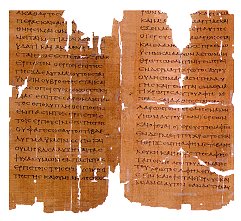
septuaginta

As soon as I announced the first-ever Septuagint Studies Soirée (and here it is!), J.K. Gayle responded with “Breast God: women in the male literary imagination of Genesis 49.” Find his post here. In it he writes about how the Greek translators of Genesis 49 rendered God’s Hebrew title Shaddai… or, rather, didn’t:

Then I recall what the Septuagint translators did with Shaddai in Genesis 49. They were men, weren’t they? Yes, breasts are mentioned, and womb. These motherly wifely womanly female images are in the Hebraic Hellene. And absence, margin, lack is there.

James Dowden offered further lexical analysis (I loved the detail) with a response here. These two gents are fine thinkers. And they are, indeed, gents. Gayle makes a point to recognize this in his WOMBman’s Bible blog, with a post in which he asks whether the Septuagint itself might not be some sort of soirée. I always need to spend some time with Gayle to really plumb the depths of his insights, but it’s time well spent. A sampling:

In many fascinating ways, this act of translating into Hellene opens up the text. It opens the text up into the debates over how Greek males (such as Alexander’s teacher Aristotle) may control the Greek language for elite educated men of the Academy. The language control was to exclude not only women but also sophists, rhetoricians, ancient epic poets, more contemporary poets, colonists such as those in Soli who committed “solecisms” in writing, and BarBarians who spoke in foreign barbarisms.

Read more Gayle here.

Along similar lexical lines, Suzanne McCarthy (Gayle blogs with her at BLT) tackled “another pesky Hebrew gender question” via Hebrew, Latin, English, and, of course, Greek. McCarthy also wrote about Adam’s nose (rendered “face,” but should it be?) here.

LXX Leviticus. Source: The Schøyen Collection

Jim West complained about Septuagint-o-mania (has he read the New Testament? has he read BLT blog???) but then posted a bunch of LXX-related links not long after (phew–he has read his NT, at least).

In two of the more substantive Septuagint posts this month, Nijay Gupta (who has impeccable taste in seminaries) wrote about the importance of the Septuagint (with an eye to pastors, among others). Part 1 is here. His Part 2 looks more closely at the Apocrypha. (“There is ample evidence to show that Jesus, Paul, James, and others certainly were acquainted with the Apocrypha and probably positively influenced by texts like Wisdom of Solomon and Sirach.”) His part 2 concludes with the promise of more to come.

Speaking of which, Jessica Parks was posting some great stuff on LXX Susanna earlier in the summer, so keep an eye out for anything LXX-related she may post in the future. She is now posting on Cataclysmic blog.

Brian LePort posted a good bit on the Septuagint in August (and before). He wrote about exegeting the Septuagint (with attention to its literary context) and even theologizing from it!

James McGrath looked to the Septuagint of Isaiah while reading Philippians 2.

This pre-dates August, but Blog of the Twelve posted a few LXX-related resources for consideration. And while we’re still dipping (but only briefly) back into July, Brian Davidson wrote about Matthew as a new Genesis.

Books

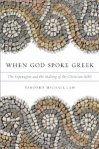
TML bookT. Michael Law’s When God Spoke Greek: The Septuagint and the Making of the Christian Bible went on tour. A multi-stop tour. Find all the posts gathered here at Near Emmaus. Oxford University Press, First Things, and Near Emmaus interviewed him.

Larry Hurtado mentioned that a book he co-edited with Paul L. Owen is now in (affordable) paperback. It’s called “Who Is This Son of Man?” The Latest Scholarship on a Puzzling Expression of the Historical Jesus, found here.

News

The International Organization for Septuagint and Cognate Studies held its International Congress in Munich in early August. Here are all the paper abstracts (pdf); here is the program (pdf).

Not-Blogs

These are not blogs proper, and not terribly active of late, but still worth checking out are this B-Greek forum (link malfunctioning at time of posting) and this Yahoo! group for LXX. The IOSCS (mentioned above) has a great page with some news and announcements here.

Feel free to leave more August 2013 LXX links of interest in the comments.

What BibleWorks on iPad looks like

The headline is not in error. BibleWorks does not make an app for iPad, still, but Parallels has just released an app called Parallels Access that allows you to use an iPad to access any computer–PC or Mac, desktop and laptop alike. They write:

Parallels Access ‘applifies’ your Windows and Mac applications, letting you remotely access and experience them as if they were made for iPad.  Tapswipe, pinch and scroll any Mac or PC software application – even if they were not optimized for the iPad – and get more done on-the-go!

More about the Parallels Access app is here. It’s free in the App Store, and you get a two-week free trial. After that it’s a fairy expensive (as apps go) subscription rate of $80/year. I hope to offer further insights about the app in the future on this blog, but for now, I’m pretty impressed that you can use your desktop and laptop programs as if they were (more or less) native to the iPad.

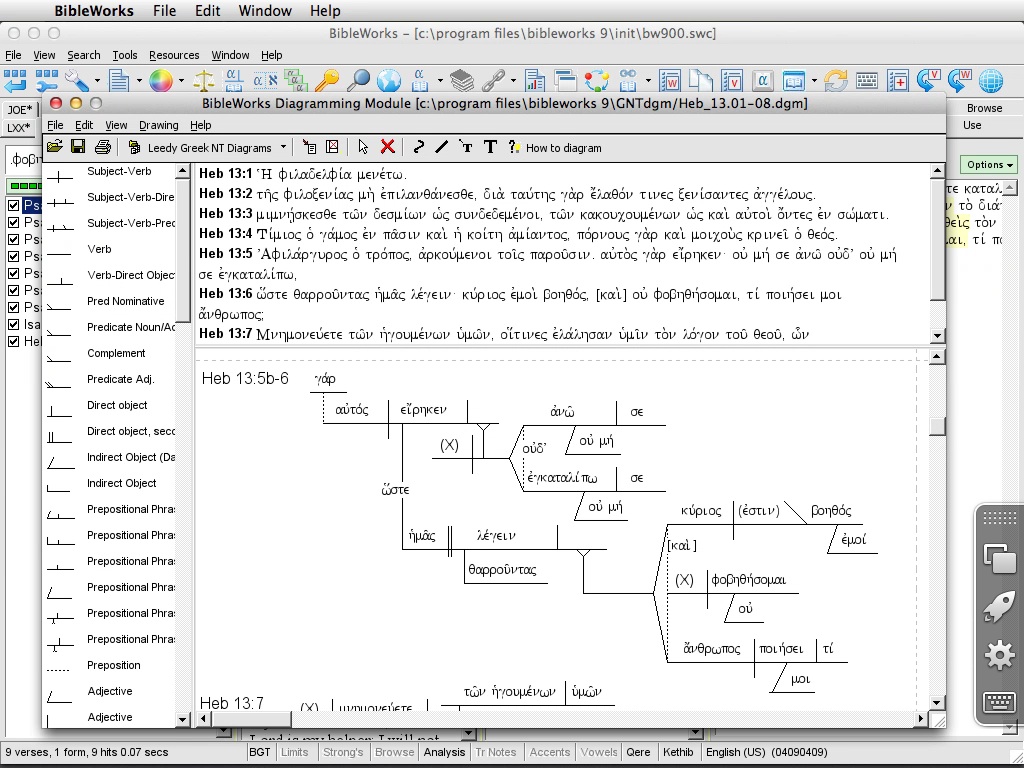
And more to the interests of this particular blog, here is what BibleWorks (using Mac Public Preview) on iPad (!) looks like, via Parallels Access (click to enlarge):

BW on iPad

Here are the sentence diagrams. Click to enlarge, and notice how crisp everything looks. (This is on an iPad mini.)

bw diagrams

Most remarkable to me is that the Use Tab feature works–in the desktop/laptop version of the program, this works by hovering over a word. In the Parallels Access version of BibleWorks, a single click on a word in the Browse Window activates the feature.

Astounding. As my friend and long-time college roommate would say: We’re in the future.

Local Faith, Global Cloud

We’ve had quite the readings today. We get people sawed in half, passing through a sea, and a prostitute being saved because of her faith. People are getting raised from the dead, standing up to grisly torture, and beating armies that they didn’t stand a chance against.

And it’s all because of their faith. These heroes of our religious tradition put everything on the line because they believed in God and in the promises of God.

We might add to this chapter all the stories of men and women around the world today who by faith are looking forward to a heavenly city: followers of Jesus in China who advocate for human rights, under threat of arrest; Coptic Christians whose churches and houses and business are being burned by extremists as the unrest and violence in Egypt continues.

I’m amazed at the faith of some of our brothers and sisters, past and present.

So is the author of Hebrews. This well-known and well-loved faith chapter, Hebrews 11, seems to just build and build with the inspirational stories of saints and martyrs who have gone on before us.

Abel, Enoch, Noah, Abraham, Isaac, Jacob, Joseph, Moses, Joshua… Rahab–a prostitute! After praising the faith of each of these, the author goes on:

“And what more shall I say? I do not have time to tell about Gideon, Barak, Samson, Jephthah, David, Samuel and the prophets,  who through faith conquered kingdoms, administered justice, and gained what was promised; who shut the mouths of lions,  quenched the fury of the flames, and escaped the edge of the sword; whose weakness was turned to strength; and who became powerful in battle and routed foreign armies.”

Hebrews 11:39 ends the chapter just like it began, by echoing Hebrews 11:2–these women and men were all commended for their faith.

What’s the Author Doing Now?

I had a college professor, a philosophy professor, who told us in the first few days of class that none of us knew how to read a book.

Well, obviously, Dr. Talbot, we know how to read, or we wouldn’t be here.

(Philosophy majors generally have a pretty high estimation of their own intelligence.)

But he said (and I paraphrase), “I’ll bet you haven’t been taught how to really sit down and wrestle with a text. To read it slowly. To follow the logic and argument of a text.” Dr. Talbot said when you read you should always be asking, “What’s the author doing now? What’s the author doing now? What’s the author doing now?”

And he always said it like that, in threes–”What’s the author doing now? What’s the author doing now? What’s the author doing now?” Seared into my memory.

As I was reading the end of Hebrews 11 this week, I found myself asking, why is the author of Hebrews spending so much time talking about faith? Why so many examples of acts of faith? What’s the author doing now?

In one sense it’s a hard question to answer, since we don’t know who wrote Hebrews.

Was it Paul? Barnabas? Clement? Priscilla?

Paul Hebrews
Probably not this guy

There have been various theories over the years. The go-to author for a New Testament letter would be Paul. But virtually all Biblical scholars today agree that it wasn’t Paul, because the language and style of Hebrews is different than what Paul used. Not only that, but the author of Hebrews writes as one who is depending on others’ eyewitness testimony regarding Jesus, whereas Paul in his letters speaks about seeing Jesus firsthand, about having had direct revelation from Jesus himself; think about his conversion on the road to Damascus, for example.  Others have suggested Barnabas, one of Paul’s companions, Luke, Clement (an early Bishop of Rome), or sort of a fringe theory is Priscilla. She was another companion of Paul’s who theoretically would have left any letter she wrote anonymous, because a female author would have been culturally unacceptable at the time Hebrews was written.

There’s no way to prove any of these authors, and as early as the 3rd century, theologian and teacher Origen summed it up: “Who wrote this epistle? Only God knows!”

But we can still make some progress on the question, “What’s the author doing now?” even if we don’t know who the author is. All this talk of faith in Hebrews 11 seems to come because the recipients of the letter were lacking in faith.

Both inward and outward pressures led to the very real possibility that the readers of Hebrews would lose faith, some in small ways, others perhaps in bigger ways. The readers are told not to “drift away” or “neglect” their salvation. They are to “hold firm.” They are in a “struggle against sin,” the author writes.

Who You Are

So what’s the author doing now? What, in chapter 11, is he (or she) trying to accomplish with this group of readers?

The author is reminding them of who they are. Hebrews 11 tells story after story of faith throughout the Scriptures.

And there’s some pretty extreme stuff.

Gideon, for example, a judge and leader of Israel. In Judges 7 he sets out with 32,000 soldiers to take on the Midianites and God tells him to reduce his army to 300 people, so that when they win the battle, Israel can’t brag, because only God can win a battle with an army that small. That took faith on Gideon’s part. A really gutsy faith.

Daniel's Answer to the King, by Briton Rivière, 1890
Daniel’s Answer to the King, by Briton Rivière, 1890

As for Daniel and his gutsy faith, someone once said, “The faith that will shut the mouth of lions must be more than a pious hope that they will not bite.”

Hebrews just rattles off these names quickly–“Gideon, Barak, Samson, Jephthah, David, Samuel and the prophets.” There’s more where that came from, the author seems to be saying–I’m just giving you a sampling.

And it doesn’t seem that the readers of Hebrews are in the same kind of mortal danger. So if men and women can withstand torture, war, beatings, etc., then the readers of the Hebrews can have faith to face smaller things.

Faith may lead believers into physically dangerous and psychologically threatening situations. Faith may call you to uproot and leave everything familiar to follow God. We saw this two weeks ago when we looked at the faith story of Abraham and Sarah.

Or… faith may have you stay right here. Having faith can be a very local activity. It happens right where you are. Maybe God’s not really calling you to go anywhere else right now, in a geographical sense, but to invest more deeply in the relationships and situations you’re already in. And so we long for a wholehearted faith that infiltrates our everyday routines, activities, and interactions.

4th century church father John Chrysostom said, “Faithfulness in little things is a big thing.”

“Makes Me Wanna Buy School Supplies”

pencils

I’d wager that a number of us find ourselves in such a position, as a new school year begins. We enter back into a familiar routine. And there’s excitement early on.

I love that line from You’ve Got Mail, where Tom Hanks says, “Don’t you love New York in the fall? It makes me wanna buy school supplies. I would send you a bouquet of newly sharpened pencils if I knew your name and address.”

But it doesn’t take long for excitement and novelty to turn into daily routine. Those newly sharpened pencils get worn down a bit, but we still have to find a way to write.

Hebrews calls for a redoubling of efforts, a reaffirmation of trust in God in the midst of the unknown and the familiar. “Faith is being sure of what we hope for and certain of what we do not see.”

Faith doesn’t always mean going somewhere else.  Sometimes it takes all the faith and trust you can muster to apply yourself to a situation or set of questions or relationships that are already at hand. Faith is local.

The readers of Hebrews were being called to be faithful right where they were.

Great Cloud of Witnesses, “Watching Us from the Grandstands”

And then, the grand finale to the faith section, Hebrews 12:1-2:

Therefore, since we are surrounded by such a great cloud of witnesses, let us throw off everything that hinders and the sin that so easily entangles, and let us run with perseverance the race marked out for us. Let us fix our eyes on Jesus, the author and perfecter of our faith, who for the joy set before him endured the cross, scorning its shame, and sat down at the right hand of the throne of God.

“Let us run with perseverance the race marked out for us”–Let us run with steadfast endurance. Never give up. “Never, never, never, never give up.” Some have pointed out in this passage that perseverance, when mentioned in the context of running a race, probably speaks to a long-distance race rather than a sprint. You have to pace yourself, but stay steady.

We want to “throw off” all hindrances and sin, which so sneakily and deceptively tries to just pull us in.

And we can have a persevering faith because in some timeless, global sense we are surrounded by this “great cloud of witnesses.” It’s a massive support network, past and present, of people who have been in similar situations to ours–and worse–and somehow have managed to keep their trust in God.

Think of what they call “cloud computing”–iCloud, Dropbox, Google Drive, Amazon Cloud. If we get it set up right, we can access our same set of data from our phone, computer, and tablets. “The cloud” is everywhere, when it comes to computing.

crowdWe are surrounded by a “great cloud of witnesses.” They’re everywhere, just like data! In some sense, the women and men, past and present, local and global, who inspire us, are present to us… surrounding us.

Denominations have been divided over questions like this–who are the saints? To what extent are they present? Can they hear our prayers? Receive them? Should we pray for dead Christians?

But the unknown author of Hebrews seems not to really be concerned with those questions. The author just says, “We are surrounded by such a great cloud of witnesses.”

We get the imagery of a stadium here. We’re running a race. This isn’t a run alone in the woods (as much as we might love those); this is a run in a stadium with a massive crowd of witnesses–of faith examples–surrounding us as we run, cheering us on. When we’re tired we can look at them and recall their successful races, and get a new boost to keep going ourselves.

The Living Bible translation says: “[W]e have such a huge crowd of men [and women] of faith watching us from the grandstands.”

The Greatest Witness in the Whole Cloud

The chief of these witnesses is Jesus. He is the “author” of our faith–the very reason we can have faith to begin with. He is the “perfecter” of our faith–he “[carries] on to completion” the good work he started in us.

Men and women in Hebrews 11 may have stared down deep waters, undergone beatings, been ridiculed, and more… but Jesus “endured the cross” because of “the joy set before him.”

Jesus is the ultimate exemplar of faith. Out of the great cloud of witnesses, he is the greatest witness.

Whether having faith in God leads us into places far or near, situations dangerous or fairly safe, we find inspiration in that great grandstand of saints who have gone before us. We receive encouragement from those saints sitting next to us each week in church.

As we run, may we keep focused on Jesus, who enables our faith and can even increase it. May God give us faith for where we are, right now, until that day when at last we see Jesus, at the right hand of the throne of God.

The above is adapted from the sermon I preached this past Sunday. See my other sermons, if you desire, here.

The NA28 Greek NT in Olive Tree’s Bible Study App: Initial Impressions, on a Mac

Which Bible software program should I buy? My answer to that question continues to be the most-visited post at Words on the Word. In it I offer a comparative review of BibleWorks (9), Logos (4 and 5), and Accordance (10).

A fourth popular Bible study software is by Olive Tree. Their “Bible Study App” works in the following platforms:

iPad
iPhone
Mac on Lion
Windows 8
Windows Desktop
Android

I’ve installed the app on a Mac and an iPad, and have received the NA28 Greek New Testament to review. In a short series of posts, I’ll report on the Bible Study App, and how it allows users to interact with the NA28 text and critical apparatus. Here I review the Mac version, using a MacBook laptop.

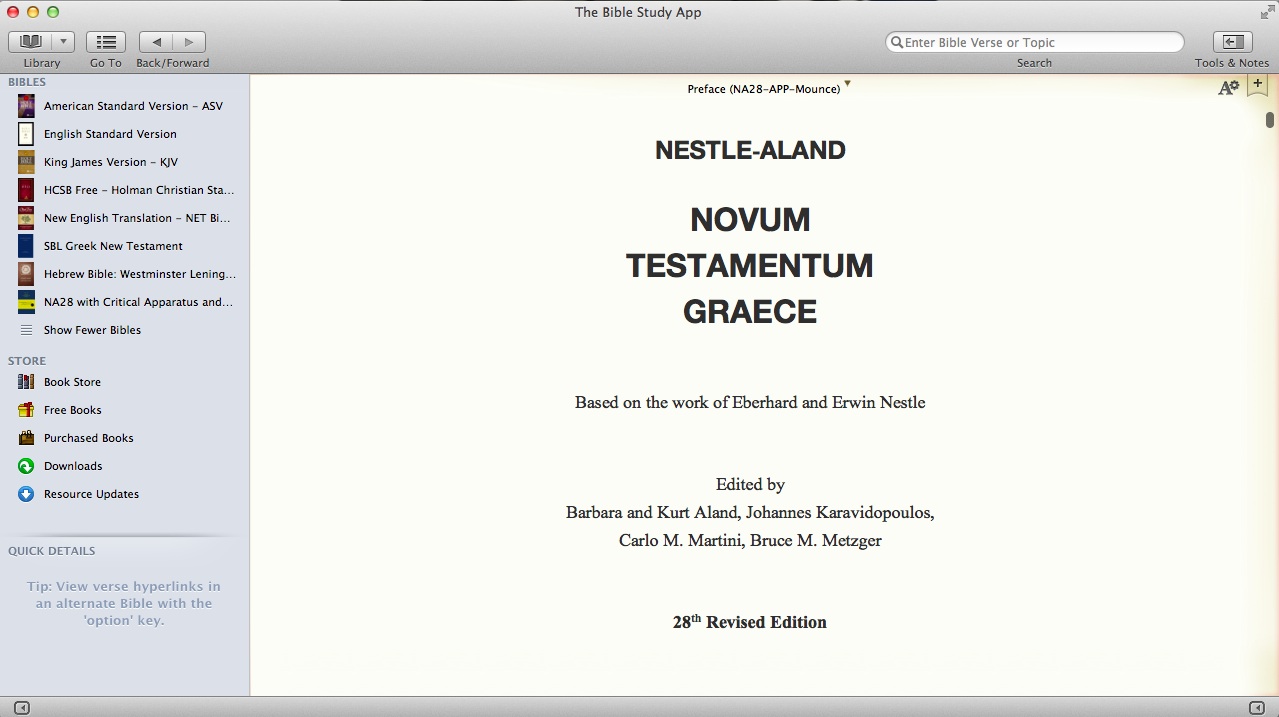
My opening screen, when I open the NA28 from my Library, looks like this (click to enlarge):

Opening Screen

The interface of the left sidebar resembles that of the Mac Finder windows. In addition the sidebar affords immediate (in-app) access to the Olive Tree store. Once you click on “Book Store,” you see a screen that slightly resembles the iTunes store:

Store

You can hide the sidebar and hide or customize the toolbar on top.

By clicking on the “Tools & Notes” icon on the top right (from the first screen shot above), I can open a second window (Olive Tree calls this “the split window”):

Split Window

I have several options at the top of the split window: Resource Guide, Notes, etc.

With the NA28 open, I quickly found four ways to navigate to a given verse–each of the three shown below, as well as a right-click option to select a verse.

Go To

For the NA28 with apparatus, I open the text in the left window and the apparatus in the right. Clicking on a word or hovering over it will show its morphological information (i.e., parsing and gloss) either through a pop-up menu (when clicking) or through the “Quick Details” at bottom left in the shot below (when hovering):

morphology info

Getting right to work within the program (with just the occasional reference to help files and a quick start guide) was easy enough. I didn’t find getting the two windows side-by-side to be as quickly intuitive as I would have liked, but I don’t know yet whether that’s a weakness in the program or just my newness to it. The interface is clean and visually appealing. I’ve already been impressed with all that’s available in the Olive Tree store.

More to come. In the meantime, Olive Tree has a blog post of their own on using the NA28 here.

Thanks to Olive Tree for the NA28 with Critical Apparatus, Mounce Parsings, and Concise Dictionary for the purposes of this blog review. You can find that product here

Greek Isaiah in a Year, Weeks 39 and 40 (Isa 47:1-49:11)

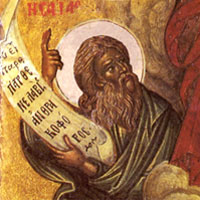
Isaiah prophet

This past week I was reminded why I’ve so much appreciated going through Isaiah slowly, just five or so verses a day. I wrote about a new observation I had (i.e., new to me) here.

This week and next week in Greek Isaiah in a Year will cover Isaiah 47:1-49:11. Here are the readings for each day:

08/26/13   Isa 47:1–5
08/27/13   Isa 47:6–10
08/28/13   Isa 47:11–15
08/29/13   Isa 48:1–5
08/30/13   Isa 48:6–11

09/02/13   Isa 48:12–16
09/03/13   Isa 48:17–22
09/04/13   Isa 49:1–3
09/05/13   Isa 49:4–7
09/06/13   Isa 49:8–11

Below is the text from R.R. Ottley’s Book of Isaiah According to the Septuagint, first in Greek, then with his English translation. Ottley is also here in Logos (reviewed here) and here as a free, downloadable pdf in the public domain. The full reading plan for our group is here (pdf).

See here for more resources and links to texts for Greek Isaiah.

47 1 Κατάβηθι, κάθισον ἐπὶ τὴν γῆν, παρθένος θυγάτηρ Βαβυλῶνος· εἴσελθε εἰς τὸ σκότος, θυγάτηρ Χαλδσίων, ὅτι οὐκέτι προστεθήσῃ κληθῆναι ἁπαλὴ καὶ τρυφερά. 2 λάβε μύλον, ἄλεσον ἄλευρον, ἀποκάλυψαι τὸ κατακάλυμμά σου, ἀνακάλυψαι τὰς πολιάς, ἀνάσυραι τὰς κνήμας, διάβηθι ποταμούς. 3 ἀνακαλυφθήσεται ἡ αἰσχύνη σου, φανήσονται οἱ ὀνειδισμοί σου· τὸ δίκαιον ἐκ σοῦ λήμψομαι, οὐκέτι μὴ παραδῶ ἀνθρώποις· 4 εἶπεν ὁ ῥυσάμενός σε Κύριος σαβαώθ, ὄνομα αὐτῷ ἅγιος Ἰσραήλ. 5 κάθισον κατανενυγμένη, εἴσελθε εἰς τὸ σκότος, θυγάτηρ Χαλδαίων, οὐκέτι μὴ κληθήσῃ ἰσχὺς βασιλείας.6 παρωξύνθην ἐπὶ τῷ λαῷ μου, ἐμίανας τὴν κληρονομίαν μου· ἐγὼ ἔδωκα εἰς τὴν χεῖρά σου, σὺ δὲ οὐκ ἔδωκας αὐτοῖς ἔλεος, τοῦ πρεσβυτέρου ἐβάρυνας τὸν ζυγὸν σφόδρα, 7 καὶ εἶπας Εἰς τὸν αἰῶνα ἔσομαι ἄρχουσα. οὐκ ἐνόησας ταῦτα ἐν τῇ καρδίᾳ, σου, οὐδὲ ἐμνήσθης τὰ ἔσχατα. 8 Νῦν δὲ ἄκουσον ταῦτα, ἡ τρυφερά, ἡ καθημένη, ἡ πεποιθυῖα, ἡ λέγουσα ἐν τῇ καρδίᾳ, αὐτῆς Ἐγώ εἰμι, καὶ οὐκ ἔστιν ἑτέρα, οὐ καθιῶ χήρα οὐδὲ γνώσομαι ὀρφανείαν. 9 νῦν δὲ ἥξει ἐξέφνης τὰ δύο ταῦτα ἐν μιᾷ ἡμέρᾳ, χηρία καὶ ἀτεκνία, ἥξει ἐξέφνης ἐπὶ σὲ ἐν τῇ φαρμακείᾳ σου, ἐν τῇ ἰσχύι τῶν ἐπαοιδῶν σου σφόδρα, 10 τῇ ἐλπίδι τῆς πονηρίας σου· σὺ γὰρ εἶπας Ἐγώ εἰμι, καὶ οὐκ ἔστιν ἑτέρα· γνῶθι ὅτι ἡ σύνεσις τούτων καὶ ἡ πορνεία σου ἔσται σοι αἰσχύνη· καὶ εἶπας τῇ καρδίᾳ σου Ἐγώ εἰμι, καὶ οὐκ ἔστιν ἑτέρα. 11 καὶ ἥξει ἐπὶ σὲ ἀπώλεια καὶ οὐ μὴ γνῷς, βόθυνος, καὶ ἐμπεσῇ εἰς αὐτόν· καὶ ἥξει ἐπὶ σὲ ταλαιπωρία, καὶ οὐ μὴ δυνήσῃ καθαρὰ γενέσθαι· καὶ ἥξει ἐπὶ σὲ ἐξέφνης ἀπώλεια καὶ οὐ μὴ γνῷς. 12 στῆθι νῦν ἐν ταῖς ἐπαοιδαῖς σου καὶ ἐν τῇ πολλῇ φαρμακείᾳ σου, ἃ ἐμάνθανες ἐκ νεότητός σου, εἰ δυνήσει ὠφεληθῆναι. 13 κεκοπίακας ἐν ταῖς βουλαῖς σου· στήτωσαν καὶ σωσάτωσάν σε οἱ ἀστρολόγοι τοῦ οὐρανοῦ, οἱ ὁρῶντες τοὺς ἀστέρας ἀναγγειλάτωσάν σοι τί μέλλει ἐπὶ σὲ ἔρχεσθαι. 14 ἰδοὺ πάντες ὡς φρύγανα ἐπὶ πυρὶ κατακαήσονται, καὶ οὐ μὴ ἐξέλωνται τὴν ψυχὴν αὐτῶν ἐκ φλογός· ὅτι ἔχεις ἄνθρακας πυρός, κάθισαι ἐπʼ αὐτούς. 15 οὗτοι ἔσονταί σοι βοήθειᾶ ἐκοπίασας ἐν τῇ μεταβολῇ σου ἐκ νεότητος, ἄνθρωπος καθʼ ἑαυτὸν ἐπλανήθη· σοὶ δὲ οὐκ ἔσται σωτηρία.

48 1 Ἀκούσατε ταῦτα, οἶκος Ἰακώβ, οἱ κεκλημένοι τῷ ὀνόματι Ἰσραὴλ καὶ οἱ ἐξ Ἰούδα ἐξελθόντες, οἱ ὀμνύοντες τῷ ὀνόματι Κυρίου θεοῦ Ἰσραήλ, μιμνησκόμενοι οὐ μετὰ ἀληθείας οὐδὲ μετὰ δικαιοσύνης, 2 καὶ ἀντεχόμενοι τῷ ὀνόματι τῆς πόλεως τῆς ἁγίας, καὶ ἐπὶ τῷ θεῷ τοῦ Ἰσραὴλ ἀντιστηριζόμενοι, Κύριος σαβαὼθ ὄνομα αὐτῷ. 3 τὰ πρότερα ἔτι ἀνήγγειλα, καὶ ἐκ τοῦ στόματός μου ἐξῆλθεν καὶ ἀκουστὰ ἐγένετο· ἐξάπινα ἐποίησα, καὶ ἐπῆλθεν. 4 γινώσκω ἐγὼ ὅτι σκληρὸς εἶ, καὶ νεῦρον σιδηροῦν ὁ τράχηλός σου, καὶ τὸ μέτωπόν σου χαλκοῦν. 5 καὶ ἀνήγγειλά σοι τὰ πάλαι πρὶν ἐλθεῖν ἐπὶ σέ· ἀκουστόν σοι ἐποίησα, μὴ εἴπῃς ὅτι Τὰ εἴδωλά μοι ἐποίησαν, καὶ <μὴ εἴπῃς> Τὰ γλυπτὰ καὶ τὰ χωνευτὰ ἐνετείλατό μοι. 6 ἠκούσατε πάντα, καὶ ὑμεῖς οὐκ ἔγνωτε· ἀλλὰ καὶ ἀκουστά σοι ἐποίησα τὰ καινὰ ἀπὸ τοῦ νῦν ἃ μέλλει γίνεσθαι· καὶ οὐκ εἶπας 7 Νῦν γίνεται καὶ οὐ πάλαι, καὶ οὐ προτέραις ἤκουσας αὐτά· μὴ εἴπῃς ὅτι Ναί, γινώσκω αὐτά. 8 οὔτε ἔγνως οὔτε ἠπίστω, οὔτε ἀπʼ ἀρχῆς ἤνοιξα τὰ ὦτά σου· ἔγνων γὰρ ὅτι ἀθετῶν ἀθετήσεις, καὶ ἄνομος ἔτι ἐκ κοιλίας κληθήσῃ. 9 ἕνεκν τοῦ ἐμοῦ ὀνόματος δείξω σοι τὸν θυμόν μου, καὶ τὰ ἔνδοξά μου ἐπάξω ἐπὶ σοί, ἵνα μὴ ἐξολεθρεύσω σε. 10 ἰδοὺ πέπρακά σε οὐχ ἕνεκεν ἀργυρίου· ἐξειλάμην δέ σε ἐκ καμίνου πτωχείας· 11 ἕνεκεν ἐμοῦ ποιήσω σοι, ὅτι τὸ ἐμὸν ὄνομα βεβηλοῦται, καὶ τὴν δόξαν μου ἑτέρῳ οὐ δώσω. 12 Ἄκουέ μου, Ἰακώβ, καὶ Ἰσραὴλ ὃν ἐγὼ καλῶ· ἐγώ εἰμι πρῶτος, καὶ ἐγώ εἰμι εἰς τὸν αἰῶνα, 13 καὶ ἡ χείρ μου ἐθεμελίωσεν τὴν γῆν, καὶ ἡ δεξιά μου ἐστερέωσεν τὸν οὐρανόν· καλέσω αὐτούς, καὶ στήσονται ἅμα, 14 καὶ συναχθήσονται πάντες καὶ ἀκούσονται. τίς αὐτοῖς ἀνήγγειλεν ταῦτα; ἀγαπῶν σε ἐποίησα ταῦτα ἐπὶ Βαβυλῶνα, τὸ θέλημά σου, τοῦ ἆραι σπέρμα Χαλδαίων· 15 ἐγὼ ἐλάλησα, ἐγὼ ἐκάλεσα, ἤγαγον αὐτὸν καὶ εὐόδωσα τὴν ὁδὸν αὐτοῦ. 16 προσαγάγετε πρὸς μὲ καὶ ἀκούσατε ταῦτα, οὐκ ἀπʼ ἀρχῆς ἐν κρυφῇ ἐλάλησα, οὐδὲ ἐν τόπῳ γῆς σκοτινῷ· ἡνίκα ἐγένετο, ἐκεῖ ἤμην, καὶ νῦν Κύριος ἀπέσταλκέν με, καὶ τὸ πνεῦμα αὐτοῦ. 17 οὕτως λέγει Κύριος ὁ ῥυσάμενός σε ὁ ἅγιος Ἰσραήλ, <Ἐγώ εἰμι ὁ θεός σου,> δέδειχά σοι τοῦ εὑρεῖν σε τὴν ὁδὸν ἐν ᾗ πορεύσῃ ἐν αὐτῇ. 18 καὶ εἰ ἤκουσας τῶν ἐντολῶν μου, ἐγένετο ἂν ὡσεὶ ποταμὸς ἡ εἰρήνη σου, καὶ ἡ δικαιοσύνη σου ὡς κῦμα θαλάσσης. 19 καὶ ἐγένετο ἂν ὡσεὶ ἄμμος τὸ σπέρμα σου, καὶ τὰ ἔκγονα τῆς κοιλίας σου ὡς ὁ χοῦς τῆς γῆς· οὐδὲ νῦν οὐ μὴ ἐξολεθρευθῇς, οὐδὲ ἀπολεῖται τὸ ὄνομά σου ἐνώπιόν μου. 20 Ἔξελθε ἐκ Βαβυλῶνος φεύγων ἀπὸ τῶν Χαλδαίων· φωνὴν εὐφροσύνης ἀναγγείλατε, καὶ ἀκουστὸν γενέσθω τοῦτο, ἀπαγγείλατε ἕως ἐσχάτου τῆς γῆς, λέγετε Ἐρρύσατο Κύριος τὸν λαὸν αὐτοῦ Ἰακώβ. 21 καὶ ἐὰν διψήσωσιν, διʼ ἐρήμου ἄξει αὐτούς, ὕδωρ ἐκ πέτρας ἐξάξει αὐτοῖς, σχισθήσεται πέτρα καὶ ῥυήσεται ὕδωρ, καὶ πίεται ὁ λαός μου. 22 οὐκ ἔστιν χαίρειν τοῖς ἀσεβέσιν, λέγει Κύριος.

49 1 Ἀκούσατέ μου, νῆσοι, καὶ προσέχετε, ἔθνη· διὰ χρόνου πολλοῦ στήσεται, λέγει Κύριος. ἐκ κοιλίας μητρός μου ἐκάλεσεν τὸ ὄνομά μου, 2 καὶ ἔθηκεν τὸ στόμα μου ὡσεὶ μάχαιραν ὀξεῖαν, καὶ ὑπὸ τὴν σκέπην τῆς χειρὸς αὐτοῦ ἔκρυψέν με· ἔθηκέν με ὡς βέλος ἐκλεκτόν, καὶ ἐν τῇ φαρέτρᾳ αὐτοῦ ἐσκέπασέν με, 3 καὶ εἶπεν μοι Δοῦλός μου εἶ σύ, Ἰσραήλ, καὶ ἐν σοὶ δοξασθήσομαι. 4 καὶ ἐγὼ εἶπα Κενῶς ἐκοπίασα, καὶ εἰς μάταιον καὶ εἰς οὐθὲν ἔδωκα τὴν ἰσχύν μου· διὰ τοῦτο ἡ κρίσις μου παρὰ Κυρίου, καὶ ὁ πόνος μου ἐναντίον τοῦ θεοῦ μου. 5 καὶ νῦν οὕτως λέγει Κύριος ὁ πλάσας με ἐκ κοιλίας δοῦλον ἑαυτῷ τοῦ συναγαγεῖν τὸν Ἰακὼβ καὶ Ἰσραὴλ πρὸς αὐτόν Συναχθήσομαι καὶ δοξασθήσομαι ἐναντίον Κυρίου, καὶ ὁ θεός μου ἔσται μου ἰσχύς.6 καὶ εἶπέν μοι Μέγα σοί ἐστιν τοῦ κληθῆναί σε παῖδά μου, τοῦ στῆσαι τὰς φυλὰς Ἰακὼβ καὶ τὴν διασπορὰν τοῦ Ἰσραὴλ ἐπιστρέψαι· ἰδοὺ τέθεικά σε εἰς φῶς ἐθνῶν, τοῦ εἶναί σε εἰς σωτηρίαν ἕως ἐσχάτου τῆς γῆς. 7 οὕτως λέγει Κύριος ὁ ῥυσάμενός σε ὁ θεὸς Ἰσραήλ Ἁγιάσατε τὸν φαυλίζοντα τὴν ψυχὴν αὐτοῦ, τὸν βδελυσσόμενον ὑπὸ τῶν ἐθνῶν τῶν δούλων τῶν ἀρχόντων· βασιλεῖς ὄψονται αὐτόν, καὶ ἀναστήσονται ἄρχοντες καὶ προσκυνήσουσιν αὐτῷ ἕνεκεν Κυρίου· ὅτι πιστός ἔστιν ὁ ἅγιος Ἰσραήλ, καὶ ἐξελεξάμην σε. 8 οὕτως λέγει Κύριος Καιρῷ δεκτῷ ἐπήκουσά σου, καὶ ἐν ἡμέρᾳ σωτηρίας ἐβοήθησά σοι, καὶ ἔδωκά σε εἰς διαθήκην ἐθνῶν, τοῦ καταστῆσαι τὴν γῆν καὶ κληρονομῆσαι κληρονομίαν ἐρήμου, 9 λέγοντα τοῖς ἐν δεσμοῖς Ἐξέλθατε, καὶ τοῖς ἐν τῷ σκότει ἀνακαλυφθῆναι. καὶ ἐν πάσαις ταῖς ὁδοῖς αὐτῶν βοσκηθήσονται, καὶ ἐν πάσαις ταῖς τρίβοις ἡ νομὴ αὐτῶν. 10 οὐ πεινάσουσιν, οὐδὲ διψήσουσιν, οὐδὲ μὴ πατάξει αὐτοὺς καύσων οὐδὲ ὁ ἥλιος, ἀλλὰ ὁ ἐλεῶν αὐτοὺς παρακαλέσει, καὶ διὰ πηγῶν ὑδάτων ἄξει αὐτούς· 11 καὶ θήσω πᾶν ὄρος εἰς ὁδὸν καὶ πᾶσαν τρίβον εἰς βόσκημα αὐτοῖς.

47 1 Come down, sit upon the ground, virgin daughter of Babylon; enter into the darkness, daughter of the Chaldaeans, for no longer shalt thou be any more called tender and delicate.

2 Take a millstone, grind meal, take off thy covering, uncover thy grey hairs, make bare the legs, pass through rivers.

3 Thy shame shall be uncovered, thy reproaches shall appear; I will do justice upon thee, no longer will I deliver thee over unto men,

4 Saith thy deliverer, the Lord of Hosts, his name is the Holy One of Israel.

5 Sit down in amazement, enter into the darkness, daughter of the Chaldaeans: no longer shalt thou be called the strength of a kingdom.

6 I was provoked at my people, thou defiledst mine inheritance: I gave (them) into thine hand, and thou showedst them no mercy; thou didst make the yoke of the elder very heavy.

7 And thou saidst, I shall be a princess for ever; thou perceivedst not this in thine heart, neither didst remember the last things.

8 But now hear this, delicate one, that sittest, that art confident, that sayest in thine heart, I am, and there is none other; I shall not sit as a widow, nor shall I come to know bereavement.

9 But now shall there come suddenly these two things in one day, widowhood and childlessness shall come suddenly upon thee in thy witchcraft; in the strength of thine enchantments exceeding greatly,

10 In the hope of thy wickedness; for thou saidst, I am, and there is no other: learn thou, that the understanding of these things and thy harlotry shall be thy shame: and thou saidst in thine heart, I am, and there is no other.

11 And there shall come upon thee destruction, and thou shalt not perceive it; a pit, and thou shalt fall into it: and there shall come misery upon thee, and thou shalt not be able to be clear of it: and there shall come destruction suddenly upon thee, and thou shalt not perceive it.

12 Stand now in thine enchantments, and thine abundant witchcraft, which thou didst learn from thy youth, to see if thou canst be helped:

13 Thou hast grown weary in thy counsels: let the astrologers of the heaven stand and save thee; let them who look on the stars declare to thee what is purposed to come upon thee.

14 Behold, all shall be burnt up as brushwood upon a fire, and they shall not deliver their soul from the flame; since thou hast coals of fire, sit thereon.

15 These shall be thy help: thou didst weary thyself in thy traffic from thy youth: each went astray by himself; but for thee shall be no salvation.

48 1 Hear ye this, house of Jacob, ye that are called by the name of Israel, and that have come forth from Judah, ye that swear by the name of the Lord God of Israel, calling him to mind not with truth, nor with righteousness,

2 And holding by the name of the holy city, and staying yourselves upon the God of Israel: the Lord of Hosts is his name.

3 Still have I declared the former things, and out of my mouth went they forth, and came to be heard: I did them suddenly, and they came to pass.

4 I perceive that thou art obstinate, and thy neck is an iron sinew, and thy brow brass.

5 And I declared to thee the things of old, before they came upon thee; I made it to be heard of thee, lest thou shouldest say, Mine idols have done it, and say, The graven and the molten images have commanded me.

6 Ye have heard all, and ye perceived not; but I have also made to be heard of thee the new things from henceforth which shall come to pass; and thou saidst not,

7 Now come they to pass, and not long since, and not in former days didst thou hear of them; lest thou shouldest say, Yea, I perceive them.

8 Thou didst neither perceive nor know, nor did I open thine ears from the beginning; for I perceived that thou wouldest utterly set them at nought, and thou shalt be called a transgressor even from the womb.

9 For my name’s sake will I show thee my wrath, and my glorious deeds will I bring upon thee, that I may not utterly destroy thee.

10 Behold, I have sold thee, not for silver; and I delivered thee out of the furnace of beggary.

11 For mine own sake will I do it unto thee; for my name is polluted, and my glory will I not give to another.

12 Hear me, Jacob, and Israel, whom I call; I am first, and I am for everlasting:

13 And mine hand laid the foundation of the earth, and my right hand established the heaven; I will call them, and they shall stand together.

14 And all shall be gathered together, and shall hearken. Who declared these things unto them? Because I loved thee, I did this upon Babylon, thy will, to destroy the seed of the Chaldaeans.

15 I spake, I called him, led him, and made his way prosperous.

16 Draw near unto me, and hear ye this; from the beginning have I not spoken in secret, nor in a dark place of the earth; when it came to pass, there was I, and now the Lord hath sent me, and his spirit.

17 Thus saith the Lord, thy deliverer, the Holy One of Israel: <I am thy God,> I have shown to thee, that thou mayest find the way wherein thou shalt walk.

18 And if thou hadst hearkened to my commandments, thy peace should have been made as a river, and thy righteousness as a wave of the sea;

19 And thy seed should have become as sand, and the offspring of thy womb as the dust of the earth; nor shalt thou now be utterly destroyed, nor shall thy name perish before me.

20 Come thou forth from Babylon, fleeing from the Chaldaeans; proclaim ye the voice of joy, and let this be heard, report it to the end of the earth; say ye, The Lord hath delivered his people Jacob.

21 And if they be thirsty, he will bring them through the wilderness, he will bring water for them out of a rock; a rock shall be cleft, and water shall flow, and my people shall drink.

22 There is no rejoicing, saith the Lord, for the wicked.

49 1 Hearken to me, ye isles, and attend to me, ye nations; after long time shall it stand, saith the Lord. From my mother’s womb he called my name,

2 And set my mouth as a sharp sword, and under the shelter of his hand he hid me; he made me as a chosen arrow, and in his quiver he sheltered me,

3 And said unto me, Thou art my bondman, Israel, and in thee will I be glorified.

4 And I said, Vainly have I laboured, in vain and for nought have I given my strength; therefore my judgment is from the Lord, and my toil before my God.

5 And now thus saith the Lord, that formed me from the womb his bondslave, to gather together Jacob and Israel unto him, I will be gathered, and will be glorified before the Lord, and my God shall be my strength.

6 And he said to me, It is a great thing for thee, that thou mayest be called my servant, that thou mayest set up the tribes of Jacob, and turn again the dispersion of Israel; behold, I have set thee for a light of nations, that thou mayest be for salvation unto the end of the earth.

7 Thus saith the Lord thy deliverer, the God of Israel, Sanctify him that lightly esteemeth his soul, him that is held abominable by the nations, the slaves of the rulers; kings shall see him, and rulers shall rise up and worship him for the Lord’s sake: for faithful is the Holy One of Israel, and I chose thee.

8 Thus saith the Lord, In an acceptable time I heard thee, and in a day of salvation I helped thee, and gave thee for a covenant of nations, to establish the earth, and to cause to inherit an heritage of a desert,

9 Saying to them that are in bonds, Go forth, and (bidding) them that are in darkness be revealed. And in all the ways they shall feed, and in all paths is their pasture.

10 They shall not hunger nor thirst, neither shall burning heat nor sun smite them; but he that hath mercy on them shall comfort them, and lead them through springs of waters:

11 And I will turn every mountain into a way, and every path into a pasture for them.

Basics of Biblical Greek vocabulary iPad app, reviewed

IMG_1048

Vocabulary cards have done wonders for my efforts to learn Greek and Hebrew. (And, really, anything else I put on a two-sided card.) Over the coming weeks and months, I’ll be reviewing a number of Greek and Hebrew vocabulary apps for iOS, with the iPad specifically in view. Today I review Zondervan’s Basics of Biblical Greek Vocabulary Cards app.

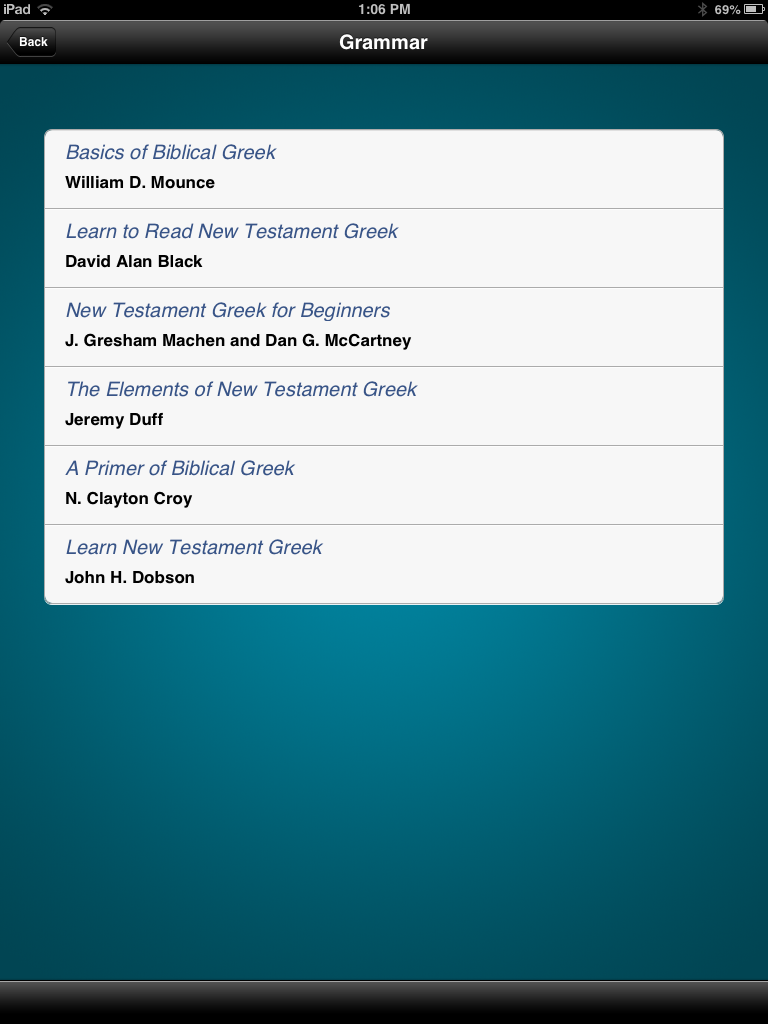
The above picture is the opening screen, following the branding and design of the popular textbook by William D. Mounce. Yet it is additionally keyed to five other popular beginning Greek grammars. This makes the app flexible to a number of students, so that they can be learning their exact vocabulary lists as presented by any of these textbooks. You can select the a book in the settings section:

IMG_0136

Words first appear on the screen like this:

IMG_1050

Then by tapping or swiping up or down, the English meaning is revealed:

IMG_1049

Swiping left or right from a Greek word goes just through the Greek words and doesn’t show English. (Tapping the double arrow keys at the bottom of the screen does the same.)

From what I can tell, the gloss (English “meaning”/equivalent) stays the same regardless of which grammar you select. This may be a rights or permission issue–that Zondervan would just use Mounce’s word glosses, even with the other grammars–but users of other textbooks besides Mounce’s should be aware of this.

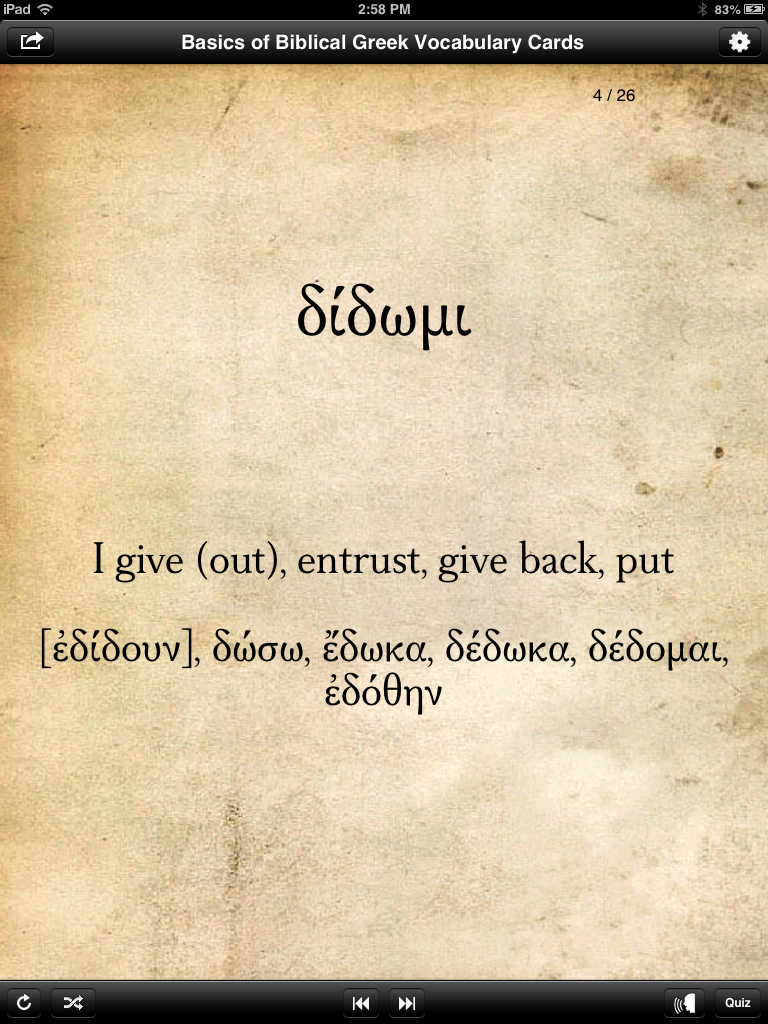
Verbs helpfully come with principal parts, displayed once you tap or swipe to show the English:

IMG_0137

Note also the audio icon on the bottom right of the screen above (just to the left of the “Quiz” button). For any given card, tapping on that icon plays an audio pronunciation of the word, which is a nice add-on, compared to the print cards. You can also set pronunciations to “on” in the preferences section, so that you automatically hear it every time you show a new word.

There is a glitch when switching to landscape mode. The same card as above looks like this in landscape orientation:

IMG_0138

That’s a pretty noticeable bug for such a simple and common function/gesture on an iPad, so I hope Zondervan fixes it soon. Along similar lines, another un-iPadlike bit of behavior is that if you close a case/cover to put your screen to sleep while the app is open, when you wake up the iPad, it shows the opening screen every time. It does remember your place, but to see the opening screen in such an instance seems odd. I don’t know of any other apps that do that.

Here is the “Sort” screen that shows all the ways you can customize the set of cards you want to go through. This is the app’s greatest strength.

IMG_0139

As you can see, you can sort not only by grammar, but also by chapter. For someone going sequentially through a textbook, this is a good feature. (It has the same effect as just “pulling” given chapters from one’s vocab card deck, though note that you can only select consecutive chapters here.) You can also quiz yourself by a single part of speech: “any,” noun, verb, adjective, adverb, preposition, or particle.

There are frequency settings, too, so that one can easily isolate words that appear just 50 to 100 times in the New Testament, for example.

I experienced it as a fairly significant loss (compared to the print cards) that these cards do not have frequency information on them. On the print cards you can see how many times a word appears in the Greek New Testament. Here there is no way to do so. You can set the frequency of what words you’ll study, but if you selected words with 50-500 occurrences, there would be no way to differentiate from within that set. The best you can do is to study a set within a range of frequencies by descending frequency (i.e., with most frequent words coming first in the “deck” you create for yourself).

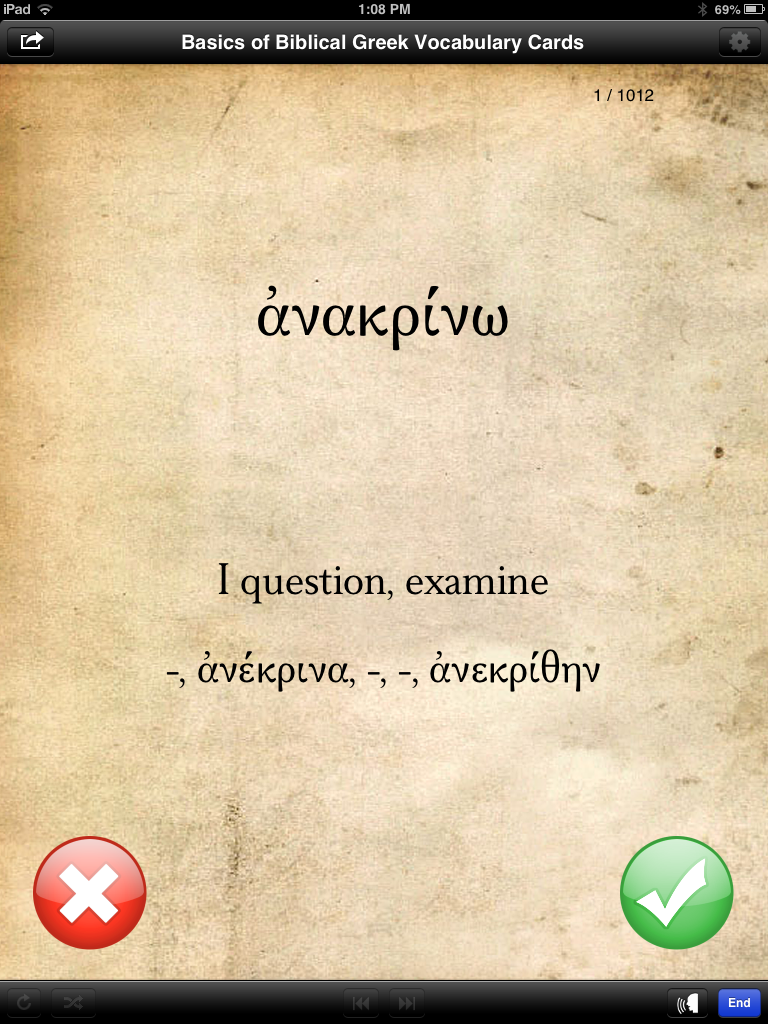
Here’s what a card looks like when you send it into “Quiz Mode”:

IMG_0140

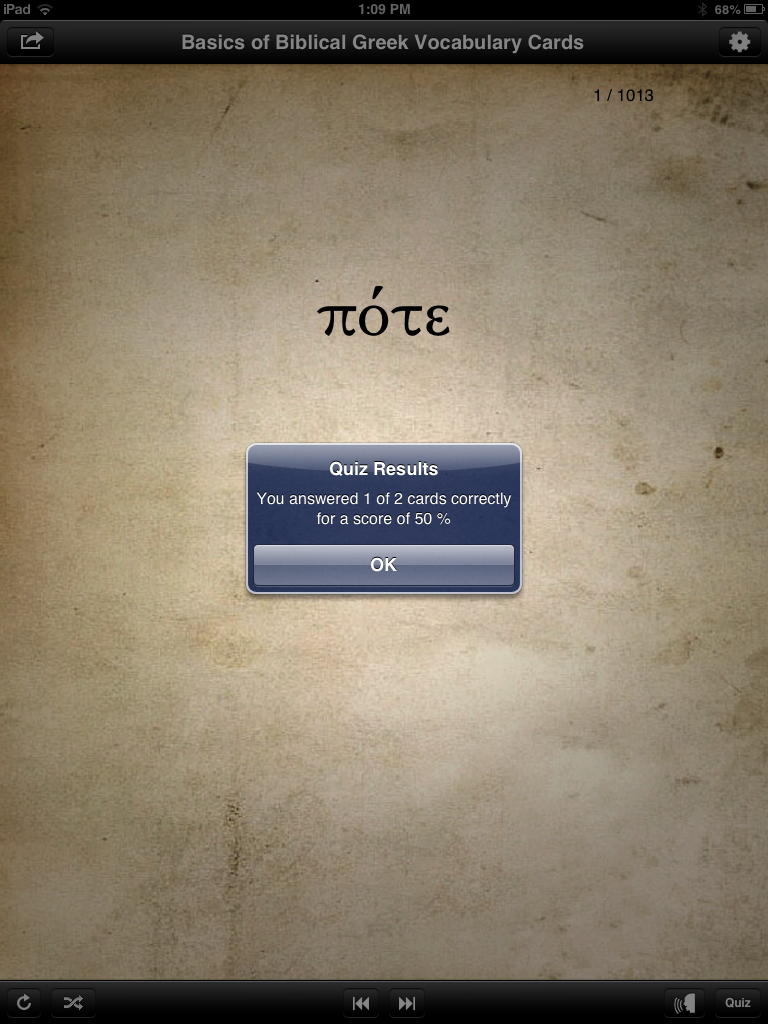
This feature works well and is a good way to track progress. You see the Greek first, then tap or swipe to see the English, then tap the red X or green check mark to show if you got it right or wrong. Then the app tracks your answers for a quiz score when you’re done:

IMG_0141

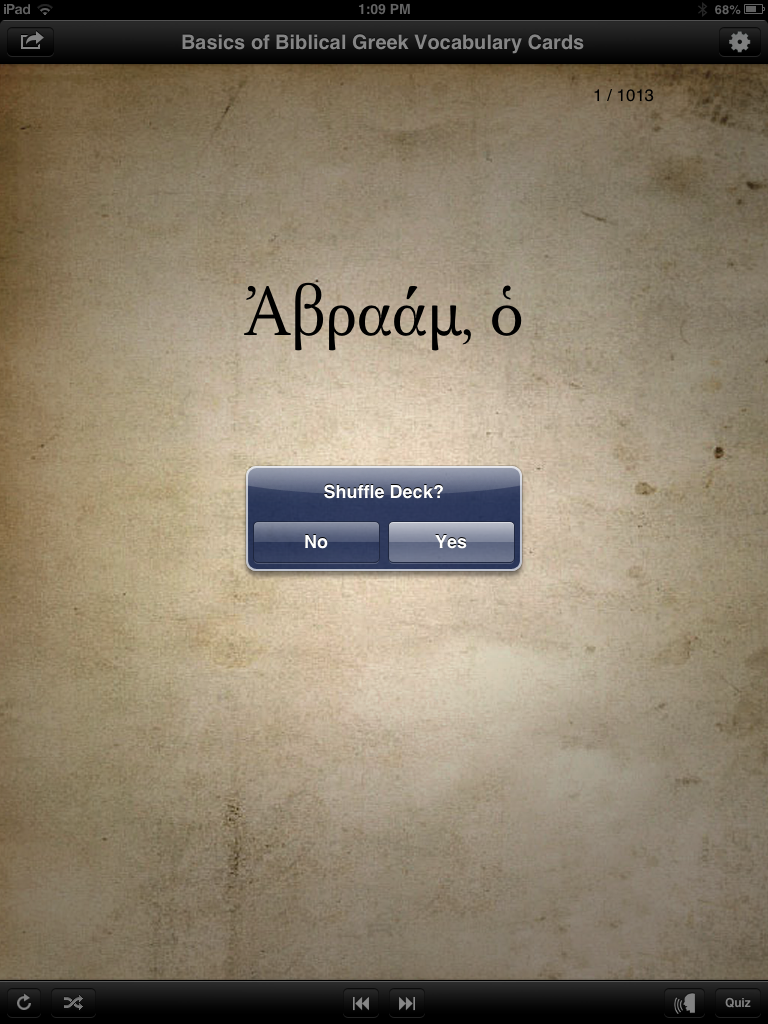
Using the icons at the bottom left of the above shot, you can either reset or shuffle a given deck:

IMG_0143

At $20, the Basics of Biblical Greek app is more expensive than most iPad apps a person would buy. There are other vocabulary app options on the market that do a similar thing (with even more customizability) for a lower price. I’ll explore some of those options in the future. I’m not convinced that the $20 is warranted with the app in its current iteration–I’d like to see a fix of the landscape mode option, as well as the addition of frequency statistics for individual words. The font is easy to read (though not the same font as used in Mounce’s materials), and the audio pronunciation is a nice addition.

8/27/13 UPDATE: I’ve heard from a developer that an update to the app will be released very soon that includes word frequency counts on the individual cards, fixes the landscape orientation bug shown above, and an English to Greek vocabulary card function. (This last one is a great idea, especially.) I know the developers are open to suggestions, so if you have used this app and have any ideas, feel free to leave a comment here. Future updates to the app will include additional features, as well.

The app is here, via the iTunes store. If and as it receives any future updates, I’ll post about them here.

Thanks to Zondervan for the complimentary app, given to me for the purposes of a review, with no expectations or pressures as to the content of this review.

The Disappearance of the Vocative Comma

And now for something completely different…

Welcome Students

The Oxford Comma is one thing. I support it and will for all time. But what about the disappearance of the ill-fated vocative comma?

When addressed to a person or group of people, a sentence that names said person(s) ought to have a comma in place like this:

Michael, take out the trash.

Hi, Betty.

Welcome, tourists!

But it seems to be going by the wayside. You’re hard-pressed to find, “Michael take out the trash” but “Hi Betty” and “Welcome tourists” are fairly ubiquitous. (And technically not correct.)

However, many say that conventions of grammar, usage, punctuation, etc. do and should follow how people actually speak, write, and use words.

So will the Vocative Comma go the way of the Oxford Comma?

Reader, I hope not.

Septuagint Studies Soirée: Last Call

Last call for nominations for any blog posts (or articles, etc.) you think should be nominated for the Septuagint Studies Soirée. I’ll be posting it in just a couple of days, so let me know if you see anything you think should be included.

You can comment here or on the original post, or email me using this form.