A Review of Discovering the Septuagint: A Guided Reader (Jobes)

Discovering the LXX


At long last Karen Jobes’s Discovering the Septuagint: A Guided Reader, has been published by Kregel Academic. The TL;DR version of my review is: while the resource has a few noticeable flaws (easily fixable for a second edition), its addition to the world of Greek reading and Septuagint studies is long overdue.

Below is a longer review of the book, in what I hope will be easy-to-scan Q & A format.


What books of the LXX are covered?

There are ten, intended to “give readers a taste of different genres, an experience of distinctive Septuagintal elements, and a sampling of texts later used by writers of the New Testament” (9). Discovering the Septuagint treats nearly 700 verses from:

  1. Genesis (80 verses)
  2. Exodus (79 verses)
  3. Exodus 20:1–21 // Deuteronomy 5:6–21 (10 Commandments)
  4. Ruth (85 verses)
  5. Additions to Greek Esther (73 verses)
  6. Psalms (67 verses)
  7. Hosea (56 verses)
  8. Jonah (48 verses)
  9. Malachi (55 verses)
  10. Isaiah (81 verses)


For whom is this book?

Jobes says it “contains everything needed for any reader with three semesters of koine Greek to succeed in expanding their horizons to the Septuagint” (8). I think this assessment is right, as I found the book easy to understand (though I’ve had more than three semesters of Greek).


How is the book structured?

Each LXX book has a short introduction. Then there is the passage, verse by verse, with the Greek text re-printed in full. Under each verse are word-by-word and phrase-by-phrase comments on the vocabulary, usage, syntax, translation from Hebrew (the book is strong here), and so on. Following each passage is the NETS (English translation). The end of the book has a three-page, 33-term glossary and a two-page “Index of New Testament LXX Citations” for the books included in the reader.


What does a sample entry look like?

Here’s Jonah 4:6:

jobes-on-jonah-lxx


What’s commendable about Discovering the Septuagint?

It shouldn’t go without saying that the very existence of this resource is a boon to Greek readers. There is Conybeare and Stock, as well as some passages in Decker’s Koine Greek Reader, but readers of the Septuagint have far fewer resources than readers of the Greek New Testament.

The margins are plenty wide for students to jot down their own parsings, translations, and notes.

Notes on the verses are often answers to questions I’ve had as I’ve read the Greek text. In this sense the reader is a great guide. For example, here is a comment from Genesis 1:4:

ἀνὰ μέσον . . . ἀνὰ μέσον | Idiomatic prep phrase, “between.” This is a Hebraism, so there is no need to translate the second of the pair as NETS does.

And another helpful nugget from Genesis 1:11:

κατὰ γένος | Prep + neut sg acc (3rd dec) noun, γένος, kind. Remember the nom and acc forms are identical in this paradigm. Agrees with and modifies σπέρμα.

Whether or not a fourth semester Greek student should remember that nominative and accusative forms are identical in the third declension is another issue. That the reader reminds me as much is welcomed.


What is lacking?

The glued binding doesn’t do justice to a book like this, but that seems to be the way many publishers have gone recently, even with reference works in biblical studies.

Parts of the book feel under-edited or rushed to print:

  • a few typos (missing periods, etc.)
  • referring to the Rahlfs-Hanhart text as a “critical edition of the Septuagint” (9), which is technically true, but potentially misleading, as “semi-critical” is better (text criticism is not a real concern of the book)
  • a peppering of vague statements like this one on “the image of God” in Genesis 1:26: “See a commentary or study Bible” (31)
  • the typesetting on the epsilon just seems off to me. I’ve tried to convince myself it’s just me, but I haven’t since been able to unsee what just looks like a flattened ε or a backwards three, rather than an actual Greek letter:


    screenshot-2016-10-31-22-06-57


    By contrast, look at the letter in this screenshot, taken from Accordance Bible Software:


    screenshot-2016-10-31-22-08-42


    The layout and Greek font are nice otherwise! (Though a couple times in the typesetting of the book, a letter from another language intrudes mid-word.)

  • Introductory issues are quite sparse–whether in the introduction to the Greek of the Septuagint itself (just two pages) or in the introductions to books. I would have liked it if the contributing writers had offered more for each book–even three or four pages would have gone further than the one or two that are here.
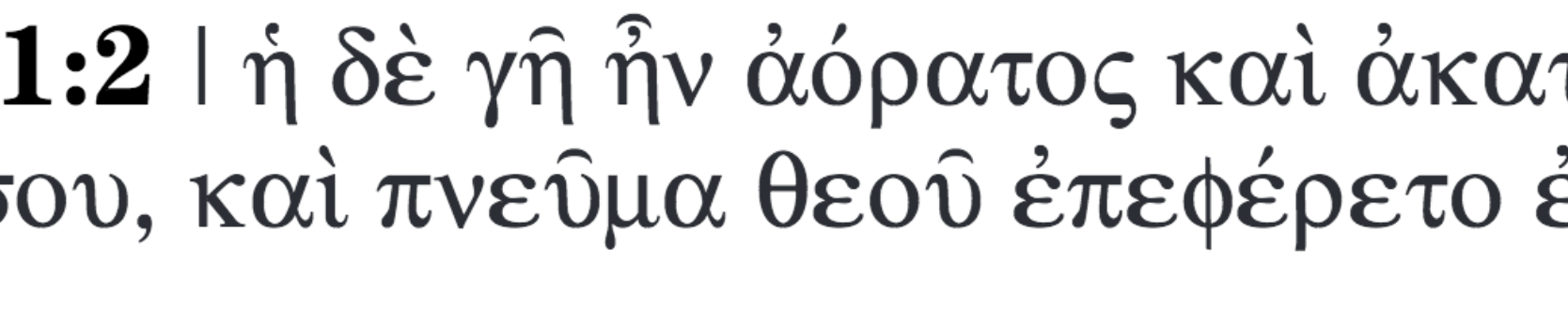
This last point deserves just a couple more lines. A number of the introductions adapt or “abstract” their text from the NETS book introductions, which readers could easily enough have found on their own. In some ways the book introductions read just like exam study guides you might have made yourself for a grad-level class on the Septuagint. That may be, in fact, how they started! (Jobes is chief overseer of the book, with many contributors.) This does not make the introductions not valuable, but it will probably leave readers wishing for more detail.

All in all, Discovering the Septuagint is worth owning. The number of times I’ve gotten grammatical or morphological help from the comments far outweighs any of the volume’s weaknesses. And there is a lot of Greek help to be had here. I’ll be making repeated use of this book by Jobes and company, and am glad it’s finally on the market.

Discovering the Septuagint is available from Amazon, as well as from Kregel.


Thanks to Kregel for sending the review copy, provided to me so I could write about the book, but with no expectation as to the content of my review.

From the Creator of Captain Underpants: Dog Man

Our children don’t need any encouragement in the area of scatalogical humor, but here we all have been anyway, laughing through the pages of Dav Pilkey’s new Dog Man. (Pilkey of Captain Underpants fame.) That is to say–this book would not be something to read to your four-year-old daughter. Unless, uh, she had two older brothers and was already unfazed by such humor.

Case in point:


one-day-this-happened


in-my-office-now


Dog Man, as Pilkey tells it, is the creation of George Beard and Harold Hutchins, two comic-writing friends whose teacher, Ms. Construde, clearly does not appreciate their “disruptive activity in my classroom.” All my kids love it, of course.

The premise itself is a little more violent than I would have liked for my (or any) kids: Dog Man is born when the evil cat Petey blows up Officer Knight and his dog Greg:

Doctor: I’m sorry Greg, but your body is dying. and your head is dying too, cop.

Officer: Rats! I sure hate my dying head!

But just when all seemed lost…

Nurse Lady: Hey! Why don’t we sew Greg’s head onto cop’s body?

Doctor: Good idea, nurse lady! You’re a genius!

Here “a brand-new crime-fighting sensation was unleashed.”

Dog Man the character is about what you would expect from somebody who is half man, half dog. He battles Petey, then Robo Chief, and then a giant, walking Philly cheesesteak mascot in chapter 4, “Weenie Wars: The Franks Awaken.” This last chapter was probably the funniest and best part of the book. Sample lines:

OH look! Little baby hot dogs are starting a revolution!!!!

We’re not little babies! we’re regular sized!

(Their subsequent claim to be “gangsta” will go over kids’ heads and seems to unfortunately engage in cultural appropriation.)

A fun feature that comes up at several points is the “Flip-O-Rama,” where you can create a little bit of animation by quickly flipping between pages. At this moment I’m looking at the book’s warning: “Remember—Flip it, Don’t Rip it!!!!!!”, which happens to be right next to a newly made rip in our edition. Oh, well.

The section in the back of the book with “How 2 Draw” different characters is icing on the cake.

For how inexpensive the book is, I was pleasantly surprised to see a sewn binding. The colors are vibrant and the lettering is what you would expect from Dav-Pilkey-as-two-kids-writing-a-comic. It inspired my own kids to write their own. (Details forthcoming, or maybe we’ll just try for a book deal.)

If you’re trying to avoid scatological humor, don’t get this book. If you’ve maybe slacked a little with your standards for your kids in that regard, they’ll probably love Dog Man.

You can find the book at Scholastic’s page here. It’s also available at Amazon here. Dav Pilkey’s got his own site, too.


Thanks to Scholastic for the review copy, given with no expectation as to the content of the review.

Mamoko: A World Where Kids Read to the Grown-Ups

mamoko-3000


Some of the best book gifts our oldest child has received have been Maps and Animalium from Big Picture Press, an imprint of Candlewick.

Our kids have also spent many collective minutes and hours poring over two books from The World of Mamoko series: The World of Mamoko in the Year 3000 and The World of Mamoko in the Time of Dragons.

The premise of Mamoko is simple: “Use your eyes!” to “follow the adventures” of more than two dozen different characters through seven detailed spreads that span two pages each. The books are hardback, like giant board books, so they’ll last us a long time. The target age range is 5-8 years old, but my four-year-old (who can’t yet read) really enjoys looking at the pictures, too.

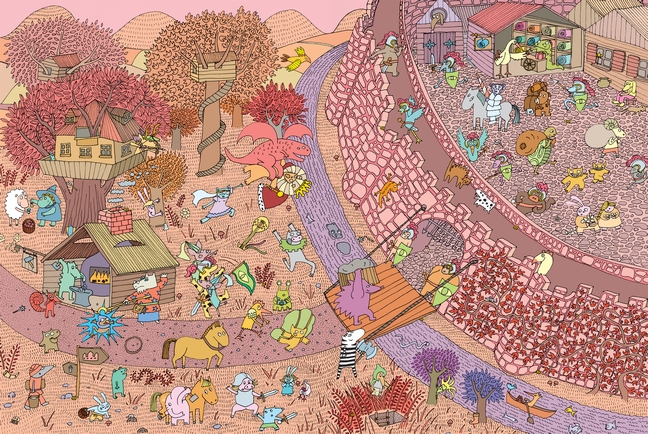
Here’s a spread from World of Mamoko in the Time of Dragons:


mamoko-in-the-time-of-dragons


It’s lots of fun. There are short descriptions of each character that help in knowing what to look for. For example, a pink elephant (holding a hammer?) is Othello Smith:

OTHELLO SMITH is feeling bummed out. What is the cause of his distress?

The book is pretty funny. And it’s big enough that, like the Where’s Waldo? books, two people can easily look for characters and their antics at the same time.

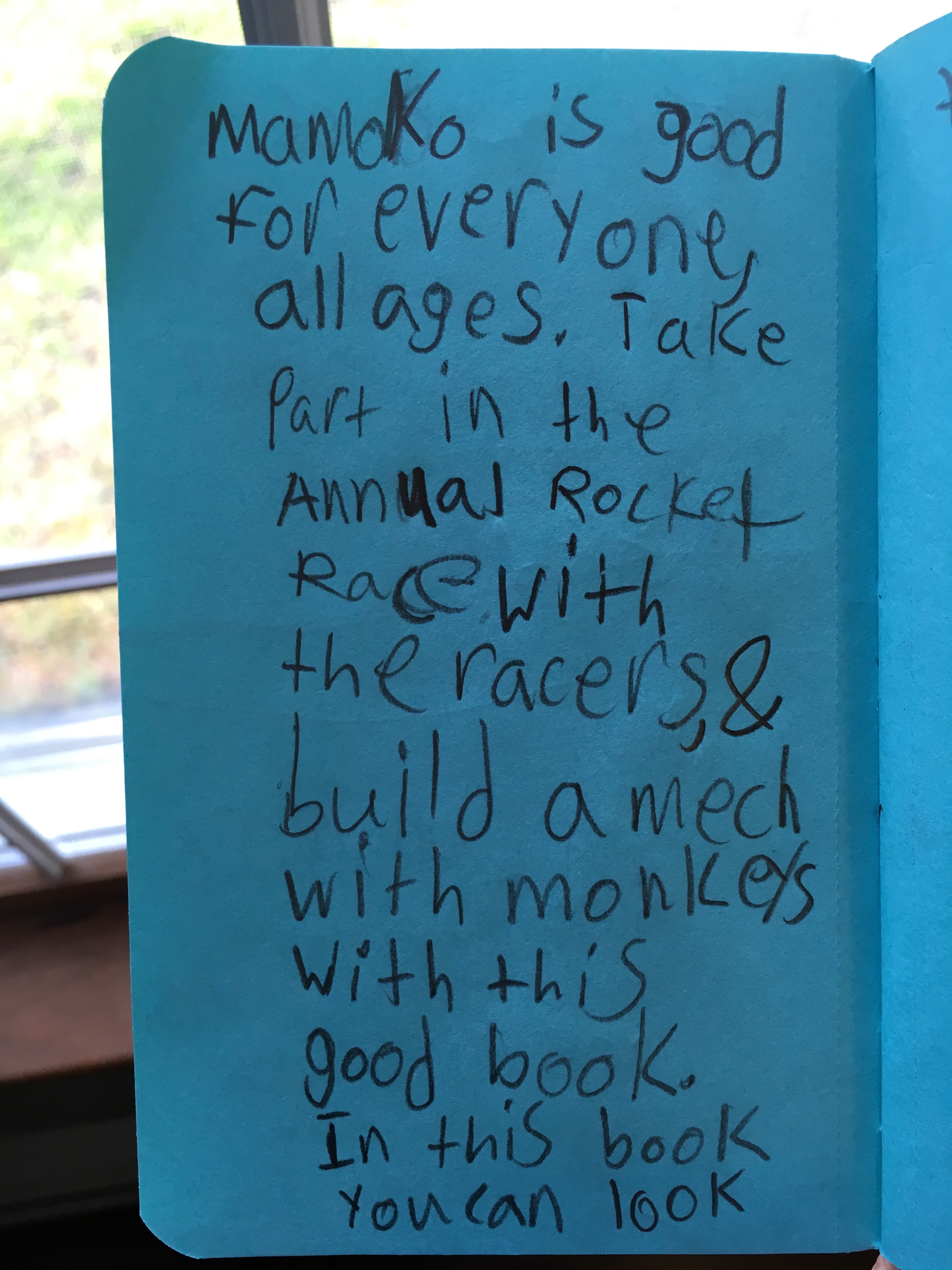
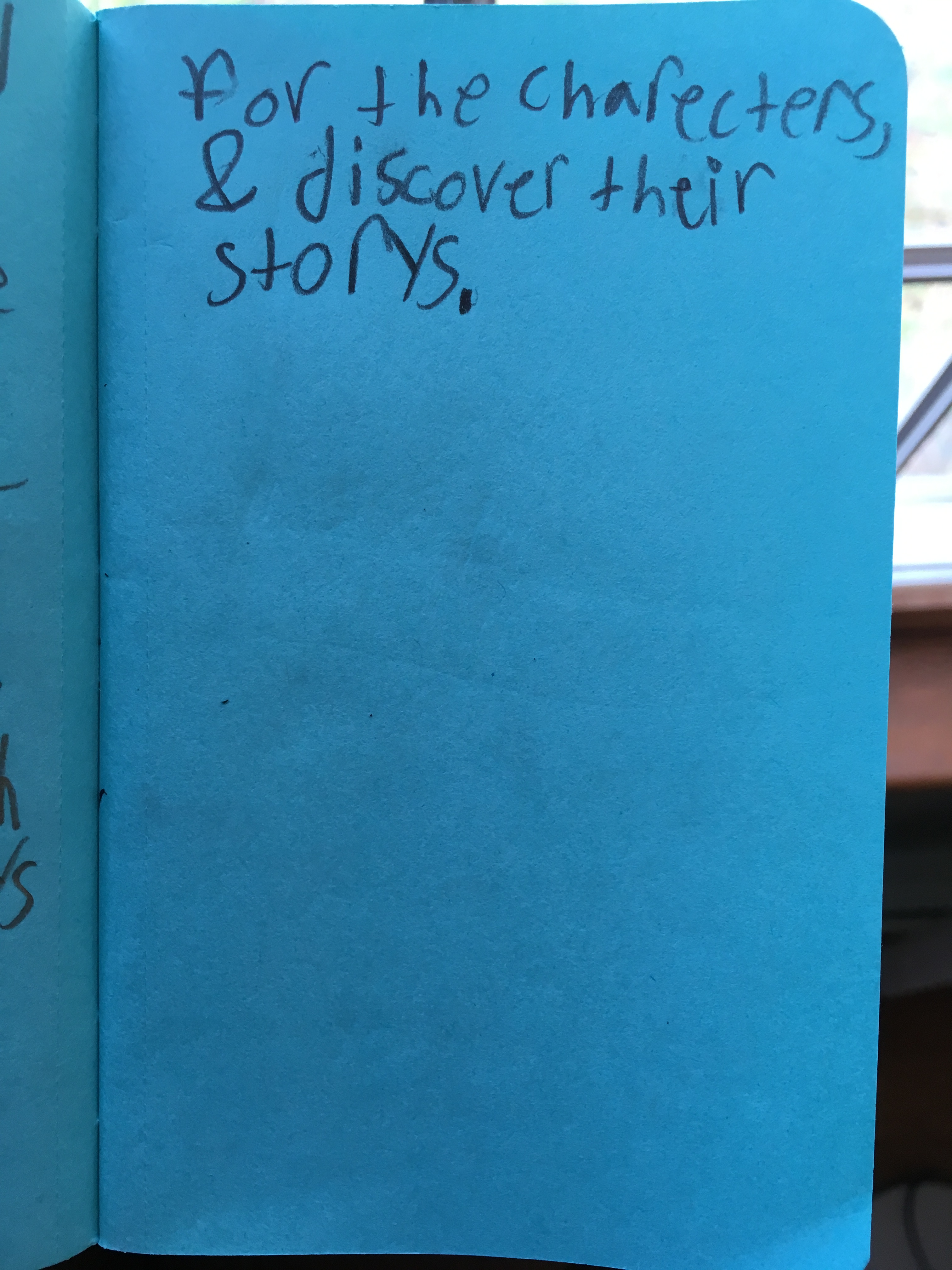
But I told Candlewick my kids would help me review these two books, and a promise is a promise, so… here are my nine-year-old’s review notes from The World of Mamoko in the Year 3000:


mamoko-3000-1


mamoko-3000-2


mamoko-3000-3


And here’s his short take on The World of Mamoko in the Time of Dragons:


mamoko-dragons


You can find all three Mamoko titles at Candlewick’s page here. They’re also available at Amazon here.


Thanks to Candlewick Press for the review copies, given with no expectation as to the content of the review.

Let the Church be a Thermostat, not a Thermometer

mlk-in-jail


Tomorrow our church’s adult Sunday school class will discuss white privilege and Martin Luther King’s compelling “Letter from a Birmingham Jail.” I think I’ve marked up at least 50% of the words in his moving piece of writing. Here’s one section that stood out:

There was a time when the church was very powerful–in the time when the early Christians rejoiced at being deemed worthy to suffer for what they believed. In those days the church was not merely a thermometer that recorded the ideas and principles of popular opinion; it was a thermostat that transformed the mores of society.

King continues:

But the judgment of God is upon the church as never before. If today’s church does not recapture the sacrificial spirit of the early church, it will lose its authenticity, forfeit the loyalty of millions, and be dismissed as an irrelevant social club with no meaning for the twentieth century. Every day I meet young people whose disappointment with the church has turned into outright disgust.

Perhaps I have once again been too optimistic. Is organized religion too inextricably bound to the status quo to save our nation and the world?

Reading and preaching through the Old Testament lectionary (prophets!) has been reminding me of the dual proclamation of the prophets: both God’s hope (which I prefer to think about and preach on) and God’s judgment on those who practice injustice and sin (not as easy to talk about; no less true). Rev. Dr. King was a prophet in the tradition of Joel, Amos, Isaiah, Jeremiah, and all the rest. Of course the church today is not immune from God’s judgment for too easily capitulating to a non-Christlike status quo.

Also intriguing is the idea, as Joel has it in tomorrow’s reading, that all believers have not only the Holy Spirit, but also the charge of prophesying and proclaiming the truth of the God who judges with justice, in whom we can put our hope. All of God’s people are called to the prophetic office!

The Joy of Analogue: Outlining the Book of Joel for Preaching

One essential step in my sermon preparation process is reading the book of which the preaching passage is a part. I find it a discipline to hold off on reading commentaries and sit with the text itself. This is easier with a short book like Joel, from which this Sunday’s Old Testament lectionary reading comes.

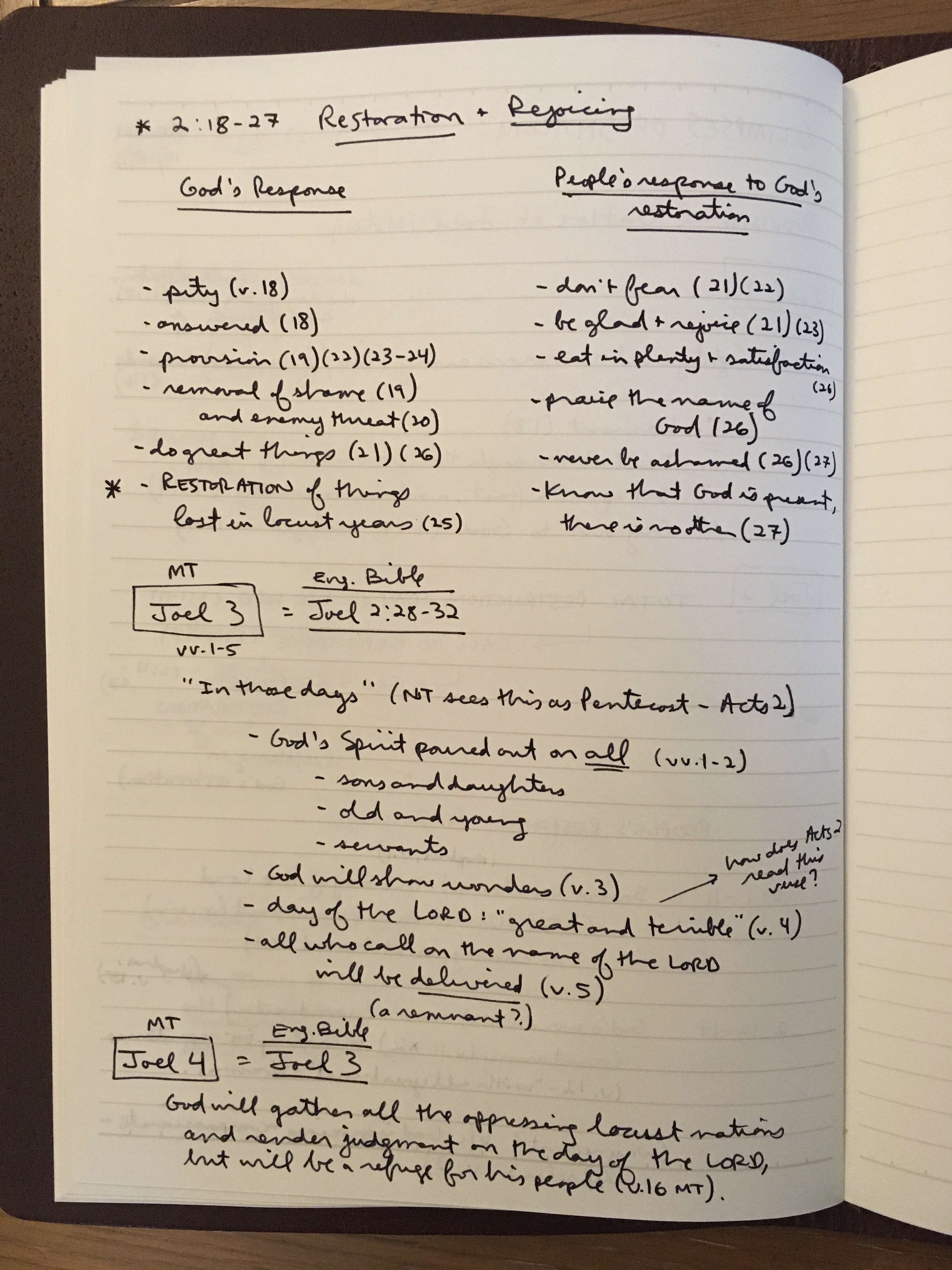
I find myself more focused to read through and outline the book in analogue fashion. Here’s what it looked like for me yesterday morning:


img_8646


(Having fine writing implements like a fountain pen and nice paper helps!) I have since transferred my book outline to MindNode, from which I’ll continue my sermon planning. Starting device-free is important (and really enjoyable) for me.

Here’s my two-page provisional outline of the book of Joel, complete with a misspelling of “devastation”:


img_8647


img_8648

American Football LP2: Fallen Leaves Return to Their Roots

AF_2016_LP_Jacket_PRINT.inddSeventeen years is a long time to wait for new music from a band you love. Fortunately, none of us (not even the band) knew we were waiting that long. In 2014 American Football reunited, after putting out 12 of the most enduring tracks of my college years.

In some ways the success or failure of this album was much like this year’s Vice Presidential debate: the players really just had to show up and not seriously mess things up.

 
American Football Track List in iTunes.png
 

The album begins with the fading in of one, then two, then three interlocking guitar parts. Mike Kinsella’s, “Where are we now?” invites the listeners to consider their place in life since the last American Football record. “Both home alone… in the same house” shows the movement of the yearning-for-love teenage emo kid to a now married but still yearning adult. The house on this album cover is the same as that on their first full-length record. This time, though, as the cover suggests, listeners get a closer look at what’s going on inside: “Would you even know, babe, if I wasn’t home… if I wasn’t afraid to say what I mean?”

As the full band enters into this powerful opening waltz, the lyrics go on, “We’ve been here before.” Or as a Chinese proverb I recently discovered puts it, “Fallen leaves return to their roots.” These guys are back to their roots of making smart, intricate, and gorgeous music. But the vocals are stronger (and mixed louder), there is a bass now, the guitar tones are more varied, the drumming is just about perfect, and the production is what you’d expect if these guys had made major label status.

There’s a sense in which LP2 sounds exactly as I hoped it would—but couldn’t have possibly imagined. The second track’s familiar arpeggios, string bends, polyrhythms, and harmonics could have just as easily appeared on the first record. But I don’t think even a die-hard American Football fan could have seen the pummeling drum and bass intro of “Give Me the Gun” coming. That rhythm section, that never existed in the band’s first bass-less incarnation, makes this album more than just an old band making a new record.


americanfootball1-shervinlainez
Photo credit: Shervin Lainez


To pre-empt those who will bemoan how much this record “sounds like Owen” (especially with the acoustic guitar intro of “Home is Where the Haunt Is”), I offer three thoughts.

  1. Mike Kinsella is one, undivided person, so for his work on other projects (Owen) not to influence this band (American Football) would be impossible.
  2. Steve Holmes’s guitar work (not to mention Lamos and cousin Kinsella on rhythm) fill out the songs in a way that set it apart from just about anything Owen–even with full band–has created.
  3. Band members shared the songwriting process, trading off who offered the first seed of any given song.

There is, however, one unfortunate carry-over from Owen to American Football: a few raunchy lyrics that don’t find a place amid the transcendent beauty of the music this band creates. It’s not singing about sex I’m opposed to, but I cringe at lyrics like: “Dead eyes, and a mouth that can’t be clean / I can only imagine where that dirty mouth is / It’s not on me.” And, “I’m down for whatever / the uglier the better.”

So maybe Kinsella is speaking to himself when he sings later, “Why such vulgarity?” Or is it his interlocutor? I’ve had the same question since the second record Owen released. It’s a real mismatch with the gorgeousness of the music throughout the record, and something that was never in play with American Football. Kinsella does better with lines like, “Oh, how I wish that I were me / the man that you first met and married.”

The final track, “Everyone is Dressed Up,” is as much an instant classic as the album’s first song. The 6/8 time signature and return of Steve Lamos’s trumpet are a fitting end to this album, as are the poignant lyrics, “Our love will surely be forgotten by history and scholars alike.” The song is marred only by the final line of, “Everybody knows that the best way to describe the ocean to a blind man / is to push him in,” which, besides being unnecessarily demeaning (what is this, Donald Trump’s Twitter feed?), sounds like it might have been the final pre-deadline lyric of the album. The final track and album needed a more convincing ending, worthy of all the goodness that preceded it.

The nine tracks (the same number as the first LP) clock in at 37 minutes. After about five listens I found myself already wanting LP3! I hope the band stays together. They’re as in sync as ever, and the addition of Nate Kinsella’s bass rarely feels out of place, with the drumming of Steve Lamos being better than ever. Mike Kinsella and Steve Holmes might be my favorite pairing of guitarists, too—they haven’t missed a beat.

Get started on this album as soon as you can: the trifecta of the first three tracks are pure bliss. Despite a few shortcomings, LP2 was worth the wait.

American Football’s LP2 releases this Friday, October 21.


Purchase info: iTunes / Amazon / Polyvinyl


Thanks to the powers-that-be for the advance release download of this fine album, so I could write a review.

Accordance 12 is Coming….

Image from http://www.accordancefiles1.com/exchange/graphics.htm
Image from http://www.accordancefiles1.com/exchange/graphics.htm (not an Accordance 12 image)


From David Lang at the Accordance blog:

Pssssttt! I’m going to let you in on a little secret. We’ve been hard at work on Accordance 12, a major upgrade to the Accordance application with a host of new features you’ll soon be wondering how you ever got along without. We’re not ready to tell you about the big stuff just yet, but here’s a sneak peek at one of the many minor enhancements you can look forward to in version 12.

Read more here.

The Freedom Simply to Begin (First Draft Co.)

When creating something—whether writing, sketching, jotting lyrics, or laying out a plan for a new project—getting started is often half the battle. To feel the freedom simply to begin—to make a first draft—makes the work possible.

Any writing teacher or art instructor will tell you that good creative work begins not with a finished product, but with a draft. That may seem obvious, but lots of folks involved in creative pursuits forget that the first goal of putting something down to paper should be, well, to put something down to paper. It need not be a finished product; in fact, in all but the rarest bursts of inspiration, it’s the working over the initial insight or burst of effort that leads to a refined or compelling outcome. As Ernest Hemingway put it, in a dictum variously attributed to others, “Easy writing makes hard reading.” It’s the constant, if not obsessive commitment to drafting and revising and redrafting that leads to strong work.

That’s one reason I like the name of the company that produces this journal, which suggests that what happens in the pages of its product will be a starting place, a beginning. “We started First Draft Co. with a passion to build tools and experiences that inspire creativity,” the web site announces.


front-cover


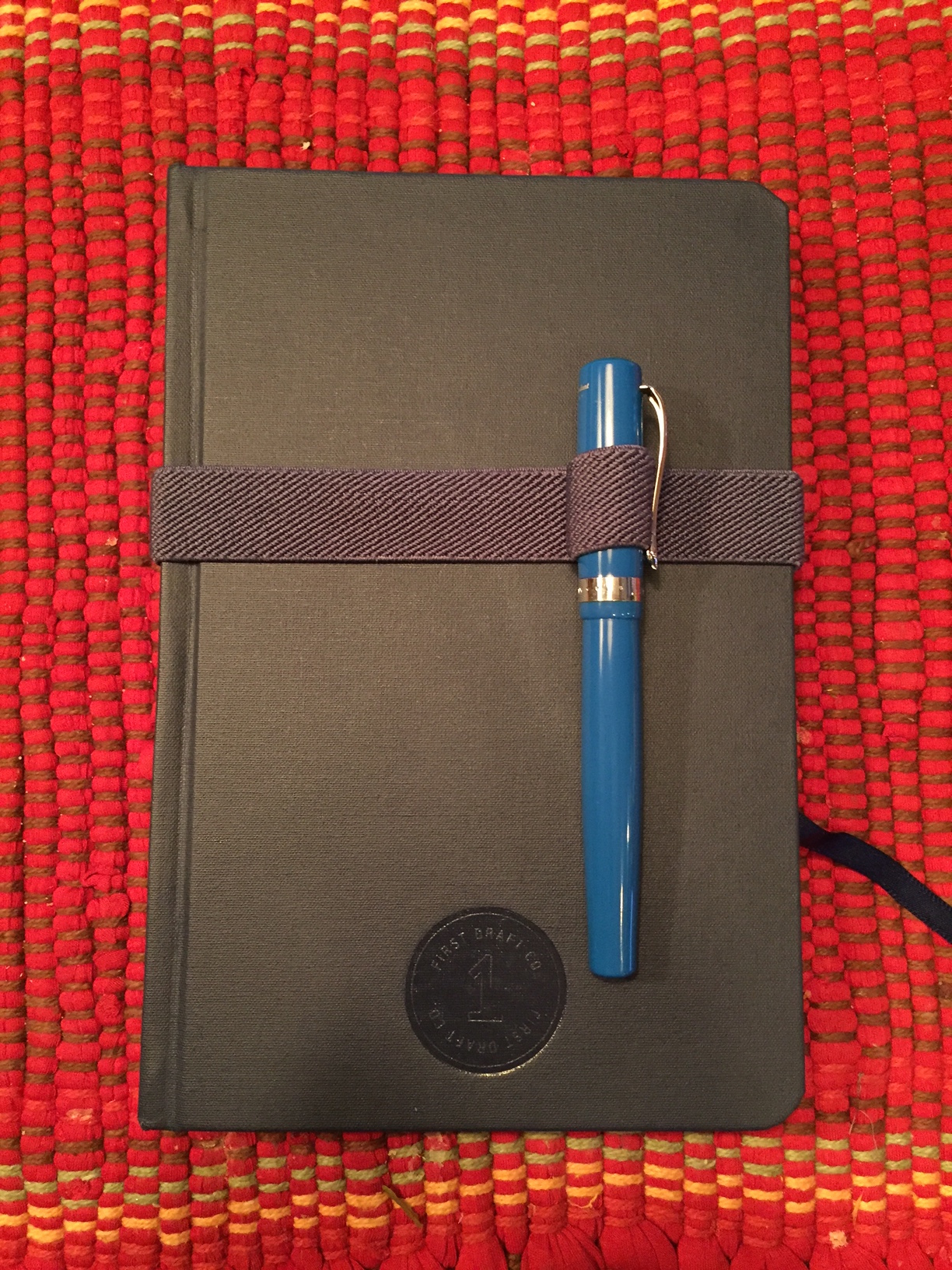
The blank book provided for this review looks impressive from first glance. But it also has a solid feel. The hardcover boards, covered with library buckram, give heft, and make the book feel like more than a sketchpad or casual notebook. The satiny place ribbon also conveys something classy and useful, making it easy to resume work once the journal has been put away.


open-inside


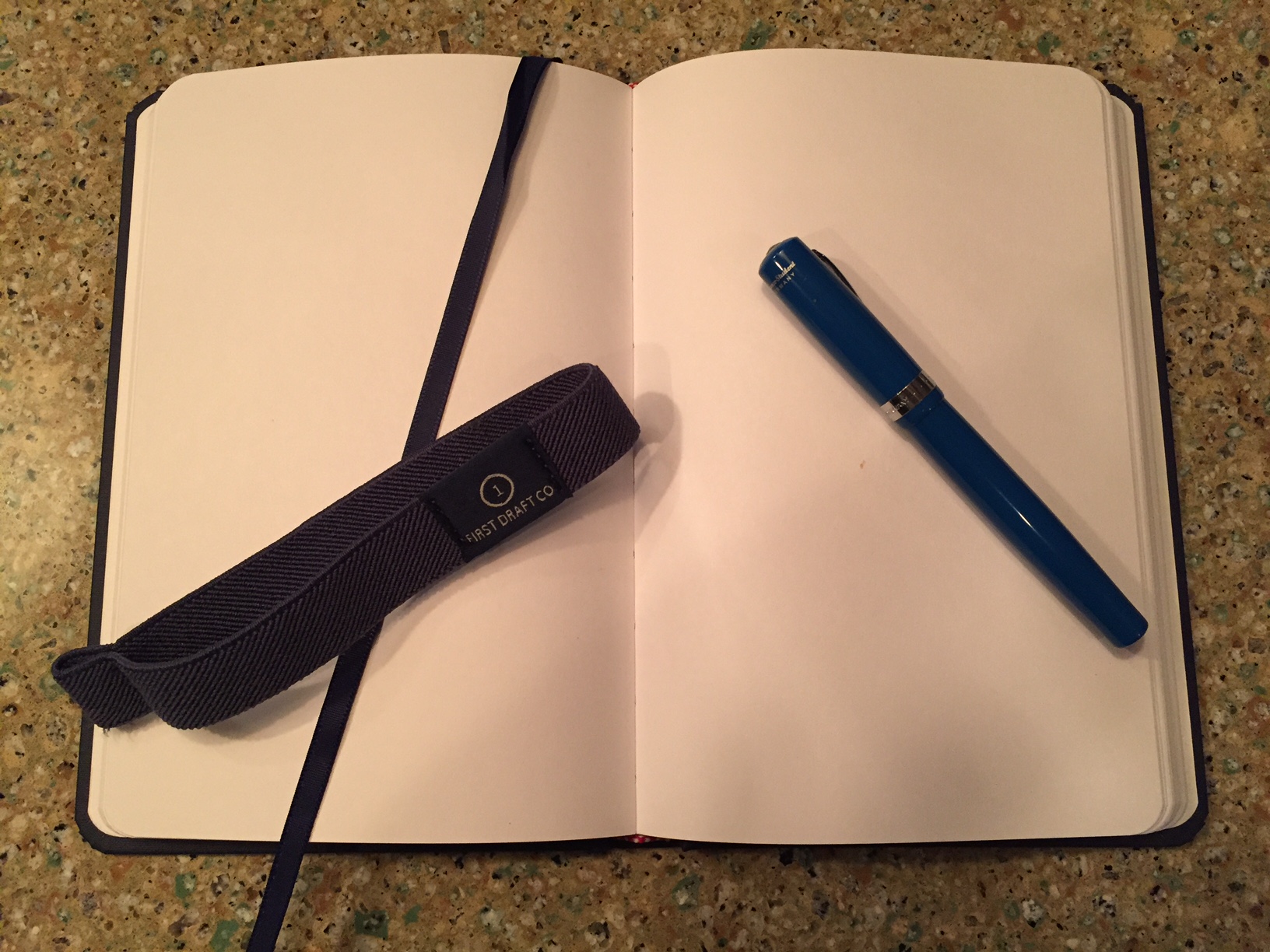
The pages are blank—no lines or dots—leaving the creator ultimate freedom. The elastic cloth band holds the pages and cover together. Slipping it off takes a couple of seconds but that need to perform a ritual act allows for a moment or two or reflection, allowing a pause for gathering one’s thoughts, perhaps one’s scattered presence for the promising task at hand.


with-pen


Some specs:

  • 104 gsm bright white paper (fountain pen-friendly, smooth, makes for a top-notch writing experience)
  • Smyth Sewn binding (yes! lays flat easily)
  • sustainably sourced paper
  • 224 pages (you won’t need a new one any time soon)
  •  5.5” by 8.25”
  • Made in the U.S.A.

You can find the First Draft Co. notebook (together with the Blackwing pencils and gorgeous desk gear they offer) here.


–Reviewed by author and guest blogger Timothy Jones


Thanks to the kind folks at First Draft Co. for the notebook for review, provided without any expectation as to the content of this write-up.

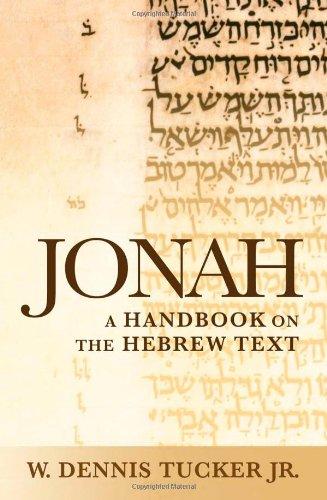
Jonah: Baylor Handbook on the Hebrew Text


A couple of Advents ago I preached on Jonah. There is no lack of good resources on the book, even ones that treat the Hebrew text itself. But the Baylor handbook offers a somewhat unique perspective, analyzing the words and phrases of the Hebrew text, as well as reading it through a discourse analysis lens:

This approach begins by observing that within Biblical Hebrew texts a number of types or “discourses” can be identified. Each type has a particular function that is readily evident. Narrative discourse relates the events of a story (Gen 8). Predictive discourse speaks of an event in advance of its occurrence (I Sam 10:2s7). Hortatory discourse is meant to exhort someone to act in a particular manner (Job 2:9). Procedural discourse tells someone either how to do something or how something was done (Gen 27:1-4). And expository/descriptive discourse is meant to explain something or make a statement (2 Sam 12:7). (3)

The Jonah handbook is short and compact. The formatting is easy to follow. First there is an English translation, passage-by-passage. Then the Hebrew text is reprinted verse-by-verse (making this an all-in-one-place reading aid). After that is “an analysis of that clause as a whole, with comments related to the function of the clause, its discourse type, and related syntactic matters” (9). Finally, there are word-by-word or phrase-by-phrase comments.

Overall, I appreciated the handbook: I read it cover to cover. The grammatical comments are helpful at multiple turns. For example, here is the text of Jonah 3:8

וְיִתְכַּסּ֣וּ שַׂקִּ֗ים הָֽאָדָם֙ וְהַבְּהֵמָ֔ה וְיִקְרְא֥וּ אֶל־אֱלֹהִ֖ים בְּחָזְקָ֑ה וְיָשֻׁ֗בוּ אִ֚ישׁ מִדַּרְכּ֣וֹ הָֽרָעָ֔ה וּמִן־הֶחָמָ֖ס אֲשֶׁ֥ר בְּכַפֵּיהֶֽם

For וּמִן־הֶחָמָ֖ס, W. Dennis Tucker, Jr. writes:

When a preposition governs more than one object, the preposition will typically be repeated before each object. The waw copulative + מִן signals the continuation of the prepositional phrase.

Here’s a representative comment using discourse analysis, coming at Jonah 3:10:

A qatal in a dependent clause provides background information in the relative past (i.e., past in comparison to the mainline). This is often expressed in translation through the use of a pluperfect (Longacre, 82).

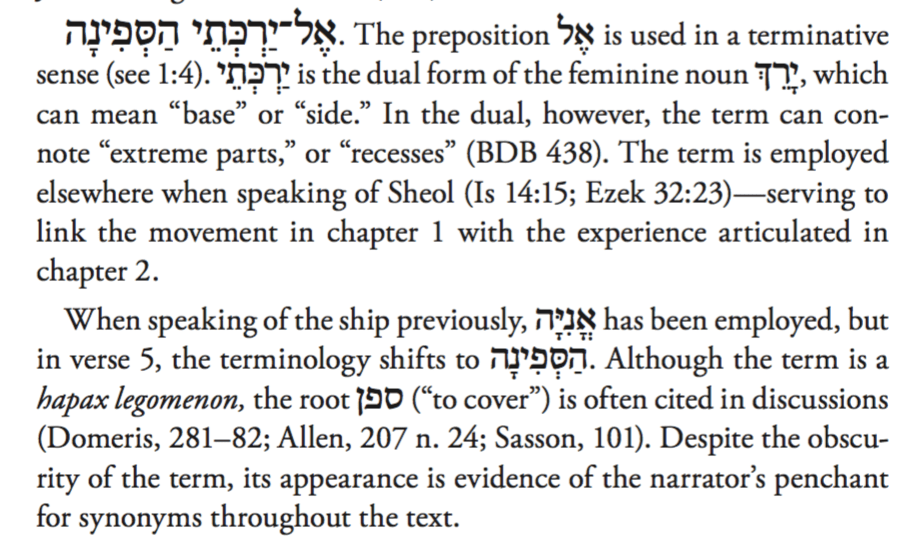
These two paragraphs from Jonah 1:5 give a good sense of the depth and utility of the comments:

The target audience is the student who is “making the move from introductory grammar to biblical text” (1). Given that, a surprising number of terms (irrealis, factitive, prosopopeia, diegetic, and more) go unlisted in the 28-term Glossary. And the discourse analysis is too much at times, as in this difficult paragraph:

Typically in narrative discourse, the negation of any verb is understood as irrealis scene setting and appears at the lowest level on the discourse profile scheme. The negation of a verb stops the forward progress of the narrative by indicating what is not the case. Longacre, however, has suggested that in certain contexts a negation may be termed a “momentous negation” because it is critical in advancing the narrative line forward (82). In these rare occurrences, the verb form is understood as a second-rank construction (similar to the X + qatal), in effect actually serving to move the narrative along. The events and dialog in chapter 4 are predicated, in part, on the momentous negation that occurs at the end of 3:10. The object of the verb is absent due to ellipsis.

Typos in the book are surprisingly frequent, especially occurring in the English translations. The book sets out to provide lexical forms for every verb in Jonah but omits them in a number of instances, leaving the reader without needed help at times. And the Malachi handbook has a “word chart” which I have hoped to see in other volumes, but haven’t. (Baylor published the Malachi volume after Jonah.)

On the plus side, Tucker commented more than I expected on the style of the author of Jonah—this helped me better understand the Hebrew in context. And there are more comments with exegetical and even preaching payoff than one might expect from a series that the editors intend to serve as a sort of prequel to a commentary.

If you’re reading through Jonah in Hebrew, will you want this handbook? Despite what I see as some shortcomings, yes. The best commentary on Jonah is probably this one, which covers Hebrew well, but in its transliterated form. So if you’re going to go deep with the Hebrew of Jonah, Tucker’s handbook is a nice companion—and much of his discourse analysis is clear, even if the reader needs to reference his introductory comments (and external sources) a few times along the way.

The handbook is available through Amazon (here) and the publisher (here).


Thanks to Baylor University Press for the review copy—sent to me with no expectation as to my reivew’s content.