Structure of Ephesians 2:1-10: The Center Is Not What I First Thought

In the past when I’ve preached on Ephesians 2:1-10, I’ve gone straight for the gold of Ephesians 2:8-10:

For it is by grace you have been saved, through faith—and this not from yourselves, it is the gift of God—not by works, so that no one can boast. For we are God’s workmanship, created in Christ Jesus to do good works, which God prepared in advance for us to do.

The first seven verses have just felt like an opening band that–while good–wasn’t necessarily what I had come to see.

I see the passage differently now, having spent a good deal of time trying to understand Paul’s flow.

Here’s the passage from the 1984 NIV, followed by the passage in Greek:

Eph 2:1       As for you, you were dead in your transgressions and sins, 2 in which you used to live when you followed the ways of this world and of the ruler of the kingdom of the air, the spirit who is now at work in those who are disobedient. 3 All of us also lived among them at one time, gratifying the cravings of our sinful nature and following its desires and thoughts. Like the rest, we were by nature objects of wrath. 4 But because of his great love for us, God, who is rich in mercy, 5 made us alive with Christ even when we were dead in transgressions—it is by grace you have been saved. 6 And God raised us up with Christ and seated us with him in the heavenly realms in Christ Jesus, 7 in order that in the coming ages he might show the incomparable riches of his grace, expressed in his kindness to us in Christ Jesus. 8 For it is by grace you have been saved, through faith—and this not from yourselves, it is the gift of God— 9 not by works, so that no one can boast. 10 For we are God’s workmanship, created in Christ Jesus to do good works, which God prepared in advance for us to do.

Eph 2:1     Καὶ ὑμᾶς ὄντας νεκροὺς τοῖς παραπτώμασιν καὶ ταῖς ἁμαρτίαις ὑμῶν, 2 ἐν αἷς ποτε περιεπατήσατε κατὰ τὸν αἰῶνα τοῦ κόσμου τούτου, κατὰ τὸν ἄρχοντα τῆς ἐξουσίας τοῦ ἀέρος, τοῦ πνεύματος τοῦ νῦν ἐνεργοῦντος ἐν τοῖς υἱοῖς τῆς ἀπειθείας· 3 ἐν οἷς καὶ ἡμεῖς πάντες ἀνεστράφημέν ποτε ἐν ταῖς ἐπιθυμίαις τῆς σαρκὸς ἡμῶν ποιοῦντες τὰ θελήματα τῆς σαρκὸς καὶ τῶν διανοιῶν, καὶ ἤμεθα τέκνα φύσει ὀργῆς ὡς καὶ οἱ λοιποί· 4 ὁ δὲ θεὸς πλούσιος ὢν ἐν ἐλέει, διὰ τὴν πολλὴν ἀγάπην αὐτοῦ ἣν ἠγάπησεν ἡμᾶς, 5 καὶ ὄντας ἡμᾶς νεκροὺς τοῖς παραπτώμασιν συνεζωοποίησεν τῷ Χριστῷ, _ χάριτί ἐστε σεσῳσμένοι _ 6 καὶ συνήγειρεν καὶ συνεκάθισεν ἐν τοῖς ἐπουρανίοις ἐν Χριστῷ Ἰησοῦ, 7 ἵνα ἐνδείξηται ἐν τοῖς αἰῶσιν τοῖς ἐπερχομένοις τὸ ὑπερβάλλον πλοῦτος τῆς χάριτος αὐτοῦ ἐν χρηστότητι ἐφ᾿ ἡμᾶς ἐν Χριστῷ Ἰησοῦ. 8 Τῇ γὰρ χάριτί ἐστε σεσῳσμένοι διὰ πίστεως· καὶ τοῦτο οὐκ ἐξ ὑμῶν, θεοῦ τὸ δῶρον· 9 οὐκ ἐξ ἔργων, ἵνα μή τις καυχήσηται. 10 αὐτοῦ γάρ ἐσμεν ποίημα, κτισθέντες ἐν Χριστῷ Ἰησοῦ ἐπὶ ἔργοις ἀγαθοῖς οἷς προητοίμασεν ὁ θεὸς, ἵνα ἐν αὐτοῖς περιπατήσωμεν.

Assuming 2:1 is the beginning of a new sentence (Καὶ ὑμᾶς ὄντας νεκροὺς τοῖς παραπτώμασιν καὶ ταῖς ἁμαρτίαις ὑμῶν), there is not a clear indicative verb in a non-subordinate clause really anywhere in sight, at least not until an indicative verb of ἤμεθα (“we were”) in 2:3 (και ἤμεθα τέκνα φύσει ὀργῆς ὡς καὶ οἱ λοιποί). (Though I confess I’m not sure why this is preceded by καὶ if it’s not a participle.)

So 2:3’s ἤμεθα is the first indicative verb in the whole passage not in a subordinate clause. 2:1 (“You, being dead…”=participle) leads to 2:3b’s “we were children of wrath” (and notice Paul’s subtle shift in 2:3a from “you” as sinner to “we” as sinners). This wrath is the outcome one would anticipate.

Then there is a construction with a participle in 2:4a, similar to how the chapter began: ὁ δὲ θεὸς πλούσιος ὢν ἐν ἐλέει–“God, being rich in mercy”=participle. This is a grammatical (and theological) balance to “you, being dead.”

Paul is about to expand on this nice contrast, but first he interrupts with this recapitulation in Ephesians 2:5a: καὶ ὄντας ἡμᾶς νεκροὺς  τοῖς παραπτώμασιν (and you, being dead in transgressions). It is nearly identical wording to how the passage started, forming an inclusio with 2:1. (Just in case we missed it the first time, that we were dead in sin!)

Now there is the continuation of θεὸς ὢν–completed with a main verb to grammatically match but theologically and narratively replace the “we were children of wrath.” It is the high point of the passage, the phrase that holds the whole passage together. It has the three main verbs the listener/reader will have been waiting for since the participle of 2:1.

συνεζωοποίησεν τῷ Χριστῷ

God made us alive in Christ!

Then the rest of the passage is the unfolding (2:6 gives two more main verbs: he raised us and seated us with Christ) and purpose (2:7) and reiteration with implications (2:8-9) of συνεζωοποίησεν τῷ Χριστῷ.

I take 2:10 and its ἐν Χριστῷ Ἰησοῦ, then, to be the “application” section of this passage.

Interestingly enough, read this way, the ever-popular 2:8-9 are not the main point of the passage, at least not on their own. They need to be understood in light of God’s specific actions of making us alive in Christ (συνεζωοποίησεν τῷ Χριστῷ), raising us (συνήγειρεν) and seating us in the heavenly realms in Christ (συνεκάθισεν ἐν τοῖς ἐπουρανίοις ἐν Χριστῷ Ἰησοῦ).

The technical commentaries confirm this way of reading the passage, namely, that the structural and grammatical center is 2:5-6, describing the three-fold action of God in making us alive, raising us, and seating us.

It’s a nuance, to be sure, and it doesn’t take away from the power of 2:8-10. But it does mean my preaching focus tomorrow will be on the three-fold action of God, and how we understand that as his saving grace, to be received by faith.

Discovering the Septuagint: A Guided Reader (Jobes) Is Now Available

Discovering the LXX


For Greek reading I’ve been so knee-deep in Ephesians that I haven’t been much in the Septuagint of late. That will change with the release of Karen Jobes’s Discovering the Septuagint: A Guided Reader, just published by Kregel Academic. I have known about this for a long time, so am happy to see it released into the wild! I think a lot of folks will benefit from it, especially those ready to freshen things up or go a step deeper in Greek learning.

While it’s available for pre-order from Amazon, it’s shipping now from Kregel, so what are you waiting for?

Guess What? Ephesians 1:15-23 is Also One Sentence in Greek: Trying a Mind Map

Just when I thought my sermon preparation was moving away from loooong Pauline sentences, Ephesians 1:15-23 offers another–a single sentence stretches across those nine verses. (See here on Ephesians 1:3-14 as one sentence and where I started my exegesis.)

This week I thought I’d see if I could wed my need to visually outline the text with my deep appreciation for mind mapping.

The result was that I got a significant step closer to understanding the focus of Paul’s prayer for Ephesian Christians. This is in rough form (and will be revised still), but here’s how I used the app MindNode to lay out the passage (click/tap to enlarge):


AKJ Mind Map Sentence Flow


It’s coming together!

At Last: Muraoka’s Syntax of Septuagint Greek

Muraoka Syntax of LXX Greek


At last, an up-to-date, full-on Septuagint grammar: Muraoka’s Syntax of Septuagint Greek.

I mean, just take a look at the Table of Contents! Thank you, T. Muraoka, for writing it.

It is undoubtedly worth every penny, though it does cost many pennies, as you might expect.

Here’s what the publisher says about it:

This is the first ever comprehensive analysis of the morphosyntax and syntax of Septuagint Greek. The work is based on the most up-to-date editions of the Septuagint. The so-called Antiochene version of Samuel, Kings, and Chronicles as well as Judges has been studied. Though this is a synchronic grammar, and though not systematic, comparison with Classical Greek, the Greek of contemporary literature of the Hellenistic-Roman period, papyri and epigraphical data, and New Testament Greek has often been undertaken. Even when analysing translated documents of the Septuagint, the perspective is basically that of its readers. However, attempts were made to determine in what ways and to what extent the structure of the Semitic source languages may have influenced the selection of this or that particular construction by translators. At many places it is demonstrated and illustrated how an analysis of the morphosyntax and syntax can illuminate our general interpretation of the Septuagint text.

Here it is at Peeters Publishers. Here‘s the Amazon page.

Brand New from Carta: The Illustrated Josephus (The Jewish War)

Josephus Carta


Josephus–affectionately dubbed Brosephus in my household–now comes to you, via Carta Jerusalem, with full-color illustrations. I’m still coming back to these three new titles, but in the meantime, here’s a bit of info about Carta’s Illustrated The Jewish War by Josephus.

The publisher describes it thus:

A modern reading of Josephus’ ancient text, profusely illustrated, and placed against its geographical historical background.

• 40 maps illustrating the events recorded by Josephus referenced to the latest scholarly research (The Carta Bible Atlas, The Sacred Bridge: Carta’s Atlas of the Biblical World, and more);

• 175 illustrations of sites, archaeological finds, landscapes, artifacts, and artist’s renditions;

• Easy name search for: Persons (red); Places (blue); References (green).

The Sacred Bridge, as I suggested in probably the longest review I’ve written on this site, is pure gold. R. Steven Notley, a co-author of The Sacred Bridge, has written the introduction for this new volume. It is not very long, but Notley does not need many words to orient readers well to the subject at hand.

Make sure to check out the sample pages here.

The translation is William Whiston’s. The illustrations, maps, and other images (not to mention the color coding that makes even a small-font, tour de force like The Sacred Bridge readable) look to be a nice enhancement to Josephus’s text.

I’ve not seen more than the sample pages, but a possible desideratum could be additional study notes, or footnoted annotations throughout the text to keep the reader oriented to The Jewish War. The images appear to serve that purpose in at least some measure, and promise to make for yet another beautiful book from Carta.

Through the end of June the discount code 30-off will get you 30% off the hardcover volume (retails at $60). The book is to be published in early June. You can find it here.

Ephesians 1:3-14 is One Sentence in Greek: Where to Start

Ephesians 1:3-14 is a single sentence in Greek. It has more than 200 words. How does a preacher even begin!

Well, to start, I isolated the indicative verbs, which is as simple as typing

[VERB Indicative]

into the search entry bar in Accordance software. I wanted to start there because I thought indicative verbs (as opposed to the participles) would be the best place to begin breaking down the flow of Paul’s argument.

Then I cross-highlighted the verbs in an English translation in parallel (though I had done my own translation, too) so I could see them in both languages. The result was this (click/tap to enlarge):


Ephesians 1.1-14 Indicative Verbs


From there, you guessed it, a three-point outline emerged, which shaped my sermon on this beautiful passage. I found that the indicative verbs themselves coalesce pretty nicely into three main points.

I’m preaching on the passage tomorrow–great stuff, and much more to share, but just this simple search (with, of course, instantaneous results) has been essential in guiding my exegesis and preparation.

Alfred 3 (for Would-Be Mac Power Users) Just Released

Alfred Logo


Alfred can be an intimidating Mac app, but its capabilities are pretty unparalleled when it comes to automating workflows. They’ve just announced the release of Alfred 3:

After months of intense development, polishing and testing, Alfred 3 is here and ready for you!

It’s been a thrill to add new features to Alfred, and improve existing ones. We already can’t live without these new features, which add so much to our workday productivity; Amazingly flexible workflows, snippet expansion, multimedia clipboard and more.

You can download Alfred 3 to get started right away.

We’ve highlighted a few of the new features below. We also published a post answering some of the commonly asked questions for Alfred 3; upgrading your Powerpack, migrating your preferences and more, so take a look for details.

The download of the app itself is free, and then you can pay for an upgrade to get the full set of features.

The snippet expansion is perhaps the most exciting feature to me. Much as I and others owe TextExpander a dept of gratitude, its new monthly subscription model suffered from a hasty (and probably overpriced) roll-out. Alfred, at any rate, can expand keyboard shortcuts and much more.

Find out more here.

The Holy Spirit Is for Ordinary Time

At my church we’ve spent the Easter season looking for and finding signs of Christ’s resurrection power all around us.

We see the power of the risen Jesus through mundane interactions in our worlds, just as the risen Jesus appeared on the shore to the disciples and ate breakfast with them.

We find rhythms of resurrection—death and rebirth—in creation.

We see signs of it in our daily lives: our work, family life, and friendships.

We find the power of the resurrection at work within us when we Christians show love to each other—both in word and action.

And we experience the power of the resurrection of Jesus when we affirm with his disciple John, “Perfect love drives out fear.”

I’ve grown these last couple months in my appreciation of how Christ’s resurrection is still shaping everything today.

So I sort of don’t want the Easter season to end. It feels like a little bit of a letdown. I’ll still be on the lookout for signs of the resurrection—I’ll still try to “practice resurrection,” as Wendell Berry wisely tells us to do. But we’re moving now into that long period in the church calendar creatively called, “Ordinary Time.”

I was doing some long-range preaching planning the other day with a week-by-week calendar in front of me. This coming Sunday is the First Sunday after Pentecost. And then, not surprisingly, it will be the Second Sunday after Pentecost. And then the Third, and Fourth, and Fifth, and 13th, and 19th, and 23rd Sunday after Pentecost… all the way up to the 27th Sunday after Pentecost on November 20. Then it’s Advent.

Those “after Pentecost” Sundays for us are “Ordinary Time.”

But moving from what has been a meaningful Easter season for me into this 27-week long “Ordinary Time,” I feel a little like the disciples must’ve felt on Pentecost Sunday: “What now?” “Where do we go from here?”

We need the Holy Spirit for the “ordinary” days ahead. Jesus unleashes the power and energy and life and breath that is the Holy Spirit, so that the disciples can have the Holy Spirit now that Easter has come and gone.


* * * * * *


If I could live through any period of history, it would be those post-resurrection days with the disciples and Jesus. They had lost him to death once, and now he’s gone from them again through his ascension to heaven.

But he doesn’t leave them stranded. He gives to the Church and to every believer the Holy Spirit for all our days to come. The Holy Spirit is for ordinary time.

A number of years ago, when Newsweek was still a print magazine, the editors asked Garrison Keillor what five books were most important to him. #1 on his list was “The Acts of the Apostles.” His one-sentence summary of it was: “The flames lit on their little heads and bravely and dangerously went they onward.” (HT)

And that’s how we go: onward, into differently structured summer days and adjusted schedules. We go onward, even into Ordinary Time, into seasons of waiting and tedium and unmet expectations—we go forward anyway because the promised Holy Spirit has come.

When we love with the love of Jesus, we go “dangerously” but willingly into places of darkness and loneliness and despair, ready to share God’s Spirit far beyond our gathered Sunday morning assemblies. Through the Holy Spirit’s power we can declare with the prophet Joel and the apostle Peter that God’s Holy Spirit is for all people, and that “everyone who calls on the name of the Lord will be saved.”

The Holy Spirit, having come in power at Pentecost, has filled each of us—all of us—to speak words of praise and comfort and love. And we can move with those first disciples from praying, “Come, Holy Spirit,” to now praying, “Thank you, Jesus, for giving us your Holy Spirit. Come afresh to me.”

And we can know that the Holy Spirit is a promise, a guarantee of Jesus Christ himself, given to us now. The Holy Spirit is for Ordinary Time!


The above is adapted from my Pentecost Sunday sermon to my congregation yesterday.

Probably the Best Broadly Evangelical Systematic Theology

Erickson Introducing Christian DoctrineMillard J. Erickson’s massive Christian Theology is now in its third edition (published in 2013). The hallmark of the 1,200-page book is its evangelical perspective, concern for application to life, and balance in covering multiple perspectives fairly.

There’s also a newly updated abridged version of the work, Introducing Christian Doctrine, which clocks in at a more modest 512 pages.

Introducing Christian Doctrine begins each chapter with an easy-to-grasp one-page summary, featuring “Chapter Objectives,” a short “Chapter Summary,” and a detailed “Chapter Outline.” This makes navigating the work a breeze, especially if you’re after a particular topic–as I am currently, since my five-year-old keeps asking me about heaven!

Erickson offers an engaging read from the beginning:

To some readers, the word “doctrine” may prove somewhat frightening. It conjures up visions of very technical, difficult, abstract beliefs, perhaps propounded dogmatically. Doctrine is not that, however. Christian doctrine is simply statements of the most fundamental beliefs the Christian has, beliefs about the nature of God, about his action, about us who are his creatures, and about what he has done to bring us into relationship with himself. Far from being dry or abstract, these are the most important types of truths. They are statements on the fundamental issues of life: namely, who am I, what is the ultimate meaning of the universe, where am I going? Christian doctrine is, then, the answers the Christian gives to those questions that all human beings ask. (4)

Readers can count on, even in this abridged version, a thorough survey of biblical references and concepts from which to derive a solid theology. Erickson covers well the expected basics: revelation, the nature of humanity, salvation, eschatology, and so on.

Balanced as he is, there are occasional areas that deserve further nuance, even in the unabridged version. In the larger edition, for example (preserved in the abridgement), Erickson says, “Jesus did not make an explicit and overt claim to divinity” (611). He means that Jesus never explicitly said, “I am God,” although verses like “I and the Father are one” seem to counter Erickson’s claim here. What follows, though, is a great read on Jesus: there are what can only be divine “prerogatives Jesus claimed” (611).

The Unabridged Version

To take just one example, Jesus forgives the sins of a paralyzed man in Mark 2:5-10. The teachers of the law object, “Who can forgive sins but God alone?” They are right, of course, that only God can forgive sins. Jesus here is exercising a divine role: “But I want you to know that the Son of Man has authority on earth to forgive sins” (Mark 2:10). Jesus also exercises an authority reserved only for God when he re-casts the Decalogue in his Sermon on the Mount with a refrain of, “But I say to you.” And when Jesus raises Lazarus from the dead in John 11, he displays power over life and death themselves, a power available to no mere human being. This is not to mention Christ’s own resurrection, showing his divine power over death.

Erickson offers some nice turns of phrase, too. Speaking of God’s age, he says God “is no older now than a year ago, for inifinty plus one is no more than infinity” (91). Together with the Scriptural support Erickson gives for God’s being “infinite in relation to time” (91), one easily sees how useful Introducing Christian Doctrine can be in church settings.

The abridged version does a impressive job at condensing Christian Theology without significantly compromising or neglecting the content. One surprising move in the abridged version is that the chapters are re-ordered and numbered differently from the full edition.

This may be inevitable with an abridgement, but most readers will want to be able to know how the two titles relate, for purposes of accurate cross-referencing and further reading. Future editions ought to bring the abridged chapter numbering in line with that of the fuller version. Even the section headings change, so that Part 5 of the condensed version is “The Person and Work of Christ” (spanning chapters 23-27), while Part 5 of the unabridged edition is “Humanity” (chapters 20-24).

The annotated Table of Contents (see them here) in Introducing Christian Doctrine do, however, allow the reader to easily locate a given theme and sub-topic.

There’s much more to interact with in Erickson’s book, but it’s the best broadly evangelical theology of which I’m aware. Erickson blends academic thoroughness with pastoral concern, an approach I love.

And now, some link love: You can find the condensed Introducing Christian Doctrine here (Amazon), here (Baker), and in electronic form here (Logos) and here (Olive Tree). The fuller, unabridged Christian Theology is here (Amazon), here (Baker), and in electronic form here (Logos) and here (Olive Tree).


Thanks to Baker Academic for the copy of Introducing Christian Doctrine, which they sent me for review, but with no expectation as to this review’s content.


New JPS Commentary Volumes, Now in Accordance

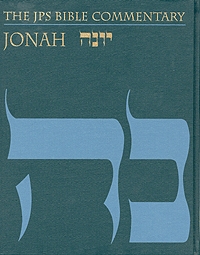
Jonah JPS CommentaryOne of the best biblical commentaries is the Jewish Publication Society (JPS) Bible Commentary. Previously at Words on the Word I’ve reviewed JPS Jonah, Genesis, Exodus, and Leviticus.

Now Accordance Bible Software has announced the release of every JPS Bible Commentary volume that currently exists in print, including Michael Fishbane’s Song of Songs and Michael V. Fox’s Ecclesiastes.

(Fun aside: I was leading an Accordance Webinar on building Workspaces when I realized the “Michael Fox” in attendance was THAT Michael V. Fox.)

Accordance has a number of purchase and even upgrade options available, all of which are explained in detail here.