Through the Psalms? 2 Books to Help

Before the mid-50 degree winds blow Psalms of Summer too far back into my homiletical consciousness, I want to highlight two Psalms commentaries I used every week this summer.

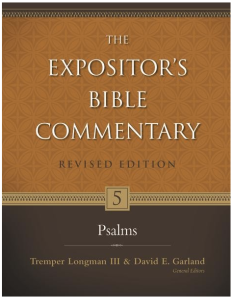
They are Willem A. VanGemeren’s Psalms (Expositor’s Bible Commentary, Revised edition) and Gerald H. Wilson’s Psalms Volume 1 (NIV Application Commentary), both from Zondervan.


1. Revised EBC
 

Psalms Revised EBC

In the EBC set’s previous edition, Psalms was only available in a larger volume that also contained Proverbs, Ecclesiastes, and Song of Solomon. Now, with some expansions and revisions, it is its own 1,000-page volume.

VanGemeren’s introduction is detailed, offering the kind of thorough but not verbose overview anyone reading or preaching on the Psalms would want. Among other issues, he writes about Psalm types, the formation of the Psalter, theology in the Psalms, and literary/poetic devices–in addition to parallelism, he lists and describes 16 devices.

The typical pattern is for each Psalm to begin with an Overview (covering its themes, structure, authorship, and so on). Then follow “Commentary” and “Notes” for each passage. The Commentary section is verse-by-verse exposition; the Notes include more detailed technical insights, especially delving into the Hebrew text. 22 “Reflections” throughout the commentary offer additional explanation of important themes.

To take just one look inside the commentary, Psalm 13:5-6 in the NIV (1984) reads:

But I trust in your unfailing love;
my heart rejoices in your salvation.

I will sing to the LORD,
for he has been good to me.

Of these verses VanGemeren says:

Though he has experienced deep despair, the psalmist does not give up. His feet did not slip. He held on to the promise of God’s covenant love: “your unfailing love” (hesed). He is not overwhelmed by his troubles, but in his depression he says, “But I trust.” The emphatic “But I” (v.5) is a surprising response from the heart of a depressed person. Because life may be so bitter for some, it is only by God’s grace that the heart of faith may groan, “but I.”


2. NIVAC


Psalms Vol 1 NIVACAs with the Revised EBC volume, the introduction to Psalms Volume 1 in the NIV Application Commentary series (NIVAC) covers good ground: authorship, historical use of Psalms (in temple worship, as well as the move “from public performance to private piety”), poetic conventions, Hebrew poetry specifically (parallelism, use of refrains, acrostics), Psalm headings, and types of Psalms.

Wilson–after an informative historical survey of attempts to categorize Psalms–highlights three “main” Psalm types: Praise, Lament, and Thanksgiving. He also notes other types, like royal Psalms and wisdom Psalms. The introduction spans more than 60 pages and (thankfully) exceeds what one might expect to find in an “application commentary.”

The NIVAC series has as its primary goal “to help you with the difficult but vital task of bringing an ancient message into a modern context.” It employs three sections for each Psalm to (quite successfully) accomplish the aim:

  1. Original Meaning: “the meaning of the biblical text in its original context.”
  2. Bridging Contexts: “to help you discern what is timeless in the timely pages of the Bible–and what is not,” i.e., what applies only particularly to a context and not universally.
  3. Contemporary Significance: the application section, including suggestions for the preacher or teacher or reader of the passage.

The text of each Psalm is printed in full before its commentary, which I appreciated. This first volume covers Psalms 1-72 (Books I and II of the Psalter). The author is as adept in the text’s Original Meaning as he is in Bridging Contexts or discussing its Contemporary Significance. Wilson won’t write your sermon for you, but he gives the preacher or teacher plenty to chew on, both for herself and for her congregation. Especially illuminating in the application section is Wilson’s Christological read of many Psalms.

Here are just two examples of the kind of edifying insights that fill Wilson’s NIVAC volume:

1. He notes the walk…stand…sit progression of Psalm 1, and does so with a nice turn of phrase:

The order of these verbs may indicate a gradual descent into evil, in which one first walks alongside, then stops, and ultimately takes up permanent residence in the company of the wicked.

2. When Sons of Korah in Psalm 46 call the congregation to a counterintuitive praise session, they do so in the midst not just of some tragic events befalling God’s people—it’s the complete disintegration of all of life that is the dominant metaphor in these verses. Wilson says that when the Psalm speaks of mountains falling into the sea, this “amounts to a moment of uncreation.”


Praying with Many, Many Others


Wilson puts it well:

Thus, whenever you read the psalms, when you sing them or pray them, you are praying, singing, and reading alongside a huge crowd of faithful witnesses throughout the ages. The words you speak have been spoken thousands–even millions–of times before: in Hebrew, Greek, Latin, English, and a myriad of other languages. As you read or sing or pray, off to your right stand Moses and Miriam, in front of you David and Solomon kneel down, to your left are Jesus, Peter and Paul, Priscilla and Aquila, while from behind come the voices of Jerome, St. Augustine, Theresa of Avila, Luther, Calvin, and more–so many more!


Thanks to Zondervan for review copies of each of the above, given to me with no expectation as to the content or trajectory of my review. Find the Revised EBC volume here (Amazon) or here (Zondervan). The NIVAC Psalms volume is here (Amazon) or here (Zondervan). 

One-Day Olive Tree Sale: Dietrich Bonhoeffer Works (16 Volumes) for $99

Bonhoeffer in Olive Tree


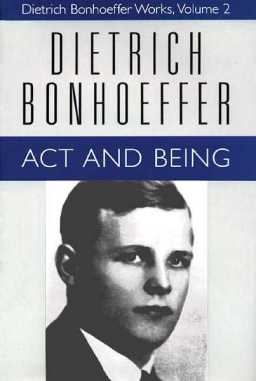
Today (Wednesday), Dietrich Bonhoeffer Works, English Edition (DBWE, 16 volumes) are $99 in Olive Tree Bible software. I have not seen DBWE in Olive Tree, but have reviewed the app here.

Their iOS and desktop apps are free, so if you like Bonhoeffer and have the cash, this is probably the best price for his complete works in English that one will ever find. (It does not include the just released Volume 17.)

Accordance 11: Coming (Very) Soon

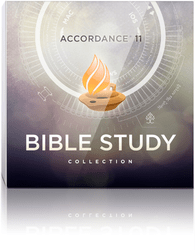
Accordance 11 Collections


Accordance 11 is coming soon. Very soon–by the end of October.

In an email announcement today, Accordance noted:

Exciting news! We are preparing our next major upgrade for release towards the end of October. During the next several weeks we’ll be telling you more about Accordance 11 and the many advances it will bring to your studies.


This week we are announcing the exciting new modules that are being added to each Version 11 Collection. Each of these Collections includes Accordance 10 and 11, so you can use Accordance 10 now, and get 11 immediately upon release.

New to the store already in Accordance 11 is the chance to “Custom Upgrade,” which provides users with a discounted collection rate if they already own modules contained in that collection.

See the announcement here.

They haven’t said much yet about what Accordance 11 contains, but today’s newsletter does note “23 new and useful categories for your books for better organization and easier access” in Tools, as shown here:


23 Tools Categories


I use Accordance every day (or almost every day). Accordance 10 is already an excellent program. Can’t wait to see what 11 brings. Subscribe to this blog or check back to hear more as it unfolds.

A First-Year Textbook that Gets You Reading Hebrew A.S.A.P.

First Hebrew Primer“But when do we get to start reading Hebrew?”

The question was a near-refrain in my first semester of Hebrew class at seminary. After months of memorizing verbal paradigm charts and individual vocabulary words, I wondered he same thing.

I don’t mind a memorization-based or paradigm-based model for second language acquisition. I did fairly well in first learning Hebrew from the Pratico and Van Pelt Basics of Biblical Hebrew (see here and here).

But as I noted in my Pratico/Van Pelt reviews:

Some people disagree that paradigm memorization outside the context of a text or conversation is ideal pedagogy for language learning. … Even dead or ancient languages should be taught as “living languages,” proponents say. So some Hebrew textbooks encourage instead a text-based inductive approach.


Getting to Read Hebrew A.S.A.P.


The First Hebrew Primer (Third Edition, EKS Publishing) takes more of a reading-based inductive approach:

The goal of the Primer is to teach students to read and understand Biblical Hebrew as quickly as possible; therefore, the lessons emphasize recognition and translation – not memorization.

It succeeds well in this aim. Indeed, as soon as chapter 10 (out of 30), the student will be excited to begin her or his guided reading of Ruth:

Congratulations! You have learned enough Hebrew to begin reading the Bible—revised for your reading level. We have chosen Ruth because it is short, simple, and beautiful. In the beginning, the Hebrew text will be simplified, but as we progress, the text will approach the original. Before we finish the Book of Ruth, you will be reading the actual biblical text.

As soon as the Primer teaches the alphabet, it offers a host of a exercises for out-loud reading practice. The “Tall Tales” (folk tales) readings give students yet another chance to put into a reading context what they have learned. All the expected charts for nouns and verbs, vocabulary lists (with occurrence of 200x or more in the Hebrew Bible), and exercise sets are present throughout the book. But I especially appreciated its emphasis on reading early.


Updates to the Third Edition


What’s different in the Third Edition? Primarily, there is more grammatical detail offered.

This revised third edition introduces several new terms and clarifies grammatical points, but will look the same to long-time Primer readers. The key change we have made is the inclusion of new explanatory endnotes. Many readers have expressed a desire to deepen their knowledge of Biblical Hebrew, but have unanimously endorsed the clear, uncomplicated tone of the Primer. We have responded by adding these optional supplementary notes. Students may read the notes to enrich their understanding of Hebrew grammar or concentrate solely on the main text. Either way, the Primer provides a sound foundation for more advanced studies in the Hebrew Bible.

One gets the feeling that in the absence of those clarifying notes, some of the grammatical concepts are oversimplified. So the additional nuances expressed in the endnotes are imperative for laying a good foundation for later Hebrew learning. EKS Publishing uses its own name for some grammatical terms (“Word Pair” instead of “construct chain” and “regular infinitive” instead of “infinitive construct”).

I can see this being something a student would need to re-learn if she or her goes further in learning Hebrew grammar; I’m not sure the level of simplification here is always helpful or necessary. (And the lack of an index makes it difficult to trace discussion throughout the book of a given concept.) All the same, page 368 provides a “Guide to Grammatical Terms” with a table of “Our Name” and the “Traditional Name” for key concepts.


The Primer for Kids?


Hebrew Learning


Though the book is for “adult beginners,” my six-year-old son, whose Hebrew-learning adventures I have chronicled here, took an interest in The First Hebrew Primer once he saw it on the shelf. Chapter 3 (“The Sheva, Odd Vowels, and the Dagesh”) was particularly helpful, as the sheva had been giving him trouble. The Primer explains how to pronounce the sheva depending on where in a word it is:

  • Sheva at the beginning of a word: “always pronounced with a short, slurred sound”
  • Sheva at the end of a word: “always a silent vowel, and it is not pronounced at all”
  • Sheva in the middle of a word: “When a sheva appears alone in the middle of a word, it usually falls at the end of a syllable and is not pronounced.” (An endnote at this point offers additional illuminating detail.)

My son did astutely ask, “How do I correct myself if I get something wrong?” So I’ve gone through the Primer with him, rather than letting him use the Primer much on his own (even though he can read just fine). There is a companion audio CD available, which has to be purchased separately; self-guided learners will need it to be able to take full advantage of the oral exercises in the Primer.


Concluding Evaluation


The Hebrew font in The First Hebrew Primer is clear and easy to read. The exercises strike a nice balance between appropriateness for each lesson and being challenging. For example, in chapter 7 (“The Perfect Tense”), there is this:

EKS First Hebrew Primer

If you prefer an interactive, digital edition, Accordance Bible Software has a Primer package available for purchase here. The Accordance edition includes the primer, the answer key (otherwise a separate purchase), and more than an hour’s worth of accompanying audio. In other words, Accordance puts everything needed in one integrated and easy-to-use place.

Would I use The First Hebrew Primer as a textbook for a first-year Hebrew student? Definitely–despite the occasional lack of nuance in the grammatical explanations, its emphasis on oral practice, its engaging exercises, its inclusions of basic paradigms, and especially its introduction of reading early on make it a solid option for a first-year Hebrew text. As an added bonus, there are plenty of English to Hebrew exercises (and even an English-Hebrew Glossary), which will go a long way to help the student solidify Hebrew comprehension.


Thanks to EKS Publishing for the review copy of the Primer and answer key, offered for the purposes of this review, but with no expectation as to my review’s content. The publisher’s book page is here (answer key here). It’s also on Amazon (affiliate link) here (answer key here).

What I’m Reading to Keep My Greek and Hebrew Fresh

To keep my Greek and Hebrew active, right now I’m alternating between two books (and enjoying them both):


Prepositions and Theology


Murray J. Harris’s Prepositions and Theology in the Greek New Testament (Zondervan, 2012).

Without accepting a so-called “theology of prepositions,” Harris’s guide is readable and illuminating. I found his exegetical guide to Colossians and Philemon quite helpful. Here is a sample of Prepositions and Theology.


Jonah Handbook on Hebrew Text


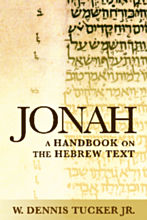
W. Dennis Tucker Jr.’s Jonah: A Handbook on the Hebrew Text (Baylor University Press, 2006).

I like this series already. I’m halfway through Jonah and finding Tucker’s handbook a welcome companion.

I’ll post a review of each when I finish.

Do You Want to Contribute to a Septuagint Dictionary?

Scholar’s Publisher is seeking contributors:

The aim of the DSEGJS [Dictionary of the Septuagint and Early Greek Jewish Scriptures] is to provide a comprehensive reference guide to the Greek Jewish Scriptures (GJS) in their Greco-Roman context as well as their subsequent influence on the early church and post Second Temple Judaism. The field as well as the general interest in matters related to the GJS has grown significantly in the past 30 years, but the discipline is lacking an informative reference tool for students and specialists, as well as scholars and students in related fields. The scope of the dictionary is to provide factual information about books, persons, places, and events, as well as define words and explain theories as they relate to the GJS. In most cases, the next step is to read an article or volume that is devoted to the topic itself, though in some cases the nature of this new endeavour means the DSEGJS is the primary source of information.

Find out more here.

From the Study… Books for Sale

Last weekend I built a sandbox; this weekend I’m cleaning up the study. I have a few books I’m trying to unload. Contact me here if you’re interested.


Simplified Guide to BHS (Hebrew Bible)
(Scott, 1990 Second Edition, includes Ruger’s English Key to Latin Words, bound together), hard to find in print. One page has writing, but is helpful to understanding text. Previous owner’s name inside front cover; sticker residue on back (slight).
$20


Hand Concordance to Greek NTHandkonkordanz zum Griechischen Neuen Testament (English and German)
Super-handy small concordance to Greek New Testament… I just don’t have use for it recently. See reviews at Amazon link here. Good to Very Good condition (sticker on back, some regular wear, but clean inside and strong binding).
$22


Seow Hebrew GrammarC.L. Seow’s Grammar for Biblical Hebrew (1987)
Pencil notations throughout (one page pen), otherwise great condition. Old sticker on back.
$10


The increasingly hard-to-find NIV Triglot Old Testament
Yes, English, Greek and Hebrew. It’s a big and impressive-looking hardback. Really good condition. Name inside front cover. No markings that I’m aware of. No dust cover (but you were just going to take that off as soon as you got it anyway, right?).
$22


Behold, the Triglot
Behold, the Triglot


Spurgeon Treasury of DavidSpurgeon’s 3-Volume Treasury of David
Commentary on the Psalms, hardcover (green dust jackets). Hardly used, in great shape. One volume has a small coffee splash on page edges. Not a set of books I’d normally want to part with, but I have it electronically now.
$29


Bonhoeffer Fiction from Tegel PrisonDietrich Bonhoeffer Works, Volume 7 (Fiction from Tegel Prison)
Hardcover. Brand new, still in shrink wrap.
$14


Dietrich Bonhoeffer Works, Volume 9 (The Young Bonhoeffer, 1918-1927)
Hardcover. Still in original shrink wrap. Just a tiny bit of bumping to spine edges, one corner ever-so-slightly dinged.
$20


Dietrich Bonhoeffer Works, Volume 10 (Barcelona, Berlin, New York: 1928-1931)
Hardcover. Dust jacket, page edges, and corners show some wear/bumping, but not much. Insides unmarked, never used.
$25


Interested? Contact me here to inquire.


A First Look Inside Bonhoeffer Works, Volume 17 (VIDEO)

DBWE17

After nearly 20 years the Dietrich Bonhoeffer Works (English edition) is complete.

Yesterday I received the concluding Volume 17, Index and Supplementary Materials. Take a look inside–this is a fittingly well-done volume to complete the set. (Make sure you click the gear icon to watch in HD.)


I describe the volume more in detail here.

To learn more about Fortress Press’s giveaway of the entire 17-volume Bonhoeffer Works, go here.